Homemade Soft Pretzel Bites with a Baking Soda Bath
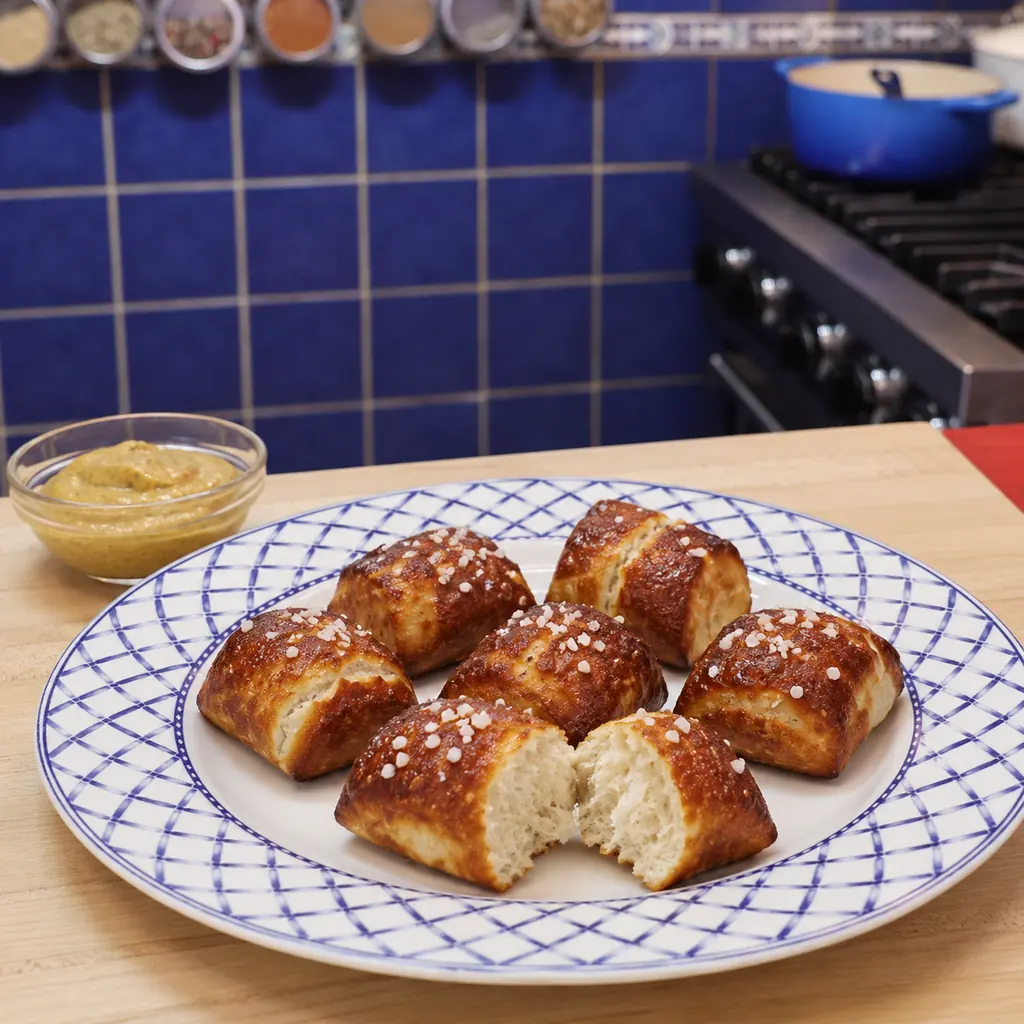
These homemade soft pretzel bites are small pieces of yeasted dough with a brown, lightly salted crust and a soft bread centre. I like cutting ropes into pillows because the shape is easy to portion and gives plenty of edges for dipping. A brief baking soda bath comes before the oven: it is part of the method, not an optional step if you want the characteristic pretzel surface. This recipe makes about sixty-four bites for a sharing plate, with weights and US measures for Canadian and American kitchens.
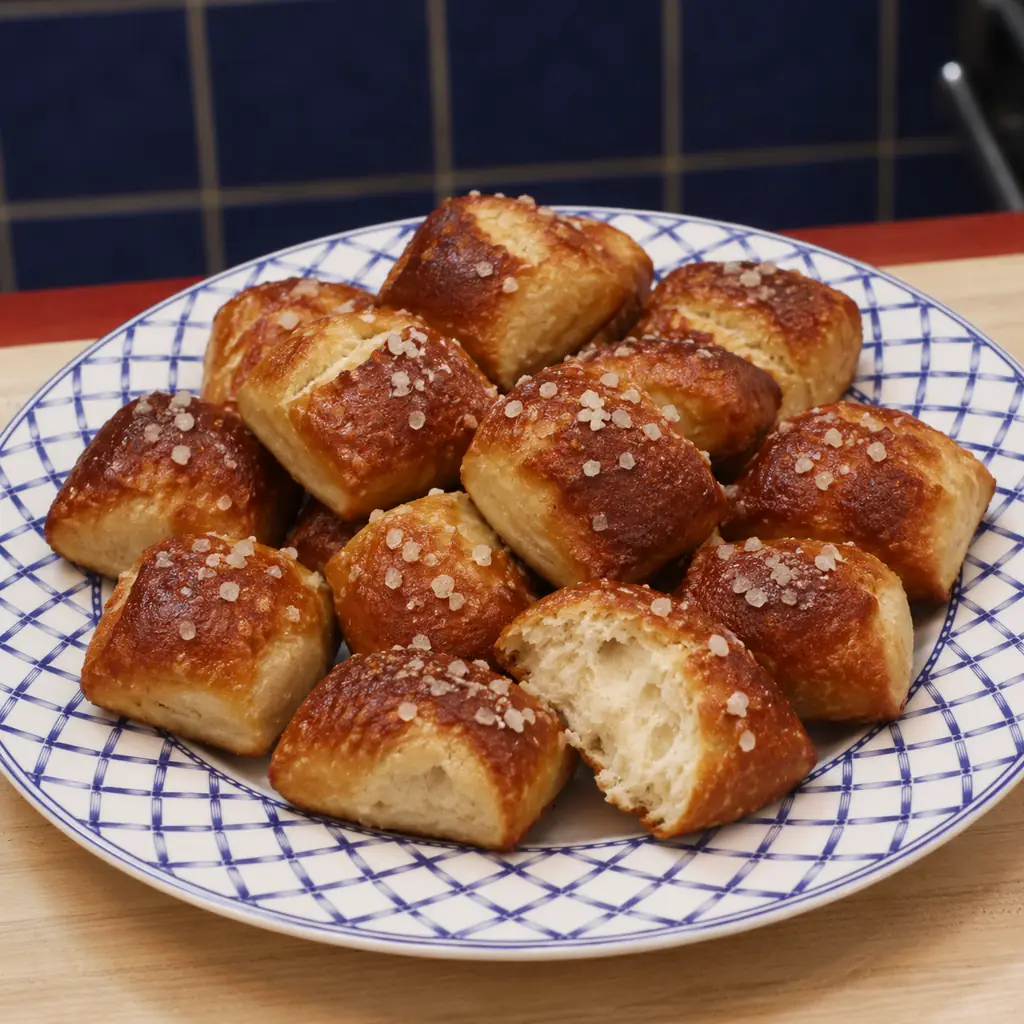
Measure a firm but flexible bread dough
Use 500 g of all-purpose flour, approximately four US cups measured by spooning into the cup and levelling. I prefer a scale because a heavily packed cup can add enough flour to make the dough difficult to roll. The liquid is 300 ml of lukewarm water, about one and a quarter US cups. Start with those amounts and let the dough come together before deciding whether it needs a light dusting of additional flour.
The dough should feel soft and slightly tacky rather than runny. Bread flour can give a chewier result, but the measured version here uses ordinary all-purpose flour. Whole-wheat flour absorbs differently and is not a direct replacement for the whole quantity. If you want a conventional sliced loaf instead, homemade white bread is a separate baking project with its own shaping and baking instructions.
Wake the yeast gently
Combine the water with 15 g of granulated sugar and a 7 g packet of active dry yeast. Aim for water around 38–43°C, or 100–110°F, unless the yeast package gives a different instruction. Leave it for five to ten minutes until a foamy layer appears. Very hot water can damage the yeast; cold water slows the process. I do not compensate for old, inactive yeast by adding extra sugar to the dough.
If the mixture remains completely flat, check the expiry date and the water temperature before using more flour. It is easier to replace an inactive yeast mixture now than after kneading. Instant yeast is used differently, so follow its package method rather than assuming every packet needs the same preliminary rest. Here, active dry yeast keeps the sequence clear: dissolve, check activity, then combine with the flour, salt, and melted butter.
Knead before judging the flour balance
Add the flour, 8 g of fine salt, and 30 g of melted butter that has cooled until merely warm. Mix until the dry patches disappear, then knead for eight to ten minutes by hand. The surface should become smoother and the dough should stretch without immediately tearing into rough pieces. I like kneading on a mostly clean counter so I can feel whether the dough is becoming elastic rather than covering every sticky spot with flour.
If it remains unworkably sticky after a few minutes, add flour one teaspoon at a time, using only what is necessary. A dry dough resists stretching into ropes. For a different sharing bread, olive bread with herbes de Provence brings the flavour into a loaf rather than these plain salted bites. Its additions should not simply be folded into this dough without reconsidering the shaping and surface treatment.
Give the dough enough time to rise
Place the dough in a lightly greased bowl, cover it, and leave it somewhere comfortably warm until roughly doubled. Allow about one hour, while recognising that a cooler kitchen can take longer. I prefer watching the volume of the dough rather than treating sixty minutes as an exact promise. A hot oven is not a suitable place to leave a covered bowl unless it is switched off and only gently warm.
This recipe does not need an overnight fermentation. Once the dough has expanded, gently press it down and divide it into eight similar portions. Keep unused pieces covered while you shape the others so the surface does not dry into a skin. Homemade brioche is useful when you want a richer bread, but the butter and egg balance of brioche serves a different purpose from this leaner pretzel dough.
Cut short pillows rather than tiny crumbs
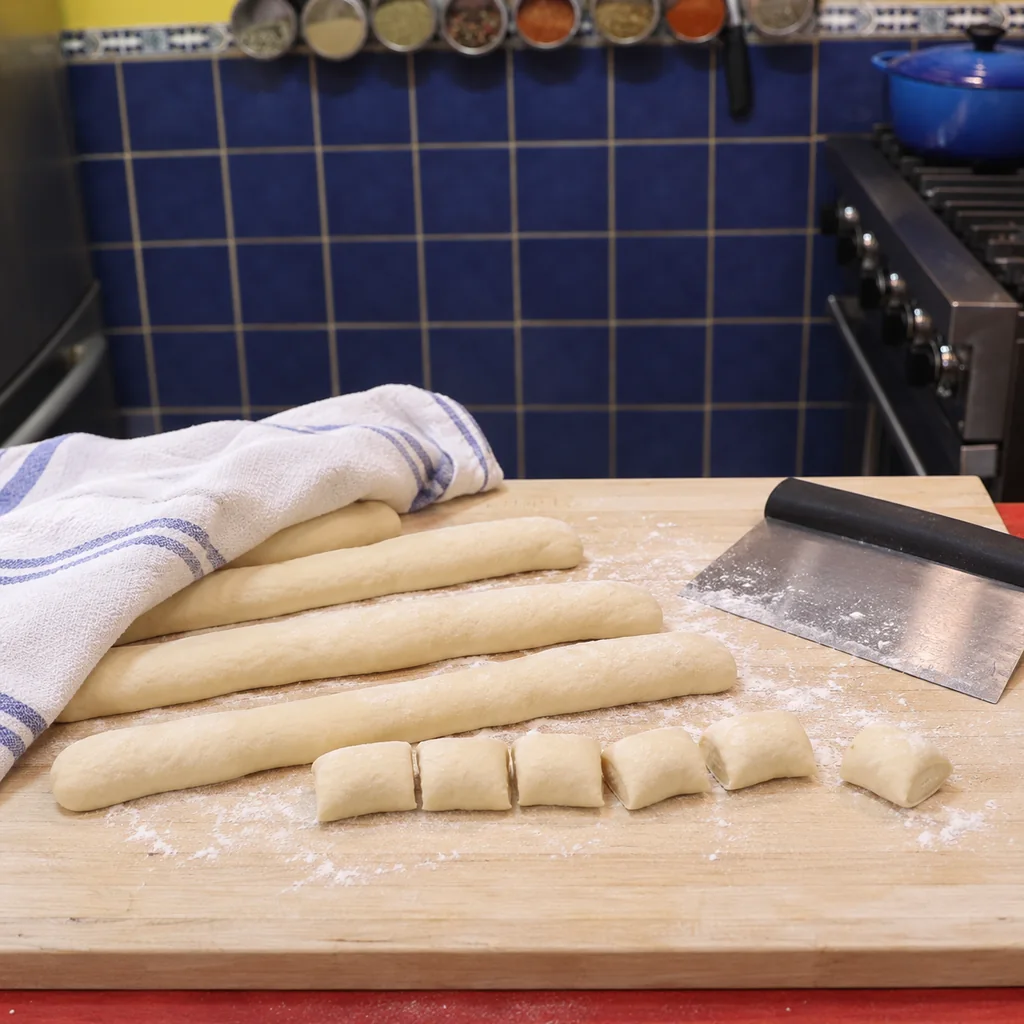
Roll each portion into a rope about 24 cm, or 9½ inches, long. Cut each rope into eight pieces, giving about sixty-four bites altogether. Their raw length is around 3 cm, just over one inch. I like a little variation in the cuts; perfectly identical cylinders are unnecessary. Avoid flattening them into thin disks, because a substantial centre is what keeps the inside pleasantly soft after baking.
If a rope springs back strongly, cover it and let it relax for five minutes before continuing. There is no need to pull until it tears. Set the cut pieces on a lightly floured area and prepare two baking sheets lined with oven-safe parchment that is rated for the baking temperature. Lightly grease the parchment. Keep the pieces separate so they can be lifted into the bath without stretching or sticking to their neighbours.
Prepare the baking soda bath carefully
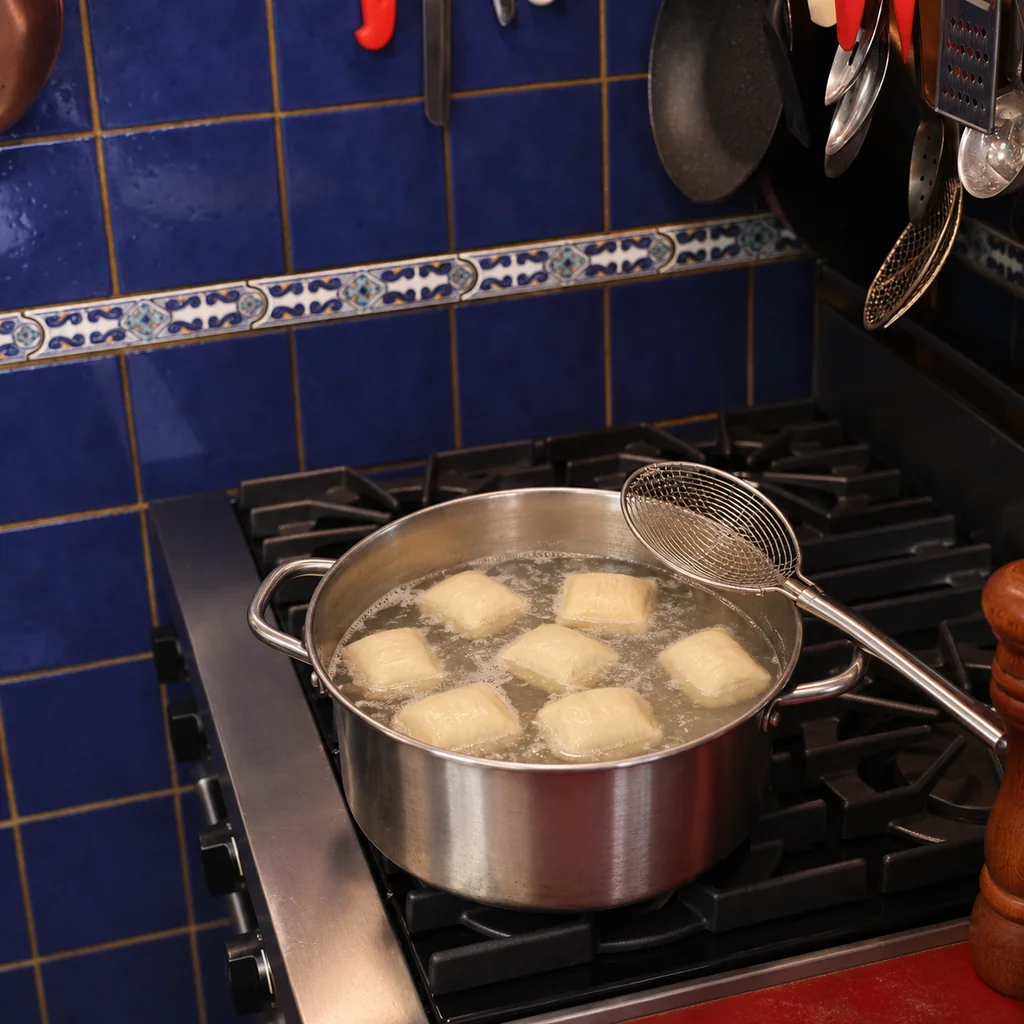
Bring 2 litres of water, about eight and a half US cups, to a simmer in a large deep pot. Reduce the heat, then gradually stir in 60 g of ordinary baking soda, about one quarter of a US cup. The mixture can foam as the powder is added, so leave generous headroom. Use baking soda as sold, not baking powder or another alkaline product. This home method does not require handling lye.
Poach eight to ten bites at a time for about thirty seconds total, turning once if needed. Lift them with a slotted spoon, let excess water drain, and place them on the prepared trays. I do not leave them soaking for several minutes because the outside can become unpleasantly thick. The dough pieces should remain recognisable pillows. Sprinkle a little coarse salt on their damp surfaces, using less if the accompanying dip is already salty.
Bake until brown rather than merely beige
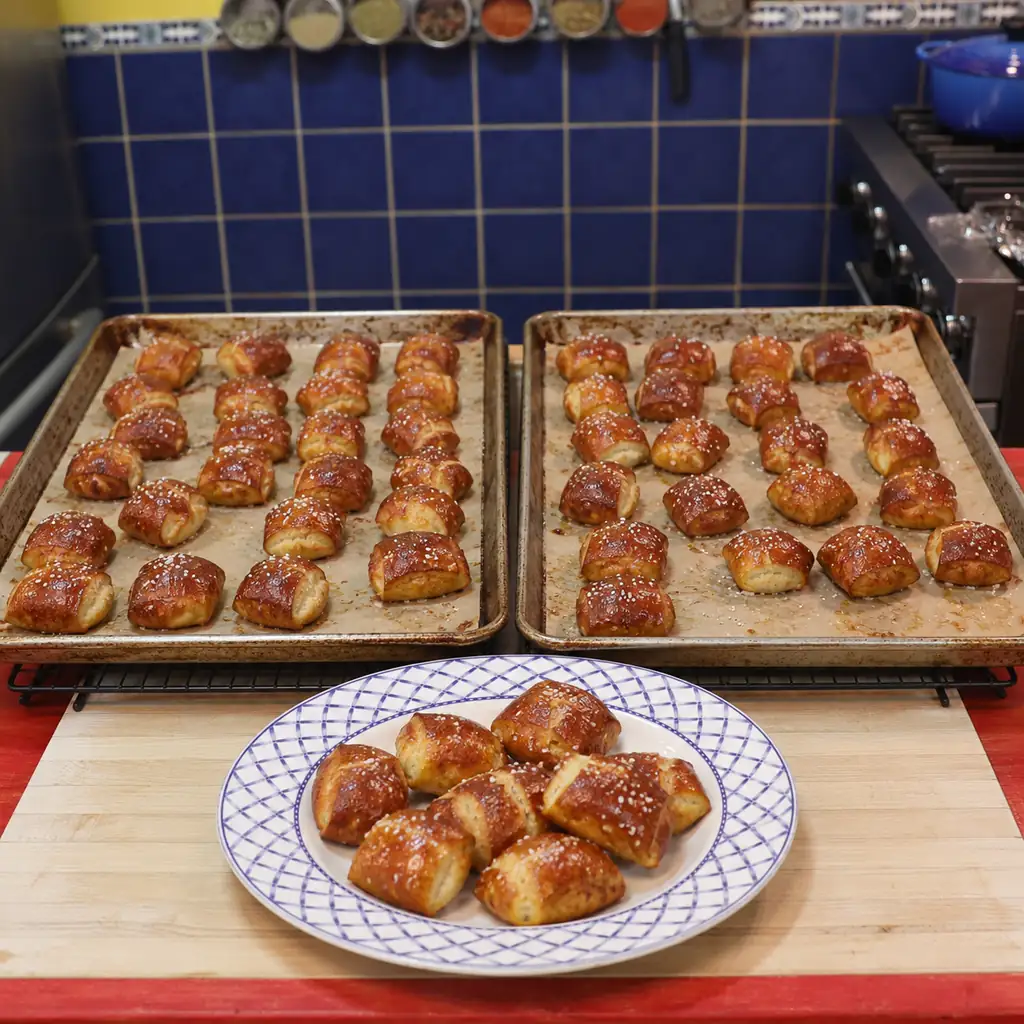
Heat the oven to 220°C, or 425°F, using conventional heat. Bake both trays for approximately fourteen to eighteen minutes, swapping their positions halfway through, until the bites have a deep golden-brown surface and cooked bread centres. Ovens and tray materials vary, so start checking at fourteen minutes. I like a clear brown crust, but black patches mean they have gone too far. Break open one bite if the middle is uncertain: it should be bread-like, not sticky raw dough.
Let the bites settle on a rack for five minutes. For an optional softer finish, brush the batch with 15 g of melted butter while warm. They are best served soon after baking. A quick bread such as cottage cheese garlic breadsticks is another option for a sharing table, but it uses a different dough and does not replace this rise-and-bath process.
Serve, reheat, and troubleshoot
Plain mustard is a simple accompaniment. For more variety, offer a small bowl of cottage cheese garlic herb dip or tzatziki separately so the bread stays dry until eaten. I prefer putting out a modest warm portion and keeping the rest uncovered briefly on the rack rather than trapping all the steam under a lid. The bites contain wheat and dairy; check each dip separately for additional allergens.
Cool leftovers completely before sealing them. Keep them at cool room temperature for one day, or freeze for up to two months. Reheat thawed bites at 175°C, or 350°F, for five to eight minutes until warm. A little surface salt can dissolve during storage, which affects appearance without turning the bread into a failed batch. Dense centres usually point to insufficient rising, too much added flour, or underbaking. Work through those causes before changing several ingredients at once.
Homemade Soft Pretzel Bites with a Baking Soda Bath
Ingredients
- 500 g all-purpose flour about 4 US cups, plus a little only if needed
- 300 ml lukewarm water about 1¼ US cups, 38–43°C / 100–110°F or per yeast package
- 7 g active dry yeast 1 packet, about 2¼ teaspoons
- 15 g granulated sugar 1 tablespoon
- 8 g fine salt about 1¼ teaspoons
- 30 g unsalted butter melted and cooled (2 tablespoons)
- 2 litres water for bath about 8½ US cups
- 60 g baking soda for bath ¼ US cup
- 1 –2 teaspoons coarse salt for the surface to taste
- 15 g melted unsalted butter for finishing optional (1 tablespoon)
- Plain mustard for serving optional
Instructions
- Stir the lukewarm water, sugar, and yeast together. Rest 5–10 minutes until foamy. Replace inactive yeast mixture before continuing.
- Mix in the flour, fine salt, and 30 g cooled melted butter. Knead 8–10 minutes until smooth and flexible, adding only a little flour if essential.
- Cover in a lightly greased bowl and let rise about 60 minutes, until roughly doubled; allow longer in a cool kitchen.
- Heat the conventional oven to 220°C / 425°F. Line two trays with temperature-appropriate parchment and grease lightly.
- Divide dough into 8 pieces, roll each into a 24 cm / 9½-inch rope, and cut each into 8 pillows, about 64 bites. Rest resistant ropes 5 minutes before rolling further.
- Simmer 2 litres water in a deep pot. Reduce heat and gradually stir in baking soda, leaving headroom for foam. Poach 8–10 bites at a time for 30 seconds total. Drain with a slotted spoon onto trays and sprinkle with coarse salt.
- Bake 14–18 minutes, swapping tray positions halfway, until deep golden brown with cooked bread centres. Cool on a rack 5 minutes and optionally brush with 15 g melted butter.
- Serve warm with optional mustard. Cool leftovers completely before storing; reheat thawed bites at 175°C / 350°F for 5–8 minutes.