Lentil Walnut Bolognese with Mushrooms
This lentil walnut bolognese is a meatless tomato sauce with cooked brown lentils, finely chopped mushrooms, and walnut crumbs. I like the combination because each ingredient contributes a different texture: tender lentils, soft vegetables, and a little firmness from the nuts. The sauce is thick enough to cling to spaghetti without turning into a dry pile of legumes. The recipe makes six servings with pasta, and the sauce can also be prepared ahead for a less rushed dinner.
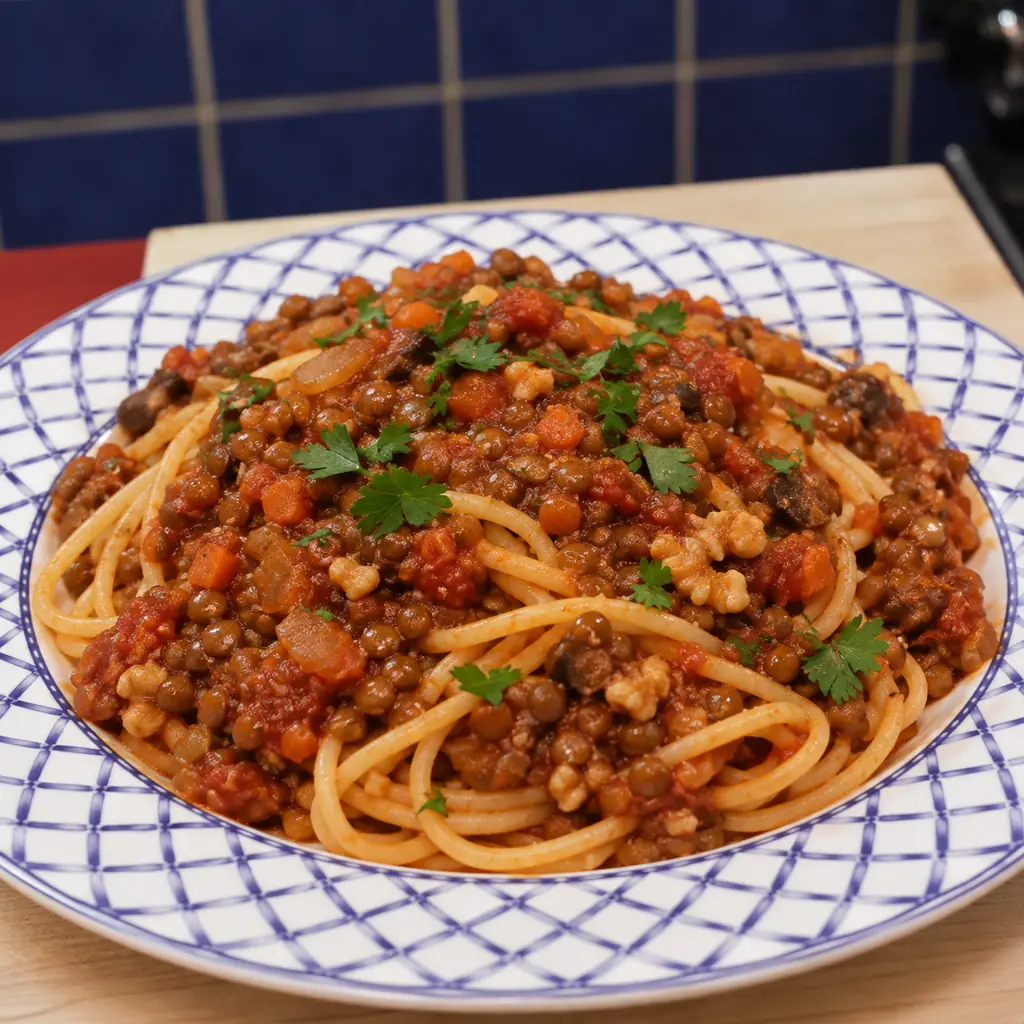
A vegetable sauce with its own character
This recipe uses the familiar structure of a slowly simmered tomato sauce, with a finely chopped onion, carrot, and celery base. It is a variation built around lentils and walnuts, rather than a claim to reproduce every detail of a traditional meat ragù. For the separate meat-based preparation, homemade bolognese sauce provides another direction. Here, the vegetables and legumes should remain recognisable enough to give the sauce its own character.
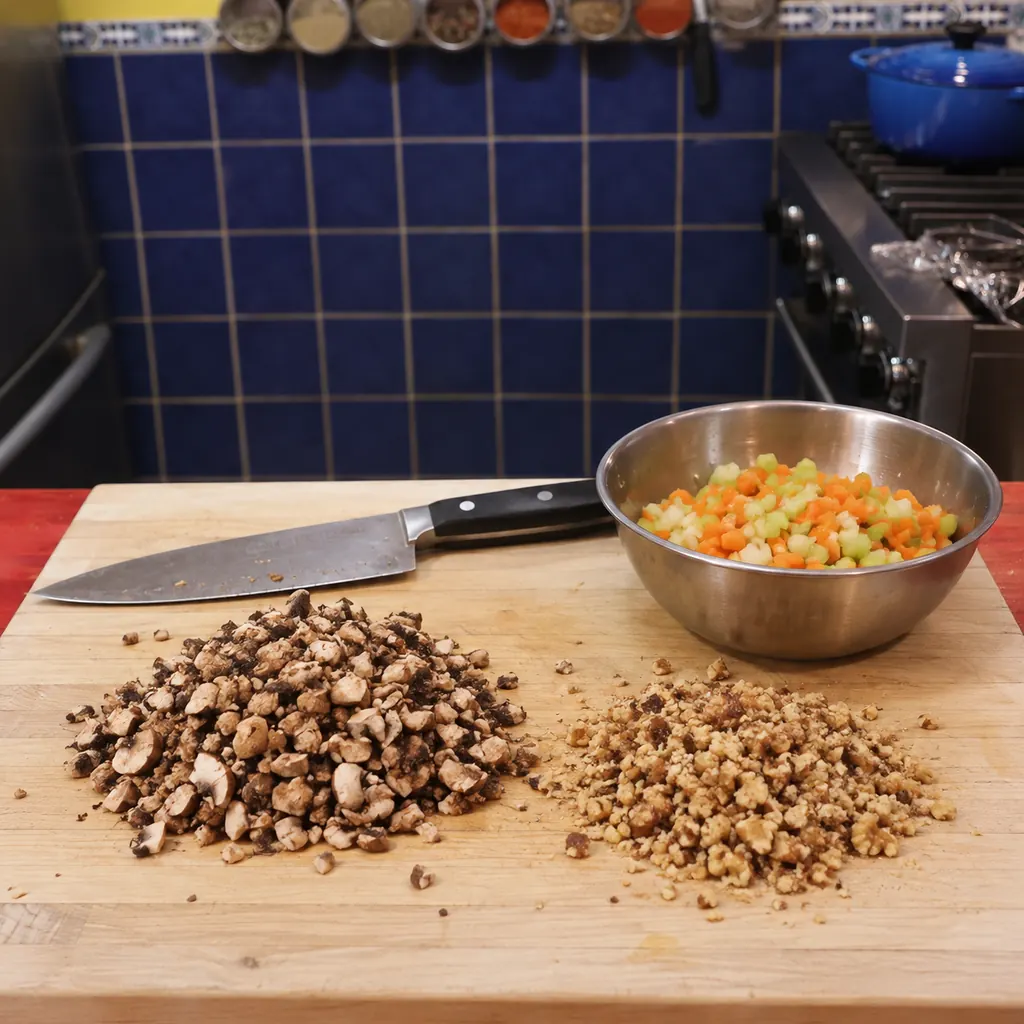
I prefer a combination of small pieces rather than blending everything until smooth. Large mushroom slices or whole walnut halves would make the sauce harder to distribute through long pasta. The goal is a cohesive spoonful that carries some tomato, lentil, mushroom, and nut together. A food processor can help chop, but use short pulses and work with the mushrooms and walnuts separately so neither becomes a wet paste.
Cook the lentils separately
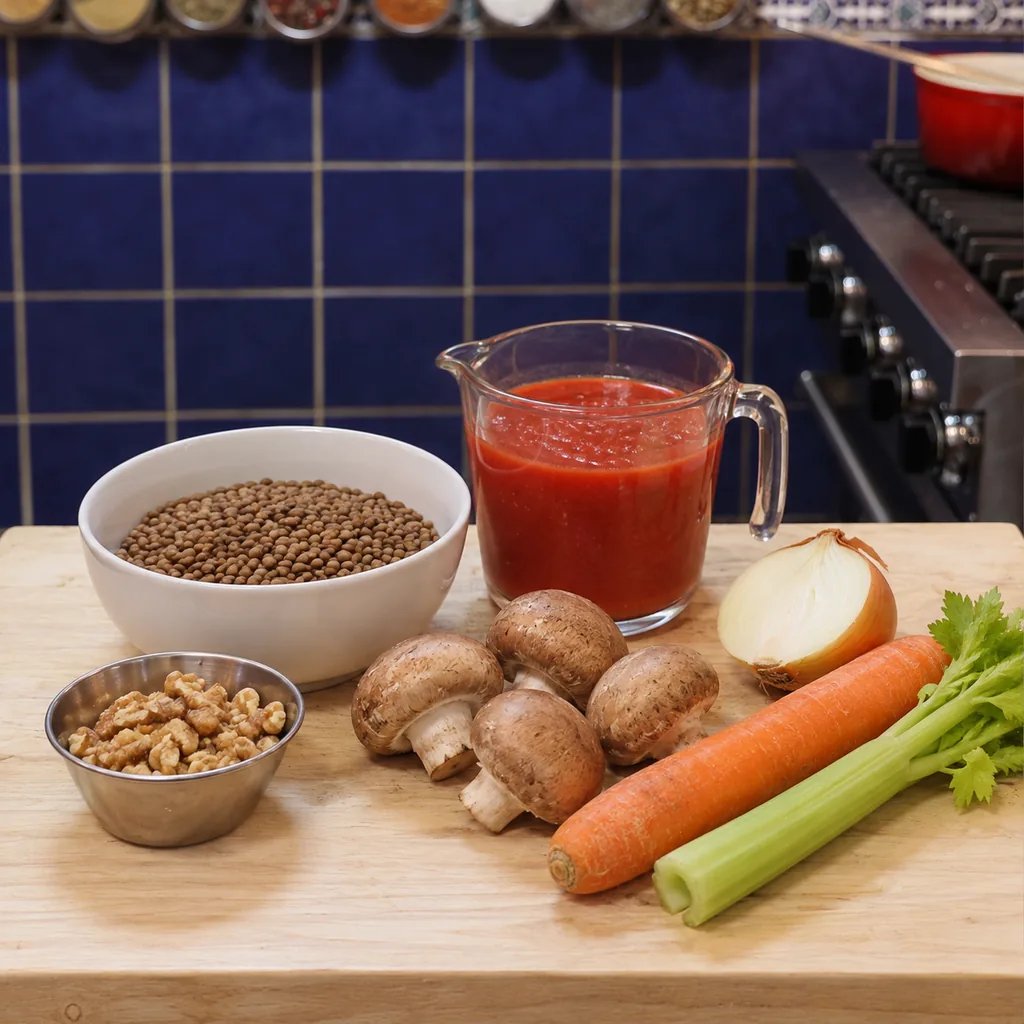
Use 160 g, about three quarters of a US cup, of dry brown or green lentils. Rinse them, check for any debris, and simmer in plenty of water according to the package, usually twenty to thirty minutes. Start checking early. They should be tender enough to eat but still hold their shape. Drain well before adding them to the tomato sauce so their cooking water does not dilute it unexpectedly.
Red split lentils soften and break down much more quickly, so they do not give the same result. I don’t use them as a direct replacement here. A canned alternative is about 400 g cooked, drained lentils; rinse and drain them before measuring. If you want a dish where lentils form the main broth-based preparation instead, homemade lentil soup with vegetables uses a different balance of liquid and vegetables.
Chop walnuts and mushrooms with care
Finely chop 250 g of mushrooms and 80 g of walnuts. I use ordinary brown mushrooms, wiping away visible dirt and trimming dry stem ends. Their moisture needs time to evaporate in the pot. The walnuts should look like coarse crumbs, with a few small pieces left for texture. Stop before they release enough oil to become nut butter, which would thicken the sauce in a different way.
Taste a walnut before using the batch. Old nuts can taste bitter or rancid, and simmering will not repair that flavour. Store the remaining bag as directed, preferably chilled if it will not be used soon. This sauce contains tree nuts throughout. Leaving a few walnuts off the finished plate does not remove the allergen, and substituting a different ingredient would require reconsidering both the flavour and texture of the recipe.
Give the vegetable base enough time
Heat two tablespoons of olive oil in a large heavy pot over medium heat. Add the finely diced onion, carrot, and celery, then cook for about ten minutes, stirring regularly. The pieces should soften rather than become crisp. I like to keep this cut small because firm carrot chunks would remain obvious against the cooked lentils. Lower the heat if the onion darkens before the carrot begins to soften.
Add the mushrooms and cook for another eight minutes, allowing the released moisture to reduce. Stir in the garlic for thirty seconds, then the tomato paste for two minutes. This stage should smell savoury without catching at the base. If the pot becomes too dry, use a small splash of the measured broth to loosen it. Do not keep adding unmeasured oil to compensate for heat that is too high.
Simmer the tomatoes before adding the nuts
Pour in the passata and vegetable broth, scraping the bottom of the pot. Add oregano, thyme, and a bay leaf. Bring to a gentle simmer and cook uncovered for twenty-five minutes, stirring from time to time. The sauce should reduce gradually, with occasional small bubbles rather than vigorous splashing. A splatter screen can help while still allowing moisture to escape. Keep a little water nearby to loosen the sauce if your pot reduces it unusually quickly.
Stir in the drained lentils, chopped walnuts, and soy sauce, then simmer for ten more minutes. I prefer adding the nuts at this point so they have time to soften slightly while retaining some texture. Remove the bay leaf and finish with red wine vinegar. Taste before adding the final salt, because broth, passata, and soy sauce all vary. The vinegar should lift the tomatoes without making the bowl taste sharply sour.
Finish the pasta in the sauce
Cook 400 g of dry spaghetti in a separate pot according to its package. Reserve a cup of pasta cooking water before draining. Add the pasta to the sauce, or combine individual portions in a wide pan, and toss gently with a splash of the reserved water. I like this brief mixing step because the sauce settles between the strands instead of sitting entirely on top. Use only enough water to loosen it.
Fresh pasta is also possible, but its weight and timing differ from dried spaghetti. The method for fresh pasta without a machine can guide a separate pasta project; prepare it before starting the final sauce stage. Do not leave cooked pasta waiting in a colander while finishing a long simmer. Keeping the sauce ready first gives you a more flexible order of work.
Serving the meal
Serve in warm plates with a little chopped parsley if desired. Grated cheese is optional; for a strictly meatless or vegan table, choose an appropriate product or omit it, and check the pasta and packaged seasonings as well. The sauce already contains a substantial mix of ingredients, so I don’t like hiding it under a heavy layer of toppings. Let the tomato and finely chopped vegetables remain visible.
A crisp romaine and endive salad offers a fresh side, while air fryer garlic bread can be prepared separately for anyone who wants bread. Neither is included in the recipe’s timing or calorie estimate. For another way to use the lentils left in the pantry, lentil quinoa salad with lemon Dijon dressing provides a different meal rather than another tomato pasta sauce.
Storage and texture questions
Cool leftovers promptly in shallow containers and refrigerate within two hours. Keep at 4°C or below, use within two to three days, and reheat the amount required to 74°C, or 165°F, throughout. Sauce stored separately from pasta is easier to loosen during reheating. Add a little water, stir along the bottom, and allow the thicker areas to heat fully. Avoid reheating the entire batch repeatedly for one small serving.
Freeze cooled sauce in meal-sized containers for up to two months for best quality, then thaw in the refrigerator. If the sauce tastes flat, check salt and acidity before adding more herbs. If it is watery, simmer uncovered a little longer before tossing with pasta. If too thick, add water gradually. These adjustments address the actual texture in the pot, which can vary with the brand of passata and how thoroughly the cooked lentils were drained.
Lentil Walnut Bolognese with Mushrooms
Ingredients
- 160 g about 3/4 US cup dry brown or green lentils, rinsed, or 400 g cooked and drained lentils
- 30 ml 2 tbsp olive oil
- 150 g 1 medium onion, finely diced
- 100 g 1 large carrot, finely diced
- 100 g about 2 stalks celery, finely diced
- 250 g 9 oz brown mushrooms, finely chopped
- 3 garlic cloves minced
- 30 g 2 tbsp tomato paste
- 700 g about 3 US cups tomato passata
- 360 ml 1 1/2 US cups low-sodium vegetable broth
- 5 ml 1 tsp dried oregano
- 2.5 ml 1/2 tsp dried thyme
- 1 bay leaf
- 80 g about 3/4 US cup walnuts, finely chopped into coarse crumbs
- 15 ml 1 tbsp soy sauce
- 15 ml 1 tbsp red wine vinegar
- 2.5 ml 1/2 tsp fine salt, or to taste
- 2.5 ml 1/2 tsp ground black pepper
- 400 g 14 oz dry spaghetti
- Optional garnish: chopped parsley and suitable grated cheese
Instructions
- Simmer dry lentils in plenty of water according to package, usually 20–30 minutes, until tender but intact. Drain well. For canned lentils, rinse, drain, and measure 400 g. Prepare vegetables and finely chop walnuts.
- Meanwhile, heat oil in a large heavy pot over medium heat. Cook onion, carrot, and celery about 10 minutes until softened. Add mushrooms for 8 minutes, letting their moisture reduce. Add garlic for 30 seconds and tomato paste for 2 minutes, stirring.
- Add passata, broth, oregano, thyme, and bay leaf. Simmer gently uncovered 25 minutes, stirring occasionally and adding a splash of water if too thick.
- Add drained lentils, walnuts, and soy sauce. Simmer 10 minutes. Remove bay leaf; stir in vinegar and adjust salt and pepper.
- Cook spaghetti separately according to package, reserving 240 ml (1 US cup) cooking water. Drain and toss with sauce, adding a little reserved water as needed. Garnish if desired and serve promptly.