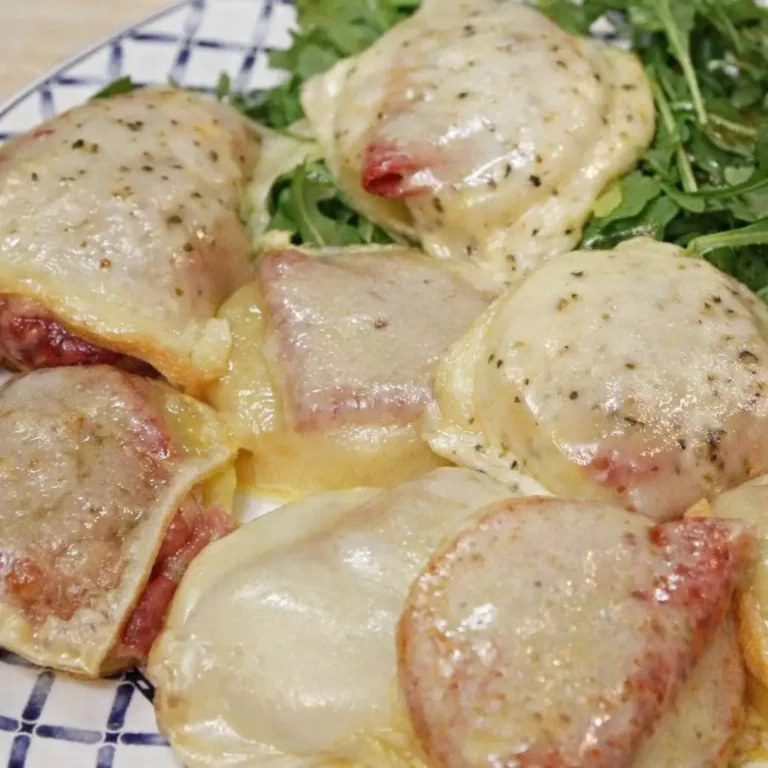
Traditional Duck and Pork Rillettes
Rich, rustic, and deeply savory, duck and pork rillettes are a slow-cooked French spread made by gently cooking meat until tender, then shredding it with enough fat to create a coarse, silky texture. Unlike a smooth pâté, rillettes stay fibrous and rustic, which makes them especially good for toast, crackers, or a simple charcuterie-style meal any time of year.
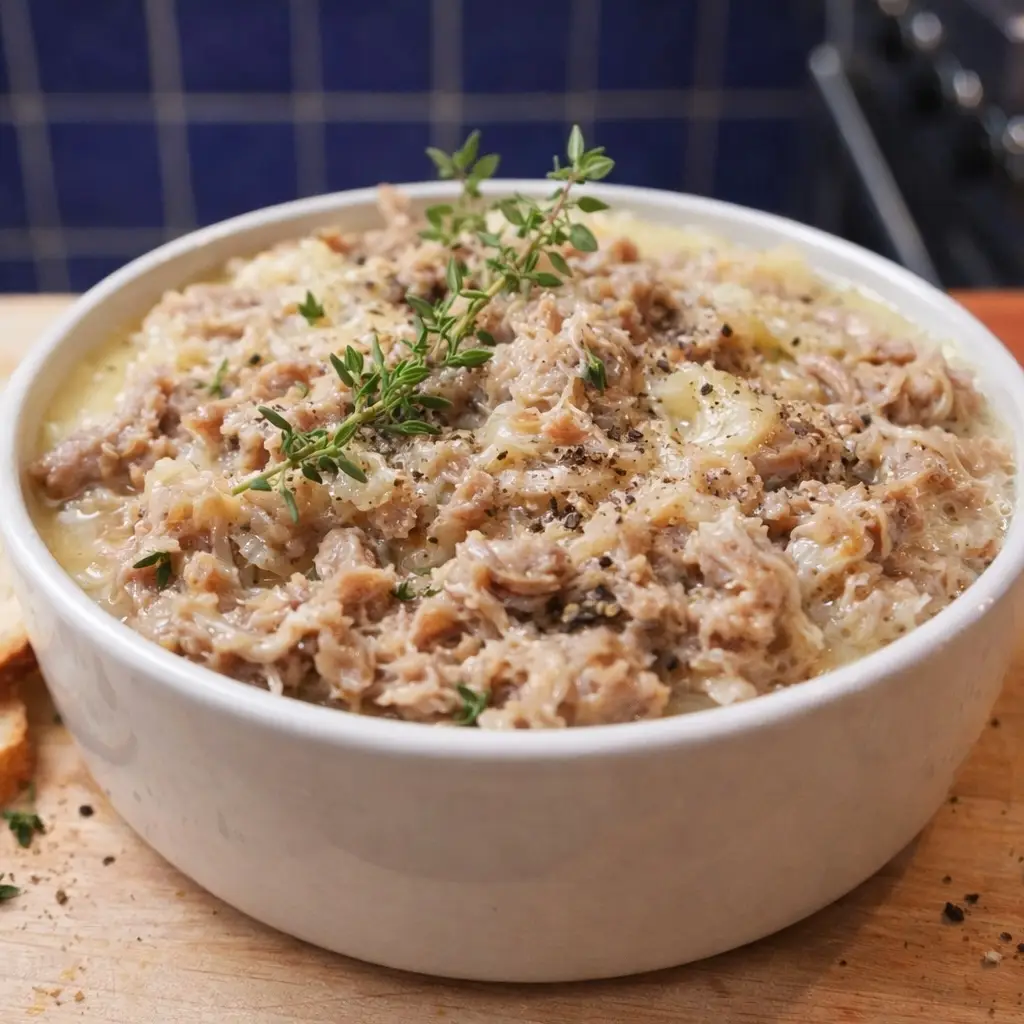
This version is based on my YouTube video, with a few adjustments since publication to make the proportions more precise and the final texture more reliable for home cooks. The goal is a true traditional rillette: flavorful, spreadable, and rich without becoming greasy or turning into a purée.
If you enjoy old-school French charcuterie and slow-cooked comfort food such as classic boeuf bourguignon, classic French cassoulet, or a good duck confit recipe, this is the same family of cooking: patience, gentle heat, and big flavor from simple ingredients.
What Makes This Rillette Different
This is not a quick lunch spread, not a whipped dip, and not a smooth terrine. It sits closer to traditional French country charcuterie, with a mix of duck and pork for a fuller flavor and a softer texture than duck alone. The pork jowl brings richness, while the duck gives the rillette its unmistakable character.
It also fills a different role than my authentic French duck rillettes because this version uses pork alongside the duck for balance, body, and better spreadability. If you want something more firmly in the pâté family, a rustic country pâté is a better match. This recipe is for those moments when you want something generous, traditional, and a little festive, but still practical enough to keep in the fridge for several days.
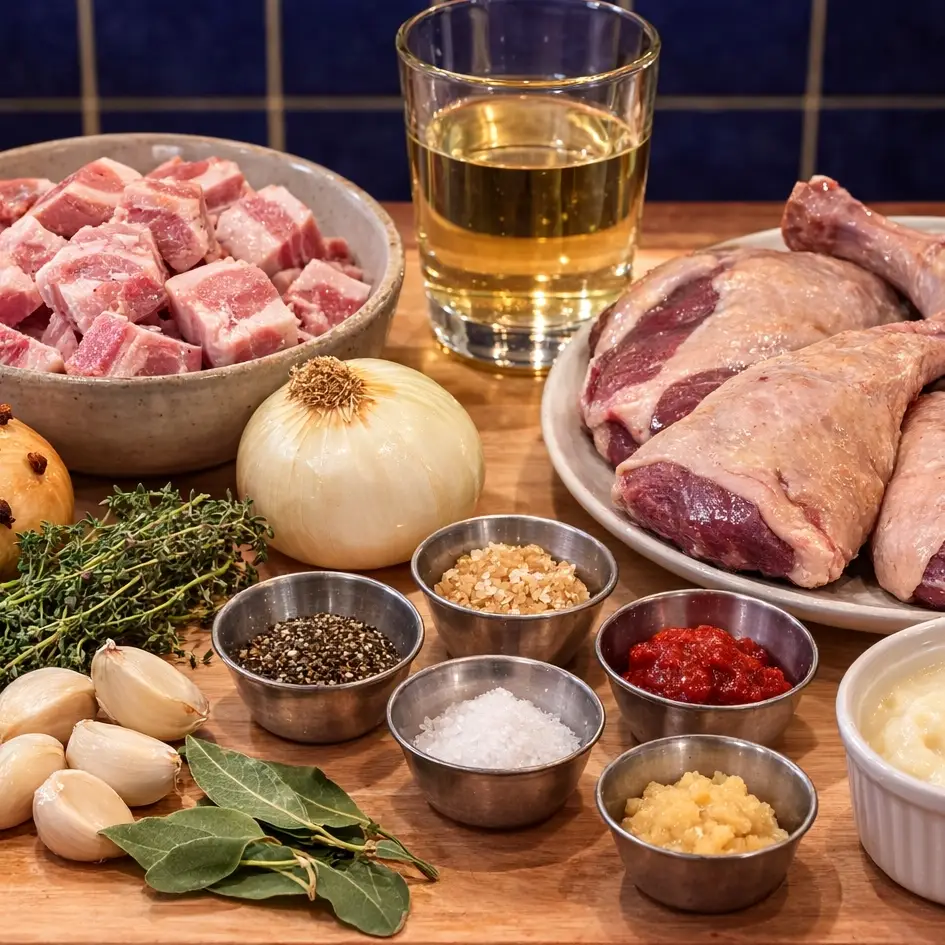
Ingredients and Proportions That Matter
The biggest thing that makes or breaks homemade rillettes is the fat balance. Too lean, and the meat dries out and crumbles instead of spreading. Too wet, and it tastes boiled rather than gently confited. For that reason, I made a few adjustments from the original video so the recipe lands in a reliable place.
Duck legs alone can vary a lot depending on size and fat content, so the combination of duck legs, pork jowl, and a final addition of duck fat gives a more stable result. The pork jowl is especially important here. It adds enough richness to support the duck, much like pork does in many classic slow-cooked French dishes, whether you are making stovetop cassoulet with duck and sausage or something more hearty and rustic like traditional homemade pot-au-feu.
A measured amount of salt also matters. In older recipes, seasoning is often described loosely, but here it needs to be more precise. Salt seasons the meat, helps it cure lightly overnight, and gives the finished rillettes their deeper, more developed taste.
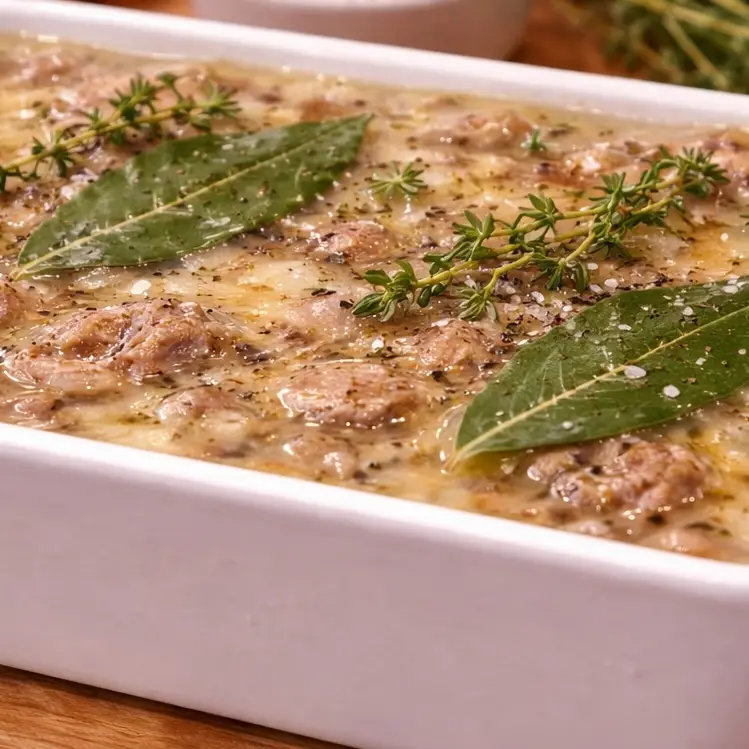
A Few Notes Before You Start
Use duck legs rather than duck breast. Legs have more connective tissue, more flavor, and more of the texture that makes rillettes work. Duck breast is better saved for something like duck breast with Dijon mustard cream or duck breast peppercorn sauce, where you want slices rather than a spread.
For the pork, pork jowl is ideal. If you cannot find it, use fatty pork belly. The point is to keep enough richness in the mixture so the meat shreds easily and stays tender after chilling.
Dry white wine adds aroma, but this recipe is not wine-forward. It is there to lift the flavor, not dominate it. The thyme, bay, garlic, sage, and clove-studded onion should remain in the background.
How to Make Traditional Duck and Pork Rillettes
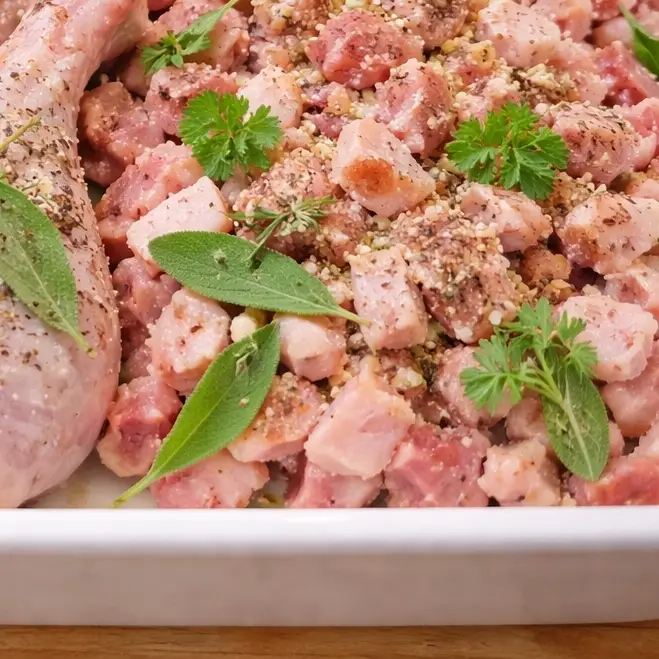
1. Cure the meat overnight
Season the duck legs with salt, cracked black pepper, garlic, thyme, and bay leaf. Place them skin side down in a deep dish. In a separate bowl, season the pork jowl with salt, cracked pepper, garlic, and sage. Cover both and refrigerate overnight.
This step matters. It is not just a marinade. It gives the meat time to absorb salt and aromatics, and that makes the finished rillette taste more complete.
2. Prepare the duck and pork
The next day, remove most of the herbs and garlic by hand rather than rinsing the meat under water. Debone the duck legs and reserve the bones. Cut the duck meat into small cubes. Trim the pork if needed and cut it into similar-sized cubes.
Keeping the pieces fairly even helps everything cook at the same pace.
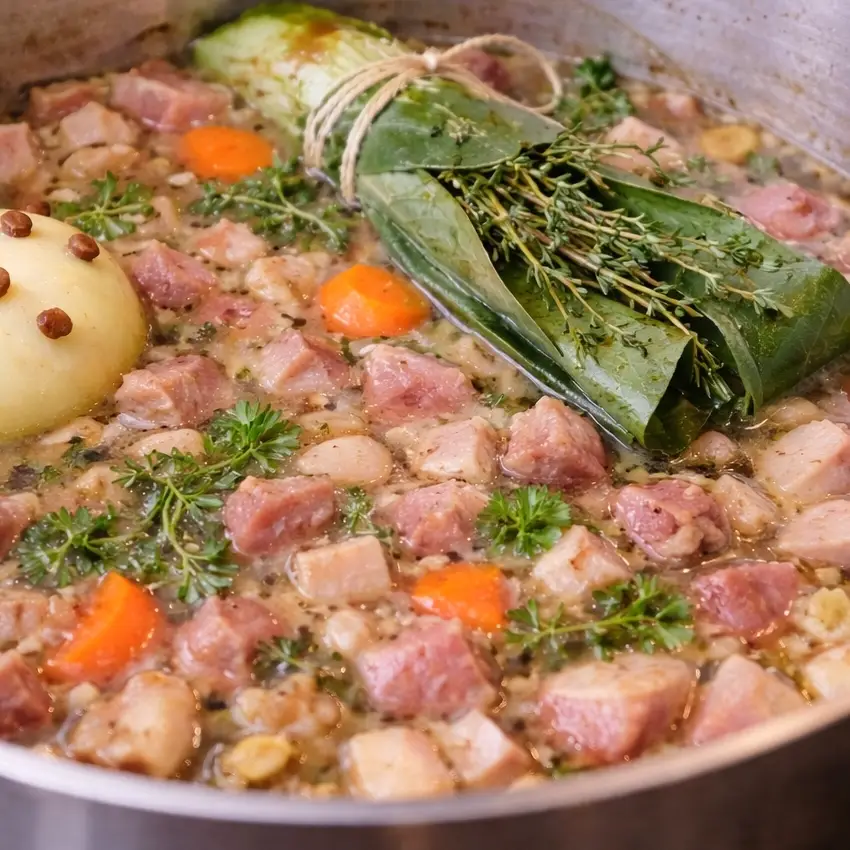
3. Build the cooking base
Strain the reserved wine and seasoning liquid. Put the duck and pork into a heavy pot or Dutch oven, then add the strained liquid, the reserved duck bones, chopped carrots, and a clove-studded onion. Add a bouquet garni made with leek leaf, thyme, bay, and sage.
You do not want the meat swimming in liquid. There should be enough to gently cook and perfume it, but not so much that it becomes a stew.
4. Cook low and slow
Bring the pot just to a simmer, then lower the heat and cook very gently for about 2 1/2 to 3 hours. Skim the surface now and then, especially during the first hour. The meat should become very tender but not aggressively boil.
This same low-and-slow principle is what gives depth to braises like braised beef cheeks with red wine or oven braised beef bourguignon. Gentle heat gives you tenderness without roughing up the texture.
5. Remove the aromatics and reduce the liquid
Once the meat is fully tender, remove the onion, carrots, bouquet garni, and duck bones. Strain the cooking liquid and simmer it separately until slightly reduced and more concentrated.
That reduced liquid is full of flavor. It helps season the shredded meat, but it must be reduced so it enriches rather than waters down the rillette.
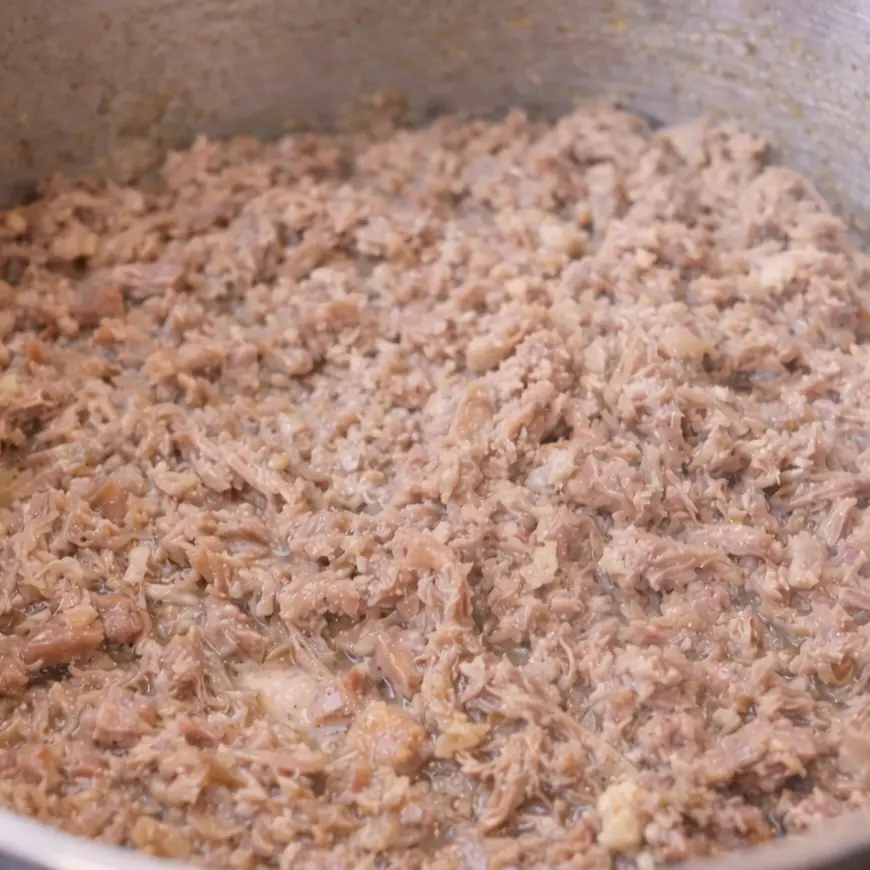
6. Shred the meat
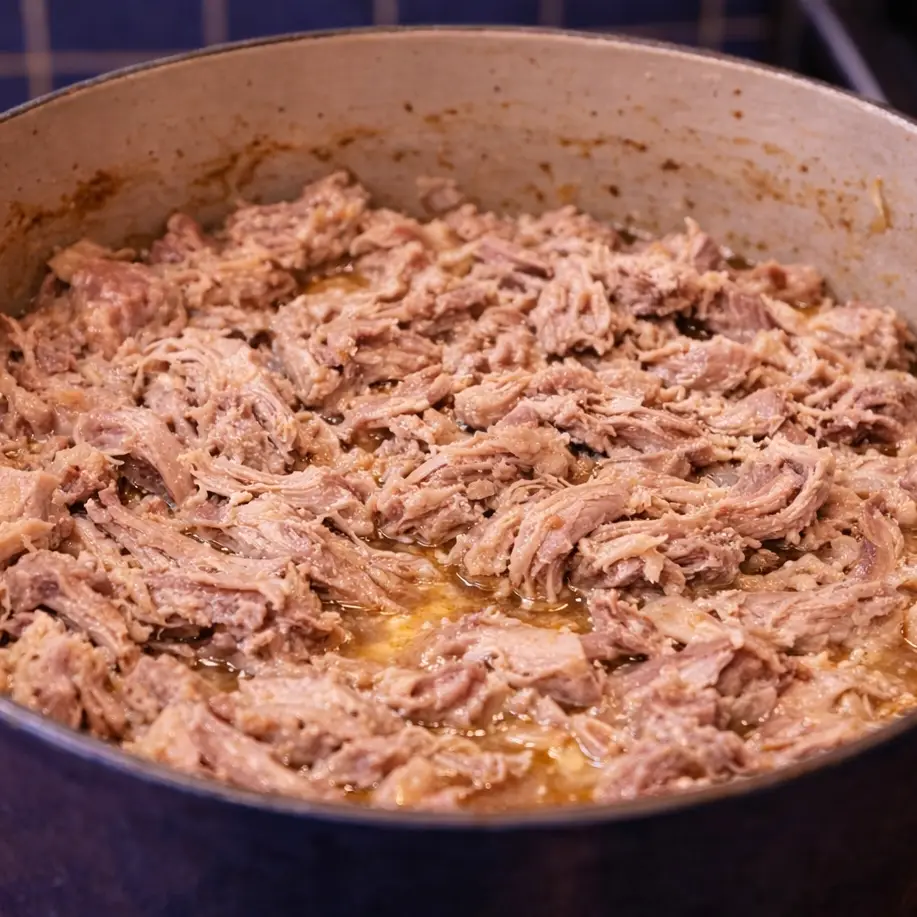
Transfer the cooked meat to a bowl or wide pot. Add a little of the reduced cooking liquid back in, then gently crush and shred the meat with a potato masher, spoon, or spatula. Do not blend it. Do not mash it into a smooth paste.
The ideal texture is somewhere between shredded confit and coarse spread. You want visible fibers and small chunks, not pâté.
7. Add duck fat until the texture is right
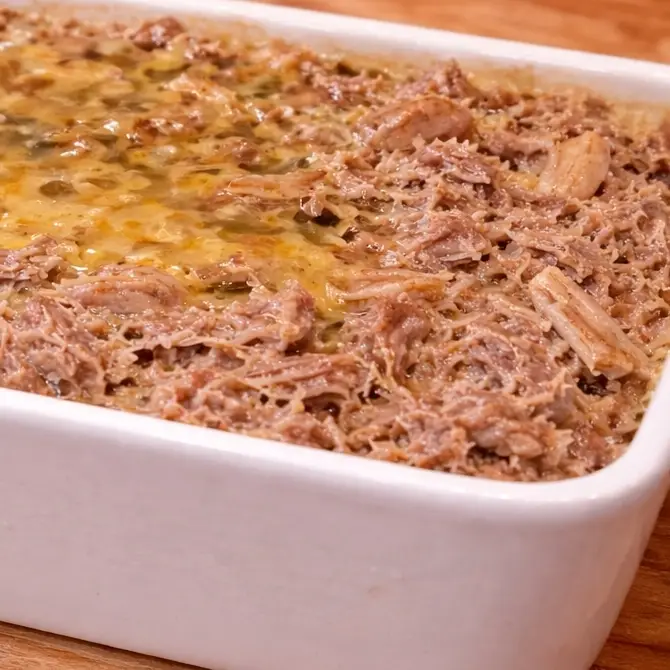
Stir in melted duck fat gradually. This is the finishing step that gives the rillette its classic spreadable body. Add enough for the mixture to hold together and feel supple, but stop before it turns oily.
This is the most important texture adjustment in the whole recipe. Some batches of duck and pork release more fat than others, so the final amount may vary slightly.
8. Chill, pack, and rest
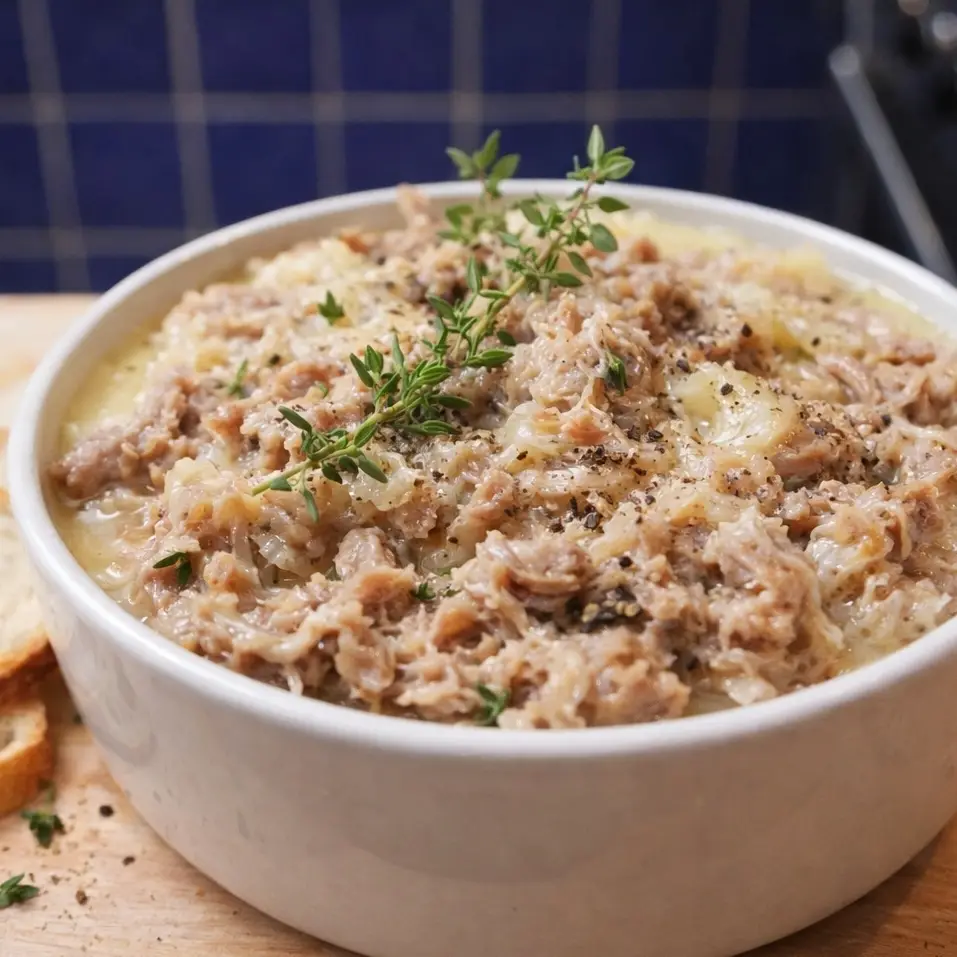
Pack the rillettes into jars, ramekins, or a terrine dish. Press lightly to remove air pockets. If you want a more traditional finish, pour a thin layer of melted duck fat over the top before chilling.
Refrigerate until firm. The texture improves after several hours, and the flavor is often even better the next day.
Serving Ideas
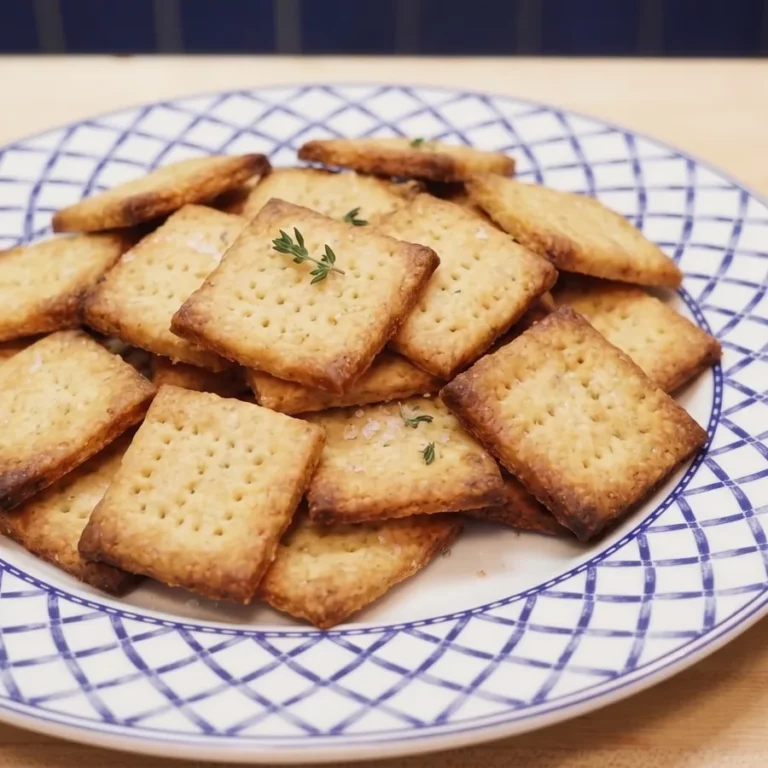
Duck and pork rillettes are rich, so keep the accompaniments simple. Toasted baguette, cornichons, pickled onions, mustard, and a crisp salad are perfect. If you want to turn it into a fuller spread, you can add a vegetable side such as oven roasted mixed vegetables or something potato-based like Parisian potatoes recipe or pommes parisiennes with bacon.
For a lighter contrast, a crunchy salad works beautifully. Something in the spirit of classic homemade grated carrot salad with mustard vinaigrette or homemade Greek salad cuts through the richness well.
Substitutions
Pork jowl can be replaced with pork belly if needed. The result will still be good, though jowl usually gives a softer, more luxurious finish.
If you do not have duck fat for the end, rendered pork fat can work, but the flavor will shift slightly. Duck fat keeps the profile more traditional.
If sage is not your favorite, reduce it rather than removing all the aromatics. Sage is strong, but in a small amount it adds depth to the pork.
If you cannot find whole duck legs, this is not the recipe to replace them with boneless skinless duck pieces. The bones, skin, and natural duck fat all contribute to the final result.
Texture and Nutrition Notes
This is hearty comfort food. It is rich in protein, rich in fat, and meant to be enjoyed in small portions, spread on bread or served as part of a larger table. That richness is exactly what makes it satisfying and traditional.
Because it is served cold or cool, texture matters as much as flavor. A good rillette should not feel hard from the fridge, but it should hold together when spread. If it becomes too firm after chilling, let it sit at room temperature for a few minutes before serving.
FAQ
What is the difference between rillettes and pâté?
Rillettes are shredded or crushed meat with a rustic texture. Pâté is usually smoother and more uniform.
Can I make this ahead?
Yes. In fact, it is better made ahead. The flavor improves after chilling overnight.
How long does it keep?
Properly chilled in a sealed container, it keeps several days in the refrigerator. A thin fat seal on top helps preserve it longer.
Can I freeze rillettes?
Yes. Freeze in small containers and thaw in the refrigerator.
Why is my rillette dry?
It usually means the meat was too lean, the liquid was reduced too far, or not enough finishing fat was added.
Why is my rillette greasy?
Too much duck fat was added at the end, or the meat was not shredded enough to absorb and hold the fat properly.
What to Serve With / Suggested Posts
For more traditional French comfort food, try classic boeuf bourguignon, stovetop cassoulet with duck and sausage, or traditional homemade pot-au-feu.
For duck dishes in the same flavor world, see authentic French duck rillettes, duck confit recipe, and duck breast with Dijon mustard cream.
For sides that balance the richness, pair it with oven roasted mixed vegetables, Parisian potatoes recipe, pommes parisiennes with bacon, or homemade Greek salad.
Traditional Duck and Pork Rillettes
Ingredients
- 4 duck legs
- 1 1/2 lb pork jowl or fatty pork belly
- 6 cloves garlic crushed
- 2 bay leaves torn
- 4 sprigs thyme
- 4 sage leaves
- 1 tbsp kosher salt
- 1 1/2 tsp cracked black pepper
- 1 cup dry white wine
- 1 onion peeled
- 6 whole cloves
- 2 carrots roughly chopped
- 1 leek leaf
- 3/4 to 1 cup melted duck fat as needed
Instructions
- Season the duck legs with half the salt, half the pepper, half the garlic, thyme, and bay leaf. Season the pork jowl with the remaining salt, pepper, garlic, and sage. Cover and refrigerate overnight.
- The next day, remove most of the aromatics from the meat. Debone the duck legs and reserve the bones. Cut the duck meat and pork into small cubes.
- Strain the reserved wine and seasoning liquid into a heavy pot. Add the duck, pork, duck bones, carrots, and onion studded with cloves. Make a bouquet garni with the leek leaf, extra thyme, bay, and sage, then add it to the pot.
- Bring just to a simmer, then cook very gently for 2 1/2 to 3 hours, skimming occasionally, until the meat is very tender.
- Remove the onion, carrots, bouquet garni, and bones. Strain the cooking liquid and reduce it slightly in a separate saucepan.
- Transfer the meat to a bowl or wide pot. Add a little reduced liquid and shred gently with a potato masher or spoon until coarse and spreadable.
- Stir in melted duck fat little by little until the texture is rich and supple.
- Pack into jars or a terrine dish. Top with a thin layer of duck fat if desired. Chill until firm before serving.
Video
Notes
Serving Ideas
Duck and pork rillettes are rich, so keep the accompaniments simple. Toasted baguette, cornichons, pickled onions, mustard, and a crisp salad are perfect. If you want to turn it into a fuller spread, you can add a vegetable side such as oven roasted mixed vegetables or something potato-based like Parisian potatoes recipe or pommes parisiennes with bacon. For a lighter contrast, a crunchy salad works beautifully. Something in the spirit of classic homemade grated carrot salad with mustard vinaigrette or homemade Greek salad cuts through the richness well.Substitutions
Pork jowl can be replaced with pork belly if needed. The result will still be good, though jowl usually gives a softer, more luxurious finish. If you do not have duck fat for the end, rendered pork fat can work, but the flavor will shift slightly. Duck fat keeps the profile more traditional. If sage is not your favorite, reduce it rather than removing all the aromatics. Sage is strong, but in a small amount it adds depth to the pork. If you cannot find whole duck legs, this is not the recipe to replace them with boneless skinless duck pieces. The bones, skin, and natural duck fat all contribute to the final result.FAQ
What is the difference between rillettes and pâté?
Rillettes are shredded or crushed meat with a rustic texture. Pâté is usually smoother and more uniform.Can I make this ahead?
Yes. In fact, it is better made ahead. The flavor improves after chilling overnight.How long does it keep?
Properly chilled in a sealed container, it keeps several days in the refrigerator. A thin fat seal on top helps preserve it longer.Can I freeze rillettes?
Yes. Freeze in small containers and thaw in the refrigerator.Why is my rillette dry?
It usually means the meat was too lean, the liquid was reduced too far, or not enough finishing fat was added.Why is my rillette greasy?
Too much duck fat was added at the end, or the meat was not shredded enough to absorb and hold the fat properly.🔗 Useful Links
🛒 Michel Dumas Shop : Explore our kitchen essentials, including aprons and knives.
🌐 Linktree : Access all our important links in one place.
📱 YouTube | Instagram | Facebook | TikTok : Follow us for the latest recipes and culinary tips.