Easy Beef Hachis Parmentier, A Hearty French Shepherd’s Pie
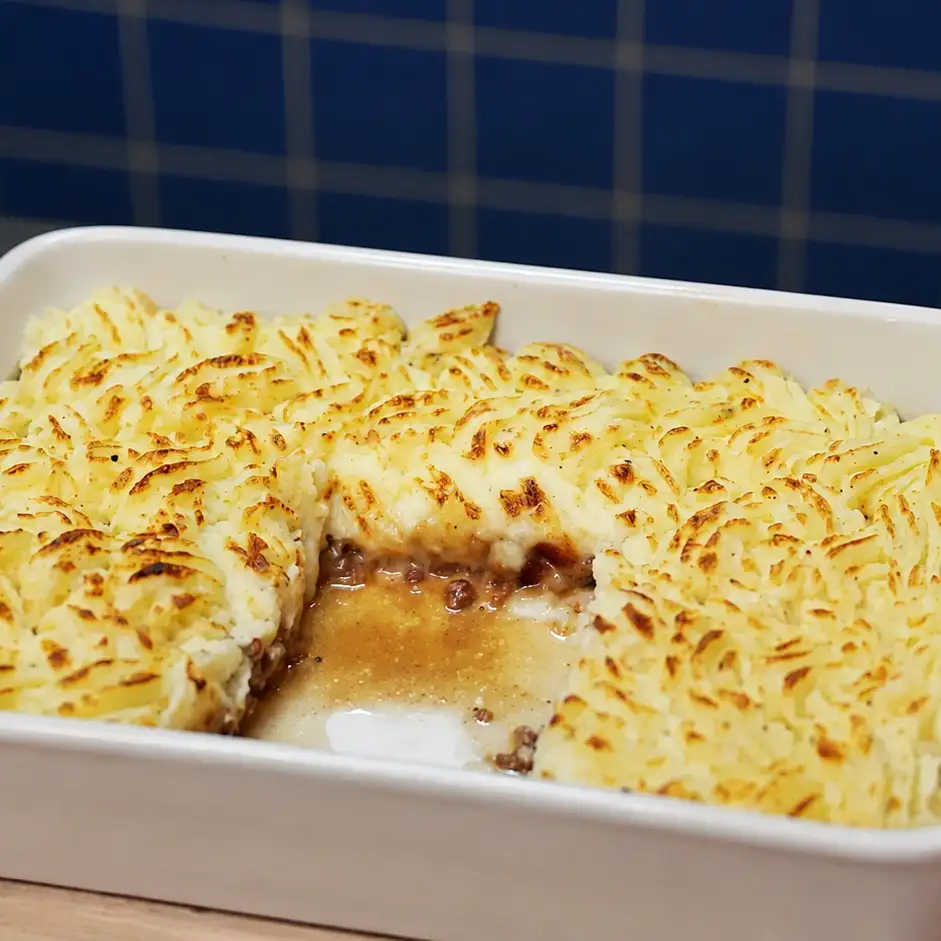
This beef hachis parmentier is based on my YouTube video, with a few adjustments since publication to make the proportions easier to reproduce at home. The spirit stays the same: a strong, generous meat filling, a buttery potato purée, and a quick trip under the broiler until the top takes on that golden gratin color.
Hachis parmentier is a French baked dish made with seasoned chopped or ground meat covered with mashed potatoes. It is close to cottage pie or shepherd’s pie, but this version leans more French bistro than pub-style, with garlic, onions, basil, duck fat, and a little veal demi-glace or beef stock to keep the filling moist. I make it when I want a real comfort food dinner that still feels like proper cooking.
The reason this version works is the balance between the beef and the potatoes. The mistake to avoid is making the meat layer dry, because then the whole dish eats heavy even if the purée is good. What I look for here is a filling that smells like browned beef and sweet onions, with just enough reduced stock to make it glossy without turning into soup.
Why I Make It This Way
I prefer to cook the potatoes in salted water from cold because the texture comes out more even. If the water is already boiling, the outside of the potato pieces can soften before the middle has had time to cook through. Bigger pieces also help because they do not absorb as much water.
For the meat, I use medium ground beef or freshly chopped beef when possible. Lean beef can work, but it needs a little help from fat or stock. In the video, the beef had enough natural fat, so it browned nicely without extra oil. For a reliable home version, I still keep duck fat for the onions and a small amount of demi-glace or reduced beef stock for the filling.
This is not the same as my duck hachis parmentier, which is richer and more festive. This one is the beef version, more economical, more everyday, and easier to make with ingredients found in most Canadian and American grocery stores. It is also different from a creamy casserole like hobo casserole with ground beef, because the potato layer is a real mashed potato topping, not sliced potatoes or a shortcut topping.
Ingredients You Need
For the potato layer, use yellow potatoes. Yukon Gold potatoes are a good choice in Canada and the United States because they mash smoothly without becoming watery too quickly. Russets can also work, but the purée will be fluffier and a little less buttery in texture.
For the beef layer, use medium ground beef, ideally around 15% to 20% fat. If the beef is very lean, the filling can taste dry even if the seasoning is correct. The onions are important here too. They should soften slowly until they smell sweet and lose their raw bite.

The demi-glace or beef stock is small but important. It gives the meat that rounded, brown-sauce depth. If you want to understand the same basic idea in sauce form, my guide to homemade brown gravy explains why reduction and seasoning matter so much.
The basil is not traditional in every hachis parmentier, but I like it here. It brings a fresh note to a dish that could otherwise be only beef, potato, butter, and onion.
Step-by-Step Instructions
Start with the potatoes. Cut them into large chunks, place them in a pot, and cover them with cold water. Salt the water well. The water should taste seasoned, not aggressively salty, but enough that the potatoes do not come out flat.


the pot to a boil, then cook until the potatoes are tender all the way through. A knife should slide into the center without resistance. If the potato breaks apart in the water, it has gone a little too far, but it can still be saved. Just drain well and let the steam escape before mashing.


While the potatoes cook, prepare the onions. Dice them fairly small so they disappear into the beef instead of staying in large pieces. If onion prep slows you down, my guide on how to cut an onion finely is useful for this type of recipe.


Chop the garlic and basil together, but do not turn them into a wet paste. The garlic should be fine enough to cook into the filling. The basil should still look chopped, not bruised into a green purée. If garlic often turns bitter in your pan, the same principle from mincing garlic without burning it applies here: add it after the onions have softened, not at the very beginning.


Drain the cooked potatoes, then return them to the warm pot. Add butter, pepper, a small pinch of nutmeg, and enough cream to make the mash smooth. I prefer to mash first, then loosen with cream, because it gives more control. The purée should be thick enough to hold marks from a spoon or piping bag, but soft enough to spread without tearing the meat layer underneath.


Do not overmix the potatoes. Once the cream is incorporated and the texture looks smooth, stop. If you beat the potatoes too much, the purée can become elastic and gluey.
Next, cook the onions in duck fat until softened. They should not be raw and crunchy, and they do not need to be dark brown. Look for a light golden color at the edges and a sweet smell coming from the pan. Add the garlic and basil mixture and cook briefly, just until fragrant.


In a separate hot pan, brown the beef. Spread it out, let it touch the pan, then break it apart. If you stir constantly from the first second, the meat steams instead of browning. You know it is going right when the sound changes from wet sizzling to a sharper frying sound and the beef starts to leave little browned bits in the pan.


Season the beef, then add the onion mixture. Add the demi-glace or beef stock and let it reduce until the filling looks moist and glossy. It should not be swimming in liquid. It should hold together when pushed with a spoon. Taste before assembling. This dish has potatoes, cream, butter, and beef, so the seasoning has to be clear. My general method for how to season a recipe properly is especially useful for dishes like this, where salt gets divided across several layers.
Spread the beef mixture in a baking dish. Add the mashed potatoes on top. You can pipe the potatoes with a star tip like in the video, or simply spread them with a spatula and make ridges with a fork. The ridges matter because they brown first under the broiler.
If everything is still hot, broil the dish for about 5 to 8 minutes until the top is golden. If the dish has cooled down or was made ahead, bake it first at 375°F until hot in the center, then broil briefly to color the top.

How This Recipe Is Different From Similar Recipes
This beef version is the straightforward comfort food one. It is not the duck version, not a cheesy potato casserole, and not a one-pan skillet dinner. It is built in layers and finished like a gratin.
For a quicker ground beef dinner, something like easy ground beef dinner ideas is a better place to look. For a more North American casserole feeling, tater tot casserole goes in a different direction with a crisp frozen potato topping. For a more saucy beef dish, beef tips with gravy is closer to a brown sauce dinner than a potato-topped bake.
This recipe sits in the middle: simple ingredients, but cooked with a little attention. It is hearty, protein-rich from the beef, and definitely a comfort food meal rather than a light salad dinner. I keep the portion size reasonable because the purée has butter and cream, and the meat is not extra-lean.
Substitutions
Use olive oil or butter if you do not have duck fat. Duck fat gives a deeper flavor, but the recipe still works without it.
Use beef stock instead of demi-glace. The important part is to reduce it until the filling is moist, not watery.
Use dried basil only if necessary. Fresh basil gives a better aroma. If using dried basil, use a small amount because it can taste dusty when overused.
Use Yukon Gold, yellow potatoes, or russet potatoes. Yukon Gold gives the best creamy texture. Russets make a lighter mash but can become dry if not enough butter or cream is added.
Use ground lamb if you want something closer to shepherd’s pie. Use leftover roast beef if it is chopped finely and moistened with stock.
Use a fork instead of a piping bag. A forked surface browns very well and is easier for everyday cooking.
For dairy-free, use olive oil and unsweetened oat cream or another neutral cooking cream. The flavor changes, but the structure still works.
What to Serve With It
This is already a full meal, so I usually keep the side simple. A green salad with a sharp vinaigrette is enough because the dish itself is rich.
For a bigger comfort food dinner, serve smaller portions beside something roasted or saucy from my collection of easy beef recipes for weeknight dinners. If you want to stay in a French-style dinner mood, the list of French beef recipes and bistro classics has good matches.
I would not serve this with another heavy potato dish unless the portions are small, but if you are planning a holiday-style meal and want a separate potato side for the table, traditional gratin dauphinois fits the same French comfort food family.
For portion planning, especially if this is part of a larger dinner, the portion guide per person helps keep the meal balanced.
FAQ
Can I make hachis parmentier ahead of time?
Yes. Assemble the dish, cover it, and refrigerate it. Since it will be cold, do not rely on broiling only. Bake at 375°F until hot in the center, then broil for a few minutes to brown the top.
Can I freeze it?
Yes, but the mashed potato texture can change slightly after freezing. Let the dish cool completely, wrap it well, and freeze. Reheat from thawed for the best texture.
What beef should I use?
Medium ground beef works best. Extra-lean beef can make the filling dry unless you add more fat or stock.
Can I use leftover mashed potatoes?
Yes. Warm them slightly and loosen them with a little cream or milk before spreading. Cold mashed potatoes can be stiff and hard to spread over the meat.
Why is my filling watery?
There was probably too much stock or it was not reduced enough. The meat should look moist and glossy, not saucy like soup.
Why is my mashed potato topping gluey?
The potatoes were likely overmixed. Mash until smooth, add cream, mix just enough, then stop.
Can I add cheese on top?
Yes, but this version does not need it. If using cheese, add a small handful of grated Gruyère, cheddar, or Parmesan before broiling.
Is this the same as shepherd’s pie?
It is similar, but not exactly. Shepherd’s pie usually uses lamb, cottage pie uses beef, and hachis parmentier is the French version with mashed potatoes and seasoned chopped meat.

Easy Beef Hachis Parmentier, A Hearty French Shepherd’s Pie
Ingredients
- For the mashed potatoes
- 2 ½ lb yellow potatoes peeled if desired and cut into large chunks
- 10 cups cold water or enough to cover
- 1 ½ tbsp salt for the potato water
- 6 tbsp salted butter
- ½ cup heavy cream plus more if needed
- 1 small pinch grated nutmeg
- Black pepper to taste
- Salt only if needed after tasting
- For the beef filling
- 1 ¾ lb medium ground beef
- 2 large onions finely diced
- 5 to 6 garlic cloves chopped
- ¼ cup fresh basil leaves loosely packed
- 1 tbsp duck fat butter, or olive oil
- 2 tbsp veal demi-glace or ⅔ cup beef stock reduced in the pan
- Salt to taste
- Black pepper to taste
Instructions
- Place the potatoes in a large pot and cover with cold water. Add the salt and bring to a boil.
- Cook for about 25 to 30 minutes, or until a knife slides easily into the center of the potatoes.
- While the potatoes cook, finely dice the onions. Chop the garlic and basil together, keeping the mixture coarse rather than pasty.
- Drain the potatoes well, then return them to the warm pot. Add the butter, nutmeg, and black pepper.
- Mash the potatoes, then add the cream and mix just until smooth. Taste and adjust the salt only if needed. Set aside.
- Heat the duck fat in a large pan. Add the onions and cook for about 8 to 10 minutes, until softened and lightly golden at the edges.
- Add the garlic and basil mixture. Cook for 1 minute, just until fragrant.
- In a separate hot pan, brown the ground beef. Break it apart and cook until no longer pink and lightly browned.
- Add the onion mixture to the beef. Stir in the veal demi-glace or reduced beef stock. Cook for about 5 minutes, until the filling is moist and glossy but not watery.
- Taste the beef filling and adjust salt and pepper.
- Spread the beef mixture into a baking dish. Cover with the mashed potatoes, either piped or spread with a spatula. Make ridges on top with a fork if not piping.
- If the dish is hot, broil for 5 to 8 minutes, until golden on top. If the dish has cooled, bake at 375°F for 20 to 25 minutes first, then broil for 3 to 5 minutes.
- Let rest for 5 minutes before serving.
Video
Notes
FAQ
Can I make hachis parmentier ahead of time?
Yes. Assemble the dish, cover it, and refrigerate it. Since it will be cold, do not rely on broiling only. Bake at 375°F until hot in the center, then broil for a few minutes to brown the top.Can I freeze it?
Yes, but the mashed potato texture can change slightly after freezing. Let the dish cool completely, wrap it well, and freeze. Reheat from thawed for the best texture.What beef should I use?
Medium ground beef works best. Extra-lean beef can make the filling dry unless you add more fat or stock.Can I use leftover mashed potatoes?
Yes. Warm them slightly and loosen them with a little cream or milk before spreading. Cold mashed potatoes can be stiff and hard to spread over the meat.Why is my filling watery?
There was probably too much stock or it was not reduced enough. The meat should look moist and glossy, not saucy like soup.Why is my mashed potato topping gluey?
The potatoes were likely overmixed. Mash until smooth, add cream, mix just enough, then stop.Can I add cheese on top?
Yes, but this version does not need it. If using cheese, add a small handful of grated Gruyère, cheddar, or Parmesan before broiling.Is this the same as shepherd’s pie?
It is similar, but not exactly. Shepherd’s pie usually uses lamb, cottage pie uses beef, and hachis parmentier is the French version with mashed potatoes and seasoned chopped meat.🔗 Useful Links
🛒 Michel Dumas Shop : Explore our kitchen essentials, including aprons and knives.
🌐 Linktree : Access all our important links in one place.
📱 YouTube | Instagram | Facebook | TikTok : Follow us for the latest recipes and culinary tips.