Stuffed Duck with Bacon-Wrapped Stuffing, Roasted Vegetables, and Blueberry Duck Sauce
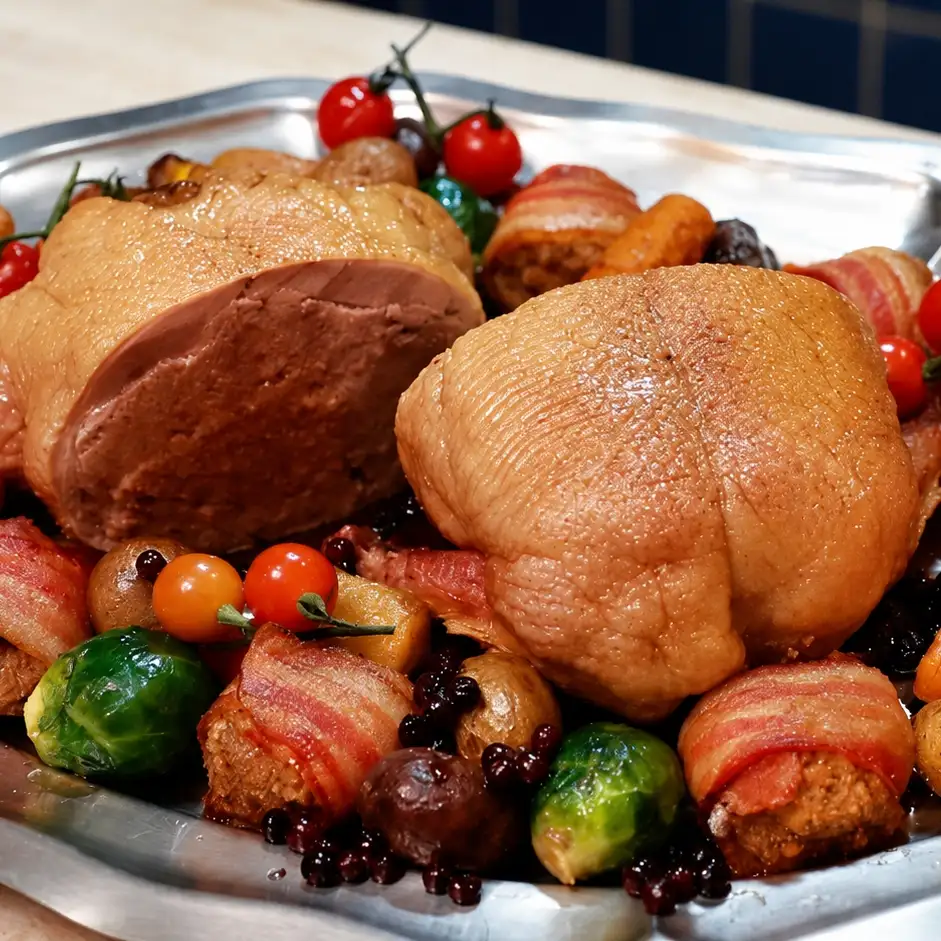
This stuffed duck is a deboned whole duck filled with a moist poultry and duck stuffing, roasted until sliceable, then served with bacon-wrapped stuffing balls, vegetables, and a rich blueberry duck sauce. It is more of a special dinner recipe than a quick weeknight roast, the kind of dish I make for Christmas, New Year’s, guests, or a proper family meal when I want the platter to look generous.
This recipe is based on my YouTube video, with a few adjustments since publication to make the proportions easier to reproduce at home. In the video, I cook by eye, but for a written recipe the stuffing needs clearer quantities, especially the breadcrumbs and milk. The mistake to avoid is packing too much farce inside the duck. The center must cook safely, and the duck should close naturally without stretching the skin.
What Makes This Stuffed Duck Different
This is not the same recipe as a straightforward classic roast duck. A regular roast duck is mostly about skin, fat rendering, and the flavor of the bird itself. This version is closer to a French-style festive roast, with the bones removed, the duck shaped around a poultry farce, and the extra stuffing turned into bacon-wrapped meatballs.
It is also different from a pâté or terrine, like my duck terrine with cognac. Here, the stuffing stays juicy and rustic, not smooth and pressed. And unlike a leftover duck dish such as duck hachis parmentier, this one starts with a whole bird and is built for serving in slices at the table.
I make it this way because the deboned duck is much easier to carve once it rests. You slice through meat and stuffing instead of fighting bones in front of everyone. It also cooks faster than a whole bone-in stuffed bird, but only if the stuffing is not packed too tightly.
A Few Important Notes Before You Start
The stuffing contains raw poultry, duck, eggs, and giblets, so the internal temperature matters more than the clock. I prefer to check the very center of the stuffing with a probe thermometer. You know it is ready when the middle reaches 165°F. I usually aim for 167°F for a small safety margin.
For more general roasting and poultry guidance, I like keeping an eye on proper doneness, especially when stuffing is involved. My internal cooking temperature chart is useful for that, and if you cook a lot of poultry, the chicken internal temperature guide gives the same practical reminder: do not guess when raw poultry is involved.
The texture of the farce is another important point. At this stage, it should feel sticky, moist, and soft, but not wet like batter. If you press it into a small loaf, it should hold its shape. If it cracks and feels dry, add a splash of milk. If it spreads and looks loose, add a little more breadcrumb.
Ingredients and Proportions
For a 4 lb duck, the stuffing uses about 1 3/4 lb of mixed meat. In the video, I use chicken thighs, duck breast, and the duck giblets, which gives a good balance. The chicken thighs keep the stuffing juicy, the duck breast keeps the flavor connected to the main bird, and the liver, heart, and gizzard add a deeper, old-school taste.
The adjusted part is the binder. Instead of leaving the breadcrumbs completely “by eye,” I use about 1 cup to start, then add a little more only if needed. Gluten-free breadcrumbs work well, but they can absorb differently depending on the brand. Some become pasty quickly. Add them gradually and give them a few minutes to hydrate before judging the texture.

The salt level is also important. Stuffing can taste flat if it is underseasoned. I use 2 teaspoons fine sea salt for this amount of meat and binder. Before stuffing the duck, cook one small spoonful of farce in a pan and taste it. That little test tells you more than smelling the raw mixture ever will. If it tastes good on its own, it will taste good inside the duck.
How to Make the Stuffing
Start with the onion, garlic, salt, pepper, eggs, milk, and breadcrumbs. I prefer to mix the binder first because it gives the breadcrumbs time to absorb the liquid. After a few minutes, it should look like a thick paste, almost like a soft panade.


Then add the ground meats. If you have a meat grinder, use it. If not, pulse the meat in a food processor, but keep it cold and do not turn it into puree. What I look for here is a coarse, sticky mixture where the pieces still have some texture. The farce should not look like baby food.

Mix with your hand until the meat and breadcrumb paste are evenly combined. It will feel cold and tacky. That is normal. Cover it and keep it refrigerated while you prepare the duck


Deboning and Filling the Duck
Deboning a duck sounds more difficult than it is, but it does take patience. Work slowly with the tip of the knife and stay close to the bones. The goal is to remove the carcass while keeping the skin intact. Small cuts in the meat are not a big problem, but holes in the skin can let stuffing escape.

If you do not want to debone the bird yourself, ask your butcher. There is no shame in that. The recipe still works beautifully.
Lay the deboned duck skin-side down. Add enough stuffing to form a long loaf down the center, then fold the duck around it. Do not force in all the farce. The duck should close without pulling hard on the skin. Save the extra stuffing for the bacon-wrapped balls.

Sew the opening with kitchen twine. The seam does not need to look perfect, but it needs to hold. If you are not comfortable sewing, you can use skewers and twine, but sewing gives a cleaner slice.

Roasting the Duck
Place the stuffed duck in a roasting pan with a small splash of stock or water. Rub a little duck fat over the top. Roast at 350°F until the center of the stuffing reaches 165°F, usually 1 hour to 1 hour 30 minutes depending on the exact size of the bird and how much stuffing is inside.

The surface should be browned, the seams should still be closed, and the juices in the pan should smell roasted, not raw. Start checking early. A thermometer is not optional here.
Once cooked, let the duck rest for 15 minutes before slicing. This is not just a polite chef step. If you cut right away, the juices run out and the stuffing can crumble. After resting, the slices hold better and the texture is cleaner.
Bacon-Wrapped Stuffing Balls
The extra farce becomes a bonus garnish. I shape it into small balls, wrap each one with bacon, and roast them in the oven until cooked through. They are rich, salty, and very good around the platter.
This part also helps the main recipe work better because it stops people from overfilling the duck. The extra stuffing is not wasted. It becomes another element on the plate.

If you like this kind of bacon idea, the collection of bacon recipes has more ways to use bacon in meals that are not only breakfast. For another meatball-style idea, my baked turkey meatballs are simpler and more weeknight-friendly.
Roasted Vegetables and Sauce
The vegetables in this recipe are classic with duck: carrots, small potatoes, Brussels sprouts, and cherry tomatoes. I roast the potatoes and carrots with duck fat because it gives them a deeper taste than neutral oil. The Brussels sprouts can be blanched first, then finished with duck fat so they stay green and do not dry out.

For a faster side on another day, air fryer Brussels sprouts give a more direct crispy result. If you want a creamy potato side instead of roasted vegetables, gratin dauphinois is a strong pairing with duck, especially for a winter dinner.

The sauce starts with the roasting juices, but the key is to pour off most of the clear fat first. Keep the browned juices and the sticky bits. Deglaze with maple syrup, let it bubble briefly, then add duck demi-glace and reduce. If you want to understand that pan step better, the guide on how to deglaze a pan explains the same idea in a simple way.
The blueberries go in near the end. I do not want them completely mashed. A few should stay whole so the sauce has little bursts of fruit. A tiny splash of vinegar is my adjustment here. I make it this way because duck, maple, and demi-glace are all rich, and a little acidity keeps the sauce from becoming heavy.

For more sauce background, the guides on French mother sauces and homemade brown gravy are useful if you want to understand why a reduced sauce becomes glossy and concentrated.
Substitutions
You can replace the gluten-free breadcrumbs with regular breadcrumbs. Start with the same amount and adjust by feel.
If you do not like liver, leave it out. Use more chicken thigh or duck breast instead. The flavor will be milder, which some people prefer.
No duck demi-glace? Use a strong chicken or beef stock and reduce it longer, but the sauce will be lighter. A spoon of brown gravy base can help if needed, but season carefully.
No blueberries? Cranberries, blackberries, or cherries also work with duck. Cranberries need a little more maple syrup because they are sharper.
For the bacon-wrapped stuffing balls, thin bacon works better than thick-cut bacon. Thick slices take longer to render and can stay chewy.
FAQ
Can I stuff the duck the day before?
I do not recommend it. Because the stuffing contains raw poultry and eggs, keep the stuffing cold and stuff the duck shortly before roasting. You can prepare the farce earlier the same day and keep it covered in the refrigerator.
Can I make this without deboning the duck?
Not this exact version. A bone-in stuffed duck cooks differently and takes longer. The deboned shape is part of why the slices work so well.
What temperature should the stuffing reach?
The center of the stuffing should reach 165°F. I prefer 167°F because it gives a small safety buffer without drying everything out.
Why is my stuffing dry?
Usually too much breadcrumb or not enough milk. Gluten-free breadcrumbs can absorb quickly, so add them gradually. The raw farce should feel moist and sticky.
Why is my sauce greasy?
Too much duck fat stayed in the pan. Spoon off the clear fat before reducing the sauce. Keep the browned juices, not all the fat.
Can I make this outside the holidays?
Yes. It feels festive, but it is not only a Christmas recipe. Make it for Thanksgiving, New Year’s, a Sunday dinner, or anytime you want a proper roast platter.
What to Serve With It
For a rich potato side, serve the duck with creamy French-style gratin dauphinois.
For a simpler roasted vegetable direction, sheet pan chicken and vegetables gives a useful vegetable timing reference, even though the main protein is different.
For another cozy poultry dinner, classic chicken pot pie is a good comfort-food option for a different night.
For another duck idea, roast duck with classic oven cooking is the simpler version to make when you do not want to debone and stuff the bird.
For seasoning help, the guide on how to season a recipe properly is helpful before making any stuffing, sauce, or roast.

Stuffed Duck with Bacon-Wrapped Stuffing and Blueberry Duck Sauce
Ingredients
- For the stuffed duck
- 1 whole duck about 4 lb
- 1 tbsp duck fat for rubbing
- 1/3 cup chicken stock duck stock, or water
- Salt and black pepper to taste
- For the stuffing
- 1 3/4 lb mixed raw meat using boneless chicken thighs, duck breast, and duck giblets
- 1 medium red onion chopped
- 1 tbsp chopped garlic
- 2 tsp fine sea salt
- 1 1/2 tsp black pepper
- 2 large eggs
- 1/3 cup milk plus more only if needed
- 1 cup gluten-free breadcrumbs plus up to 1/3 cup more if needed
- For the bacon-wrapped stuffing balls
- Extra duck stuffing
- 8 to 12 thin bacon slices as needed
- For the vegetables
- 1 1/4 lb carrots cut into large bites
- 1 1/2 lb small potatoes
- 1 lb Brussels sprouts trimmed
- 1 1/2 cups cherry tomatoes
- 2 to 3 tbsp duck fat
- 1 tbsp chopped garlic
- 12 cups water for blanching
- 2 tbsp kosher salt for blanching water
- Salt and black pepper to taste
- For the blueberry duck sauce
- Roasting juices from the duck mostly defatted
- 1 to 2 tbsp maple syrup
- 1 cup duck demi-glace
- 1/2 cup frozen blueberries
- 1 tsp cider vinegar or red wine vinegar optional but recommended
- Salt and black pepper to taste
Instructions
- Make the stuffing base. In a food processor, pulse the onion, garlic, salt, pepper, eggs, milk, and 1 cup breadcrumbs until thick and paste-like. Let sit for 10 minutes.
- Grind or finely chop the chicken thighs, duck breast, and giblets. Add to the breadcrumb mixture and mix by hand until sticky and evenly combined. Add a little more breadcrumb only if the farce is too loose. Add a splash of milk only if it feels dry.
- Cook a small spoonful of stuffing in a pan and taste. Adjust seasoning if needed. Keep the stuffing refrigerated while preparing the duck.
- Debone the duck, keeping the skin as intact as possible. Lay the duck skin-side down on the work surface.
- Add enough stuffing to form a long loaf in the center of the duck. Do not overfill. Save the remaining stuffing for the bacon-wrapped balls.
- Fold the duck around the stuffing and sew the opening closed with kitchen twine. Place in a roasting pan with the stock or water. Rub the top with duck fat.
- Roast at 350°F for 1 hour to 1 hour 30 minutes, or until the center of the stuffing reaches 165°F. Start checking after 55 minutes.
- Shape the remaining stuffing into balls. Wrap each one with bacon and roast until the centers reach 165°F and the bacon is browned.
- Roast the carrots and potatoes with duck fat, salt, and pepper until tender. Blanch the Brussels sprouts in salted boiling water for about 8 minutes, drain, then finish with duck fat. Add cherry tomatoes near the end of roasting.
- Remove the cooked duck and rest for 15 minutes. Pour off most of the clear fat from the roasting pan.
- Add maple syrup to the pan juices and reduce briefly. Add duck demi-glace and simmer until glossy. Stir in blueberries and vinegar, then season with salt and pepper.
- Slice the rested stuffed duck. Serve with the bacon-wrapped stuffing balls, roasted vegetables, and warm blueberry duck sauce.
Video
Notes
FAQ
Can I stuff the duck the day before?
I do not recommend it. Because the stuffing contains raw poultry and eggs, keep the stuffing cold and stuff the duck shortly before roasting. You can prepare the farce earlier the same day and keep it covered in the refrigerator.Can I make this without deboning the duck?
Not this exact version. A bone-in stuffed duck cooks differently and takes longer. The deboned shape is part of why the slices work so well.What temperature should the stuffing reach?
The center of the stuffing should reach 165°F. I prefer 167°F because it gives a small safety buffer without drying everything out.Why is my stuffing dry?
Usually too much breadcrumb or not enough milk. Gluten-free breadcrumbs can absorb quickly, so add them gradually. The raw farce should feel moist and sticky.Why is my sauce greasy?
Too much duck fat stayed in the pan. Spoon off the clear fat before reducing the sauce. Keep the browned juices, not all the fat.Can I make this outside the holidays?
Yes. It feels festive, but it is not only a Christmas recipe. Make it for Thanksgiving, New Year’s, a Sunday dinner, or anytime you want a proper roast platter.🔗 Useful Links
🛒 Michel Dumas Shop : Explore our kitchen essentials, including aprons and knives.
🌐 Linktree : Access all our important links in one place.
📱 YouTube | Instagram | Facebook | TikTok : Follow us for the latest recipes and culinary tips.