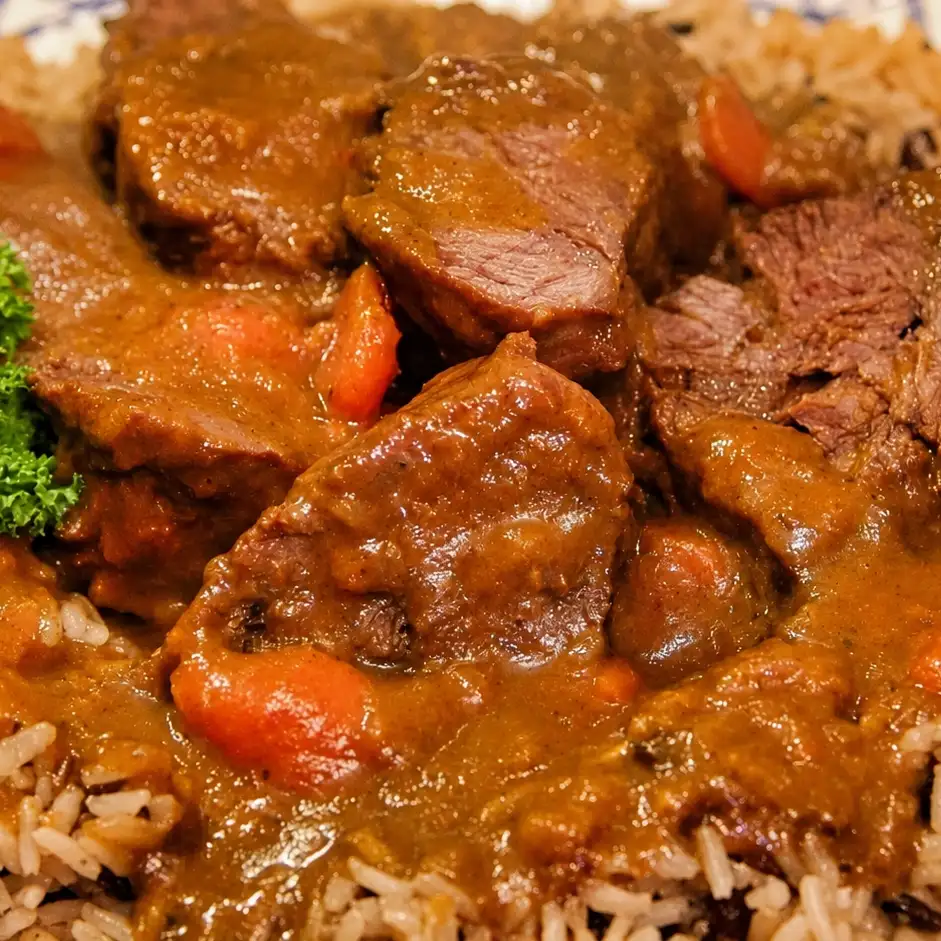
Easy Braised Pork Curry with Rice
This pork curry is based on my YouTube video, with a few adjustments since publication to make the timing, liquid level, and rice instructions easier to reproduce at home. The heart of the recipe stays the same: pork cheeks browned properly, vegetables cooked in the same pan, curry Madras, ginger, apple, and a slow simmer until the sauce reduces into something thick and warm.
Pork cheek curry is a braised pork dish where the meat cooks slowly in a seasoned sauce until it becomes very tender. It is different from a quick pork curry because the sauce is built like a stew, with browning, deglazing, flour, stock, and a long simmer. I make it when I want a hearty comfort food dinner with rice, especially in colder months, but it works year-round because the curry and ginger keep it bright.
The reason this recipe works is the browning. You do not just put everything in a pot and hope for the best. The pork needs color first, the vegetables need a little time in the pan, and the sauce needs to pick up the browned bits stuck to the bottom. The mistake to avoid is boiling the meat hard or reducing the sauce too early. Pork cheeks need patience. If the sauce gets thick before the meat is tender, add a little more stock and keep going.
What Makes This Pork Curry Different
This is not a fast skillet pork recipe, and it is not a creamy curry. It is closer to a French-style braise with curry spices added. The flour thickens the sauce, the veal stock gives it body, and the apple melts slightly into the sauce to round out the heat.
That makes it different from a quick weeknight pork dish like sticky honey garlic pork, where the sauce is sweet, glossy, and cooked quickly in the pan. It is also different from a classic slow pork dish like pork bourguignon, which goes deeper into wine, mushrooms, and bistro-style braising.
Here, I prefer to keep the sauce curry-forward but not too heavy. The curry Madras gives the base flavor, the ginger wakes it up, and the apple adds a quiet sweetness without turning the dish into something sugary.
The Best Cut of Pork to Use
Use pork cheeks if possible. They are small, firm pieces of meat with a lot of connective tissue, and that is exactly what makes them good for braising. After a slow simmer, they become soft and rich without drying out.
If pork cheeks are hard to find in Canada or the United States, ask a butcher. They are often available even when they are not displayed in the meat case. Pork shoulder can work too, but it will not have the same silky texture. Cut pork shoulder into large chunks and expect the cooking time to be similar, sometimes a little longer.
I would not use pork tenderloin here. It is too lean for this style of cooking. Save that cut for faster recipes like pork tenderloin medallions where it can stay juicy with a shorter cooking time.
Why I Make It This Way
I make it this way because the sauce gets better when each layer has time to develop. First, the pork cheeks are browned in oil. What I look for here is a deep golden color on the outside, not just grey meat. If the pan is too crowded, the pork steams instead of browning, so work in batches if needed.
Then the carrots, onion, garlic, and ginger go into the same pan. They pick up the flavor from the pork, and the bottom of the pan starts to smell like roasted meat, onion, and spices. At that point, the flour goes in. It should coat the vegetables and cook for a minute or two so the sauce does not taste raw or pasty.
The deglazing step matters. When the stock hits the pan, scrape the bottom with a wooden spoon or spatula. Those browned bits are flavor. If you want a deeper look at that technique, I explain the same idea in my guide on how to deglaze a pan.
Ingredients That Matter
The curry Madras is the main seasoning. I use a generous amount because the sauce has pork, stock, carrots, and rice to carry it. If your curry powder is very strong or very spicy, start with less and adjust near the end.
The homemade spice blend from the video, called épice Isou, is a simple mixture of crushed chili and paprika. Use half crushed chili flakes and half paprika if you do not have it. Smoked paprika can work, but it changes the dish. Regular sweet paprika keeps the flavor closer to the original.

The apple is small but important. I prefer a yellow apple because it softens into the sauce without being too sharp. It should not dominate the dish. Use a medium apple, not a huge one. At the end, you should taste the curry first, then a little sweetness in the background.
The sauce is thickened with flour, which makes it more like a braised stew than a loose curry. If sauces sometimes give you trouble, this recipe follows the same basic principle as my guide on how to thicken a sauce: cook the thickener, add liquid gradually, and adjust the texture at the end.
Step-by-Step Instructions
Start by heating a large heavy pan with a little vegetable oil. The oil should shimmer lightly, but it should not smoke. Season the pork cheeks with salt and pepper, then brown them on all sides. Take your time here. You know the meat is ready to move to the pot when the surface has a nice brown crust and the pan smells roasted, not raw.

Transfer the browned pork cheeks to a large Dutch oven or heavy pot.

In the same pan, add the carrots, onion, garlic, and ginger. Stir with a spatula and let the vegetables cook until the onion starts to soften and the carrots pick up a bit of color. The garlic should smell warm, not burnt. If the pan seems dry, add a small splash of oil.


Sprinkle the flour over the vegetables. Stir well. The mixture will look a little dry and sandy at first, which is normal. Let it cook for 1 to 2 minutes. This step gives the final sauce a better texture.


Add some of the veal stock to the pan and scrape the bottom well. The liquid should turn slightly darker as the browned bits dissolve. Pour everything into the pot with the pork. Add enough stock so the meat is almost covered.


Add the curry Madras, the chili-paprika spice, and the diced apple. Stir gently.
Bring the pot to a simmer, then reduce the heat. The sauce should bubble slowly, not aggressively. I prefer to cook it partially covered for the first hour, then uncovered near the end so the sauce reduces without drying out too early.


Cook for 1 1/2 to 2 hours, or until the pork cheeks are very tender. The exact time depends on the size of the cheeks and the strength of the simmer. You know it is ready when a spoon can press into the meat easily and the sauce coats the back of the spoon.
If the sauce thickens before the pork is ready, add a splash of stock or water. If the pork is tender but the sauce is too thin, simmer uncovered for a few more minutes.

For seasoning, taste at the end. Because the sauce reduces, salting too much at the beginning can make it too salty later. This is the same reason I like using unsalted or low-sodium stock. For more general seasoning cues, my guide on how to season a recipe properly is useful with braised dishes like this.
About the Rice
In the video, I use brown rice with raisins of Corinth. The ratio works best with converted or parboiled brown rice, which cooks faster and stays separate.
For regular brown rice, use more water and cook it longer. That is the adjustment I would make now for better results. Converted brown rice should be ready in about 30 minutes. Regular brown rice usually needs closer to 40 to 45 minutes.

The raisins are not there to make the dish sweet like a dessert. They give small bites of sweetness beside the curry and ginger. If you do not like raisins in savory food, leave them out.
Substitutions
Pork cheeks: Use pork shoulder cut into large chunks. Avoid pork tenderloin for this braise.
Veal stock: Use unsalted beef stock, chicken stock, or pork stock. Beef stock gives a darker sauce. Chicken stock keeps it lighter.
Curry Madras: Use your usual curry powder, but taste it first. Some blends are mild, some are very hot.
Épice Isou: Use equal parts crushed chili flakes and paprika. For less heat, use more paprika and less chili.
Apple: Use a yellow apple, Golden Delicious, Gala, or another sweet apple that softens when cooked. Avoid very tart apples unless you want a sharper sauce.
Flour: All-purpose flour works best here. For a gluten-free version, use a cornstarch slurry at the end instead of flour, but the texture will be slightly different.
Rice: Serve with white rice, brown rice, basmati rice, or mashed potatoes. For a more French-style comfort plate, a creamy potato side like classic gratin dauphinois also works well.
What to Serve With This Pork Curry
Rice is the natural choice because it catches the sauce. A simple green salad also helps because the dish is rich and slow-cooked.
For a pork dinner with another braised feeling, try pork stew with potatoes and carrots. It stays in the same comfort food family, but without the curry profile.
For another cozy pork option, pork and bean stew is a good match for cold-weather cooking. If you want something richer and more rustic, braised pork shoulder with onions and beer goes in that direction.
For side dishes, the curry sauce pairs well with potatoes, cabbage, and simple vegetables. I like it beside French gratin dauphinois when I want a heavier meal, or with cabbage and carrot salad when I want something cooler and crunchy. A sharper salad like marinated red cabbage also cuts through the sauce nicely.
For more ideas in the same family, browse my collection of easy pork recipes for family dinners.
FAQ
Can I make this pork curry ahead of time?
Yes. This is the kind of dish that reheats well because the meat is braised and the sauce has time to settle. Cool it down, refrigerate it, then reheat gently on the stove. Add a splash of stock or water if the sauce has thickened too much.
Can I freeze it?
Yes, the pork and sauce freeze well. Freeze without the rice if possible. Rice can become dry after freezing, so I prefer to make fresh rice when serving leftovers.
Why are my pork cheeks still tough?
They need more time. Pork cheeks are not like pork chops. If they are tough, they are usually undercooked, not overcooked. Keep the simmer gentle, add more liquid if needed, and continue until the meat softens.
Can I make it spicier?
Yes. Add more crushed chili, cayenne, or a hotter curry powder. I would add heat gradually because the sauce reduces and the spice becomes more concentrated.
Can I use coconut milk?
You can, but it changes the recipe. This version is more of a French-style pork braise with curry. Coconut milk will make it creamier and softer, closer to another style of curry. If using it, replace only part of the stock near the end so the sauce does not become too rich.
Is this a healthy recipe?
It is a hearty, protein-rich comfort food dish. Pork cheeks are rich and satisfying, and the carrots, onion, ginger, apple, and rice make it a full meal. It is not meant to be a light salad-style dinner, but it can fit nicely into a balanced home-cooked meal with a fresh vegetable side.

Easy Braised Pork Curry with Rice
Ingredients
- For the Pork Curry
- 2 to 2 1/2 lb pork cheeks trimmed
- 2 tablespoons vegetable oil plus more if needed
- 3 medium carrots sliced on a bias
- 1 large yellow onion roughly chopped
- 3 garlic cloves crushed and roughly chopped
- 1 tablespoon fresh ginger finely chopped
- 1 medium yellow apple peeled and diced
- 3 tablespoons all-purpose flour
- 2 to 3 tablespoons Madras curry powder
- 1 1/2 teaspoons crushed chili and paprika blend
- 3 to 4 cups unsalted veal stock beef stock, or chicken stock, plus more if needed
- 1 1/2 teaspoons kosher salt plus more to taste
- 1/2 teaspoon black pepper plus more to taste
- For the Rice
- 2 cups converted brown rice
- 2 3/4 cups water
- 1/3 cup raisins of Corinth or small dried currants
- 1/2 teaspoon kosher salt
- Black pepper to taste
- Optional Garnish
- A few small kale leaves
Instructions
- Heat the oil in a large heavy pan over medium-high heat.
- Season the pork cheeks with salt and pepper. Brown them well on all sides, working in batches if needed. Transfer to a Dutch oven or heavy pot.
- In the same pan, add the carrots, onion, garlic, and ginger. Cook for 4 to 5 minutes, stirring often, until lightly colored.
- Sprinkle the flour over the vegetables. Stir and cook for 1 to 2 minutes.
- Add about 1 cup of stock to the pan and scrape the bottom well to deglaze. Pour everything into the pot with the pork.
- Add enough remaining stock to almost cover the meat. Stir in the curry powder, chili-paprika blend, and diced apple.
- Bring to a gentle simmer. Cook partially covered for 1 hour, then uncovered for 30 to 60 minutes, until the pork cheeks are very tender and the sauce has reduced.
- If the sauce gets too thick before the pork is tender, add a splash of stock or water. If the pork is tender but the sauce is thin, simmer uncovered a little longer.
- For the rice, bring the water, rice, salt, and pepper to a boil in a saucepan. Stir in the raisins, cover, reduce to low, and cook for about 30 minutes, or until tender. Use more water and cook longer if using regular brown rice.
- Taste the curry and adjust the seasoning. Serve the pork cheeks and sauce over the rice. Garnish with kale leaves if desired.
Video
Notes
FAQ
Can I make this pork curry ahead of time?
Yes. This is the kind of dish that reheats well because the meat is braised and the sauce has time to settle. Cool it down, refrigerate it, then reheat gently on the stove. Add a splash of stock or water if the sauce has thickened too much.Can I freeze it?
Yes, the pork and sauce freeze well. Freeze without the rice if possible. Rice can become dry after freezing, so I prefer to make fresh rice when serving leftovers.Why are my pork cheeks still tough?
They need more time. Pork cheeks are not like pork chops. If they are tough, they are usually undercooked, not overcooked. Keep the simmer gentle, add more liquid if needed, and continue until the meat softens.Can I make it spicier?
Yes. Add more crushed chili, cayenne, or a hotter curry powder. I would add heat gradually because the sauce reduces and the spice becomes more concentrated.Can I use coconut milk?
You can, but it changes the recipe. This version is more of a French-style pork braise with curry. Coconut milk will make it creamier and softer, closer to another style of curry. If using it, replace only part of the stock near the end so the sauce does not become too rich.Is this a healthy recipe?
It is a hearty, protein-rich comfort food dish. Pork cheeks are rich and satisfying, and the carrots, onion, ginger, apple, and rice make it a full meal. It is not meant to be a light salad-style dinner, but it can fit nicely into a balanced home-cooked meal with a fresh vegetable side.🔗 Useful Links
🛒 Michel Dumas Shop : Explore our kitchen essentials, including aprons and knives.
🌐 Linktree : Access all our important links in one place.
📱 YouTube | Instagram | Facebook | TikTok : Follow us for the latest recipes and culinary tips.