Easy Fresh Pasta with Ground Beef Sauce
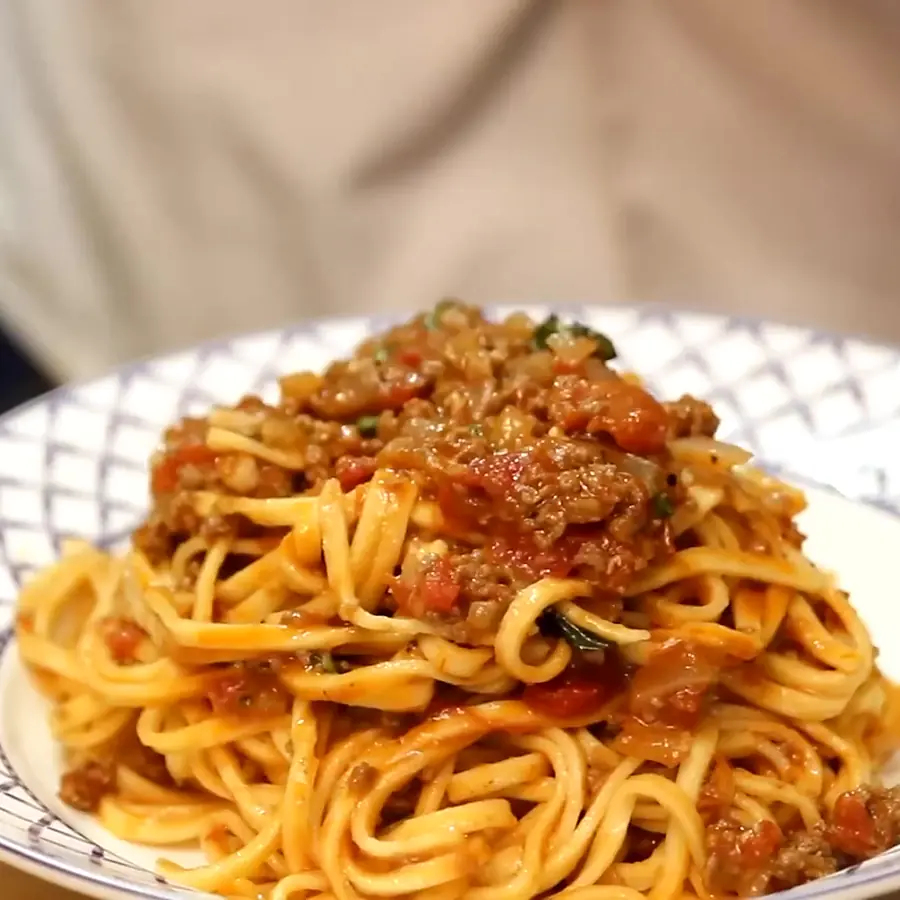
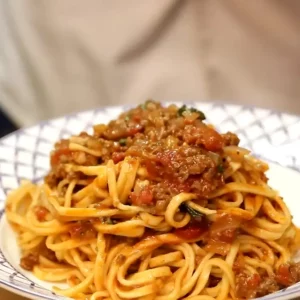
This hearty bowl combines tender fresh noodles with a thick tomato and ground beef sauce, Parmesan, and fresh basil. Browning the beef before adding the vegetables gives the sauce a deeper taste, while the main mistake to avoid is adding too much water: it is ready when a spoon dragged across the bottom of the pan leaves a path that closes slowly.
This recipe is based on my YouTube video, with a few adjustments since publication to make the quantities reliable for one classic pasta dinner. In the original father-and-son video, the meat sauce was divided between this stovetop dish and a baked rigatoni cake. Here, the sauce has been scaled specifically for four servings, so there is no béchamel, mozzarella, cake pan, or oven step.
Fresh pasta with meat sauce is a straightforward main dish made by finishing quickly cooked noodles in a tomato-based ground beef sauce. It is different from a long-simmered Bolognese and from a cheesy pasta bake. I make it when I want a substantial dinner with the comfort of a slow sauce but without spending half the day at the stove.
{VIDEO}
What Makes This Recipe Different
The original video plays with two generations and two approaches to the same ingredients. One version stands rigatoni upright in a cake pan with béchamel and mozzarella. This one stays deliberately classic: pasta, reduced meat sauce, basil, and Parmesan, all tossed together in a hot pan.
I prefer to finish the noodles in the sauce because that last minute changes the texture. The pasta picks up the tomato and beef flavour instead of sitting underneath it, and a splash of starchy cooking water helps the sauce cling. It is quicker and less creamy than my ground beef pasta bake with mozzarella, and it is more direct than a traditional homemade Bolognese sauce.
Fresh noodles make this especially fast once the sauce is ready. If you want to prepare them yourself, my method for fresh pasta without a machine is a useful place to start. Store-bought fresh tagliatelle, fettuccine, or pappardelle also work well.
Ingredients You Need
Ground beef: One pound gives the sauce enough body for four generous servings. Beef around 85 to 90 percent lean browns well without leaving the pan greasy.
Fresh pasta: Use one pound of fresh noodles. Fresh pasta cooks much faster than dried pasta, so begin checking it after two minutes. If using dried pasta, use 12 to 14 ounces and follow the package timing.
Red onion and garlic: The onion provides sweetness as it softens, while the garlic goes in afterward so it does not burn. For more detail on the knife work, see my guide to mincing garlic without burning it.
Crushed tomatoes: A 24-ounce jar or can makes a smooth sauce that still has enough texture to hold the beef. Finely diced tomatoes can be substituted, but they may need a few extra minutes to reduce. In tomato season, a batch of fresh homemade tomato sauce is another good base.
Thyme, bay leaf, and cumin: Thyme and bay support the tomato. The small amount of cumin reflects the seasoning in the video, but it should stay in the background rather than make the sauce taste like chili.
Parmesan and basil: Add these at the end. Parmesan seasons and thickens the coating around the noodles, while basil keeps the finished plate fresh.

Step-by-Step Instructions
1. Prepare the aromatics
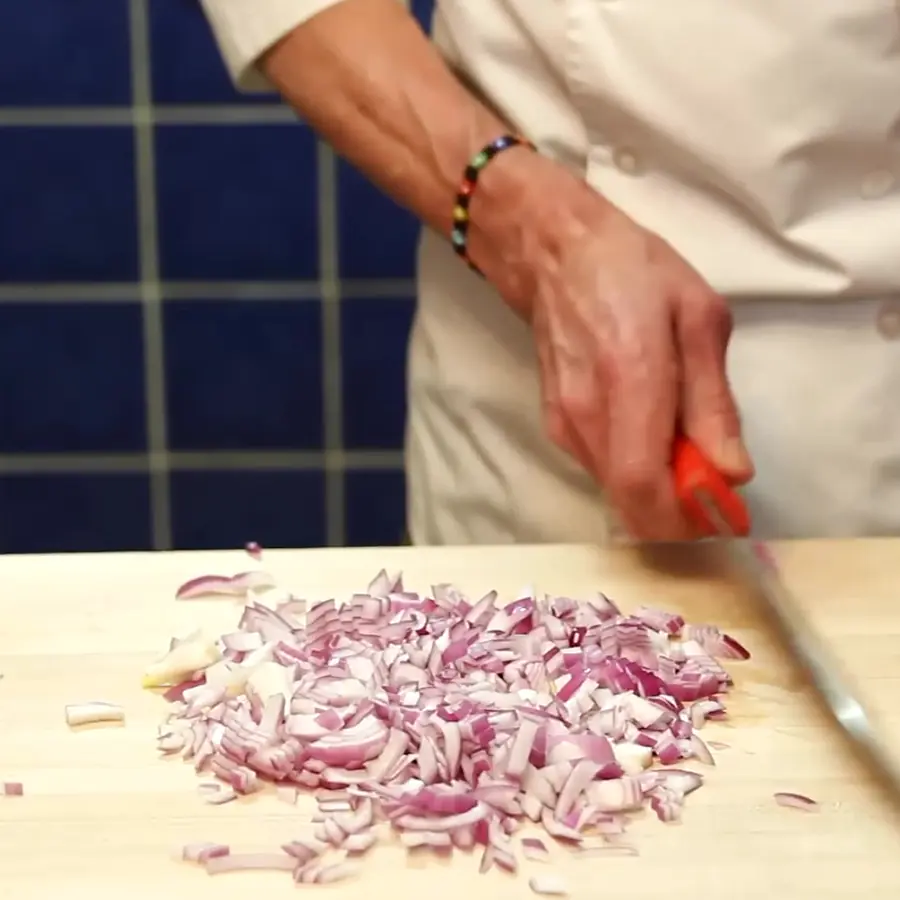
Finely chop the red onion and mince the garlic, keeping them separate. Heat a wide, heavy skillet or Dutch oven over medium-high heat. Add the olive oil only if the beef is very lean; beef with a little more fat can go directly into the dry hot pan.
2. Brown the beef
Add the ground beef in a broad layer. Leave it alone for about two minutes so the underside can take on colour, then break it into small pieces. What I look for here is actual browning on the pan, not pale meat simmering in its own liquid. If the pan is crowded, let the released moisture evaporate before moving on.
Add the chopped onion and cook for three to four minutes, stirring occasionally, until it softens and the raw smell disappears. Stir in the garlic and cook for about 30 seconds. Garlic should smell fragrant but should not turn dark brown.

3. Build and reduce the sauce
Pour in the crushed tomatoes. Add no more than one-third cup of water to rinse the container, then pour that into the pan. Stir in the thyme, bay leaf, cumin, salt, and black pepper.
Bring the sauce to a gentle simmer and cook uncovered for 30 to 35 minutes. Stir from the bottom every few minutes, especially near the end. At first it will look loose and bright red. As it reduces, the colour deepens, the bubbles become slower, and the sauce begins to hold its shape on a spoon. Remove the bay leaf and taste before adding more salt.

4. Cook the fresh pasta
Bring a large pot of well-salted water to a full boil. Add the fresh pasta, separate the strands gently, and cook until just shy of done, usually two to three minutes depending on thickness. The noodle should bend easily but still have a slight bite at the centre. Before draining, reserve at least one-half cup of the cooking water.

5. Finish everything in the pan
Transfer the drained pasta directly into the warm meat sauce. Toss over medium heat for one to two minutes, adding reserved cooking water a tablespoon at a time if the sauce feels too tight. Stop when the noodles look glossy and evenly coated, not watery or buried under a pool of tomato.
Turn off the heat. Fold in most of the Parmesan and sliced basil, saving a little of each for serving. Parmesan can become clumpy over fierce heat, so I prefer to add it after the pan stops bubbling aggressively. Divide among warm bowls and finish with the remaining cheese and basil.


Practical Tips for Consistent Results
Use a wide pan rather than a narrow saucepan. More surface area allows moisture to escape and helps the beef brown. A narrow pot can still work, but the reduction will take longer.
Do not automatically add all the reserved pasta water. It is there to loosen and bind the sauce only when needed. Fresh pasta carries more surface flour than many dried pastas, so a few tablespoons may be enough.
Taste after adding Parmesan. Between the salted cooking water, seasoned beef, and cheese, the dish can move from properly seasoned to too salty quickly. The final texture should resemble my fresh pasta with tomato sauce, but with a heartier, meatier coating.
Substitutions
Ground turkey can replace the beef, although it benefits from the full tablespoon of oil and may need a little more seasoning. Ground pork also works and gives a richer sauce. For the pasta, fresh tagliatelle, fettuccine, and pappardelle are the easiest shapes to coat, while dried spaghetti or rigatoni are reliable pantry alternatives. Pecorino Romano can replace Parmesan, but use less because it is saltier. If cumin is not to your taste, omit it rather than replacing it with a stronger spice. For a softer herbal flavour, use parsley instead of basil.

FAQ
Can I use dried pasta instead of fresh pasta?
Yes. Use 12 to 14 ounces of dried pasta for four servings and cook it until one minute short of the package directions. Finish that final minute in the sauce. The result will have a firmer bite and will take slightly longer than the fresh version.
Is this the same as Bolognese sauce?
No. This is a faster tomato and ground beef sauce with a short ingredient list and about 35 minutes of simmering. Bolognese generally has a different balance of meat, aromatic vegetables, dairy, and a longer cooking time.
Can I make the sauce ahead?
Yes. Cool it promptly and refrigerate it in a covered container for up to three days. Reheat gently while the pasta cooks, adding a small splash of water if it has thickened. Cook the pasta fresh rather than storing it in the sauce.
Why is my meat sauce watery?
The pan may be too narrow, the sauce may be covered, or too much rinse water may have been added. Simmer it uncovered until the bubbles slow and a spoon leaves a visible trail across the bottom. Do not add the pasta until that stage.
Can I freeze it?
The meat sauce freezes well for up to three months in an airtight container. Freeze the sauce by itself, thaw it overnight in the refrigerator, and prepare a fresh batch of pasta when serving.
What to Serve With It
A rich bowl of meat sauce benefits from something crisp or garlicky on the side. Try a bright homemade Greek salad, a simple romaine and endive green salad, or a tray of oven-roasted mixed vegetables. For soaking up the tomato left in the bowl, crisp air-fryer garlic bread is an easy choice.
If you want another ground beef dinner with a different texture, try one-pan rigatoni with beef or my homemade spaghetti and meatballs. You can also browse my collection of 30-minute pasta dinners for quicker weeknight ideas.
Easy Fresh Pasta with Ground Beef Sauce
Ingredients
- 1 tablespoon olive oil only if needed
- 1 pound ground beef 85 to 90 percent lean
- 1 medium red onion about 1 cup finely chopped
- 3 garlic cloves minced
- 24 ounces crushed tomatoes
- 1/3 cup water
- 1 teaspoon dried thyme
- 1 bay leaf
- 1/4 teaspoon ground cumin
- 3/4 teaspoon kosher salt plus more for the pasta water
- 1/2 teaspoon ground black pepper
- 1 pound fresh pasta
- 1/2 cup reserved pasta cooking water as needed
- 1/2 cup freshly grated Parmesan divided
- 1/4 cup sliced fresh basil loosely packed
Instructions
- Chop the onion and mince the garlic, keeping them separate. Heat a wide skillet over medium-high heat and add the oil if the beef is lean.
- Add the beef in a broad layer and brown it for 2 minutes before breaking it apart. Add the onion and cook for 3 to 4 minutes, then add the garlic and cook for 30 seconds.
- Add the crushed tomatoes, water, thyme, bay leaf, cumin, salt, and pepper. Simmer uncovered for 30 to 35 minutes until thick, then remove the bay leaf and adjust the seasoning.
- Cook the fresh pasta in well-salted boiling water until just shy of done, usually 2 to 3 minutes. Reserve 1/2 cup cooking water, then drain.
- Toss the pasta with the warm meat sauce over medium heat for 1 to 2 minutes, adding cooking water as needed.
- Remove from the heat, fold in most of the Parmesan and basil, and serve with the remaining cheese and herbs.