Foolproof Stovetop Cassoulet with Duck and Toulouse Sausages
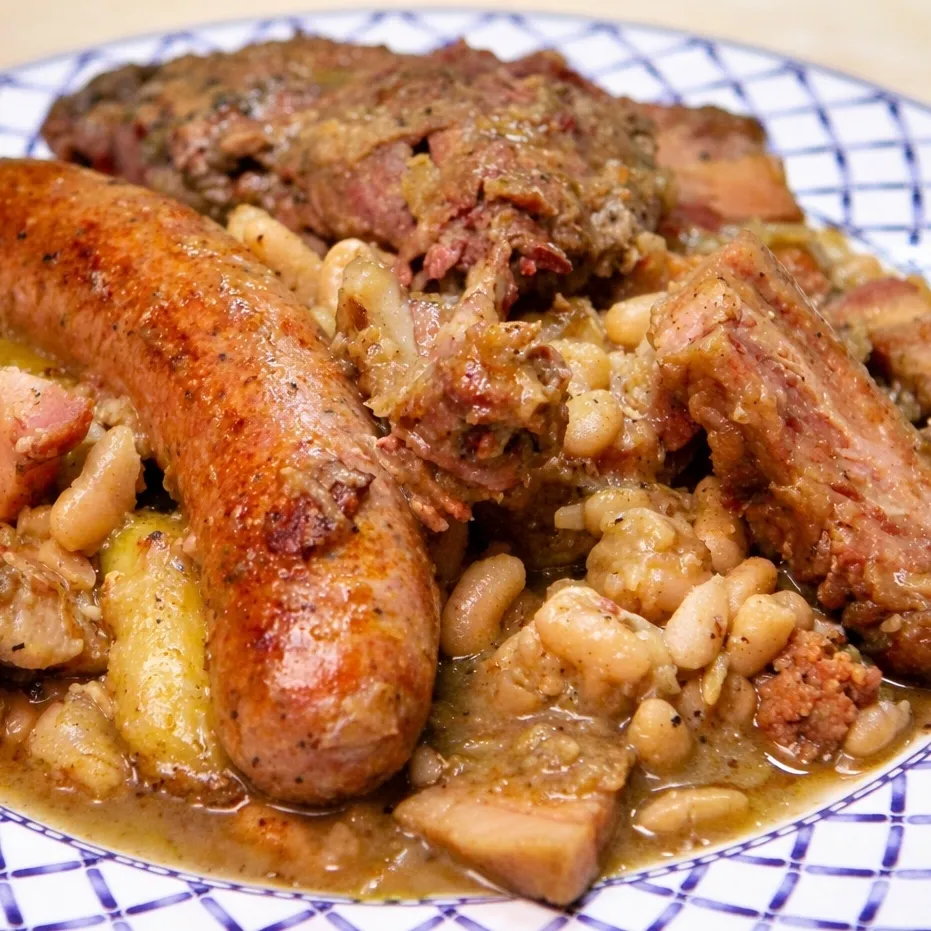
This cassoulet is a rich, pork-forward, duck-and-bean stew made the practical way, on the stovetop instead of in the oven. It keeps the spirit of a classic cassoulet with smoky pork, white beans, Toulouse sausages, duck confit, a bouquet garni, and slow simmered stock, but it is easier to manage at home and more forgiving for a weekend dinner. In the video, I build it with smoked pork belly, smoked pork jowl, Toulouse sausages, duck confit, soaked Tarbais beans, chicken stock, thyme, bay leaf, and cloves, then blanch the beans, simmer them gently, brown the sausages separately, warm the duck, and finish everything together with the reduced cooking juices.
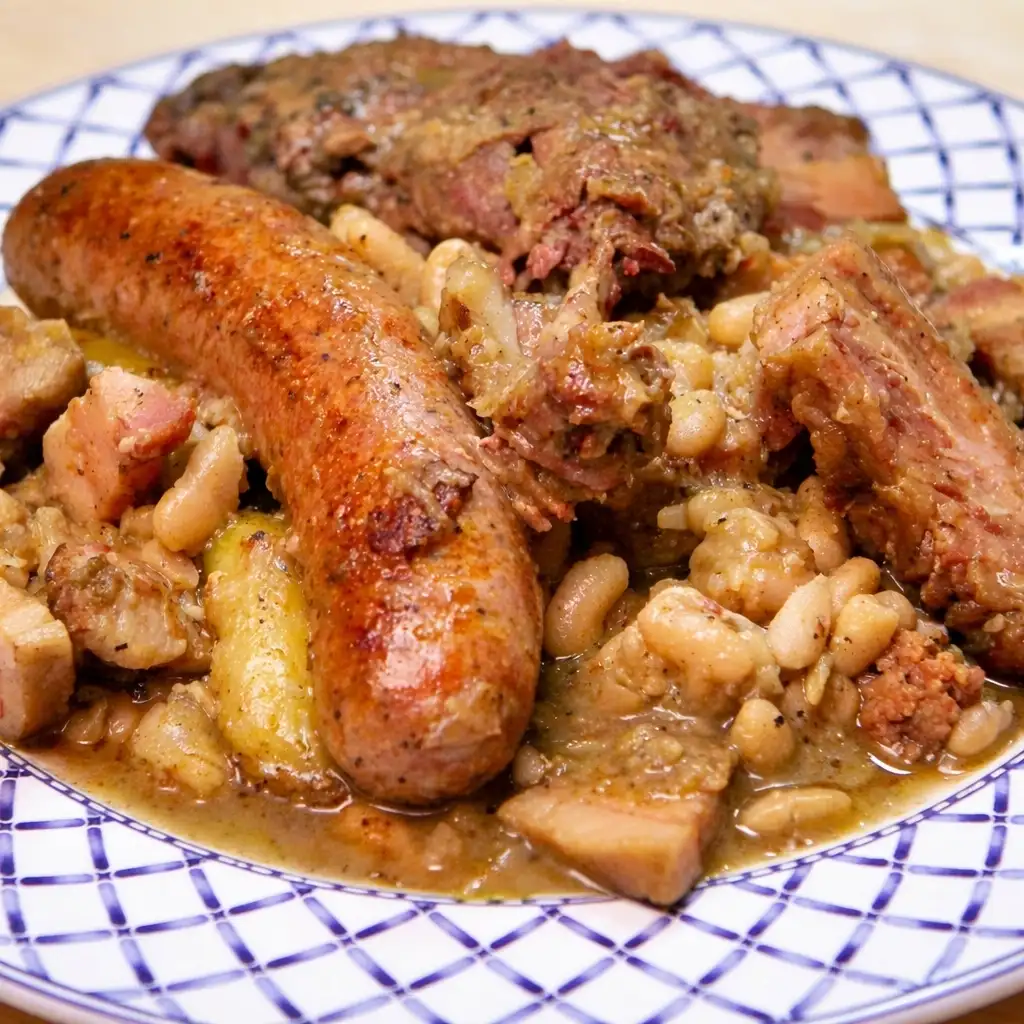
This recipe is based on my YouTube video, with a few adjustments since publication to make the written version more consistent. The biggest change is that I standardize the stock quantity and give a more flexible bean-cooking time, because dried beans do not all cook at the same speed.
What makes this cassoulet different
A lot of cassoulet recipes try to be very formal, very long, and very oven-heavy. This version is more direct. It is deeply savory, smoky, and satisfying, but it does not ask you to babysit a crust for hours. The flavor comes from the layering: first the smoked pork, then the aromatics, then the beans and stock, then the sausages, then the duck, then the reduced pan juices.
It is also different from lighter bean dishes or brothier stews. Think of it as a hearty, protein-rich comfort food, not a delicate soup. It is perfect in cold weather, but it also works year-round when you want something generous and rustic for Sunday lunch or a relaxed dinner with friends.
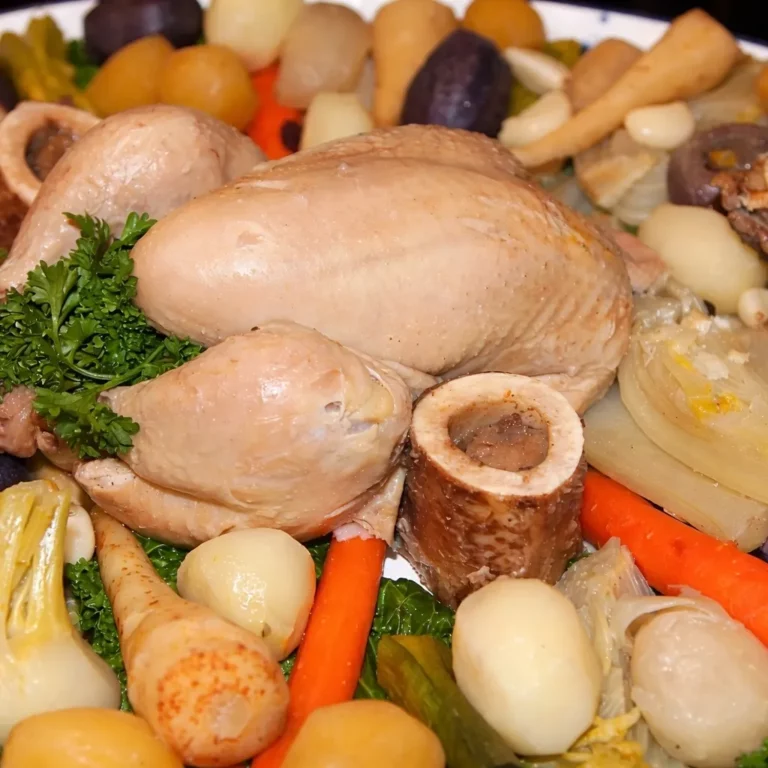
If you enjoy old-school French comfort cooking, this sits in the same broad family as a classic pot-au-feu, traditional blanquette de veau, or coq au vin. What makes this one stand apart is the combination of duck confit, pork, and white beans in one pot.
Why I make it this way
The cold-pan start for the pork matters. Instead of throwing everything into a hot pot and hoping for the best, you let the pork slowly release its fat, which becomes the cooking base for the onion, garlic, and carrots. That means the vegetables are not just softened, they are seasoned from the start.
The separate browning step for the sausages matters too. If you cook them directly in the beans from the beginning, you lose some color and you miss the concentrated juices that later get deglazed back into the pot. It is a small move, but it gives the finished cassoulet a deeper, rounder flavor. That sequence comes directly from the video method.
Ingredients you need
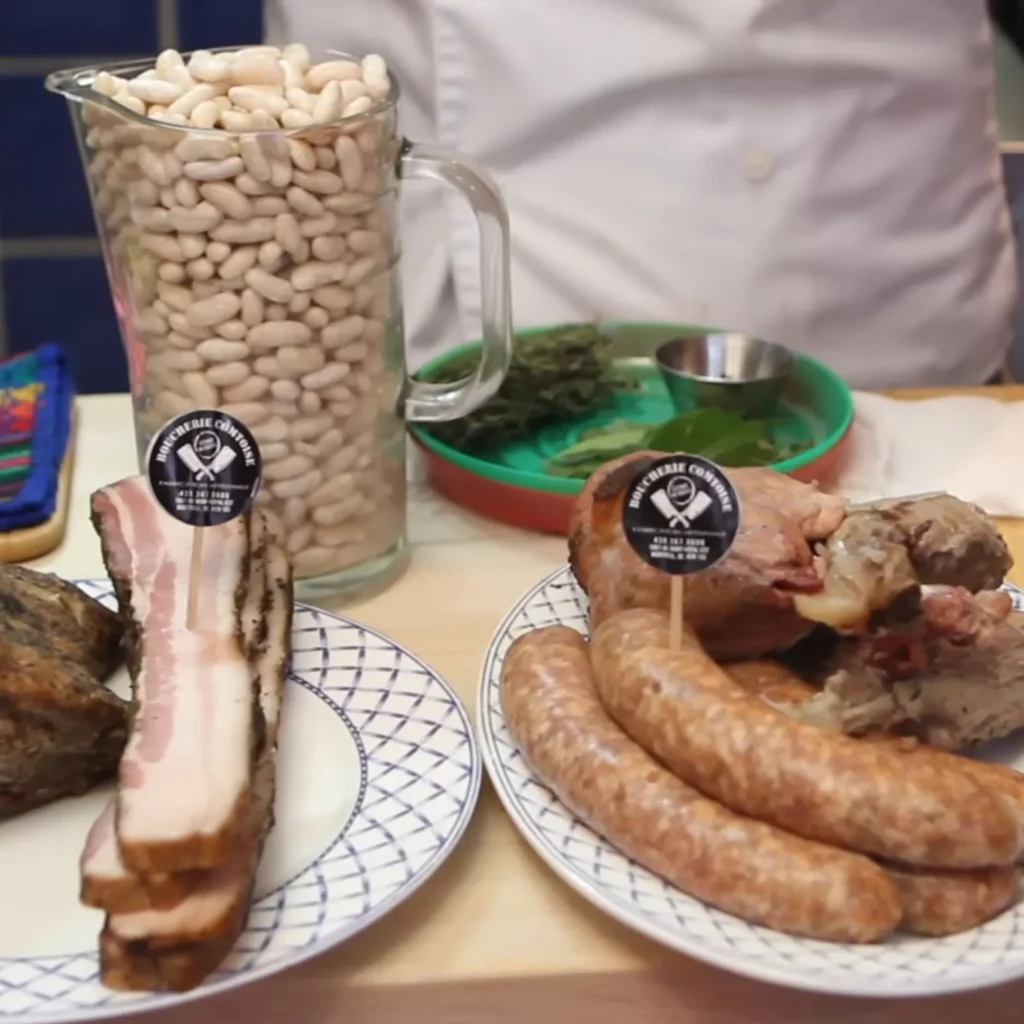
The original transcript clearly gives the bean amount, the aromatics, the bouquet garni, the chicken stock base, and the core meats, but not every weight is spoken with full precision. For a website version that works reliably, these are the proportions I recommend:
- dried Tarbais beans if you can find them, or another good white bean like Great Northern
- smoked pork belly
- smoked pork jowl, or extra smoked pork belly if jowl is harder to source
- Toulouse sausages, or a mild fresh pork sausage
- duck confit legs
- white onion
- garlic
- carrots
- chicken stock, ideally low sodium
- thyme, bay leaves, and cloves for the bouquet garni
- a spoonful of duck fat if needed
If you like making components from scratch, a strong homemade stock makes a big difference. My concentrated chicken stock is a great base here. And if you want to go one step further with the meat, the technique behind my French pork sausage is useful when you want a more traditional, rustic sausage texture at home.
Step-by-step method
1. Soak and blanch the beans
Start by soaking the beans overnight in plenty of cold water. Drain them the next day, then place them in a pot and cover with fresh water. Bring to a boil and let them boil for 10 minutes. Drain and rinse well.
That blanching step is in the video and it helps clean up the broth while getting the beans started. Rinsing after blanching also removes excess surface starch, which keeps the final pot from getting muddy.
2. Build the bouquet garni
Tie thyme, bay leaves, and 5 cloves in cheesecloth or a clean piece of cloth. Keep it simple and tie it tightly so it does not open in the pot.
This is one of those small details that keeps a rustic dish tidy. You get the fragrance in the stock without fishing loose herbs and cloves out of the beans later.
3. Cut the pork and vegetables
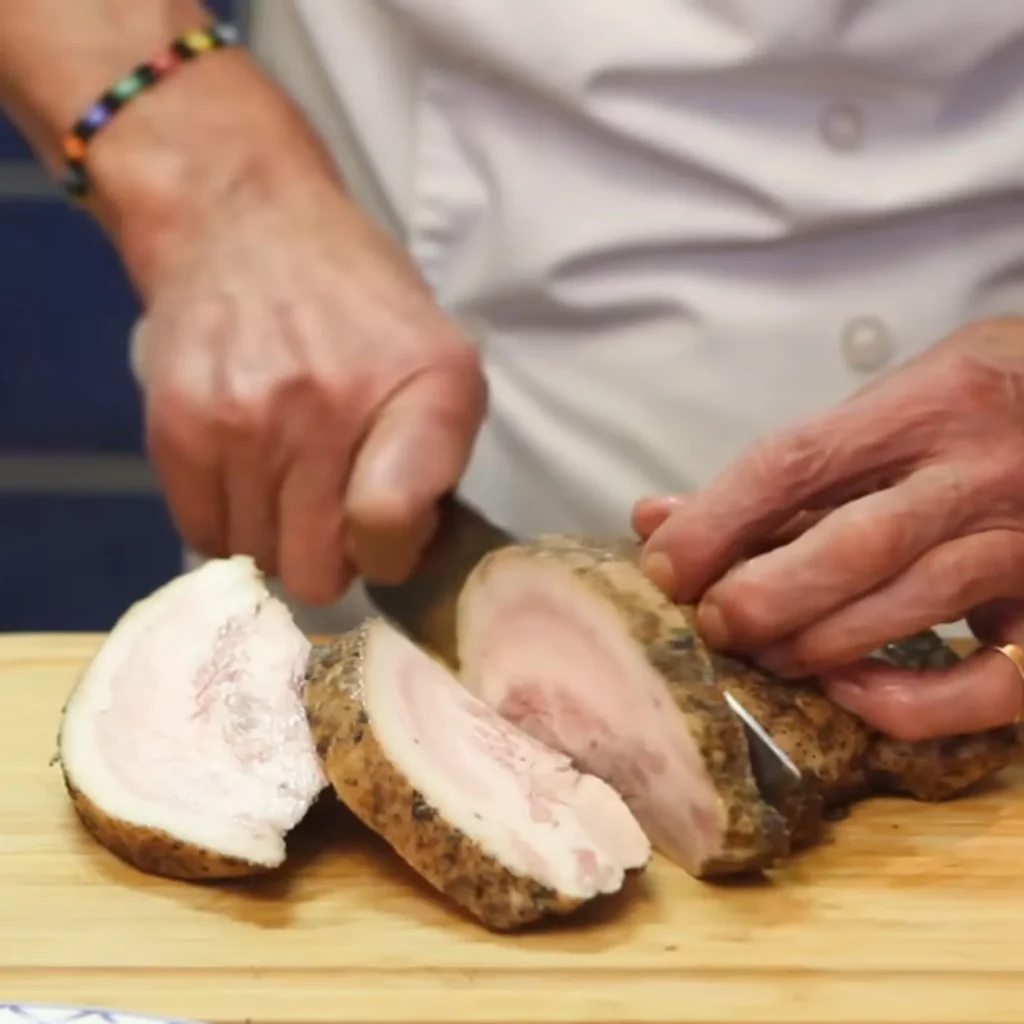
Cut the smoked pork belly into large chunks. Slice the smoked pork jowl into thick pieces. Dice the onion, mince the garlic, and cut the carrots into medium pieces.
Do not cut the pork too small. Cassoulet should feel generous and substantial. Tiny cubes disappear into the beans and lose the rustic look that makes the dish so appealing.
4. Render and brown the pork
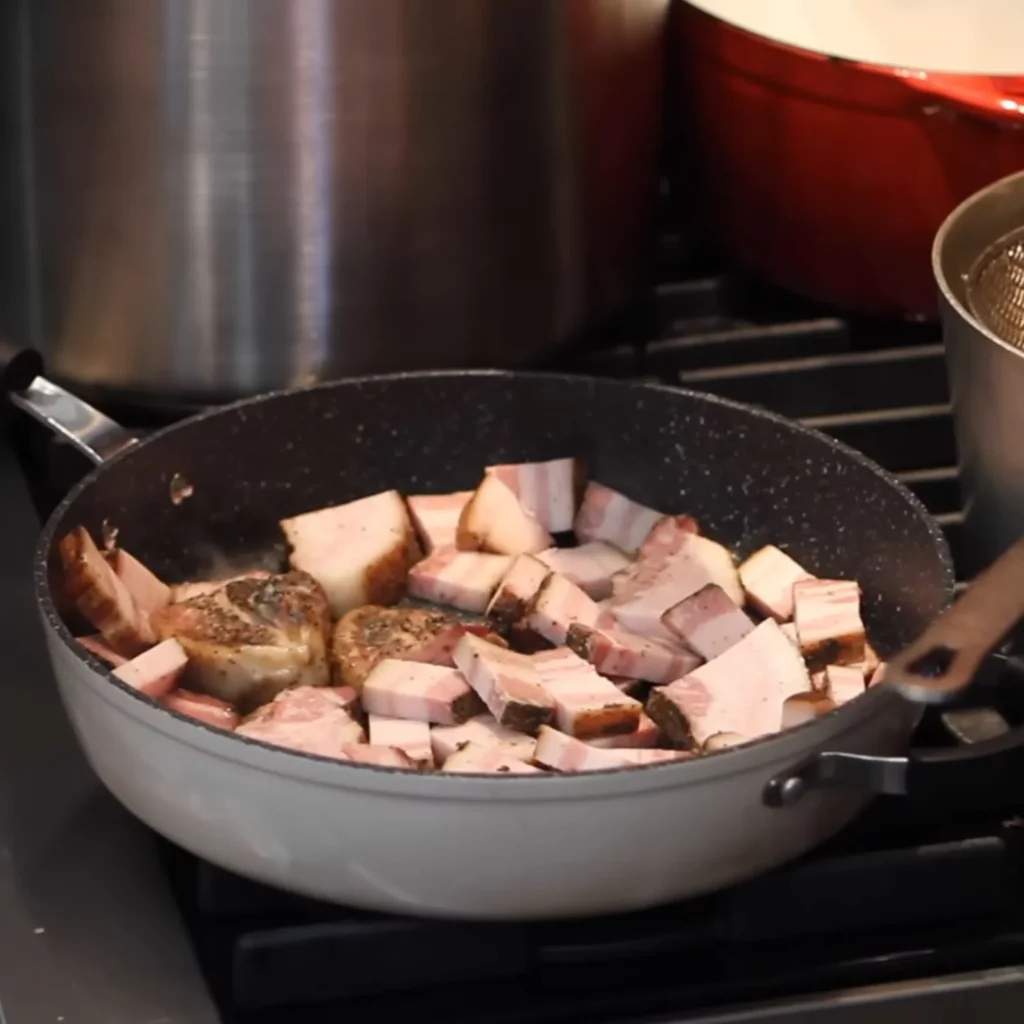
Place the smoked pork belly and jowl in a cold pan. Turn the heat on and let the fat slowly render. Once the pieces start to color lightly, add a spoonful of duck fat if needed, then add the onion, carrots, and garlic.
Cook until the vegetables soften and take on a little color. This is where the foundation of the dish is made. You are not chasing hard browning, just deep savory sweetness.

5. Start the bean pot
Put the blanched beans into a Dutch oven or heavy pot. Add the pork and vegetables, then add the bouquet garni. Pour in enough chicken stock to come just to the level of the beans. Bring to a boil, then reduce to a gentle simmer.
In the video, the pot simmers about an hour before the final finishing phase, but for a written recipe I recommend treating that as a guide, not a strict rule. Some beans are tender in an hour, others need longer. You are looking for beans that are soft and creamy inside, not chalky.
6. Brown the sausages separately
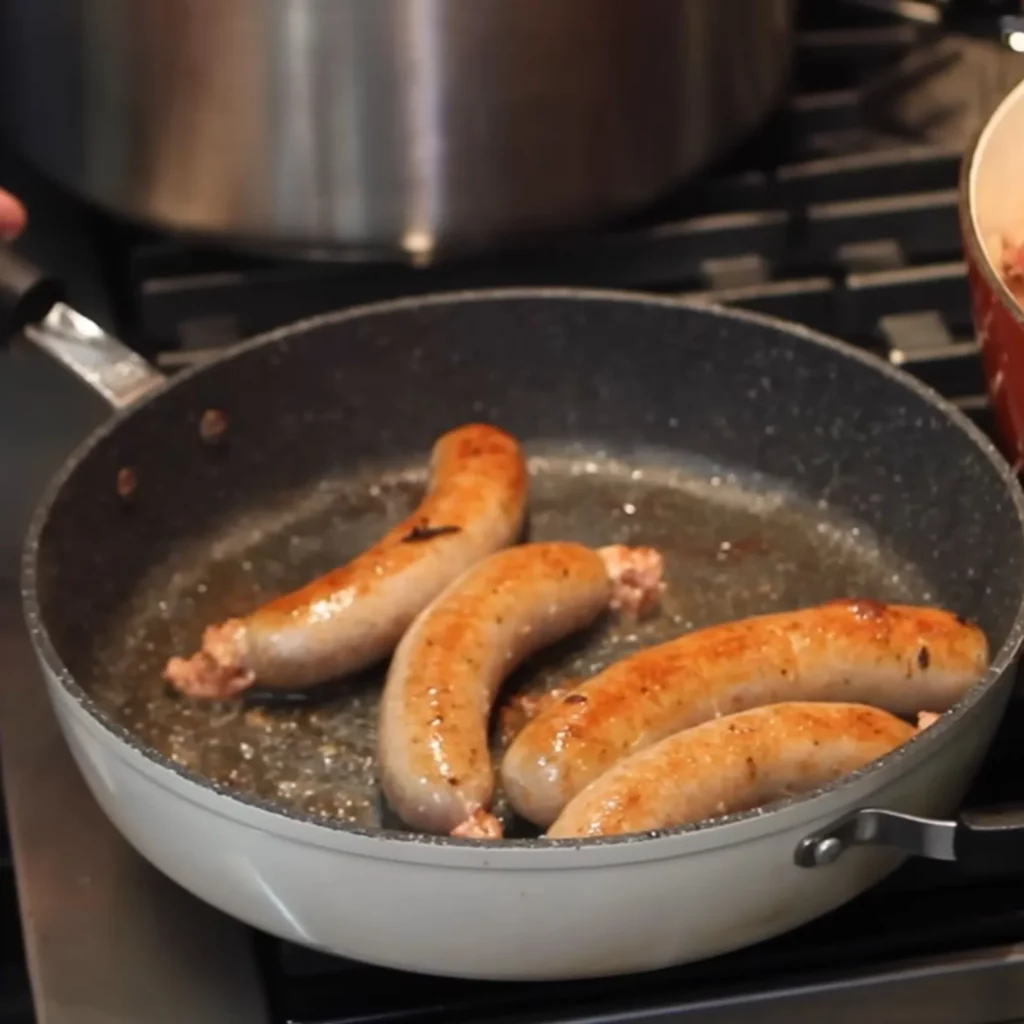
After the beans have been cooking for about 30 minutes, heat another pan with a little duck fat and brown the sausages on all sides. You want good color, because color means flavor.
This step keeps the sausages juicy while also giving you those caramelized juices in the pan. It is one of the reasons this recipe tastes richer than a one-pot version where everything is dropped in at once.

7. Warm the duck and deglaze the pan
Add the duck confit legs to the sausage pan just long enough to warm them through. They are already cooked, so the goal is not to cook them again from scratch.
Pour in a little chicken stock to deglaze the pan and scrape up all the browned bits. Let that reduce for about 10 minutes. Then pour that flavorful reduction into the bean pot.
8. Finish gently
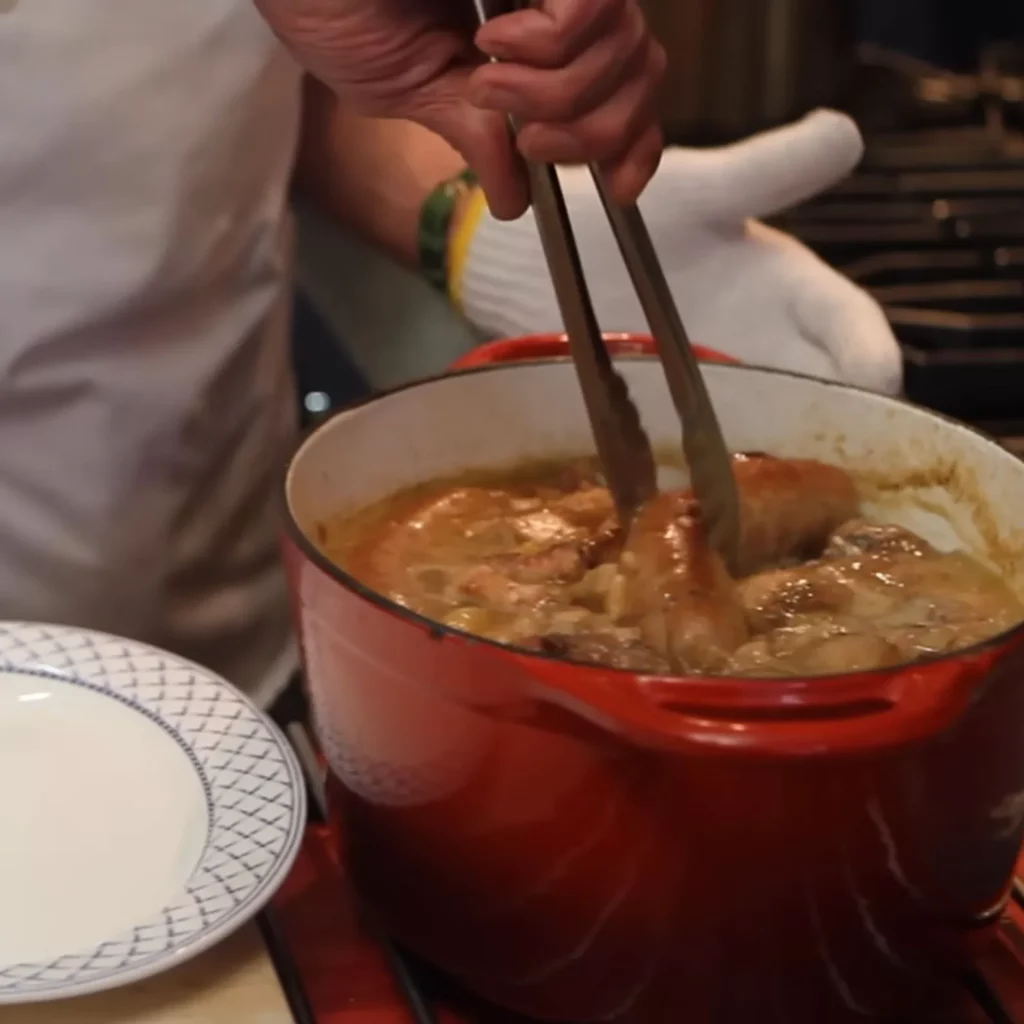
Once the sausage reduction goes into the pot, simmer the cassoulet for a final 15 minutes or so. Taste before adding any salt. Between the smoked pork, sausages, duck confit, and stock, there is already plenty of seasoning in the pot.
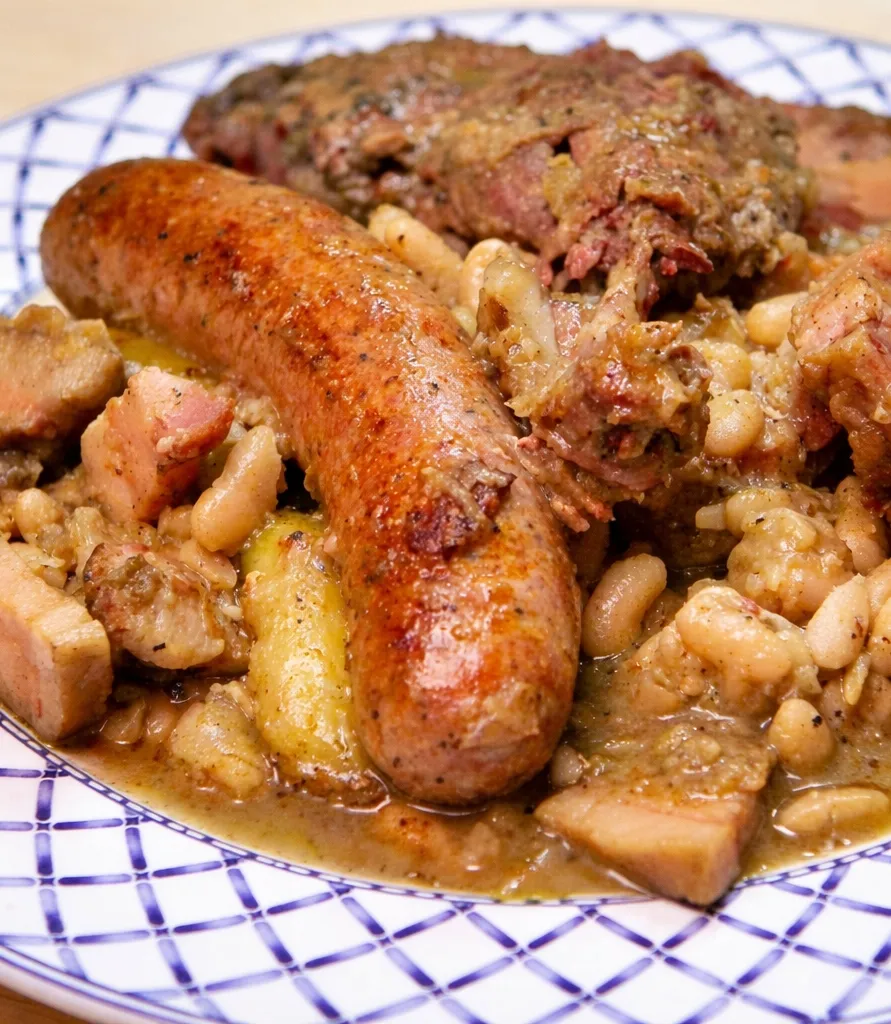
You want the finished consistency to be moist and spoonable, not watery, but not dry either. It should settle into the bowl with a little body and a glossy cooking jus around the beans. The video finishes the dish exactly this way, with the beans very tender, the sausages still juicy, and only a little extra seasoning if needed.
Substitutions
If you cannot find Tarbais beans, Great Northern beans, cannellini beans, or navy beans all work. The texture will vary a little, but the recipe still works.
If smoked pork jowl is hard to source, use more smoked pork belly. Thick-cut bacon can work in a pinch, but it gives a more familiar bacon flavor and a less traditional feel.
If you cannot get Toulouse sausages, choose a mild pork sausage without sweet flavors. Avoid maple, apple, or very spicy sausage here.
Duck confit can be store-bought, and that is completely fine for this kind of recipe. If duck is unavailable, the dish will still be good with more sausage and pork, but it loses part of what makes cassoulet special.
For the stock, use low-sodium chicken stock whenever possible. This gives you better control over the seasoning at the end.
FAQ
Is this a traditional oven-baked cassoulet?
Not exactly. This is a stovetop cassoulet, inspired by the traditional spirit of the dish but adapted to be easier and more reliable at home.
Can I make it ahead?
Yes. In fact, it is even better after a rest. Make it a few hours ahead or the day before, cool it, then reheat gently with a splash of stock if needed.
Can I freeze it?
Yes. Freeze it in portions once cooled. Thaw in the fridge and reheat slowly on the stovetop.
How do I know when the beans are done?
Taste them. They should be tender all the way through and creamy inside. If they are still firm or grainy, keep simmering and add a little more stock if needed.
Is it supposed to be salty?
It should be savory, not aggressively salty. Because several components are already seasoned, always taste first and season last.
What to serve with it
Cassoulet is a full meal on its own, but a simple side helps balance the richness. If you want potatoes, Parisian potatoes are elegant and buttery, while gratin dauphinois makes the meal even more indulgent. For something lighter, oven roasted mixed vegetables work very well.
If you enjoy rustic French meat dishes, you might also like traditional pork feet stew, a rich duck country pâté, authentic French duck rillettes, a cozy green lentil soup, a slow-cooked weeknight beef ragout, or a roast pork rack with pan jus.
Foolproof Stovetop Cassoulet with Duck and Toulouse Sausages
Ingredients
- 14 oz dried Tarbais beans or Great Northern beans soaked overnight
- 8 oz smoked pork belly cut into large chunks
- 8 oz smoked pork jowl sliced thick, or extra smoked pork belly
- 4 Toulouse sausages or mild fresh pork sausages
- 4 duck confit legs
- 1 large white onion diced
- 4 garlic cloves minced
- 3 medium carrots cut into chunks
- 6 to 7 cups low-sodium chicken stock plus 1/2 cup for deglazing
- 2 bay leaves
- 6 sprigs thyme
- 5 whole cloves
- 1 tablespoon duck fat plus more if needed
- Salt and black pepper to taste
Instructions
- Drain the soaked beans. Cover with fresh water, bring to a boil, boil 10 minutes, then drain and rinse.
- Tie the bay leaves, thyme, and cloves in cheesecloth to make a bouquet garni.
- In a cold pan, add the smoked pork belly and pork jowl. Turn on the heat and let the fat slowly render. Lightly brown the pork.
- Add 1 tablespoon duck fat if needed, then add the onion, garlic, and carrots. Cook until lightly colored.
- Transfer the beans, pork, vegetables, and bouquet garni to a Dutch oven. Add chicken stock just to the level of the beans. Bring to a boil, reduce to a gentle simmer, and cook 60 to 90 minutes, or until the beans are nearly tender.
- After about 30 minutes of bean cooking, brown the sausages in a separate pan with a little duck fat.
- Add the duck confit legs to the sausage pan just to warm through.
- Deglaze the sausage pan with 1/2 cup chicken stock, scraping up the browned bits. Reduce for about 10 minutes.
- Pour the reduced pan juices into the bean pot and simmer 15 minutes more.
- Remove the bouquet garni. Taste and season only if needed. Serve with the sausages, duck confit, beans, and a little cooking jus.
Video
Notes
Substitutions
If you cannot find Tarbais beans, Great Northern beans, cannellini beans, or navy beans all work. The texture will vary a little, but the recipe still works. If smoked pork jowl is hard to source, use more smoked pork belly. Thick-cut bacon can work in a pinch, but it gives a more familiar bacon flavor and a less traditional feel. If you cannot get Toulouse sausages, choose a mild pork sausage without sweet flavors. Avoid maple, apple, or very spicy sausage here. Duck confit can be store-bought, and that is completely fine for this kind of recipe. If duck is unavailable, the dish will still be good with more sausage and pork, but it loses part of what makes cassoulet special. For the stock, use low-sodium chicken stock whenever possible. This gives you better control over the seasoning at the end.FAQ
Is this a traditional oven-baked cassoulet?
Not exactly. This is a stovetop cassoulet, inspired by the traditional spirit of the dish but adapted to be easier and more reliable at home.Can I make it ahead?
Yes. In fact, it is even better after a rest. Make it a few hours ahead or the day before, cool it, then reheat gently with a splash of stock if needed.Can I freeze it?
Yes. Freeze it in portions once cooled. Thaw in the fridge and reheat slowly on the stovetop.How do I know when the beans are done?
Taste them. They should be tender all the way through and creamy inside. If they are still firm or grainy, keep simmering and add a little more stock if needed.Is it supposed to be salty?
It should be savory, not aggressively salty. Because several components are already seasoned, always taste first and season last.🔗 Useful Links
🛒 Michel Dumas Shop : Explore our kitchen essentials, including aprons and knives.
🌐 Linktree : Access all our important links in one place.
📱 YouTube | Instagram | Facebook | TikTok : Follow us for the latest recipes and culinary tips.