Easy Asparagus Gratin with Creamy Béchamel and Cheese
This asparagus gratin combines tender green asparagus, a smooth homemade béchamel, and a browned layer of melted cheese. I make it this way because the asparagus stays recognizable instead of disappearing under a heavy sauce, but the gratin still has the creamy texture you expect. The main mistake to avoid is placing wet asparagus in the baking dish, since the excess water can thin the sauce and leave liquid at the bottom.
This recipe is based on my YouTube video, with a few adjustments since publication to make the proportions more dependable for home cooks. In the original video, I prepare the roux and adjust the sauce by eye. Here, the flour, oil, milk, asparagus, and cheese are measured so the gratin can be reproduced consistently.
{VIDEO}
What Is Asparagus Gratin?
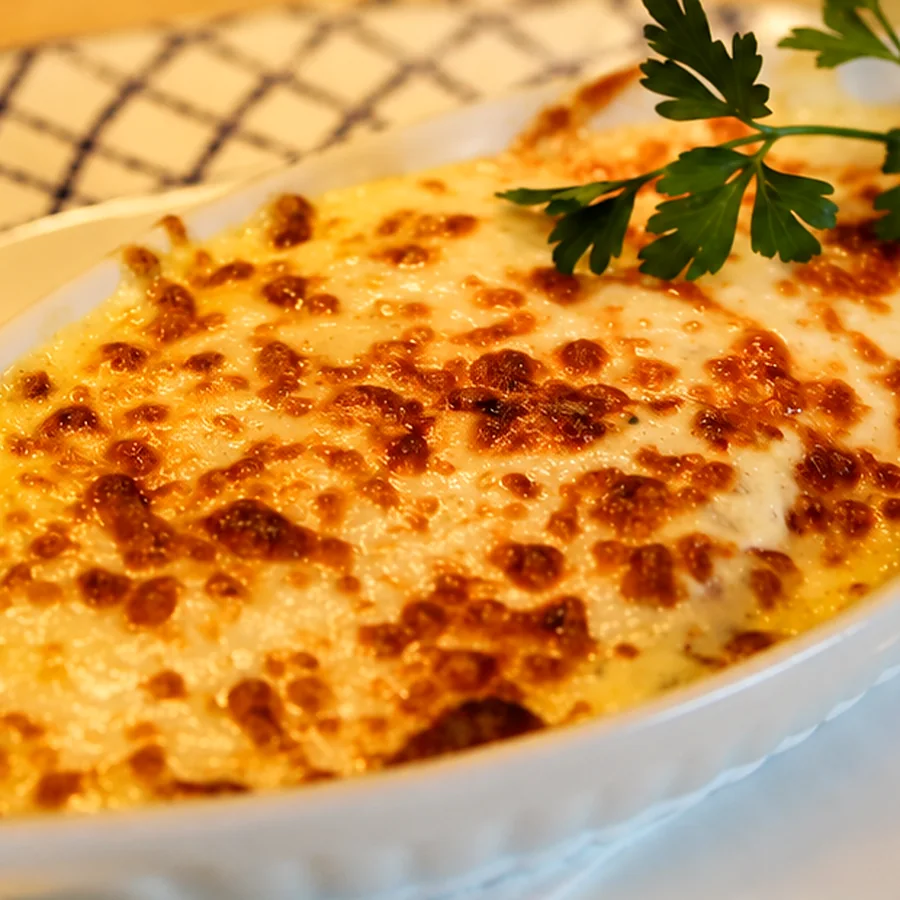
Asparagus gratin is a baked vegetable dish made with cooked asparagus, white sauce, and grated cheese. The assembled dish is placed under the broiler until the cheese melts, bubbles, and develops browned spots.
This version is creamier than roasted or grilled asparagus, but lighter and more vegetable-focused than a potato gratin or pasta casserole. It works especially well during local asparagus season in Québec and Canada, although supermarket asparagus makes it practical throughout the year.
What Makes This Version Different
The asparagus is briefly blanched before it goes into the gratin. This gives better control than trying to cook raw asparagus entirely beneath a thick sauce. When it comes out of the water, it should be tender enough for a knife to enter the thick end with only slight resistance.
I also use a cold flour-and-oil paste, similar to the method shown in the video, instead of beginning with a traditional hot butter roux. The paste can be added gradually to the hot milk, which makes it easier to stop when the sauce reaches the right thickness. For more background on how this sauce works, see my guide to French mother sauces and their uses.
The finished béchamel should coat the back of a spoon and hold a clean line when you run a finger through it. It should not pour like milk, but it should not sit in the saucepan like mashed potatoes either. For a closer look at several ways to prepare it, refer to my foolproof béchamel sauce methods.
Unlike my endive gratin with ham, this recipe contains no meat and needs only a few minutes under the broiler once assembled. It is also more delicate than a creamy zucchini gratin, since asparagus can quickly become too soft if it is overcooked.
Ingredients You Need
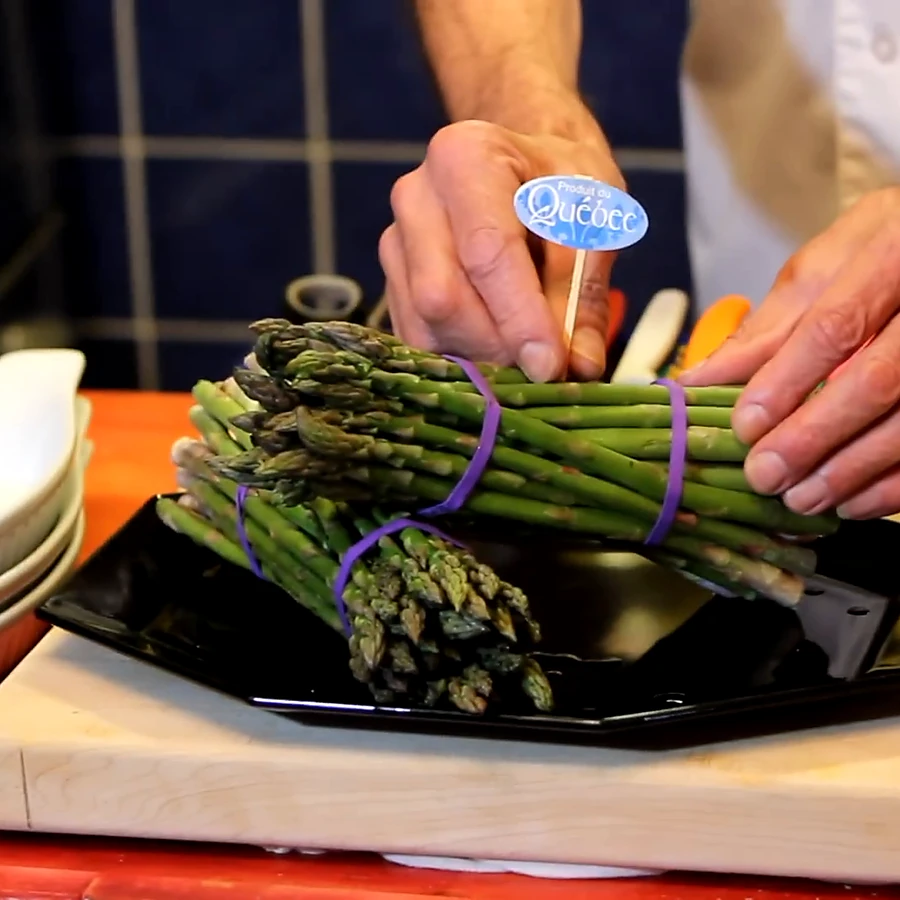
Green asparagus: Choose firm stalks with closed tips and bases that do not look dried or deeply wrinkled. Medium stalks are easiest to cook evenly.
Milk: Whole milk makes the sauce creamy without requiring heavy cream. Two percent milk can also work, although the sauce will taste slightly lighter.
All-purpose flour: Flour thickens the milk. Measure it carefully because too much will produce a pasty sauce with a noticeable flour taste.
Neutral oil: The oil is mixed with the flour to form the cold roux paste shown in the video. Canola, sunflower, or another mild oil works well.
Turmeric: Only a small pinch is needed. It gives the sauce a warm pale-yellow color but should not make the gratin taste strongly of turmeric.
Grated cheese: Gruyère, Swiss, Emmental, aged cheddar, or a mixture will melt and brown properly. Gruyère gives the most classic gratin character.
Salt and black pepper: Season the cooking water and the sauce separately. Add the sauce salt cautiously because the cheese will contribute additional salt.
Step-by-Step Instructions
1. Trim the asparagus
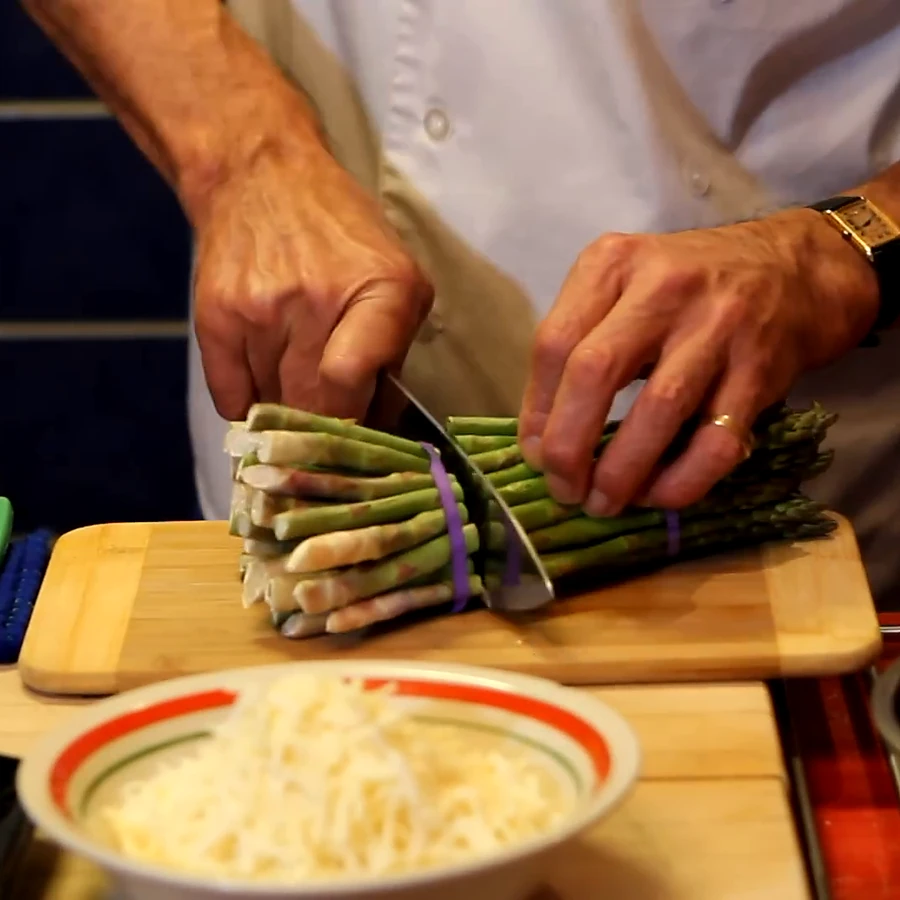
Cut or snap off the dry, woody base of each asparagus stalk. Try to keep the stalks reasonably even in length so they fit neatly in the baking dish.
Bring a wide pot of water to a boil. A wide pot allows the asparagus to lie flatter and cook more evenly than a narrow saucepan.
2. Blanch until almost tender
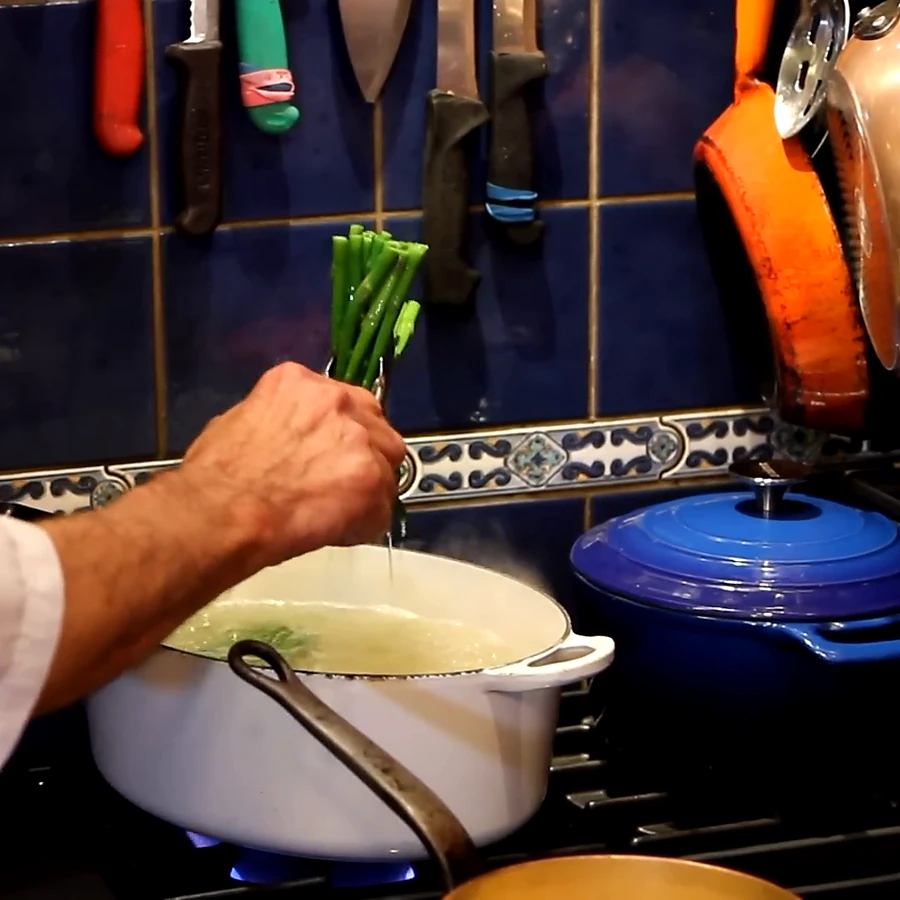
Salt the boiling water, add the asparagus, and cook for 3 to 5 minutes. Thin stalks may need only 2 to 3 minutes, while thick stalks can require closer to 5 minutes.
What I look for here is a stalk that bends slightly but does not collapse. Test the thick lower portion with the tip of a small knife. It should enter with a little resistance because the asparagus will continue heating beneath the sauce.
Drain the asparagus thoroughly. Spread it on a clean towel or paper towel and pat it dry. Do not skip this step. Water trapped between the stalks is one of the main reasons a vegetable gratin turns loose and watery.
3. Prepare the cold roux paste
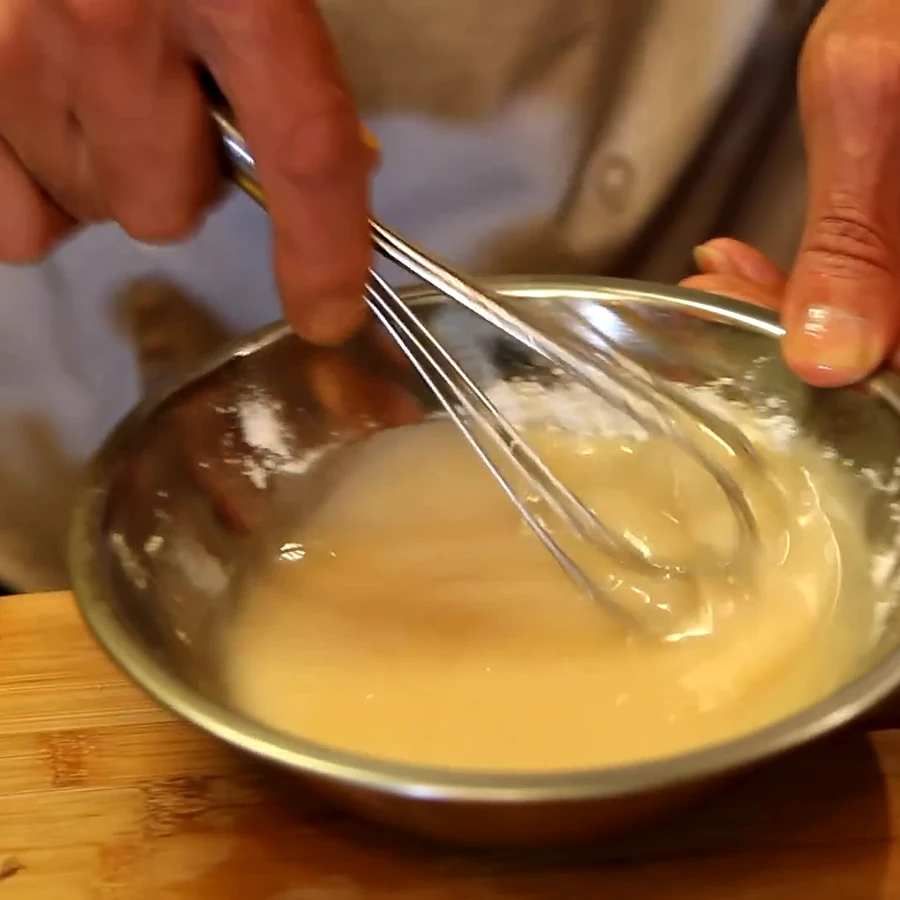
In a small bowl, whisk the flour and neutral oil together until completely smooth. The mixture should resemble a thick, pourable cream with no pockets of dry flour.
This method works because the oil coats and separates the flour particles before they enter the milk. Still, the paste must be added gradually and the finished sauce must simmer long enough to remove the raw-flour taste.
4. Cook the béchamel
Heat the milk in a saucepan over medium heat with a small pinch of turmeric. When steam rises and small bubbles begin appearing around the edge, season lightly with salt and black pepper.
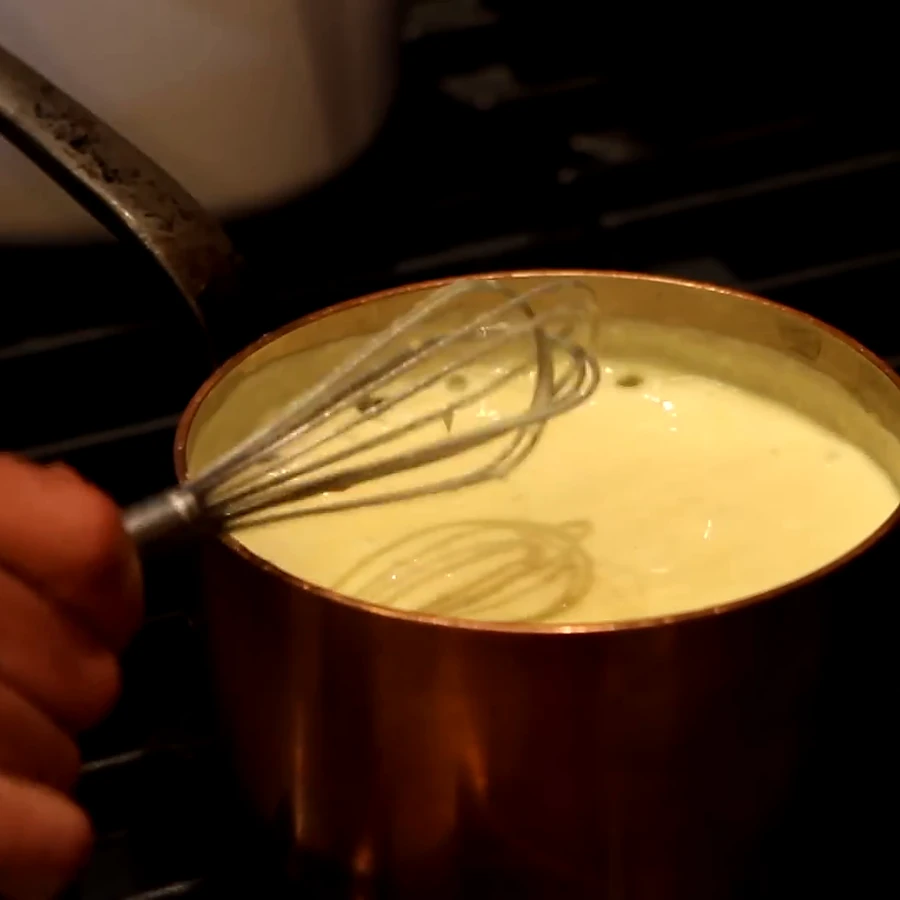
Whisk in roughly one-quarter of the flour paste. Let the milk return to a gentle simmer, then add more paste a little at a time until the sauce coats the whisk and the back of a spoon.
You may not need every last bit if the sauce thickens quickly. If it becomes too thick, whisk in a splash of milk. Simmer gently for 5 to 6 minutes while whisking along the bottom and into the corners of the saucepan. You know it is ready when it looks glossy, tastes creamy rather than floury, and falls from the whisk in a thick ribbon.
5. Assemble the gratin
Preheat the broiler with an oven rack positioned about 6 inches from the heat source.
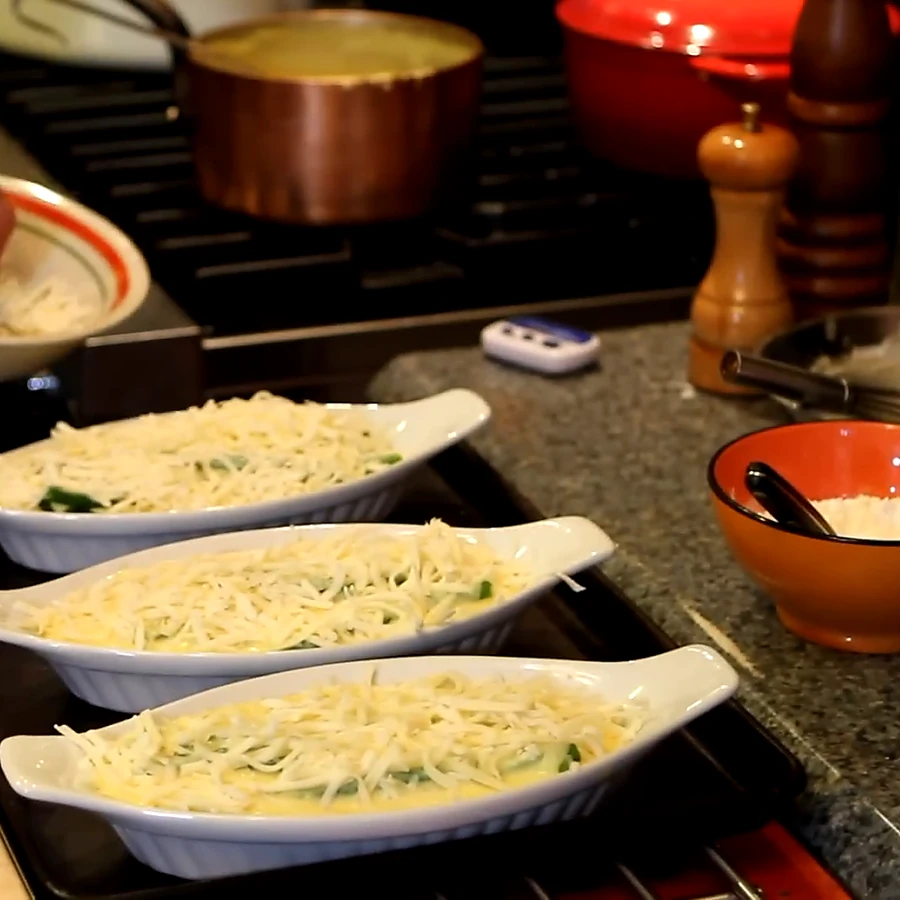
Spread a thin layer of béchamel over the bottom of a broiler-safe baking dish. Arrange the dried asparagus in a single compact layer. Pour over enough sauce to coat the stalks without completely burying them, then scatter the grated cheese evenly over the surface.
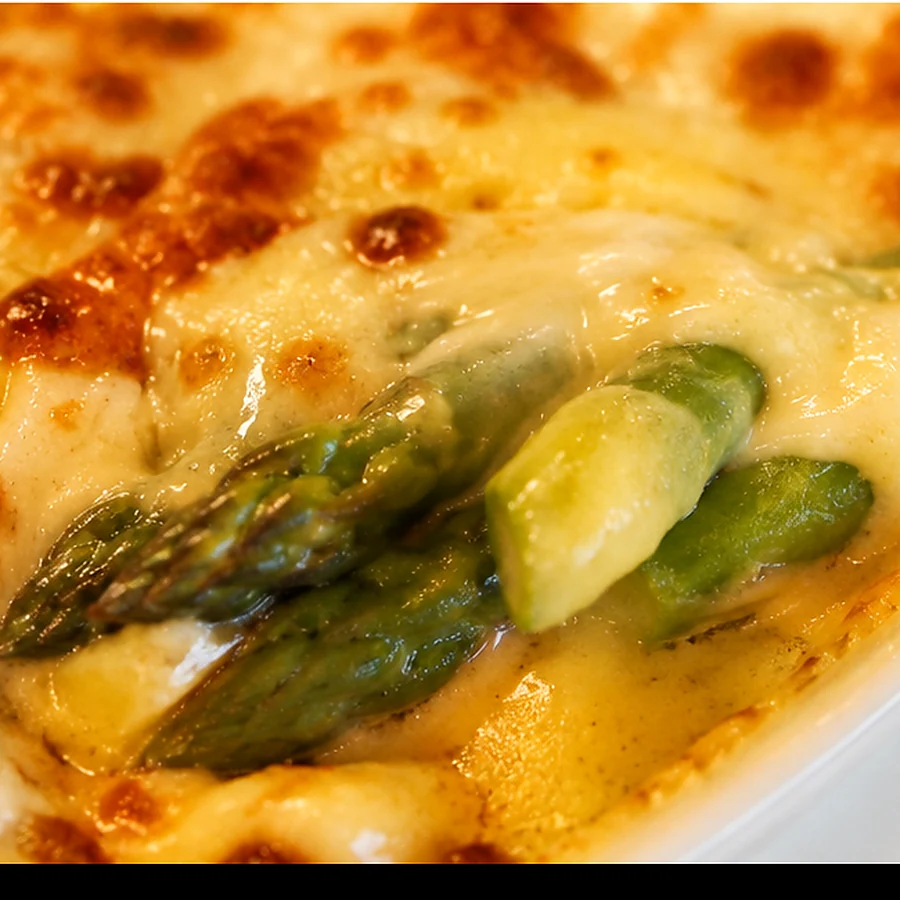
I prefer to leave a few asparagus tips visible. It makes the dish easier to identify and prevents the presentation from looking like a pan of sauce with cheese.
6. Broil until browned
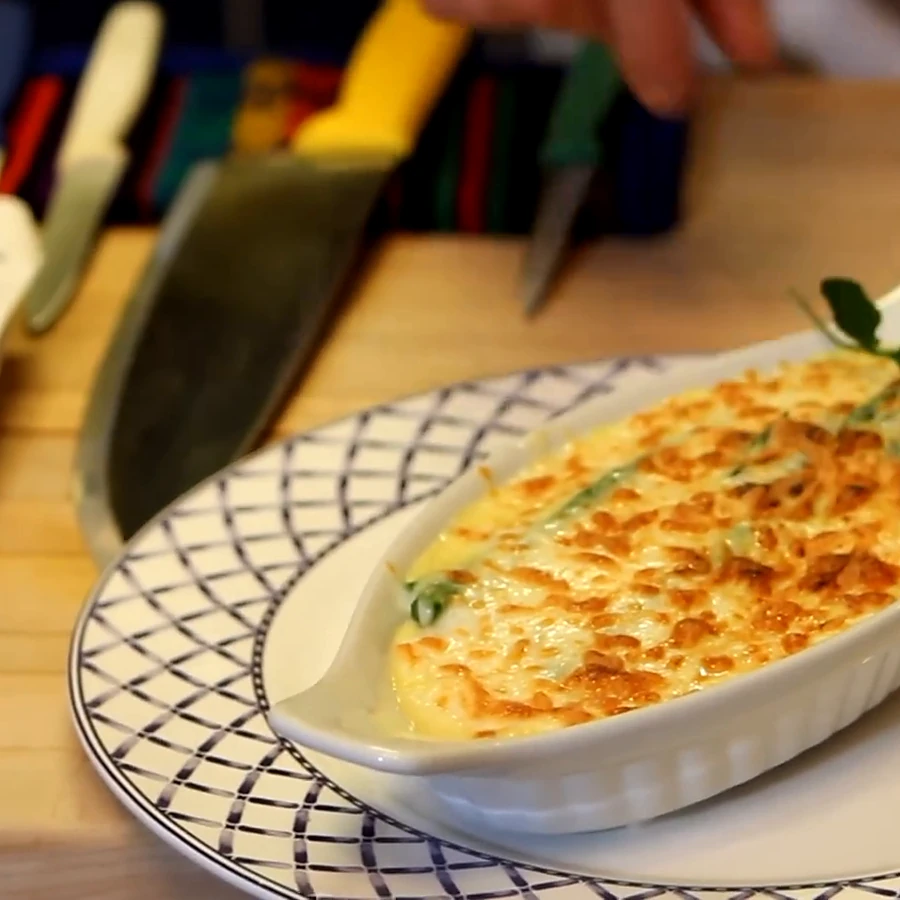
Place the hot gratin under the broiler for 3 to 5 minutes. Watch it continuously during the final minute. The cheese should be fully melted with bubbling edges and scattered golden-brown spots.
If the asparagus and sauce have cooled before assembly, bake the gratin at 375°F for 15 to 20 minutes first, then broil for 1 to 3 minutes. Broiling a cold gratin by itself may brown the top while leaving the centre lukewarm.
Let the dish stand for about 5 minutes before serving. The sauce will settle slightly but should remain creamy.
Mistakes to Avoid
Do not cook the asparagus until completely soft in the water. It still has to withstand the hot béchamel and broiler.
Do not transfer dripping-wet stalks directly into the baking dish. Drying them is what keeps the sauce thick enough to cling.
Avoid adding loose flour directly to boiling milk. Mix it with the oil first and whisk the paste into the milk gradually.
Do not use an ordinary elastic band to tie asparagus for boiling. Cook the stalks loose, or use only kitchen twine or food-safe silicone ties.
Finally, do not walk away from the broiler. A well-browned cheese surface can become scorched very quickly.
What to Serve with Asparagus Gratin
This gratin can be served as a vegetable side with fish, chicken, beef, or a simple vegetarian meal. Because the sauce and cheese are rich, it pairs best with a main dish that is roasted, pan-seared, or lightly sauced.
For fish, try it beside simple pan-seared salmon or whole baked trout with vegetables. The fresh asparagus helps balance the richness of salmon, while the béchamel makes a leaner fish dinner feel more substantial.
For poultry, it works with French chicken in tarragon cream sauce, although I would serve a smaller portion because both dishes contain creamy elements. With beef, a straightforward steak with tarragon sauce makes a bistro-style meal.
For more vegetable ideas, browse these easy vegetable side dishes for meat, fish, and pasta. This gratin is the creamy option, while oven-roasted mixed vegetables give you a drier, more caramelized alternative.
Substitutions
Butter can replace the neutral oil. Use the same measured volume and melt it before combining it with the flour. The flavour will be richer, although this changes the cold-paste method slightly.
Gruyère can be replaced with Swiss cheese, Emmental, aged cheddar, or a combination. Parmesan may be added for flavour, but I would not use it as the only cheese because it does not create the same smooth melted layer.
White asparagus can be used, but it generally requires peeling and a longer cooking time. Check tenderness with a knife rather than using the green-asparagus timing.
For a different vegetable gratin using the same basic sauce logic, try broccoli under a browned cheese crust or classic cauliflower with béchamel. A potato and carrot gratin is heavier and better suited to a cold-weather dinner.
FAQ
Can I assemble the gratin ahead of time?
Yes. Blanch and dry the asparagus, prepare the sauce, and assemble the dish. Cover and refrigerate it for up to one day. Bake at 375°F until hot throughout, then finish briefly under the broiler.
Why did my béchamel become lumpy?
The thickening paste may have been added too quickly, or the sauce may not have been whisked continuously. Remove the pan from the heat and whisk firmly. For stubborn lumps, pass the sauce through a fine strainer before assembling the gratin.
Why is there water in the bottom of the dish?
The asparagus was probably overcooked, insufficiently drained, or not dried after blanching. A very thin sauce can also separate more easily around wet vegetables.
Can I use frozen asparagus?
Fresh asparagus is strongly preferred. Frozen asparagus releases more water and usually has a softer texture. When it is the only option, thaw it completely, drain it, and dry it very well before adding the sauce.
Is this a main dish or a side dish?
It is usually served as a vegetable side, but it can become a light main dish with bread and a salad. The cheese and milk add some protein and richness, while the asparagus keeps the meal vegetable-forward.
How do I know when the gratin is ready?
The centre should be hot, the sauce should bubble gently around the edges, and the cheese should have melted with golden spots. The asparagus should remain intact when lifted from the dish.
How should leftovers be reheated?
Reheat leftovers in a 350°F oven until hot, usually 10 to 15 minutes. The microwave works, but the cheese will be softer and the sauce may loosen slightly.
Suggested Posts
For more browned, creamy dishes, explore my collection of gratin recipes and cheesy casserole ideas.
The endive and ham version uses a similar French gratin approach but is more substantial.
The classic cauliflower version is a useful cold-weather alternative.
The creamy zucchini gratin is well suited to summer zucchini season.
The broccoli gratin with cheese is another dependable family-style vegetable dish.
Easy Asparagus Gratin with Creamy Béchamel and Cheese
Ingredients
- 1 1/3 pounds green asparagus
- 2 cups whole milk
- 1/3 cup all-purpose flour
- 3 tablespoons neutral oil
- 1 small pinch turmeric
- 1 1/4 cups grated Gruyère Swiss cheese, or aged cheddar
- 1 tablespoon kosher salt for the cooking water
- 1/2 teaspoon fine salt plus more as needed
- 1/4 teaspoon ground black pepper
Instructions
- Trim and discard the woody bases from the asparagus.
- Bring a wide pot of water to a boil and season it with the kosher salt.
- Blanch the asparagus for 3 to 5 minutes, until almost tender.
- Drain the asparagus, spread it on a towel, and pat it thoroughly dry.
- Whisk the flour and oil together in a bowl until completely smooth.
- Heat the milk with the turmeric until steaming and beginning to simmer.
- Add the fine salt and black pepper.
- Gradually whisk in the flour paste until the sauce coats the back of a spoon.
- Simmer the béchamel for 5 to 6 minutes, whisking frequently.
- Preheat the broiler and place an oven rack about 6 inches from the heat.
- Spread a thin layer of béchamel in a broiler-safe baking dish.
- Arrange the asparagus in the dish and cover it with the remaining sauce.
- Sprinkle the grated cheese evenly over the top.
- Broil for 3 to 5 minutes, until bubbling and golden brown.
- Rest for 5 minutes before serving.