Crispy Pork Shoulder Roast, Easy Oven Comfort Food
Pork shoulder roast is a slow-roasted pork dinner with a deeply seasoned crust, tender meat, and rich pan juices. It is different from a lean oven pork roast because pork shoulder has more marbling, which means it becomes softer, juicier, and more rustic when cooked low and slow. I make this recipe when I want a hearty comfort meal that works for Sunday dinner, meal prep, cold weather cooking, or any time I want a generous pork roast with crispy edges.
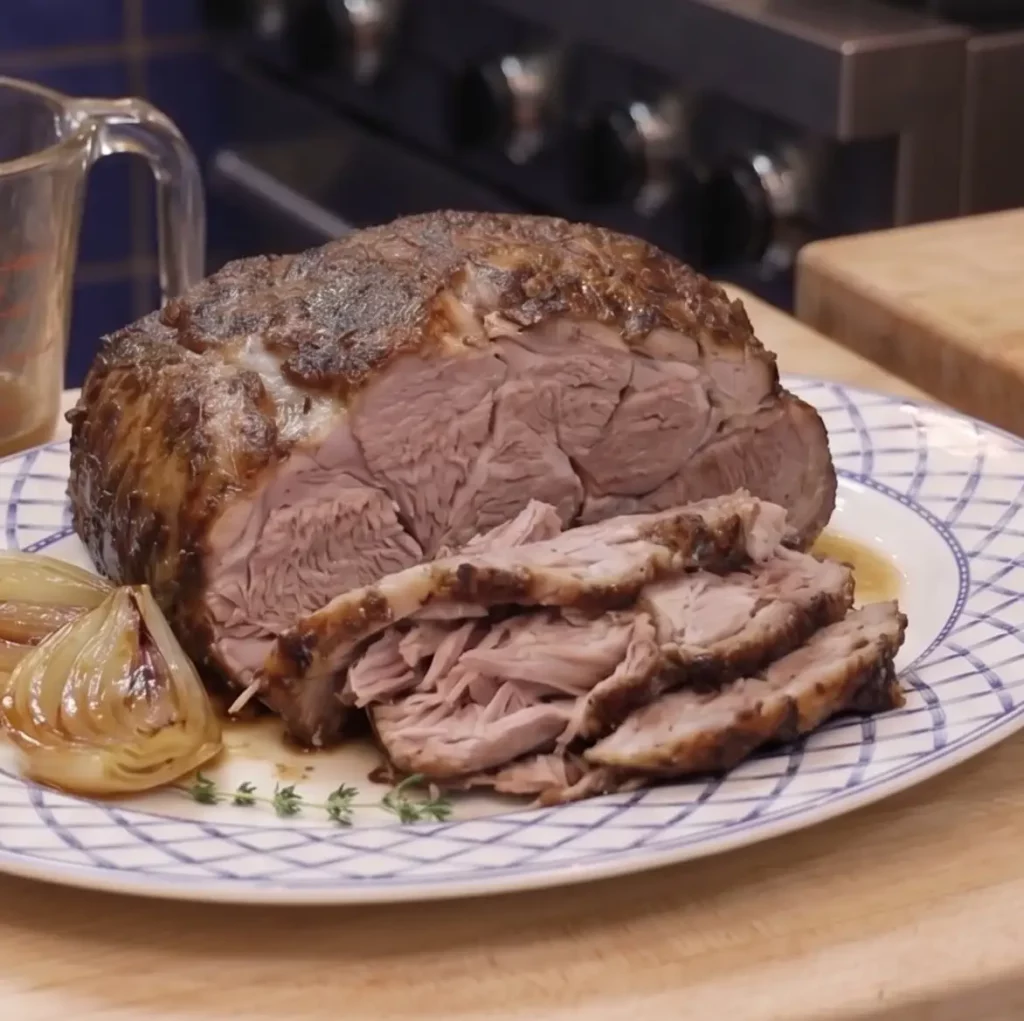
This recipe is based on my YouTube video, with a few adjustments since publication. I make it this way because pork shoulder needs time, seasoning, and dry heat to build flavor. I prefer to roast it uncovered for most of the cooking so the outside develops a crust instead of steaming like a braise.
This recipe is not the same as a classic oven pork roast. That recipe is more about a sliceable roast with a cleaner, leaner texture. This crispy pork shoulder roast is richer, more rustic, and made for tender pieces of pork with a golden, savory crust. It is also different from oven or slow cooker pulled pork because the goal here is not barbecue sauce or sandwich meat. The goal is a roasted pork shoulder with crispy edges, pan juices, and a true comfort food feel.
Why Pork Shoulder Makes Such a Good Roast
Pork shoulder is one of the best cuts for slow roasting because it has enough fat and connective tissue to stay juicy during a long cooking time. When cooked properly, the meat becomes tender without drying out, and the outside turns into a flavorful crust.
For this recipe, I like using a boneless or bone-in pork shoulder roast around 4 to 5 pounds. A bone-in shoulder can be slightly more flavorful, while a boneless shoulder is easier to carve and serve. Both work well. The most important thing is giving the roast enough time in the oven.
The seasoning is simple: salt, pepper, garlic powder, onion powder, paprika, mustard, brown sugar, herbs, and a little oil. The brown sugar helps the crust darken, the mustard helps the seasoning stick, and the paprika gives the roast a beautiful color. The result is savory, slightly smoky, a little sweet, and very comforting.
This is a protein-rich main dish, but it is also a hearty roast. Pork shoulder has more fat than pork tenderloin or loin roast, which is why it tastes so rich and stays tender. Serve it with potatoes, cabbage, roasted vegetables, or a simple salad to balance the plate.
Ingredients for Crispy Pork Shoulder Roast
The main ingredient is pork shoulder, sometimes sold as pork butt or Boston butt in Canada and the United States. Even though it is called pork butt, it comes from the shoulder area. It is ideal for slow roasting, shredding, braising, and building a crisp roasted crust.
The dry seasoning is what gives this recipe its character. Salt seasons the meat deeply. Brown sugar helps with browning. Smoked paprika gives color and a light smoky flavor without needing a barbecue. Garlic powder and onion powder make the crust savory. Mustard gives a mild tang and helps the spices stick to the pork.
I also add a little vinegar or lemon juice near the end if the pan juices taste too rich. That small acidic touch wakes up the flavor without turning the roast into a sweet and sour dish.
If you like the idea of a more traditional pork dinner, this roast pairs very well with a simple sauce like classic brown sauce, especially if you want to serve it with potatoes or vegetables.
Step-by-Step Instructions
1. Dry the pork shoulder
Pat the pork shoulder very dry with paper towels. This step matters because moisture on the surface slows down browning. A dry surface gives you a better crust.
If the pork has a thick fat cap, trim it slightly, but do not remove all the fat. Leave about 1/4 inch so it can protect the meat and help the outside crisp.
2. Season generously
Mix salt, black pepper, garlic powder, onion powder, paprika, brown sugar, thyme, and a little cayenne if you want heat. Rub the pork with Dijon mustard and oil, then coat it all over with the seasoning.
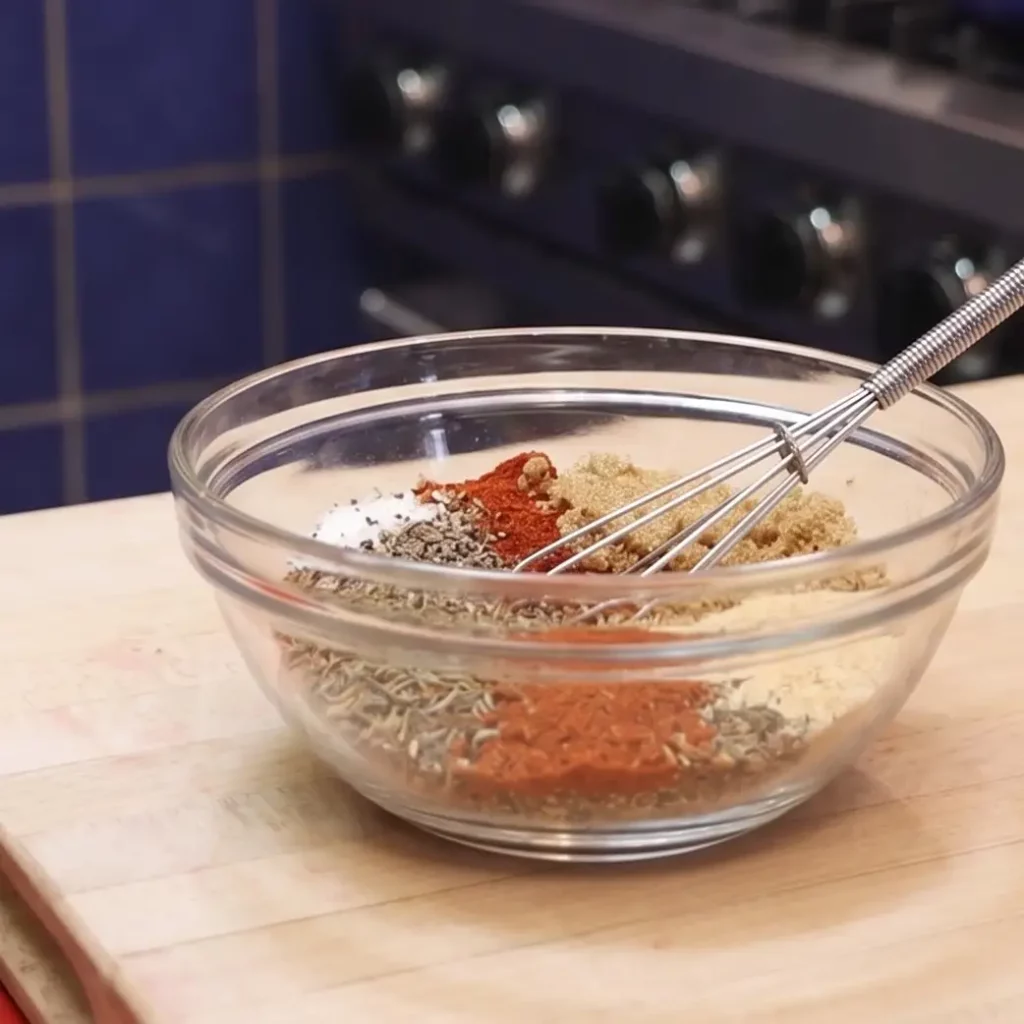
For the best flavor, place the seasoned pork on a rack or plate and refrigerate it uncovered for at least 4 hours, or overnight if possible. This helps the seasoning penetrate and dries the surface, which improves the crust.
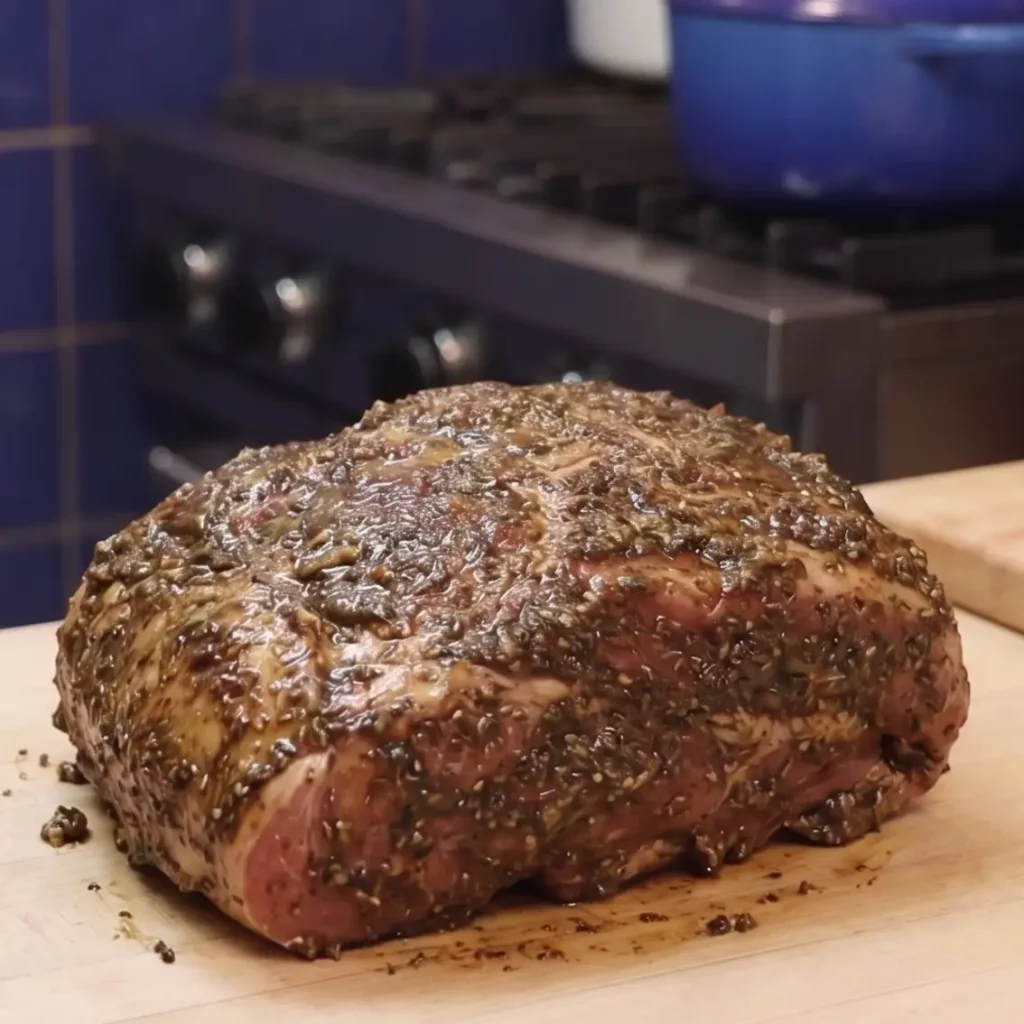
3. Start with moderate heat
Place the pork shoulder in a roasting pan, fat side up. Add onions and a little broth or water to the bottom of the pan, but do not pour liquid over the meat. The liquid keeps the pan juices from burning while the pork roasts.
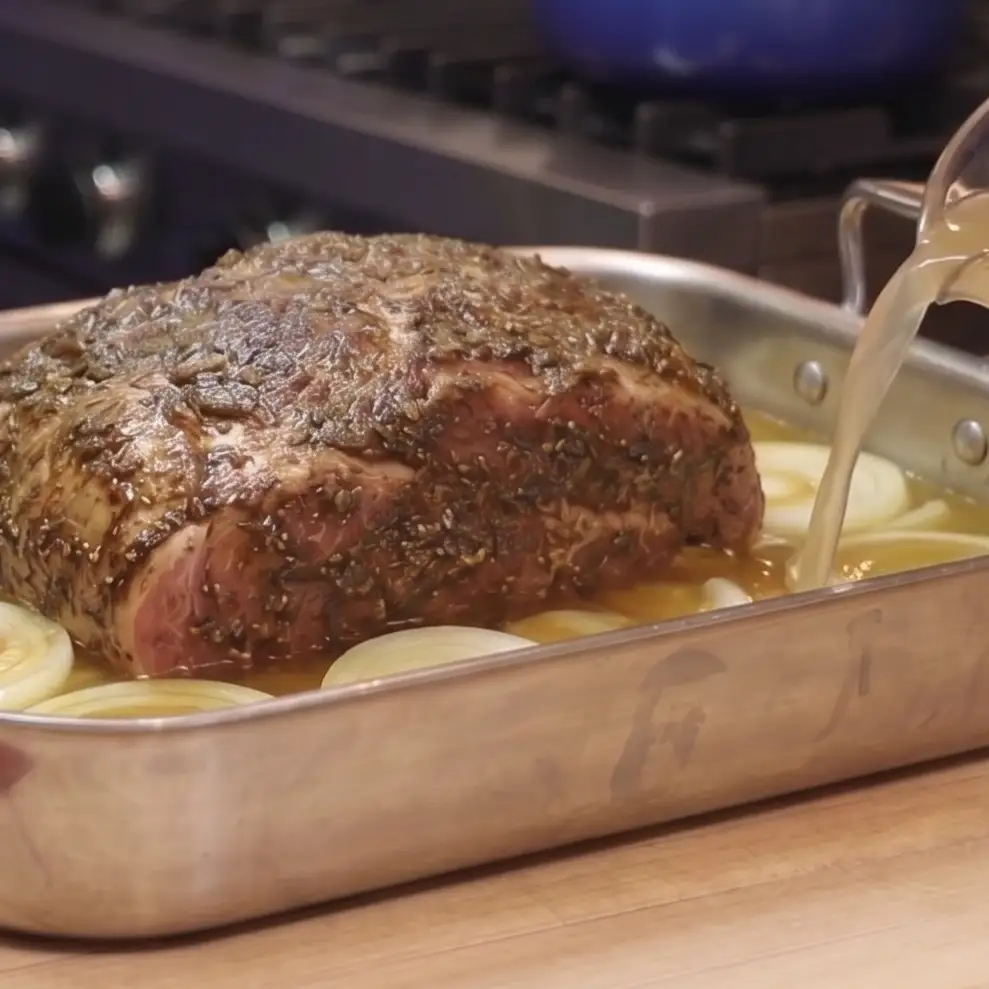
Roast at 300°F until the pork becomes tender. This can take 4 to 5 hours depending on the size of the roast. Pork shoulder is not a cut to rush. If it still feels tight when you test it with a fork, it needs more time.
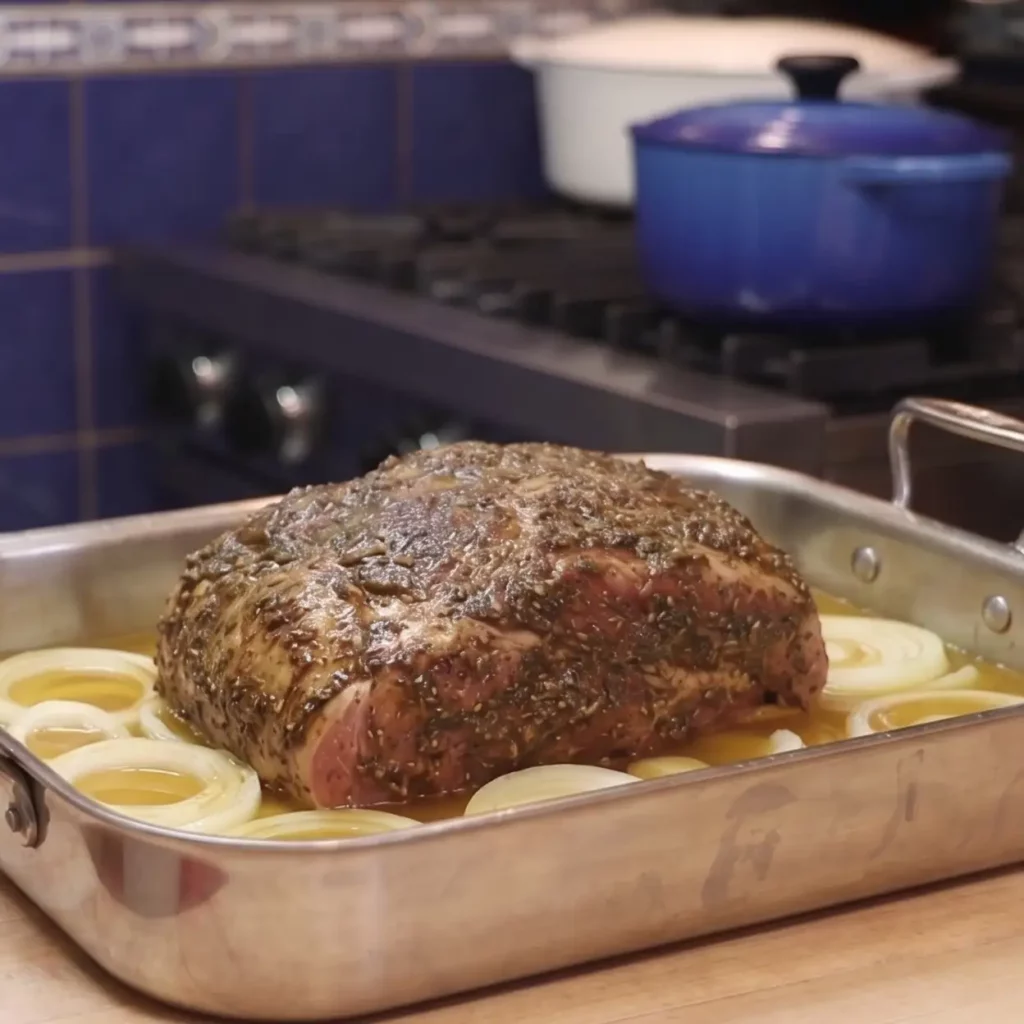
4. Crisp the outside
Once the pork is tender, increase the oven temperature to 450°F for the last 15 to 25 minutes. This final blast of heat helps the crust become darker, crispier, and more flavorful.
Watch it closely at this stage. The sugar and spices can darken quickly. You want a deep roasted crust, not a burnt surface.
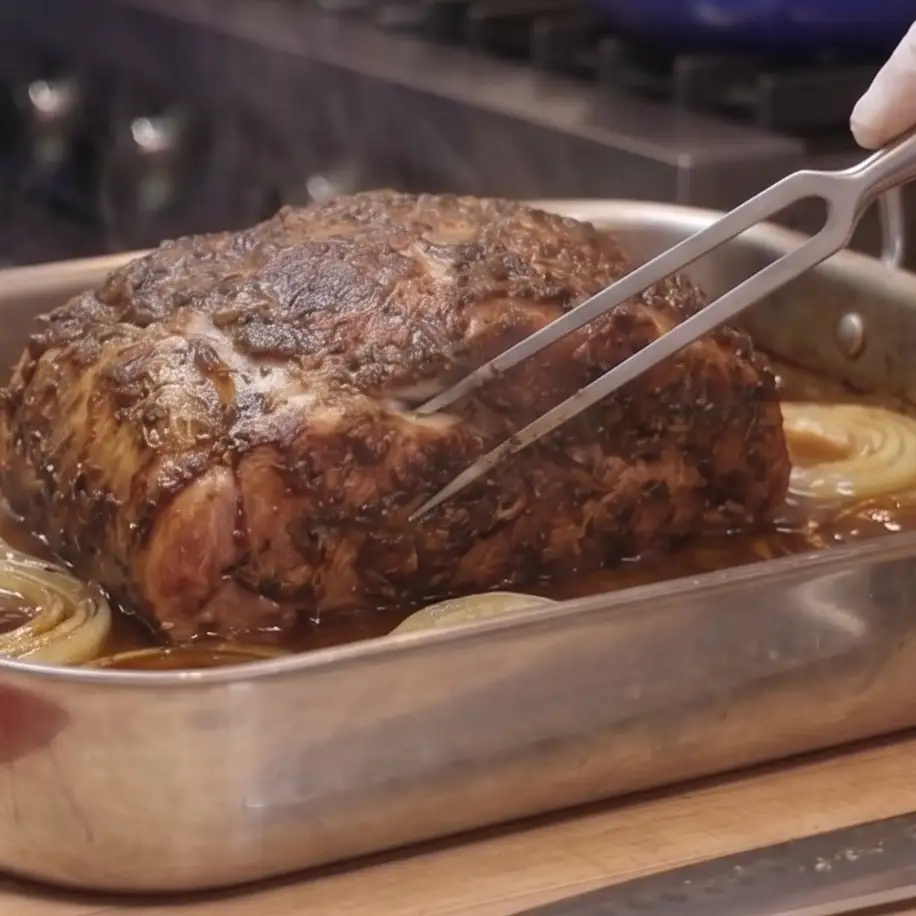
5. Rest before serving
Remove the roast from the oven and let it rest for at least 20 minutes. This makes the meat easier to pull into large chunks or thick slices.
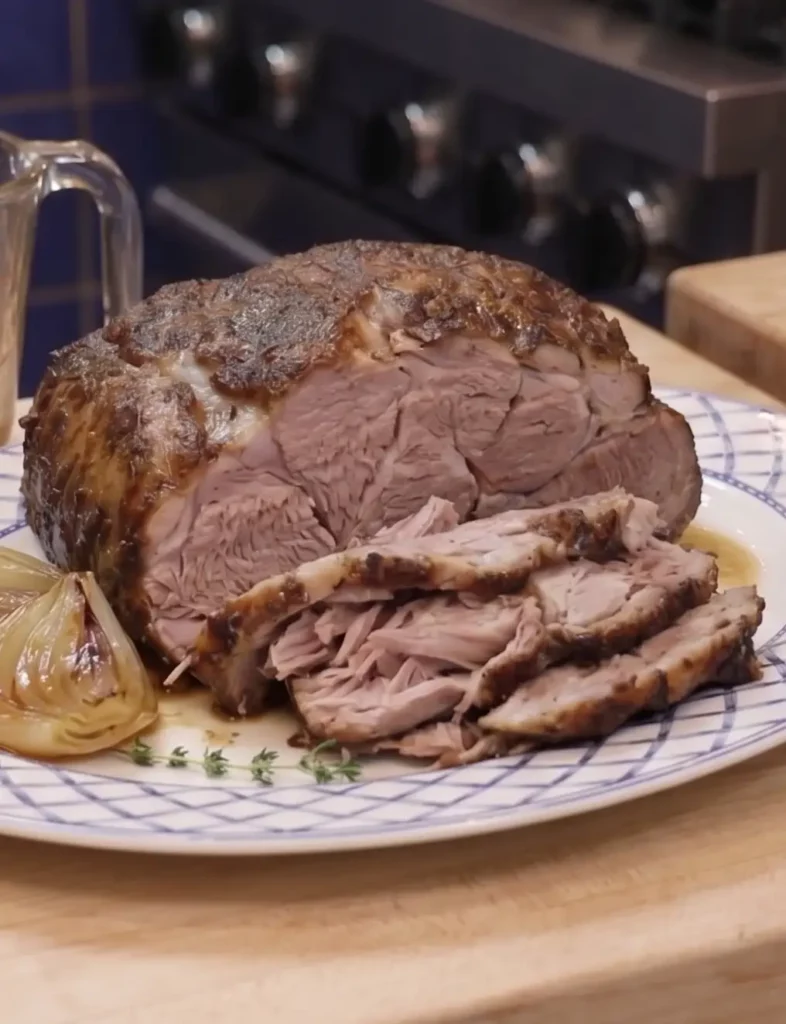
Pork shoulder is not always perfectly sliceable like pork loin. It is more rustic. Serve it in thick pieces, tender chunks, or rough slices with the crispy crust on top.
How to Get a Crispy Crust
The crust comes from three things: a dry surface, enough seasoning, and uncovered roasting. If the pork is covered the whole time, it will steam. That can make it tender, but it will not give you the same roasted crust.
I prefer to roast it uncovered because the outside develops flavor while the inside slowly softens. If your pork shoulder is browning too quickly before it becomes tender, loosely tent it with foil for part of the cooking, then uncover it again at the end.
Do not add too much liquid to the pan. A small amount is enough. The pork should not be sitting in a deep bath of broth. That turns it into a braise instead of a roast.
For a different slow pork recipe with a saucier finish, rustic pork stew with carrots and lentils is better. For this recipe, the crispy roasted surface is the main feature.
Substitutions
Pork shoulder
You can use pork butt, Boston butt, or picnic shoulder. If using picnic shoulder with skin, score the skin and dry it very well for better crisping.
Brown sugar
Use maple sugar if you want a more Canadian flavor. You can also use a small amount of maple syrup, but dry sugar gives a better crust.
Dijon mustard
Yellow mustard works, but Dijon gives a more balanced flavor. Whole-grain mustard is also good if you want a more rustic crust.
Smoked paprika
Regular paprika works if you do not want smoky flavor. Chili powder can also be used, but it changes the flavor profile.
Herbs
Thyme, rosemary, sage, or a simple poultry-style herb blend can all work with pork shoulder.
Broth
Use chicken broth, vegetable broth, apple cider, beer, or water. Apple cider gives a slightly sweeter pan juice, while beer gives a more rustic flavor.
What to Serve with Crispy Pork Shoulder Roast
This roast is rich and savory, so potatoes are one of the best sides. A creamy potato dish like traditional gratin dauphinois makes the meal feel like a proper Sunday dinner.
For something more rustic, serve the pork with Sarladaise potatoes cooked in duck fat. The crispy potatoes match the roasted crust of the pork, especially with a spoonful of pan juices.
If you want a lighter side, Parisian potatoes work well because they are simple, golden, and not too heavy.
A crisp cabbage side is also excellent with pork shoulder. A creamy slaw like homemade KFC-style coleslaw gives freshness and crunch, especially if you serve the pork in chunks or sandwiches the next day.
For a sauce option, keep it simple. The pan juices are usually enough, but a spoonful of homemade barbecue sauce works if you want a more casual North American plate.
Suggested Posts
For a leaner pork dinner, try a classic oven pork roast when you want clean slices and a more traditional roast presentation.
For a saucy, shreddable pork recipe, make slow-cooked pulled pork instead of this crispy roast.
For another pork recipe with a big comfort food feel, maple barbecue pork ribs are perfect when you want a sticky rib dinner.
For a French-style pork and sausage meal, classic cassoulet is a deeper, bean-based comfort dish.
For a sausage-focused recipe, French pork sausage is a useful base recipe for building a larger pork cluster.
For a sauce to serve with roasted meats, classic brown sauce is a practical match with pork, potatoes, and vegetables.
FAQ
Is pork shoulder the same as pork butt?
They are closely related cuts from the shoulder area. Pork butt, also called Boston butt, is usually well marbled and excellent for roasting. Picnic shoulder can also work, especially if it has skin.
Can I make this pork shoulder roast ahead of time?
Yes. Pork shoulder reheats well because it has enough fat to stay moist. Reheat it gently in a covered dish with a few spoonfuls of pan juices, then uncover it briefly to refresh the crust.
Why is my pork shoulder tough?
It probably needs more time. Pork shoulder becomes tender when the connective tissue has enough time to break down. If it feels tight, keep roasting and check again later.
Should I cover pork shoulder while roasting?
For a crispy crust, roast it uncovered most of the time. If it browns too much before it becomes tender, cover it loosely with foil, then uncover it near the end.
What internal temperature should pork shoulder reach?
For tender pork shoulder, aim for about 195°F to 205°F if you want it very soft and easy to pull into chunks. It can be safe before that, but it will not have the same tender texture.
Can I use this recipe for pulled pork?
Yes, but it is not the main goal. If you want pulled pork, cook it until very tender, shred it, and mix it with sauce. For a dedicated version, the oven or slow cooker pulled pork is the better recipe.
Crispy Pork Shoulder Roast
Ingredients
- 4 to 5 lb pork shoulder roast boneless or bone-in
- 2 tbsp Dijon mustard
- 2 tbsp olive oil
- 1 tbsp kosher salt
- 2 tsp black pepper
- 2 tsp garlic powder
- 2 tsp onion powder
- 2 tsp smoked paprika
- 1 tbsp brown sugar
- 1 tsp dried thyme
- 1/2 tsp cayenne pepper optional
- 2 onions thickly sliced
- 1 cup chicken broth water, beer, or apple cider
- 1 tbsp apple cider vinegar or lemon juice optional for finishing
- 2 tbsp chopped parsley optional
Instructions
- Pat the pork shoulder very dry with paper towels. Trim the fat cap if needed, leaving about 1/4 inch of fat.
- In a small bowl, mix salt, pepper, garlic powder, onion powder, smoked paprika, brown sugar, thyme, and cayenne if using.
- Rub the pork with Dijon mustard and olive oil. Coat all sides with the seasoning mixture.
- For the best crust, refrigerate the seasoned pork uncovered for 4 hours or overnight.
- Preheat the oven to 300°F.
- Place sliced onions in the bottom of a roasting pan. Add broth, water, beer, or apple cider to the pan. Place the pork shoulder on top, fat side up.
- Roast uncovered for 4 to 5 hours, or until the pork is very tender and a fork slides in easily. Add a little liquid to the pan if the bottom becomes dry.
- Increase the oven temperature to 450°F. Roast for another 15 to 25 minutes, or until the outside is dark, crisp, and well browned.
- Remove from the oven and rest for at least 20 minutes.
- Skim excess fat from the pan juices if desired. Add a small splash of vinegar or lemon juice to brighten the flavor.
- Serve the pork in thick slices, chunks, or rough pieces with crispy crust and pan juices.
Notes
FAQ
Is pork shoulder the same as pork butt?
They are closely related cuts from the shoulder area. Pork butt, also called Boston butt, is usually well marbled and excellent for roasting. Picnic shoulder can also work, especially if it has skin.Can I make this pork shoulder roast ahead of time?
Yes. Pork shoulder reheats well because it has enough fat to stay moist. Reheat it gently in a covered dish with a few spoonfuls of pan juices, then uncover it briefly to refresh the crust.Why is my pork shoulder tough?
It probably needs more time. Pork shoulder becomes tender when the connective tissue has enough time to break down. If it feels tight, keep roasting and check again later.Should I cover pork shoulder while roasting?
For a crispy crust, roast it uncovered most of the time. If it browns too much before it becomes tender, cover it loosely with foil, then uncover it near the end.What internal temperature should pork shoulder reach?
For tender pork shoulder, aim for about 195°F to 205°F if you want it very soft and easy to pull into chunks. It can be safe before that, but it will not have the same tender texture.Can I use this recipe for pulled pork?
Yes, but it is not the main goal. If you want pulled pork, cook it until very tender, shred it, and mix it with sauce. For a dedicated version, the oven or slow cooker pulled pork is the better recipe.🔗 Useful Links
🛒 Michel Dumas Shop : Explore our kitchen essentials, including aprons and knives.
🌐 Linktree : Access all our important links in one place.
📱 YouTube | Instagram | Facebook | TikTok : Follow us for the latest recipes and culinary tips.