Creamy Shrimp Pasta with Basil and Cherry Tomatoes
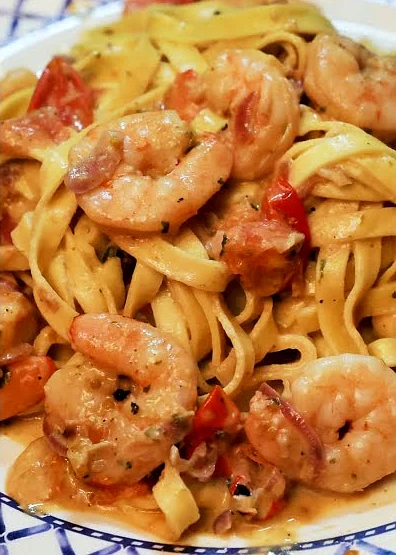
This creamy shrimp pasta is a quick skillet pasta made with large shrimp, fresh fettuccine, cherry tomatoes, garlic, red onion, basil oil, and a short cream reduction. It is different from a heavy Alfredo because the tomatoes release juice into the pan, the basil keeps the sauce fresh, and the shrimp stay the main ingredient. I make it when I want a generous seafood pasta that still feels fast enough for a weeknight dinner in Canada or the USA.
This recipe is based on my YouTube video, with a few adjustments since publication. In the video, I used a very generous amount of cream and reduced it hard in the pan. For the written version, I prefer to use a little less cream so the recipe is easier to reproduce at home and the shrimp do not overcook while the sauce thickens.
The mistake to avoid is cooking the shrimp all the way before the sauce is finished. What I look for here is shrimp that are just turning pink, tomatoes starting to collapse, and a sauce that coats the pasta instead of sitting like soup at the bottom of the plate.
Why this version works
I make it this way because shrimp cook fast, fresh pasta cooks fast, and the sauce has to be ready before both go too far. The red onion gives sweetness, the garlic perfumes the oil, the cherry tomatoes add acidity, and the cream pulls everything together.
This is not the same idea as a red sauce pasta like tomato tuna pasta for a quick pantry dinner. It is also not as sharp and spicy as linguine arrabbiata with a tomato chili sauce. This one is creamy, shrimp-forward, and more generous.
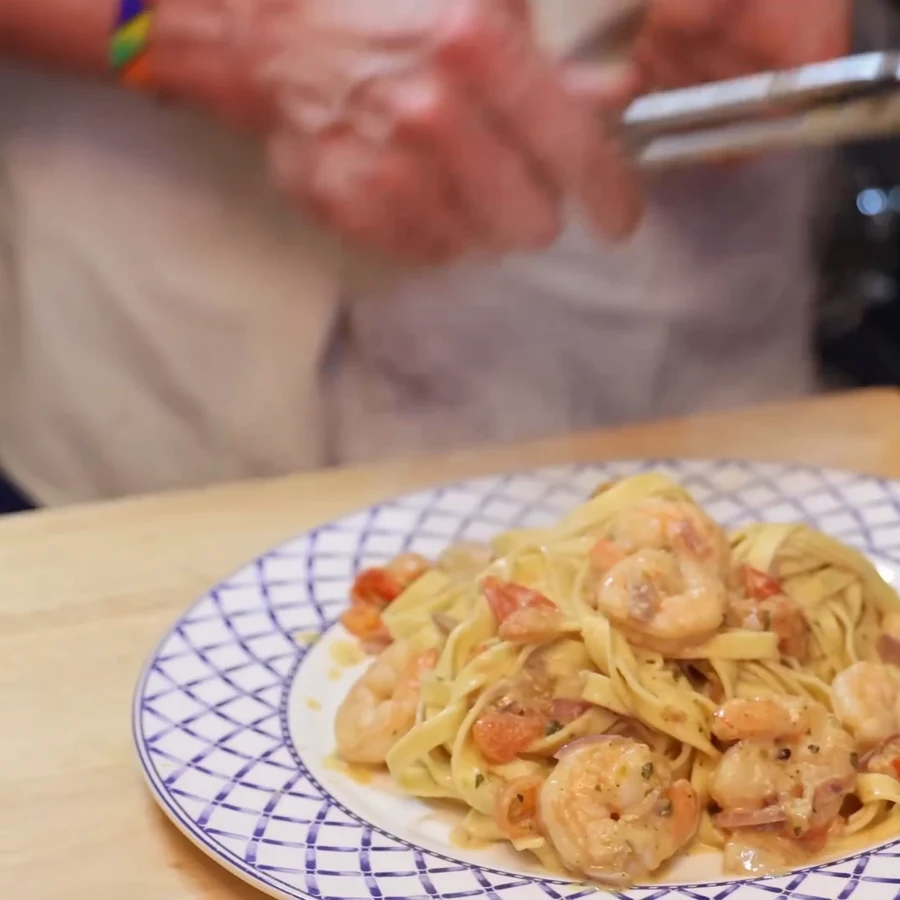
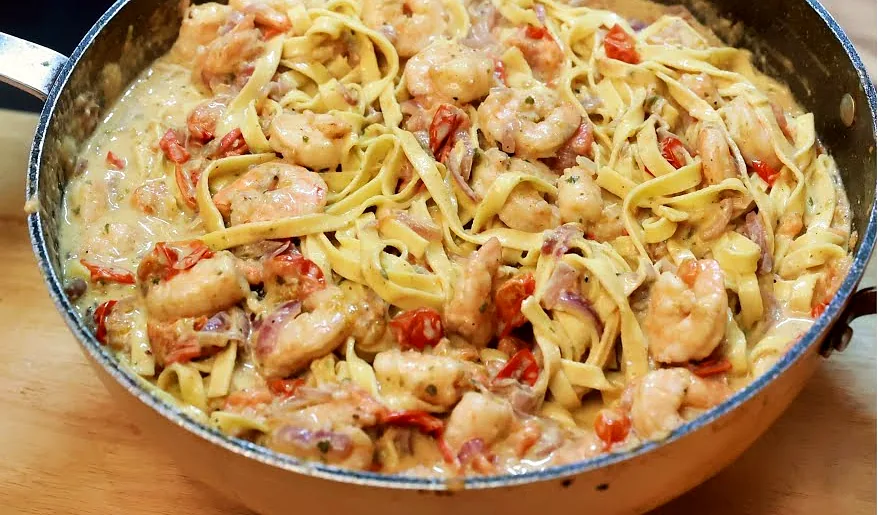
The texture matters. At the end, the sauce should be glossy and creamy, but not thick like glue. When you lift the pasta with tongs, it should hold together lightly, with little streaks of tomato and basil clinging to the noodles.
Ingredients you need
Use large shrimp if possible. The video uses about 40 shrimp, which is a generous amount for the pasta. For home cooking, large shrimp give the best result because they stay juicy even after being tossed in the sauce.
Fresh fettuccine is also important here. It cooks in just a few minutes, so the whole recipe moves quickly. Dried pasta works too, but the timing changes. Start dried pasta earlier and save a splash of pasta water before draining.
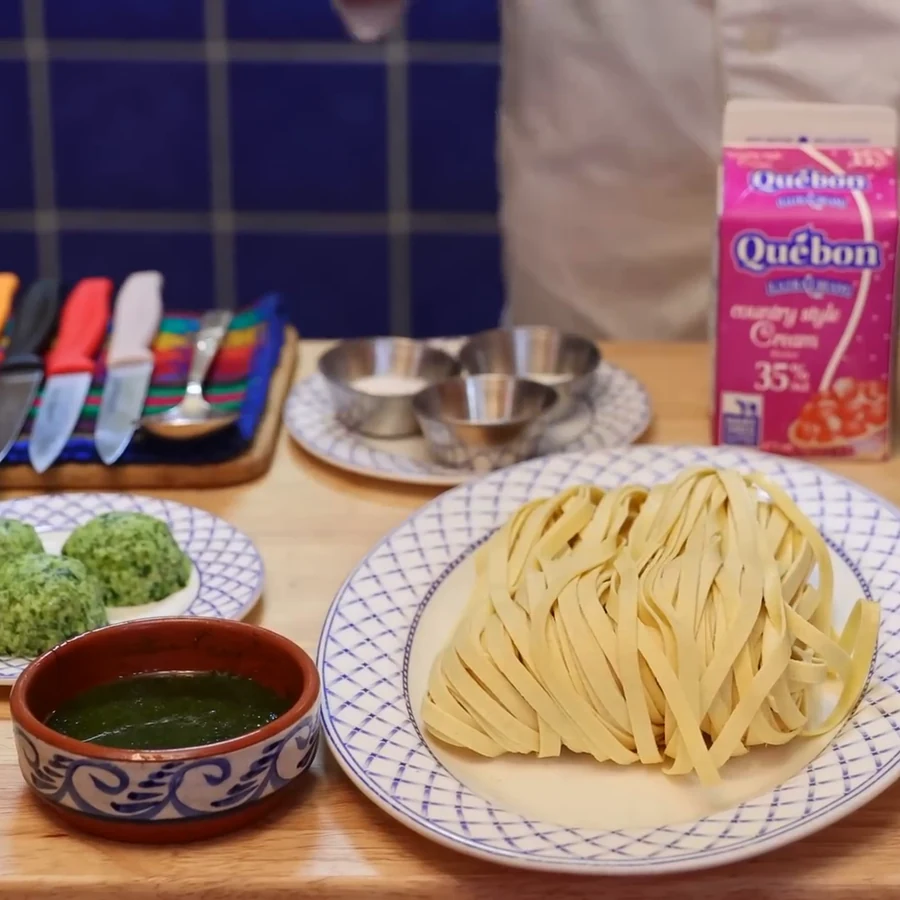
The basil in the video is basil blended with olive oil. A simple basil oil works beautifully. A small spoonful of pesto also works, but use a light hand because pesto can be salty and cheesy. If you want to understand cream sauces better, the guide on how to make a creamy sauce without making it heavy is useful for this kind of recipe.
For the garlic, keep the heat under control. Garlic should smell sweet and warm, not bitter. If garlic tends to burn in your pan, my method for mincing garlic without burning it applies perfectly here.
Step-by-step instructions
Start with the pasta water. Salt it well. The pasta itself needs seasoning from the inside, and because the sauce is not salted heavily at the beginning, the pasta water does part of the work.
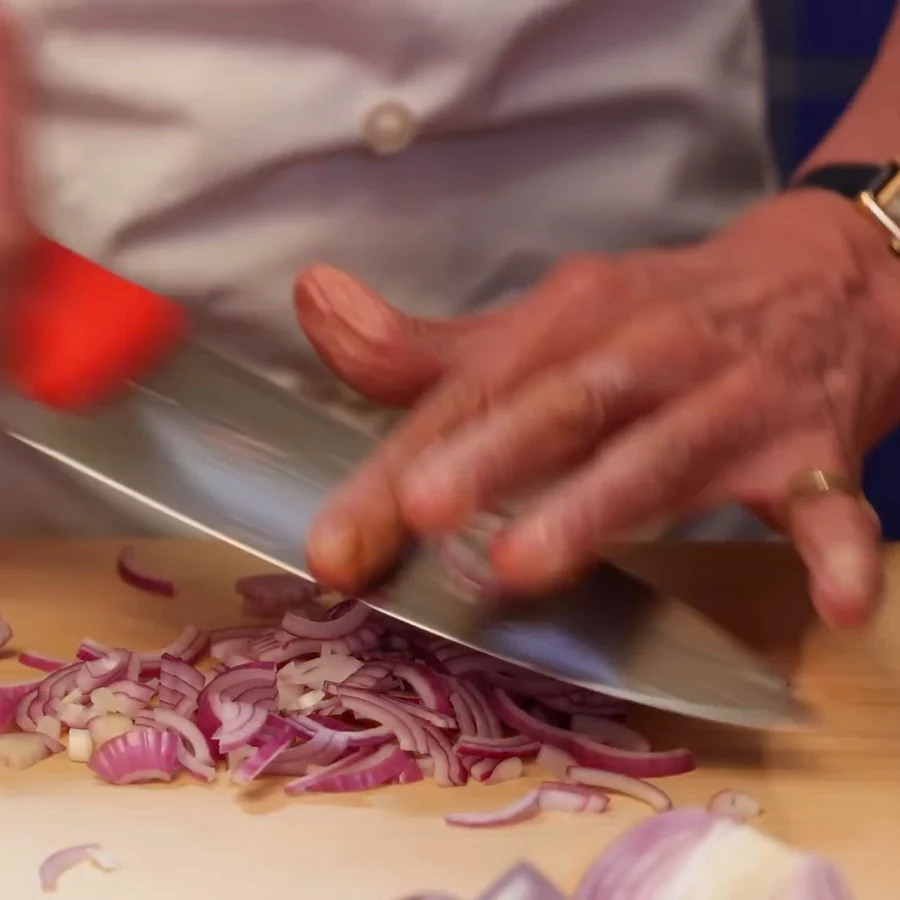
Slice the red onion thinly. If the slices are too thick, they stay crunchy and a little aggressive. Thin onion softens fast and melts better into the sauce. For a cleaner prep, use the same basic method as in how to cut an onion properly.
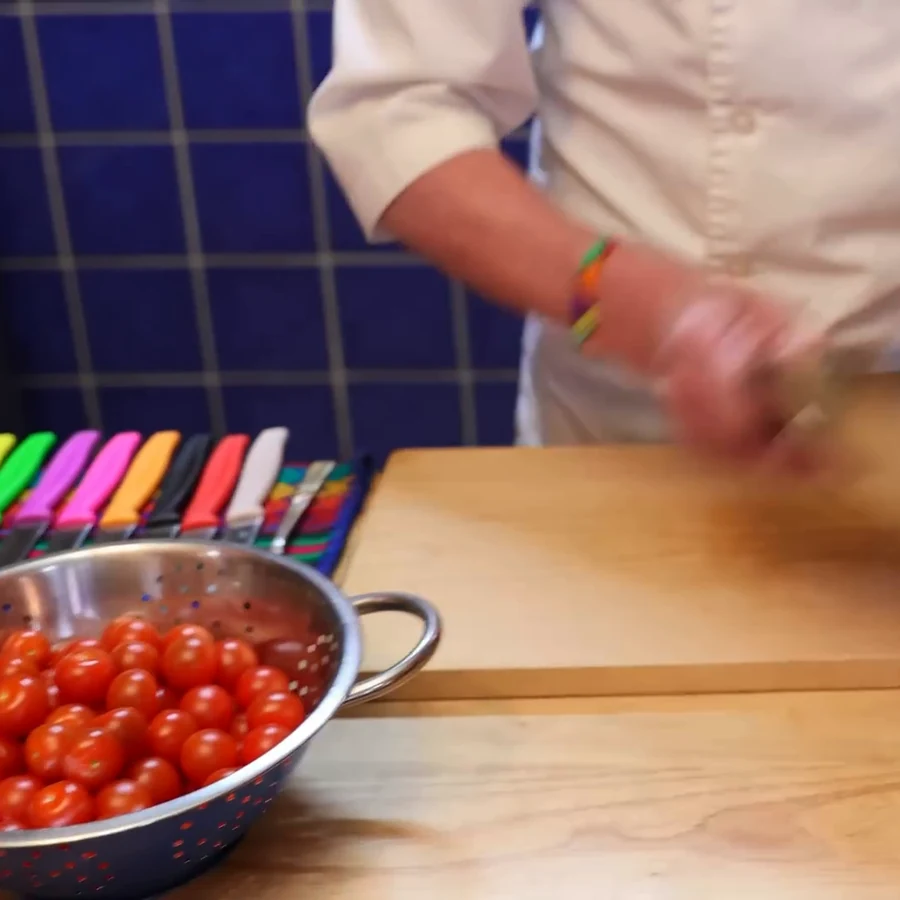
Cut the cherry tomatoes in half. This helps them release their juice quickly. Whole cherry tomatoes take longer to burst, and by the time they soften, the shrimp can already be too cooked.
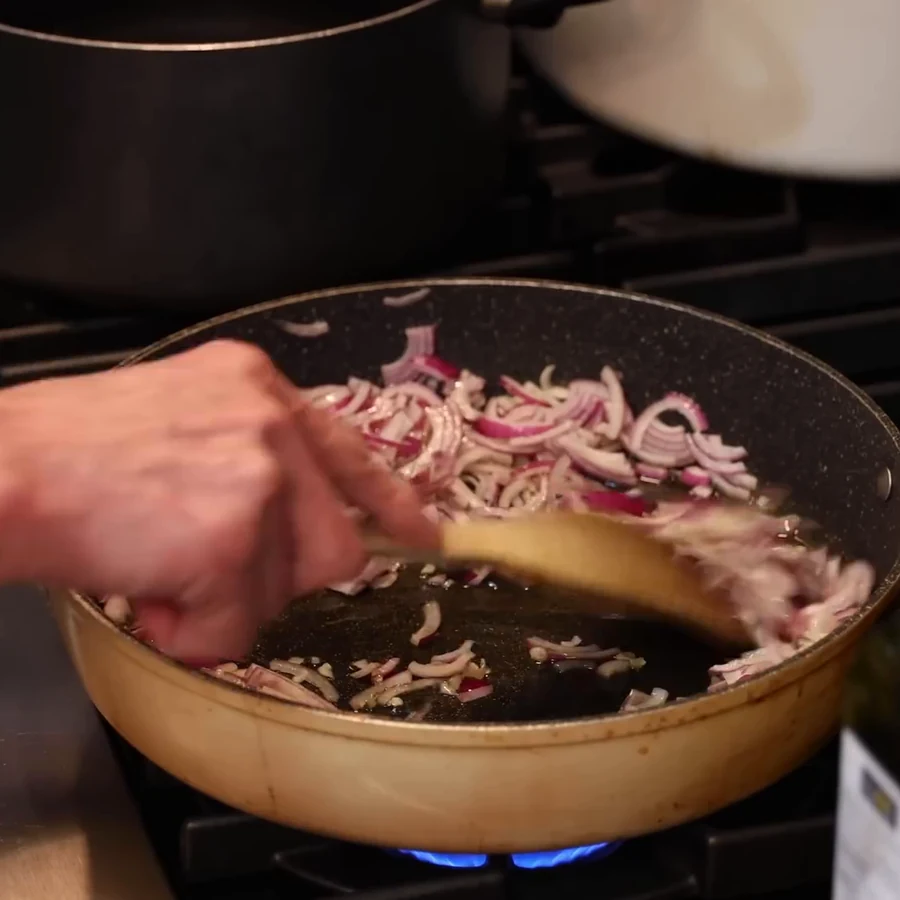
Heat olive oil in a large skillet. Add the onion and let it sweat. You should hear a gentle sizzle, not a violent frying sound. The onion should soften and pick up a little color at the edges.
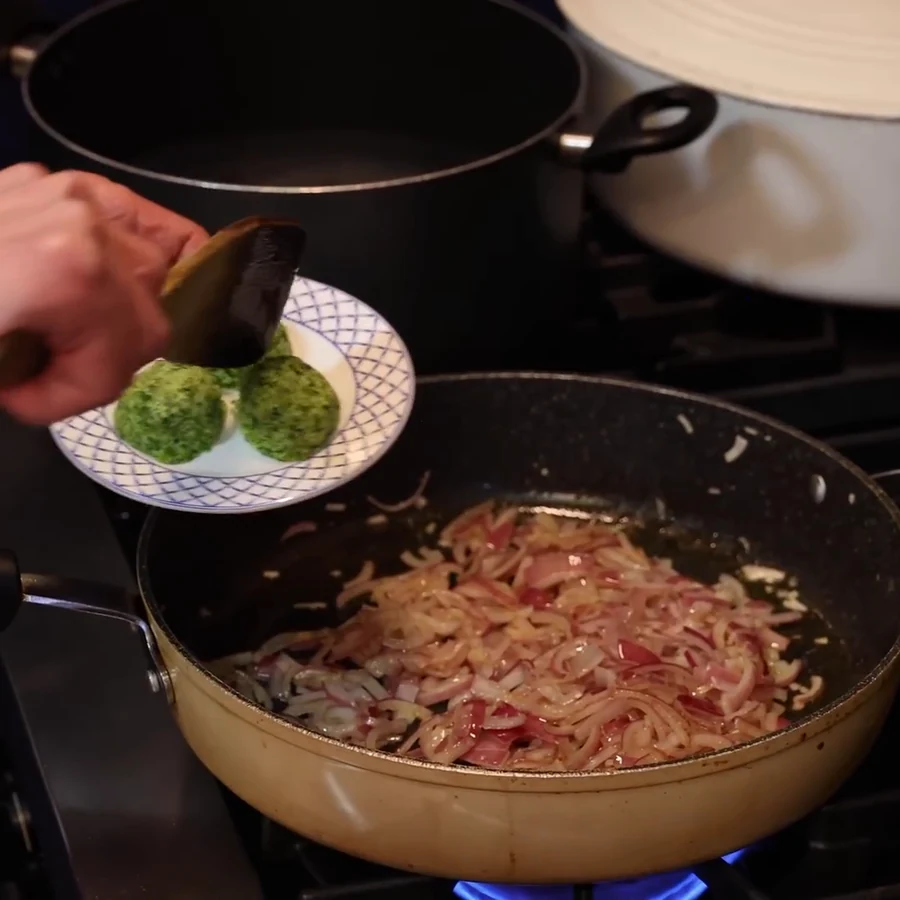
Add the garlic. Stir it into the oil for a few seconds. As soon as the smell comes up, continue. Do not walk away here.
Add the shrimp in one layer if possible. Let them cook on the first side until they start to turn pink around the edges, then turn them. They do not need to be fully cooked yet. The center can still be slightly translucent because they will finish in the sauce.
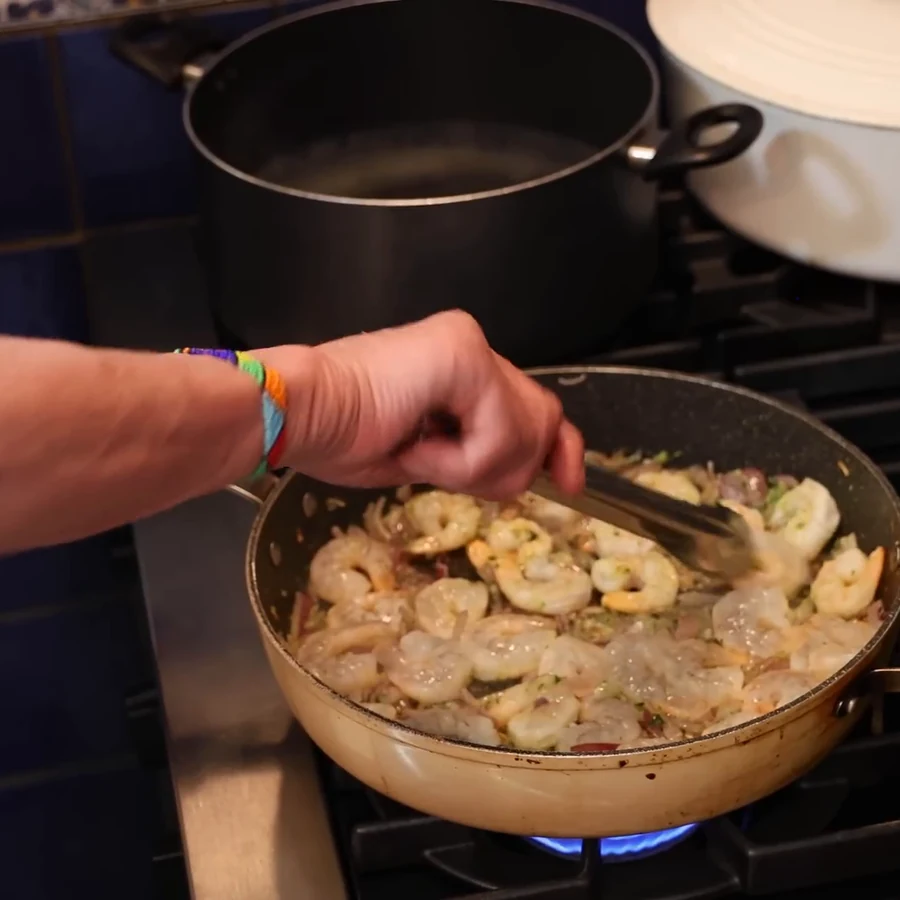
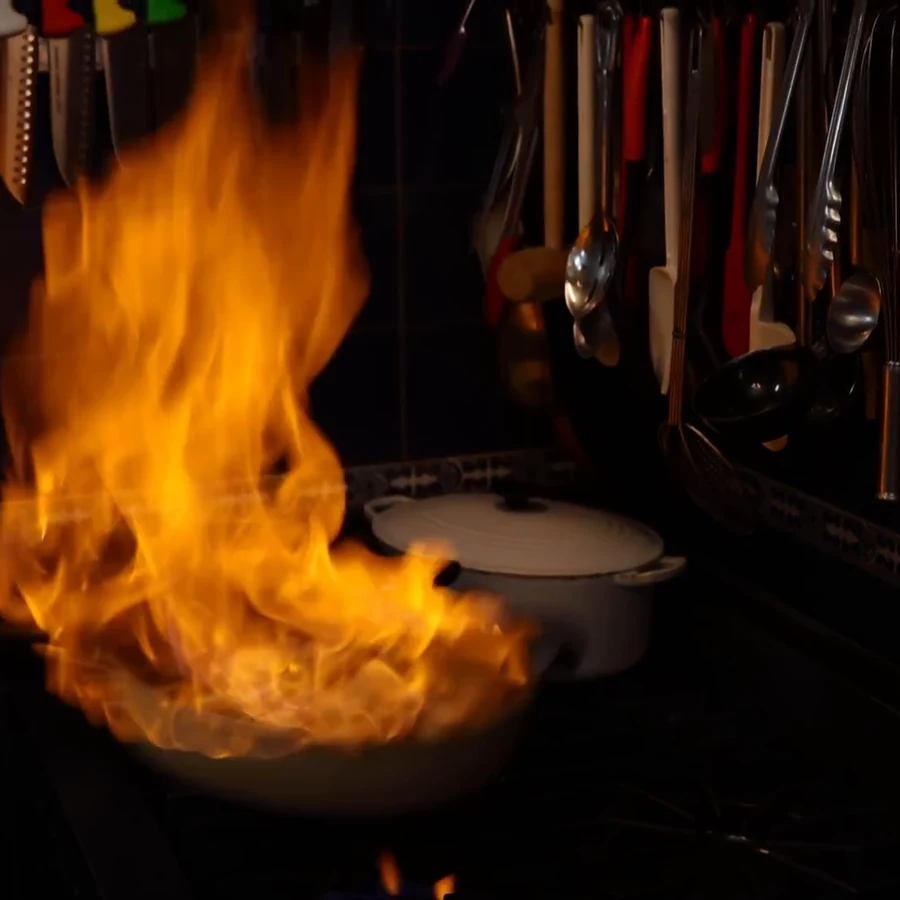
Add pepper, then add the tomatoes. Keep the heat high enough that the tomatoes start to give juice. The pan should look a little messy now, in a good way. Tomato juice, onion, garlic, shrimp juices, and olive oil start becoming the base of the sauce.
Add the basil oil or a small amount of pesto. Stir it in and let it perfume the sauce. At this point, it should smell like garlic, warm tomatoes, and basil.
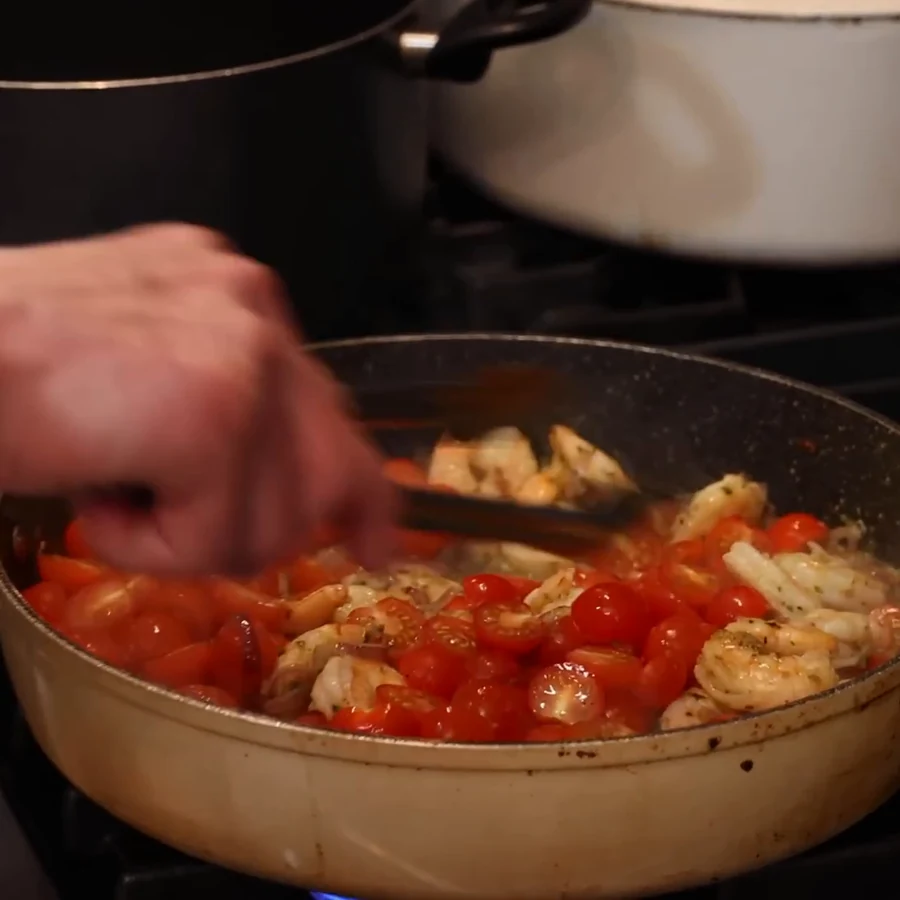
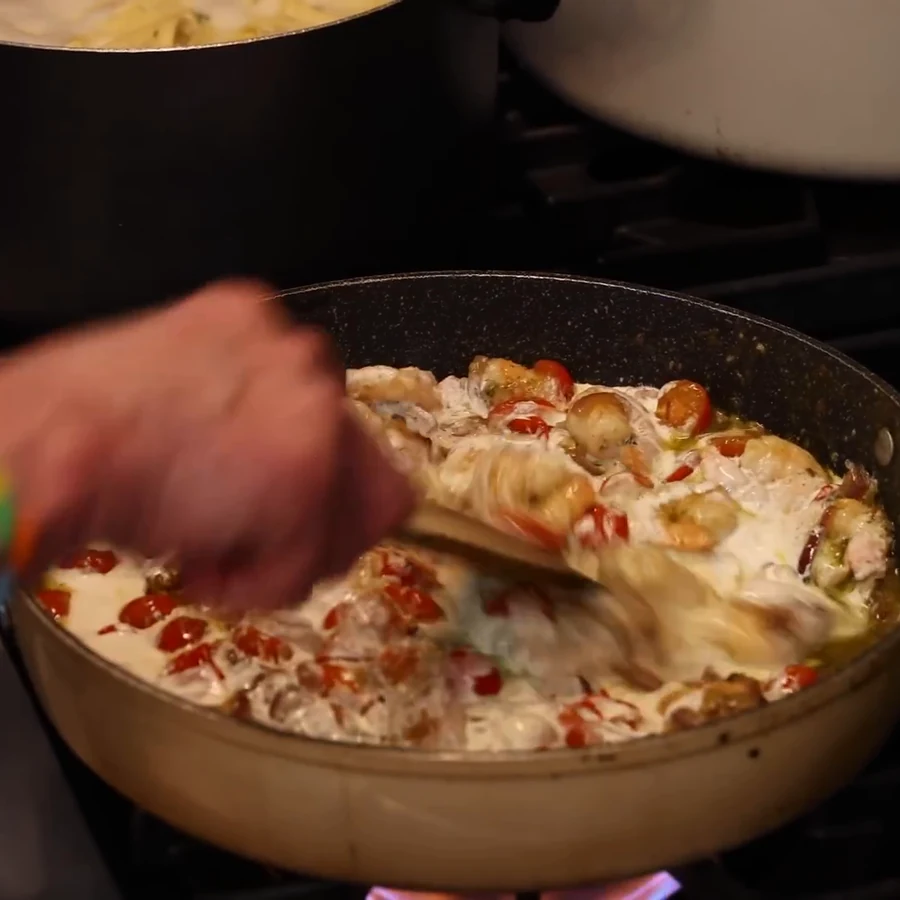
Pour in the cream. Let it bubble for a few minutes until it thickens slightly. The goal is not to boil the shrimp for a long time. You know it is ready when a spoon dragged through the sauce leaves a small trail for a second before the cream flows back.
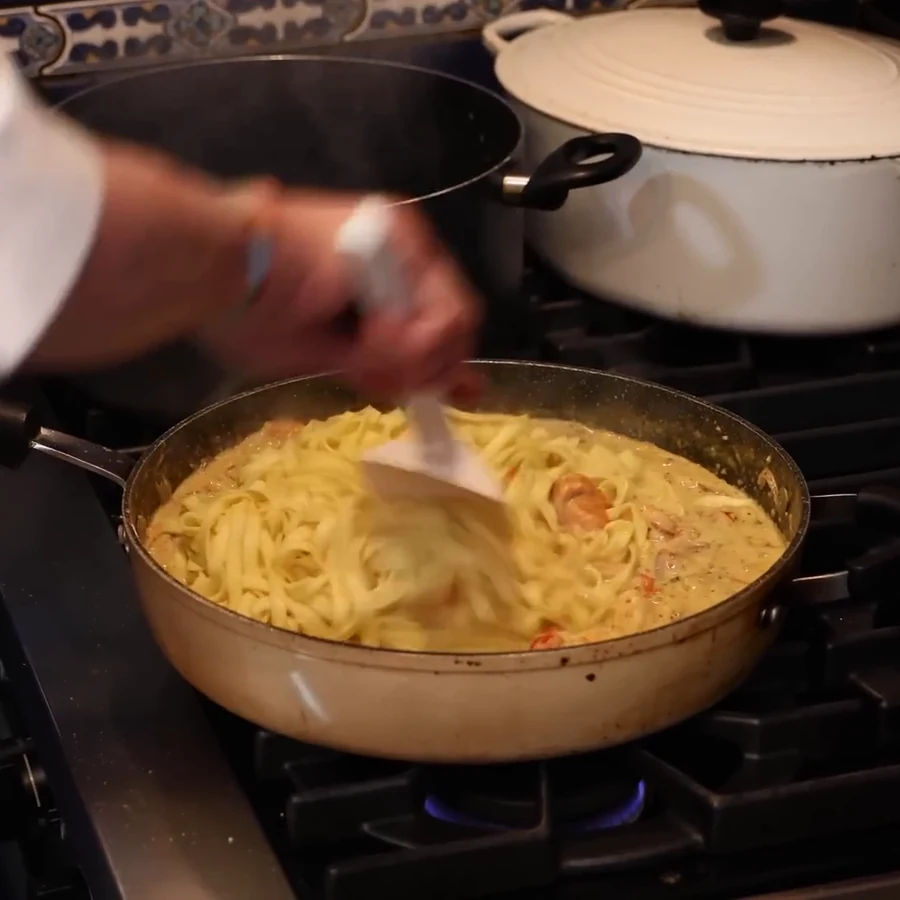
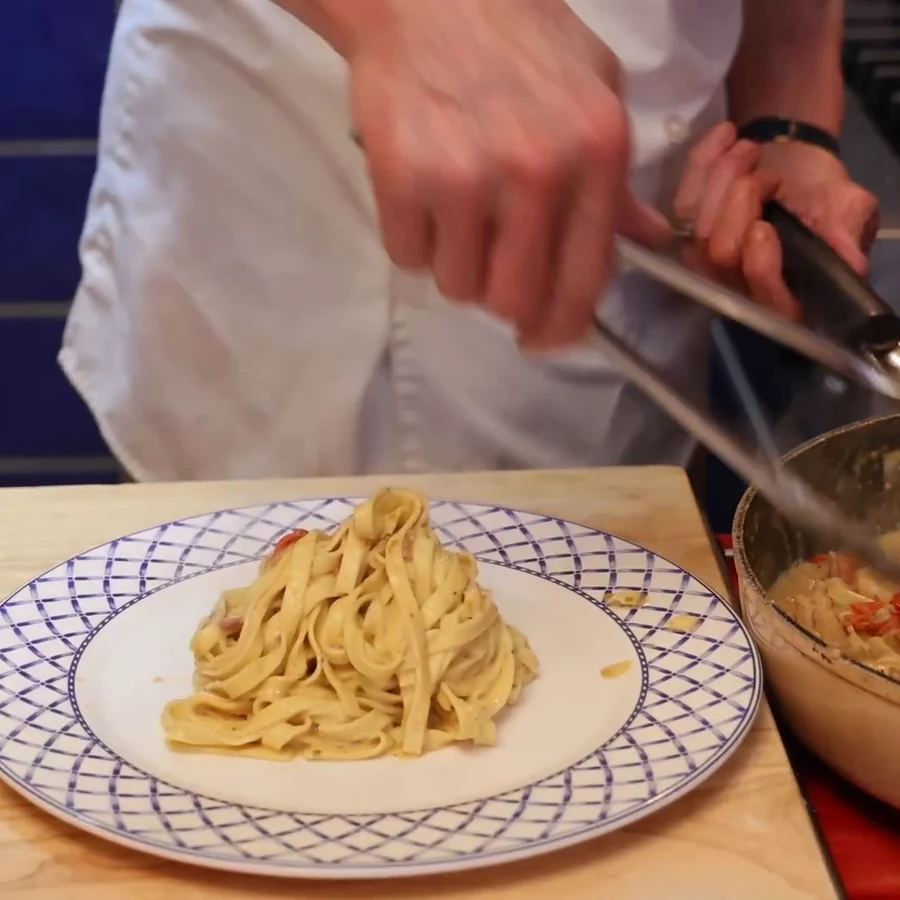
Cook the fresh fettuccine. This should take only a few minutes. Transfer the pasta directly into the skillet and toss. Add a small splash of pasta water only if the sauce gets too tight.
Finish with a little grated cheese if you like. I keep it optional because not everyone likes cheese with seafood, but a small amount works well with the cream and tomato. Keep the pan on low heat or off the heat when adding it.
How to avoid overcooked shrimp
The shrimp should not be bouncing around the pan for ten minutes. That is the main risk in this recipe.
If you are nervous, remove the shrimp after they turn pink on both sides, reduce the cream sauce without them, then add them back at the end with the pasta. This gives you more control and is the safest method for beginners.
The shrimp are ready when they are opaque and curled, but still juicy. If they curl very tightly and feel firm like rubber, they went too far.
How this recipe is different from similar pasta recipes
This pasta is creamy, but it is not an Alfredo. It uses tomatoes and basil to keep the sauce lighter in taste, even though it is still a rich dish. Compared with cottage cheese Alfredo pasta for a lighter creamy option, this one is more classic and more indulgent because it uses real cream.
It is also different from creamy mushroom pasta with a deeper earthy sauce. Mushrooms give a darker, more bistro-style flavor. Shrimp gives a sweeter seafood flavor and needs a shorter cooking time.
Compared with tuna garlic pasta with olive oil, this recipe is richer and more of a main dish. The tuna pasta is more pantry-style. This one feels more like a Friday night dinner, but it still cooks quickly.
If you want another creamy tomato pasta idea without seafood, creamy tomato penne with prosciutto stays in the same comfort-food family without competing with the shrimp.
Substitutions
Use dried fettuccine if you do not have fresh pasta. Start cooking it earlier because dried pasta takes longer, and save some pasta water before draining.
Use half-and-half for a lighter sauce, but reduce it gently. It will not thicken exactly like heavy cream. For more ideas, see what to use instead of cream in cooking.
Use grape tomatoes instead of cherry tomatoes. They behave almost the same in the pan.
Use basil pesto instead of basil oil, but use less salt at the end because pesto is already seasoned.
Use scallops instead of shrimp for a more delicate version. The timing changes, but the same butter-and-seafood logic from scallops with lemon butter gives a good idea of how gentle seafood cooking should feel.
Skip the cheese if you prefer a cleaner seafood flavor. Add more black pepper and a little extra basil oil instead.
Health and nutrition context
This is a protein-rich pasta because of the generous amount of shrimp. It is also a creamy pasta, so it is not meant to be the lightest dish on the table. I prefer to keep the cream controlled instead of flooding the pan, because the sauce tastes better and the plate feels less heavy.
Serve it with something fresh or acidic if you want balance. A crunchy salad, tomatoes, or a simple vegetable side makes the meal feel complete without adding more richness.
FAQ
Can I use frozen shrimp?
Yes. Thaw them fully, pat them dry, and remove extra moisture before cooking. Wet shrimp steam instead of sear, and the sauce can become watery.
Should I salt the shrimp?
Not at the beginning. The pasta water is salted and shrimp can already taste slightly salty. Taste the finished sauce before adding more salt.
Can I make this without cream?
Yes, but it becomes a different recipe. You can use a splash of pasta water, olive oil, tomatoes, and basil for a lighter sauce. It will not have the same creamy texture.
Can I make it ahead?
It is best served right away. Shrimp and fresh pasta both lose texture when reheated. If needed, reheat gently in a skillet with a small splash of cream or water.
What pasta shape works best?
Fresh fettuccine is excellent because it catches the cream sauce without feeling too heavy. Linguine, tagliatelle, or spaghetti also work. Short pasta is fine, but the dish feels less elegant.
Why is my sauce too thin?
It probably needed another minute of reduction, or the shrimp and tomatoes released more liquid than expected. Let the sauce bubble briefly before adding the pasta. If needed, the guide on how to thicken a sauce can help.
What to serve with it
For something simple, serve this pasta with air fryer garlic bread. The bread is useful because this sauce is creamy and tomatoey, and nobody complains about wiping the plate.
For a fresh starter, fresh tomato bruschetta makes sense because it stays in the tomato and basil family without adding more cream.
For crunch and acidity, I like marinated red cabbage salad. It cuts through the richness and works year-round, especially when tomatoes are not at their summer best.
If you want to build a seafood dinner, crispy crab cakes with lemon mayo can be served before the pasta, and the collection of easy fish recipes for weeknight dinners gives more ideas in the same seafood direction.
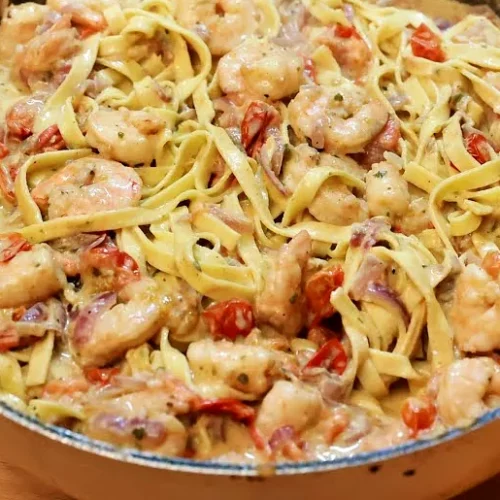
Creamy Shrimp Pasta with Basil and Cherry Tomatoes
Ingredients
- 1 lb large raw shrimp peeled and deveined
- 10 to 11 oz fresh fettuccine
- 3 quarts water for cooking the pasta
- 1 1/2 tbsp fine salt for the pasta water
- 3 tbsp olive oil
- 1 small red onion thinly sliced
- 3 garlic cloves minced or crushed
- 2 cups cherry tomatoes halved
- Black pepper to taste
- 2 to 3 tbsp basil oil or mild basil pesto
- 1 to 1 1/4 cups heavy cream
- 2 tbsp grated Parmesan or similar cheese optional
- A small splash of pasta water only if needed
Instructions
- Bring 3 quarts of water to a boil and season with the salt.
- Thinly slice the red onion, halve the cherry tomatoes, and mince or crush the garlic.
- Heat the olive oil in a large skillet over medium-high heat.
- Add the red onion and cook until softened with light color at the edges.
- Add the garlic and stir briefly, just until fragrant.
- Add the shrimp in a single layer. Cook until just turning pink, then turn them.
- Season with black pepper. Do not add extra salt yet.
- Add the cherry tomatoes and cook until they begin to soften and release juice.
- Stir in the basil oil or pesto.
- Add the cream and simmer for 2 to 4 minutes, just until the sauce lightly thickens.
- Cook the fresh fettuccine until tender, usually 2 to 3 minutes.
- Transfer the pasta into the skillet and toss gently with the sauce.
- Add a small splash of pasta water only if the sauce is too thick.
- Stir in the optional cheese over low heat or off the heat.
- Taste, adjust seasoning if needed, and serve immediately.
Video
Notes
FAQ
Can I use frozen shrimp?
Yes. Thaw them fully, pat them dry, and remove extra moisture before cooking. Wet shrimp steam instead of sear, and the sauce can become watery.Should I salt the shrimp?
Not at the beginning. The pasta water is salted and shrimp can already taste slightly salty. Taste the finished sauce before adding more salt.Can I make this without cream?
Yes, but it becomes a different recipe. You can use a splash of pasta water, olive oil, tomatoes, and basil for a lighter sauce. It will not have the same creamy texture.Can I make it ahead?
It is best served right away. Shrimp and fresh pasta both lose texture when reheated. If needed, reheat gently in a skillet with a small splash of cream or water.What pasta shape works best?
Fresh fettuccine is excellent because it catches the cream sauce without feeling too heavy. Linguine, tagliatelle, or spaghetti also work. Short pasta is fine, but the dish feels less elegant.Why is my sauce too thin?
It probably needed another minute of reduction, or the shrimp and tomatoes released more liquid than expected. Let the sauce bubble briefly before adding the pasta. If needed, the guide on how to thicken a sauce can help.🔗 Useful Links
🛒 Michel Dumas Shop : Explore our kitchen essentials, including aprons and knives.
🌐 Linktree : Access all our important links in one place.
📱 YouTube | Instagram | Facebook | TikTok : Follow us for the latest recipes and culinary tips.