Easy Tuna Garlic Pasta with Olive Oil in 15 Minutes
This tuna garlic pasta is a fast pantry pasta made with canned tuna, olive oil, garlic, parsley, and starchy pasta water. It is different from creamy tuna pasta because there is no cream, no tomato sauce, and no heavy base. I make this when I want something quick, economical, and satisfying with ingredients that are almost always in the pantry.
This recipe is based on my YouTube video for Pâtes au Thon, with a few adjustments since publication to make the proportions clearer and easier to reproduce at home. In the video, I made two versions: one with tomato, leek, onion, basil, and anchovies, and this simpler garlic and olive oil version with tuna, parsley, and pasta.
Why I Make It This Way
I make it this way because canned tuna does not need a complicated sauce to taste good. The key is to treat it like an aglio e olio: warm olive oil, gently cooked garlic, fresh parsley, and a little pasta water to create a glossy coating around the noodles.
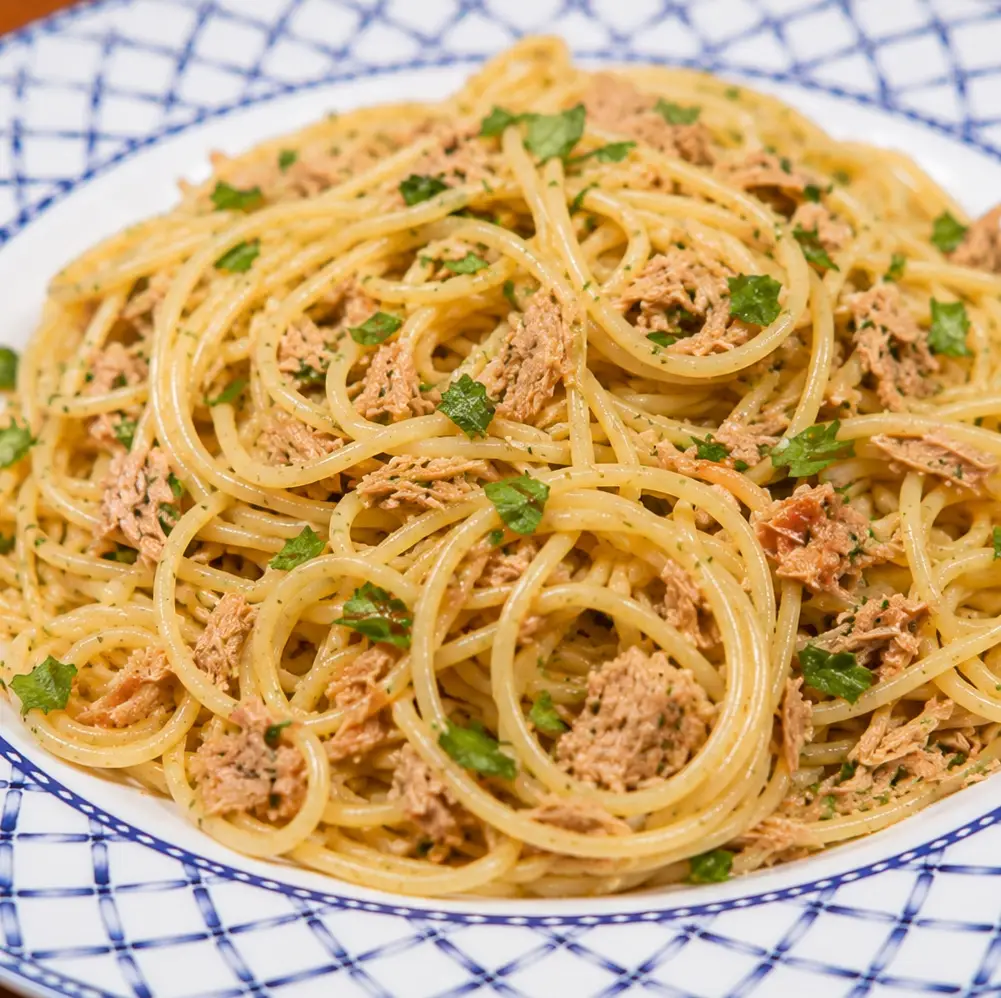
I prefer to finish the pasta directly in the pan because the starch from the cooking water helps bind the olive oil and tuna together. Instead of a dry bowl of pasta with tuna on top, you get a simple sauce that clings to every strand.
I also adjusted the original version slightly by making the tuna quantity more flexible and adding optional lemon. The lemon is not mandatory, but it helps brighten the dish and balance the richness of the olive oil and tuna.
What Makes This Tuna Pasta Different
This is not the same style as a creamy tuna pasta. If you want a richer, saucier version with tomato, cream, and basil, try my creamy tuna pasta. This recipe is lighter, faster, and closer to an Italian-style garlic and olive oil pasta.
It is also different from my spicy tuna rigatoni, which uses cherry tomatoes, capers, and more Mediterranean intensity. This one is more minimal: garlic, olive oil, tuna, parsley, and pasta water.
For a cold summer option, my tuna pasta salad with basil vinaigrette is the better choice. This warm version is better when you want a fast weeknight dinner, a student-budget meal, or a simple pantry recipe that works all year.
Ingredients You Need
For 2 portions, you need long pasta, canned tuna, garlic, parsley, olive oil, pasta water, pepper, and salt for the pasta water.
I like spaghetti or linguine here because the olive oil sauce coats long pasta very well. Short pasta can work, but long pasta gives the dish a better texture and a more classic aglio e olio feeling.
Use canned tuna in water or oil. If the tuna is packed in oil and the oil tastes good, you can use a little of it in the pan. If it is packed in water, drain it well and rely on good olive oil for the sauce.
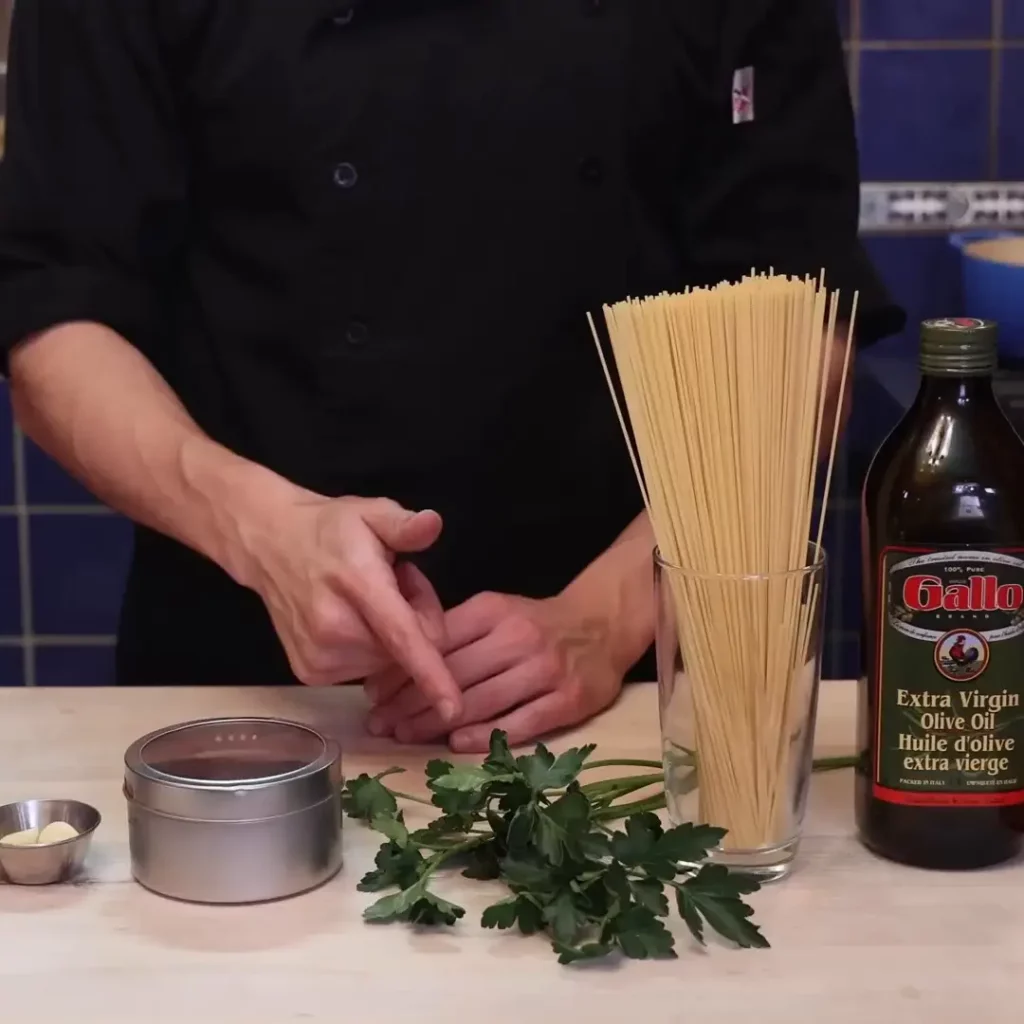
The parsley is important. Chop the stems finely and cook them with the garlic, then add the leaves at the end for freshness. I do this because the stems have a lot of flavor, but they need a little heat to soften.
Step-by-Step Instructions
1. Prepare the parsley
Separate the parsley stems from the leaves. Chop the stems very finely and keep them apart from the leaves. Chop the leaves and reserve them for the end.
The stems go into the oil because they can handle a little cooking. The leaves go in at the end so they stay fresh and green.
2. Chop the garlic
Finely chop the garlic. Do not leave the pieces too large because you want the flavor to spread through the oil.
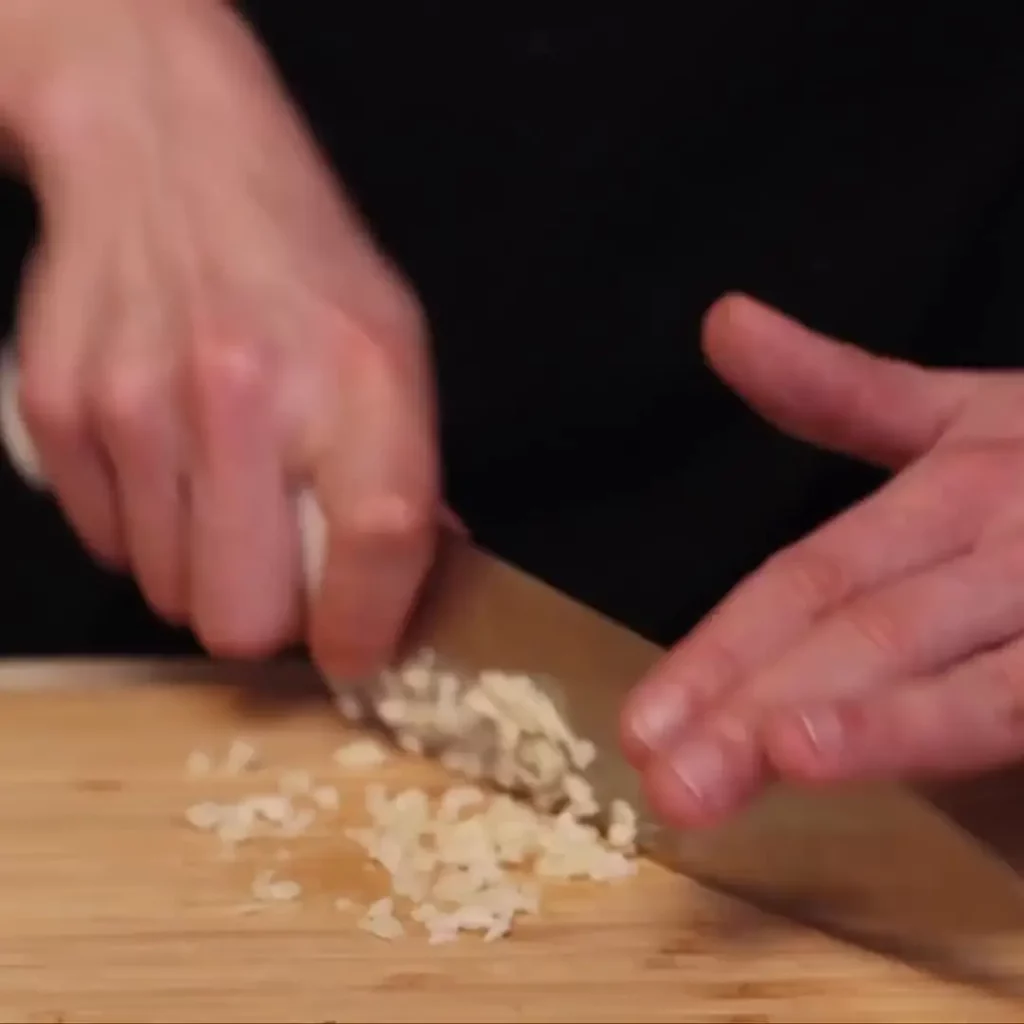
The most important point is heat control. Garlic burns quickly, and once it burns, the whole dish becomes bitter. Keep the heat low when the garlic goes into the oil.
3. Cook the pasta
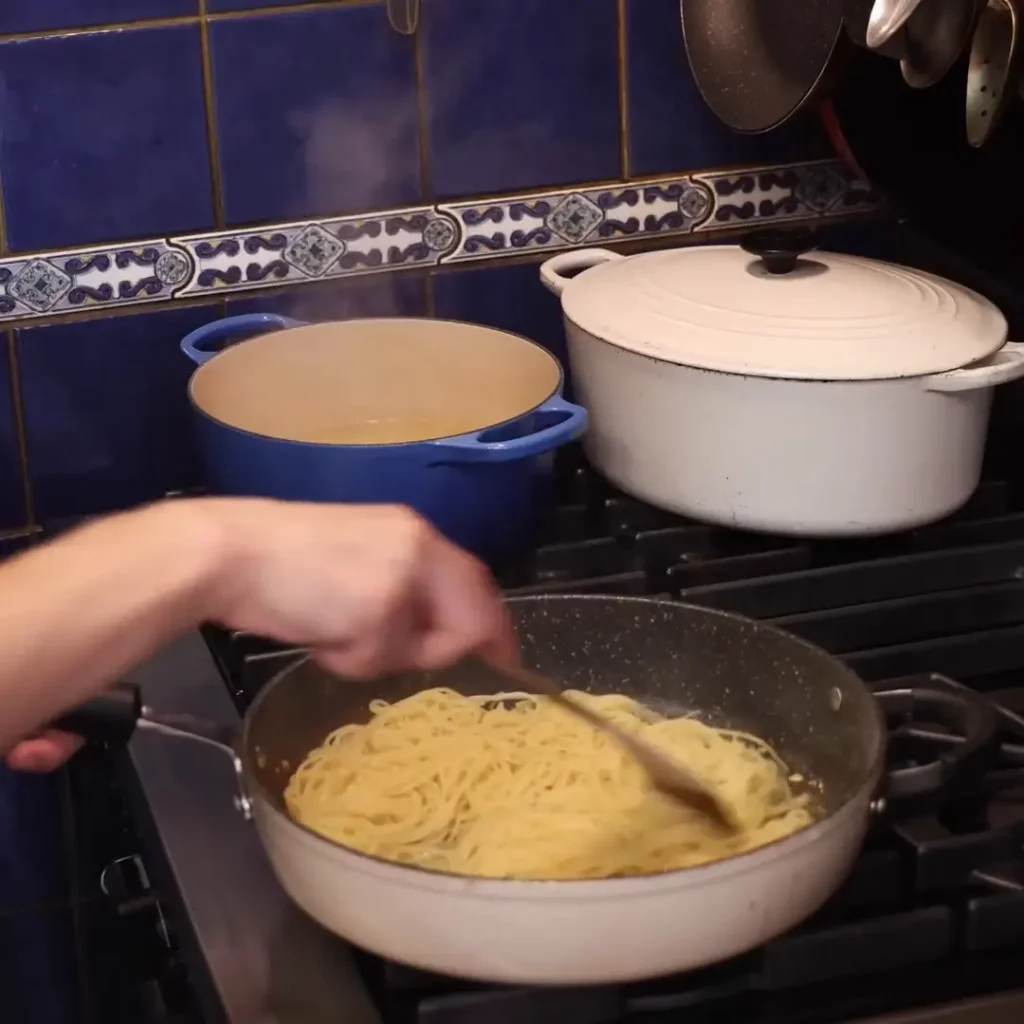
Bring a large pot of salted water to a boil. Add the pasta and cook it 1 to 2 minutes less than the package instructions.

In the video, I cooked the pasta for about 4 minutes 30 seconds before finishing it in the pan, but that timing depends on the brand and shape of pasta. For the website version, the safest instruction is to cook until very al dente, then finish in the pan.
Before transferring the pasta, reserve at least 1 cup of pasta water. You may only need 1/2 cup, but it is always better to have extra.
4. Infuse the olive oil
In a large pan, add the olive oil and warm it over low heat. Add the chopped garlic and parsley stems.
Cook gently for about 1 to 2 minutes. The garlic should smell good and soften slightly, but it should not turn dark brown.
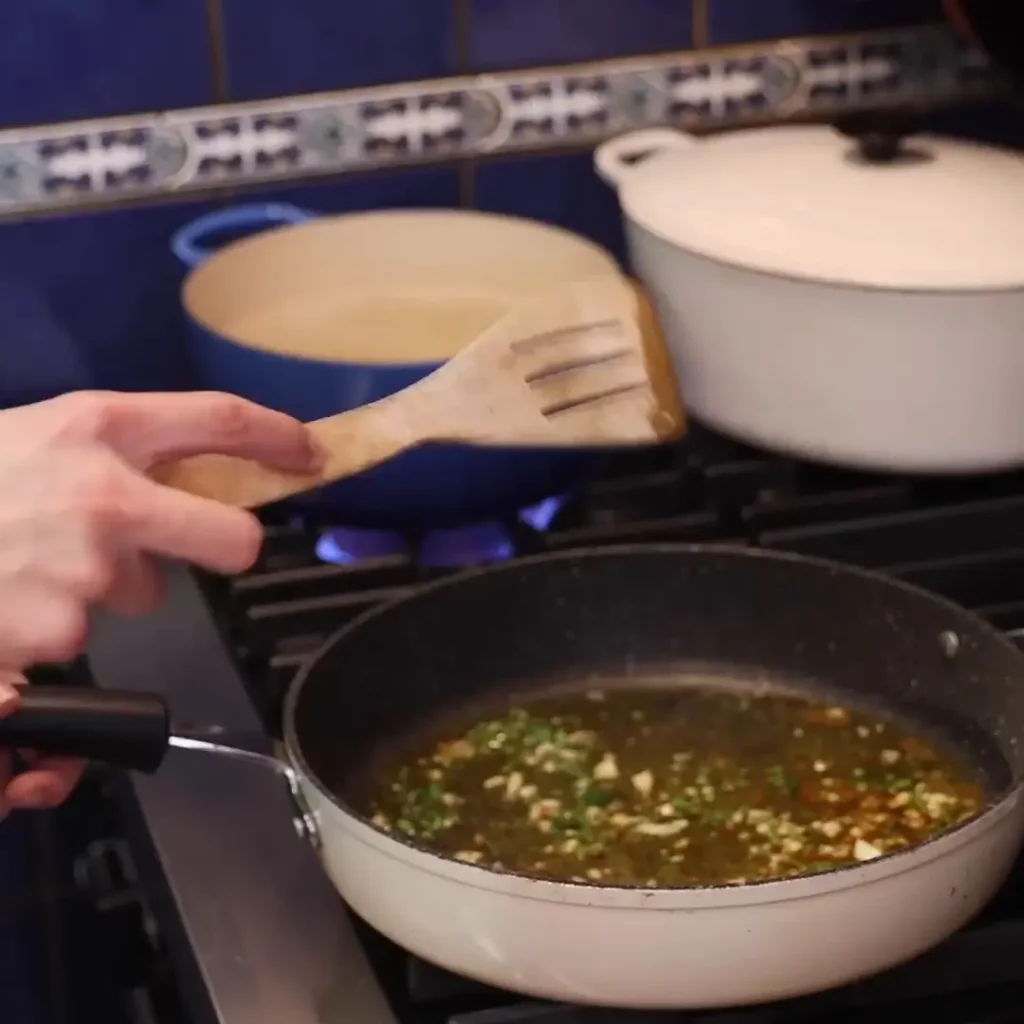
If you want a little heat, add a pinch of chili flakes at this stage.
5. Add the tuna
Add the drained tuna to the pan. Break it up gently with a fork and mix it into the garlic oil.
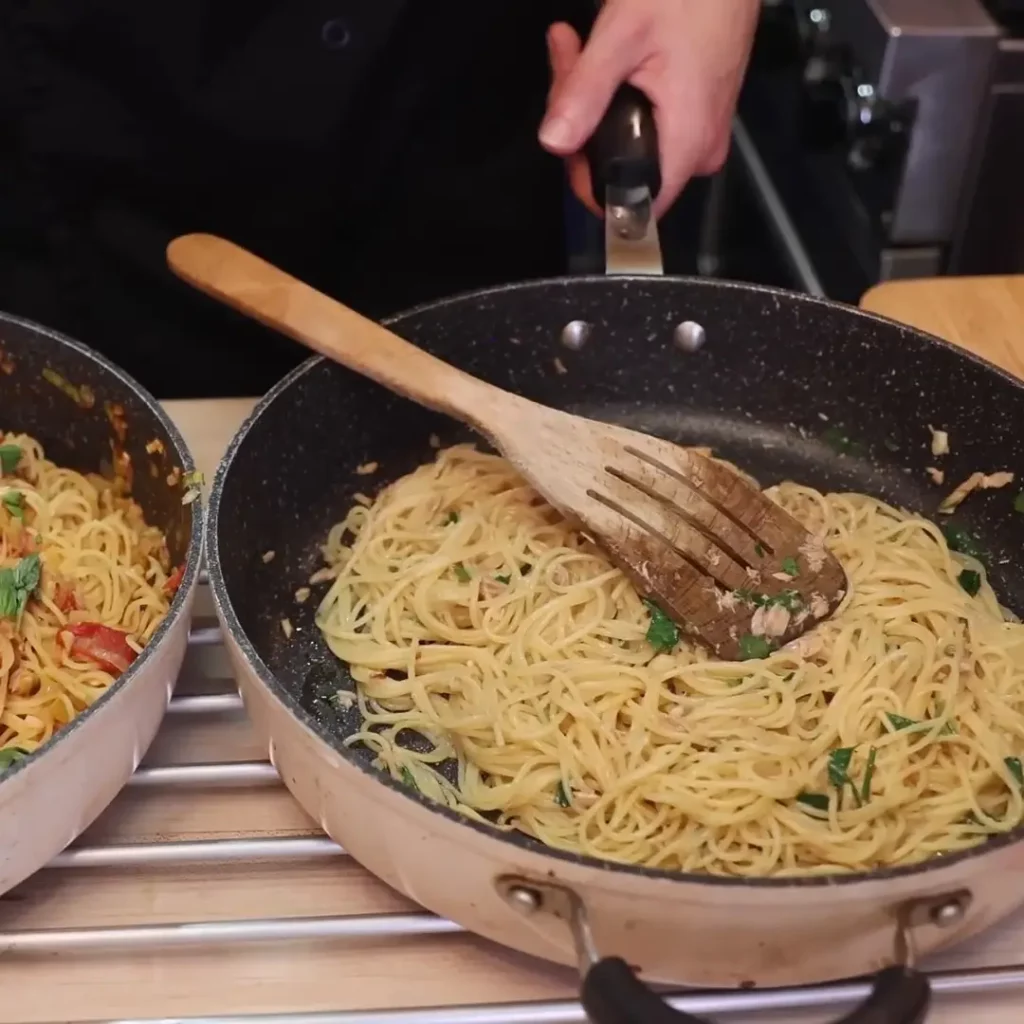
Do not cook the tuna aggressively. It is already cooked, so the goal is only to warm it and let it absorb the flavor of the oil, garlic, and parsley stems.
6. Finish the pasta in the pan
Transfer the very al dente pasta directly into the pan. Add about 1/2 cup of reserved pasta water and increase the heat to medium.

Toss the pasta constantly. The pasta water will reduce, the starch will help bind the oil, and the tuna will coat the noodles.
If the pan gets dry before the pasta is cooked, add another splash of pasta water. If the pasta looks watery, keep tossing for another minute until the sauce tightens.
7. Finish with parsley and lemon
Turn off the heat. Add the chopped parsley leaves, black pepper, and a small squeeze of lemon juice if using.

Taste before adding salt. The pasta water and canned tuna may already bring enough salt.
Serve immediately while the pasta is glossy and hot.
Tips for the Best Result
Do not overcook the pasta in the pot. The pasta must finish in the pan so it can absorb the flavor of the tuna and garlic oil.
Do not burn the garlic. This is the most common mistake in a recipe like this. Keep the heat low at first, then raise it only after the pasta and pasta water are added.
Use enough pasta water. The sauce is not cream-based, so the starch from the pasta water is what helps create texture.
Do not drain the pasta too aggressively. A little water clinging to the pasta is helpful.
Add lemon only at the end. If you add it too early, the fresh flavor disappears. A small squeeze at the end is enough.
Substitutions
Pasta
Spaghetti and linguine are my first choices, but fettuccine, bucatini, or even penne can work. For more pasta ideas, see my collection of easy pasta recipes and my guide to homemade pasta recipes.
Tuna
Use canned tuna in water for a lighter version or tuna packed in olive oil for a richer version. If using tuna in oil, taste the oil first. If it tastes good, add a little to the pan.
Parsley
Flat-leaf parsley is best. Curly parsley works too, but chop it finely. Basil can be added at the end, but it will make the dish taste more summery and less classic.
Lemon
Lemon juice is optional, but recommended. Lemon zest also works if you want aroma without adding too much acidity. If you enjoy bright dressings, my quick lemon vinaigrette uses the same idea of balancing richness with acidity.
Chili
A small pinch of chili flakes is excellent here. It gives the pasta a little warmth without turning it into a spicy dish.
What to Serve With Tuna Garlic Pasta
This pasta is enough for a quick meal, but it also works well with a fresh salad or vegetable side.
For something light and fresh, serve it with a simple salad inspired by my easy tuna salad with eggs, especially if you want a protein-rich meal without making it heavy.
For a vegetable side, oven-roasted mixed vegetables are a good choice because they add color and texture without competing with the pasta.
If you want to stay in the pasta family for a summer table, pair this warm recipe with a cold side like farfalle pasta salad, fusilli pasta salad with sun-dried tomatoes, or orzo pasta salad.
For a more classic North American side, macaroni salad is creamier and more picnic-style, so it gives a completely different texture next to this olive oil tuna pasta.
FAQ
Can I make this tuna pasta with canned tuna in water?
Yes. Drain the tuna well, then use good olive oil in the pan. Tuna in water gives a lighter result, while tuna in oil gives a richer result.
Can I use tuna packed in olive oil?
Yes. If the oil tastes good, you can use part of it in the recipe. Reduce the added olive oil slightly if needed so the pasta does not become greasy.
Why do I need pasta water?
Pasta water contains starch. When it mixes with olive oil and reduces in the pan, it helps create a light glossy sauce that coats the pasta.
Can I add cream?
You can, but then it becomes a different recipe. For a creamy version, use my creamy tuna pasta instead.
Can I make it spicy?
Yes. Add chili flakes to the oil with the garlic. For a more tomato-based spicy tuna pasta, make my tuna rigatoni with capers and tomatoes.
Can I eat this cold?
This recipe is best served hot. For a cold version, use a pasta salad approach like my tuna pasta salad with basil vinaigrette.
How do I keep the garlic from burning?
Start with low heat and warm the garlic gently in the olive oil. Once the pasta and pasta water are added, you can raise the heat to finish the sauce.
Is this a healthy recipe?
It is a simple, protein-rich pasta with tuna, olive oil, garlic, and parsley. It is lighter than creamy pasta, but still satisfying because of the pasta and olive oil.
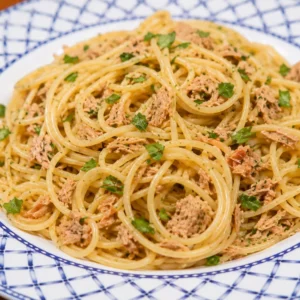
Easy Tuna Garlic Pasta with Olive Oil
Ingredients
- 7 oz spaghetti or linguine
- 4 to 5 oz canned tuna drained
- 4 garlic cloves finely chopped
- 3 tbsp olive oil plus more if needed
- 4 parsley sprigs stems and leaves chopped separately
- 1/2 cup reserved pasta water plus more if needed
- Black pepper to taste
- Salt for the pasta water
- Optional: 1 tsp lemon juice or a little lemon zest
- Optional: pinch of chili flakes
Instructions
- Separate the parsley stems from the leaves. Chop the stems finely and chop the leaves separately.
- Finely chop the garlic.
- Bring a large pot of salted water to a boil. Cook the pasta 1 to 2 minutes less than the package instructions, until very al dente. Reserve at least 1 cup of pasta water.
- In a large pan, warm the olive oil over low heat. Add the garlic and parsley stems. Cook gently for 1 to 2 minutes without browning the garlic.
- Add the drained tuna and break it up gently with a fork. Mix it into the garlic oil.
- Transfer the pasta to the pan. Add 1/2 cup pasta water and toss over medium heat until the pasta finishes cooking and the sauce becomes glossy. Add more pasta water if needed.
- Turn off the heat. Add parsley leaves, black pepper, and optional lemon. Taste before adding extra salt. Serve immediately.
Video
Notes
FAQ
Can I make this tuna pasta with canned tuna in water?
Yes. Drain the tuna well, then use good olive oil in the pan. Tuna in water gives a lighter result, while tuna in oil gives a richer result.Can I use tuna packed in olive oil?
Yes. If the oil tastes good, you can use part of it in the recipe. Reduce the added olive oil slightly if needed so the pasta does not become greasy.Why do I need pasta water?
Pasta water contains starch. When it mixes with olive oil and reduces in the pan, it helps create a light glossy sauce that coats the pasta.Can I add cream?
You can, but then it becomes a different recipe. For a creamy version, use my creamy tuna pasta instead.Can I make it spicy?
Yes. Add chili flakes to the oil with the garlic. For a more tomato-based spicy tuna pasta, make my tuna rigatoni with capers and tomatoes.Can I eat this cold?
This recipe is best served hot. For a cold version, use a pasta salad approach like my tuna pasta salad with basil vinaigrette.How do I keep the garlic from burning?
Start with low heat and warm the garlic gently in the olive oil. Once the pasta and pasta water are added, you can raise the heat to finish the sauce.Is this a healthy recipe?
It is a simple, protein-rich pasta with tuna, olive oil, garlic, and parsley. It is lighter than creamy pasta, but still satisfying because of the pasta and olive oil.🔗 Useful Links
🛒 Michel Dumas Shop : Explore our kitchen essentials, including aprons and knives.
🌐 Linktree : Access all our important links in one place.
📱 YouTube | Instagram | Facebook | TikTok : Follow us for the latest recipes and culinary tips.