Mushroom and Lentil Wellington
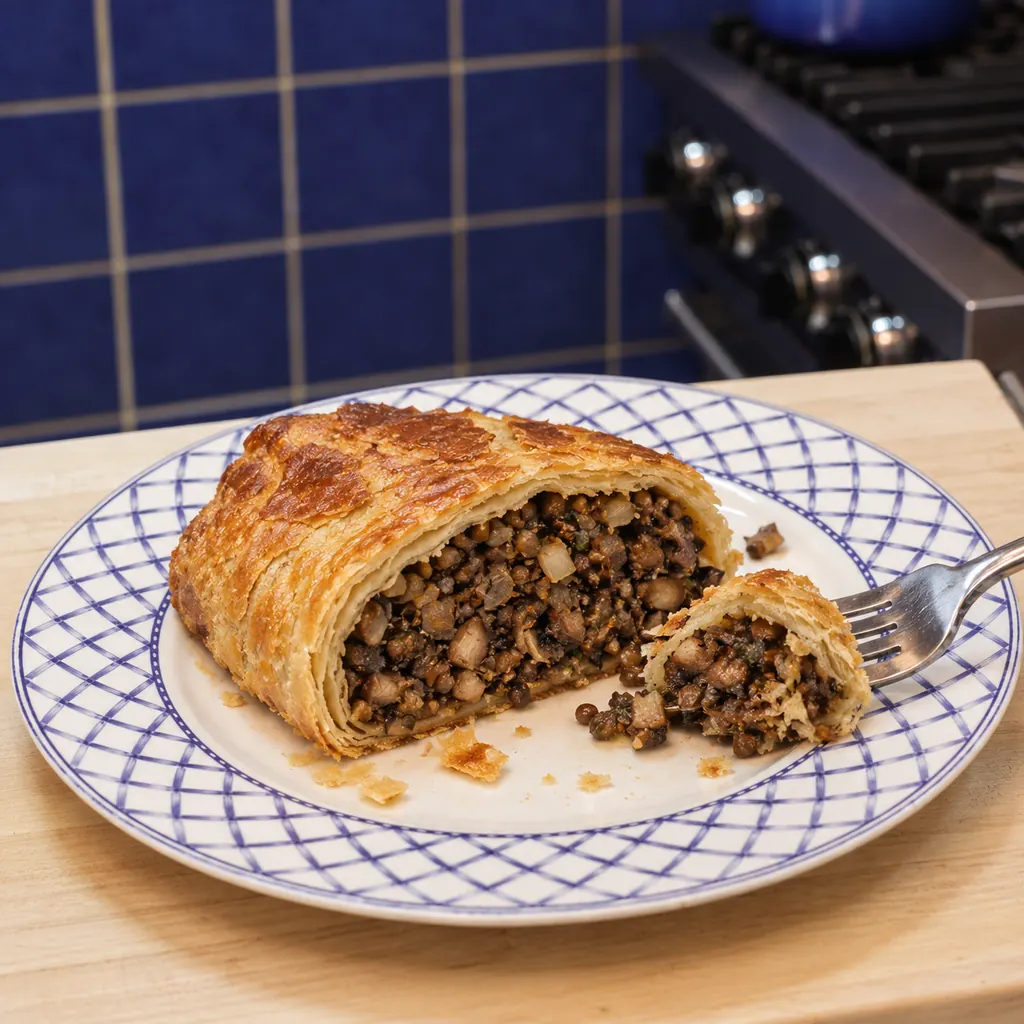
This mushroom and lentil Wellington encloses a savoury vegetable filling in a golden puff pastry shell. I use finely chopped mushrooms, cooked brown lentils, onion, and herbs, with breadcrumbs and one egg to help the filling hold together when sliced. It makes six substantial portions for a meatless main course. The preparation needs cooling and chilling time as well as cooking, so I prefer treating it as a planned meal rather than a last-minute pastry project.
Plan the cooling time first
The filling must be cool before it touches the puff pastry. Warm mushrooms soften the pastry fat and release steam too early, which makes assembly difficult and can leave a damp base. Allow roughly forty-five minutes to cool the filling in a shallow container in the refrigerator, then twenty minutes to chill the assembled parcel and ten minutes to rest after baking. These periods are additional to the active preparation and cooking times on the recipe card.
This is a vegetable and lentil variation with a cohesive chopped filling. The separate beef Wellington uses a different centre and cooking method. I like keeping the identity of this version clear: there is no piece of meat or large whole mushroom hidden inside. Finely chopped vegetables and small lentils should form an even mixture that can be shaped without spilling liquid onto the pastry.
Use cooked lentils that are well drained
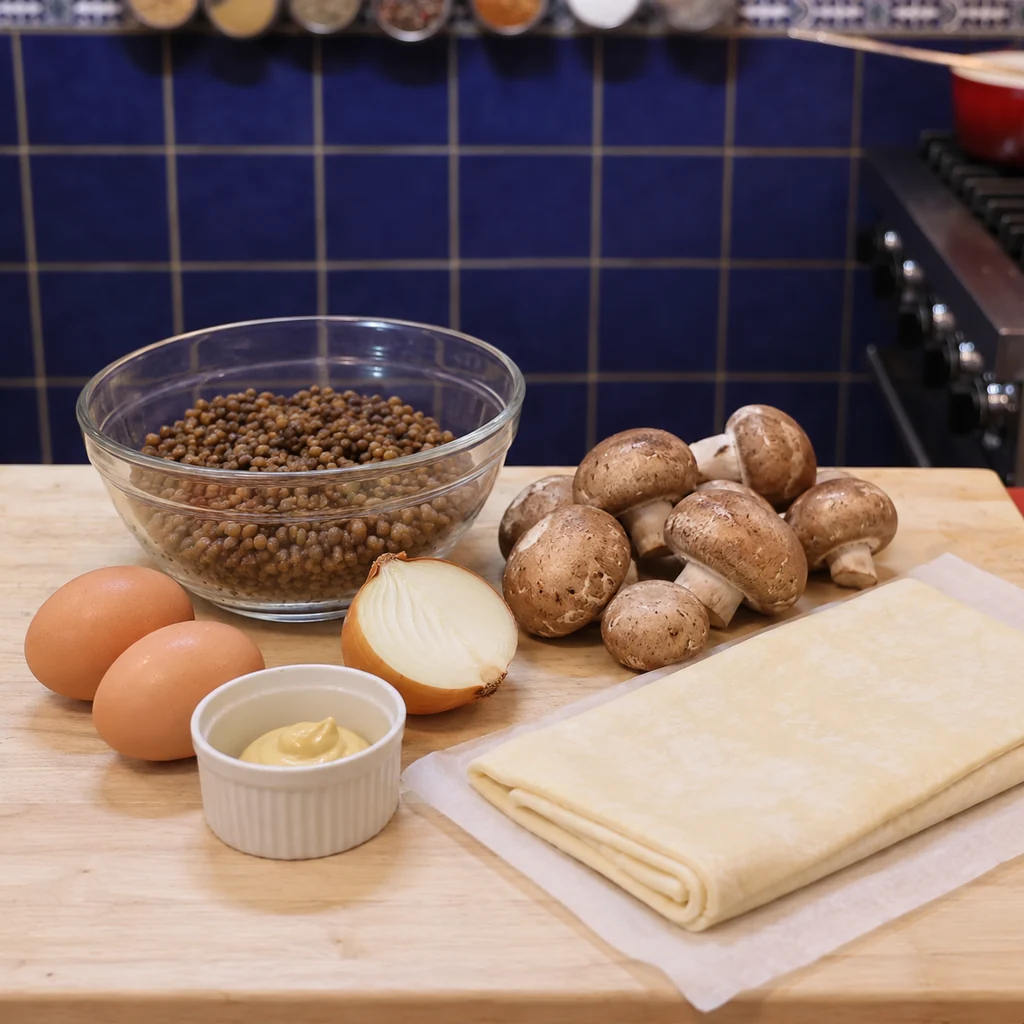
Measure 300 g, about one and a half US cups, of cooked brown or green lentils. Canned lentils are convenient; rinse them and drain thoroughly before measuring. If cooking from dry, do that separately according to the package and allow additional cooking and cooling time. The filling recipe starts with lentils already tender. Spread very wet lentils briefly in a sieve rather than carrying a pool of liquid into the mushroom mixture.
I prefer lentils that still have some shape. Red split lentils become much softer and do not give the same structure. The breadcrumbs and egg help bind the mixture, but they should not be used to absorb unlimited water. If the lentils or mushrooms are wet, address that before assembly. A dry-looking filling can still be moist to eat once the vegetables, egg, and pastry have cooked together.
Cook the mushrooms in two batches
Finely chop 600 g of brown mushrooms. Heat one tablespoon of olive oil in a wide pan over medium heat and cook half the mushrooms for eight to ten minutes, stirring occasionally, until their released water has evaporated and they begin to colour. Transfer to a bowl, then repeat with the remaining oil and mushrooms. A crowded pan traps moisture and makes it harder to achieve a concentrated filling.
Add the butter and finely diced onion to the empty pan, then soften for six minutes. Stir in garlic and thyme for one minute. Return the mushrooms, add soy sauce and Dijon, and stir briefly to combine. I don’t like leaving large pieces of raw onion in the filling, because the pastry can finish before those pieces soften. Check the pan for standing liquid before transferring the mixture to a shallow container to cool.
Bind only after the vegetables are cool
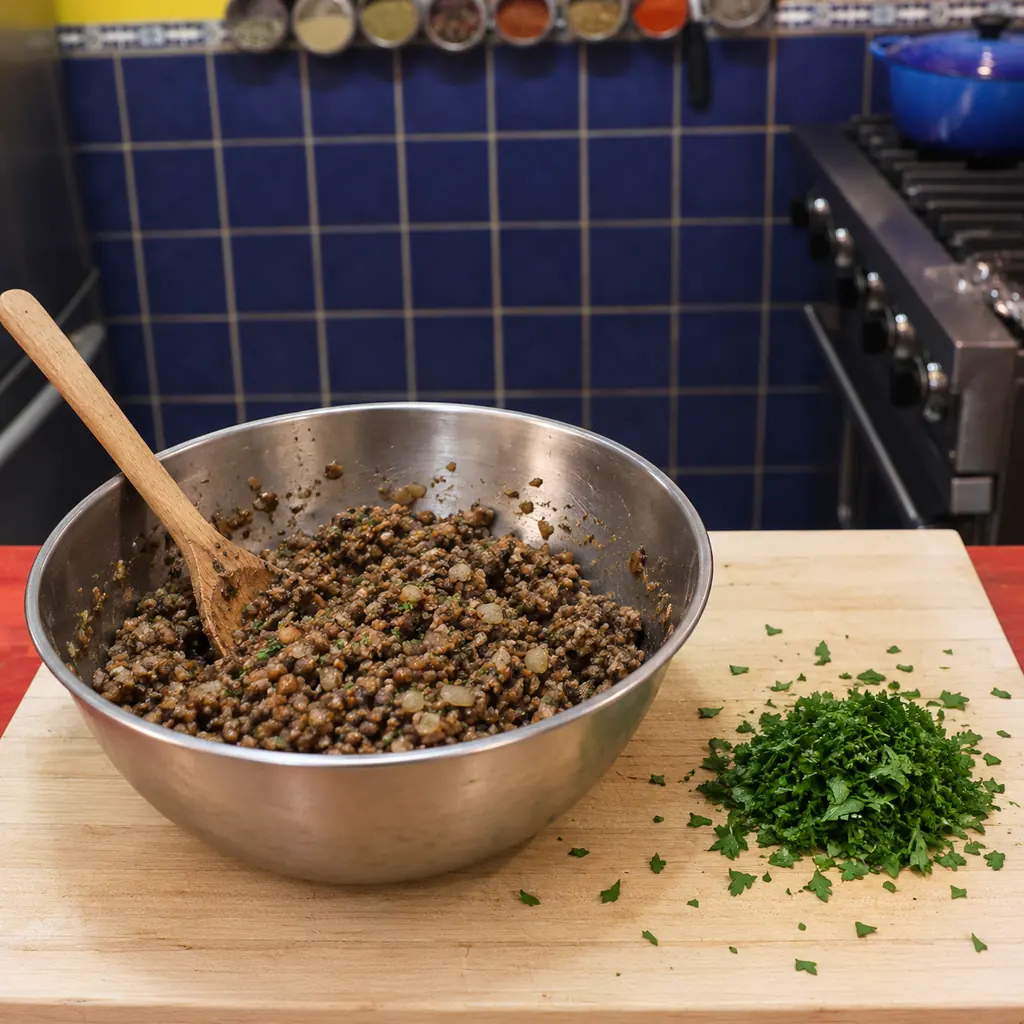
Once the mushroom mixture is cool, combine it with the drained lentils, breadcrumbs, chopped parsley, pepper, and one beaten egg. Taste and adjust the cooked mushroom mixture for salt before adding the raw egg; do not taste the filling after the egg goes in. Fold rather than purée. The mixture should hold a mound when pressed with a spoon. If it remains loose despite draining, add one extra tablespoon of breadcrumbs and let it stand briefly.
Egg is part of this recipe, both inside and in the separate wash. The spinach and goat cheese puff pastries are another pastry preparation, with their own filling and proportions. I do not treat egg removal or a different filling as a simple one-for-one change here, because structure matters when lifting and slicing a large enclosed parcel.
Wrap with cold, flexible pastry
Thaw 500 g of puff pastry according to its package, keeping it chilled until needed. Roll to a rectangle about 35 by 40 cm, roughly 14 by 16 inches, and about 3 mm thick on lightly floured parchment. Shape the filling into a log about 25 cm long, 8 cm wide, and 5 cm high in the centre, with its length aligned with the longer side of the pastry.
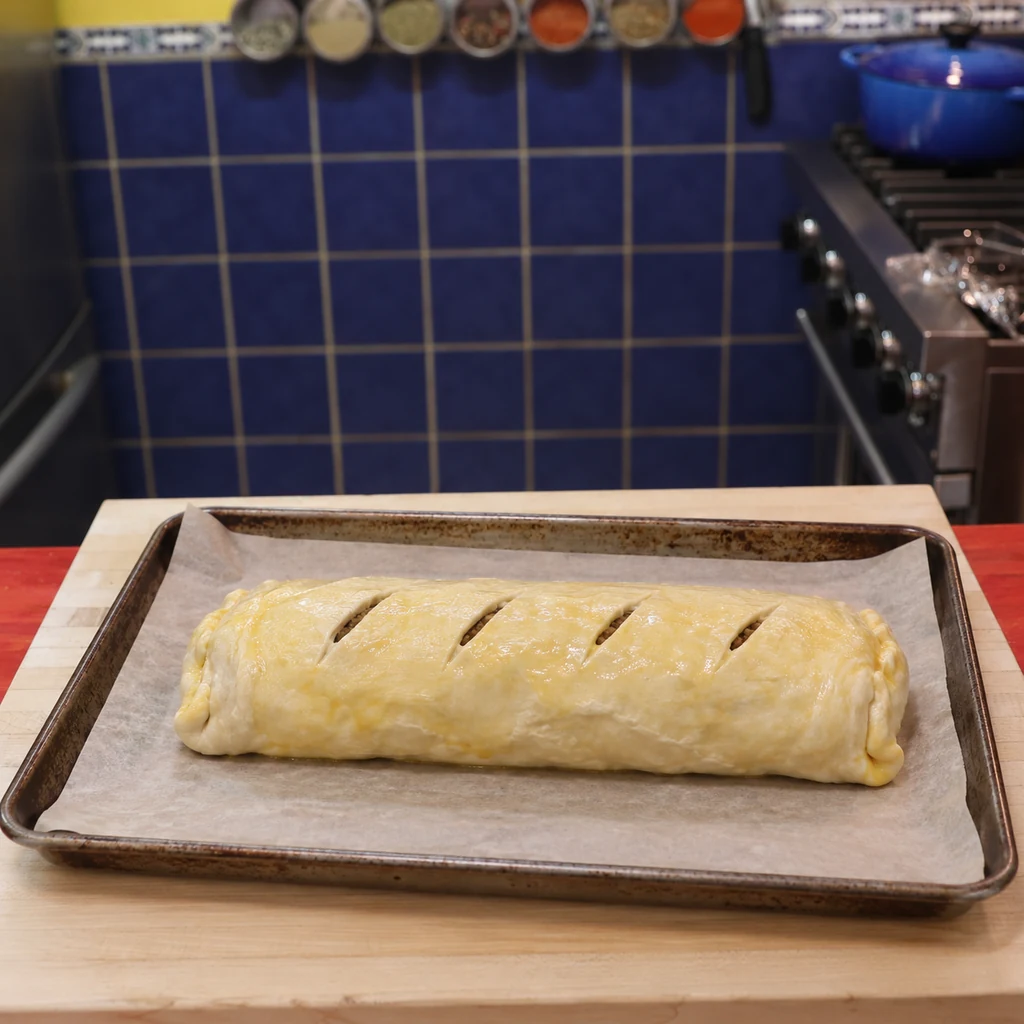
Brush the joining edges lightly with beaten egg. Fold the long sides over the filling, trimming excess so the overlap is modest rather than several thick layers. Fold and seal the ends, then turn the parcel seam-side down on a lined baking tray. I like using the parchment to support it while turning. Make four small steam slits on top, brush thinly with the remaining egg wash, and chill for twenty minutes.
Bake until the base and sides are cooked
Heat the oven to 200°C, or 400°F, while the parcel chills. Bake on a middle-lower rack for forty to forty-five minutes, or until the pastry is deeply golden, crisp at the sides, and cooked underneath. Check the filling reaches 74°C, or 165°F, in the centre because it contains egg. If the top browns too quickly, cover it loosely with foil while allowing the lower pastry to finish.
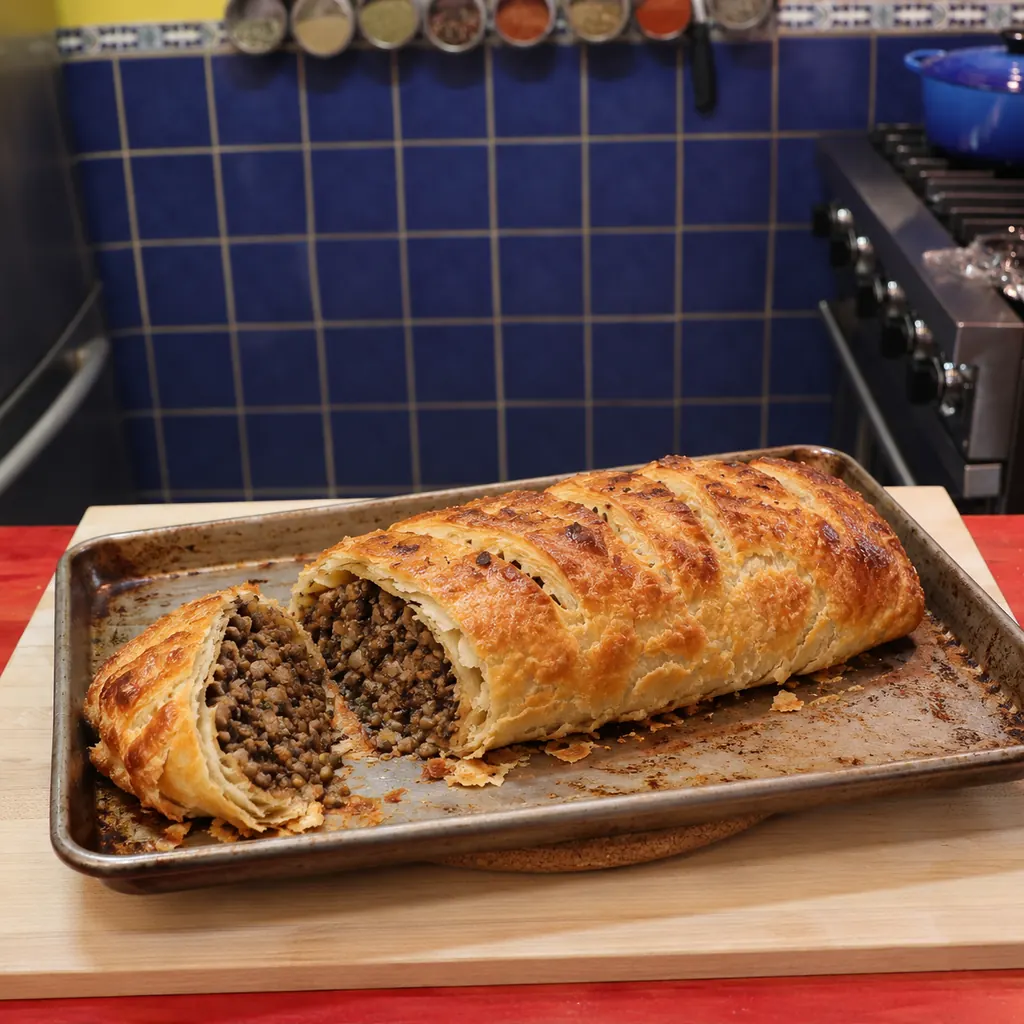
The colour on top is only one clue. Pale, soft folds along the bottom need more baking even if the surface looks attractive. Follow the pastry package if its guidance requires a longer bake, and use the centre temperature as an additional check. Rest ten minutes before cutting with a serrated knife. I prefer a gentle sawing motion rather than pressing hard enough to flatten the flaky shell and squeeze out the filling.
Serve with sides prepared separately
Cut into six thick portions and serve promptly. A little mushroom sauce can be offered separately if dairy is suitable, but do not pour it over the entire pastry before bringing it to the table. I like leaving most of the crust dry so the layers remain crisp. Sauce ingredients and preparation time are additional to the Wellington and are not part of its estimated calories.
For vegetables, air fryer Brussels sprouts or green bean salad with raspberry vinaigrette give two different serving options. A romaine and endive salad also works when you want a fresh side with the rich pastry. Plan these separately so a side dish does not force the baked Wellington to wait too long after its short resting period.
Make-ahead and leftover questions
The cooked mushroom mixture and lentils can be prepared in advance, cooled promptly, and refrigerated separately at 4°C or below. Add breadcrumbs and egg when ready to assemble. Keep the raw-egg filling chilled, assemble close to baking, and avoid leaving a filled pastry overnight if you want the best chance of a crisp base. I prefer the staged preparation because it lets the vegetable moisture be checked before the pastry is unrolled.
Refrigerate cooked leftovers within two hours in shallow containers, use within two to three days, and reheat to 74°C, or 165°F, throughout. An oven is better suited to restoring some pastry crispness than a covered wet pan. Freeze cooled individual slices for up to one month for best quality and thaw in the refrigerator before reheating. The crust may soften after storage, so the most distinct flaky texture is on the day the parcel is baked.
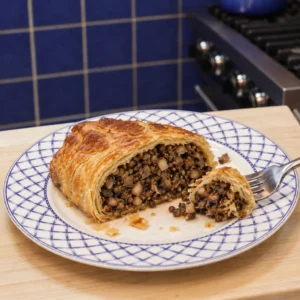
Mushroom and Lentil Wellington
Ingredients
- 600 g 1 lb 5 oz brown mushrooms, finely chopped
- 30 ml 2 tbsp olive oil, divided
- 15 g 1 tbsp butter
- 100 g 1 small onion, finely diced
- 2 garlic cloves minced
- 5 ml 1 tsp dried thyme
- 15 ml 1 tbsp soy sauce
- 15 ml 1 tbsp Dijon mustard
- 300 g about 1 1/2 US cups cooked brown or green lentils, well drained
- 60 g about 1/2 US cup fine dry breadcrumbs, plus 1 tbsp only if needed
- 30 ml 2 tbsp chopped parsley
- 2.5 ml 1/2 tsp ground black pepper
- 2.5 ml 1/2 tsp fine salt, or less to taste before adding raw egg
- 1 large egg beaten, for filling
- 500 g about 1 lb 2 oz puff pastry, thawed according to package and kept chilled
- A little flour for rolling
- 1 large egg beaten with 5 ml (1 tsp) water, for sealing and brushing
Instructions
- Cook half the mushrooms in 15 ml (1 tbsp) oil in a wide pan over medium heat for 8–10 minutes until their liquid evaporates and they begin to colour. Transfer to a bowl. Repeat with remaining mushrooms and oil.
- In the empty pan, soften onion in butter 6 minutes. Add garlic and thyme 1 minute. Return mushrooms, add soy sauce and Dijon, and stir briefly. Taste for salt and pepper before raw egg is added. Spread in a shallow container and refrigerate until cool, about 45 minutes, cooling promptly within 2 hours.
- Mix cool mushrooms with drained cooked lentils, breadcrumbs, parsley, and filling egg. It should hold a mound; add 1 tbsp breadcrumbs only if needed. Do not taste after adding raw egg.
- Roll cold puff pastry on lightly floured parchment to about 35 x 40 cm and 3 mm thick. Form filling into a central log about 25 x 8 x 5 cm. Brush joining edges lightly with wash, fold long sides over and trim excess overlap, seal ends, and turn seam-side down on a lined tray. Cut 4 small steam slits, brush thinly with wash, and chill 20 minutes.
- Heat oven to 200°C (400°F). Bake on a middle-lower rack 40–45 minutes or as needed until pastry is deeply golden and cooked at sides and base, with filling at 74°C (165°F). Loosely cover top with foil if it browns early. Rest 10 minutes and slice into 6 portions with a serrated knife.