Classic Poule au Pot with Garden Vegetables and Cold Dijonnaise
Poule au pot is a traditional French chicken dish where a whole hen is gently simmered in broth, then served on a platter with vegetables, potatoes, and a simple sauce on the side. What makes this version different is the clear homemade chicken broth, the marrow bones used to deepen the flavor, and the cold dijonnaise with a little harissa for contrast. This is based on my YouTube video, with a few adjustments since publication to make the written recipe more reliable at home.
Some chicken dinners are all about speed, cream, or a quick pan sauce. This one is not that. This is the slow, old-school, Sunday-style version that fills the kitchen with the smell of broth, herbs, and vegetables. It is lighter than a cream-based chicken dish, but still feels generous and comforting. It works beautifully in colder months, yet it is just as good year-round when you want a proper family-style platter in the middle of the table.
I make it this way because the broth matters as much as the chicken. A hard boil gives you cloudy liquid and drier meat. A gentle simmer gives you a clear broth, tender flesh, and vegetables that taste like themselves. In the video, I use homemade broth, a lot of garlic, plenty of garden vegetables, and a cold mustardy sauce on the side. Here, I keep that spirit but tighten the seasoning and timing so the result is more dependable.
If you enjoy slower French comfort food, this sits closer to traditional homemade pot au feu than a quick skillet dinner like creamy lemon garlic chicken or a fast mustard chicken dinner. It also shares that same cozy table presence as coq au vin or easy hunter’s chicken, but the flavor profile is cleaner, brothier, and more vegetable-forward.

Ingredients
For the poule au pot
- 1 whole stewing hen or large roasting chicken, about 4 1/2 to 5 1/2 pounds
- 12 to 14 cups unsalted homemade chicken broth
- 3 marrow bones
- 8 to 10 garlic cloves, peeled
- 4 bay leaves
- 1 sprig fresh thyme
- Sea salt
- Freshly ground black pepper
For the vegetables
- 4 carrots, peeled
- 3 parsnips, peeled
- 2 leeks, cleaned well
- 1 small fennel bulb, halved
- 1/2 small green cabbage
- 1/4 small red cabbage
- 3 small turnips, peeled
- 2 small yellow beets, peeled
- 1 small celeriac, peeled and cut into large pieces
- 2 small onions, peeled
- 2 shallots, peeled
- 8 small potatoes, white or a mix of white and blue if available
- A few cabbage leaves for the platter
- A little fresh parsley for finishing

For the bouquet garni
- 1 large leek green or a few long leek leaves
- 2 sprigs basil
- 2 sprigs thyme
- 5 to 6 bay leaves
- Kitchen twine
For the cold dijonnaise
- 1 whole egg
- 2 tablespoons red wine vinegar
- 3 tablespoons Dijon mustard
- 1 to 2 teaspoons harissa
- 1 cup neutral oil
- Salt, to taste
- Black pepper, to taste
If you do not have homemade broth on hand, start with a strong unsalted stock or a concentrated base like my homemade chicken stock concentrate. For the sauce, the texture follows the same logic as foolproof homemade mayonnaise, and the gentle heat can come from your favorite chili paste or a batch of homemade harissa paste.
How to Make Poule au Pot
1. Strain the broth
Pour the chicken broth through a fine sieve into a clean large pot or Dutch oven. This step is worth doing even if the broth already looks good. A clear broth makes the whole dish feel cleaner and more elegant.

2. Season and tie the hen
Season the cavity of the hen with salt and pepper. Add the garlic cloves, 2 bay leaves, and the thyme sprig inside. Tuck the wings neatly, trim excess fat if needed, and tie the bird with kitchen twine so it keeps a nice shape while it cooks.
3. Start the first simmer
Place the tied hen in the pot and pour in enough broth to cover it by about 1 inch. Add the marrow bones. Bring everything slowly to a very light simmer. Do not boil it. Skim off any foam and fat that rises to the surface.
Let the hen simmer gently for 30 minutes.
4. Prep the vegetables and bouquet garni
While the chicken begins cooking, prep the vegetables. Keep them in large pieces so they do not fall apart in the broth.
Tie the leek leaves, basil, thyme, and remaining bay leaves into a bouquet garni. If your leeks are large, tying them lightly with twine also helps them keep their shape.
5. Add the hard vegetables
After the first 30 minutes, remove the marrow bones and set them aside. Add the carrots, parsnips, turnips, yellow beets, celeriac, onions, shallots, and bouquet garni to the pot. Push them gently into the broth.
Simmer for 45 minutes at a very gentle bubble, skimming when needed.

6. Add the more delicate vegetables
Add the leeks, fennel, green cabbage, and red cabbage. Continue cooking gently for 30 to 45 minutes more, or until the hen is fully tender.
This timing matters. In the video, the cooking stays very gentle, and that is exactly right. If you are using a true older stewing hen instead of a younger roasting chicken, it may need a little longer. The bird is ready when the legs feel loose and the meat is tender but still holds together for serving.
7. Cook the potatoes separately
About 30 minutes before the hen is done, ladle some broth into a second pot. Season it with salt and pepper, add the potatoes, and simmer until tender.
Cooking the potatoes separately keeps the main broth clearer and prevents them from breaking apart into the serving pot.
8. Warm the marrow bones
Put the marrow bones in a small saucepan, cover with a little broth, and warm them gently during the final stretch of cooking. They should be hot and rich but not aggressively boiled.

9. Make the cold dijonnaise
In a tall container, combine the egg, red wine vinegar, Dijon mustard, harissa, salt, and pepper. Blend with an immersion blender while slowly adding the oil until the sauce thickens.
Taste it. It should be punchy but balanced. Chill until serving time.
10. Blanch the cabbage leaves
Bring a small pot of water to a boil. Season lightly with salt. Blanch the cabbage leaves for about 2 minutes, then drain well. These leaves will form the bed for the vegetables on the platter.

11. Assemble the platter
Lift the hen out carefully and remove the twine. Take out all the vegetables and discard the bouquet garni.
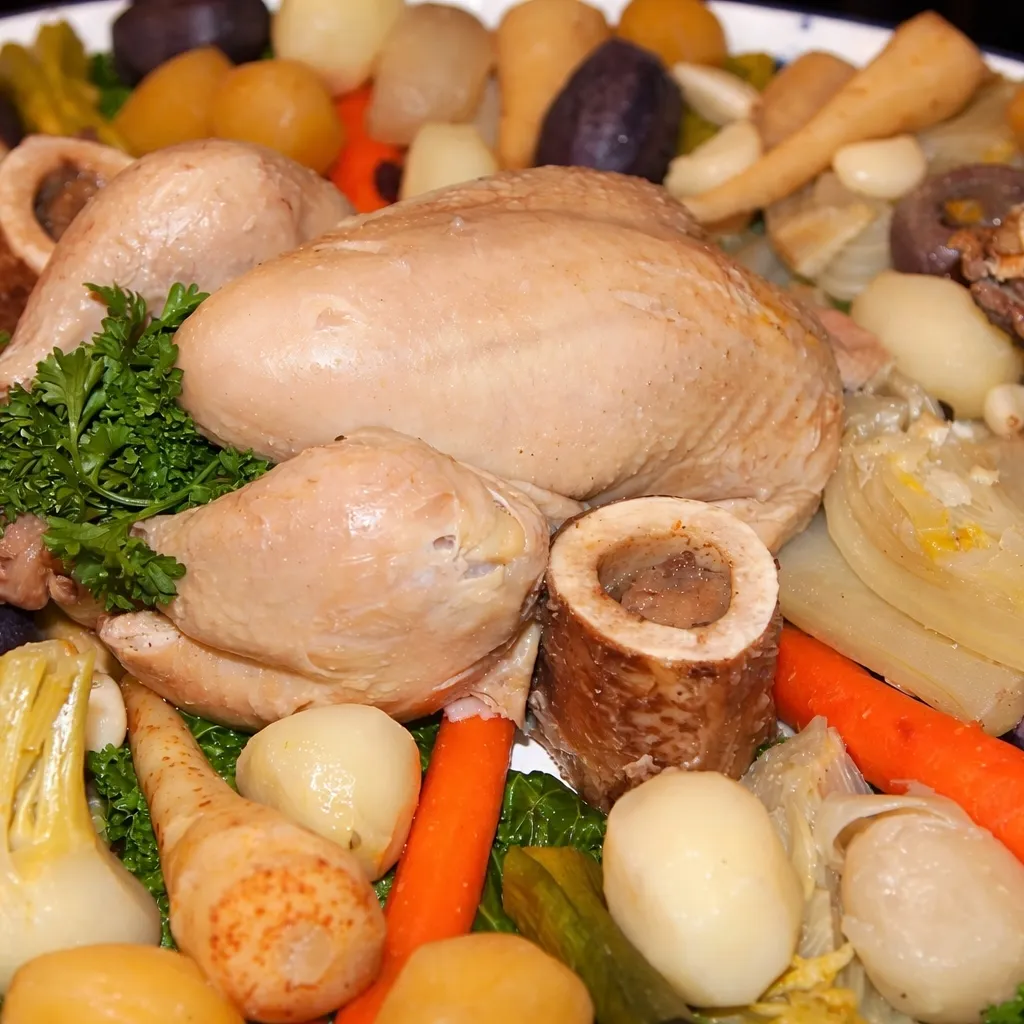
Arrange the blanched cabbage leaves on a large platter. Build the vegetables around the edges, adding the potatoes and marrow bones as you go. Place the hen in the center. Tuck in the cooked garlic cloves if you like, then finish with parsley.
Serve the cold dijonnaise on the side.

Why This Version Works
The main adjustment from the video is the staging of the vegetables. Harder vegetables can handle the longer cooking time, but fennel, leeks, and cabbage benefit from going in later. That keeps the platter attractive and prevents everything from tasting uniformly soft.
The second important adjustment is seasoning. Because the broth starts unsalted, you need to season in layers and taste. That one detail makes the difference between a dish that looks beautiful and one that actually tastes finished.
The final thing I like here is the contrast. The broth and chicken are warm, delicate, and comforting. The dijonnaise is cold, sharp, and slightly spicy. That contrast wakes up the whole plate.
Substitutions
No yellow beets? Use regular golden turnips or just add an extra carrot and parsnip.
No fennel? Leave it out and increase the leeks slightly.
No marrow bones? The dish still works. You will lose some richness, but the broth will still be good.
No stewing hen? A large roasting chicken is perfectly fine and often easier to find. It may cook faster, so start checking earlier.
No harissa? Use a small spoonful of chili paste, or skip the heat completely for a milder sauce.
No homemade broth? Use a strong, good-quality unsalted stock and reduce it slightly if it tastes weak.

FAQ
What is the difference between poule au pot and pot au feu?
Poule au pot is chicken-based. Pot au feu is usually built around beef and marrow bones. The serving style is similar, but the flavor is lighter and cleaner with chicken.
Can I make this ahead?
Yes. In fact, the broth often tastes even better the next day. Reheat gently so the chicken does not dry out.
Do I need a real old hen?
No. A large chicken works well. A true stewing hen gives more depth, but it may need more time.
Why cook the potatoes separately?
It keeps the main broth cleaner and helps the potatoes hold their shape.
Can I skip the sauce?
You can, but I would not. The cold dijonnaise is one of the details that gives this version character.
What to Serve with It and Suggested Posts
If you want to keep the meal classic and simple, serve this with Parisian potatoes or a richer version like potatoes with bacon. For something softer and more comforting, creamy mashed potatoes also make sense, especially if you want to spoon over some extra broth.
For extra vegetables, a tray of oven roasted mixed vegetables works well. If you want a cold starter or side, try a homemade Caesar salad or a crisp grated carrot salad with mustard vinaigrette.
If this kind of chicken cooking is your style, you can also browse my five easy chicken marinades for something more weeknight-friendly.

Classic Poule au Pot with Garden Vegetables and Cold Dijonnaise
Ingredients
For the poule au pot
- 1 whole stewing hen or large roasting chicken about 4 1/2 to 5 1/2 pounds
- 12 to 14 cups unsalted homemade chicken broth
- 3 marrow bones
- 8 to 10 garlic cloves peeled
- 4 bay leaves
- 1 sprig fresh thyme
- Sea salt
- Freshly ground black pepper
For the vegetables
- 4 carrots peeled
- 3 parsnips peeled
- 2 leeks cleaned well
- 1 small fennel bulb halved
- 1/2 small green cabbage
- 1/4 small red cabbage
- 3 small turnips peeled
- 2 small yellow beets peeled
- 1 small celeriac peeled and cut into large pieces
- 2 small onions peeled
- 2 shallots peeled
- 8 small potatoes white or a mix of white and blue if available
- A few cabbage leaves for the platter
- A little fresh parsley for finishing
For the bouquet garni
- 1 large leek green or a few long leek leaves
- 2 sprigs basil
- 2 sprigs thyme
- 5 to 6 bay leaves
- Kitchen twine
For the cold dijonnaise
- 1 whole egg
- 2 tablespoons red wine vinegar
- 3 tablespoons Dijon mustard
- 1 to 2 teaspoons harissa
- 1 cup neutral oil
- Salt to taste
- Black pepper to taste
Instructions
- Strain the broth into a clean large pot.
- Season the cavity of the hen with salt and pepper. Add garlic, thyme, and bay leaves. Tie the hen.
- Put the hen in the pot, cover with broth by about 1 inch, add marrow bones, and bring to a very gentle simmer. Skim and cook 30 minutes.
- Tie the bouquet garni. Prep the vegetables in large pieces.
- Remove marrow bones. Add carrots, parsnips, turnips, yellow beets, celeriac, onions, shallots, and bouquet garni. Simmer 45 minutes.
- Add leeks, fennel, green cabbage, and red cabbage. Continue simmering 30 to 45 minutes, or until the hen is tender.
- Cook the potatoes separately in salted and peppered broth for about 25 to 30 minutes.
- Reheat the marrow bones gently in a little broth.
- Blend the egg, vinegar, mustard, harissa, salt, pepper, and oil into a thick dijonnaise. Chill.
- Blanch the cabbage leaves for 2 minutes and drain.
- Remove the hen and vegetables from the broth. Discard the bouquet garni.
- Arrange the blanched cabbage leaves on a platter, add the vegetables and potatoes, place the hen in the center, add marrow bones, finish with parsley, and serve with the cold dijonnaise.
Video
Notes
Substitutions
No yellow beets? Use regular golden turnips or just add an extra carrot and parsnip. No fennel? Leave it out and increase the leeks slightly. No marrow bones? The dish still works. You will lose some richness, but the broth will still be good. No stewing hen? A large roasting chicken is perfectly fine and often easier to find. It may cook faster, so start checking earlier. No harissa? Use a small spoonful of chili paste, or skip the heat completely for a milder sauce. No homemade broth? Use a strong, good-quality unsalted stock and reduce it slightly if it tastes weak.FAQ
What is the difference between poule au pot and pot au feu?
Poule au pot is chicken-based. Pot au feu is usually built around beef and marrow bones. The serving style is similar, but the flavor is lighter and cleaner with chicken.Can I make this ahead?
Yes. In fact, the broth often tastes even better the next day. Reheat gently so the chicken does not dry out.Do I need a real old hen?
No. A large chicken works well. A true stewing hen gives more depth, but it may need more time.Why cook the potatoes separately?
It keeps the main broth cleaner and helps the potatoes hold their shape.Can I skip the sauce?
You can, but I would not. The cold dijonnaise is one of the details that gives this version character.🔗 Useful Links
🛒 Michel Dumas Shop : Explore our kitchen essentials, including aprons and knives.
🌐 Linktree : Access all our important links in one place.
📱 YouTube | Instagram | Facebook | TikTok : Follow us for the latest recipes and culinary tips.