Mussels Three Ways with White Wine Cream and Maroilles
Three small pots of mussels share the same celery and onion base, then take different directions: a light white wine broth, a smooth cream sauce, and a rich Maroilles cheese sauce. Prepare the vegetables first, reduce the sauces before adding the shellfish, and serve each version as soon as the mussels are cooked.
{VIDEO}
Three sauces from one simple preparation
This recipe brings together the three preparations shown in my mussels video. The plain version lets the mussels and vegetables lead. Cream rounds out the second sauce, while Maroilles gives the third a stronger cheese flavor. You can make the complete trio for a tasting meal or prepare just one version using its own ingredient list.
The quantities below give three small bowls, rather than three generous main courses. Shell-on weight includes a substantial amount of shell, so keep that distinction in mind when planning dinner. For a full main course, double the mussels and all the ingredients for the version you choose, and use a wider pot. For a familiar bistro plate with potatoes, see classic Belgian mussels with fries.
These are practical, standardized proportions adapted from the video. The demonstration uses separate pots and seasons by eye. The written method specifies the vegetables, liquid and sauce ingredients so the same balance can be reproduced at home. It has not been independently kitchen-tested. The important cooking sequence is retained: soften the aromatics, reduce the liquid, finish the chosen sauce, then cook the mussels briefly under a lid.
Ingredients for the complete trio
Shared ingredients divided between three pots
2 pounds fresh live mussels in their shells, divided into three equal batches
3 tablespoons unsalted butter, divided
1 medium onion, finely diced, about 1 cup
2 celery stalks, finely sliced, about 1 cup
Freshly ground black pepper, to taste
Salt only after tasting the finished sauces, if needed
Plain white wine version
1/3 of the mussels, butter, onion and celery above
1/3 cup dry white wine
1 small bay leaf
Cream version
1/3 of the mussels, butter, onion and celery above
1/3 cup dry white wine
1/2 cup heavy cream
Maroilles version
1/3 of the mussels, butter, onion and celery above
1/3 cup dry white wine
2 1/2 ounces Maroilles cheese, cut into small cubes
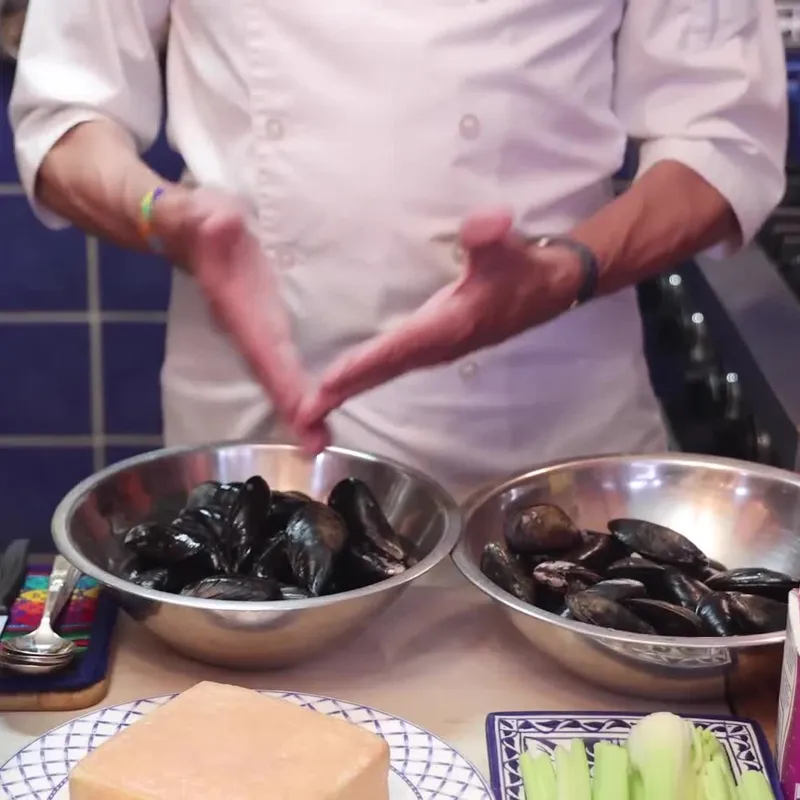
Maroilles is a washed-rind cheese with an assertive aroma. A small amount gives the sauce character without completely hiding the mussels. The cream version uses heavy cream because it tolerates heating better than a low-fat substitute. A dry wine gives acidity; a sweet wine can make the sauce taste noticeably different.
Keep the mussels cold while preparing everything else. Buy live shellfish from a reliable supplier and follow the package’s storage instructions. Before cooking, discard cracked shells and any open mussels that do not close when tapped. Rinse quickly under cold running water, scrub if needed, and pull away the beards. Do not leave live mussels soaking in fresh water.
Prepare the mussels and sauces
1 Prepare the vegetables and cheese
Slice the celery thinly and dice the onion small. Divide both equally between three bowls. Cut the Maroilles into small cubes so it melts evenly. Measure the wine and cream before turning on the stove. Check and clean the mussels, then divide them equally. If making one version, prepare only that version’s share of the ingredients.

2 Soften the onion and celery
Place one tablespoon of butter in each of three small, wide pots with lids. Melt over medium heat. Add a third of the onion and celery to each pot. Cook for about 3 to 5 minutes, stirring, until the onion is translucent and the celery begins to soften. Reduce the heat if the butter browns or the vegetables catch. The aim is a sweet aromatic base rather than a dark fried flavor.

3 Reduce the wine
Pour 1/3 cup wine into each pot. Scrape up any light cooking residue and simmer uncovered until the liquid has reduced by roughly half. Add the bay leaf to the plain version. This brief reduction concentrates the base before the mussels release their own liquid. Do not let the pots boil dry. Keep each sauce separate, and taste only after the mussels have cooked.

4 Finish the two richer sauces
Turn the heat down under the cheese pot. Add the diced Maroilles and stir gently until melted into the wine and vegetables. In the cream pot, add the heavy cream and simmer gently for 1 to 2 minutes, just until slightly thickened. The plain pot stays as a vegetable and wine broth. Add a little pepper to each. Avoid adding salt at this stage.

5 Add the mussels and cover
Bring each base to a lively simmer, add its mussels and immediately cover. Cook for about 5 to 7 minutes, shaking each covered pot carefully once or twice. Check near the end: the shells should open and the meat should look plump and opaque. Cook until done rather than following the video’s short countdowns literally. Discard any mussels that remain closed after cooking.

6 Serve each version promptly
Remove the pots from the heat as soon as the mussels are ready. Remove the bay leaf. Gently turn the mussels through their own sauce, then taste the liquid and adjust pepper or salt only if needed. Divide between warm bowls and spoon the sauce over the shells. Set an empty bowl on the table for discarded shells and serve immediately.


Getting the sauce consistency right
Mussels release liquid as they open. A sauce that looks thick before the shellfish go in will loosen during cooking. That is expected: the finished sauce should flow around the mussels and collect at the bottom of the bowl. It does not need to coat every shell like a thick gravy.
If the cream or cheese sauce is too thin, lift out the cooked mussels with a slotted spoon and reduce the sauce alone briefly. Return the mussels only long enough to coat them. Boiling them throughout a long reduction makes the meat shrink and become chewy. If the cheese sauce is too thick before cooking, loosen it with a tablespoon or two of water. For another seafood sauce where gentle heat matters, try salmon with beurre blanc.
The plain version is deliberately lighter. Adding flour to it would change the dish. A separate creamy seafood meal, such as creamy shrimp pasta with garlic sauce, follows a different approach because pasta absorbs part of the sauce.
Substitutions and scaling
An equal weight of shallot can replace the onion. Keep celery thinly sliced so it softens during the short preparation. If you cannot find Maroilles, another melting washed-rind cheese can work, though the flavor and salt level will differ. Start with less cheese, taste the finished sauce, and adjust on a future batch. A very salty blue cheese is not a neutral replacement.
For an alcohol-free variation, replace the wine with the same volume of water or unsalted vegetable broth and add a small squeeze of lemon after cooking. This changes the flavor but preserves the basic method. Wine reduction does not guarantee that all alcohol disappears. Frozen cooked mussels are also a different starting point: follow their package directions rather than steaming them as live shellfish.
Doubling a single version is easier than managing three large pots at once. Use a pot that leaves space above the mussels, and do not pack them tightly. Crowding prevents you from turning them and makes heating uneven. For a different use of shellfish with a richer finish, see mussels gratin in the style of coquilles Saint Jacques.
Questions about cooking mussels
Can I prepare the sauces ahead
Dice the vegetables and cheese ahead and keep refrigerated. You can soften the aromatics shortly before serving, but cook the mussels at the last minute. Have bowls and side dishes ready before the shells go into the pots.
Why are the mussels chewy
They usually spent too long over the heat, especially if the sauce was reduced with the cooked mussels still inside. Remove them once cooked and make any final sauce adjustment separately.
How should I handle leftovers
Refrigerate promptly in a shallow covered container within two hours. Remove the meat from the shells for easier storage and keep it with the sauce. Use within two days and reheat thoroughly once; the texture will be firmer than when freshly cooked. Do not leave the finished bowls on the counter for later snacking.
What to serve with the three bowls
For a traditional pairing, make crisp Belgian fries before cooking the mussels. Bread is useful for the sauces; air fryer garlic bread is a quick option. A simple green salad with lemon vinaigrette keeps the meal fresh alongside the cream and cheese.
For a larger seafood menu, oven-baked garlic butter shrimp can be prepared separately. If you prefer a cold starter, cold salmon salad offers a different texture. Another aromatic shellfish dish is creamy Pernod shrimp capellini. Choose one accompaniment or starter so the three mussel sauces remain the focus.

Mussels Three Ways with White Wine Cream and Maroilles
Ingredients
- 2 pounds live shell-on mussels divided into three equal batches
- 3 tablespoons unsalted butter divided
- 1 medium onion finely diced, about 1 cup, divided
- 2 celery stalks thinly sliced, about 1 cup, divided
- 1 cup dry white wine divided equally between three pots
- 1 small bay leaf for the plain version
- 1/2 cup heavy cream for the cream version
- 2 1/2 ounces Maroilles cheese cubed, for the cheese version
- Black pepper to taste
- Salt only if needed after cooking
Instructions
- Clean and check the mussels. Divide into three batches. Prepare and divide the onion and celery; cube the cheese.
- Melt one tablespoon butter in each pot. Soften a third of the onion and celery in each for 3 to 5 minutes.
- Add 1/3 cup wine to each pot and reduce by about half. Add the bay leaf to the plain version.
- Melt the Maroilles into the cheese base over low heat. Add the cream to the cream base and simmer gently for 1 to 2 minutes. Season lightly with pepper.
- Add each batch of mussels to its own simmering sauce. Cover and cook for about 5 to 7 minutes, shaking the pots carefully, until shells open and meat is opaque. Discard any that remain closed.
- Remove the bay leaf. Taste the sauces, adjust seasoning if needed and serve immediately in three bowls.





 Last chance for our paring knives.