Brown Butter Salmon Almondine with Toasted Almonds
Salmon almondine is a pan-seared salmon fillet finished with toasted almonds, brown butter, lemon and parsley. I toast the nuts separately so I can control their colour while the salmon cooks. The final spoonful of butter carries the almonds over the fish just before it goes to the table.
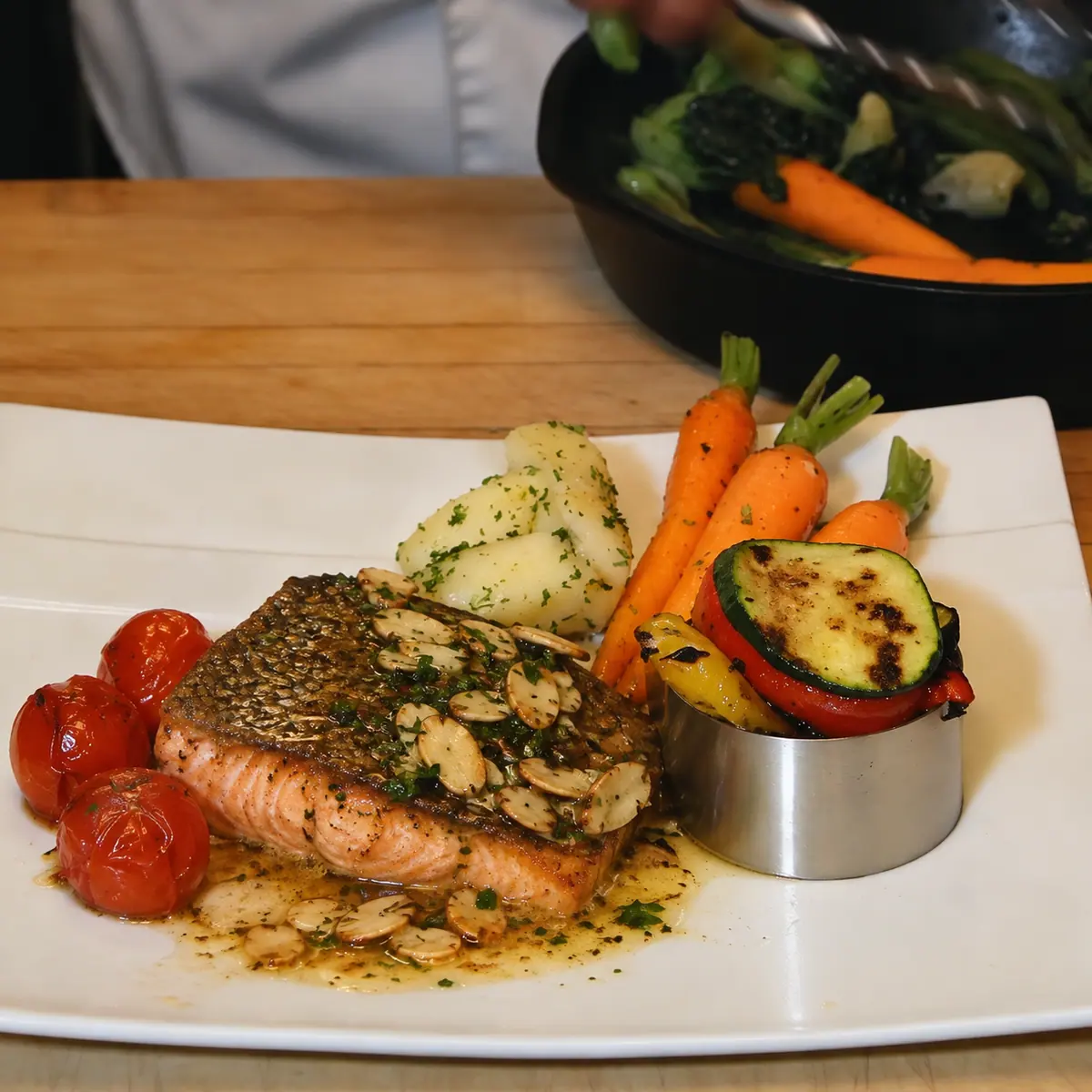
Pick the fillets and set up the finishing ingredients
Choose four skin-on salmon portions close in thickness. The thinner belly flap on a centre-cut piece cooks more quickly than the rounded back, but you can judge the main portion by its thickest point. Run your fingers along the flesh for pin bones and pull them in the direction they point. Pat the skin dry with paper towel. If it glistens with water when you lower it into oil, it will spit and steam before it has a chance to brown. Salt lightly just before cooking.
In the classic trout almondine, a thin fillet can be on and off the heat in a few minutes. A thick piece of salmon deserves a more deliberate sear. Give yourself time at the beginning by measuring the lemon juice, chopping and drying the parsley, and setting a cool plate beside the stove for the nuts. Have four warm dinner plates ready as well. Once the butter turns amber you should be able to finish the pan simply by reaching for the next ingredient.
Toast the almonds before heating the oil
Scatter the sliced almonds in a dry skillet over medium-low heat. Keep them in one loose layer and move them around with a wooden spoon, especially those sitting near the outer edge of the burner. A sliced almond can be pale on top and already toasted underneath. Lift and turn a few to check both faces. As soon as most have a golden patch and smell lightly roasted, slide the entire batch onto the cool plate. Leaving them in the empty pan while you prepare the fish is enough to take them from blond to bitter.
Use ordinary unsalted butter for the sauce. The tiny milk solids are what turn brown and give the butter its hazelnut aroma. Clarified butter has had those solids removed and will behave differently. The sauce here needs no cream or stock. If you want a more generous, creamy-looking sauce for a similar fillet, see crisp salmon with beurre blanc. For this recipe, a modest spoonful of concentrated butter and a scattering of nuts is enough to season each serving.
Sear the salmon and protect the skin
Heat the oil over medium-high heat in a heavy skillet large enough to give each fillet breathing room. Lower the salmon skin side down and press the top gently with a broad spatula for a few seconds. This keeps the skin flat as it contracts. After that, let it cook undisturbed. If the portions vary in size, put the thicker pieces in first. A little pale band will rise up the sides of the fish as heat travels toward the centre.
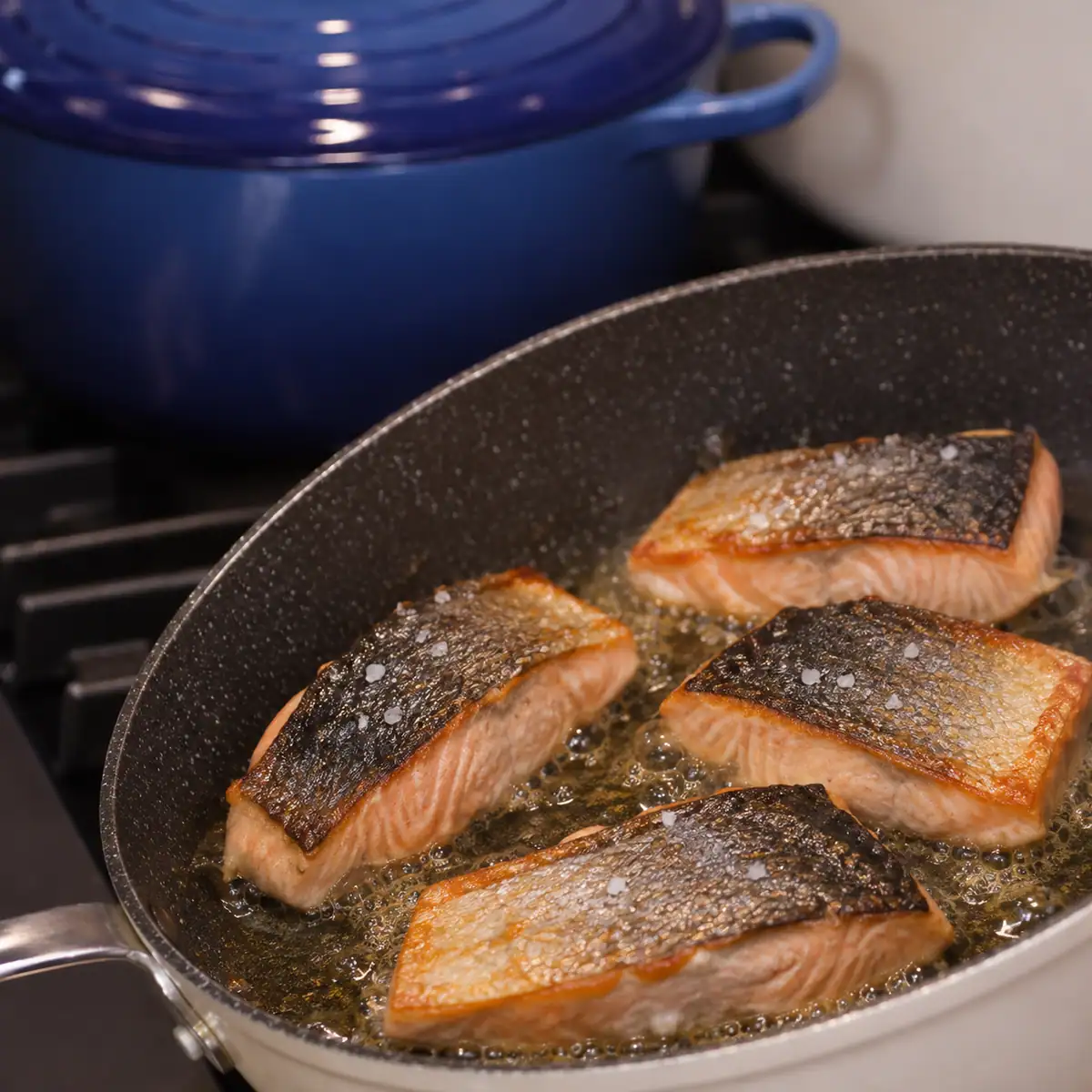
Allow roughly four to six minutes on the first side, then test a corner with a thin spatula. If it clings, wait a little longer. Once it releases, turn the fish and lower the heat if the pan is smoking. Finish until a thermometer inserted sideways into the thickest part reads 158°F (70°C). Lift each piece onto its plate skin up. You can do this without flour, unlike the thin coating often used on sole meunière. Dry skin and enough time against the metal do most of the work.
Brown the butter and finish off the heat
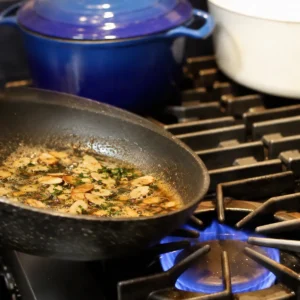
Pour off the used oil and wipe away dark bits of fish from the skillet with paper towel held in tongs. If the pan is still very hot, move it away from the burner briefly. Add the butter over medium heat and swirl gently. First it melts, then it foams as its water cooks off. Look through gaps in the foam for small golden specks on the bottom. Lift the pan when the specks turn amber and the smell changes from dairy to toasted nuts. A pale interior pan makes that moment easier to see.
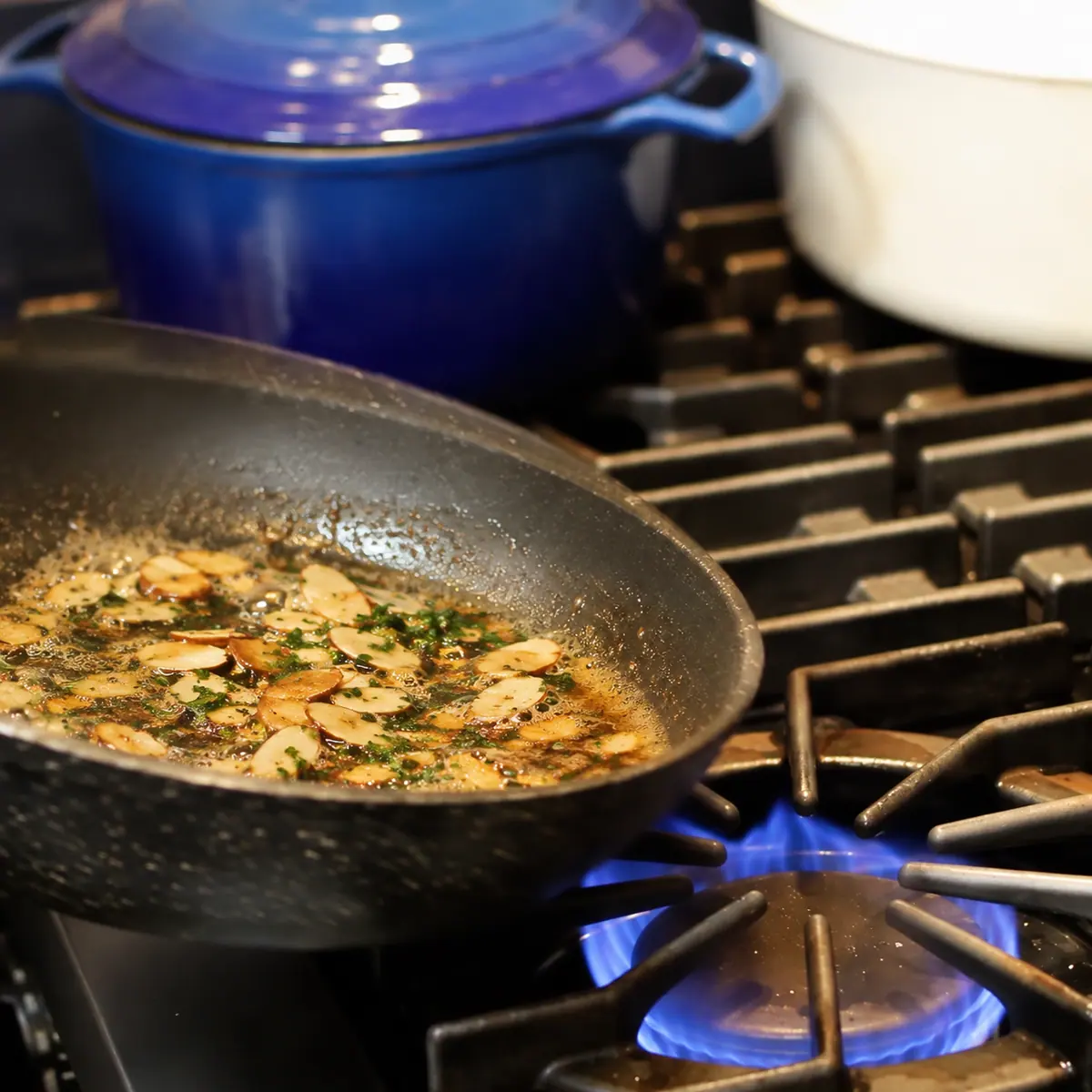
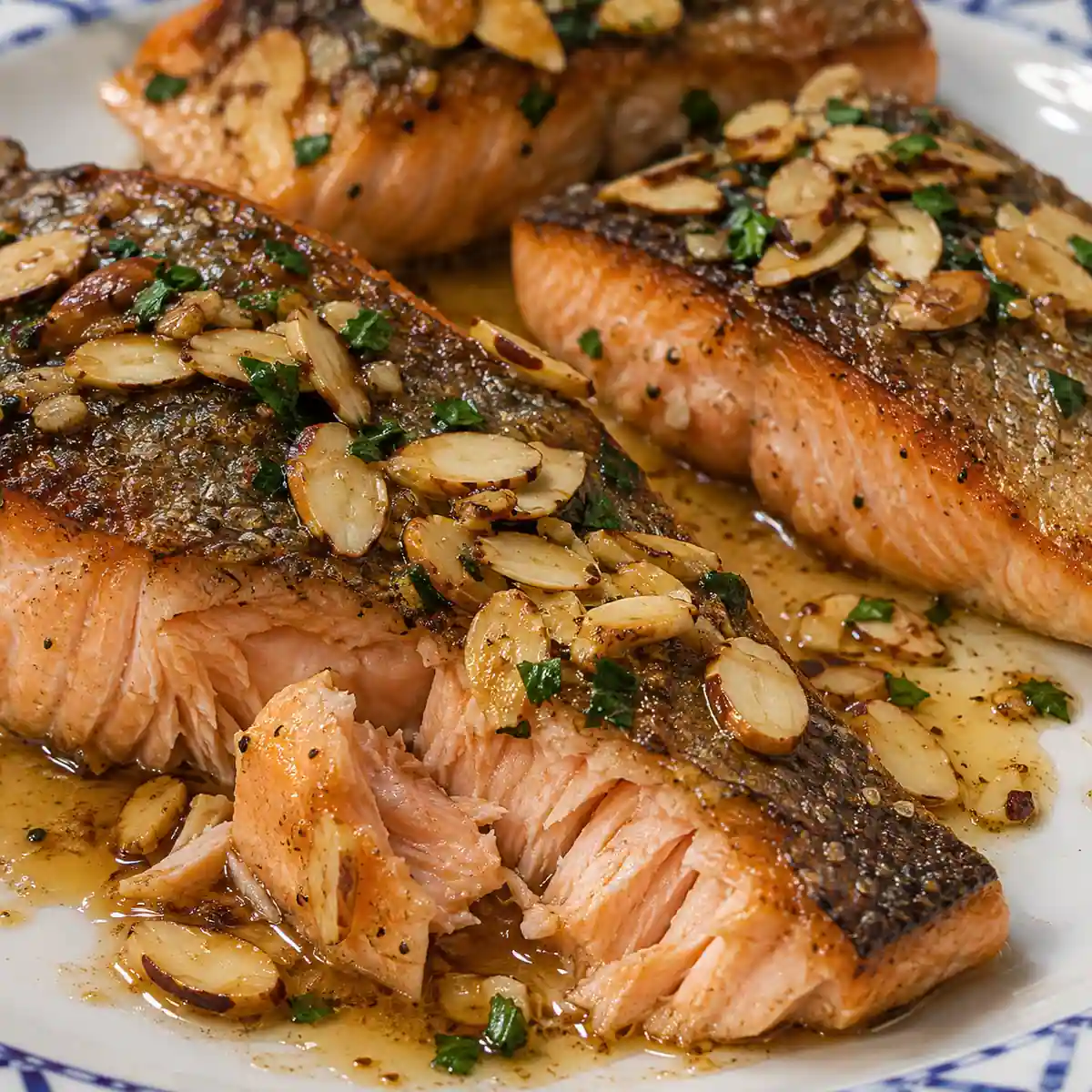
Off the heat, add the lemon juice carefully from close to the pan. It will hiss when it meets the butter. Add the parsley and toasted almonds, swirl once and spoon immediately over the exposed flesh and around the salmon. Leave a strip of skin uncovered if you enjoy the crisp texture. For a side that catches the last of the butter, rice pilaf works well. A cool green bean salad makes a good contrast if the fish is the richest thing on the plate.
Make ahead and substitutions
Toast the almonds the day before, cool them completely and keep them in a closed container. Set out the measured butter and lemon just before cooking. Brown the butter when the fish is ready because its fragrance is clearest while warm and the nuts keep a better crunch if they spend little time in it. For a dinner where the stove is already busy, oven-baked salmon can free a burner for the last-minute sauce. Match the baking time to the actual thickness of the fish.
Skinless salmon also works. Start on the smooth presentation side in a lightly oiled pan and use a wide spatula to turn it before it flakes apart. For a thinner white fish, the timing for lemon butter baked cod is a useful alternative. If almonds cannot be served, leave them out and describe the dish as lemon brown butter salmon. A spoonful of parsley and butter still gives it plenty of flavour. For another seafood supper with a short finishing sauce, try scallops with lemon butter.
Questions about colour and timing
Is dark brown butter still good?
Smell it and look at the solids. Amber specks and an aromatic, nutty smell are what you want. Black specks and an acrid smell mean it has gone too far. Wipe out the pan and start with fresh butter. Lemon may brighten a properly browned batch but cannot take away the bitterness of burnt milk solids. Keep the cooked salmon on its warm plates while you correct the sauce.
What can I prepare while the almonds cool?
Finish a vegetable side such as asparagus gratin before you start searing the fish. A baked side can stand briefly while you brown the butter. For different thicknesses of salmon or a whole side, consult the salmon recipe collection to choose the cooking method first, then finish with the almonds at the table. The nuts are at their best when the first bite still snaps under the fork.
Serving suggestions and related recipes
Spoon the rice pilaf onto the plate first so it catches the lemon butter. Pass the green bean salad separately to keep the almonds on the fish crisp.
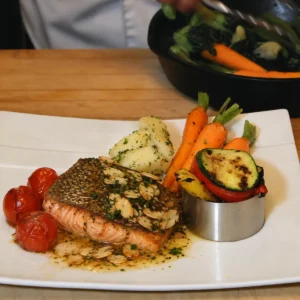
Brown Butter Salmon Almondine with Toasted Almonds
Ingredients
- 4 skin-on salmon fillets about 5¼ oz each
- 1½ oz sliced almonds
- 3 tbsp plus ½ tsp unsalted butter
- 1 tbsp neutral oil
- 1 tbsp fresh lemon juice
- 2 tsp chopped parsley
- Fine salt to taste
Instructions
- Toast the sliced almonds in a dry pan over medium-low heat until pale gold. Tip immediately onto a cool plate.
- Dry and lightly salt the salmon. Heat the oil over medium-high heat and sear skin side down for 4 to 6 minutes.
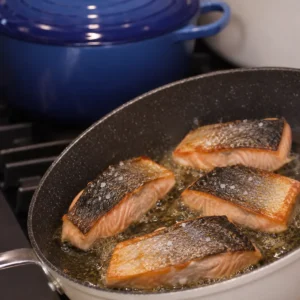
- Turn and cook until a thermometer in the thickest part reads 158°F (70°C). Plate skin up.
- Wipe the skillet, melt the butter over medium heat and swirl until the solids turn amber and smell nutty.
- Off heat, carefully add lemon, parsley and almonds. Spoon over and around the fish and serve immediately.


 Last chance for our paring knives.