Sauce Robert for Pork Chops with Onion and Dijon
Sauce Robert is a brown onion sauce finished with Dijon mustard. This home version uses a little flour, dry white wine and unsalted brown stock to make enough sauce for four pork chops. I cook the onions until tender before adding liquid, then whisk in the mustard off the heat so its fragrance reaches the plate.
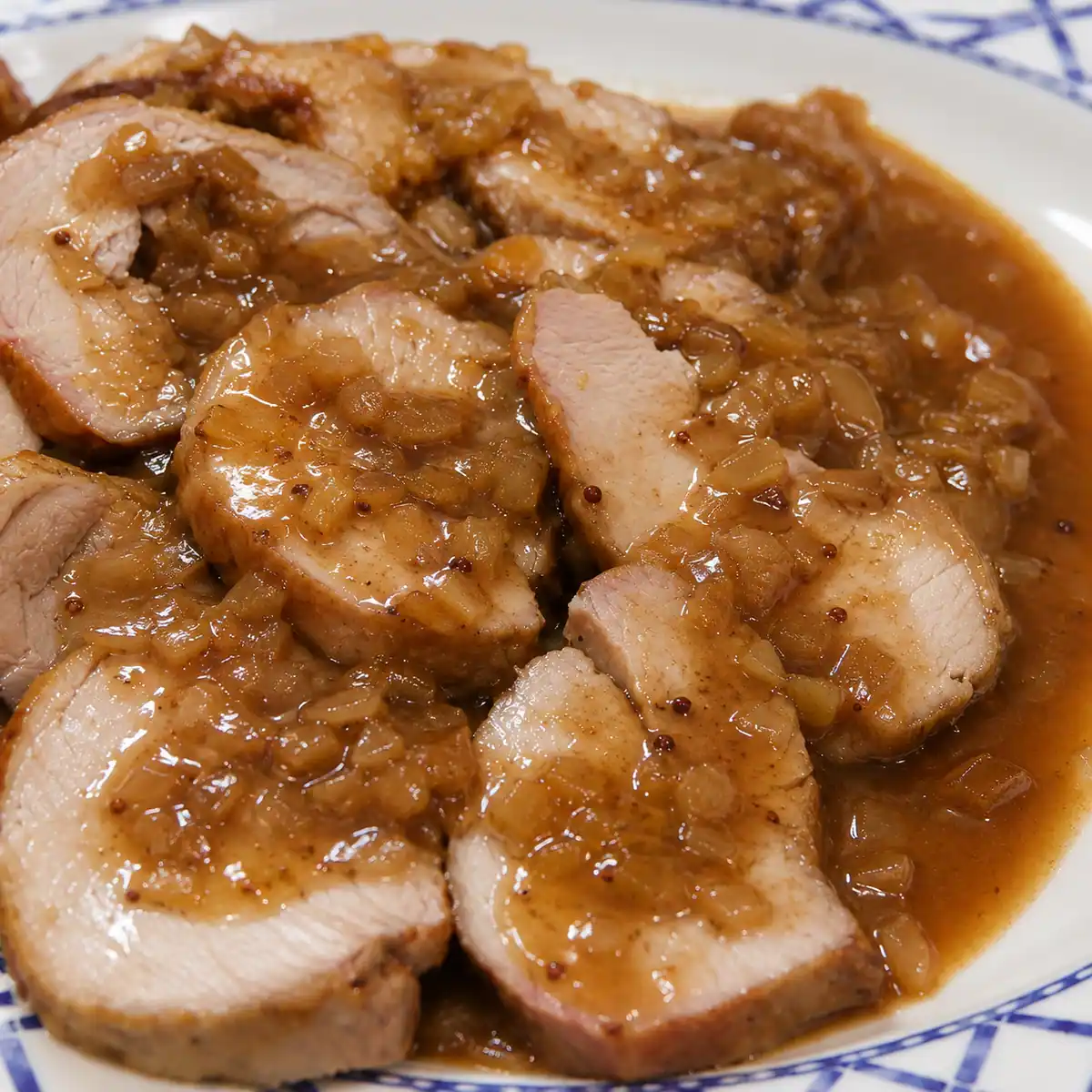
Decide whether to use the pork pan
A clean saucepan gives you control over the sauce while the chops cook independently. A skillet used to brown pork gives you the additional flavour of the meat juices. Choose according to the timing of dinner. The onion needs about eight minutes to soften and the sauce then simmers for about ten more. That is longer than I want a thin chop to wait on a plate. For thin chops, make the onion base first in a saucepan and finish it with the resting juices just before serving.
If you want browned pork flavour but have the meat cooking in the oven, spoon the non-burnt roasting juices into the base at the end. A chop cooked with garlic butter, as in these garlic butter pork chops, may have browned garlic left in the pan. Check it before deglazing. Keep the golden pieces and wipe away black fragments. With air fryer pork chops there may be little usable fond, which makes the separate saucepan method particularly convenient.
Give the onion enough time
Halve the onion from root to tip, peel it and cut it into fine dice. Aim for pieces that will fit comfortably on the tip of a teaspoon. The onion remains in the finished sauce and should be small enough to come away with a slice of pork. Large strips are difficult to portion neatly. Melt the butter over medium-low heat, add the onion and stir until every piece looks glossy. If the base of the pan is already very hot from the pork, let it cool briefly before adding the butter.
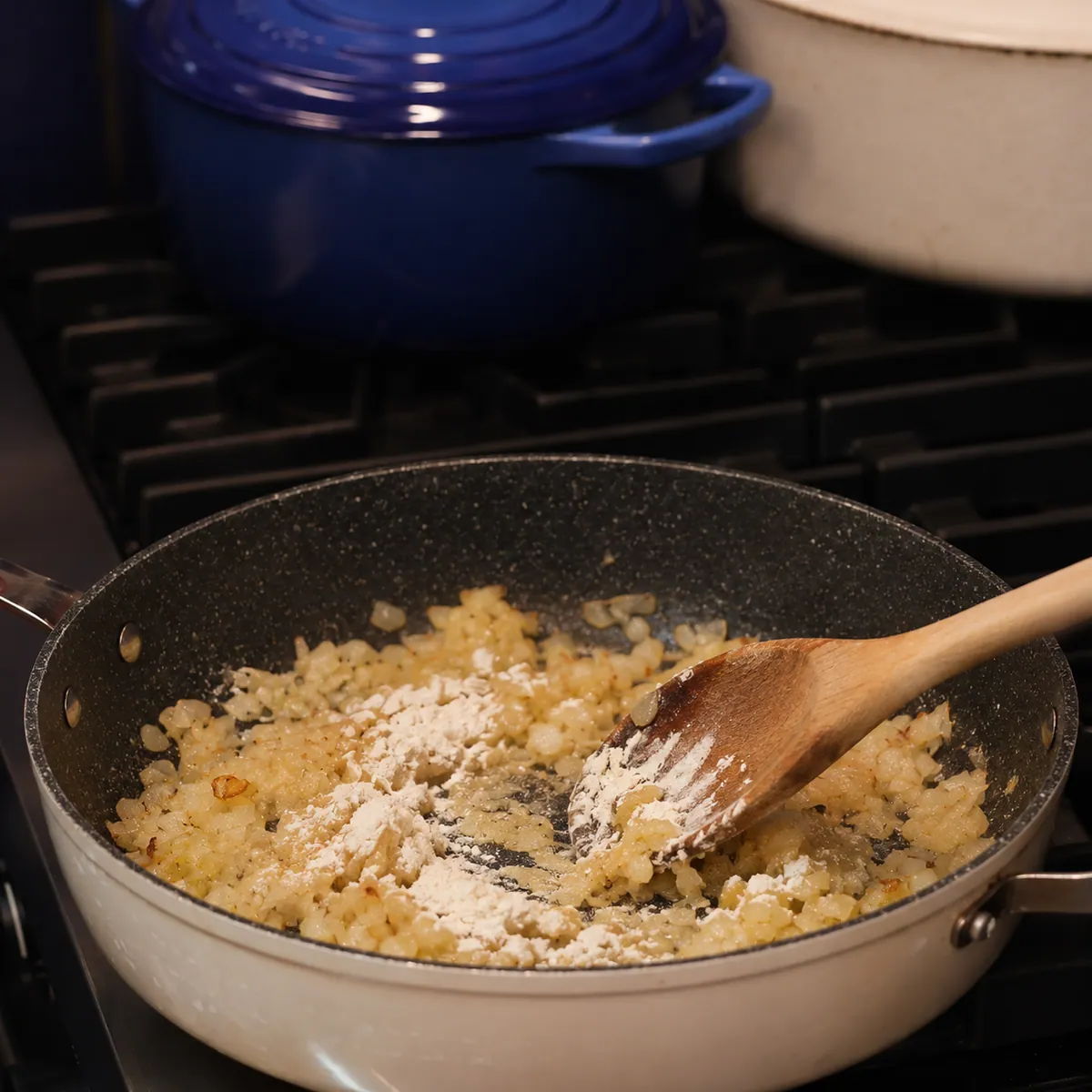
Cook for about eight minutes, stirring often. Look for translucent centres and the first golden edges. Press a piece against the pan with the spoon. It should flatten readily. If it browns while the middle is still hard, lower the heat and add a teaspoon of water to slow the colouring. Let the water evaporate before adding flour. This is a short onion base with a gentle sweetness. Cooking the onions until dark and jammy would change the balance and compete with the mustard.
Add flour, wine and stock in order
Dust the onions evenly with flour and stir for one minute. Check that no dry patch remains on the spoon or along the edge. Add the white wine gradually while scraping the golden bits from the base. The first splash will turn the flour and butter into a thick paste around the onions. Smooth it out with each addition. When all the wine is in, add the stock in portions and bring the sauce to a gentle simmer. The wine and stock reduce together here, so there is no need to boil the wine dry first.
Choose a dry white wine that tastes fresh and a brown stock with little or no salt. As the sauce reduces, the salt in the stock becomes more noticeable; Dijon will add more at the end. Simmer uncovered about ten minutes, stirring occasionally and checking the bottom. Dip a spoon and run a finger through the coating on its back once cool enough to touch. The line should stay clear for a moment. If it closes immediately, reduce a little longer. If the sauce clings in a heavy layer, loosen it with a spoonful of stock.
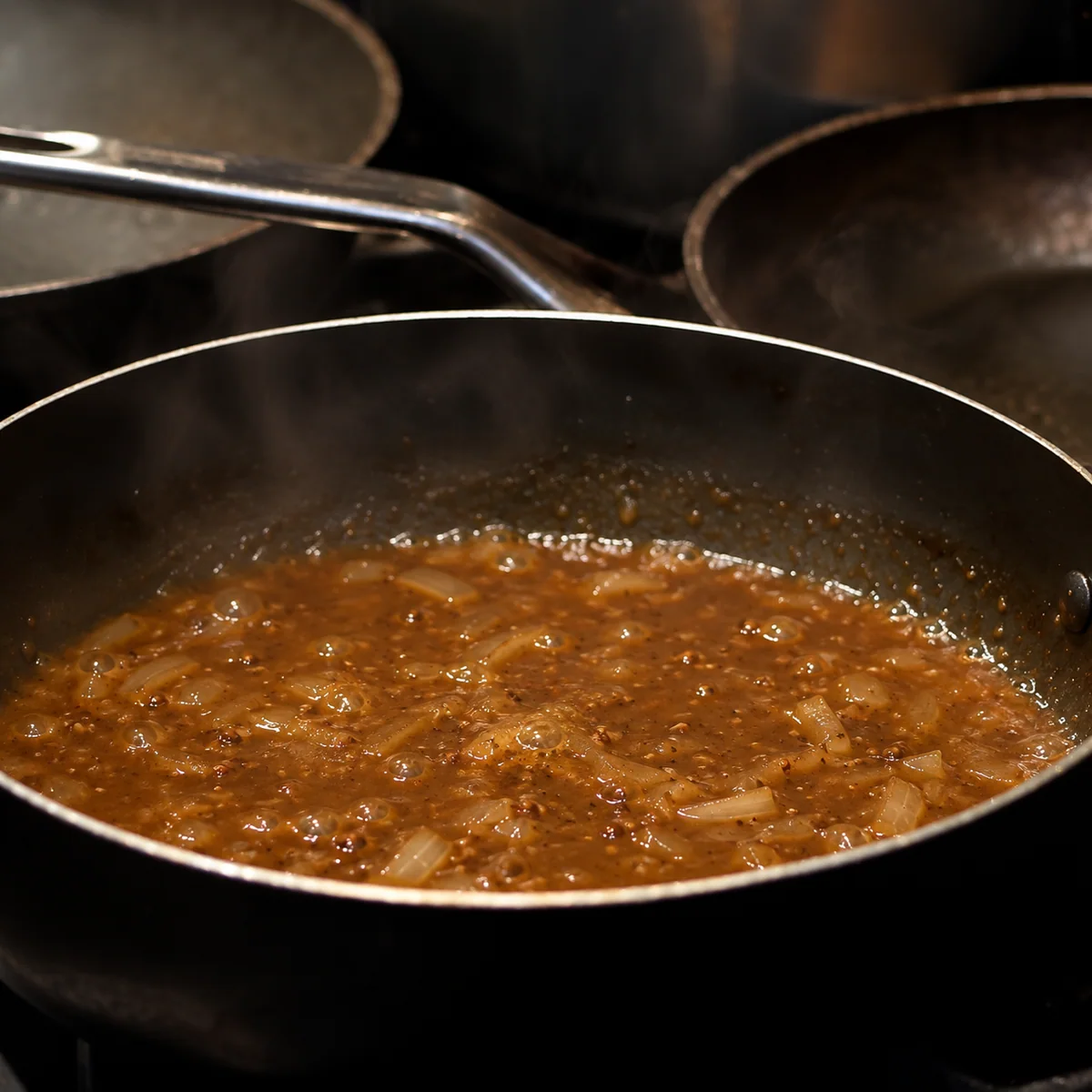
Taste a small piece of pork with a little sauce before deciding on the vinegar. A spoonful tasted alone can seem quite sharp, while the same sauce on the browned edge of a chop tastes balanced. Add vinegar a few drops at a time and stir it through the whole pan before tasting again.
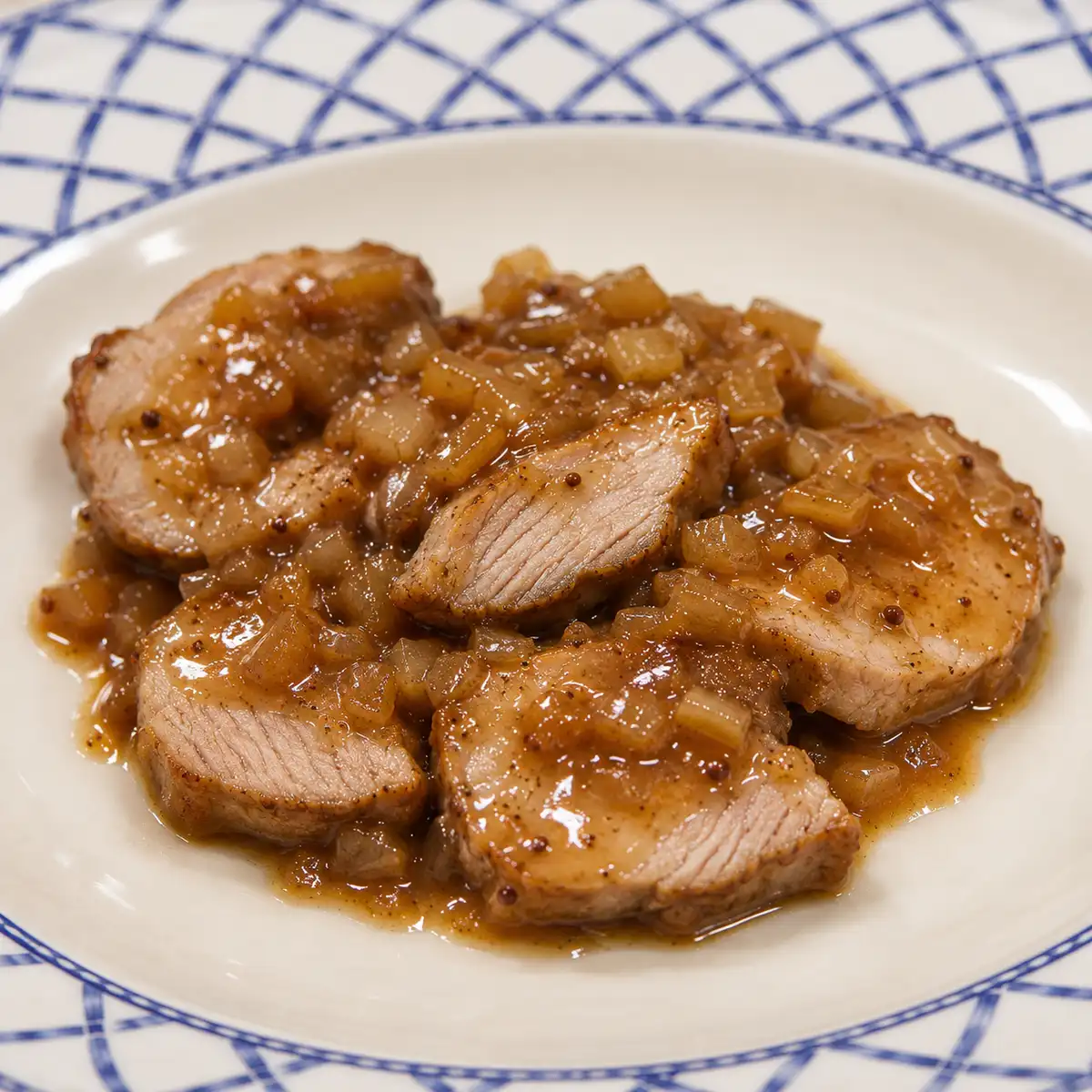
Remove from the heat and whisk in the Dijon. Taste before adding the wine vinegar. Begin with a few drops and work up to the measured teaspoon according to the acidity of your wine and mustard. Taste a little with the pork if possible. A sauce that seems quite sharp by itself can taste balanced on a browned chop. Spoon it across part of each rested chop, leaving some browned crust visible. For a sweeter mustard finish on another cut, maple Dijon pork tenderloin is built around a different balance of flavours.
Make ahead and substitutions
Prepare the onion, wine and stock base a day ahead, cool it promptly and refrigerate. At dinner, warm it gently and use a little water or stock to bring it back to a pouring consistency. Add the mustard and vinegar after warming. This makes the sauce easy to time with a larger oven-roasted pork tenderloin. If you prefer a sauce enriched with cream, the creamy Dijon tenderloin takes that approach. Adding cream changes the colour and softens the bite of this brown sauce.
For an alcohol-free version replace the wine with the same volume of unsalted stock. Add the vinegar cautiously at the end to restore brightness. Smooth Dijon disperses evenly. Wholegrain mustard can work in a pinch if you enjoy the seeds, although its taste varies by brand. Taste before adjusting. The sharp sauce is particularly good with mashed potatoes or pommes boulangères, both of which pick up the juices. Keep some sauce in a warm jug so guests can add more to the potatoes.
Questions at the stove
Can I strain out the onion?
You can, but the finely cut onion contributes both sweetness and texture. Try the sauce with a slice of meat before deciding. If one guest prefers a smooth portion, strain just a small ladleful through a sieve, pressing lightly, and leave the rest intact. For the related chop preparation with a pickle garnish, see French pork chops charcutière. Thin strips of cornichon give that sauce a sharper crunch.
What can go alongside the pork?
Serve the chops with a green vegetable and a little starch. A green bean salad works if the dressing is used lightly, since the sauce already has vinegar. For other cuts suited to a family supper, these pork dinner recipes give options beyond chops. Keep the sauce hot enough to pour and add it once the meat is on the plate so it does not spend its resting time submerged.
Serving suggestions and related recipes
For a bistro supper, start the pommes boulangères before the onions for the sauce. Serve a small green bean salad in a side dish so its vinaigrette stays separate from the warm mustard sauce.
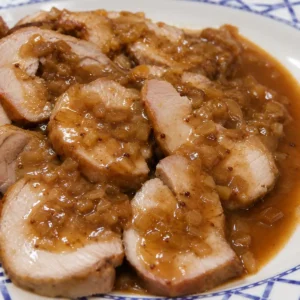
Sauce Robert for Pork Chops with Onion and Dijon
Ingredients
- 1 medium onion finely diced
- 25 g about 1¾ tbsp unsalted butter
- ⅜ oz all-purpose flour
- ⅓ cup plus 1 tbsp dry white wine
- 1¼ cups unsalted brown stock
- 1 tbsp smooth Dijon mustard
- Up to 1 tsp wine vinegar to taste
Instructions
- Soften onion in butter over medium-low heat for about 8 minutes, until tender and lightly golden.
- Sprinkle in flour and stir 1 minute. Add wine gradually, scraping the pan. Stir in stock.
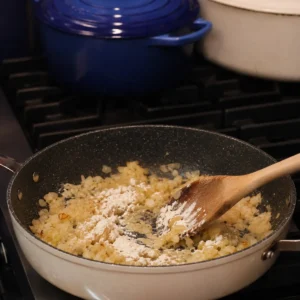
- Simmer uncovered for about 10 minutes. Draw a line through the coating on the back of a spoon. When the line stays visible, take the pan off the heat. A thin stock may need longer.
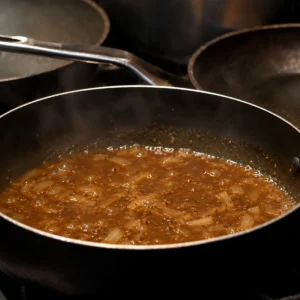
- Off heat whisk in Dijon. Add vinegar to taste and spoon over rested pork chops.





 Last chance for our paring knives.