Beef Cheeks with Roquefort Sauce, Tender Braised Bistro Recipe
Beef cheeks with Roquefort sauce is a slow-cooked French-style beef dish where the meat is braised until tender, sliced, then warmed in a strong blue cheese sauce made with the reduced cooking juices. It is rich, salty, creamy, and very bistro. I make it this way because beef cheeks give a much deeper sauce than a quick steak, and the gelatin in the meat gives the finished sauce a natural body.
This recipe is based on my YouTube video, with a few adjustments since publication to make it easier to reproduce at home. The main correction is the cooking time: 1 hour 30 minutes works in a pressure cooker, but in a regular Dutch oven, beef cheeks need longer. The mistake to avoid is adding too much salt before the Roquefort goes in. The cheese is already salty, and once the cooking juices are reduced, the sauce can become too strong very quickly.
What Makes This Recipe Different
This is not the same dish as a quick steak with Roquefort sauce. That version is for a fast pan-seared steak, where the sauce is built quickly and served right away. Here, the beef cheeks are braised first, and the Roquefort sauce is made from the reduced cooking liquid. The result is deeper, softer, and more comforting.
It is also different from a classic Dutch oven pot roast because the sauce is not a brown gravy. It is sharper, creamier, and more French bistro in style. The Roquefort brings salt, strength, and that blue cheese aroma that fills the kitchen as soon as it melts.
I prefer to slice the beef cheeks after cooking instead of serving them whole. When they cool slightly, the meat firms up just enough to cut cleanly. Then the slices go back into the sauce and warm gently. What I look for here is meat that bends under the knife, not meat that needs pressure.
Ingredients You Need
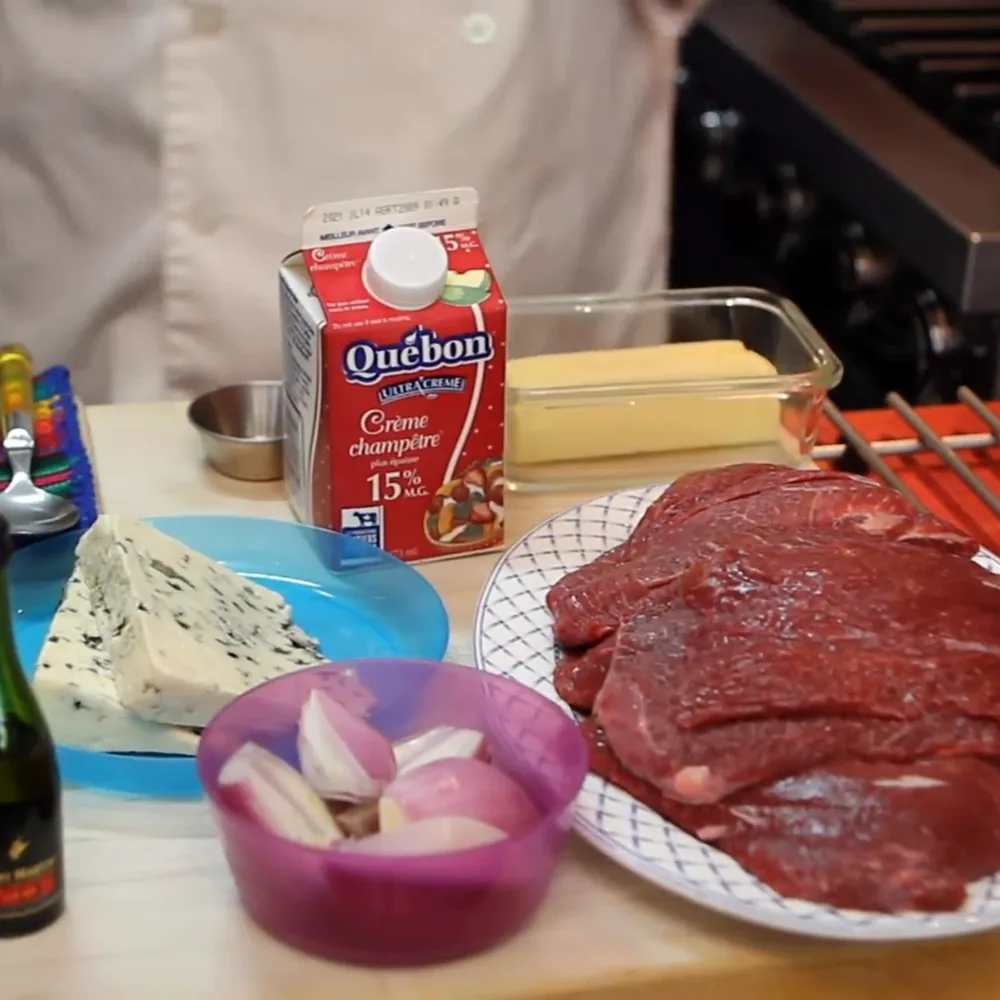
Beef cheeks are the main ingredient. They are not always as easy to find as chuck roast or short ribs, but they are worth asking for at the butcher. They are full of connective tissue, which means they need time, but when cooked properly they become almost spoon-tender.
Dry white wine gives acidity and keeps the sauce from tasting too heavy. Use something simple and dry. It does not need to be expensive, but it should not be sweet.
Roquefort is the main seasoning in the sauce. Add it at the end and taste before adding any more salt. I like a strong sauce, but there is a line between strong and too salty. For a smoother finish, I add a little cream. It is not there to hide the cheese, just to help the sauce stay round and stable.
Butter and black pepper finish the sauce. I like to toast the pepper lightly in the butter before adding the reduced jus. It wakes up the pepper and gives the sauce a warmer flavor.
For the cooking liquid, unsalted beef stock is best. Water also works, especially if the beef cheeks are good quality. If you have homemade stock, a neutral brown stock like brown veal stock is excellent here. For another useful base, chicken stock concentrate is helpful in many sauces, but for this recipe, use it lightly because the cheese already brings plenty of seasoning.
Step-by-Step Instructions
Start by trimming the beef cheeks if needed. Remove thick pieces of silver skin, but do not obsess over every little bit. Some of that collagen is exactly what gives the sauce its texture. Pat the meat dry. Season it with salt and pepper.

Heat a heavy pot with a little oil. Sear the beef cheeks on all sides until they take on a good brown color. Do not rush this part. If the pot is too crowded, the meat steams instead of browning. You should hear a steady sizzle, and the bottom of the pot should develop browned bits, not black burnt spots.

Add the dry white wine and scrape the bottom of the pot. The wine should bubble and pick up the browned bits. Add enough unsalted stock or water to come about halfway to two-thirds up the meat. Add the optional onion, carrot, garlic, thyme, and bay leaf if using. Cover and cook gently until the cheeks are tender.
For a pressure cooker, cook for about 1 hour 15 minutes to 1 hour 30 minutes. For a Dutch oven, plan on 3 to 3 1/2 hours at a low simmer or in a low oven. You know the meat is ready when a knife slides in with very little resistance.

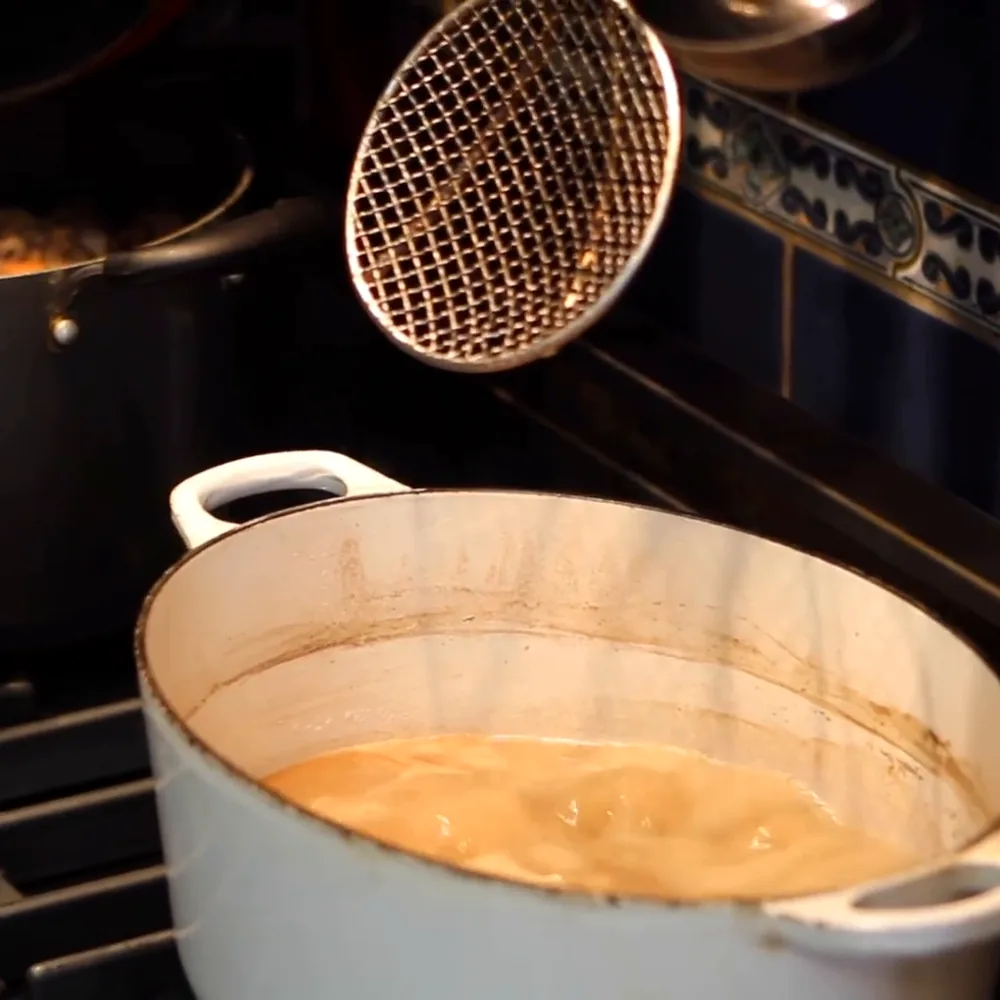
Remove the beef cheeks from the pot and let them cool slightly. Strain the cooking liquid. Bring the liquid to a boil and reduce it until it tastes concentrated but not salty. This usually takes about 15 to 25 minutes. The liquid should look darker and slightly glossy.
In a saucepan, melt the butter and add black pepper. Let it toast for a short moment. Add the reduced cooking liquid, then lower the heat. Add the cream and the Roquefort. Stir gently until the cheese melts. Do not boil hard after the cheese goes in. The sauce should coat the spoon, not separate into oil and grainy cheese.

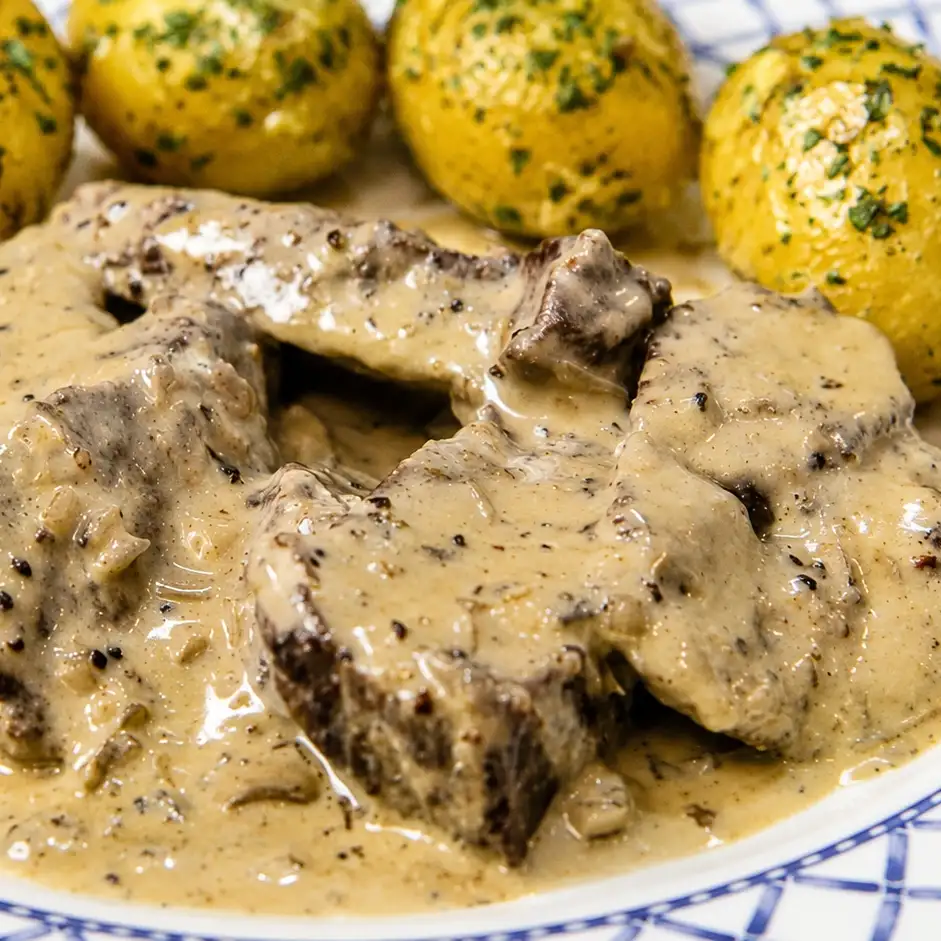
Slice the beef cheeks into thick pieces. Return them to the sauce and warm them slowly. At this point, the dish should look generous: tender slices of beef, a creamy sauce, and enough thickness to cling to the meat.

Sauce Texture and Salt Control
This is where the recipe succeeds or fails.
The sauce should be strong, but not aggressive. Reduce the cooking juices before adding the Roquefort, then stop and taste. If the reduced jus already tastes salty, use less cheese or add a little more cream. If it tastes flat, reduce it more before adding the cheese.
The cream is optional, but I recommend it for home cooking. It makes the sauce more forgiving. Without cream, the sauce is sharper and more intense, which can be excellent, but it needs careful heat control.
If you like the sauce work in this recipe, the same logic applies to other bistro-style sauces like steak with shallot sauce or ribeye steak Bordelaise, where the pan juices and reduction are doing most of the work.
What to Serve With Beef Cheeks and Roquefort Sauce
Mashed potatoes are the easiest choice. They absorb the sauce and balance the strength of the cheese. A simple homemade mashed potato is probably the best match.
For something more bistro, serve the beef cheeks with Parisian potatoes. The browned edges of the potatoes work very well with the creamy sauce.
If the meal needs something crisp on the side, a green salad helps. I like a bitter or crunchy salad more than a heavy side here. A romaine and endive salad gives enough freshness without fighting the sauce.
For a bigger comfort-food plate, traditional gratin dauphinois is rich but very good with beef cheeks. Keep the portions reasonable because the sauce already brings cream and cheese.
Substitutions
Chuck roast can replace beef cheeks, but the texture will be different. It is easier to find in Canada and the USA, and it works well for braising, but it does not have the same gelatin-rich softness. Short ribs are another good option. They give a deep sauce, but they are fattier and may need skimming before the Roquefort is added.
If Roquefort is too strong, use another blue cheese. Danish blue, Bleu d’Auvergne, or Gorgonzola can work. Use less at first, then add more after tasting. The sauce is easier to adjust up than down.
If you do not want wine, replace it with unsalted beef stock and add a small splash of vinegar or lemon juice at the end. The acidity matters. Without it, the sauce can feel heavy.
For a lighter finish, use more cooking liquid and less cream. It will still be rich because of the cheese, but the sauce will feel less thick. This is still a hearty comfort food dish, high in protein and very satisfying, but it is not a light weeknight plate.
If you enjoy this style but want something faster, make beef tips and gravy instead. If you want a long-cooked beef dish without blue cheese, oven-baked beef brisket is a better match.

FAQ
Can I make this recipe ahead of time?
Yes. Beef cheeks are excellent made ahead. Cook the meat, strain and reduce the liquid, then chill everything separately. The next day, slice the beef cheeks and finish the Roquefort sauce. The texture is often even better after resting.
Can I use a slow cooker?
Yes, but sear the meat first and reduce the liquid on the stove before making the sauce. A slow cooker creates a lot of liquid and does not reduce it, so the sauce can taste watery if you skip that step.
Why is my beef cheek still tough?
It needs more time. Beef cheeks become tender only after the collagen breaks down. If the meat feels firm or rubbery, keep cooking gently. Do not increase the heat too much. A hard boil can dry the meat before it becomes tender.
Why did my Roquefort sauce split?
The heat was probably too high after the cheese went in. Lower the heat and stir gently. Cream helps stabilize the sauce, but even with cream, blue cheese sauces should not be boiled hard.
Can I freeze this dish?
The braised beef freezes well, but the finished Roquefort sauce may change texture after thawing. For best results, freeze the cooked beef and reduced jus, then make the cheese sauce fresh when serving.
Is this a winter recipe?
It is very good in winter, but it works year-round if served with the right sides. In cold weather, I serve it with mashed potatoes or gratin. In warmer weather, I prefer potatoes and a crisp salad.
Suggested Posts
For another slow-cooked beef dinner, try Dutch oven pot roast.
For a faster blue cheese beef recipe, make steak with Roquefort sauce.
For a classic steak sauce direction, try ribeye steak Bordelaise.
For another French-style sauce technique, read French mother sauces explained.
For a side dish that catches the sauce, make homemade mashed potatoes.
For a potato side with more browning, serve Parisian potatoes.
For a crisp side, add romaine and endive green salad.
For another rich beef dinner, try oven-baked beef brisket.
For a practical sauce base, make neutral brown veal stock.
For more beef ideas, browse French beef recipes.

Beef Cheeks with Roquefort Sauce, Tender Braised Bistro Recipe
Ingredients
- 3 1/4 lb beef cheeks
- 2 to 2 1/2 tsp kosher salt
- 1 tsp black pepper
- 1 tbsp neutral oil
- 1 cup dry white wine
- 2 to 3 cups unsalted beef stock or water as needed
- 1 onion chopped, optional
- 1 carrot chopped, optional
- 2 garlic cloves crushed, optional
- 1 bay leaf optional
- 2 thyme sprigs optional
- 2 tbsp butter
- 1/2 cup heavy cream
- 5 to 6 oz Roquefort cheese crumbled
- Extra black pepper to taste
Instructions
- Trim the beef cheeks and pat them dry.
- Season the beef cheeks with salt and black pepper.
- Heat the oil in a heavy pot and sear the beef cheeks on all sides.
- Add the white wine and scrape the bottom of the pot.
- Add enough unsalted stock or water to come halfway to two-thirds up the meat.
- Add the optional onion, carrot, garlic, bay leaf, and thyme.
- Cover and cook until fork-tender, about 1 hour 30 minutes in a pressure cooker or 3 to 3 1/2 hours in a Dutch oven.
- Remove the beef cheeks and let them cool slightly.
- Strain the cooking liquid and reduce it until concentrated but not too salty.
- Melt the butter in a saucepan and lightly toast the black pepper.
- Add the reduced cooking liquid and cream, then lower the heat.
- Add the Roquefort and stir gently until melted.
- Slice the beef cheeks and return them to the sauce.
- Warm gently and serve hot.