French-Style Lemon & White Wine Chicken (Weeknight-Easy, Restaurant-Nice)
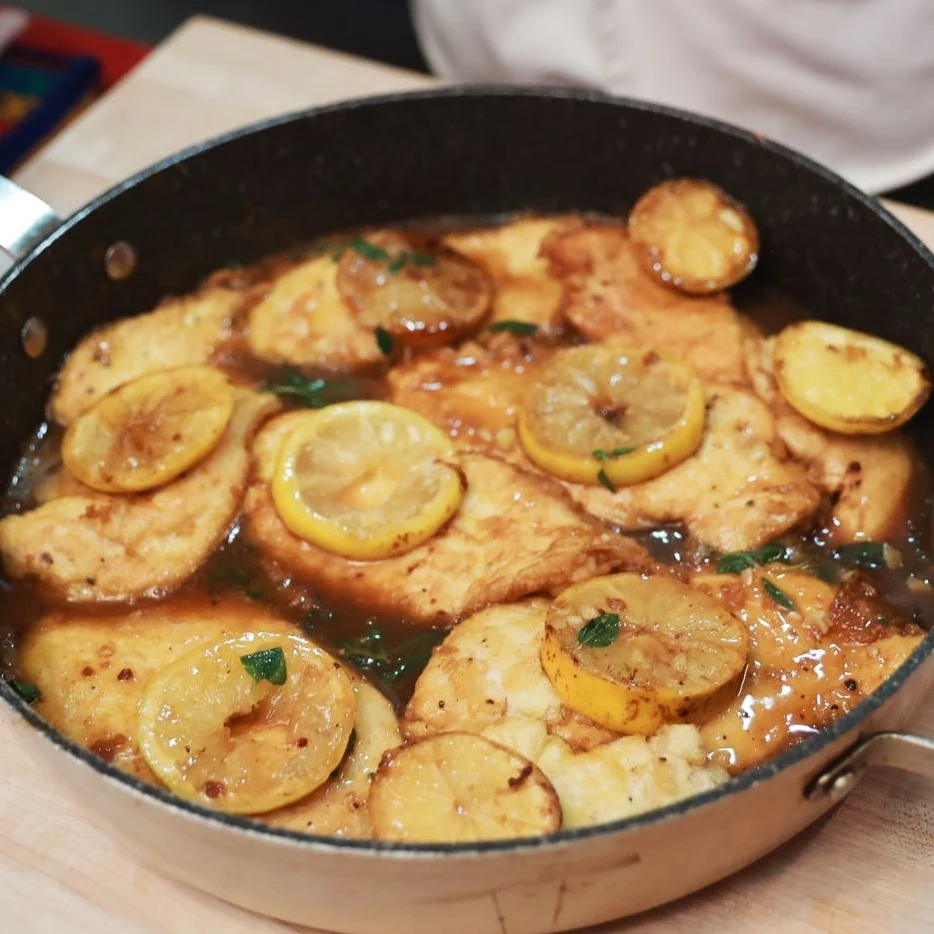
If you love bright, saucy chicken dinners that feel restaurant-nice but still fit a busy weeknight, this French-style lemon and white wine chicken is for you. Thinly cut chicken cooks in minutes, then gets glazed in a buttery pan sauce built with dry white wine, reduced chicken stock (or demi-glace), and a kiss of fresh oregano. Serve with a quick salad or light crudités and a spoon of lemon-Dijon aioli. It’s the kind of dish you’ll cook once and then keep in your regular rotation.
Ingredients (Serves 3–4)
Chicken
- 2 large chicken breasts, halved horizontally (4 thin cutlets total)
- 2–3 chicken tenders/filets (optional)
- 80–100 g (⅔–¾ cup) all-purpose flour (use a 1:1 GF blend if needed)
- 4 large eggs
- 1 tsp fine salt, plus more to taste
- ½ tsp black pepper
- Neutral oil for shallow-frying (canola, grapeseed, peanut)

Lemon–White Wine Pan Sauce
- 2 tbsp unsalted butter
- 1 lemon, very thinly sliced, seeds removed (reserve the ends for juicing)
- 1 small garlic clove, finely minced
- 125 ml (½ cup) dry white wine
- 125 ml (½ cup) reduced chicken stock or demi-glace
- 1–2 tsp fresh oregano leaves, chopped (or ½ tsp dried)
- Salt & pepper, to taste
- Extra lemon juice, to finish (1–2 tsp, to taste)
Optional Lemon-Dijon Aioli (for Crudités)
- 1 egg yolk (room temp)
- 1 tsp Dijon mustard
- 1 tbsp fresh lemon juice
- 150–200 ml (⅔–¾ cup) neutral oil (or mild olive oil)
- Pinch of salt & pepper
Optional Crudités / Light Side
- Small florets of purple, green, yellow cauliflower (blanched 60 seconds & shocked, optional)
- Or a crisp green salad
Step-by-Step Instructions
1) Prep the Chicken

- Slice each breast in half horizontally for even, quick cooking. Pat dry.
- Season both sides lightly with salt and pepper.

- Set up two shallow dishes: one with the flour (seasoned with a pinch of salt/pepper), one with beaten eggs (plus a tiny splash of oil to help the coating brown evenly).

Coating order that sticks: Dip chicken in flour → shake off excess → egg. This gives a delicate, even golden film that won’t slide off.
2) Pan-Fry
- Heat a generous ½ cm (¼ in) layer of neutral oil in a wide skillet to ~170 °C / 340 °F.

- Fry chicken in batches, 2–3 minutes per side, until golden and just cooked (internal temp ~67–70 °C / 153–158 °F).

- Transfer to a rack or paper towel. Keep warm.
3) Build the Sauce (No Bitterness!)
- Discard most frying oil and wipe out any scorched bits, leaving a thin film.
- Add butter, then the thin lemon slices and garlic. Sauté briefly (30–60 sec) just until the lemons take light color.

- Remove the lemon slices to a plate (they’ll garnish later).
- Deglaze with white wine; simmer on medium-high to reduce by half.
- Add reduced chicken stock/demi-glace. Simmer until the sauce lightly coats a spoon.
- Stir in oregano, season with pepper and salt only as needed (demi-glace varies).
- Finish with lemon juice (start with 1 tsp, then adjust). You want bright, balanced acidity.

4) Glaze & Serve
- Return chicken to the pan, turn to coat in the glossy sauce for 30–60 sec.
- Plate the chicken, spoon over extra sauce, and tuck in a few of the sautéed lemon slices for aroma and visual pop.
Optional: Lemon-Dijon Aioli (Light Mayo)
- In a tall container, whisk yolk, Dijon, lemon juice, a pinch of salt.
- With a hand blender running, stream in oil slowly until thick and creamy.
- Adjust salt/pepper and thin with a teaspoon of water if you want a lighter dip.
- Serve with blanched (or raw) cauliflower florets or a crisp salad.
A proper ratio (1 yolk : 150–200 ml oil) gives a light, stable mayo. Your original 1 yolk : ~60 ml was too thin and unstable.
Cook’s Notes & Fixes from the Transcript
- Coating: Switching to flour → egg fixes slippage and ensures even browning.
- Oil: Use neutral oil for clean flavor and safer smoke point; olive oil can scorch at 170 °C.
- Lemon: Briefly sauté slices for aroma, remove before reduction, then finish with fresh juice—no bitterness.
- Seasoning: Demi-glace is salty; taste before adding more salt.
- Crudités: Lightly blanch cauliflower for 60 seconds if you want a softer bite; it pairs better with a hot sauced main.
Substitutions & Variations
- Wine-Free: Replace wine with 125 ml (½ cup) chicken stock + 1 tbsp lemon juice; reduce fully, then finish with a small knob of butter for gloss.
- No Demi-Glace? Reduce good chicken broth by half with a small beurre manié whisked in for body. (Learn how to make it here: Beurre Manié.)
- Herbs: Swap oregano for tarragon or parsley.
- Gluten-Free: Use a 1:1 GF flour blend for dredging.
- Dairy-Free: Skip butter; finish with extra-virgin olive oil off the heat.
- Crispier edge: Dust the dredged chicken very lightly with flour after the egg (tiny sprinkle) just before it hits the pan.
What to Serve With It
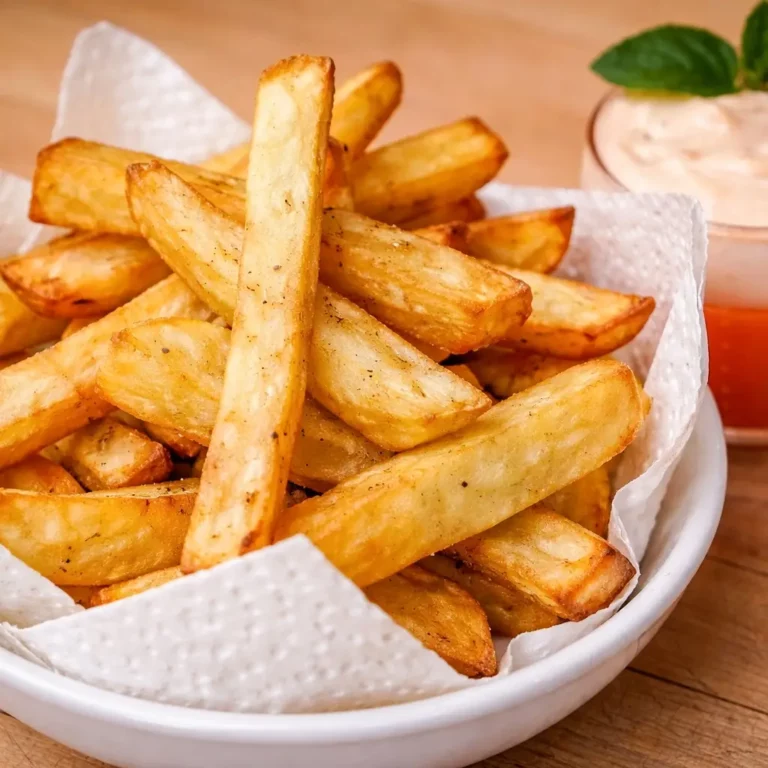
- Crisp Green Salad with a bright dressing—try my Caesar Dressing Without Mayonnaise or the full Homemade Caesar Salad.
- Potatoes, French-style: Parisian Potatoes for an elegant side or Authentic Belgian Fries for extra crunch.
- Another lemony classic: readers who love this dish also love my Chicken Piccata (30-Minute).
Explore more 30-Minute Recipes and Chicken Main Dishes.
FAQs
Can I use chicken thighs?
Yes—use boneless, skinless thighs pounded to an even thickness. Cook ~3–4 min per side; check doneness by feel or thermometer.
Will olive oil work for frying?
You can, but a neutral oil (canola, peanut, grapeseed) is safer at 170 °C/340 °F and keeps flavors clean.
How do I avoid a sour or bitter sauce?
Don’t brown lemon slices too deeply, remove before reducing wine, and finish with fresh lemon juice to taste. If it tastes sharp, whisk in a teaspoon of cold butter off the heat.
No wine in the house—what now?
Use stock + lemon (see “Wine-Free” under Substitutions). A dash of white wine vinegar (½–1 tsp) can mimic the brightness—add at the end.
Can I bake instead of pan-fry?
Yes. Brush cutlets lightly with oil after dredging and bake at 220 °C/425 °F, 10–12 minutes (flip once). Sauce still cooks on the stove.
Storage & Reheat
- Fridge: 3–4 days in an airtight container.
- Reheat: Gently in a skillet with a splash of water or stock to loosen the sauce; avoid boiling so the chicken stays tender.
- Freezer: Sauce freezes well; chicken coating softens but is still tasty. Freeze up to 2 months.

French-Style Lemon & White Wine Chicken (Weeknight-Easy, Restaurant-Nice)
Ingredients
For the Chicken
- 2 large chicken breasts halved horizontally (4 thin cutlets)
- 2 –3 chicken tenders/filets optional
- 80 –100 g all-purpose flour ⅔–¾ cup; use 1:1 GF blend if needed
- 4 large eggs beaten
- 1 tsp fine salt divided
- ½ tsp black pepper divided
- Neutral oil for shallow frying canola, grapeseed, or peanut
For the Lemon–White Wine Sauce
- 2 tbsp unsalted butter
- 1 lemon very thinly sliced, seeds removed (reserve ends for juicing)
- 1 small garlic clove finely minced
- 125 ml dry white wine ½ cup
- 125 ml reduced chicken stock or demi-glace ½ cup
- 1 –2 tsp fresh oregano chopped (or ½ tsp dried)
- Salt & pepper to taste
- Extra fresh lemon juice to finish (about 1–2 tsp)
Optional Lemon-Dijon Aioli (for Crudités)
- 1 egg yolk room temp
- 1 tsp Dijon mustard
- 1 tbsp fresh lemon juice
- 150 –200 ml neutral oil ⅔–¾ cup; or mild olive oil
- Pinch salt & pepper
- Water to thin if desired
Optional Crudités / Side
- Small florets of purple green, and yellow cauliflower
- blanch 60 seconds and ice-shock for a tender-crisp bite, or a simple green salad
Instructions
Prepare and Dredge the Chicken
- Prep cutlets: Pat dry. Season both sides lightly with a pinch of salt and pepper (from the divided amounts).
- Set up dredging: Place flour in a shallow dish and season with a small pinch of salt and pepper. In a second dish, beat the eggs until smooth.
- Dredge correctly: Dip each piece in flour first (shake off excess), then into egg to coat evenly. Set on a rack or plate while the oil heats.
Pan-Fry to Golden
- Heat oil: In a wide skillet, add about ½ cm (¼ in) of neutral oil and heat to ~170 °C / 340 °F (a small drop of egg should sizzle gently).
- Fry in batches: Cook chicken 2–3 minutes per side until golden with light crisp edges and just cooked through (internal temp ~67–70 °C / 153–158 °F).
- Drain: Transfer to a rack or paper towel to drain. Keep warm. Discard frying oil and wipe the pan (leave a thin film for flavor).
Build a Bright, Non-Bitter Sauce
- Aromatics: Add butter to the wiped skillet over medium heat. When foaming, add lemon slices and garlic. Sauté 30–60 seconds just until the lemons take a hint of color and the garlic is fragrant.
- Prevent bitterness: Remove the lemon slices to a small plate (they’ll garnish later).
- Deglaze: Pour in the white wine. Bring to a lively simmer and reduce by half (about 2–3 minutes), scraping any tasty fond.
- Body & gloss: Add reduced chicken stock or demi-glace. Simmer 1–2 minutes until the sauce lightly coats a spoon.
- Season & finish: Stir in oregano. Taste; add pepper and salt only if needed (demi-glace can be salty). Squeeze in 1 tsp lemon juice, taste, and add up to another teaspoon for a bright finish.
Glaze the Chicken & Serve
- Coat: Return the chicken (and any resting juices) to the pan. Turn pieces for 30–60 seconds to glaze in the sauce.
- Plate: Spoon extra sauce over the chicken and garnish with the reserved lemon slices.
- Side: Serve with blanched cauliflower crudités and a spoon of lemon-Dijon aioli—or a crisp green salad.
Optional: Lemon-Dijon Aioli (Quick)
- In a tall container, whisk yolk, Dijon, lemon juice, salt, and pepper.
- Blend with an immersion blender while slowly streaming in oil until thick and creamy.
- Adjust seasoning. Thin with 1–2 tsp water for a lighter dip if desired.
Video
Notes
Storage & Reheat
- Fridge: 3–4 days in an airtight container.
- Reheat: Gently in a skillet with a splash of water or stock to loosen the sauce; avoid boiling so the chicken stays tender.
- Freezer: Sauce freezes well; chicken coating softens but is still tasty. Freeze up to 2 months.
Chef Tips for Perfect Texture & Gloss
- Dry the chicken well before dredging.
- Use a rack after frying to keep the coating crisp.
- Reduce to nappe: the sauce should coat the back of a spoon; if it’s thin, reduce 1–2 more minutes; if too thick, whisk in a spoon of water/stock.
- A last-second knob of cold butter off heat = restaurant sheen.
Chef Tips for Perfect Texture & Gloss
- Dry the chicken well before dredging.
- Use a rack after frying to keep the coating crisp.
- Reduce to nappe: the sauce should coat the back of a spoon; if it’s thin, reduce 1–2 more minutes; if too thick, whisk in a spoon of water/stock.
- A last-second knob of cold butter off heat = restaurant sheen.
Notes for Best Results
- Order matters: Flour before egg ensures the egg adheres and browns evenly.
- Heat control: Keep oil near 170 °C / 340 °F. Too cool = greasy; too hot = scorched.
- No bitterness: Sauté lemon briefly and remove before reducing wine; finish with fresh lemon juice at the end.
- Salt awareness: Taste before salting—demi-glace varies in salinity.
Useful Links
🛒 Michel Dumas Shop : Explore our kitchen essentials, including aprons and knives.
🌐 Linktree : Access all our important links in one place.
📱 YouTube | Instagram | Facebook | TikTok : Follow us for the latest recipes and culinary tips.