Homemade Pickled Beets for Canning, Safe, Tangy, and Ready for Tourtière Season
Pickled beets are cooked beets packed in a sweet and sharp vinegar brine, then processed in jars so they can be stored and served later. This version is different from a quick refrigerator pickle because the vinegar level, headspace, hot packing, and water-bath time matter. I make these when I want a cold, bright side dish for rich meals like meat pie, roast pork, brisket, pâté, or a holiday table that needs something acidic to cut through the fat.
This recipe is based on my YouTube video for beet preserves, with a few adjustments since publication. In the video, I used a gentler marinade and a shorter jar processing time, but for a recipe people will reproduce at home, I prefer to tighten the method and make the brine more reliable for water-bath canning. The mistake to avoid is treating pickled beets like a casual side dish once they go into jars. The flavor is simple, but the process needs precision.
What I look for here is a beet that is tender but not collapsing. When the knife goes in with light resistance, stop cooking. If the beets are already too soft before they go into the brine, they will become mushy after the hot pack and water bath.
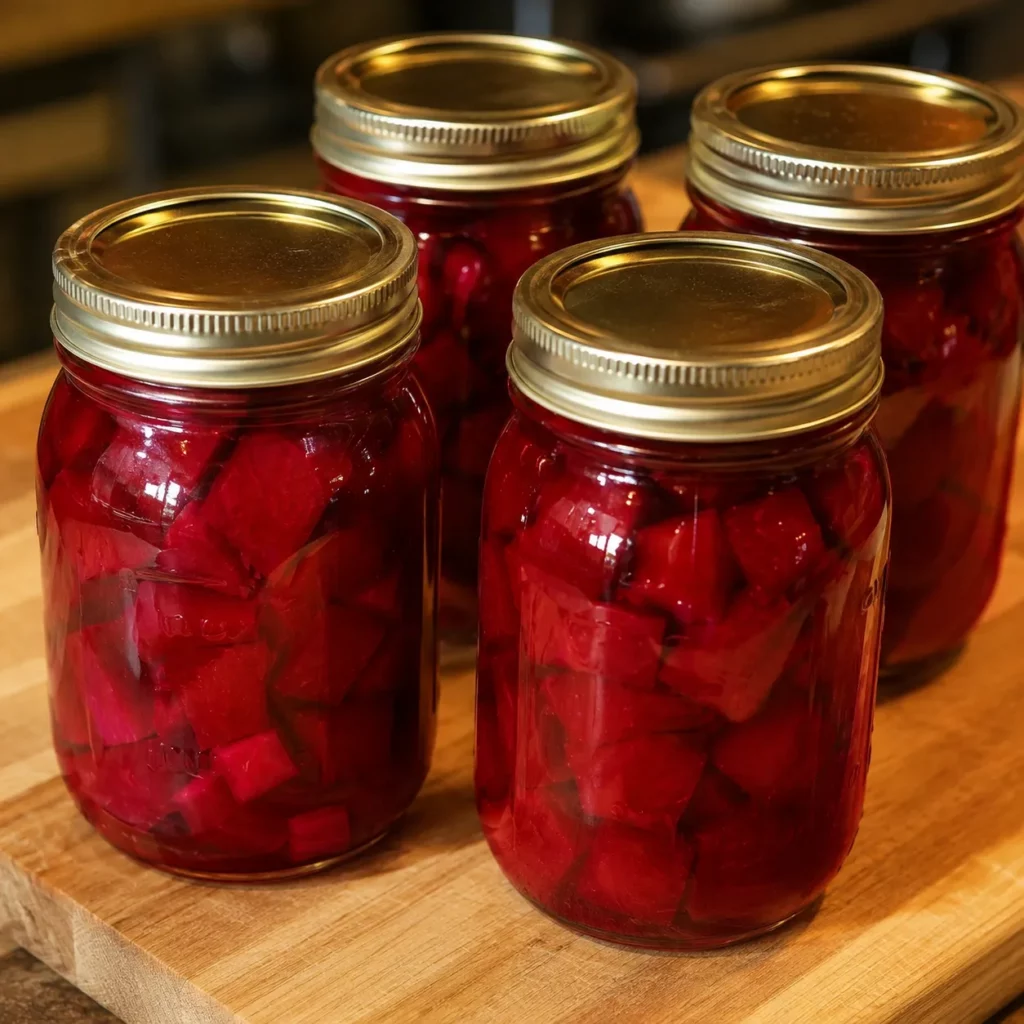
Why I Make This Version
I make it this way because pickled beets need enough vinegar to be properly sharp and stable. Beets are naturally sweet and earthy, but they are not acidic on their own, so the brine has to do the work.
The original video method gives a nice homemade flavor, especially if the jars are kept cold, but this written version is designed to be more responsible for home canning. I use white vinegar with 5% acidity, less water than vinegar, and a full boiling-water bath. The result is still very classic: sweet, tangy, a little peppery, with garlic, thyme, and bay leaf in the background.
This is not a creamy beet salad, not a roasted beet side, and not a quick pickle for tonight’s dinner. It is a traditional-style preserve made for meals where you want that cold, vinegary bite next to something rich. It is especially good beside French Canadian tourtière, but I also like it with juicy homemade meatloaf or a slow, heavy dish like Dutch oven pot roast.
Ingredients
For about 4 pint jars:
- 4 lb fresh beets, similar in size if possible
- Water, enough to cover the beets for boiling
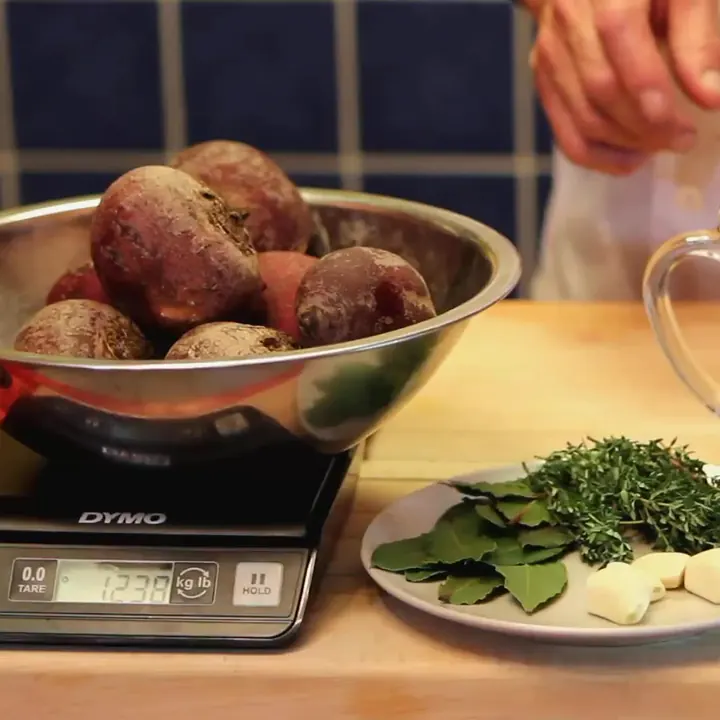
For the pickling brine:
- 3 cups white vinegar, 5% acidity
- 1 1/2 cups water
- 1 1/4 cups granulated sugar
- 1 1/2 tsp pickling salt or fine sea salt without additives
- 1 tsp whole black peppercorns
- 1 sprig fresh thyme
- 4 bay leaves
- 4 garlic cloves, peeled and lightly crushed
For the jars:
- 4 clean pint jars with new canning lids and screw bands
- Boiling water for sterilizing and processing
Step-by-Step Instructions
1. Cook the Beets
Place the whole beets in a large pot and cover them with cold water. Bring to a boil, then cook until the beets are tender enough for a knife to slide in with slight resistance.
The cooking time depends on size. Small beets can take 30 to 40 minutes. Large ones can take closer to 75 to 90 minutes. Do not follow the clock blindly. The knife test is better.
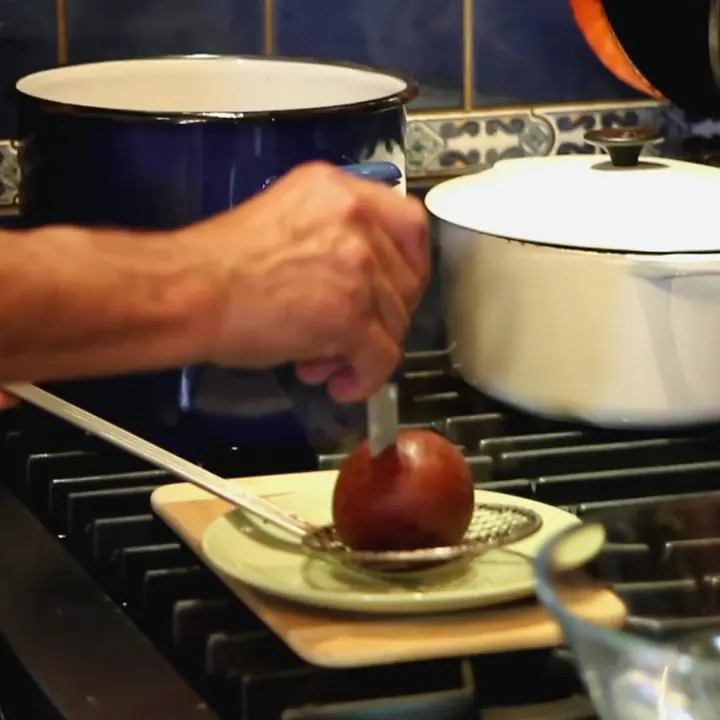
You know they are ready when the skin looks a little loose and the inside feels tender, but the beet still holds its shape. If the knife falls through like butter, they are probably going too far.
Drain the beets and cool them just enough to handle. You can run them under cold water or let them sit in a bowl until the steam calms down.
2. Peel and Cut
Slip off the skins with your hands or use a small knife for stubborn spots. Trim the root ends and any dark or rough areas.
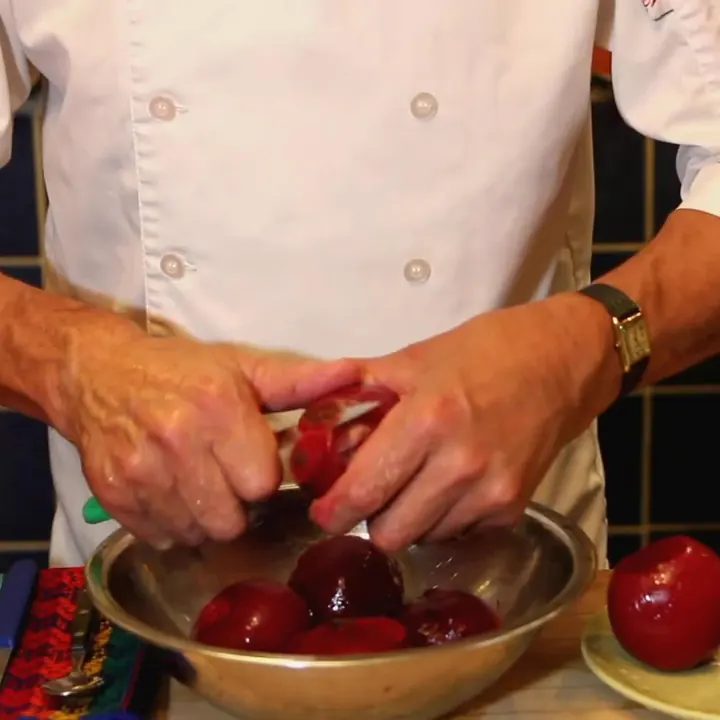
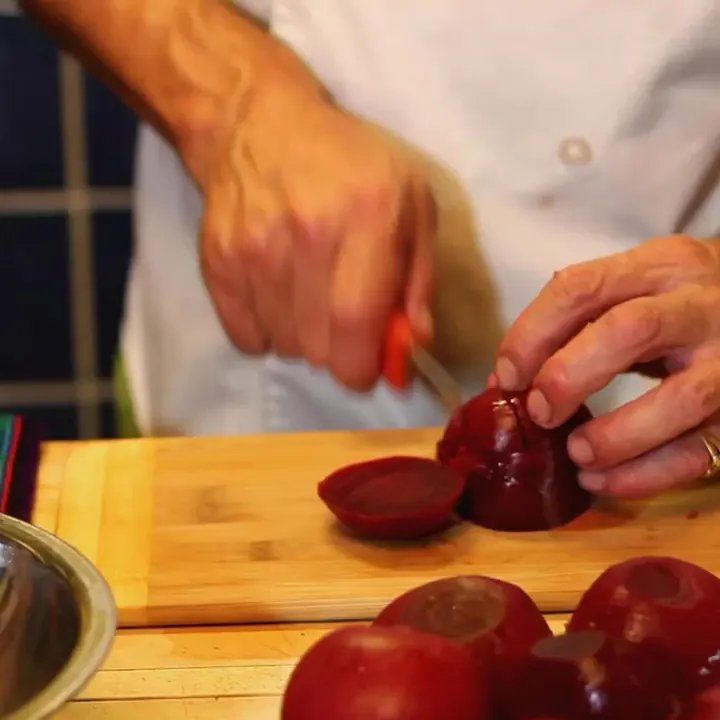
Cut the beets into cubes or slices. Cubes are practical if you want them for plates of tourtière, cold cuts, or sandwiches. Slices look more traditional in the jar.
At this point, the beets should look glossy, deep red, and firm enough to toss without breaking apart.
3. Make the Brine
In a large saucepan, combine the vinegar, water, sugar, salt, peppercorns, thyme, bay leaves, and garlic.
Bring to a boil, stirring until the sugar dissolves. Let it simmer for about 10 minutes so the garlic, thyme, bay, and pepper have time to perfume the liquid.
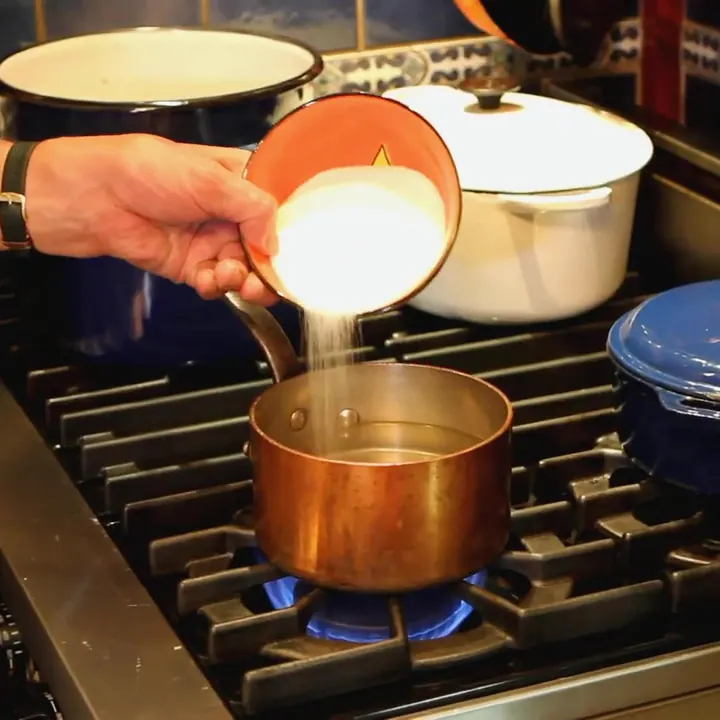
The smell should be sharp from the vinegar, but not flat. The sugar rounds it out, and the aromatics should come through quietly. This is not a heavily spiced pickle. It is clean, old-school, and meant to sit beside rich food.
4. Hot Pack the Beets
Add the peeled and cut beets to the hot brine. Simmer for about 5 minutes, just to heat everything through.
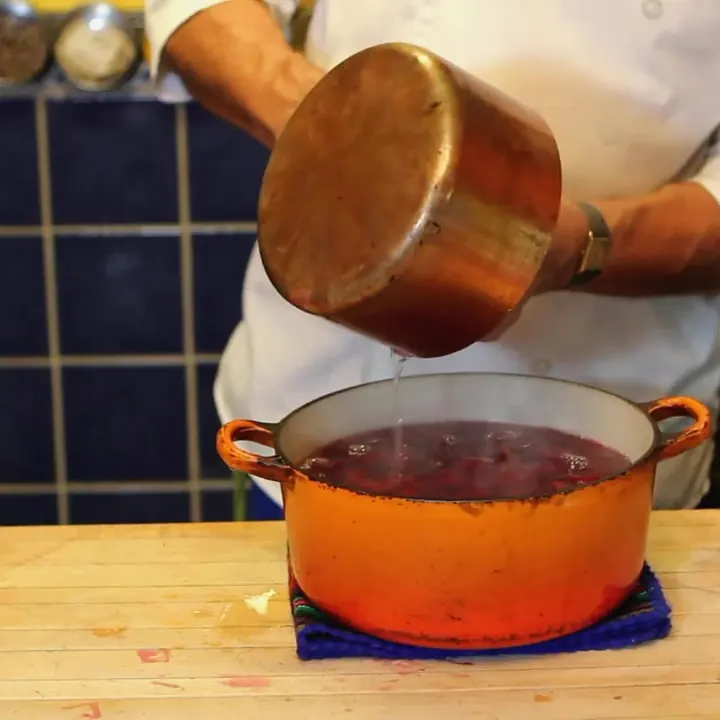
I prefer a short simmer here because the water bath will keep cooking the beets. The mistake to avoid is boiling them hard in the brine for too long. If they start knocking around aggressively in the pot, lower the heat.
The brine should stain darker and the beets should be fully hot before going into the jars.
5. Prepare the Jars
Wash the jars, lids, and screw bands. Keep the jars hot until filling.
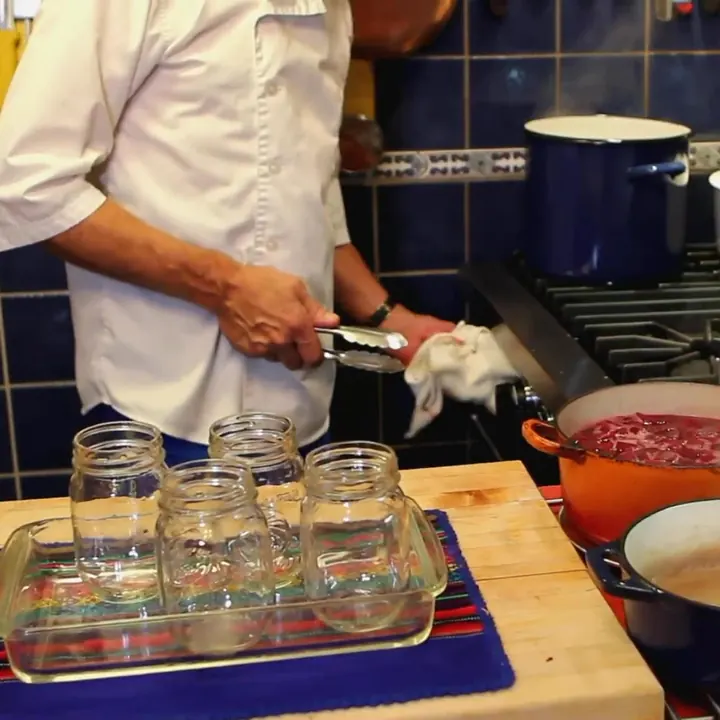
Use proper canning jars and new lids. Do not use old commercial jars with random lids for a canned preserve.
Fill a boiling-water canner or a deep pot with enough water to cover the filled jars by at least 1 inch. Bring the water to a boil.
6. Fill the Jars
Pack the hot beets into hot pint jars. Pour the hot brine over the beets, leaving 1/2 inch headspace at the top.
Slide a clean non-metallic utensil or bubble remover around the inside of each jar to release air bubbles. Adjust the brine level if needed.
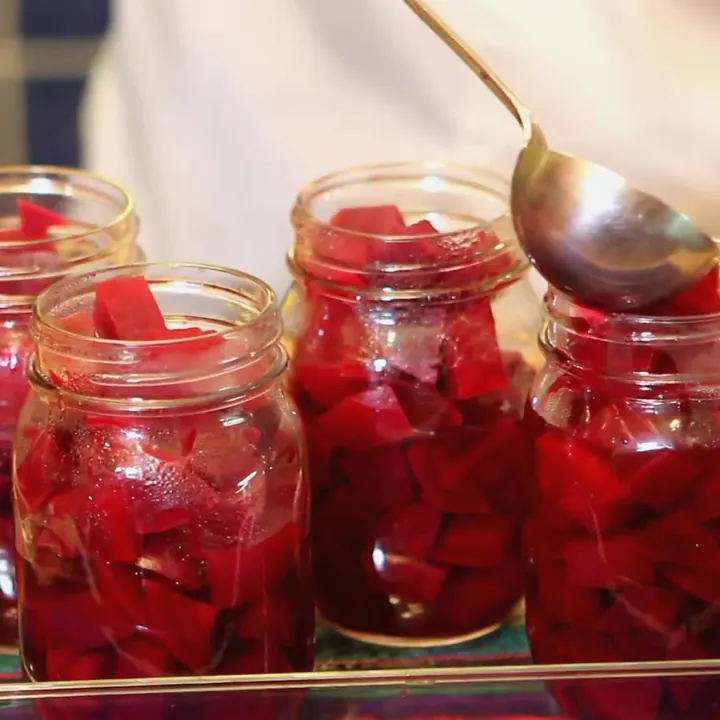
Wipe the rims very well. Beet juice and sugar can leave a sticky edge, and a dirty rim can stop the lid from sealing.
Place the lids on the jars and screw the bands on fingertip tight. Do not crank them down hard.
7. Process the Jars
Place the filled jars into the boiling-water canner. The jars must be covered by at least 1 inch of water.
Once the water returns to a full rolling boil, process the pint jars for 30 minutes at low elevation. If you live at a higher elevation, follow your local canning time adjustments.
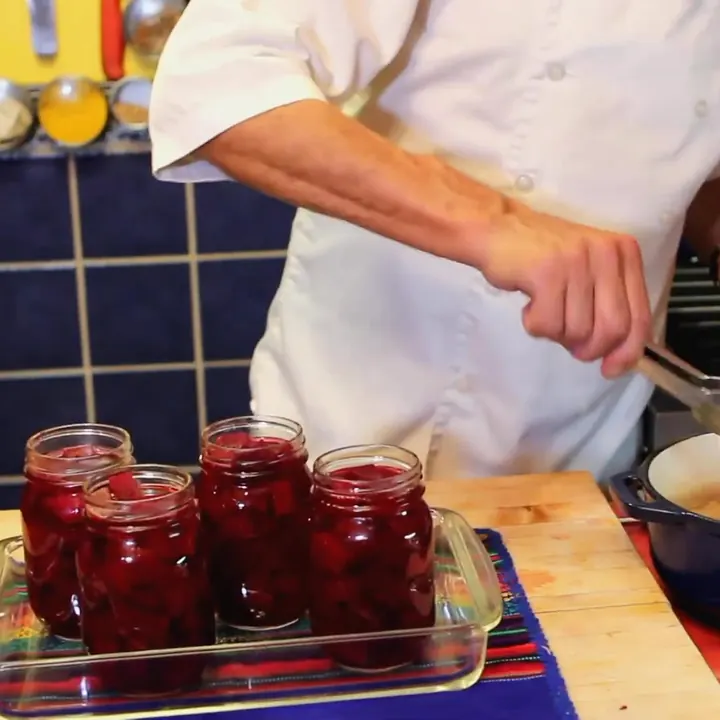
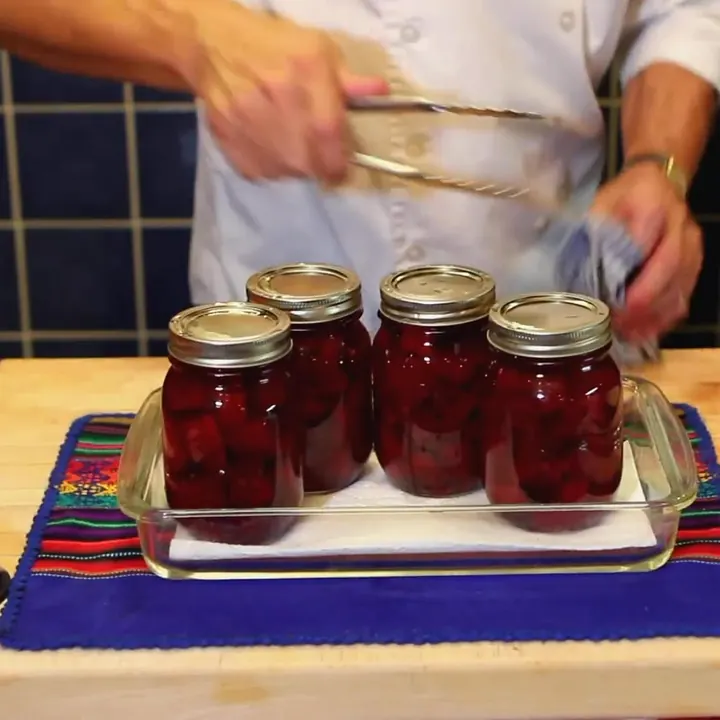
When the time is done, turn off the heat and let the jars sit in the canner for 5 minutes. Remove them carefully and place them upright on a towel.
Do not tilt the jars. Do not tighten the bands after processing. Let them cool undisturbed for 24 hours.
How to Check the Seal
After 24 hours, press the center of each lid. It should not flex up and down. Remove the screw bands and gently lift each jar by the lid edge to make sure the seal is firm.
Any jar that did not seal should go into the refrigerator and be eaten first.
Sealed jars can be stored in a cool, dark place. For best quality, use them within 12 months. Once opened, refrigerate the jar.
When to Serve Pickled Beets
These beets are made for rich plates. The vinegar wakes up food that has a lot of meat, butter, pastry, or gravy.
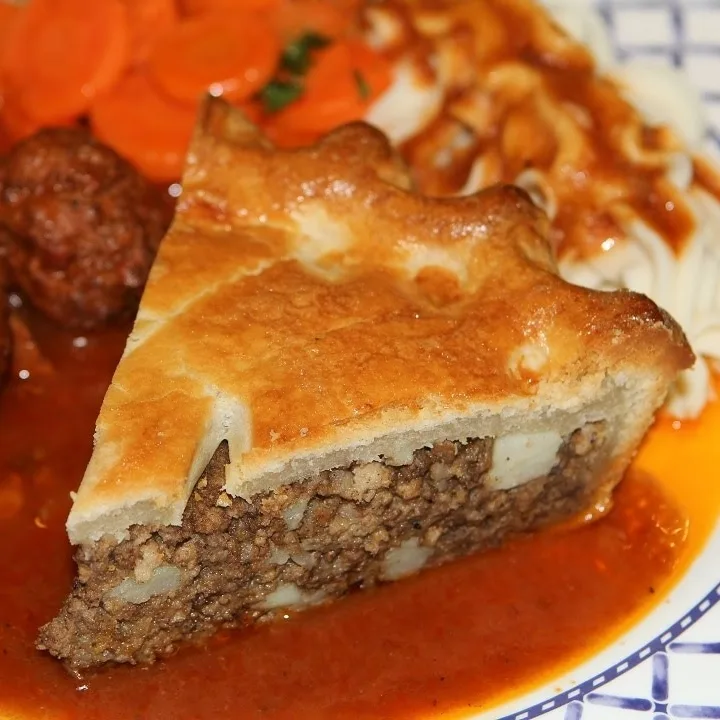
Serve them with French Canadian tourtière during the holidays, with classic French cassoulet in winter, or beside oven-baked beef brisket when you want something cold and acidic on the plate.
They also work year-round. In summer, chop them into a cold plate with eggs, ham, cheese, and salad. In fall, serve them with roasted meats. In winter, put them on the table with meat pie and potatoes. In spring, slice them into sandwiches or serve them with a simple lunch plate.
For another old-school side with the same kind of cold-table feeling, a bowl of traditional Quebec cabbage salad fits the same meals nicely. If you want something brighter and lighter, grated carrot salad with mustard vinaigrette gives you that same sharp contrast without the canning process.
How This Recipe Is Different From Similar Recipes
This is the canning-style version, not a quick refrigerator beet pickle. A quick version can use a softer brine and stay in the fridge, but this one is written with a stronger vinegar ratio and a full boiling-water bath.
It is also not a beet salad. There is no mayonnaise, no cream, no cheese, and no fresh herbs tossed in at the end. The goal is preservation, clean acidity, and a firm beet texture.
Compared with roasted beets, these are sharper and sweeter. Roasted beets are earthy and warm. Pickled beets are cold, tangy, and made to refresh the plate. That is why they are so good with meat pie, roasts, and heavy winter dishes.
Substitutions
Vinegar
Use white vinegar with 5% acidity. Apple cider vinegar with 5% acidity can work, but it gives a fruitier, darker flavor. Do not use homemade vinegar or weak vinegar for canning.
Sugar
You can reduce the sugar slightly if you prefer a sharper pickle, but do not reduce the vinegar. The sugar affects flavor. The vinegar is part of the safety and structure of the recipe.
Salt
Use pickling salt or fine sea salt without additives if possible. Table salt can cloud the brine because of anti-caking agents.
Spices
The thyme, bay leaf, garlic, and peppercorns keep this version savory. You can add a small cinnamon stick or a few cloves for a more holiday-style beet preserve, but go easy. Beets absorb spice quickly, and too much clove can take over the jar.
Beet Cut
Cubes are best for serving with meat pies and holiday plates. Slices are better for sandwiches and cold platters.
Health and Nutrition Context
Pickled beets are a vegetable side, but they are also made with sugar and vinegar, so I treat them like a condiment or garnish rather than the main vegetable on the plate. A few spoonfuls add color, acidity, and sweetness without needing a heavy sauce.
They are naturally low in fat and useful when a plate needs freshness beside rich foods. The flavor is strong enough that a small portion does the job.
FAQ
Can I use the original vinegar and water ratio from the video?
For refrigerator storage, yes, a milder brine can taste good. For a public canning recipe, I prefer this stronger version because beets need enough acidity. Do not reduce the vinegar if you plan to process and store the jars.
Do I have to process the jars for 30 minutes?
Yes, for this canning-style version. The short answer is that the jar needs enough time in boiling water for proper heat processing. Start timing only once the water returns to a full rolling boil.
Can I make this as a refrigerator pickle instead?
Yes. Cook the beets, make the brine, pack everything into clean jars, cool, and refrigerate. Let them sit at least 24 to 48 hours before eating. For refrigerator pickles, eat them within a few weeks and keep them cold.
Why are my beets too soft?
They were likely cooked too long before going into the jars. Remember, the beets cook three times: first in water, then briefly in brine, then again in the water bath. Stop the first cook when the knife enters with light resistance.
Can I use golden beets?
Yes, but the color and flavor will be different. Golden beets are usually milder and less earthy. Keep the same brine and process.
Can I reuse old lids?
No. Use new canning lids for any jar you want to seal. Screw bands can be reused if they are not rusty or bent, but lids should be new.
How long before eating?
You can eat them after a few days, but I prefer to wait at least 2 weeks. The vinegar settles, the garlic softens, and the beet flavor becomes more even.
What to Serve With Pickled Beets
For a classic Quebec-style meal, serve them cold with French Canadian tourtière and potatoes. If you want potatoes that feel more traditional and less creamy, classic pommes boulangères are a natural fit.
For a bistro-style plate, pair the beets with Lyonnaise potatoes and sliced roast meat. The onions in the potatoes and the vinegar in the beets work well together.
For cold plates and summer meals, add classic macaroni salad or traditional Quebec cabbage salad. Both give that picnic-table feeling without making the meal too heavy.
For richer mains, serve the beets beside Dutch oven pot roast, oven-baked beef brisket, or classic French cassoulet. The acidity cuts through the meat and keeps the plate from feeling flat.
If you want a practical kitchen reference for seasoning the rest of the meal, my guide on how to season a recipe properly is useful, especially when serving salty meats with acidic sides.
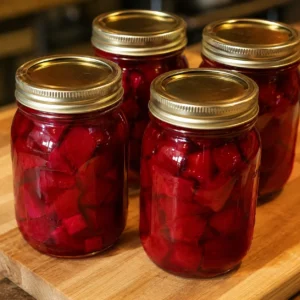
Homemade Pickled Beets for Canning
Ingredients
- 4 lb fresh beets
- Water enough to cover the beets
- For the brine:
- 3 cups white vinegar 5% acidity
- 1 1/2 cups water
- 1 1/4 cups granulated sugar
- 1 1/2 tsp pickling salt or fine sea salt without additives
- 1 tsp whole black peppercorns
- 1 sprig fresh thyme
- 4 bay leaves
- 4 garlic cloves peeled and lightly crushed
- For canning:
- 4 clean pint jars
- 4 new canning lids
- 4 screw bands
- Boiling water enough to cover the jars by at least 1 inch
Instructions
- Place the beets in a large pot and cover with cold water.
- Bring to a boil and cook until a knife enters with light resistance, about 30 to 90 minutes depending on beet size.
- Drain and cool the beets until easy to handle.
- Peel the beets, trim the ends, and cut into cubes or slices.
- In a saucepan, combine vinegar, water, sugar, salt, peppercorns, thyme, bay leaves, and garlic.
- Bring the brine to a boil, stirring until the sugar dissolves.
- Simmer the brine for 10 minutes.
- Add the beets to the hot brine and simmer for 5 minutes.
- Pack hot beets into hot pint jars, leaving 1/2 inch headspace.
- Cover with hot brine, keeping 1/2 inch headspace.
- Remove air bubbles, adjust brine if needed, and wipe jar rims clean.
- Apply lids and screw bands fingertip tight.
- Place jars in a boiling-water canner, making sure they are covered by at least 1 inch of water.
- Once the water returns to a full boil, process for 30 minutes at low elevation.
- Turn off the heat and let jars rest in the canner for 5 minutes.
- Remove jars and cool upright for 24 hours without tightening the bands.
- Check the seals. Refrigerate any jar that did not seal.
- Store sealed jars in a cool, dark place and let the beets rest for about 2 weeks before serving for best flavor.
Video
Notes
FAQ
Can I use the original vinegar and water ratio from the video?
For refrigerator storage, yes, a milder brine can taste good. For a public canning recipe, I prefer this stronger version because beets need enough acidity. Do not reduce the vinegar if you plan to process and store the jars.Do I have to process the jars for 30 minutes?
Yes, for this canning-style version. The short answer is that the jar needs enough time in boiling water for proper heat processing. Start timing only once the water returns to a full rolling boil.Can I make this as a refrigerator pickle instead?
Yes. Cook the beets, make the brine, pack everything into clean jars, cool, and refrigerate. Let them sit at least 24 to 48 hours before eating. For refrigerator pickles, eat them within a few weeks and keep them cold.Why are my beets too soft?
They were likely cooked too long before going into the jars. Remember, the beets cook three times: first in water, then briefly in brine, then again in the water bath. Stop the first cook when the knife enters with light resistance.Can I use golden beets?
Yes, but the color and flavor will be different. Golden beets are usually milder and less earthy. Keep the same brine and process.Can I reuse old lids?
No. Use new canning lids for any jar you want to seal. Screw bands can be reused if they are not rusty or bent, but lids should be new.How long before eating?
You can eat them after a few days, but I prefer to wait at least 2 weeks. The vinegar settles, the garlic softens, and the beet flavor becomes more even.🔗 Useful Links
🛒 Michel Dumas Shop : Explore our kitchen essentials, including aprons and knives.
🌐 Linktree : Access all our important links in one place.
📱 YouTube | Instagram | Facebook | TikTok : Follow us for the latest recipes and culinary tips.





Great merci Chef