Veal Head Terrine in Aspic with Tongue and Carrots
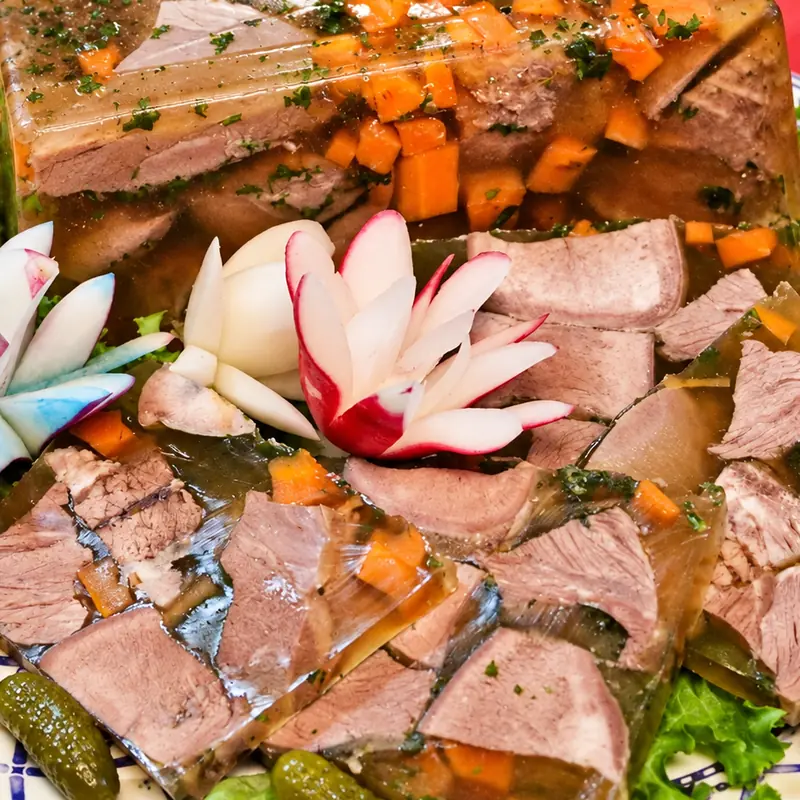
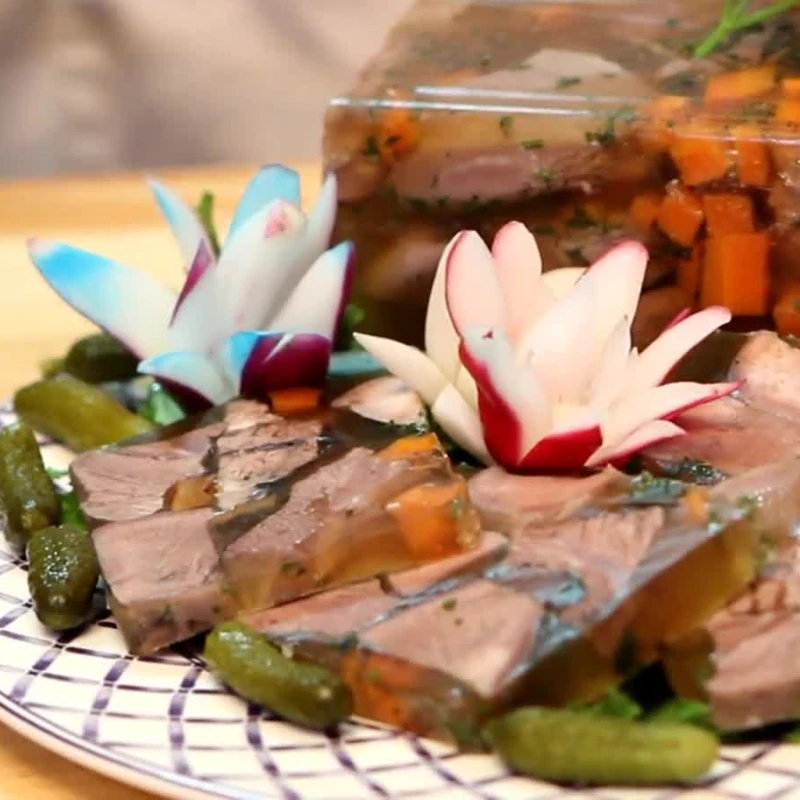
Veal head terrine in aspic is a cold French starter with tender veal cheeks and tongue, diced carrots, parsley, and a savory jelly. In this version, pork feet provide the collagen-rich stock. The filling stays in recognizable pieces, so every slice shows the meat and vegetables through the gel. The most important step is checking a small chilled sample of broth before filling the mold: good flavor alone does not guarantee a jelly strong enough to slice.
This written version follows the preparation shown in my video, with a smaller, measured batch and added guidance for cooling, seasoning, and checking the gel. It is a preparation for the day before a meal rather than a quick appetizer. Use two modest molds instead of one very deep container, and leave enough time for the terrines to become thoroughly cold overnight.
{VIDEO}
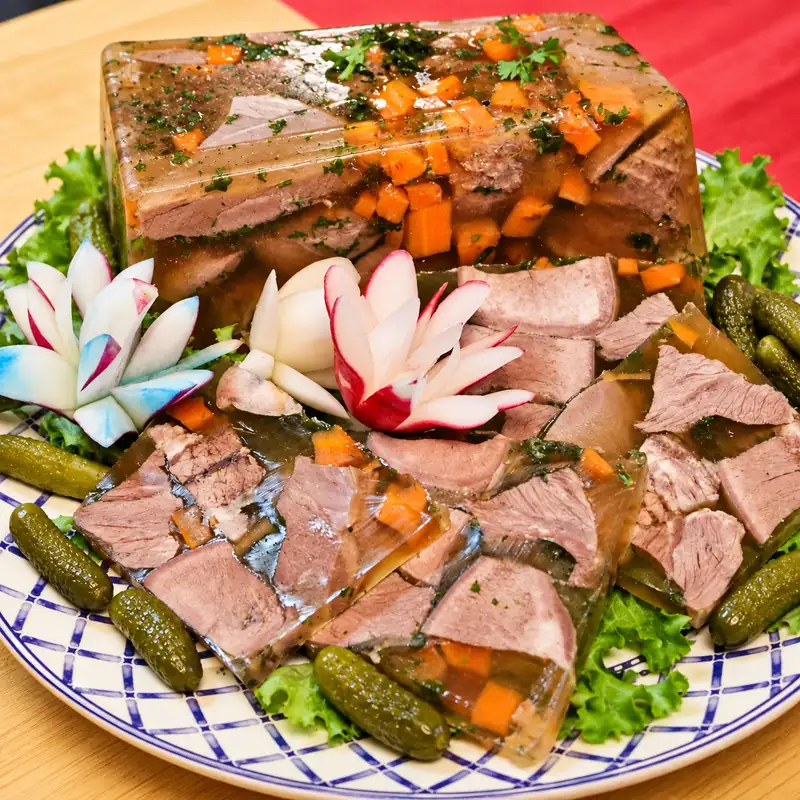
What goes into a veal head terrine
The name refers to the style of charcuterie, but you do not need to buy an entire head for this adaptation. Ask your butcher for trimmed veal cheeks and veal tongue. The cheeks bring a tender, slow-cooked texture, while the tongue gives neat, substantial pieces after its outer skin has been removed. Neither should remain chewy when the mold is assembled.
This is different from country pâté or a duck country terrine, where a seasoned meat mixture is baked in a mold. Here the meat is cooked first, then held together by cold stock. The same general assembly idea appears in chicken terrine in aspic and duck aspic with port.
A jelly stock that will actually set
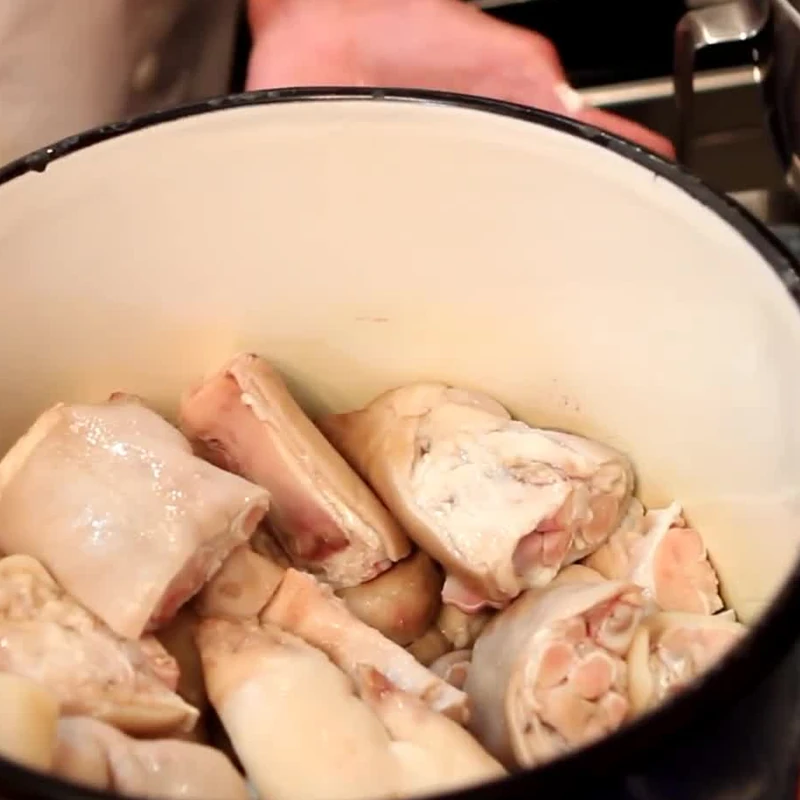
Pork feet are used for the broth rather than the sliced filling. Their connective tissue releases gelatin during a long, gentle simmer. Buy cleaned feet split by the butcher, and add enough cold water to cover closely. Starting with an oversized pot full of unnecessary water makes the final stock harder to concentrate.
Strain carefully and remove visible surface fat. A greasy cap interferes with the appearance and mouthfeel of a cold terrine. Keep the broth at a quiet simmer rather than a violent boil, which stirs particles through the liquid. Do not squeeze the solids through the cloth when straining; let the broth drain.
A chilled setting test is essential because feet, water levels, and evaporation all vary. Put a tablespoon of strained broth in a small shallow dish and refrigerate until thoroughly cold, allowing about 30–60 minutes. It should form a cohesive gel when tilted. If it stays liquid, reduce some unsalted broth and test again. Keep the meat refrigerated while working on the stock.
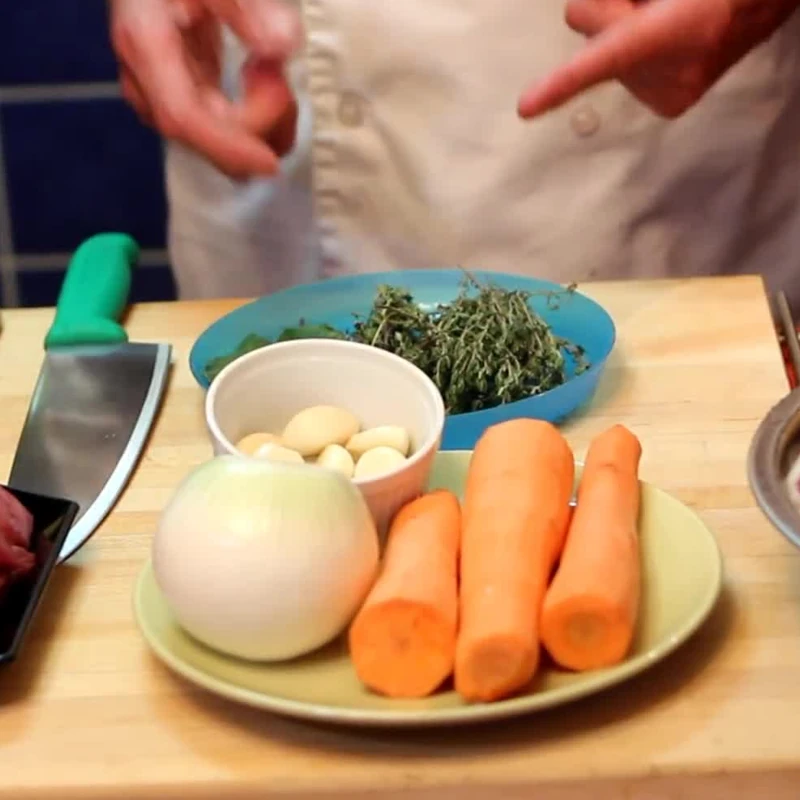
Prepare the terrine step by step
1 Build the pork foot stock
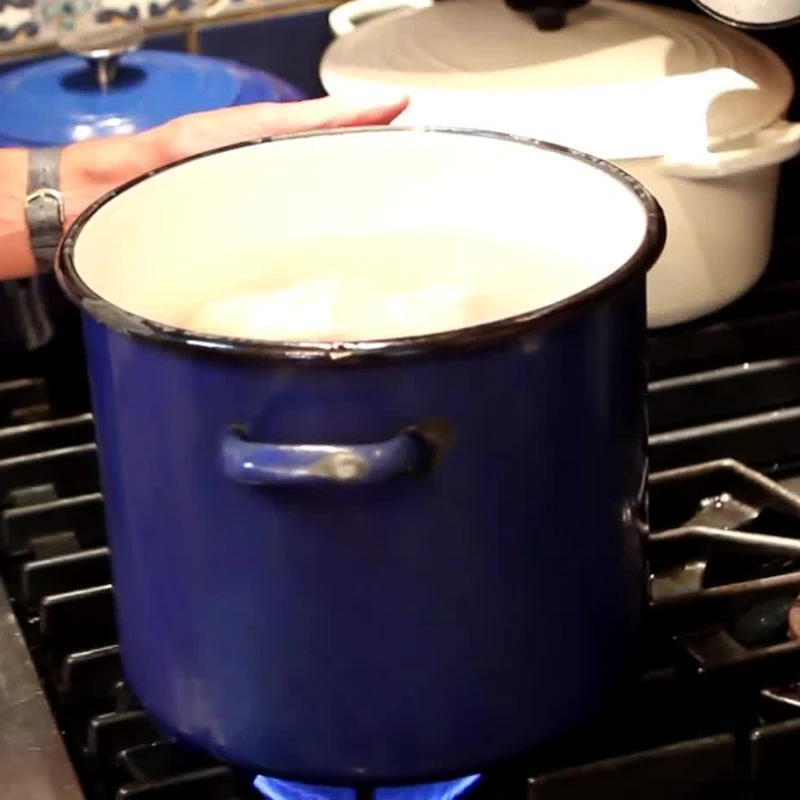
Place the cleaned split pork feet in a large stockpot with the onion, garlic, thyme, and bay. Add cold water just to cover. Bring gradually to a simmer, skim the foam, and cook gently until the feet are very soft and the broth becomes sticky when a cooled drop is rubbed between your fingers. Plan about four to five hours, topping up only enough water to keep the feet submerged.
2 Poach the veal until tender
Strain the broth into a clean pot, then add the cheeks and tongue. Add the carrots and poach gently. Remove the carrots as soon as tender enough to dice without crumbling, usually after 20–30 minutes. Continue cooking the meat until a skewer enters without resistance, generally two to three hours depending on thickness. Check each piece separately; remove tender cheeks if the tongue needs longer.
3 Strain and degrease the cooking liquid
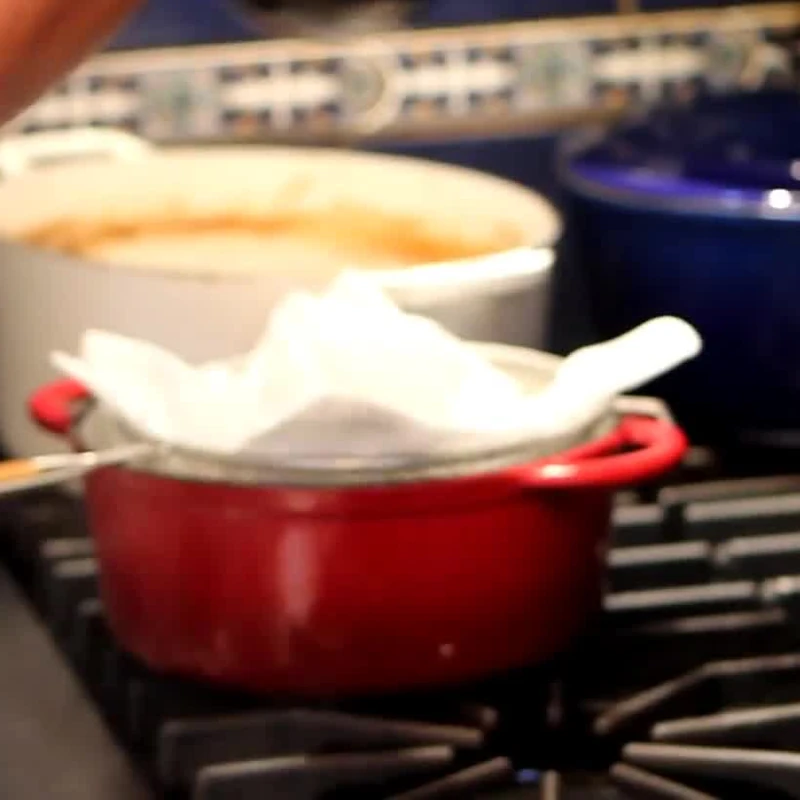
Lift out the cooked meat and set it in a shallow dish. Strain the cooking liquid through a fine sieve lined with clean food-safe cloth. Skim off the fat, or use a fat separator. Reserve enough for the terrine and chill extra broth promptly in shallow containers. The feet have done their job in the stock; their bones and cooking aromatics do not go into the molds.
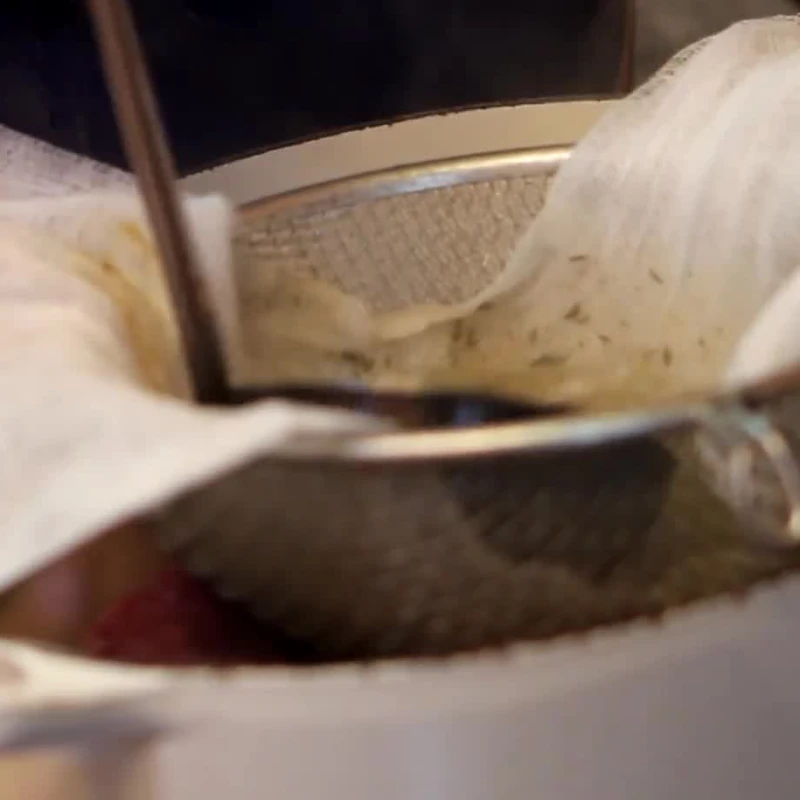
4 Concentrate and test the jelly
Simmer a portion of the strained broth until concentrated, then perform the chilled setting test. Aim to have about four cups available for the molds, although the amount actually used depends on the space between the meat pieces. Season only after reduction. Cool the remaining liquid over an ice bath while stirring, keeping bath water out, until it is lukewarm and still pourable.
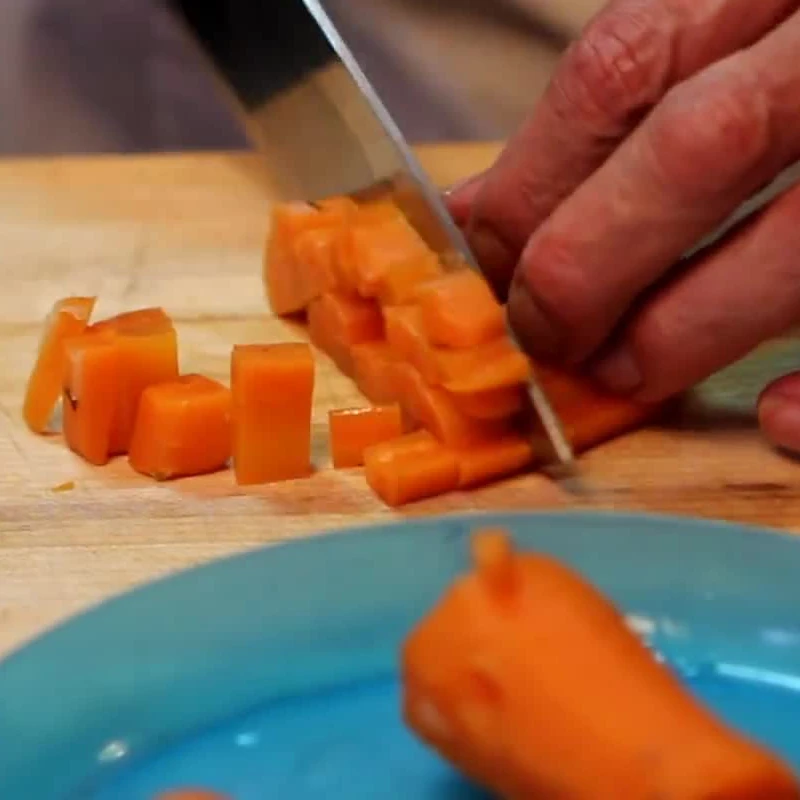
5 Dice the carrots and chop parsley
Cut the cooked carrots into small, even cubes. Chop the parsley finely and keep both refrigerated until assembling. The carrots should add color and a little sweetness without turning into mash. Remove woody herb stems from any reserved ingredients; thyme and bay belong in the strained stock, not in the finished slices.
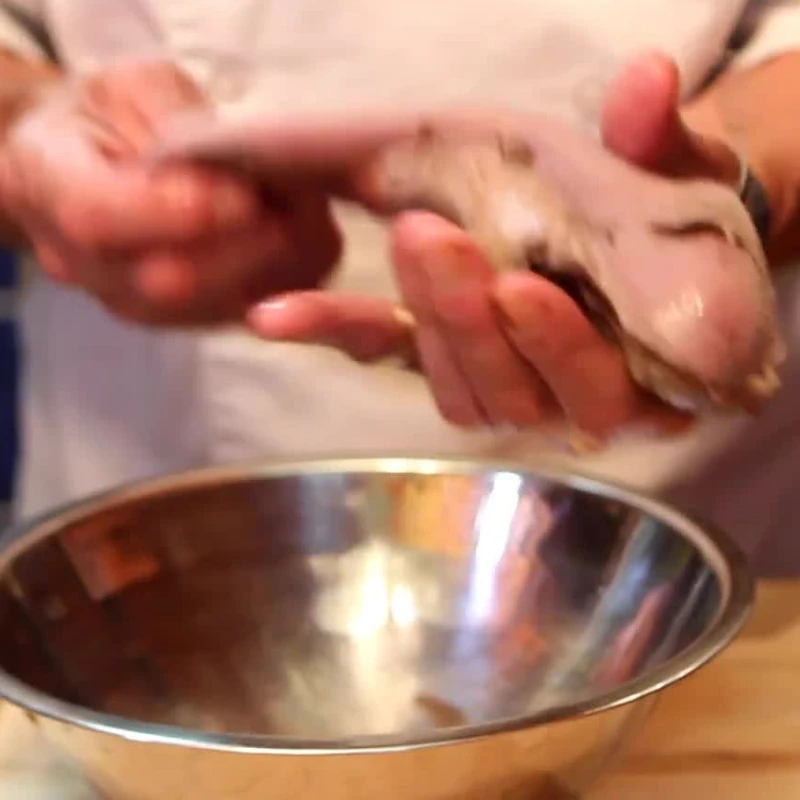
6 Peel the tongue while warm
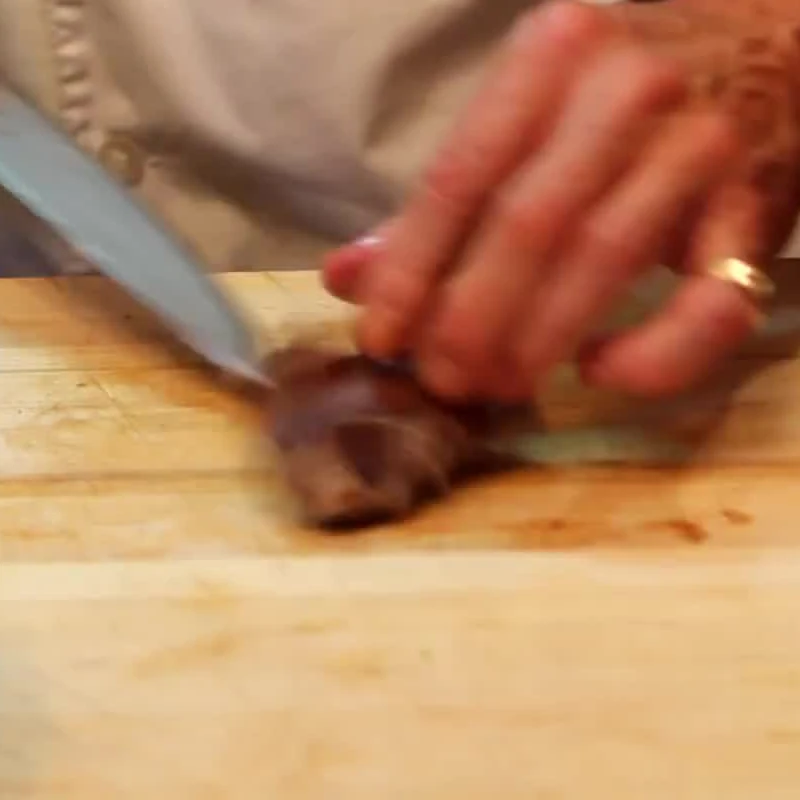
As soon as the cooked tongue is cool enough to handle, pull away the thick outer skin. It releases more easily while warm than after a night in the refrigerator. Trim the tough root tissue and any remaining gristle. The tongue should be tender throughout; if the skin will not release and the meat is firm, it may need more cooking.
7 Cut the meat into pieces
Cut the peeled tongue and tender cheeks into roughly three-quarter-inch pieces. Keep the grain and texture visible rather than shredding everything. Taste a cooked piece and adjust seasoning lightly. Refrigerate promptly if the broth still needs attention; do not leave a bowl of cooked meat on the counter during a long reduction.
8 Layer the molds
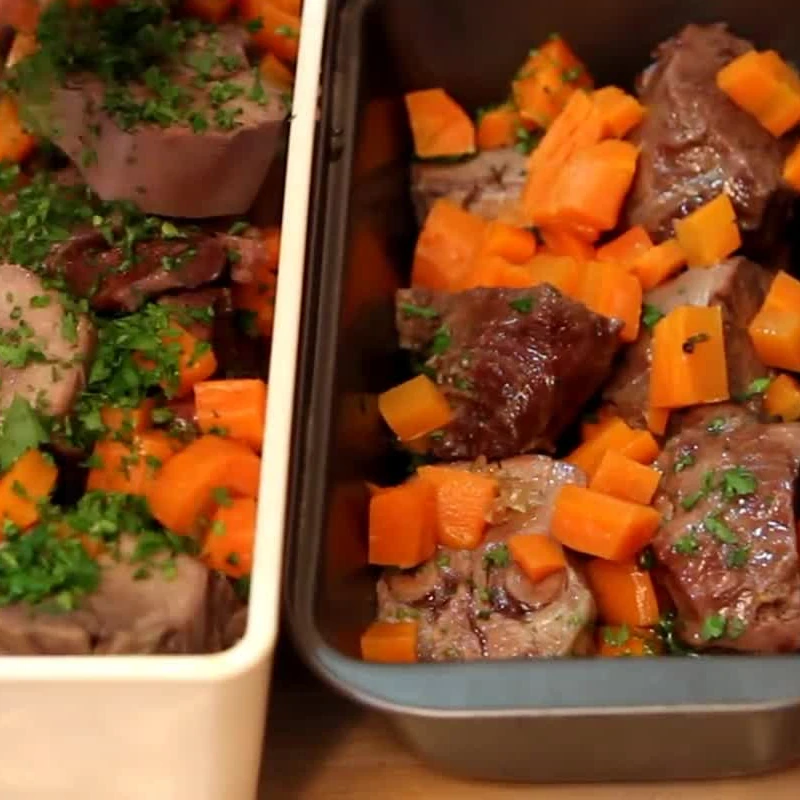
Use two small molds with a combined capacity of about two and a half quarts, or additional shallow containers as needed. For easy release, use a removable base or a suitable food-safe liner according to the mold instructions. Divide carrots, meat, and parsley among the molds, distributing them throughout. Press lightly to remove large gaps without crushing the filling.
9 Add the stock and chill overnight
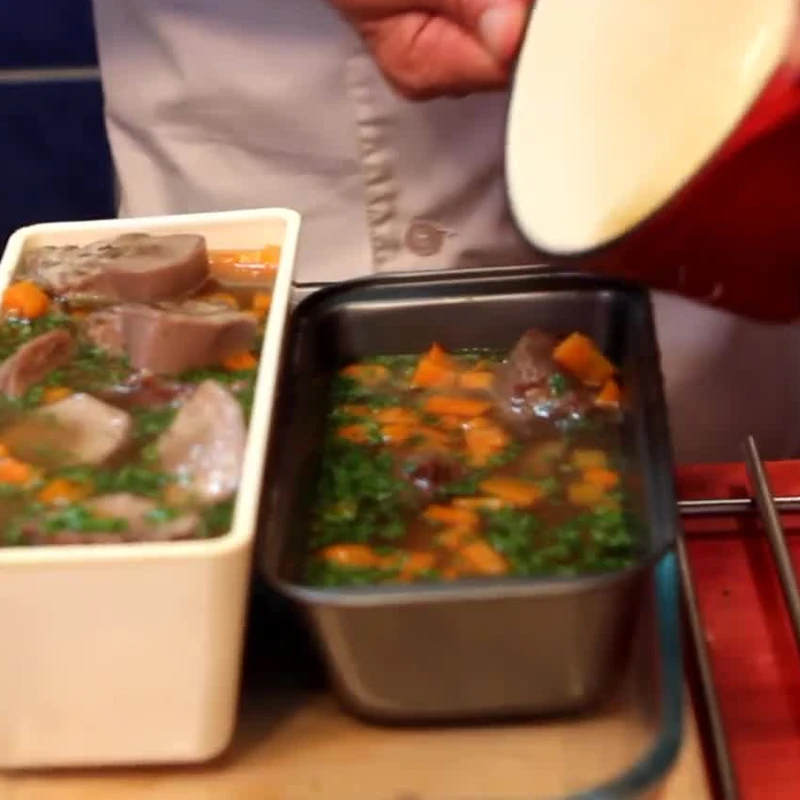
Pour the tested, lukewarm stock slowly between the meat pieces. Tap the molds gently so trapped air rises, then top up just enough to cover the filling. Set the molds in an ice-water bath if they are still warm, protecting the rims from splashes, and refrigerate promptly with loose covering. Once cold, cover fully and chill at least 12 hours.
10 Unmold and slice cold
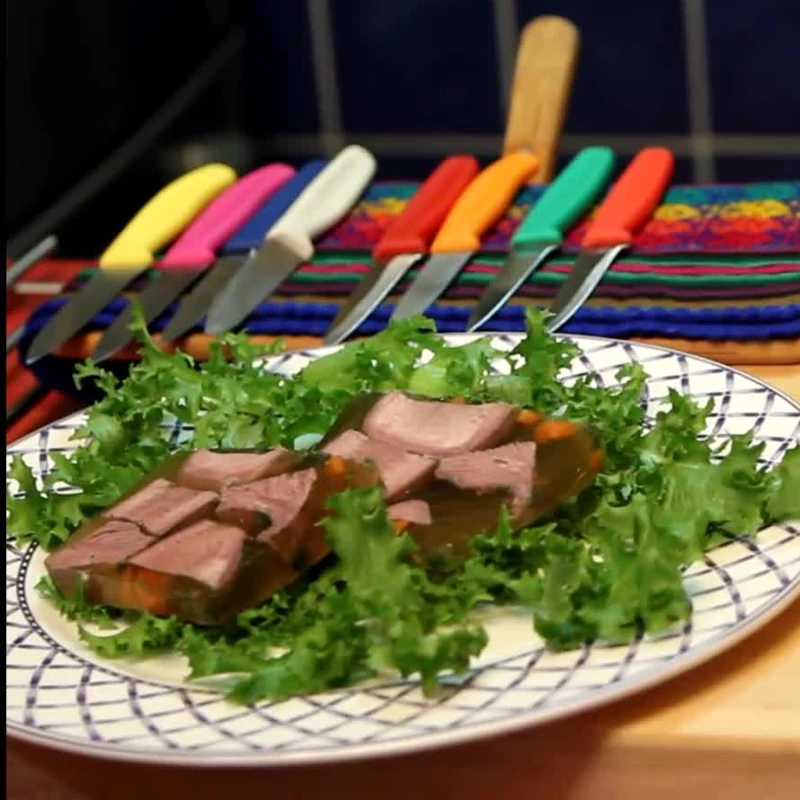
Release the liner or removable base first. If necessary, dip only the outside of the mold briefly in lukewarm water; prolonged warming melts the gel. Invert onto a chilled platter. Slice with a thin sharp knife and wipe the blade between cuts. Return the unused terrine to the refrigerator rather than leaving the whole loaf out during service.
Gelatin as a backup
If the stock is flavorful but still fails the setting test, unflavored powdered gelatin can reinforce it. It is an optional written adaptation, not a quantity confirmed in the video. Follow your product’s directions for the measured volume of broth, bloom it in a reserved cold portion, and dissolve it completely in warm broth before filling the molds. Include the blooming liquid in the total liquid measurement.
For reference, a standard quarter-ounce envelope is commonly used for about two cups of liquid to make a soft gel; this stock already contains natural gelatin, so do not automatically add a full packet dose to a broth that already sets firmly. Test a small sample again. Gelatin sheet sizes and strengths differ, so replacing powder with a fixed number of leaves is not reliable without the package guidance.
Substitutions and serving
Veal feet can replace pork feet for the stock if your butcher has them. A prepared stock must genuinely set when chilled; ordinary boxed broth is not a direct substitute. Beef tongue or beef cheeks change the identity and cooking time of the dish, so treat them as a separate variation and follow tenderness rather than the clock.
Serve with cornichons, radishes, mustard, and toast. A grated carrot salad with mustard vinaigrette or Greek salad makes a fresh accompaniment. For a charcuterie table, choose small portions of duck and pork rillettes or chicken liver mousse. If you prefer a spread rather than a sliced jelly terrine, duck rillettes are another option. Add Parisian potatoes for a more substantial cold lunch.
Questions about the terrine
Why did the jelly stay soft
The stock may be too diluted, or the mold may not be completely cold. Test the broth before assembling and allow a full overnight chill. Salt, good flavor, and a long cooking time do not prove that the gel is strong enough.
Must I add vinegar or wine
No. They are not necessary for this measured version. Serve something acidic beside the terrine instead. If adding an acidic seasoning, use a small amount before the setting test so you test the actual final broth.
How long does it keep
Keep at 40°F or below and use within two to three days, counting from cooking rather than from unmolding. Cool meat and broth promptly, refrigerate within two hours, and use clean utensils. This is a refrigerated cooked dish, not a shelf-stable preserve. Freezing can make the jelly watery and damage the slice texture.
Can I make one large terrine
Smaller molds are preferable for quicker cooling and practical portions. Do not pack a large hot batch into a deep mold and leave it to cool on the counter. Extra filling can go into small containers instead of being forced into the chosen mold.
Veal Head Terrine in Aspic with Tongue and Carrots
Ingredients
- 4 1/2 lb cleaned split pork feet for stock
- Cold water just to cover approximately 4 quarts initially
- 1 large onion quartered
- 4 cloves garlic peeled
- 4 sprigs thyme
- 2 bay leaves
- 2 lb trimmed veal cheeks
- 1 veal tongue about 1 1/2 lb
- 3 medium carrots peeled
- 1/4 cup finely chopped fresh parsley
- 1 teaspoon fine salt to start after reducing then to taste
- 1/2 teaspoon ground black pepper then to taste
- About 4 cups strained degreased cooking broth for assembly amount actually used varies
- Optional unflavored gelatin only if the chilled broth fails the setting test measured according to package directions
- Cornichons radishes mustard and toast for serving
Instructions
- Cover pork feet onion garlic thyme and bay closely with cold water. Skim and simmer gently about 4–5 hours until feet are soft and stock is gelatinous.
- Strain into a clean pot. Add cheeks tongue and carrots. Poach gently, removing carrots when tender after about 20–30 minutes. Cook meat about 2–3 hours until a skewer enters easily.
- Remove meat and strain stock through a cloth-lined sieve. Degrease thoroughly and refrigerate extra stock promptly.
- Concentrate a portion of stock as needed. Chill a tablespoon to test its setting strength. Season after reduction and reinforce with properly bloomed gelatin only if necessary. Cool assembly broth to lukewarm.
- Dice carrots and chop parsley.
- Peel tongue while warm and trim tough root tissue.
- Cut tongue and cheeks into three-quarter-inch pieces. Chill promptly if not assembling immediately.
- Layer meat carrots and parsley in two small molds of about 2 1/2 quarts combined capacity, or use extra shallow containers. Press lightly.
- Pour tested stock slowly into the gaps, tap gently and cover filling. Cool promptly using an ice bath if needed and refrigerate within 2 hours. Cover fully once cold and chill at least 12 hours.
- Unmold cold and slice with a sharp knife wiped between cuts. Serve with pickles mustard and toast.