Homemade Québec Cretons, a Traditional Pork Spread
Good cretons should spread across warm toast without crumbling into dry pieces or leaving a puddle of fat. The pork simmers gently with milk, onion and a small amount of spice, then firms up in the refrigerator. Break the meat into fine crumbs early, while the liquid is still loose; large cooked lumps are much harder to smooth out later.
I’d serve these Québec pork cretons cold on warm toast, especially for breakfast. Ground meat gives them a fine, slightly grainy texture rather than the long shreds found in rillettes. This version uses ordinary ground pork and a little breadcrumb to bind the cooking juices, with cloves and cinnamon kept deliberately restrained.
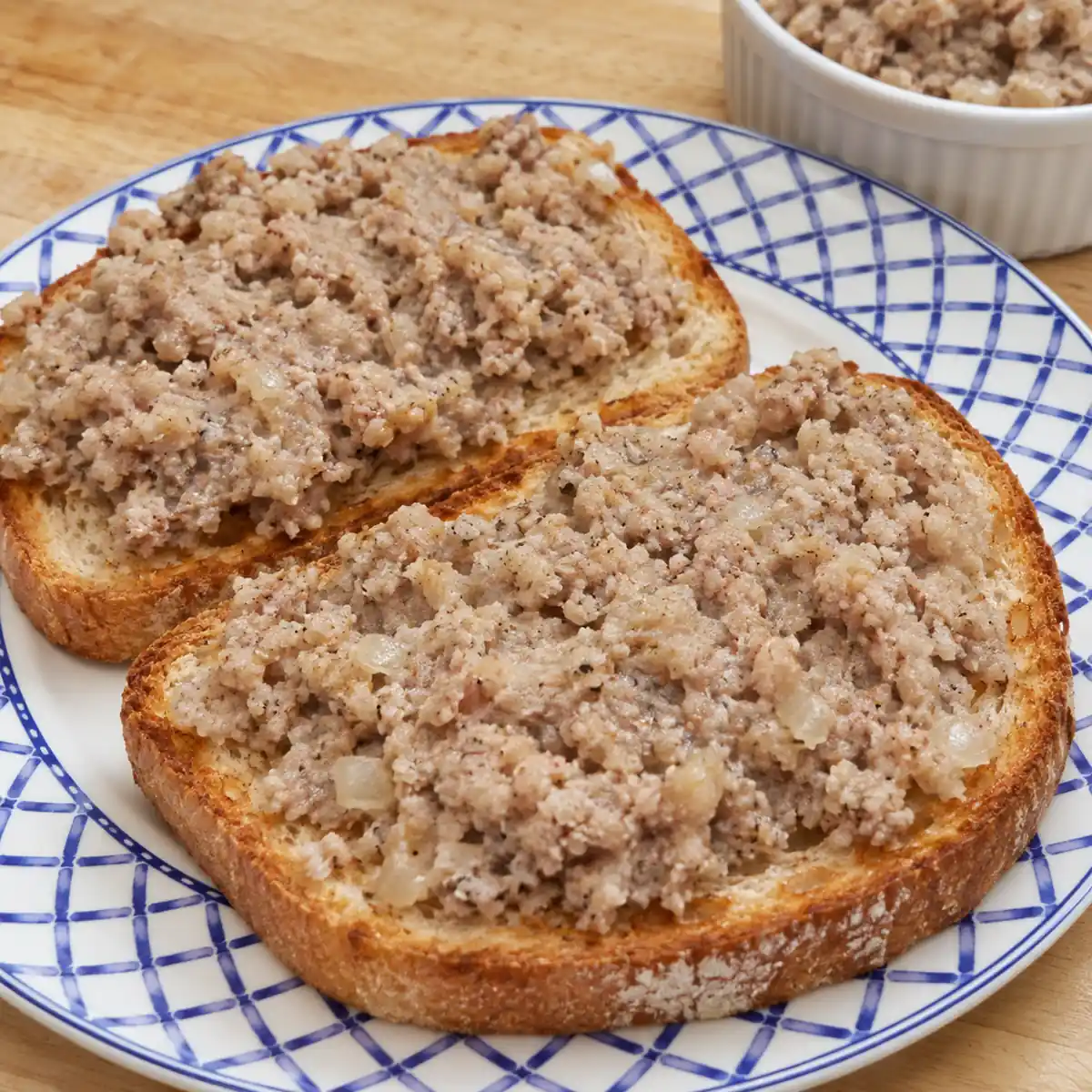
The texture starts with the pork
Choose regular ground pork with enough fat to stay supple, ideally around twenty percent fat. Extra-lean meat tends to make dry cretons that fall off the toast. The fat is part of the texture, but it should be distributed through the spread rather than floating in a thick layer on top.
Unlike slow-cooked pork rillettes, this recipe starts with ground meat and does not require shredding a large cut. Duck and pork rillettes are another spread with a different fibre structure. Here, a spoon should leave a shallow ridge in the chilled mixture while still moving through it easily.
I prefer to start the pork in the liquid rather than brown it first. Browning creates firmer bits and a roasted flavour that are not the goal of this version. The long gentle simmer softens the onion and brings the ingredients together. Cretons belong comfortably in a Québec recipe collection, but every household has its own spice balance.
Onion, milk and a light hand with spice
Chop the onion very finely. Large cubes remain noticeable in a small spoonful of cold spread, even after cooking. One small onion is enough for a pound of pork. A little garlic supports it without making the finished cretons taste like a garlic pâté.
Whole milk adds body as it reduces. The extra half cup of water gives the meat time to cook gently without catching immediately on the bottom. Use plain fine dry breadcrumbs, not seasoned crumbs or large panko flakes. Their job is to absorb the remaining liquid and hold the spread together, not turn it into a bread stuffing.
Measure the ground cloves carefully. An eighth of a teaspoon is a small quantity, but its flavour carries through the entire batch. Cinnamon should also stay in the background. If you enjoy the warm spices in French-Canadian tourtière, the family resemblance will be familiar, though these are distinct dishes with different proportions.
Simmer gently, then let the mixture set
Break up the raw pork in the liquid
Put the pork, onion, garlic, milk, water, salt, pepper, cloves and cinnamon in a heavy saucepan. Stir with a wooden spoon to separate the raw meat into small pieces before heating. Bring gradually to a gentle simmer over medium heat, stirring frequently. The mixture should bubble quietly, not boil violently.

Cook until fine and cohesive
Lower the heat, partially cover and simmer for fifty to sixty minutes. Stir every ten minutes, scraping the corners and bottom. Press larger meat pieces against the side of the pan with the spoon. The onion should become very soft, the pork fully cooked and the liquid noticeably reduced. Ground pork must reach at least 160°F.

If the mixture starts sticking before the onion is soft, add a tablespoon or two of water and lower the heat. A heavy pot makes this easier. You are looking for moist cooked crumbs suspended in a little rich liquid, not a dry frying sound or a brown crust.
Bind and pack into small containers
Stir in the breadcrumbs and cook uncovered for another five to ten minutes, stirring often. The mixture should hold together when pushed with the spoon, with no large pool of liquid running into the space. It will still be softer than the finished chilled cretons. Mash lightly with a fork if a few pieces remain too large.

Taste a small cooked spoonful and adjust salt if needed. Divide into shallow ramekins or small containers, pressing gently and smoothing the surface. Let the heavy steam subside, then refrigerate promptly. Chill at least four hours, preferably overnight. Do not judge the final firmness while the fat is still warm.

What to fix before chilling
If the mixture is very loose, give it a few more minutes uncovered rather than adding handfuls of crumbs. Excess breadcrumbs produce a pasty flavour. If it looks dry and sandy, add a small splash of milk and stir over low heat. The right consistency is moist and cohesive, with fine grains of meat still visible.
A little fat may appear on the surface as the cretons cool. Stir the warm mixture thoroughly before portioning to distribute it. Do not automatically drain all the fat away, since that can make the spread dry. For pork dishes where a leaner texture is more appropriate, choose a different preparation from the pork dinner collection.
Substitutions and seasoning choices
For a milder spread, I’d reduce the cloves to a small pinch. A pinch of allspice can replace the cinnamon, but avoid adding several spices generously at once. The flavour should still be mostly pork and onion. Ground turkey is not a direct equivalent: it changes both the fat content and the character of the spread.
If using gluten-free breadcrumbs, choose fine, plain crumbs and add them gradually while watching the texture. For a dairy-free preparation, water can replace the milk, although the finished mixture will be less rounded in flavour. These are variations, so use the consistency cues and do not assume the final yield will be exactly the same.

Questions about homemade cretons
Do I need a food processor?
No. Break up the meat while it simmers and mash lightly at the end. A food processor can turn the mixture into a smooth paste, which loses the fine grain that distinguishes this preparation. If you do use one, pulse briefly rather than blending continuously.
How long do they keep?
Refrigerate promptly in shallow covered containers and use within three to four days. Keep only the portion you plan to eat on the table and use a clean knife. A layer of fat does not make this a shelf-stable preserve. Freeze small portions for up to two months and thaw in the refrigerator.
Why are they too firm straight from the fridge?
The fat sets when cold. Let only the serving portion stand briefly while you toast the bread, then spread a thin layer. If the cretons remain dry and crumbly, the pork may have been too lean or the mixture reduced too far before chilling.
Serve a small portion with something crisp
Toast slices of homemade white bread and add a little mustard if you like. Pickled red onions or pickled beets provide acidity beside a richer spread.
For breakfast, add soft scrambled eggs with cottage cheese or a small French omelette. Cretons supply protein but also contain pork fat, so a modest spread on toast is usually enough. They work on a brunch table year-round, not only during the holiday season.
Homemade Québec Cretons, a Traditional Pork Spread
Ingredients
- 1 pound regular ground pork about 20% fat
- 1 small onion very finely chopped
- 1 clove garlic minced
- 1 cup whole milk
- 1/2 cup water plus small splashes as needed
- 1/4 cup plain fine dry breadcrumbs
- 3/4 teaspoon fine salt adjusted to taste
- 1/4 teaspoon ground black pepper
- 1/8 teaspoon ground cloves
- 1/8 teaspoon ground cinnamon
Instructions
- Combine pork, onion, garlic, milk, water, salt, pepper, cloves and cinnamon in a heavy saucepan. Break the raw meat into fine pieces with a spoon.
- Bring gradually to a gentle simmer, stirring. Reduce heat, partially cover and simmer 50–60 minutes, stirring every 10 minutes and breaking up lumps. Pork must reach at least 160°F. Add a splash of water if the bottom begins to catch.
- Stir in breadcrumbs. Cook uncovered 5–10 minutes, stirring, until moist and cohesive without a pool of liquid. Mash lightly if needed and adjust salt.
- Divide among shallow containers and smooth the tops. Let heavy steam subside, refrigerate promptly and chill at least 4 hours, preferably overnight. Serve cold on toast.