Fresh Tuna Salad with Lemon Garlic Dressing and Capers
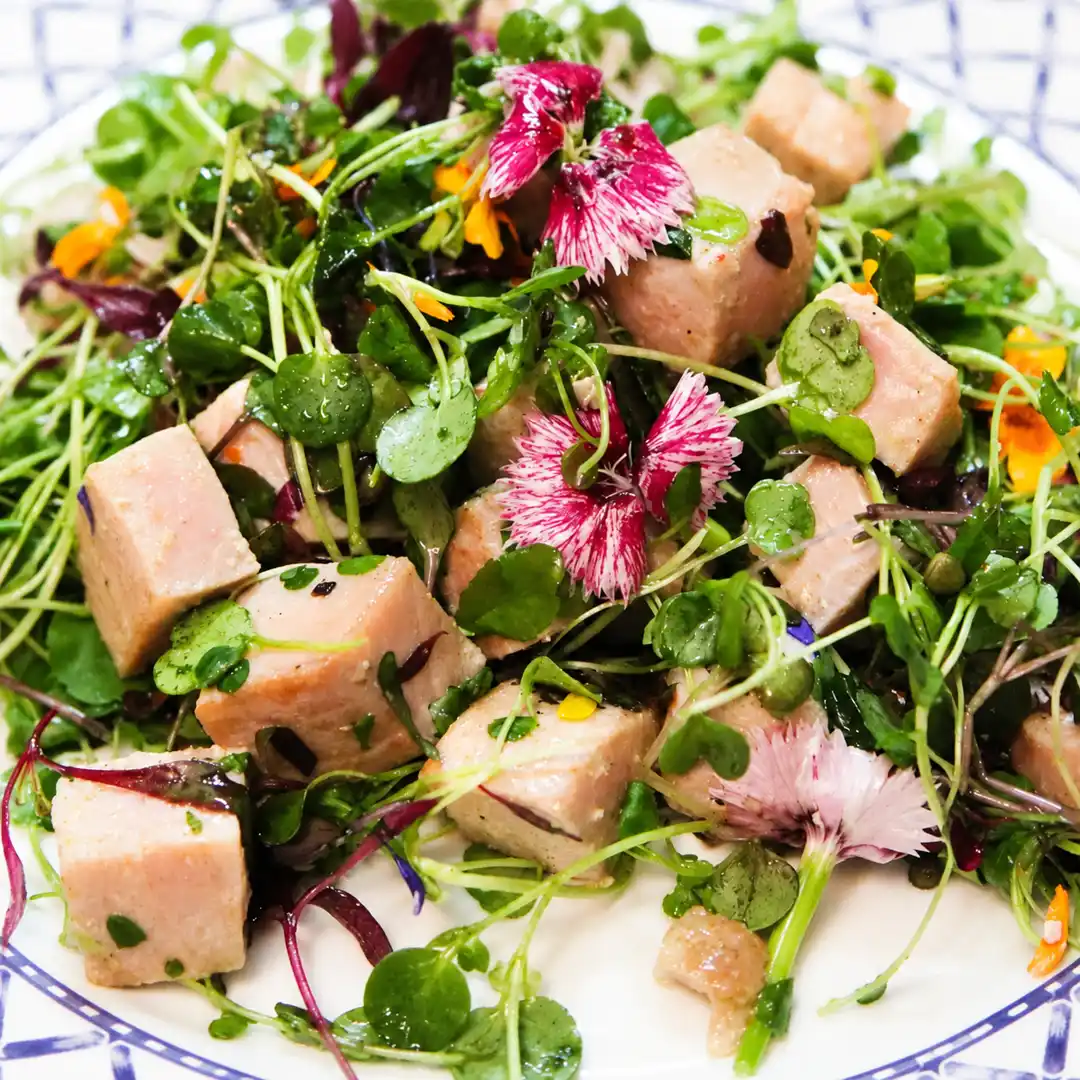
Small cubes of fresh tuna, lemon-garlic dressing and salty capers turn a bowl of tender greens into a substantial salad. The fish is cooked separately, then allowed to lose its strongest heat before it meets the mesclun. That brief pause matters: the leaves should stay lifted and lightly glossy, not collapse under hot fish and a puddle of dressing.
This fresh tuna salad uses pan-cooked fish rather than canned tuna, with a blended lemon, olive oil, garlic and chili dressing. Delicate microgreens and a few edible flowers give it the light presentation shown in my YouTube video. It works as a lunch or an early supper, especially when you want something fresh without mayonnaise or a long list of vegetables.
The written version is based on that video, with a measured dressing and clearer doneness guidance added since publication. I keep the small tuna cubes, capers and gentle final toss, while making the amounts of garlic, chili and dressing easier to control.
{VIDEO}
A different kind of tuna salad
The point here is the contrast between firm pieces of fish and very delicate leaves. Unlike Niçoise salad with seared tuna, there are no potatoes, eggs or a large assortment of vegetables. Unlike tuna and egg salad, this is not a canned-tuna salad. The dressing brings the garlic and lemon directly onto the cooked fish, so each cube tastes seasoned before you reach the greens.
I make it this way because the tuna should remain in recognizable pieces. Long stirring breaks the cubes and crushes the leaves. The flower mesclun salad is a useful base if you want to understand the greens and flower mixture on its own; adding tuna turns that light salad into a more substantial plate.
Choose the fish and keep the greens dry
Use 18 ounces of boneless fresh tuna for two generous main-dish portions. A thick steak is easier to cut evenly than a very thin piece. Keep it chilled until preparation, pat the surface dry and remove any tough skin or dark, fibrous portions. If starting with frozen tuna, thaw it in the refrigerator and blot away the moisture before cutting.
For the greens, use about 5 loosely packed cups of mesclun and tender microgreens. The mixture should be dry enough that no water collects under it in the bowl. A wet salad dilutes the dressing and encourages the fish to slide straight to the bottom. A few food-grade edible flowers are optional; they belong in the salad, not scattered all over the board.
The measured dressing uses 1/4 cup of olive oil, 2 tablespoons of lemon juice and 2 small garlic cloves. Start with half a small bird’s-eye chili. These peppers can be very hot, so removing seeds does not guarantee a mild dressing. Blend, taste, then increase the heat if wanted. Capers are added separately after cooking the fish.

Prepare the dressing before the pan gets hot
1. Blend the lemon, garlic and chili
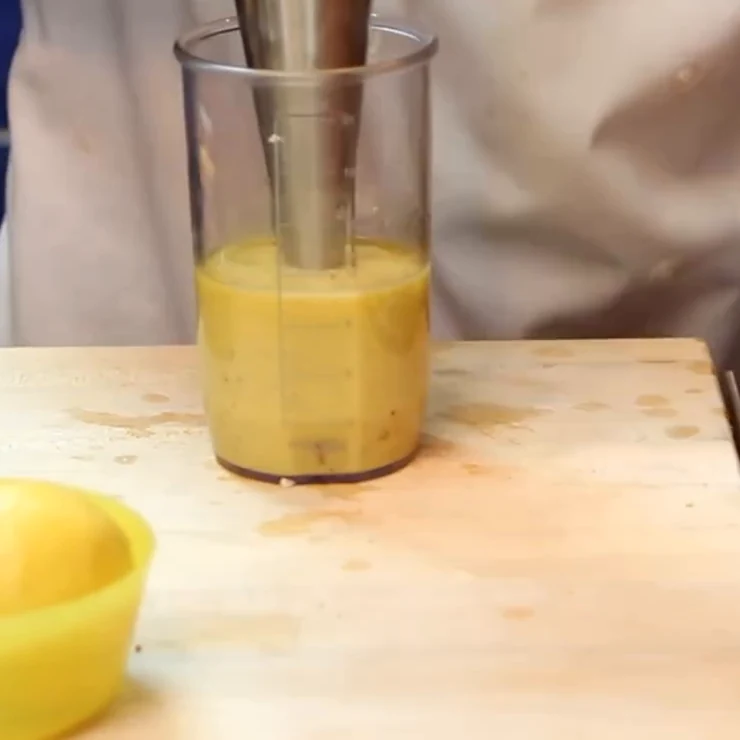
Place the lemon juice, roughly chopped garlic, chili, 1/8 teaspoon of fine salt and 1/4 teaspoon of black pepper in a narrow blending cup. Add the olive oil and blend until the garlic is finely dispersed and the dressing looks evenly yellow, with tiny flecks of chili. No egg or mayonnaise is needed.
Taste a drop with a leaf rather than judging a spoonful by itself. The dressing should be bright and garlicky, but the lemon should not drown out the fish. My lemon vinaigrette gives another simple approach to citrus dressing, while classic vinaigrette explains the basic oil-and-acid balance. If the raw garlic tastes harsh, do not add more just because the mixture looks pale.
2. Cut the tuna into regular cubes
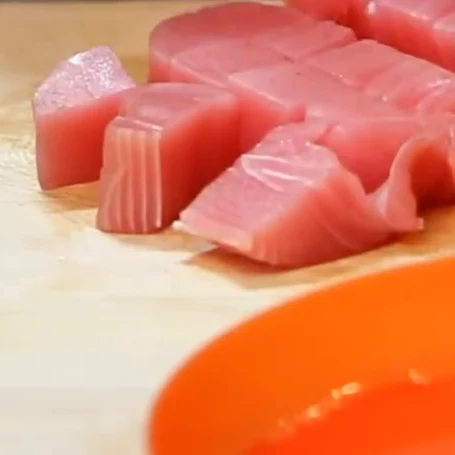
Cut the tuna into cubes about 3/8 inch across, as in the video. Keep the pieces similar in size so the smallest ones do not become dry while the largest finish cooking. Use a clean board and knife for the fish, separate from the ready-to-eat greens. Pat the cubes lightly if cutting has released extra moisture.
Set out a clean plate for the cooked fish, drain 2 tablespoons of capers, and keep the greens nearby. Everything at the stove happens quickly, so this is the moment to finish preparation. Do not leave the raw cubes soaking in lemon dressing while you organize the rest of the kitchen.
3. Cook in a single layer
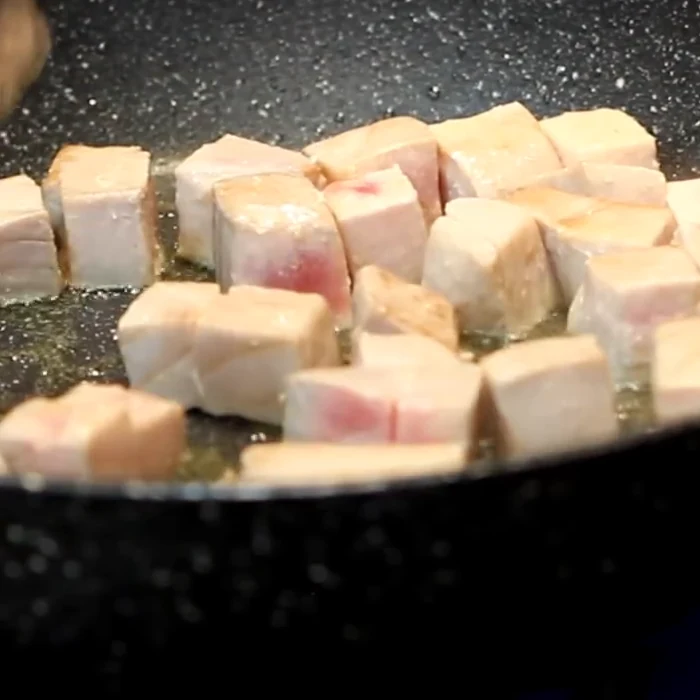
Heat a wide skillet over medium-high heat and add 1 tablespoon of olive oil. When the oil moves freely across the pan, add the tuna in one layer. The pieces should sizzle. Cook in two batches if necessary; a crowded pan collects liquid and steams the fish instead of giving it a clean seared surface.
Turn the cubes gently as their surfaces become opaque. These small pieces cook quickly, so check early rather than following a fixed long timer. For the fully cooked version, verify 145°F in a larger cube with a thin-tip thermometer and stop cooking when that temperature is reached. The video’s pan-temperature reading is not an internal doneness measurement.
4. Add a little dressing and the capers
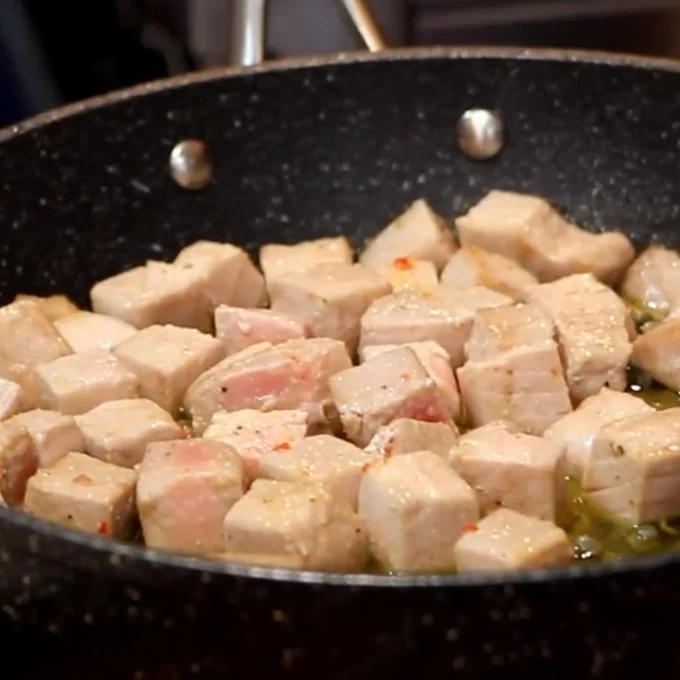
Take the skillet off the heat and add 2 tablespoons of dressing with the drained capers. Toss gently to coat the fish. The dressing may loosen the pale cooking juices, but there is no need to boil it into a thick sauce. If you want more detail on that pan technique, the guide to deglazing a pan explains the basic idea.
Move the tuna and capers to the clean plate with a slotted spoon, letting excess liquid stay in the skillet. Allow them to cool for about 3 to 5 minutes, just until they are no longer piping hot. This is a short pause before serving, not a reason to leave the fish sitting out for an extended time.
5. Fold into the greens and serve
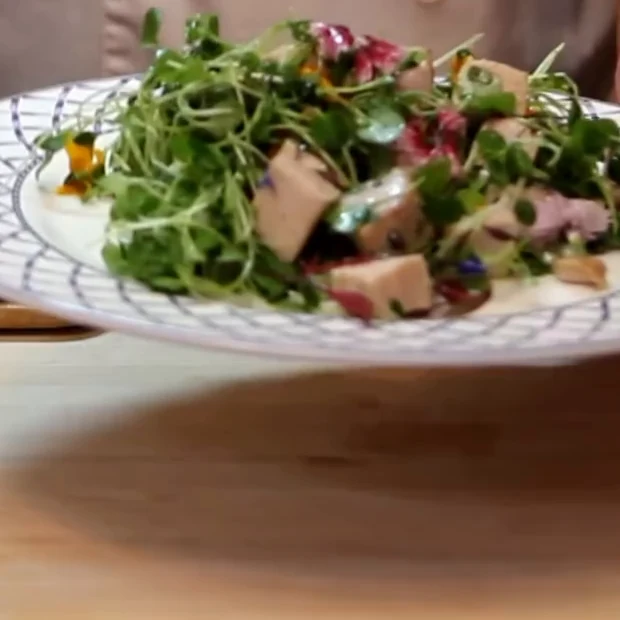
Add 1 tablespoon of dressing to the dry greens and lift them gently to distribute it. Add the tuna and capers, then fold once or twice with salad servers. The greens should remain airy around the cubes. Taste and add another small spoonful of dressing only if the leaves need it; you may not use the whole batch.
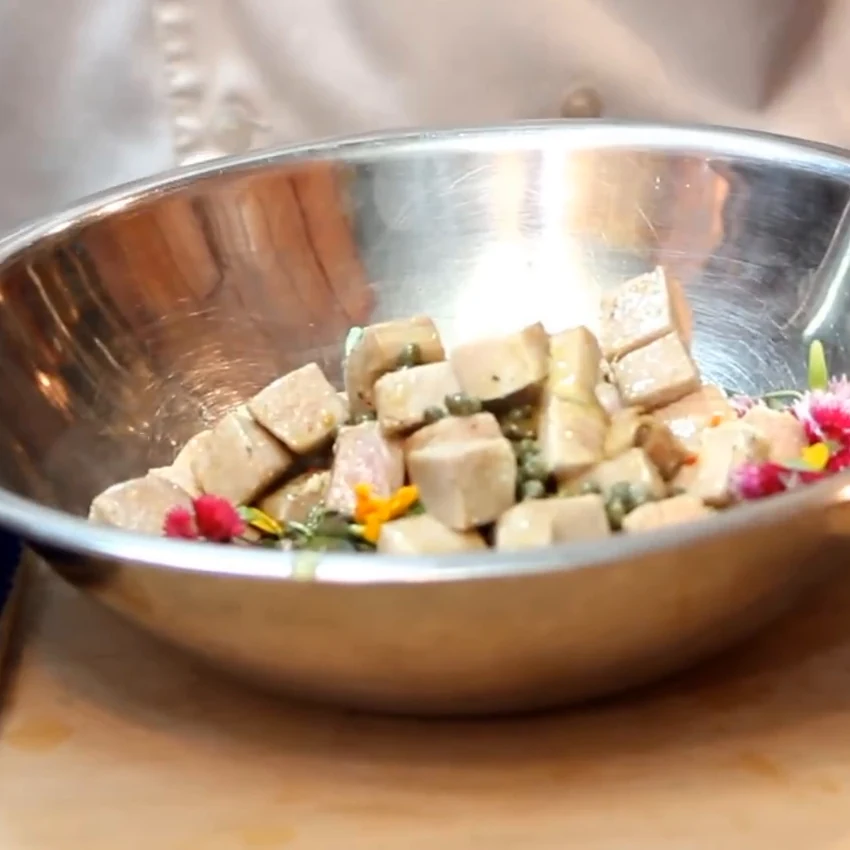
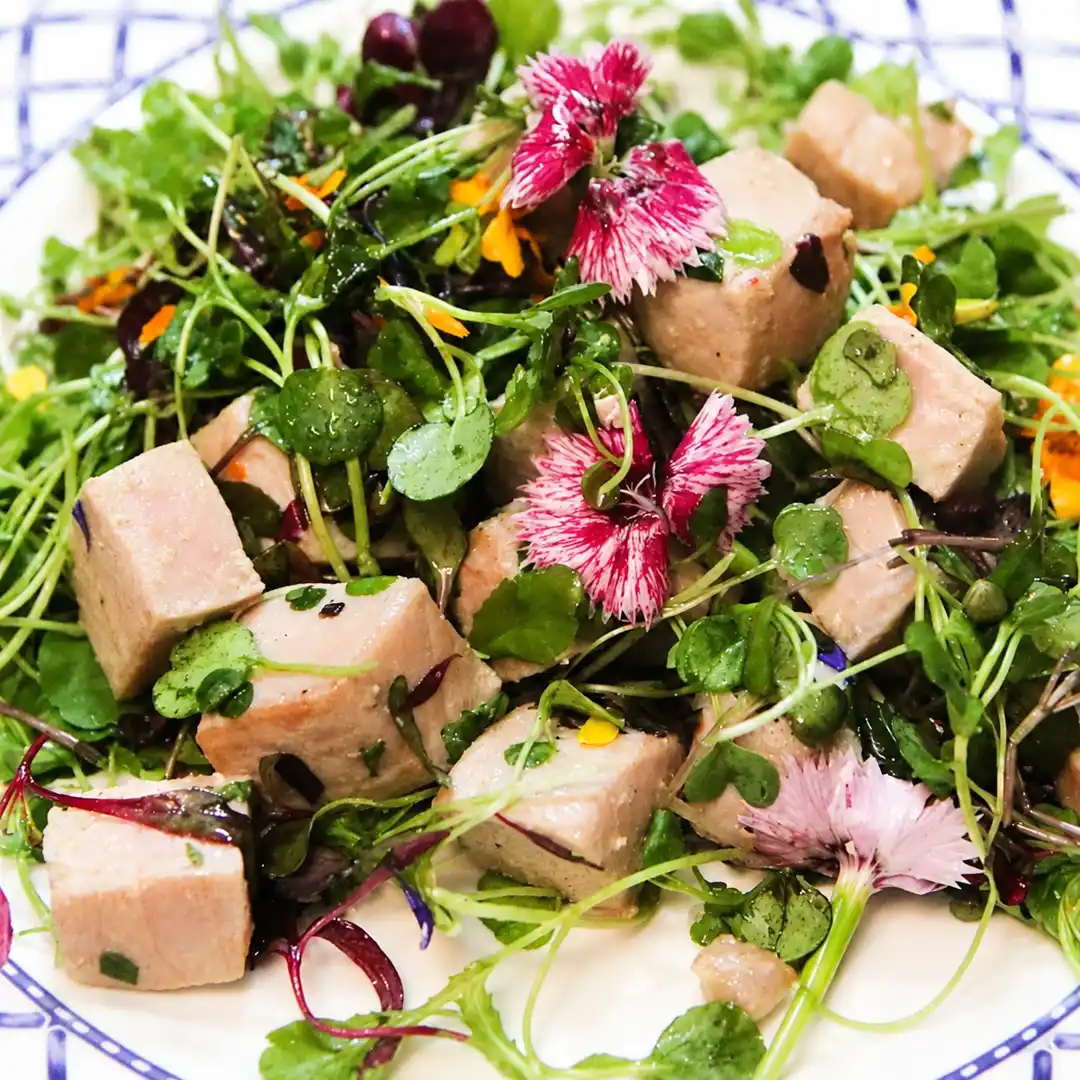
Divide between plates and add the edible flowers, if using. Serve immediately. I prefer adding dressing in small amounts here because the fish already brings some into the bowl. Pouring in the remaining pan liquid would make the bottom of the salad oily and flatten the lighter leaves.
Serve it as lunch or part of a larger meal
This salad contains a generous portion of fish, but no potatoes, rice or pasta. A piece of homemade focaccia can make it a fuller lunch without changing the salad itself. For a small starter alongside, tomato bruschetta provides tomato freshness on a separate plate, where its juices will not soak the mesclun.
For another fish-and-lemon dinner, fish meunière with lemon and capers uses capers in a warmer sauce. plancha shrimp with mesclun is another seafood option with delicate greens. When you want a cold dish with pasta instead, tuna pasta salad with basil vinaigrette has a different structure and dressing. These keep the seafood theme while giving each meal its own texture.
Substitutions and heat adjustments
Plain baby lettuce can replace mesclun, and a little watercress adds a peppery edge. Keep tougher greens out of the main mixture unless they are sliced very finely. Edible flowers can simply be omitted. Use flowers sold for eating, rather than assuming a decorative bouquet is suitable for the plate.
Omit the chili for a gentle lemon-garlic dressing, or replace it with a small pinch of chili flakes. The strength will differ, so adjust by tasting. One small garlic clove gives a softer dressing than two. Adding more garlic does not make the dressing thicker in a useful way; it mainly changes its intensity.
Canned tuna is convenient, but it will produce a flaked salad rather than the cube-based dish shown here. Drain it and add it directly to the dressed greens without searing. Chopped drained green olives can replace capers for a different briny note. Taste before adding salt with either option.
Questions about cooking and serving
Does the tuna need a long marinade?
No. The video cooks the fish first and seasons it afterward. Keeping that order makes the lemon a dressing ingredient rather than a prolonged acidic soak. The fish stays in clean, recognizable cubes, and the greens are dressed only when the meal is ready.
Why not leave the center rare, as in a quick sear?
The video uses a very brief sear. This written version gives a fully cooked endpoint for general home preparation. A browned exterior alone does not establish safety, and lemon dressing does not make undercooked fish equivalent to cooked fish.
Why are my greens limp?
Usually the fish was still too hot, the leaves were wet, or too much dressing was added. Let the tuna lose its strongest heat, dry the mesclun thoroughly and keep the final mixing gentle. Once dressed, the salad is meant to be eaten, not held for hours.
What can I prepare ahead?
Wash and dry the greens, drain the capers and blend the dressing ahead. Refrigerate them separately and use the fresh garlic dressing within 2 days. Cook the tuna close to serving. Refrigerate any leftovers promptly within 2 hours; for texture, eat the dressed salad by the next day. Keeping the components separate gives a better result than storing the entire dressed bowl.
Fresh Tuna Salad with Lemon Garlic Dressing and Capers
Ingredients
- 18 oz boneless fresh tuna steak
- 5 loosely packed cups mesclun and tender microgreens washed and thoroughly dried
- 2 tbsp capers drained
- 1 tbsp olive oil for cooking
- 1/4 cup olive oil for the dressing
- 2 tbsp fresh lemon juice
- 2 small garlic cloves roughly chopped
- 1/2 small red bird’s-eye chili stem removed, or more to taste
- 1/8 tsp fine salt plus more to taste
- 1/4 tsp black pepper
- A few food-grade edible flowers optional
Instructions
- Blend the dressing oil, lemon juice, garlic, chili, measured salt and pepper until evenly combined. Taste and adjust heat; keep chilled until needed.
- Pat the tuna dry and cut into even 3/8-inch cubes. Keep raw fish separate from the greens. Drain the capers and set out a clean plate.
- Heat the cooking oil in a wide skillet over medium-high heat. Add tuna in one layer, working in batches if necessary. Turn gently and cook until a larger cube reaches 145°F internally.
- Remove the skillet from the heat. Add 2 tbsp dressing and the drained capers; gently coat the tuna. Lift the fish and capers onto the clean plate with a slotted spoon, leaving excess liquid behind.
- Let the tuna lose its strongest heat for about 3 to 5 minutes. Toss the dry greens with 1 tbsp dressing, then gently fold in the tuna and capers. Add more dressing only as needed.
- Divide between plates, finish with optional edible flowers and serve immediately.