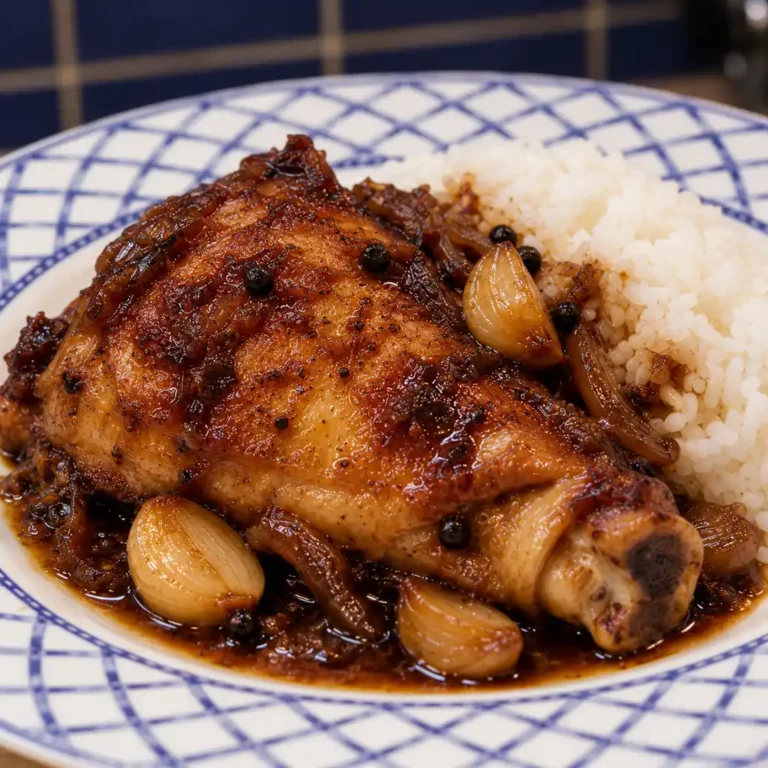
Easy French Rabbit with Mustard Sauce
This rabbit with mustard sauce is based on my YouTube video, with a few adjustments since publication to make the proportions more reliable for home cooking. In the video, the sauce is generous and rustic, but for this written version I prefer to use a little less liquid so the mustard, wine, carrots, and pan juices stay concentrated instead of turning into a thin broth.
Rabbit with mustard is a French-style braise made with browned rabbit pieces simmered gently in white wine, stock, aromatics, and Dijon mustard. It is different from a quick skillet dinner because the meat needs time to relax and become tender. I make it when I want a hearty comfort meal that still feels lighter than a beef stew, especially with potatoes and green vegetables on the side.
Why This Recipe Works
The important part is the first ten minutes. The rabbit needs to be lightly floured, then browned until the surface has a pale golden crust. It will not look deeply roasted like beef, and it should not burn. What I look for here is a thin, dry coating that grabs the oil and leaves a few browned bits in the pan.
I make it this way because rabbit is lean. If it goes straight into liquid without browning, the sauce tastes flatter and the meat can feel boiled. The flour also helps the sauce tighten during the simmer. Not thick like gravy, but just enough to coat the back of a spoon.
The mistake to avoid is adding too much stock too early. In the original video, the liquid goes almost to height, which works if you reduce the sauce at the end. For a written recipe, I prefer to start with enough liquid to braise gently, but not so much that the mustard disappears. The sauce should bubble quietly around the rabbit, not roll like a pot of pasta water.
This recipe is also different from my Dijon chicken in a creamy pan sauce because rabbit is leaner and needs a slower simmer. It is not a fast 30-minute creamy chicken dinner. It is closer in spirit to a small French braise, like pork stew with potatoes and carrots, but with a sharper mustard finish.
Ingredients Notes
Rabbit legs are the best choice here because they handle the longer simmer. Saddle or loin can work, but they cook faster and dry out more easily. If using a whole rabbit cut into pieces, check the smaller pieces earlier and remove them when tender.
Dijon mustard gives the cleanest result. I prefer to add most of it during the simmer, then stir in a little more near the end. Mustard loses some bite as it cooks, so that last spoonful brings the sauce back to life.
The crushed tomato is not there to make a tomato sauce. It gives color, acidity, and a little body. Keep it modest. Too much tomato pushes the dish away from classic rabbit with mustard and into a tomato braise.

For the stock, use unsalted or low-sodium chicken stock if possible. A homemade base like chicken bouillon cubes made from scratch is useful here because the sauce reduces and the salt becomes more concentrated.
The cream is optional. In the video, it was planned but not used. I kept it optional here too. Without cream, the sauce is sharper and lighter. With cream, it becomes rounder, softer, and more bistro-style.
Step-by-Step Instructions
1. Season and flour the rabbit
Pat the rabbit legs dry with paper towel. Season them with salt and pepper, then dust lightly with flour. Shake off the extra flour. The meat should look barely coated, not buried in white powder.
Heat olive oil in a wide skillet over medium-high heat. When the oil moves easily and looks glossy, add the rabbit. The pan should sizzle right away, but not smoke heavily.

Brown the legs on both sides, about 3 to 4 minutes per side. Do not rush this part. The color will stay fairly light, but the pan should smell nutty and savory from the flour and meat juices.
Transfer the browned rabbit to a Dutch oven or heavy saucepan.
2. Cook the aromatics
In the same skillet, add the onion, carrots, and garlic. Stir them through the oil and browned bits. Cook for a few minutes until the onion softens and the carrots start to shine.
A little color is good. Dark brown garlic is not. If the pan feels dry, add a small splash of stock to loosen the bottom before the garlic burns.


This base is what gives the sauce its quiet sweetness. It is a similar idea to the vegetables in a French stew, but this version stays brighter because of the white wine and mustard.
3. Deglaze with white wine
Pour in the dry white wine and scrape the bottom of the skillet. The wine should hiss at first, then calm down as the browned bits lift into the liquid.

Let it bubble for a minute or two. This takes the raw edge off the wine and starts building the sauce before everything goes into the pot.
Add the crushed tomatoes and a little stock, then stir.
4. Start the braise
Pour the skillet mixture over the rabbit. Add the thyme, bay leaf, and enough chicken stock to come about halfway to two-thirds up the rabbit pieces. The meat does not need to be fully submerged.


Stir in 2 tablespoons of Dijon mustard. Bring the liquid to a gentle simmer, then lower the heat.
You know the heat is right when you see small bubbles around the edge of the pot. If the sauce is jumping and boiling hard, the heat is too high. Rabbit is lean, and a rough boil can make it tighten.
Cover partly and cook for about 1 hour, turning the pieces once or twice.
5. Cook the sides
While the rabbit simmers, cook the potatoes in salted water until tender. Start them in cold water so they cook evenly. They are ready when a small knife slides through without resistance.
Cook the Brussels sprouts separately in boiling salted water for 4 to 5 minutes, then drain. They should stay green and still hold their shape. If they turn dull and smell too strong, they have gone too far.
Before serving, warm the potatoes and Brussels sprouts with a small drizzle of olive oil. Keep them simple. The sauce already has the personality.
For a richer potato side, this dish would also sit well beside a classic creamy potato gratin. For something crisp instead of soft, golden homemade hash browns are a stronger brunch-style pairing, but they work if the sauce is kept thick.
6. Finish the sauce
After 1 hour, check the rabbit with the tip of a knife. It should go in easily, especially near the joint. If there is resistance, cook another 10 to 15 minutes at a gentle simmer.
Remove the rabbit pieces to a plate if the sauce looks too thin. Simmer the sauce uncovered for 5 to 10 minutes until it lightly coats a spoon. This step matters. A watery mustard sauce is the one thing that can make the dish feel unfinished.

Stir in the final tablespoon of Dijon mustard. Add cream if using, then warm gently without a hard boil. Taste for salt and pepper.
Return the rabbit to the sauce and spoon the sauce over the top.
How to Serve It
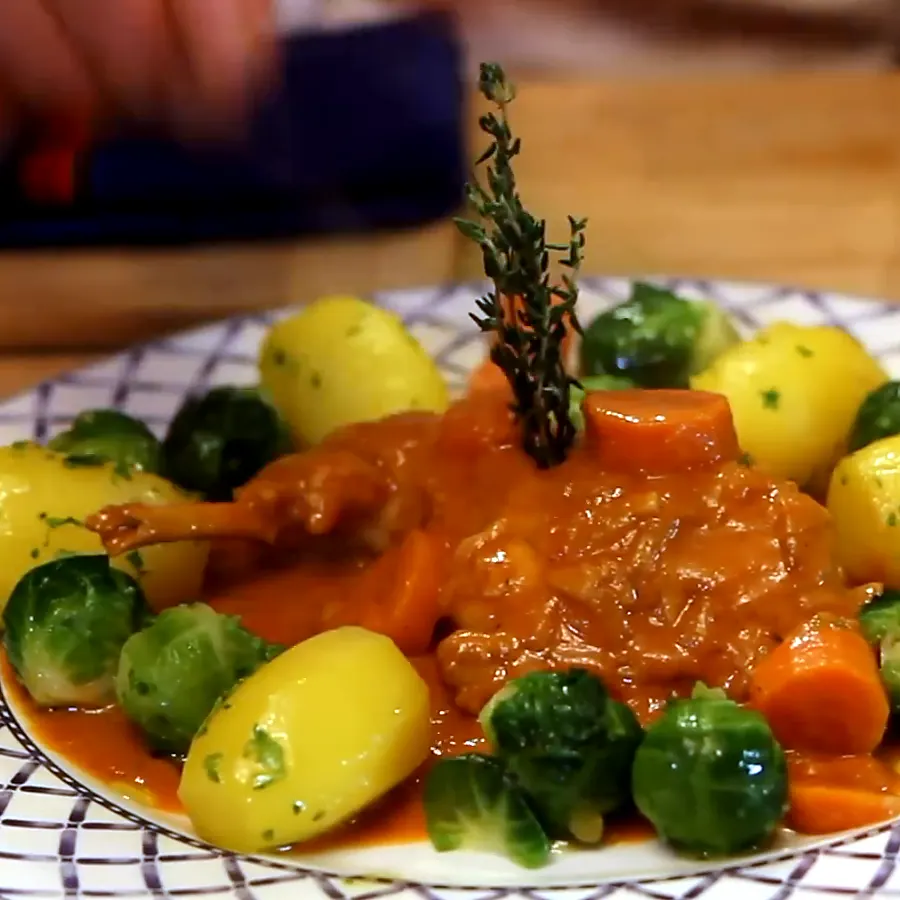
Serve one rabbit leg per person with the carrots, plenty of sauce, potatoes, and Brussels sprouts. The sauce should sit around the plate, not flood it.

A fresh salad is good beside this because the dish has mustard, wine, and a little richness. A crisp plate of romaine and endive salad gives the meal a clean edge. If serving this for a bigger dinner, I would keep the starter light and French, something like a small slice of duck pâté with cognac or a few bites of rabbit rillettes with duck fat if leaning into the rabbit theme.
This is not a summer-only or winter-only recipe. It feels cozy in cold weather, but with green vegetables and a salad it also works in spring or fall. In summer, I would skip the cream and keep the sauce sharper.
Substitutions
Rabbit substitute
Chicken thighs are the easiest substitute. Use bone-in thighs if possible and simmer until tender. The flavor will be milder, but the mustard sauce still works. For a different French-style skillet meal, pork chops with a charcutière-style sauce have the same bistro feeling with a shorter cooking time.
Mustard substitute
Dijon is best. Whole-grain mustard can replace half the Dijon for more texture. Avoid sweet yellow mustard unless that is the flavor you want, because it changes the sauce completely.
Wine substitute
Use extra chicken stock with a small splash of white wine vinegar or lemon juice. Add the acidity gradually. The goal is a little brightness, not a sour sauce.
Cream or no cream
Without cream, the sauce tastes more direct and mustard-forward. With cream, it becomes softer and richer. Both versions work. I prefer the no-cream version when serving with potatoes, and the creamy version when serving with rice, noodles, or a simple pasta side.
Vegetables
Carrots are important for sweetness, but the side vegetables can change. Green beans, peas, roasted mushrooms, or broccolini all work. If using mushrooms, brown them separately so they do not water down the sauce.
Nutrition Context
Rabbit is a lean, protein-rich meat, so this dish feels hearty without being as heavy as a beef or pork braise. The final result depends mostly on the sauce finish. Keep it without cream for a lighter plate, or add cream for a more comforting restaurant-style version.
The potatoes make it filling. The Brussels sprouts or a green salad help balance the richness and mustard.
Frequently Asked Questions
Can I make rabbit with mustard ahead of time?
Yes. It reheats well because it is a braised dish. Cool it in the sauce, refrigerate, then reheat gently on the stove. Add a splash of stock if the sauce thickens too much overnight.
Why is my rabbit tough?
Usually the heat was too high or the rabbit needed more time. Rabbit should simmer gently. If it boils hard, the meat can tighten. If it is still firm after 1 hour, keep cooking at a low simmer and check every 10 minutes.
Can I use a whole rabbit?
Yes. Cut it into serving pieces. The legs may need the full cooking time, while smaller loin or saddle pieces can cook faster. Remove pieces as they become tender, then return them to the sauce at the end.
Should the rabbit be completely covered with liquid?
No. I prefer the liquid halfway to two-thirds up the meat. That gives enough moisture for braising while keeping the sauce concentrated.
Can I make it without tomato?
Yes. The tomato is optional. Without it, the sauce will be paler and more classic. Add a little extra stock if needed, but keep the total liquid moderate.
Can I freeze it?
Yes, but freeze it without the potatoes and Brussels sprouts if possible. The rabbit and sauce freeze better than the vegetables. Thaw overnight in the fridge and reheat gently.
What does rabbit taste like?
Rabbit is mild, lean, and slightly sweet. It is often compared to chicken, but it has a finer texture and a more delicate flavor. That is why the sauce should not be too salty or too heavy.
Suggested Posts
For another rabbit recipe with a completely different texture, try slow-cooked rabbit rillettes.
For another mustard-forward French dish, make veal kidneys in Dijon sauce.
For a creamy poultry version with similar flavors, cook chicken thighs with Dijon cream.
For a classic braised dinner with potatoes and carrots, try pork stew with tender vegetables.
For a potato side that makes the meal richer, serve it with traditional gratin dauphinois.
For a crisp green side, add romaine and endive salad.
For a useful base recipe, keep homemade chicken bouillon cubes ready for sauces and braises.
For another French bistro-style dinner, try pork chops in a French-style sauce.

Easy French Rabbit with Mustard Sauce
Ingredients
- Rabbit and Sauce
- 3 rabbit legs about 1 1/2 lb total
- 2 tbsp all-purpose flour
- 2 tbsp olive oil
- 1 medium onion finely chopped
- 2 medium carrots sliced into rounds
- 2 garlic cloves crushed
- 2/3 cup dry white wine
- 1 3/4 to 2 cups unsalted or low-sodium chicken stock
- 1/2 cup crushed tomatoes
- 3 tbsp Dijon mustard divided
- 2 to 3 thyme sprigs
- 1 bay leaf
- Salt to taste
- Black pepper to taste
- 1/2 cup heavy cream optional
- Sides
- 1 1/4 lb potatoes
- 3/4 lb Brussels sprouts
- Salt for the cooking water
- 1 pinch turmeric optional
- 1 tbsp olive oil for finishing the vegetables
Instructions
- Pat the rabbit legs dry. Season with salt and pepper, then dust lightly with flour and shake off the excess.
- Heat olive oil in a wide skillet over medium-high heat. Brown the rabbit legs for 3 to 4 minutes per side, then transfer to a Dutch oven or heavy saucepan.
- In the same skillet, cook the onion, carrots, and garlic for a few minutes until lightly softened.
- Deglaze with white wine, scraping the bottom of the pan. Let it bubble for 1 to 2 minutes.
- Add the crushed tomatoes and a splash of chicken stock. Stir, then pour everything over the rabbit.
- Add the thyme, bay leaf, remaining chicken stock, and 2 tbsp Dijon mustard. The liquid should come halfway to two-thirds up the rabbit, not fully cover it.
- Bring to a gentle simmer. Cover partly and cook on low heat for about 1 hour, turning the rabbit once or twice.
- Meanwhile, cook the potatoes in salted water until tender. Cook the Brussels sprouts separately in boiling salted water for 4 to 5 minutes, then drain.
- Check the rabbit with the tip of a knife. If it is not tender, cook another 10 to 15 minutes.
- Remove the bay leaf and thyme. If the sauce is too thin, remove the rabbit and reduce the sauce uncovered for 5 to 10 minutes.
- Stir in the remaining 1 tbsp Dijon mustard. Add cream if using and warm gently without boiling hard.
- Return the rabbit to the sauce. Warm the potatoes and Brussels sprouts with a drizzle of olive oil, then serve with the rabbit and mustard sauce.
Video
Notes
Frequently Asked Questions
Can I make rabbit with mustard ahead of time?
Yes. It reheats well because it is a braised dish. Cool it in the sauce, refrigerate, then reheat gently on the stove. Add a splash of stock if the sauce thickens too much overnight.Why is my rabbit tough?
Usually the heat was too high or the rabbit needed more time. Rabbit should simmer gently. If it boils hard, the meat can tighten. If it is still firm after 1 hour, keep cooking at a low simmer and check every 10 minutes.Can I use a whole rabbit?
Yes. Cut it into serving pieces. The legs may need the full cooking time, while smaller loin or saddle pieces can cook faster. Remove pieces as they become tender, then return them to the sauce at the end.Should the rabbit be completely covered with liquid?
No. I prefer the liquid halfway to two-thirds up the meat. That gives enough moisture for braising while keeping the sauce concentrated.Can I make it without tomato?
Yes. The tomato is optional. Without it, the sauce will be paler and more classic. Add a little extra stock if needed, but keep the total liquid moderate.Can I freeze it?
Yes, but freeze it without the potatoes and Brussels sprouts if possible. The rabbit and sauce freeze better than the vegetables. Thaw overnight in the fridge and reheat gently.What does rabbit taste like?
Rabbit is mild, lean, and slightly sweet. It is often compared to chicken, but it has a finer texture and a more delicate flavor. That is why the sauce should not be too salty or too heavy.🔗 Useful Links
🛒 Michel Dumas Shop : Explore our kitchen essentials, including aprons and knives.
🌐 Linktree : Access all our important links in one place.
📱 YouTube | Instagram | Facebook | TikTok : Follow us for the latest recipes and culinary tips.