Easy Cottage Cheese Mug Cake in 2 Minutes
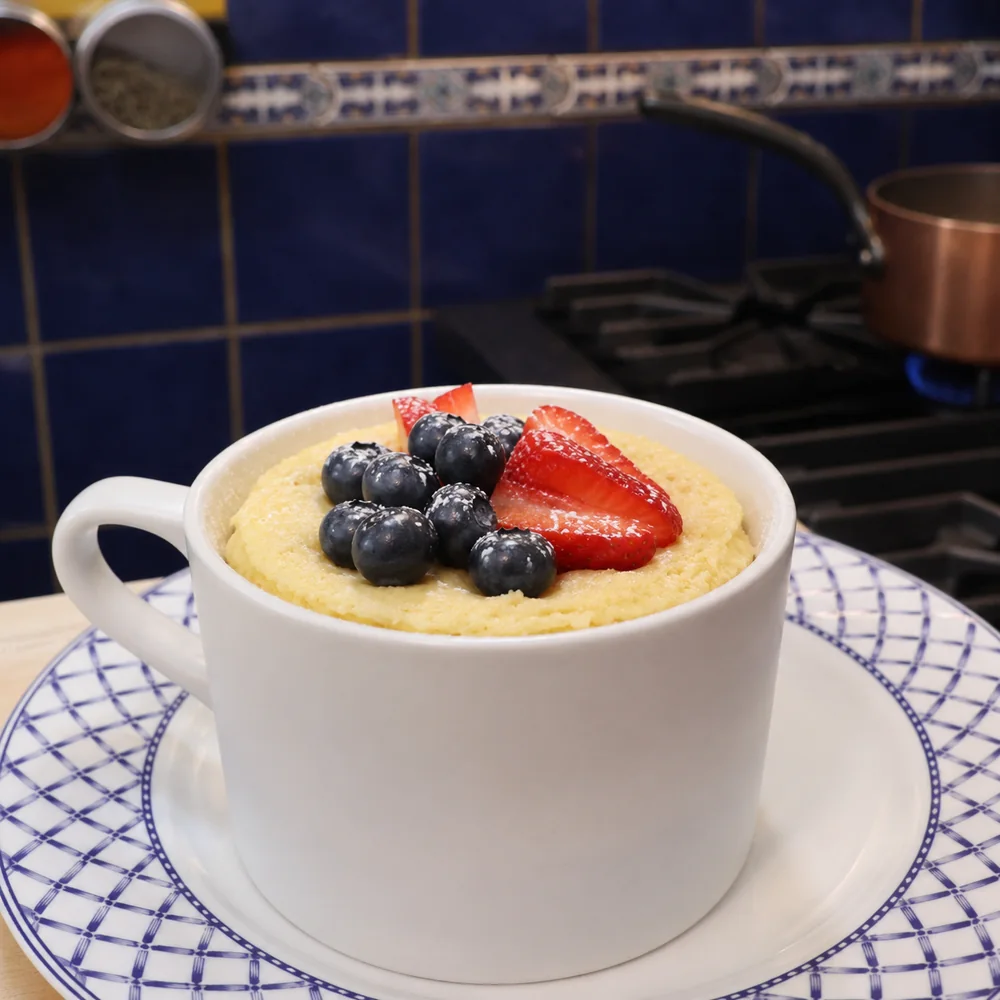
This cottage cheese mug cake is a quick single-serving dessert with a soft, lightly creamy centre and enough structure to feel like cake rather than sweet scrambled egg. Blending the cottage cheese before microwaving makes a big difference: the batter should look smooth and pourable, and the main mistake to avoid is cooking it until the centre is completely dry because it continues to set for a minute after leaving the microwave.
What Makes This Cottage Cheese Mug Cake Different
A cottage cheese mug cake is a small microwave cake made with cottage cheese, egg, flour, sweetener, and a little baking powder. The cottage cheese adds moisture and protein while giving the cake a slightly richer texture than a standard flour-heavy mug cake.
I make this version as a simple vanilla cake rather than loading it with chocolate chips, protein powder, or several flavourings. That keeps it separate from desserts like my cottage cheese chocolate pudding and lets the cottage cheese do most of the work.
The key is texture. Cottage cheese contains quite a bit of moisture, so simply stirring everything together can leave visible curds and an uneven cake. Blending the batter gives you something much closer to a smooth cheesecake-style cake batter.
Microwave cooking also happens extremely fast. Ten or fifteen seconds can be the difference between a moist cake and something rubbery. What I look for is a surface that has puffed and set around the edges while the very centre still looks slightly moist.
This is useful when you want one portion instead of baking an entire cake. For a larger cottage-cheese dessert meant for slicing and sharing, my lemon cottage cheese cake is a better fit.
Ingredients You Need
You only need a handful of basic ingredients.
Cottage cheese: Use regular cottage cheese rather than a very dry pressed cottage cheese. Blending removes the curds and creates the creamy base of the batter.
Egg: One large egg provides most of the structure. Since this is such a small cake, using more egg would quickly make the texture rubbery.
All-purpose flour: A few tablespoons are enough to turn the cottage cheese and egg mixture into cake rather than custard.
Granulated sugar: The recipe uses a modest amount because this is meant to be lightly sweet. You can add a sweeter topping afterward if you prefer.
Vanilla extract: Vanilla works especially well here because the base is mild.
Baking powder: This provides a little lift in the microwave.
Salt: A small pinch sharpens the vanilla and balances the sweetness.
If you like cottage cheese in breakfast recipes too, the same ingredient gives very different textures in my fluffy cottage cheese pancakes and crispy cottage cheese waffles.

Step-by-Step Instructions
1. Blend the cottage cheese base
Add the cottage cheese, egg, sugar, and vanilla to a small blender or blending cup.
Blend until completely smooth. You should no longer see obvious cottage cheese curds.

I prefer to blend before adding the flour because it is easier to eliminate the curds while the mixture is still loose. Once flour is added, excessive blending can make the finished cake slightly tougher.
If you do not have a blender, you can mash the cottage cheese thoroughly with a fork first and then whisk it with the egg. The texture will be more rustic, but the recipe can still work.
2. Add the dry ingredients
Add the flour, baking powder, and salt.
Pulse very briefly or stir until there are no visible streaks of dry flour.

At this point, the batter should be thicker than pancake batter but still easy to pour. It should not resemble dough.
The mistake to avoid here is adding extra flour simply because the batter looks moist. Cottage cheese mug cake batter is supposed to be softer than traditional cake batter.
3. Transfer to a microwave-safe mug
Lightly grease a large microwave-safe mug, then pour in the batter.
Use a mug with enough extra room for the cake to rise. The batter should not come close to filling it to the rim.

A wider mug generally cooks more evenly than a very narrow, tall mug because the centre does not have to heat through such a thick layer of batter.
4. Microwave until just set
Microwave on high for about 60 seconds. Check the cake, then continue in 10-second intervals until the edges are set and the centre is only slightly moist.
For many microwaves, the total cooking time will fall somewhere around 70 to 90 seconds.
Do not judge it only by whether the top looks dry. Press it very gently. The surface should spring back slightly, but the centre can remain softer than the edges.
If the cake becomes very firm while still in the microwave, it has probably gone too far.
5. Let it rest
Leave the mug cake alone for about 1 minute before eating it.
This short rest matters because the retained heat finishes setting the centre. The texture should settle into something soft and tender rather than wet.

You can eat it directly from the mug or loosen the edges with a small knife and turn it onto a plate.
A spoonful of berries, sliced banana, yogurt, or a little maple syrup works well on top. For another chilled option using the same ingredient, try my cottage cheese strawberry mousse.
How to Avoid a Rubbery Mug Cake
Microwave cakes are convenient, but they are unforgiving when overcooked.
The egg proteins set quickly, and cottage cheese adds even more protein to the batter. Once those proteins become too hot for too long, the texture tightens.
That is why I prefer to stop cooking while the centre still looks a little softer than expected.
There are three useful signs to watch:
The sides should look cooked and should begin pulling very slightly from the mug.
The top should no longer look like liquid batter.
The centre should still have some softness when gently pressed.
Another common problem is using a mug that is too small. A thick column of batter can become dry around the outside before the centre cooks properly.
More Ways to Use Cottage Cheese
Cottage cheese changes dramatically depending on how it is handled.
Blended into this cake, it creates moisture and a creamy crumb. In my cottage cheese lemon mousse, it becomes a chilled creamy dessert instead.
For something baked with more traditional structure, try the protein cottage cheese blueberry muffins or cottage cheese banana bread.
It also works well in make-ahead breakfasts. My cottage cheese overnight oats are a good example when you want something cold instead of warm.
Substitutions
You can use low-fat or full-fat cottage cheese. Full-fat cottage cheese will generally give the mug cake a slightly richer mouthfeel, while lower-fat cottage cheese can produce a somewhat lighter result.
If your cottage cheese is unusually wet, avoid adding its loose liquid from the bottom of the container.
The sugar can be adjusted according to the toppings you plan to use. If you are serving the cake with fruit, maple syrup, or another sweet topping, keeping the cake itself lightly sweet works well.
Vanilla can be paired with a small amount of cinnamon, lemon zest, or cocoa, although adding large quantities of dry ingredients changes the moisture balance.
For a cold cottage-cheese dessert where microwave texture is not a concern, my cottage cheese protein ice cream uses the ingredient in an entirely different way.
FAQ
Does a cottage cheese mug cake taste like cottage cheese?
The flavour is mild, especially when the cottage cheese is blended until smooth. Vanilla and sugar soften its tang, although you may still notice a slight dairy flavour.
Do I have to blend the cottage cheese?
No, but blending produces a smoother and more cake-like texture. Without blending, small curds can remain visible throughout the cooked cake.
Why is my mug cake rubbery?
The most likely cause is overcooking. Because the cake contains both cottage cheese and egg, it can firm up quickly. Cook in short intervals once the first minute has passed.
Why is the middle still soft?
A slightly soft centre immediately after microwaving is normal. Let the cake rest for a minute. If the centre is still visibly liquid after resting, microwave it for another 10 seconds.
Can I make this ahead?
This recipe is best made and eaten shortly after cooking. Mug cakes lose some of their soft texture as they cool and sit.
For something that holds better in the refrigerator, try a cottage cheese parfait with fruit and granola instead.
Is cottage cheese mug cake high in protein?
Cottage cheese and egg both contribute protein, so this cake contains more protein than many basic mug cakes made primarily with flour, sugar, and oil. The exact amount depends on the cottage cheese you use.
Can I add chocolate?
Yes. A small spoonful of chocolate chips can be folded into the batter before microwaving. For a dessert where chocolate is the main flavour, the moist cottage cheese chocolate muffins are another option.
Suggested Posts
If you want to keep exploring this ingredient, try these next:
Cottage Cheese Chocolate Pudding
Protein Cottage Cheese Blueberry Muffins
Fluffy Cottage Cheese Pancakes
Cottage Cheese Protein Ice Cream

Easy Cottage Cheese Mug Cake in 2 Minutes
Ingredients
- 1/4 cup cottage cheese
- 1 large egg
- 3 tablespoons all-purpose flour
- 1 tablespoon granulated sugar
- 1/2 teaspoon vanilla extract
- 1/4 teaspoon baking powder
- 1 pinch salt
- Nonstick cooking spray or butter for the mug
Instructions
- Blend the cottage cheese, egg, sugar, and vanilla until smooth.
- Add the flour, baking powder, and salt and mix briefly until combined.
- Lightly grease a large microwave-safe mug and pour in the batter.
- Microwave for 60 seconds, then continue in 10-second intervals until the edges are set and the centre is slightly soft.
- Let the mug cake rest for 1 minute before serving.