Potato Salad with Blue Cheese Sauce
This potato salad with blue cheese sauce brings together tender yellow potatoes, scallions, olive oil, and a bold blue cheese dressing. A tiny pinch of turmeric adds warmth to the color without taking over the flavor. Serve it slightly warm so the potato slices stay supple and the sauce coats them lightly.
{VIDEO}
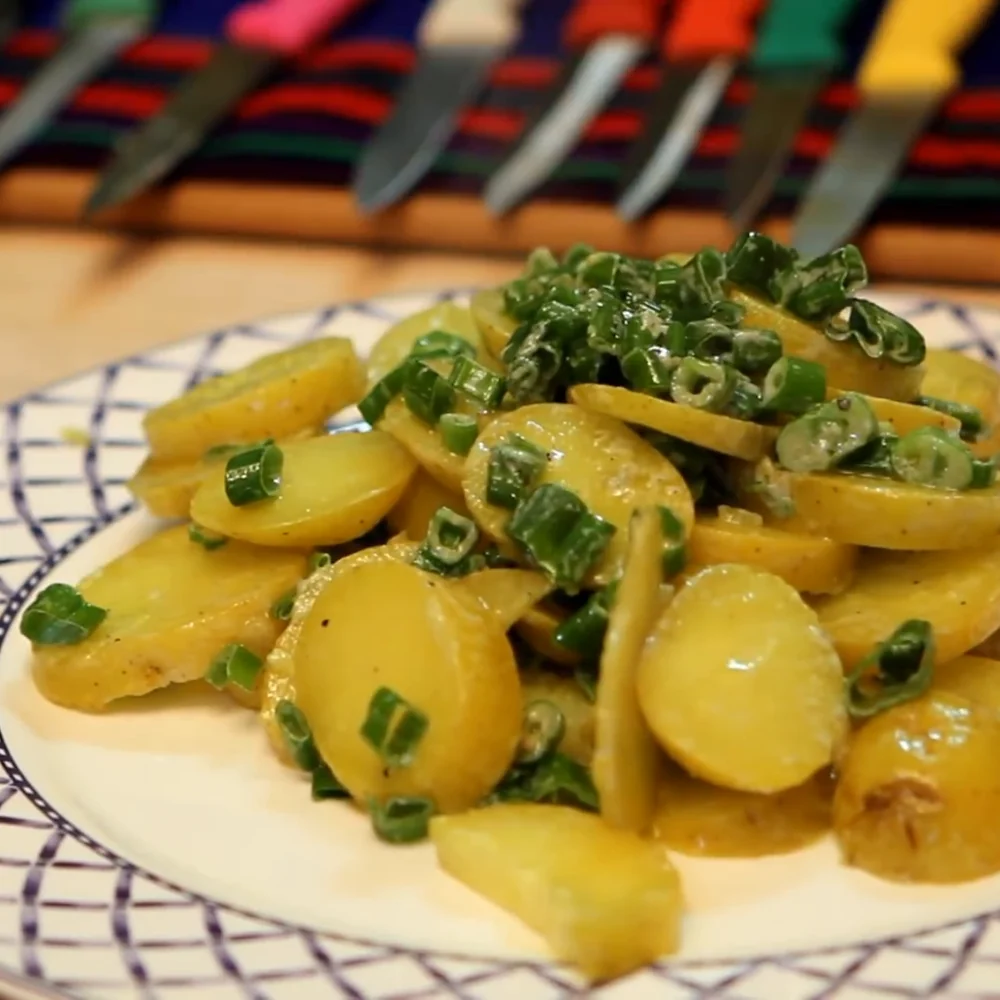
A potato salad with a different personality
Here, the potatoes are the main event. The blue cheese supplies richness, salt, and a tangy finish; the scallions give each forkful a fresh onion bite. There is no mayonnaise and no cream in the sauce. Blending the cheese with olive oil produces a glossy dressing that clings to the potatoes without turning the bowl into a heavy casserole.
The important word is lightly. In the video, I add only a small amount of sauce before tossing. You want distinct slices with a thin coating, not potatoes floating in dressing. Start modestly, taste a potato, and add a little more only if it needs it. A strong blue cheese goes a long way, especially when the potatoes are still warm.
For a gentler alternative, try my creamy potato salad. If you prefer a sharper dressing and a more substantial salad, my potato salad with eggs and mustard vinaigrette takes a different direction. This version keeps the ingredient list short and lets the cheese do the work.
Ingredients and proportions
Use small yellow potatoes with a firm, waxy texture. Wash them thoroughly and leave the skins on. Their thin skins bring a little structure and an attractive contrast to the yellow flesh. Avoid large floury baking potatoes for this preparation: once sliced and simmered, they can crumble during draining and tossing. Similar-size potatoes also make it easier to cut rounds that cook together.
Choose a blue cheese you enjoy eating on its own. A creamy, mild blue gives a softer result; a drier, stronger cheese makes the dressing more assertive. The recipe card uses a moderate amount of cheese and olive oil for four side servings. These are proposed measured quantities for a reproducible home batch, because the video does not specify the weights of the potatoes or cheese or the volume of oil. They are not a tested reconstruction of the exact filmed batch.
Scallions add freshness and texture. Use both the white and green parts after removing the roots and any tired outer leaves. Cut them into rings, but do not mince them into a paste. The turmeric is only a tiny pinch in the cooking water. It colors the potatoes; it should not become the dominant taste. Black pepper belongs in the sauce, and extra salt should wait until you have tasted the cheese.
You will also need water to cover the potatoes. The video uses about 8½ cups and salts it at roughly 1⅔ teaspoons of fine salt per 4¼ cups of water. That is cooking water, most of which is discarded; do not put the whole salt quantity into the finished salad. Salt crystal sizes vary, so use fine salt for the spoon measurements in the card.
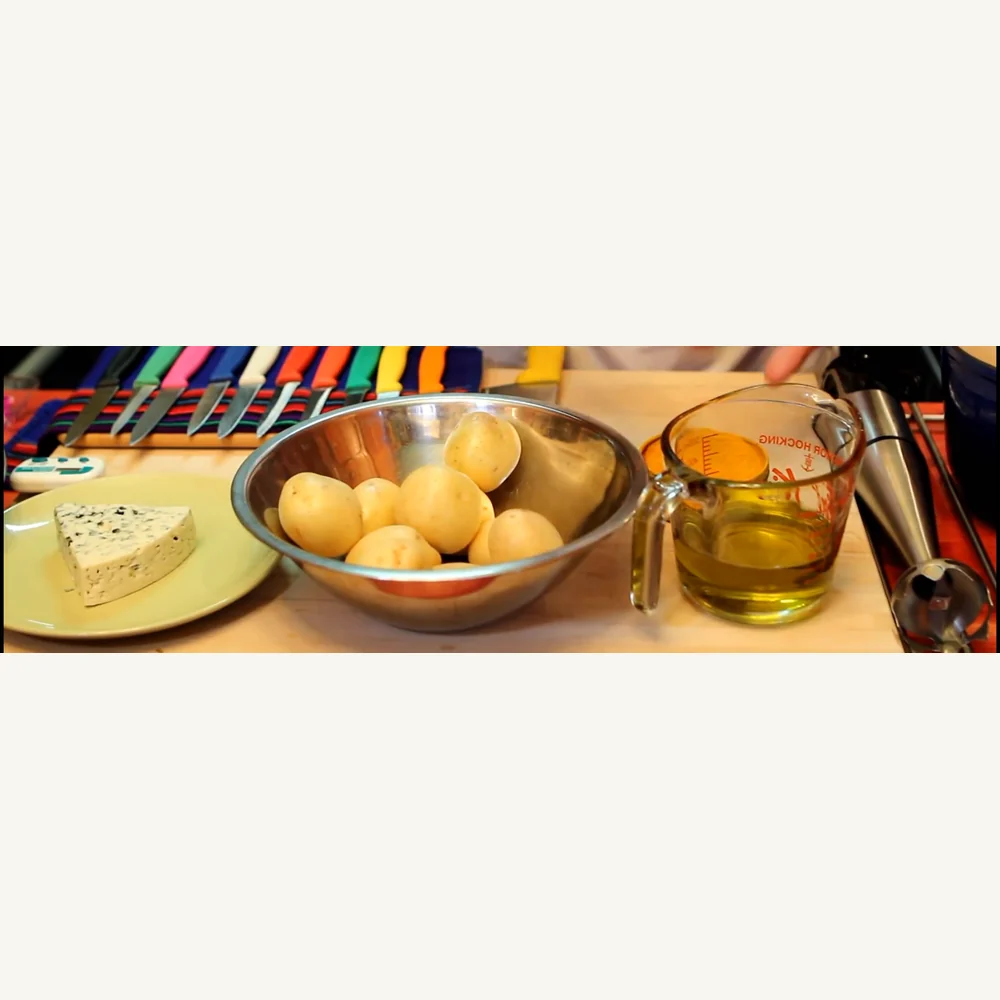
How to make the salad
1. Cut even potato rounds
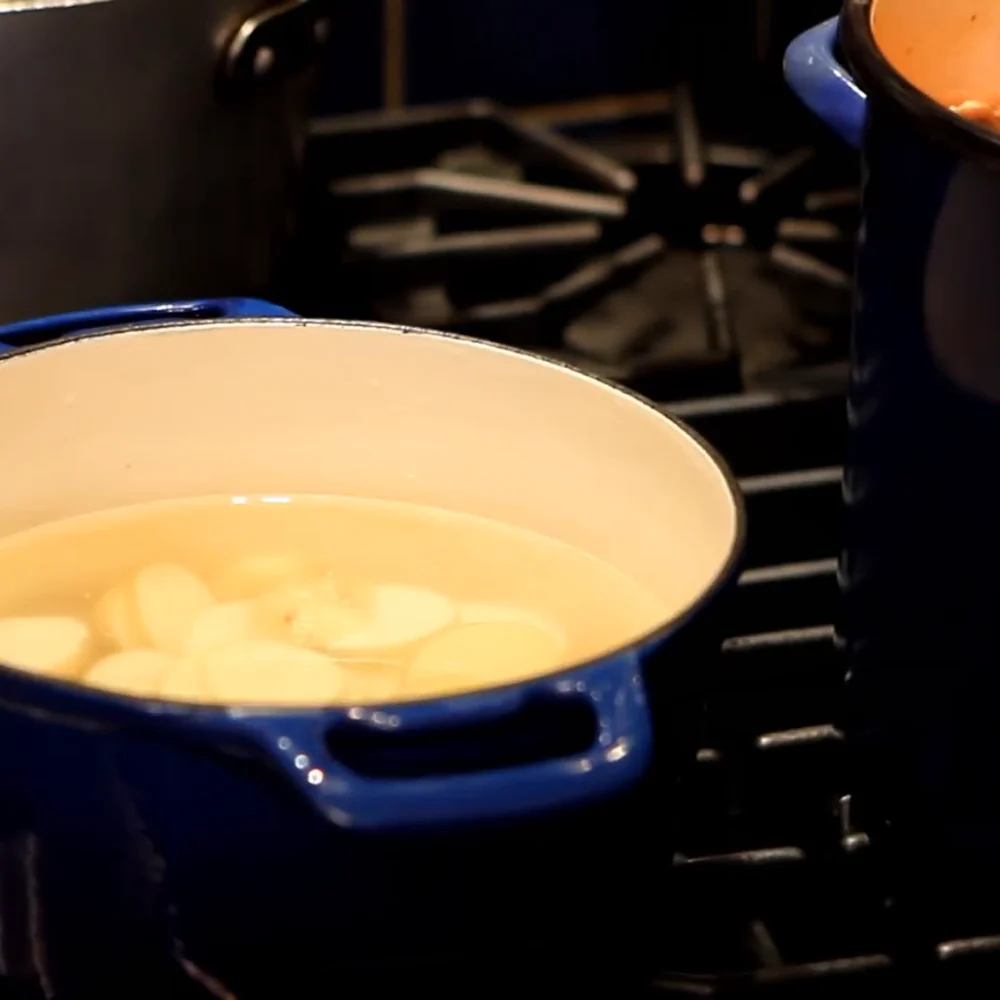
Slice the washed potatoes about ¼ to ⅜ inch thick. Keep the thickness consistent rather than chasing perfectly round shapes. Very thin slices can break before thicker pieces are tender. A sharp knife and a steady board are all you need. Put the slices into a saucepan with enough cold water to cover them, then add the cooking-water salt and the small pinch of turmeric.
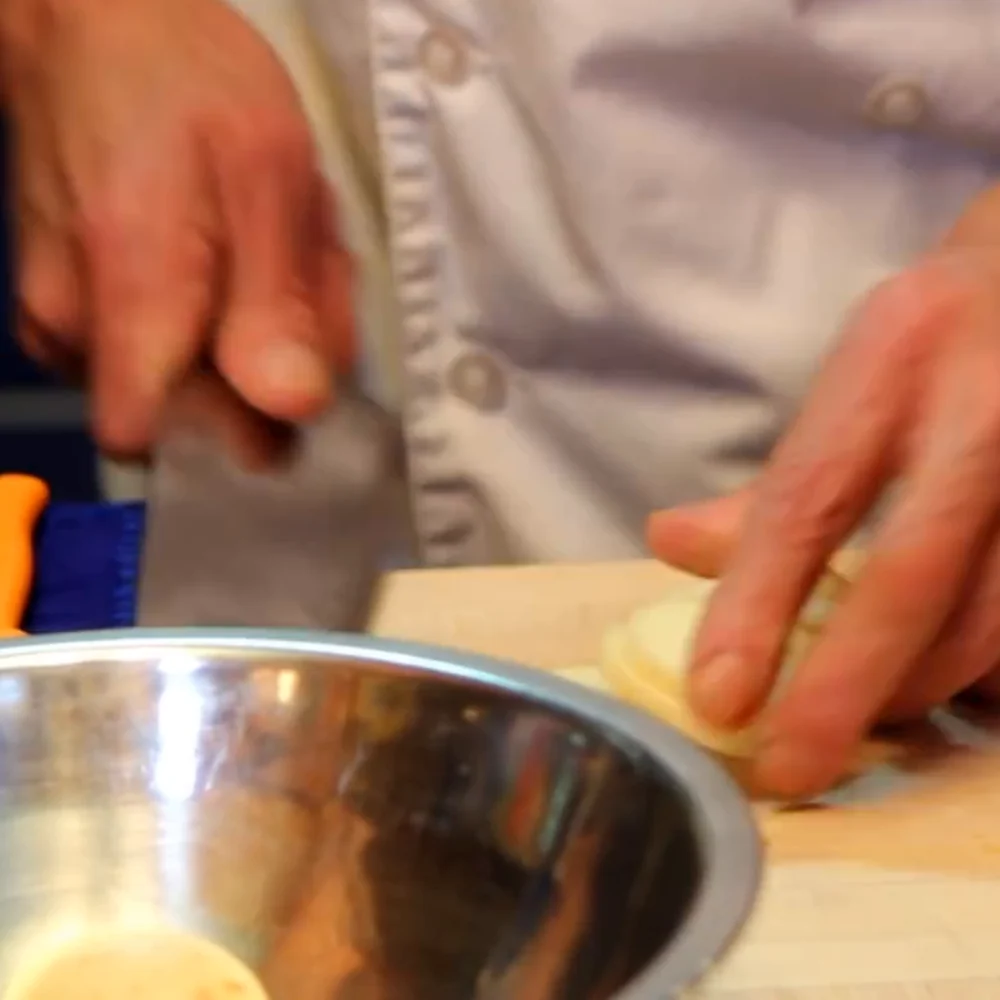
2. Simmer until tender, with the slices intact
Bring the water to a boil, then reduce the heat to a gentle simmer. The video gives 20 minutes after boiling, but that should not become an automatic timer for every potato and slice thickness. Begin checking after about 8 minutes. Many batches of these rounds will need about 10 to 15 minutes; thicker slices may take longer. Let the potatoes tell you when they are ready.
Slide a small knife into the center of a representative slice. It should pass through easily, while the slice still holds together when lifted. Test a thicker piece as well. A hard center needs more cooking; ragged edges and collapsing slices mean you have gone too far. A rolling boil and repeated stirring make breakage more likely, so keep the pot calm.
3. Drain and let the steam escape
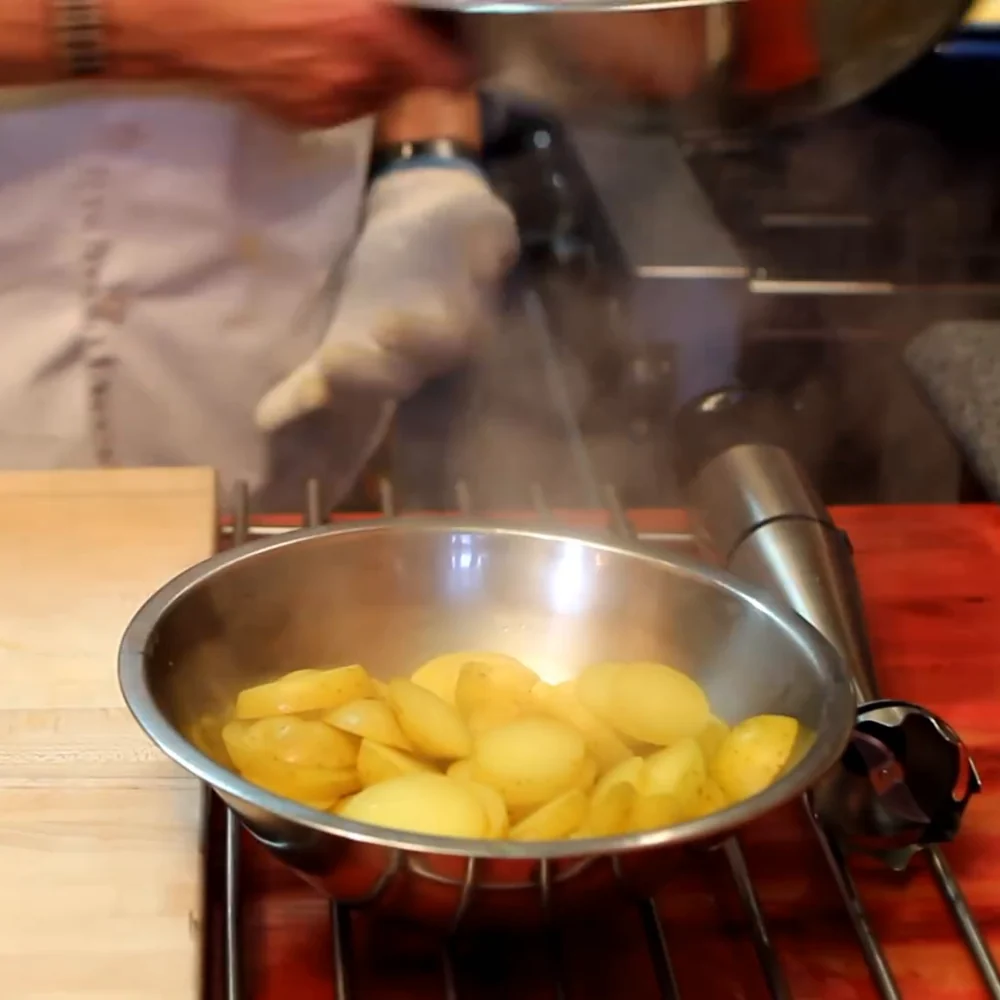
Reserve a little cooking water before draining if you want the option of loosening the dressing later. Drain the potatoes thoroughly and give the colander one gentle shake. Transfer them to a bowl and let the surface steam escape for a few minutes. They should be warm, not piping hot, when you add the cheese dressing.
Do not rinse them under cold water for this version. The goal is a slightly warm salad, and excess surface water dilutes the sauce. While the potatoes settle, slice the scallions and get the dressing ready. Work gently from this point onward; even firm potatoes are more fragile once cooked.
4. Blend the blue cheese sauce
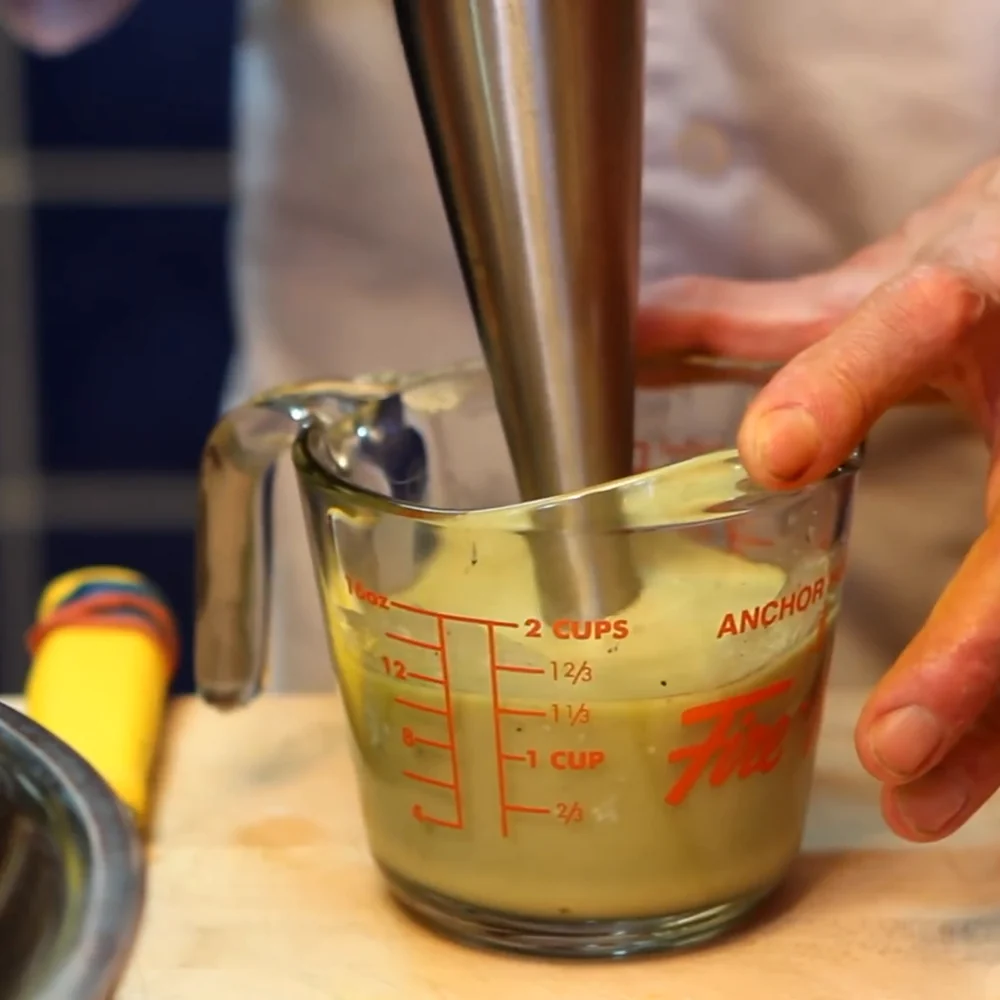
Put the blue cheese, olive oil, and a modest amount of black pepper into a narrow blending container. Use an immersion blender briefly, until the mixture is reasonably smooth. The container should let the blender head reach the small batch; otherwise use a mini processor or mash a soft cheese thoroughly with a fork before working in the oil.
Taste before adding more pepper or salt. The video uses a generous amount of pepper, but a small home batch needs less to start. If the sauce is too thick to coat the potatoes, blend in a teaspoon of reserved cooking water at a time. This is an optional adjustment for the written batch, not a liquid explicitly added to the sauce in the video.
5. Toss gently and taste
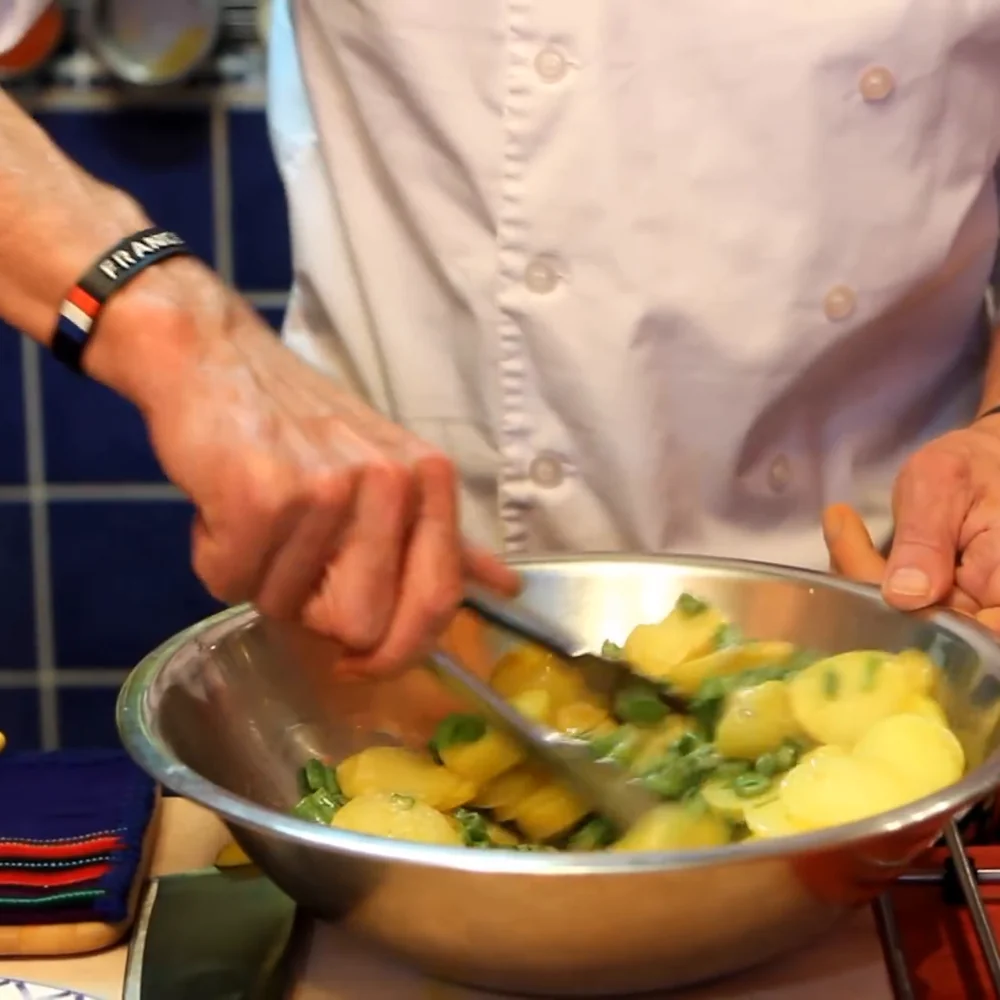
Add the scallions to a large bowl, followed by the warm potatoes. Spoon over about three-quarters of the dressing first. Turn the slices carefully with a flexible spatula or serving spoons, lifting from the bottom rather than stirring rapidly. Taste a coated potato and add more sauce if needed. Keep any excess dressing separate instead of forcing it all into the bowl.
6. Plate while slightly warm
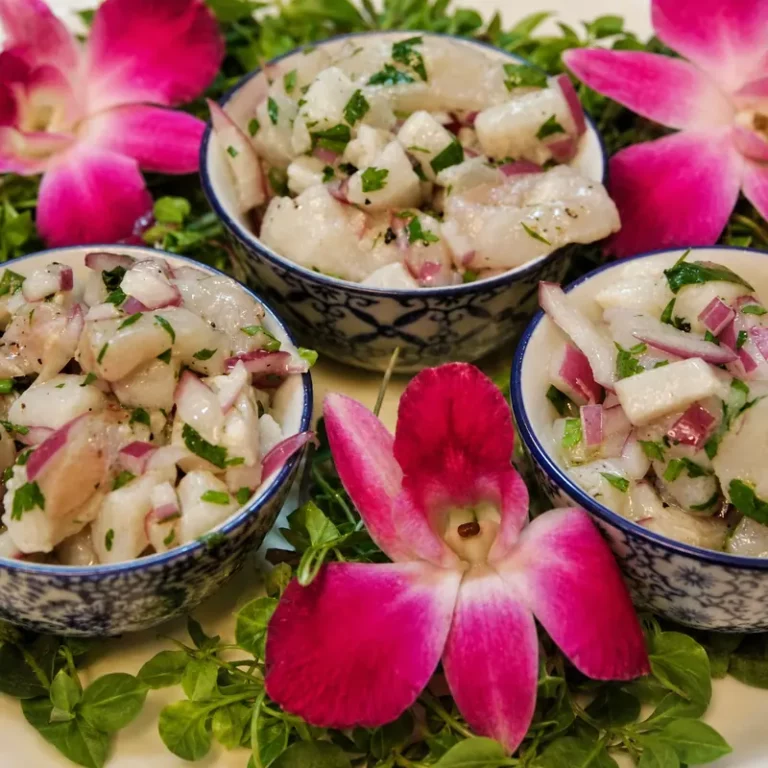
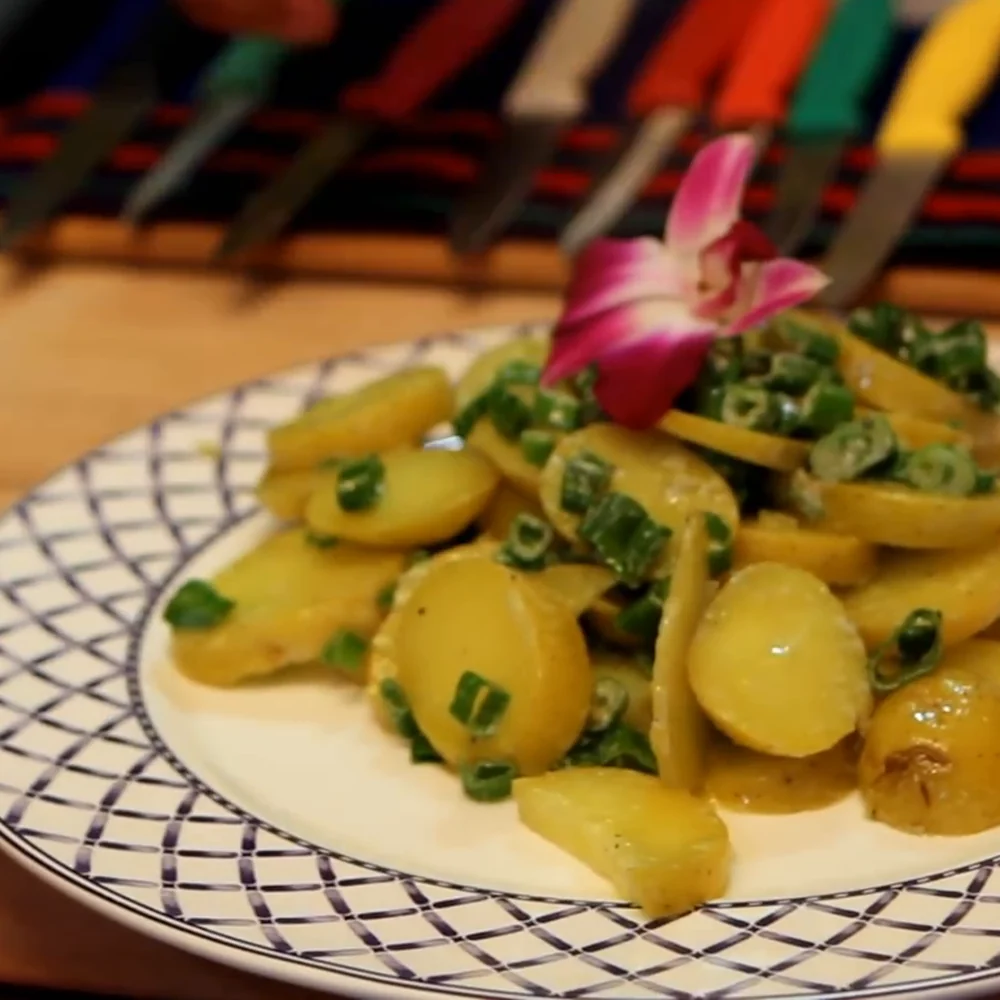
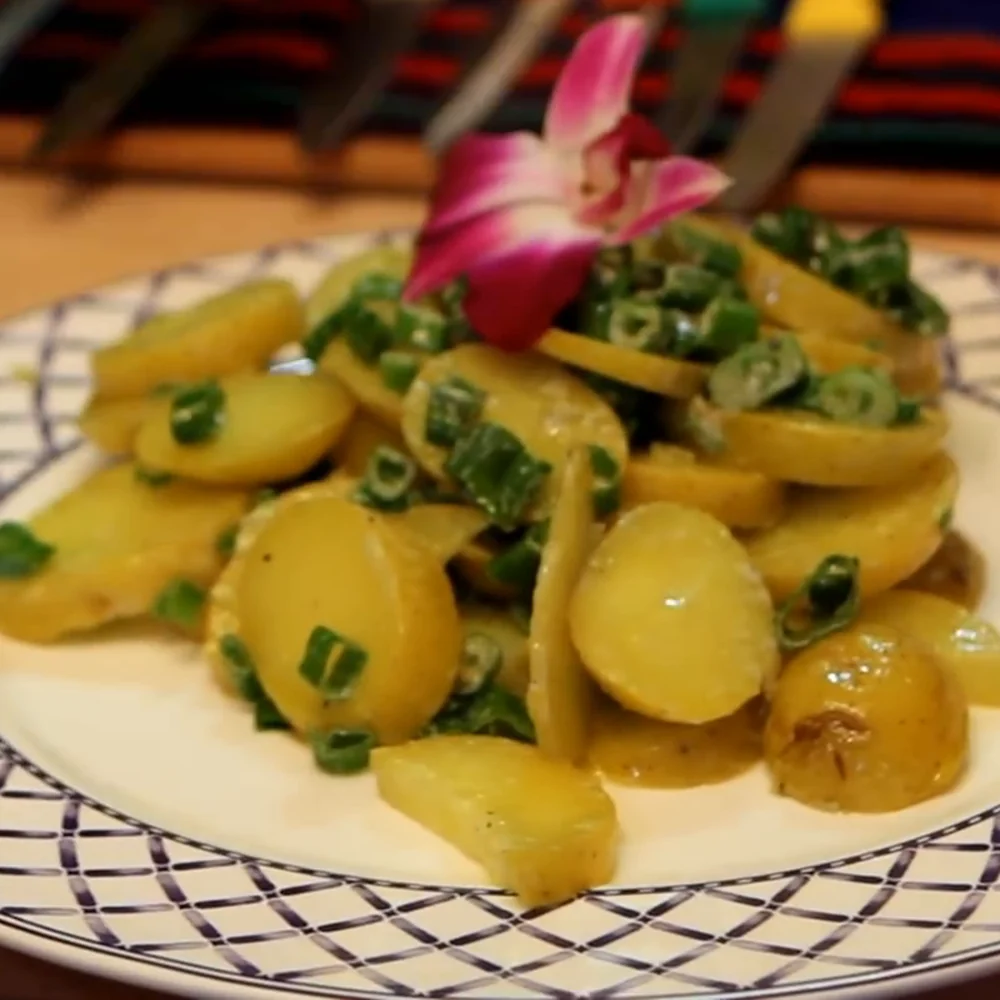
Arrange the salad in a loose mound so you can see the potato rounds and green scallions. There is no need for a bed of unrelated garnish. The edible orchid in the video is optional; if using one, choose a food-grade edible flower supplied for eating. The salad is complete without it. Serve while the dressing is glossy and the potatoes are still slightly warm.
Substitutions and variations
Small red potatoes can replace the yellow potatoes if they hold their shape well. For the cheese, stay within the blue-cheese family if you want the character of this recipe. Replacing it with feta creates a different salad; my Greek-style potato salad with feta and olives is a better starting point for that combination.
Leave out the turmeric if you do not have it. The potatoes will look paler, but the cheese and scallions still carry the flavor. The dressing does not require mustard or vinegar to work. If you are specifically looking for an acidic dressing, use my classic vinaigrette or quick mustard vinaigrette with an appropriate salad instead. Adding a large splash of vinegar here changes the intended balance.
For a different picnic bowl, there is also my dill pickle potato salad, bacon and cheddar potato salad, or potato salad with ham. Each has its own dressing and texture; avoid combining every variation in this small, cheese-focused recipe.
Frequently asked questions
Why is my potato salad breaking apart?
Usually the slices were too thin, the potatoes were floury, or the cooking went too long. Check early and stop when the centers are tender. Drain carefully and fold the salad rather than stirring it hard. More dressing will not repair overcooked potatoes.
Can I make it ahead?
You can cook the potatoes and make the dressing separately, then refrigerate both promptly in covered containers. The potatoes become firmer when chilled and the cheese dressing thickens. For the best slightly warm texture, finish the salad close to serving. If serving cold, stir the dressing first and adjust its consistency gradually before coating the potatoes.
Does it need lemon juice or vinegar?
Not necessarily. Blue cheese already has a tangy flavor, and this recipe is a cheese-and-oil dressing rather than a classic vinaigrette. Taste the finished potato before deciding. My lemon vinaigrette is useful when you want a deliberately bright, citrus-led salad.
What can I serve with it?
Keep the main dish fairly simple. Try pan-seared salmon, Greek grilled chicken thighs, or steak au poivre. A grated carrot salad with mustard vinaigrette adds crunch alongside the soft potatoes. Keep portions modest if the main course already has a rich sauce.
Potato Salad with Blue Cheese Sauce
Ingredients
- 1⅔ lb small waxy yellow potatoes washed, skin on
- 2⅔ oz blue cheese
- 3 tablespoons olive oil
- 4 scallions about 1¾ oz, roots removed
- 1 tiny pinch turmeric about ⅛ teaspoon
- ¼ teaspoon freshly ground black pepper plus more to taste
- About 8½ cups water enough to cover the potatoes
- 3⅓ teaspoons fine salt for 8½ cups cooking water only
- 1 –2 tablespoons reserved cooking water optional, added only as needed
- 1 food-grade edible orchid optional garnish
Instructions
- Slice potatoes into even ¼- to ⅜-inch rounds. Put in a saucepan with water to cover, cooking-water salt, and turmeric.
- Bring to a boil, then simmer gently. Check after 8 minutes and cook until a knife enters easily but the slices remain intact, usually 10–15 minutes depending on thickness. The filmed batch cooks for 20 minutes.
- Reserve a little cooking water, drain gently, and let the potatoes steam-dry and cool until warm. Slice the scallions.
- Briefly blend the blue cheese, olive oil, and pepper in a narrow container. Taste. If necessary, loosen with reserved cooking water a teaspoon at a time.
- Put scallions and potatoes in a large bowl. Add about three-quarters of the dressing, fold gently, and taste before adding more. Do not use excess sauce merely to empty the container.
- Plate and serve slightly warm. Add the optional food-grade edible flower if desired.