Sucre à la Crème: Quebec Brown Sugar Fudge
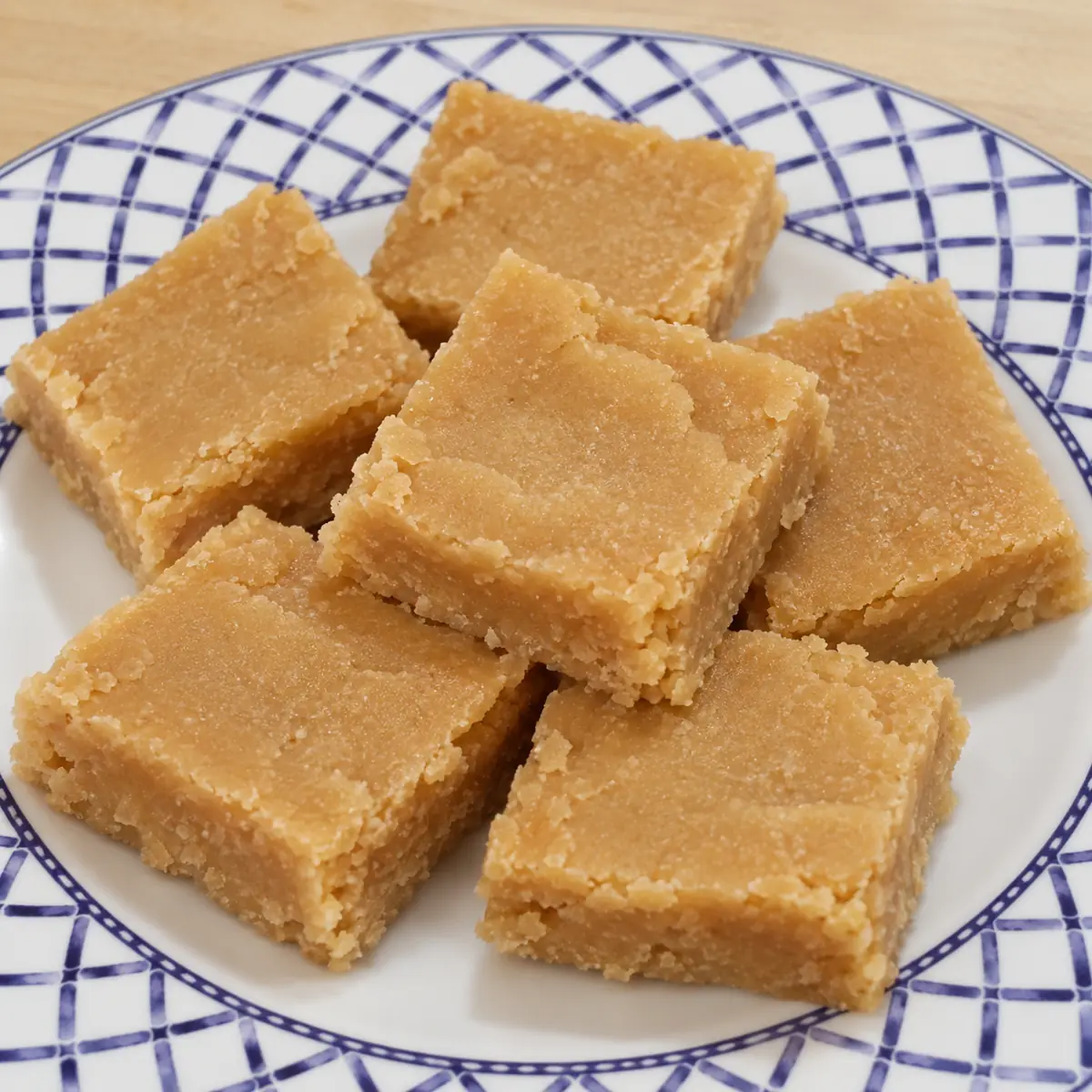
Sucre à la crème is a small, rich square of brown sugar and cream fudge with a fine texture that melts on the tongue. It needs only a short ingredient list, but temperature and patience matter more than speed. This version uses a candy thermometer so you can follow the syrup, cooling and beating stages with clear reference points.
There is no chocolate and no condensed milk in this recipe. Brown sugar supplies the warm flavour, cream supplies richness and beating the cooled syrup creates the characteristic texture. Cut small pieces. A little square beside coffee is plenty, especially on a dessert tray with other sweets.
Get the pan and thermometer ready first
Line an eight-inch square pan with parchment, leaving enough overhang to lift out the set fudge. Have a sturdy wooden spoon or heatproof spatula ready. Use a heavy saucepan of at least three quarts because the cream mixture rises as it boils. A small saucepan gives you very little room to manage that foam.
Check your candy thermometer in boiling water before starting. At sea level, it should read close to 212°F. The target for this recipe is 239°F at sea level. At higher elevations, a useful adjustment is to cook to twenty-seven degrees Fahrenheit above the boiling-water reading measured in your kitchen with the same thermometer.
The probe tip must be submerged in the syrup without touching the pan bottom. Contact with the hot metal gives a misleading reading. If the thermometer cannot measure a shallow layer properly, use a narrower heavy saucepan with enough height for the boiling mixture rather than guessing from colour alone.
Why there are two sugars
Brown sugar gives the fudge its flavour and beige colour. White sugar keeps the result from tasting overwhelmingly of molasses. Use ordinary light brown sugar, packed into the measuring cup, and granulated white sugar. Large hard lumps should be broken up before heating so they dissolve evenly.
Use whipping cream with about thirty-five percent fat. Milk and light coffee cream contain more water and less fat, so they are not direct substitutes here. This is confectionery: the balance of sugar, water and fat affects the final texture more than it would in a loosely measured sauce.
If you prefer a pourable brown sugar dessert topping, brown sugar caramel sauce is a separate preparation. Butter tart squares also use a brown sugar flavour, but eggs and baking give them a very different structure.
Cook, cool and beat
Dissolve the sugar gently
Combine two cups of packed brown sugar, one cup of white sugar, one cup of cream and a pinch of salt in the saucepan. Heat over medium-low heat, stirring gently until the sugars are dissolved and the mixture is smooth. Brush any visible sugar crystals from the inside wall with a pastry brush lightly dipped in water.
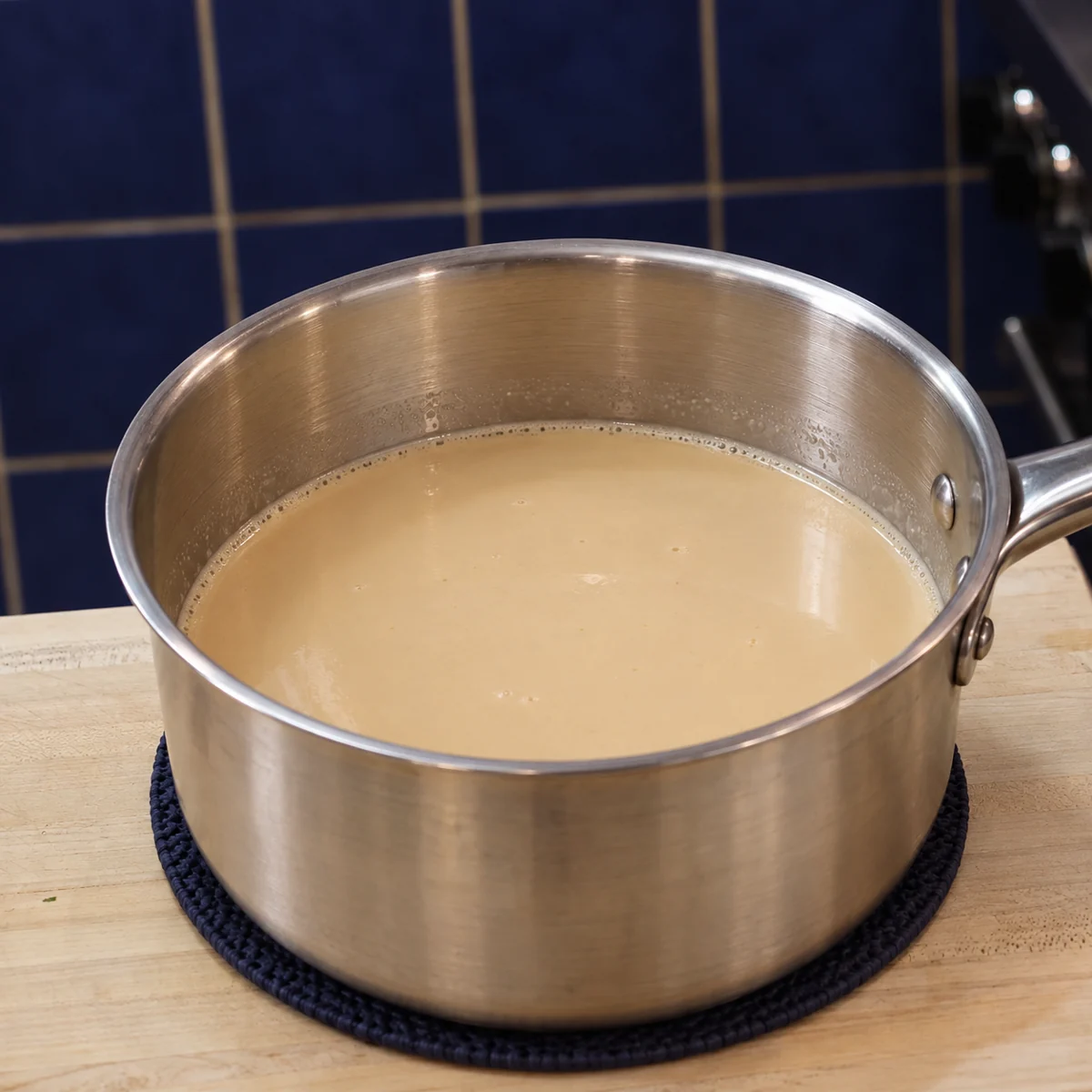
Bring to a steady boil, then stop stirring. Keep the heat at a level that maintains bubbling without threatening to overflow. Cook to 239°F, or your adjusted target. Begin watching closely once it passes about 230°F. The last few degrees can arrive quickly. The exact number of minutes varies with the pan and burner.
Cool without disturbing the syrup
Remove from the heat and set the pan on a heatproof surface. Add the two tablespoons of butter on top without stirring. Leave the syrup undisturbed until it cools to about 110°F. This may take thirty to fifty minutes or longer depending on the saucepan and room. Use the temperature, not a fixed waiting time.
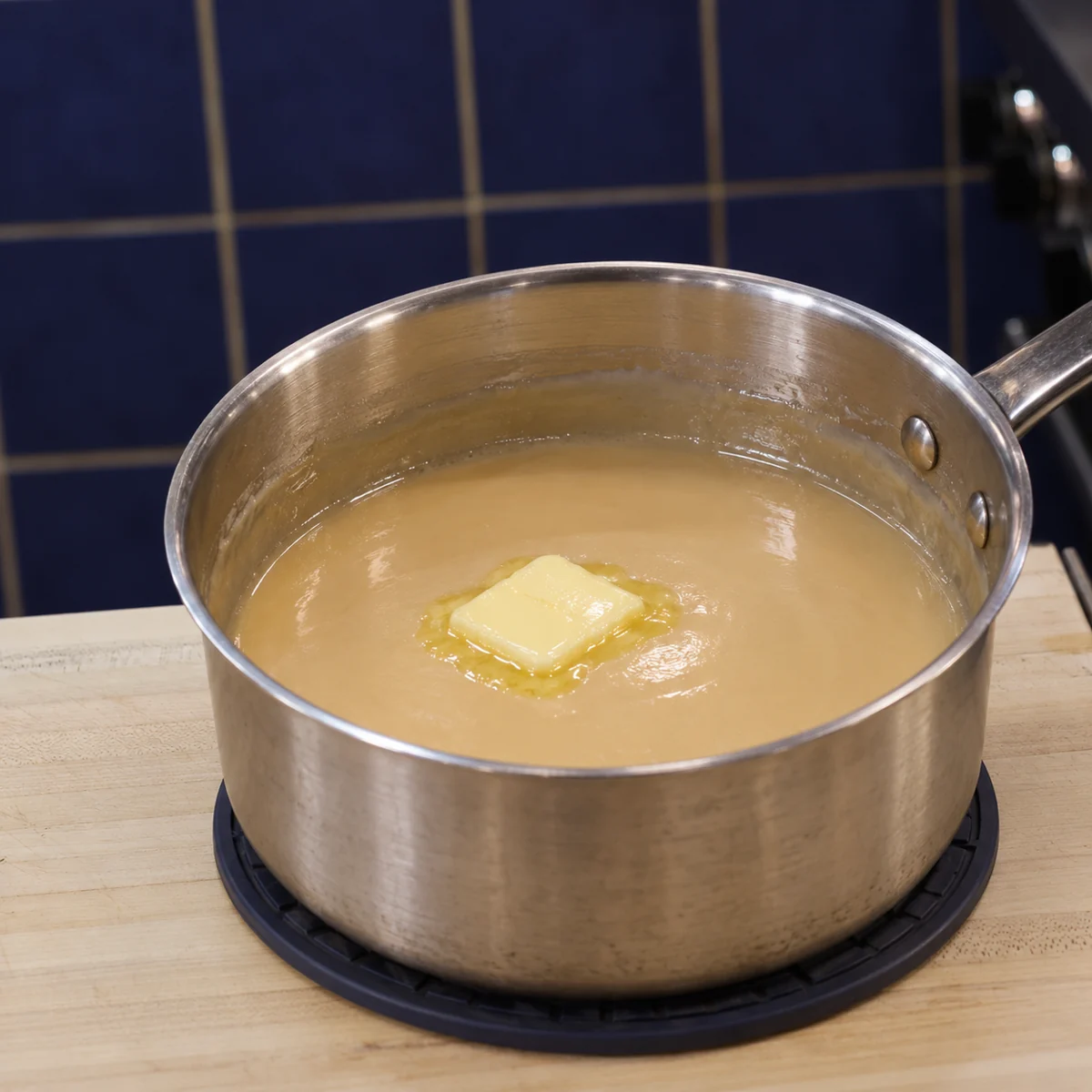
Do not shake the pan, scrape the sides or stir to speed cooling. Starting crystallization while the syrup is too hot can give coarse grains. Keep the pan away from a busy part of the counter so it can cool quietly while you prepare the serving container or wash the measuring cups.
Beat only until it thickens
Add the vanilla once the syrup has cooled. Beat firmly with the spoon, scraping the base but avoiding any crusty sugar deposits high on the sides. The mixture will become lighter and thicker and begin to lose its glossy shine. This can take roughly five to ten minutes by hand, but watch the texture rather than the clock.
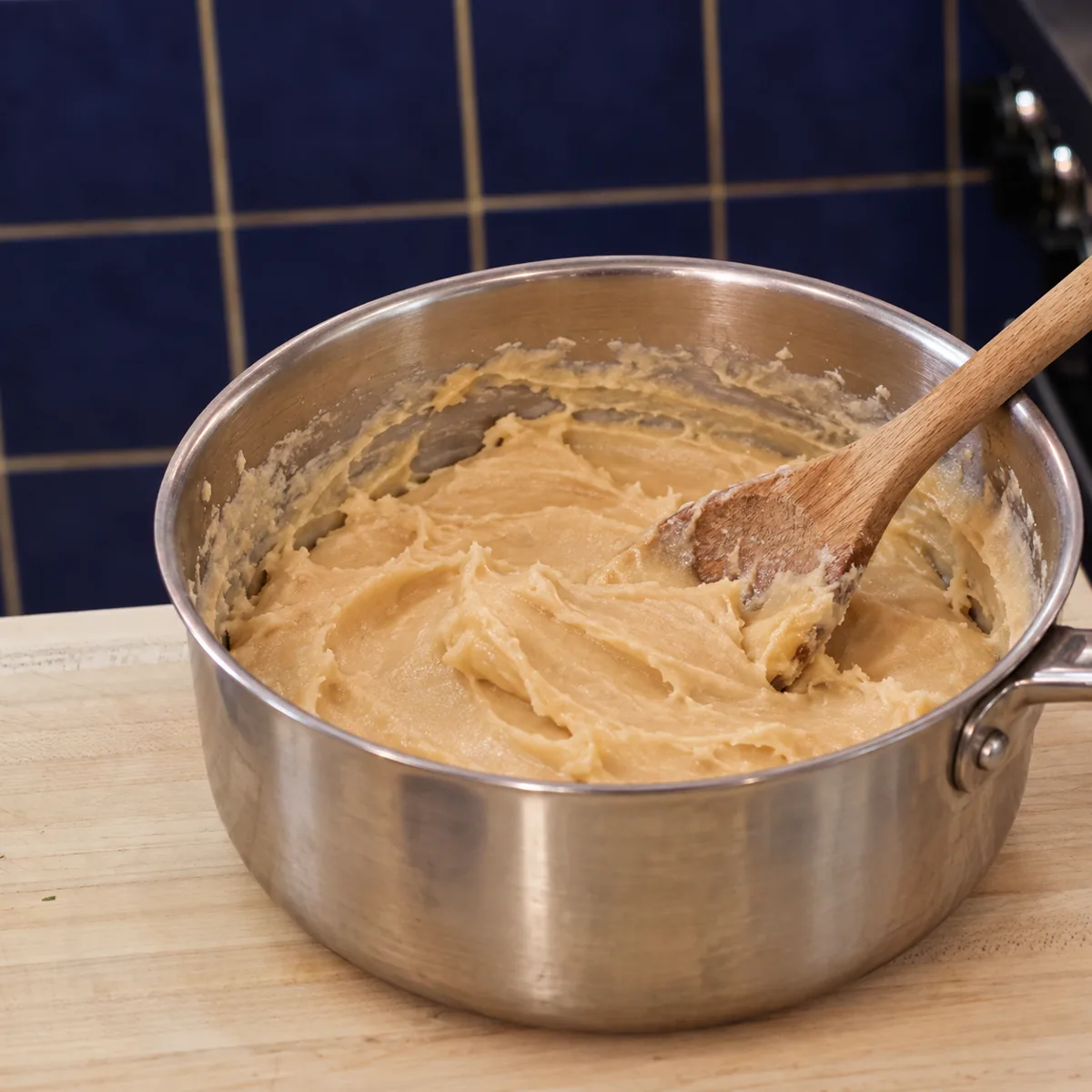
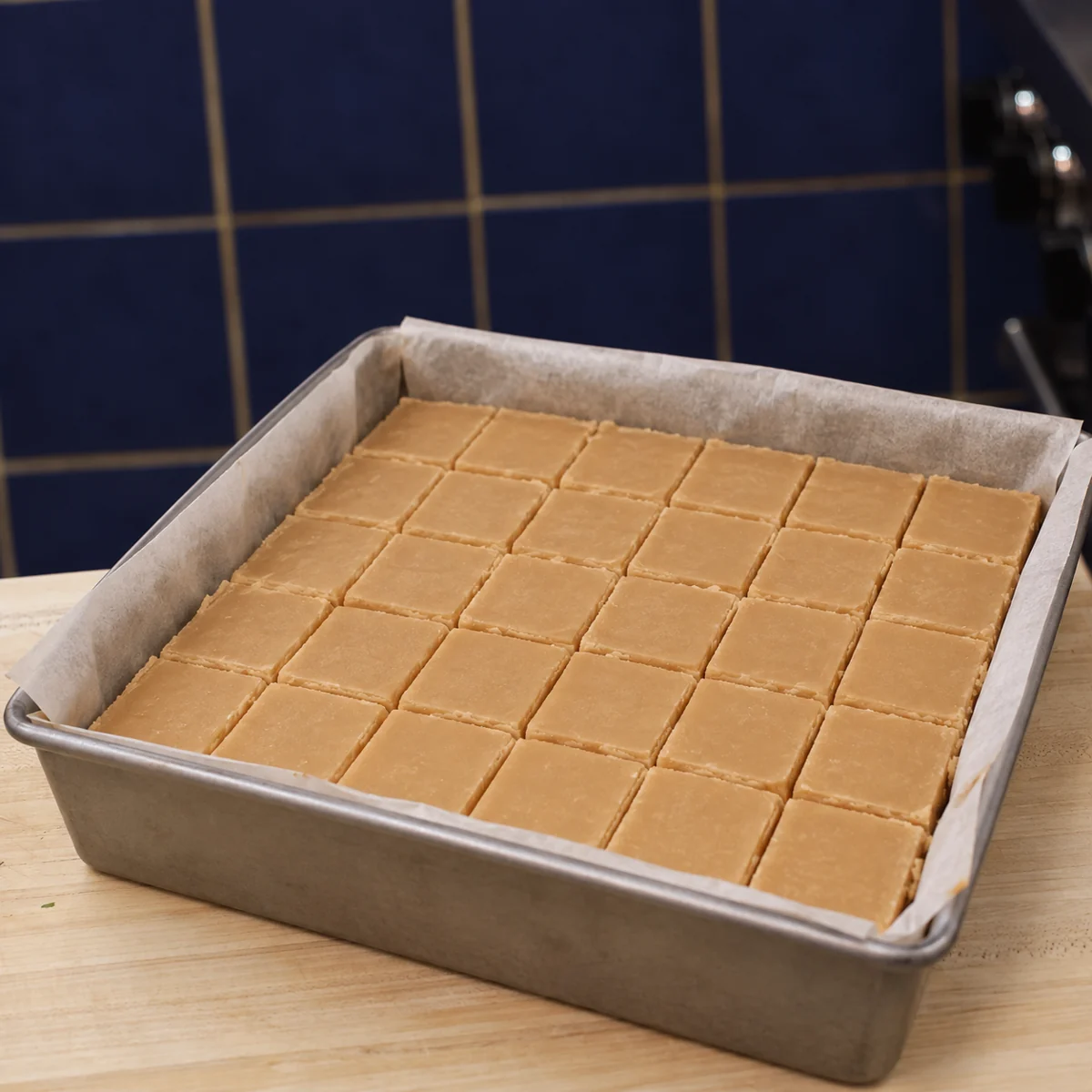
As soon as it holds brief trails and looks creamy and less shiny, spread it quickly into the prepared pan. Do not keep beating until it becomes a solid mass in the saucepan. Smooth the surface with a lightly buttered spatula, then leave at room temperature for at least two hours until firm. Lift out and cut into thirty-six small squares.
Chef tips for a fine texture
I recommend getting the pan and utensils ready before the syrup starts boiling. Once the syrup reaches its target, extra cooking can make the fudge dry and crumbly. Conversely, stopping too early leaves too much water and can make it difficult to set. The thermometer takes away much of that uncertainty.
The cooling stage is just as important as the cooking stage. A recipe with only a few ingredients is not necessarily one to rush. Let the syrup cool, then give the beating stage your attention. The change from glossy liquid to creamy fudge is the moment to move quickly into the pan.
For a holiday tray, pair small squares with chewy chocolate chip cookies, cocoa brownies or lemon yuzu bars. Their different textures make a more interesting assortment than several very sweet candies together.
Substitutions
For a stronger molasses flavour, I’d replace the light brown sugar with dark brown sugar; the fudge will also be darker. Salted butter can replace unsalted butter if you omit the pinch of salt. For a nut version, fold in half a cup of toasted chopped walnuts just before transferring the thickened mixture to the pan.
Do not replace the cream with a low-fat product or the sugars with a non-sugar sweetener. Those changes require a different formula. Maple syrup also adds liquid and is not a direct replacement for brown sugar. For an expressly maple dessert, maple pouding chômeur is a better choice.
Frequently asked questions
Why did it stay soft?
The syrup may not have reached the correct temperature, or it may not have been beaten enough after cooling. Give it the full setting time before deciding. A refrigerator can firm a soft mixture temporarily, but it cannot correct an undercooked syrup into the same room-temperature fudge texture.
Why is it crumbly or grainy?
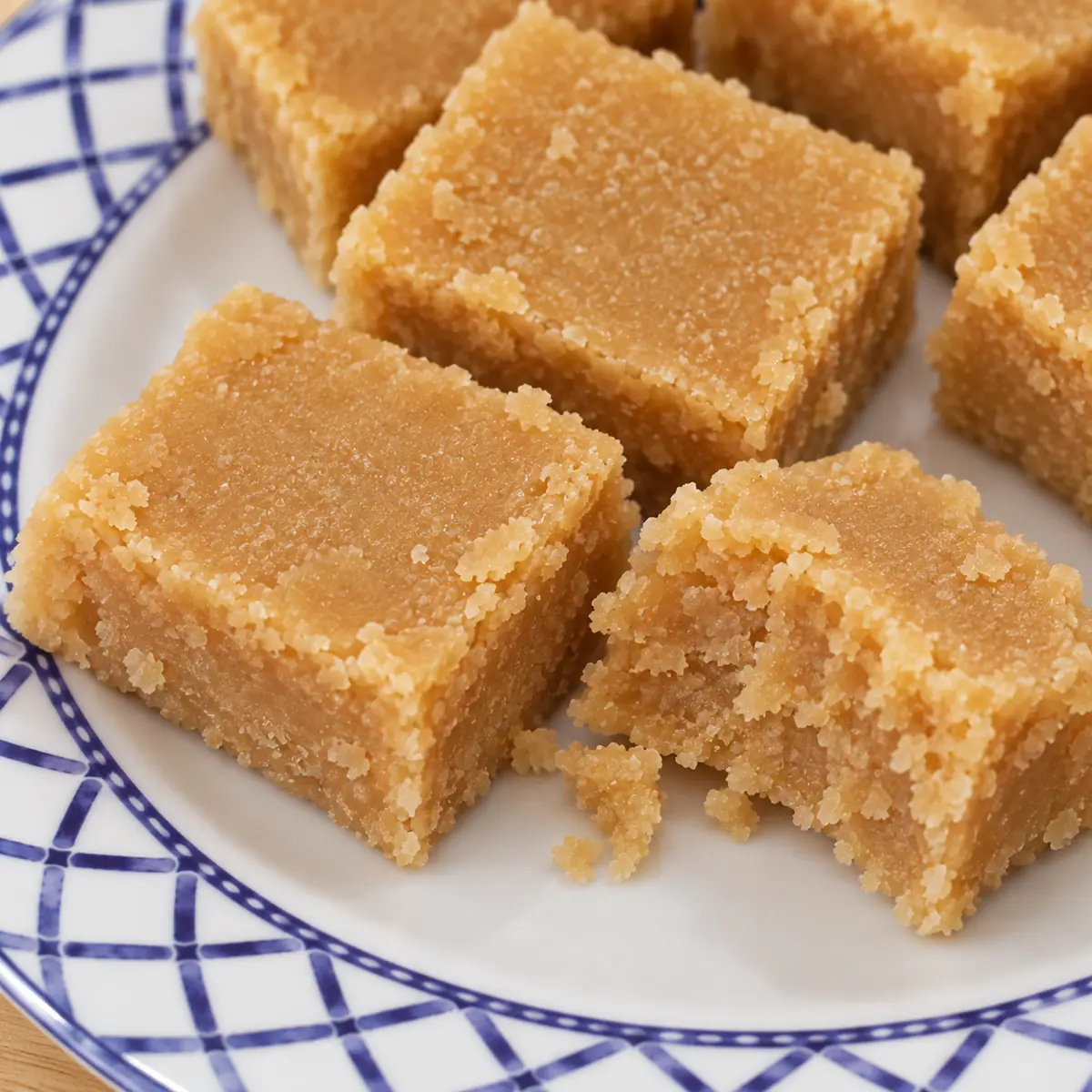
Overcooking removes too much water, while beating too long can make the mixture set before it reaches the pan. Coarse grains can also result from stirring during cooling or introducing sugar crystals from the pan sides. Follow the temperature sequence and stop beating when the texture first turns creamy and thick.
How do I store it?
Keep squares airtight with parchment between layers. Store in a cool room for up to five days, refrigerate for up to two weeks or freeze for up to two months. Thaw wrapped in the refrigerator, then bring to room temperature before opening to reduce condensation on the surface.
More desserts for the table
For spoon desserts, vanilla rice pudding and crème caramel offer gentler textures. A vanilla cake or apple upside-down cake suits a larger dessert portion. Sucre à la crème works best as a small finishing bite or a homemade gift packed after it has fully set.
Sucre à la Crème: Quebec Brown Sugar Fudge
Ingredients
- 2 cups packed light brown sugar
- 1 cup granulated sugar
- 1 cup heavy whipping cream about 35% fat
- 1 small pinch fine salt
- 2 tablespoons unsalted butter
- 1 teaspoon vanilla extract
Instructions
- Line an 8-inch square pan with parchment. Check a candy thermometer in boiling water. Use a heavy saucepan of at least 3-quart capacity.
- Heat sugars, cream and salt over medium-low heat, stirring until dissolved. Brush sugar crystals from pan walls with a damp pastry brush.
- Bring to a steady boil and stop stirring. Cook to 239°F at sea level, or 27°F above your measured boiling-water reading. Keep probe off the pan bottom.
- Remove from heat. Add butter on top without stirring. Cool undisturbed to about 110°F, usually 30–50 minutes or longer.
- Add vanilla. Beat with a sturdy spoon until lighter, thickened and beginning to lose its shine, roughly 5–10 minutes. Avoid scraping crusty sugar from high on the sides.
- Immediately spread in prepared pan. Set at room temperature at least 2 hours until firm. Cut into 36 squares.


 Last chance for our paring knives.