Crispy Multicolored Vegetable Chips with Beets and Lotus Root
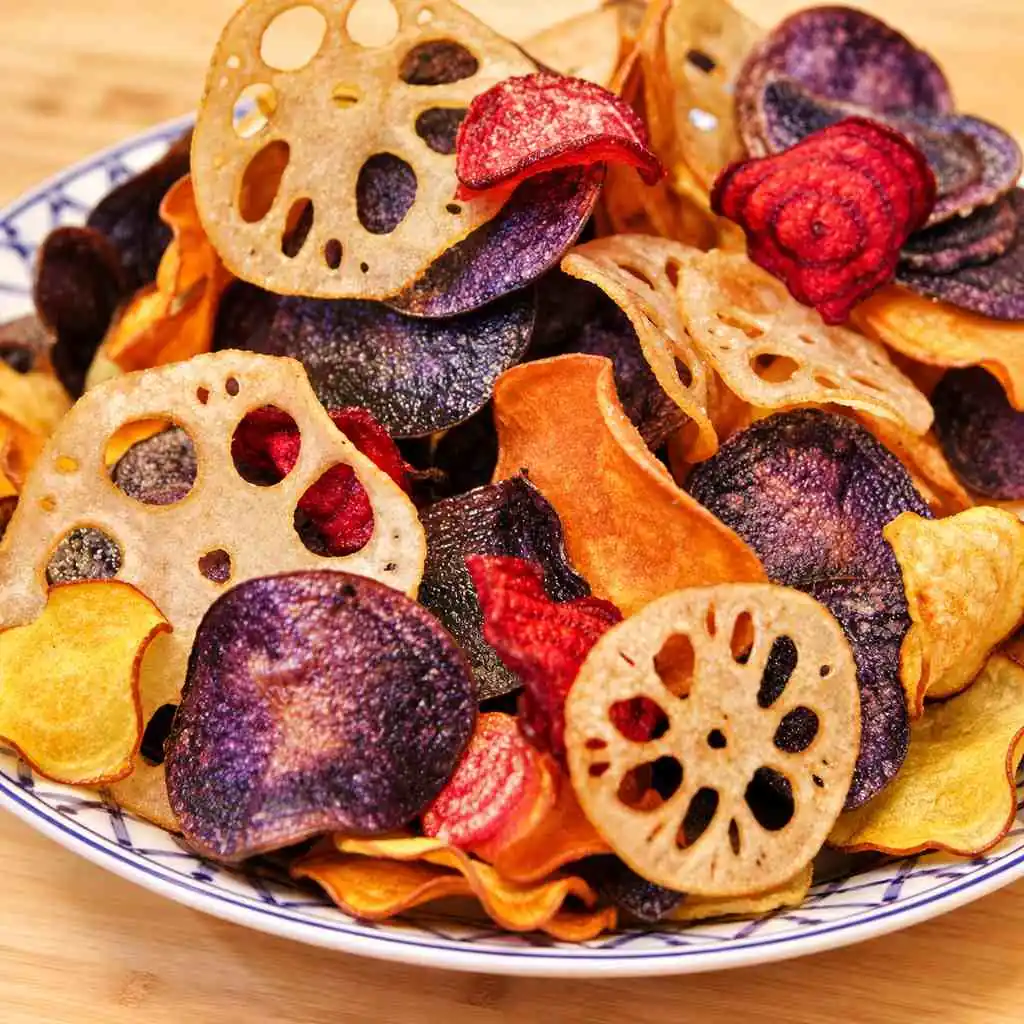
These homemade vegetable chips combine purple potatoes, orange sweet potato, three colors of beet, and delicate lotus-root slices. Each vegetable is sliced thinly and fried separately, then drained and seasoned before the colors are brought together. The result is a crisp appetizer with naturally different shapes, earthy sweetness, and the decorative holes of lotus root.
This recipe is based on my Chips Multicolores YouTube video, with a few adjustments since publication. The written version supplies a manageable batch size, precise drying instructions, and gentler starting temperatures for the sweeter vegetables. These measurements are an editorial adaptation, not quantities weighed in the film or a claim that this version has been kitchen-tested.
{VIDEO}
What makes these vegetable chips different?
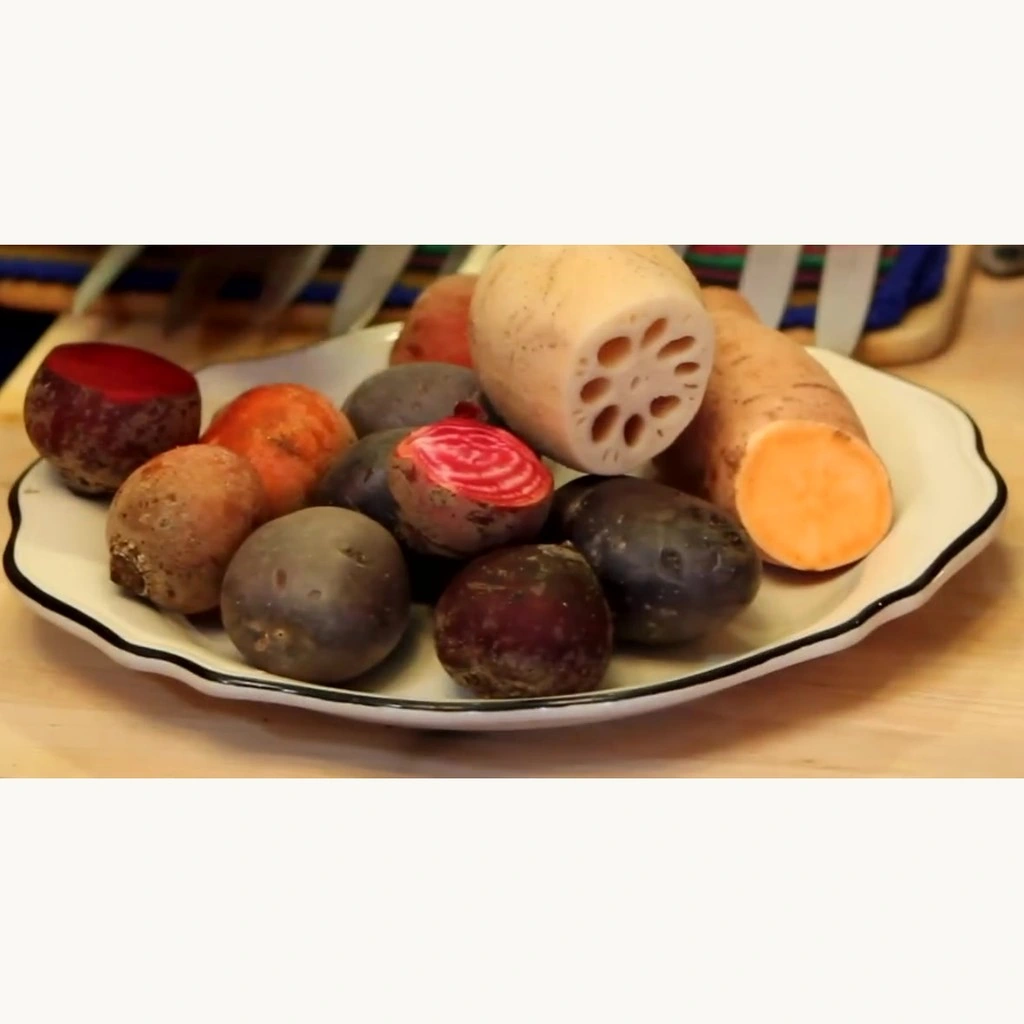
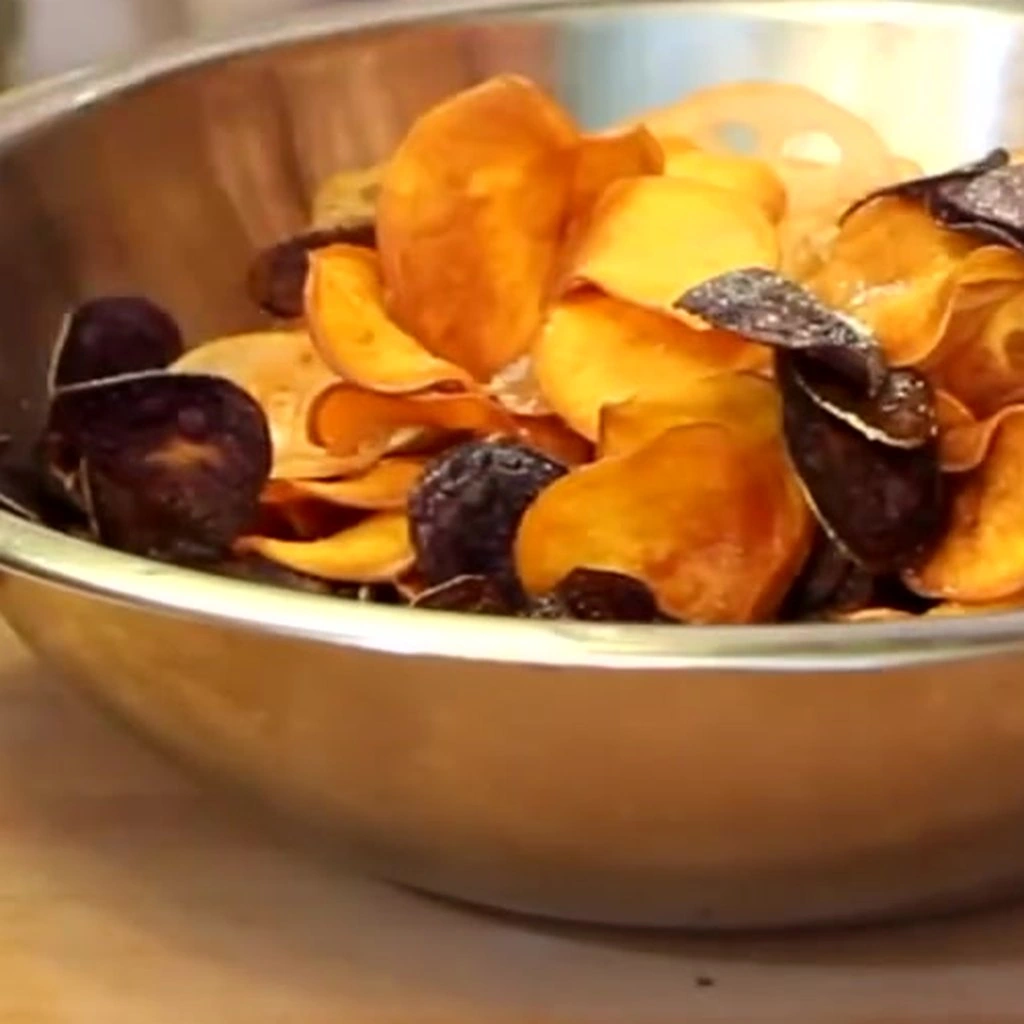
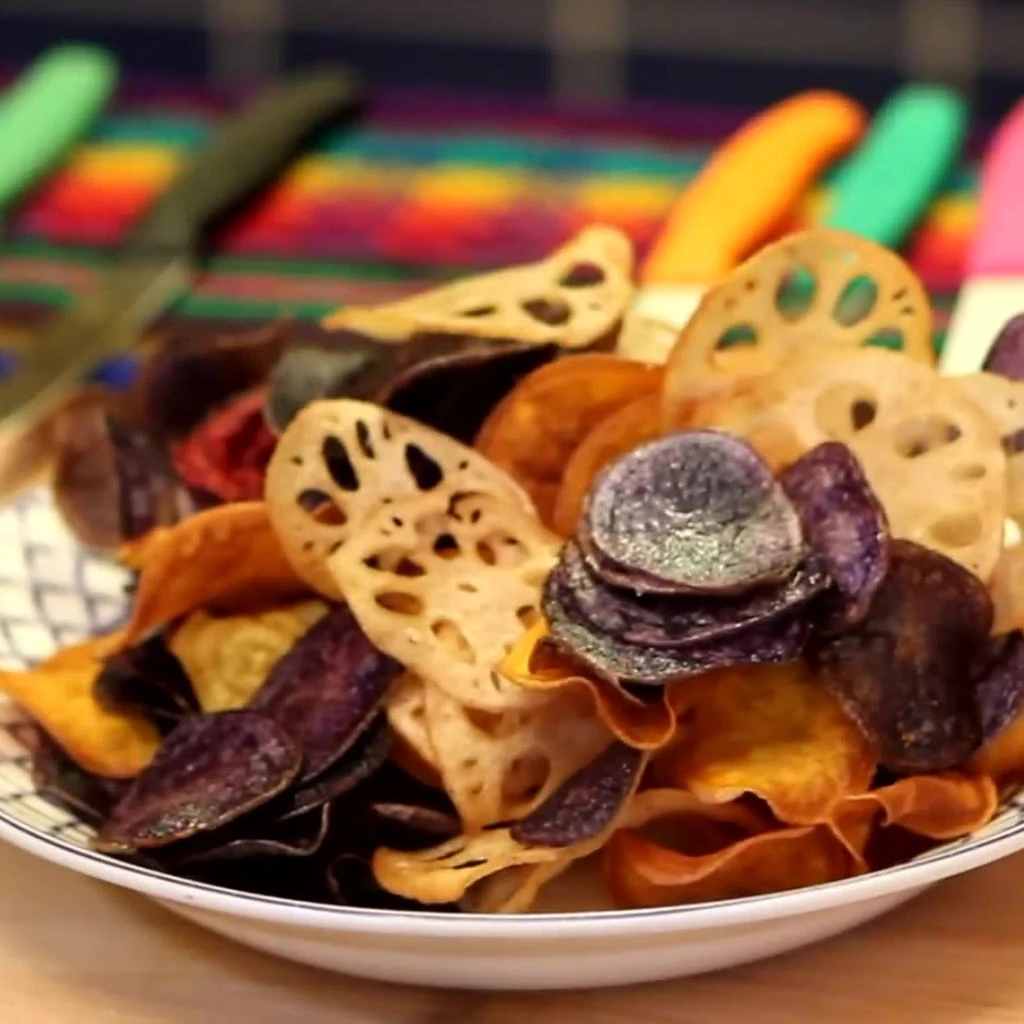
The colors come from the vegetables themselves. Blue or purple potatoes supply dark violet rounds; sweet potato brings orange; red, golden, and Chioggia beets add their own shades. Chioggia beets have pink and white rings when raw, although frying can soften that contrast. Lotus root supplies pale slices with natural holes. There is no batter, colored coating, or sauce mixed into the chips.
These are smooth-cut chips, unlike my waffle-cut vegetable chips with basil dip, which use a different mandoline setting and an accompanying emulsion. For a simpler starting point, my homemade potato chips focus on one vegetable. Neither recipe should be confused with the thicker sticks in Belgian-style fries.
The method can give a good result, but the short demonstration leaves important variables to the cook. Uniform thickness, small batches, dryness, and cooling matter more than reproducing the exact number of roots on the ingredient plate. A dark edge is not a dependable signal that a thick center has become crisp.
Ingredients and equipment
For six snack portions, allow 7 oz prepared lotus root, 7 oz sweet potato, 7 oz purple potatoes, and 12 oz mixed beets, roughly 4 oz each red, golden, and Chioggia. Weigh after trimming. Individual vegetables vary considerably in size, so weights make a better guide than a promise that one beet or one potato will be enough.
Choose firm roots. Scrub and rinse them well. Trim the lotus ends and clean its channels; peel any rough skin. Scrub potato and sweet-potato skins and peel if damaged or tough. Peel the beets for a cleaner result. Keep the beet varieties separate from the paler vegetables so their juice does not stain everything before cooking.
Use a neutral frying oil, such as refined canola or sunflower oil. About 6–8 cups may suit a deep pot, but the correct volume depends on the equipment. Follow an electric fryer’s fill marks; leave ample headroom in a pot and never fill it more than halfway. The oil is a cooking medium, not an ingredient that is entirely eaten.
Have a thermometer, slotted skimmer, clean towels, and a draining rack ready. A mandoline gives consistent slices, but use its food holder and follow its instructions. A cut-resistant glove adds protection. Stop before the final small piece rather than passing bare fingertips near the blade.
How to make multicolored vegetable chips
1. Slice the lotus and prepare the frying station
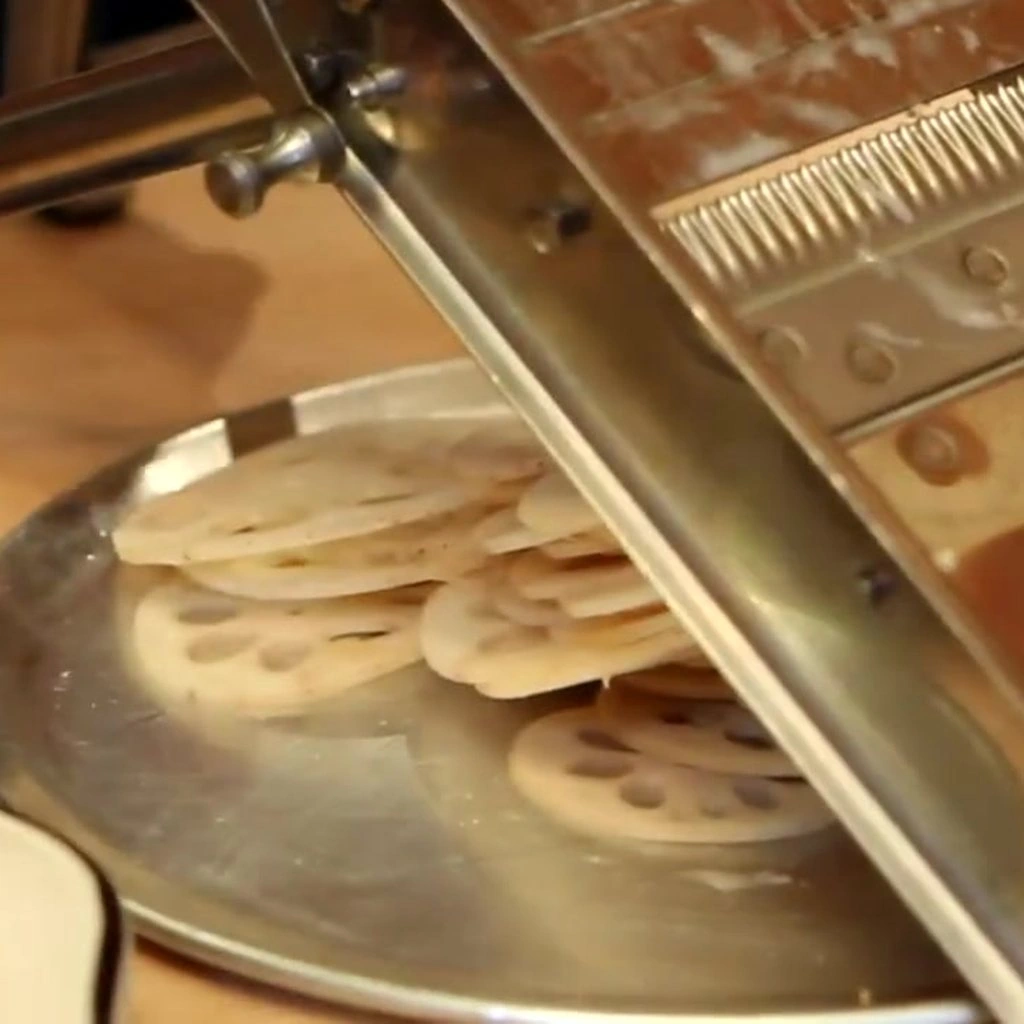
Set the mandoline to approximately 1/32–1/16 inch. Cut a test slice: it should be thin and flexible, with an even edge. Slice the lotus, leaving its natural holes intact. Pat every slice dry. Prepare the other vegetables in separate piles as you need them rather than allowing wet slices to sit in a bowl together.
The video starts with lotus. Keep that order for this version: pale lotus first, followed by sweet potato, beets, and purple potatoes. Heat the oil to 350°F for lotus. Fry a small test batch for roughly 2–3 minutes, separating overlapping pieces gently, until lightly golden and the vigorous bubbling subsides. Drain and let a sample cool before judging its crunch.
2. Fry the sweet potato separately
Lower the oil to 320°F. Slice the sweet potato just as thinly, dry thoroughly, and fry in small batches, starting with a few slices. Allow about 1–3 minutes, checking continuously rather than treating the time as a guarantee. Remove while the orange slices have only light browning, then spread them out to cool.
Sweet potato contains more sugar than ordinary potato and can become dark before its moisture has escaped. A lower starting temperature gives more room to observe that change. If a cooled sample remains leathery, make the next slices thinner and avoid adding more food than the oil can fry briskly. Do not try to rescue burnt edges by extending the same batch indefinitely.
3. Cook the beet varieties in small batches
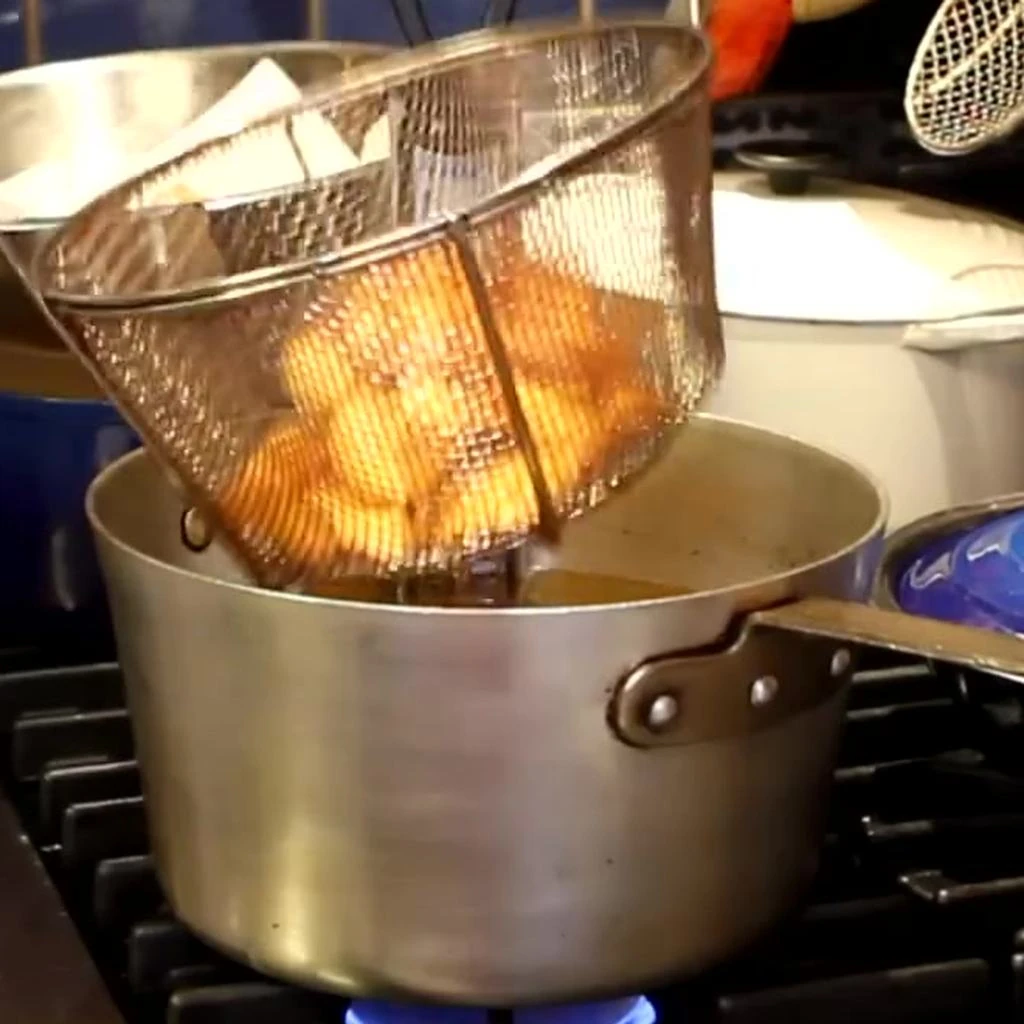
Keep the oil around 320–330°F. Thinly slice and dry the golden beets first, then Chioggia and red beets. Fry each variety separately, generally 2–4 minutes for very thin slices, until bubbling has noticeably reduced and the edges begin to curl. Drain a sample, cool briefly, and check the center before continuing with a larger batch.
Red pigment makes browning difficult to see. Look for diminishing bubbles and a slice that firms as it cools; blackened edges and a bitter smell mean it has gone too far. The printed time is a starting range because beet size, water content, and mandoline settings differ. Keeping varieties separate also prevents a fast-cooking slice from waiting for a thicker one.
4. Finish with the purple potatoes
Bring the oil back to 350°F. Slice the potatoes evenly. Rinse or soak their slices in cool water for several minutes to remove loose surface starch, then drain and dry extremely well between clean towels. This drying step is essential before any slice reaches hot oil.
Fry in small batches for approximately 1–3 minutes, gently separating the slices. Allow the oil to recover between additions. Purple potatoes can hide darkening, so check a cooled sample instead of relying only on color. Aim for crisp, lightly cooked edges, with no bitter or scorched flavor.

5. Drain, season, and assemble
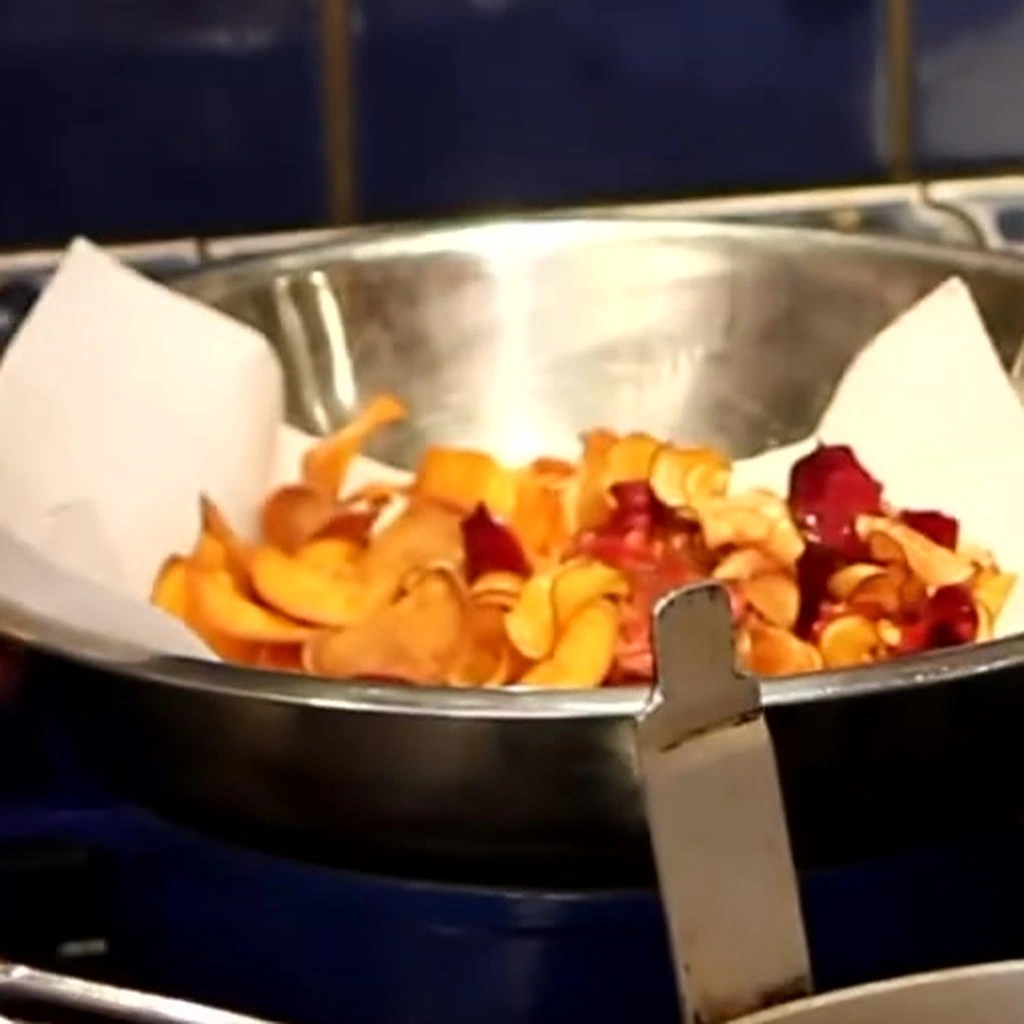
Let each batch drain briefly on paper, then spread it on a rack or dry tray. Season lightly while warm, starting with part of the measured salt and tasting before adding the rest. Avoid piling steaming chips into a deep bowl. Trapped moisture can undo careful frying even when the slices looked crisp in the oil.
Once the steam has escaped, combine the colors gently and serve promptly. The video shows paper-lined draining, then salt and plating; this version makes the cooling stage more explicit. Keep any optional dip in a separate bowl so the chips remain dry.
Substitutions
Regular potatoes can replace purple potatoes by weight. Red beets can replace the golden or Chioggia varieties, with a less varied appearance. If lotus is unavailable, replace it with more potato or omit it and make a smaller batch. The cooking times should still be judged by each vegetable’s thickness and cooled texture.
The video does not include a dip or pepper. If you want one, offer homemade mayonnaise, tartare sauce, or fresh guacamole separately. These are serving suggestions, not ingredients recovered from the source recipe.

FAQ
Does the temperature in the video work?
The video initially announces 180°C, approximately 356°F, rounded to 360°F, but later calls for the oil to return to 195°C, approximately 383°F. Those are different settings. The higher temperature leaves little margin before sweet potato and beets darken. For home cooks, this version uses 350°F for lotus and potatoes and 320–330°F for the sweeter roots. These are adapted starting settings, not a transcription of the original temperature.
Why are my chips soft after frying?
Common causes are thick slices, crowding that cools the oil, incomplete moisture removal, and stacking while hot. Test one small batch and judge it after cooling. A soft chip needs a change in the next batch’s preparation, rather than simply stronger seasoning.
Can I bake or air-fry this exact recipe?
Those methods require different oil quantities, spacing, temperatures, and timings. They are not interchangeable with this deep-frying recipe. For a separately developed alternative, see my crispy air-fryer fries recipe.
Can I prepare the chips ahead?
They are best on the day they are fried. Cool completely before putting them into an airtight container at room temperature, and aim to serve within one day. Never seal them warm. Their storage texture will depend on how thoroughly each vegetable was dried during frying.
What to serve with them
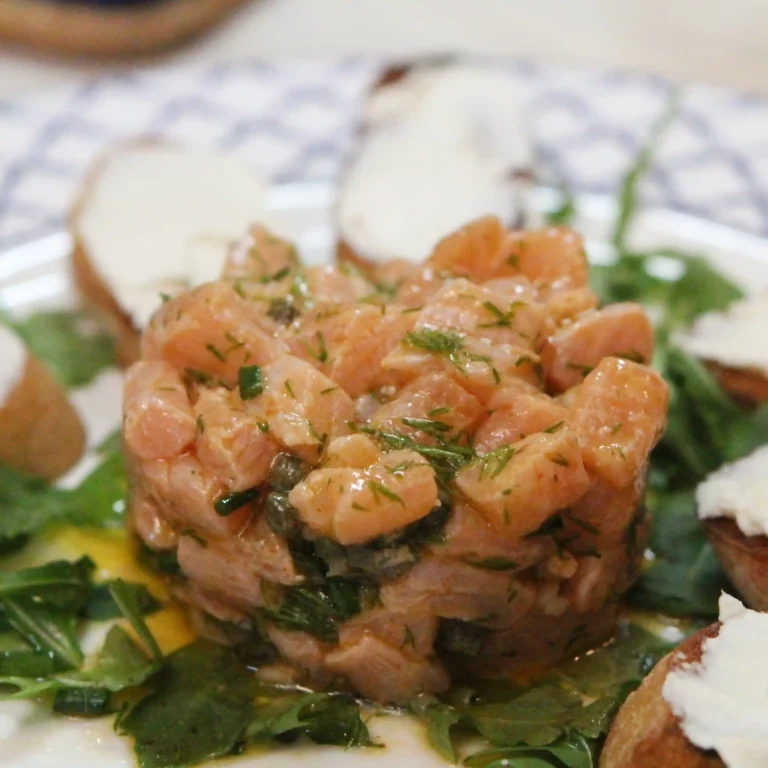
Serve a small bowl alongside a spicy smash burger or an Oklahoma onion smash burger. For an appetizer spread, add shrimp cocktail with Dijon mayonnaise or salmon tartare with lemon and capers, prepared separately.
This is a fried snack, even though its colors come from vegetables. The roots contribute some fiber, while absorbed oil adds much of the energy. The approximate calorie estimate depends on how much oil remains in the chips. Make these year-round with whichever beet varieties are available; the technique matters more than having every color.
Crispy Multicolored Vegetable Chips with Beets and Lotus Root
Ingredients
- 7 oz prepared lotus root
- 7 oz sweet potato scrubbed and trimmed
- 7 oz purple potatoes scrubbed and trimmed
- 12 oz prepared mixed beets: about 4 oz each red golden and Chioggia
- About 6–8 cups neutral frying oil according to equipment fill limits
- ½ tsp fine salt plus more only to taste
- Water for rinsing potato slices
Instructions
- Wash and trim the roots. Set up a thermometer, draining rack and mandoline with food holder. Slice each vegetable approximately 1/32–1/16 inch thick, keeping varieties separate, and dry thoroughly.
- Heat oil to 350°F, respecting equipment fill limits. Fry lotus in small batches, about 2–3 minutes, until lightly golden and bubbling subsides. Drain and check a cooled sample.
- Lower oil to 320°F. Fry dried sweet-potato slices in small batches, about 1–3 minutes, before edges darken. Drain and check texture after cooling.
- Keep oil around 320–330°F. Fry golden, Chioggia and red beet slices separately, about 2–4 minutes per batch. Watch reduced bubbling and check a cooled sample; avoid blackened edges.
- Bring oil back to 350°F. Rinse or soak potato slices briefly, then dry completely. Fry in small batches about 1–3 minutes until crisp after cooling. Let oil recover between batches.
- Drain briefly on paper, then spread on a rack. Season lightly while warm with salt. Let steam escape, combine colors gently and serve promptly.