Homemade Cinnamon Raisin Bread with Coarse Sugar
This homemade raisin bread has cinnamon mixed through the dough, plenty of raisins and a thin, golden crust topped with coarse sugar. It is shaped into four small loaves for slicing, rather than rolled around a pastry-cream filling. Give the dough time to become puffy and let the baked bread cool before cutting, so the crumb stays tender instead of turning gummy under the knife.
This recipe is based on my YouTube video, with a few adjustments since publication to balance the yeast and salt and make the rising stages easier to follow. The raisins are mixed into the dough, so every slice gets some fruit. It is a year-round breakfast bread, especially good toasted the following morning.
{VIDEO}
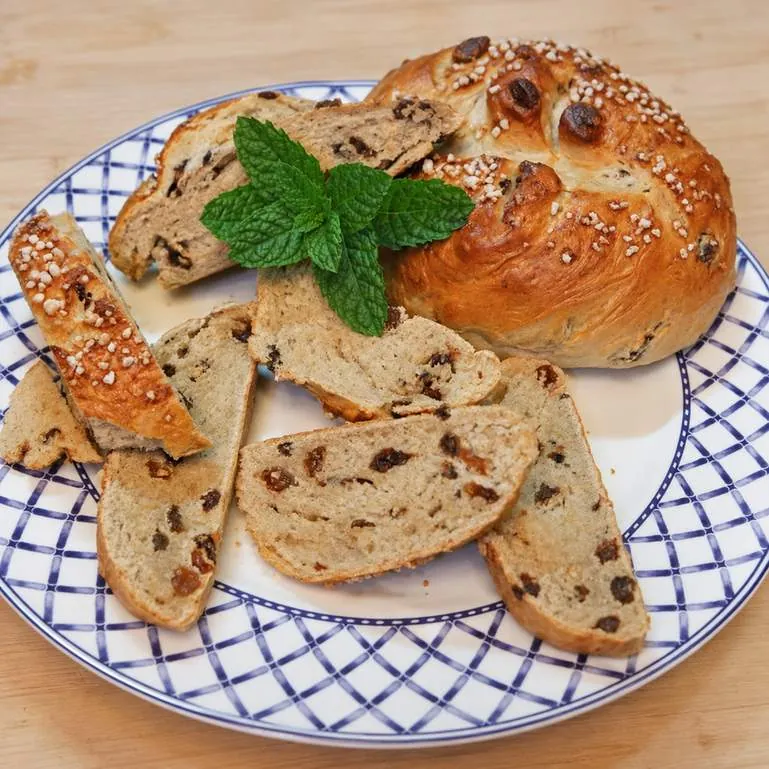
A sliceable loaf with cinnamon and raisins
The name pains aux raisins can suggest a spiral French pastry. Here, it means small loaves of raisin bread, made with water, eggs and a little butter. There is no laminated dough, custard or cinnamon-sugar swirl. Cinnamon colours the whole crumb lightly, and the raisins soften as the dough rests and bakes.
This is less rich than the buttery homemade brioche. It also differs from the raisin, chocolate and walnut brioche rolls, which have a separate filling. Compared with a plain white bread, this dough has eggs, fruit and a little sweetness.
I keep the butter modest because this is bread for slicing and toasting. The sugar on top adds a little crunch without needing icing. The result should still feel like bread, with a soft but substantial crumb.
Ingredients and the dough balance
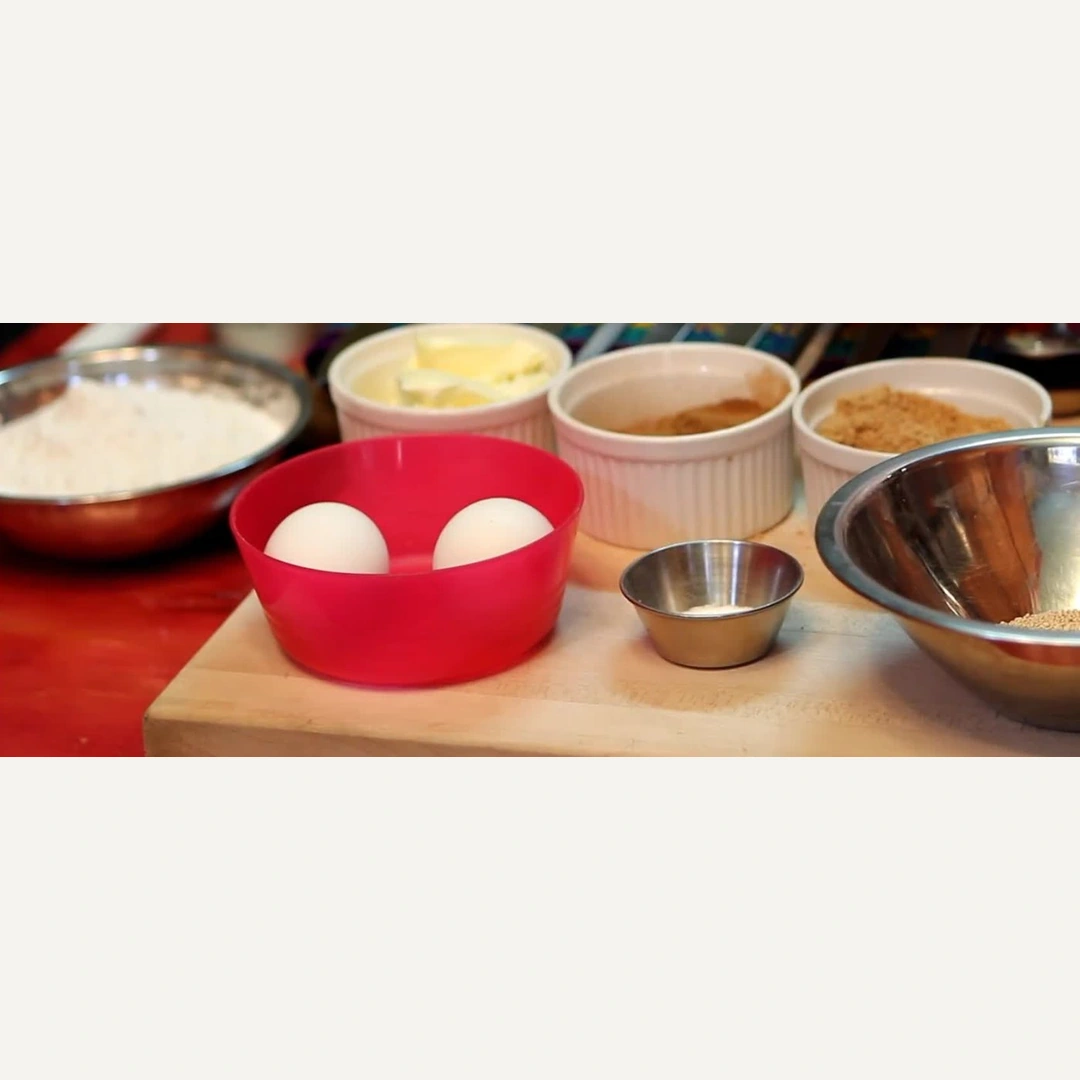
Use all-purpose flour. Weighing the flour in ounces gives a more consistent dough than scooping tightly packed cups. If measuring by volume, spoon the flour into the cup and level it without pressing it down. Keep the extra flour for the board separate from the flour in the dough.
The written recipe uses less dry yeast and more salt than the video. The original specifies a generous yeast quantity and a short final rest; this version gives the dough longer to rise. Salt also seasons the crumb and helps control fermentation. Do not shorten the rising stages just because the oven is ready.
Choose ordinary seedless raisins that feel pliable rather than hard. There is no rum soak in the video. Very dry raisins can be soaked briefly in warm water, then drained and dried thoroughly before adding. Weigh the raisins before soaking; wet fruit makes the dough harder to manage.
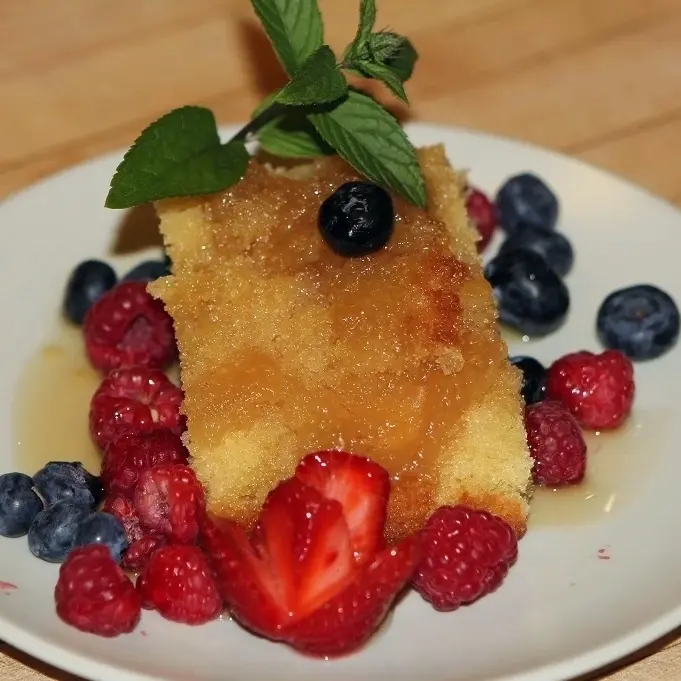
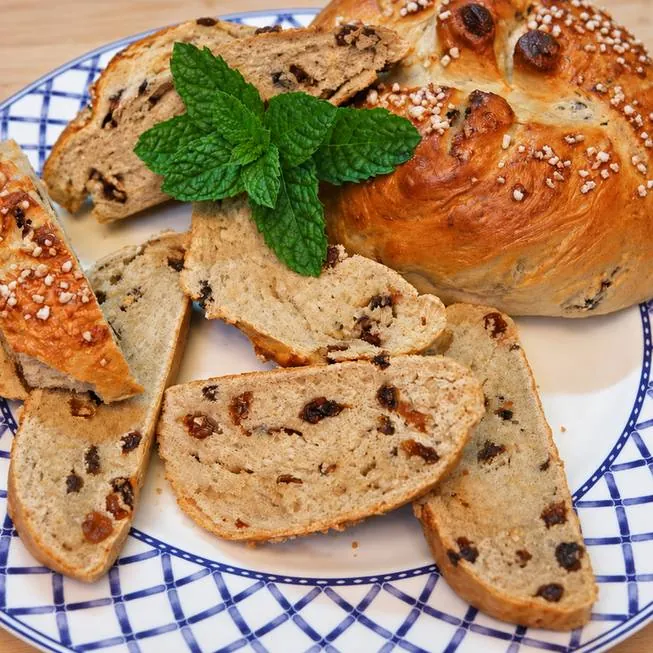
Brown sugar and ground cinnamon flavour the bread. Two eggs and a small amount of butter soften the crumb. A third egg is for the wash, and coarse or pearl sugar finishes the crust. The mint in the serving photograph is optional decoration, not an ingredient in the dough.
The water should feel comfortably warm, not hot. Hold back 2 tablespoons of the total at first. Different flours absorb differently, and you can add that small reserve if the dough feels stiff after mixing.
How to make the four loaves
1. Activate the yeast and prepare the liquid
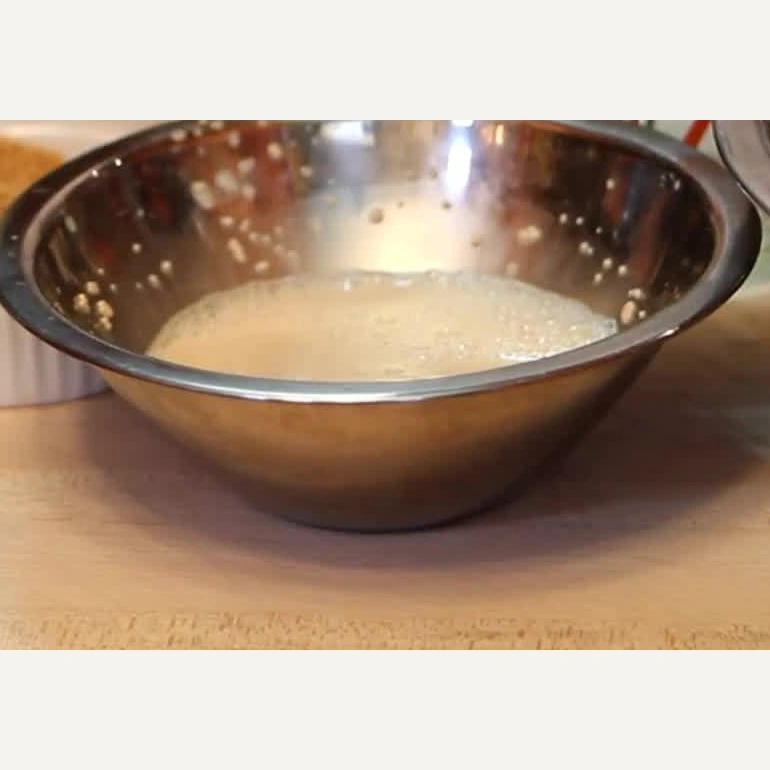
Take 1/2 cup from the measured water and check it is about 100 to 105°F. Stir in the active dry yeast and leave for 10 to 15 minutes, until a creamy foam develops. Use the remaining water to melt the butter gently, then take it off the heat. Let it cool to the same warm temperature before whisking in the two dough eggs.
Check the liquid again before combining it with the yeast. Keeping a saucepan over a burner is unnecessary for this written method; residual heat can make a small quantity hotter than intended.
2. Mix and knead the raisin dough
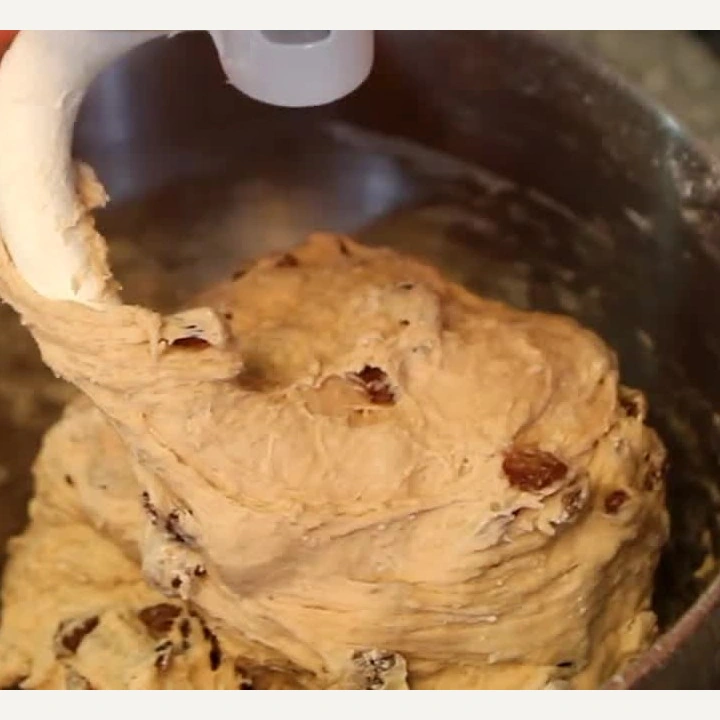
Combine the flour, brown sugar, fine salt and cinnamon in a large mixer bowl. Add the raisins, followed by the egg-butter liquid and activated yeast. Remember to hold back 2 tablespoons of the total water initially. Mix with the dough hook on low speed until no dry flour remains, then knead on the mixer’s recommended bread-dough setting for about 8 to 10 minutes.
Look for a soft, elastic dough that gathers around the hook but still feels slightly tacky. Add the reserved water a teaspoon at a time if needed. If the dough is genuinely spreading like a thick batter, add flour a tablespoon at a time; do not keep dusting until it becomes dry. A mixer needs capacity for a large dough batch. Kneading by hand is possible, but takes more effort.
3. Let the dough rise until expanded
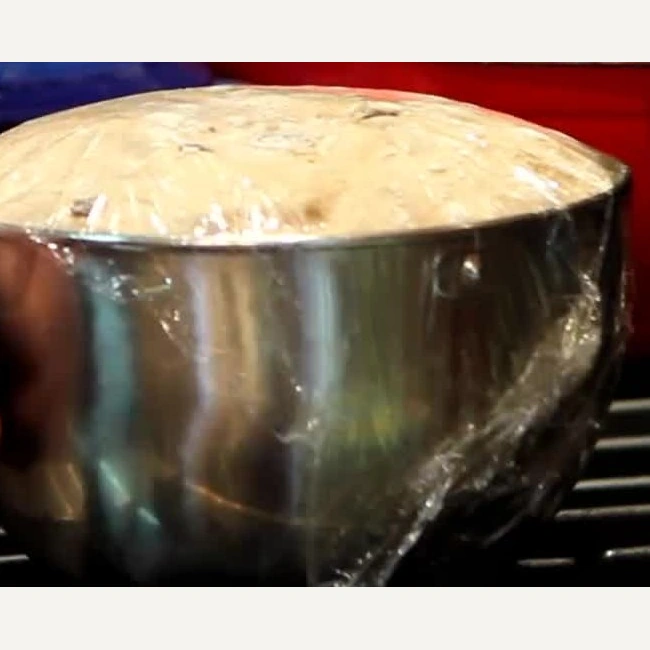
Gather the dough into a ball, put it in a roomy bowl and cover it. Leave in a comfortably warm spot for about 60 to 90 minutes, or until roughly doubled. A cool room or cinnamon in the dough can make this take longer.
I look for expansion and a lighter feel rather than a precise minute count. If it remains tight and heavy, give it more time. The bowl must leave room above the dough so it does not push into the covering.
4. Divide and shape
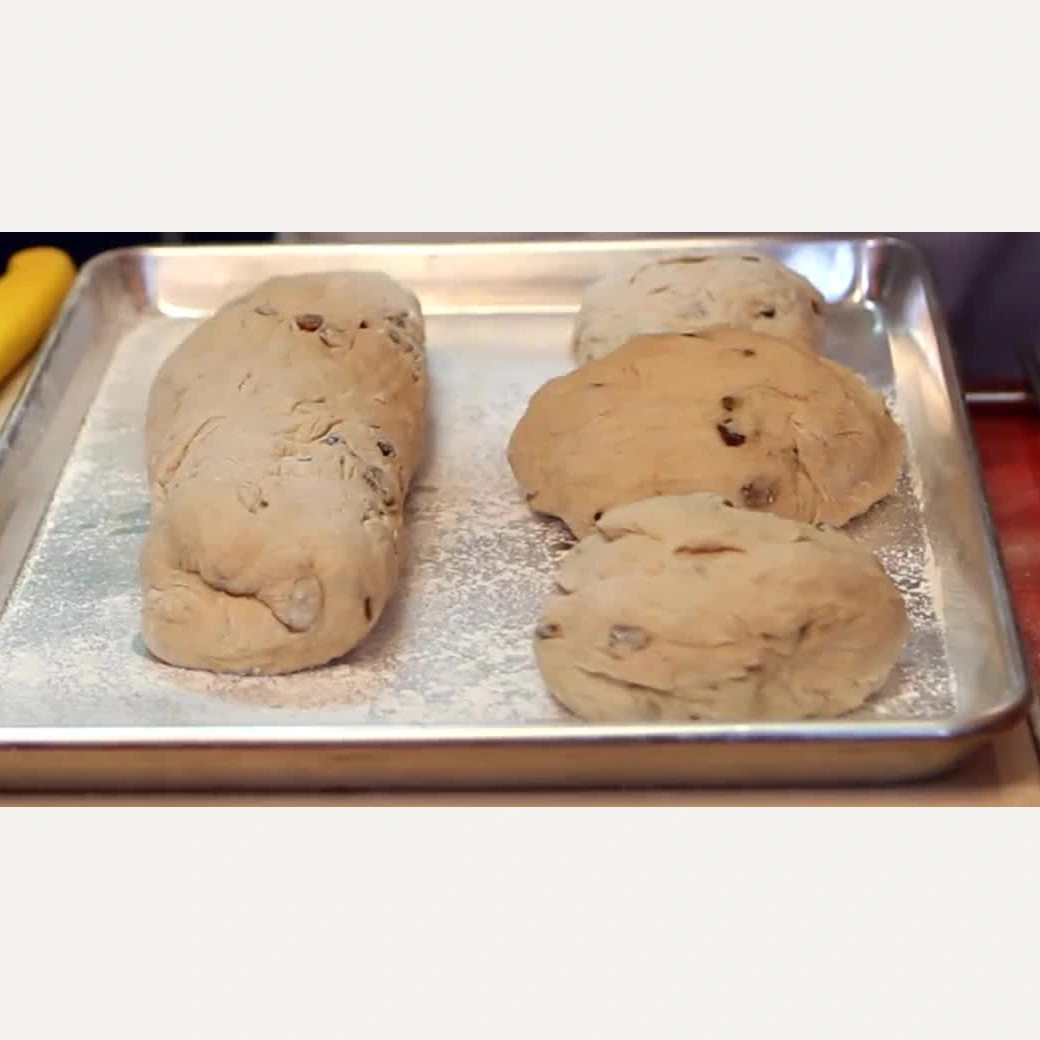
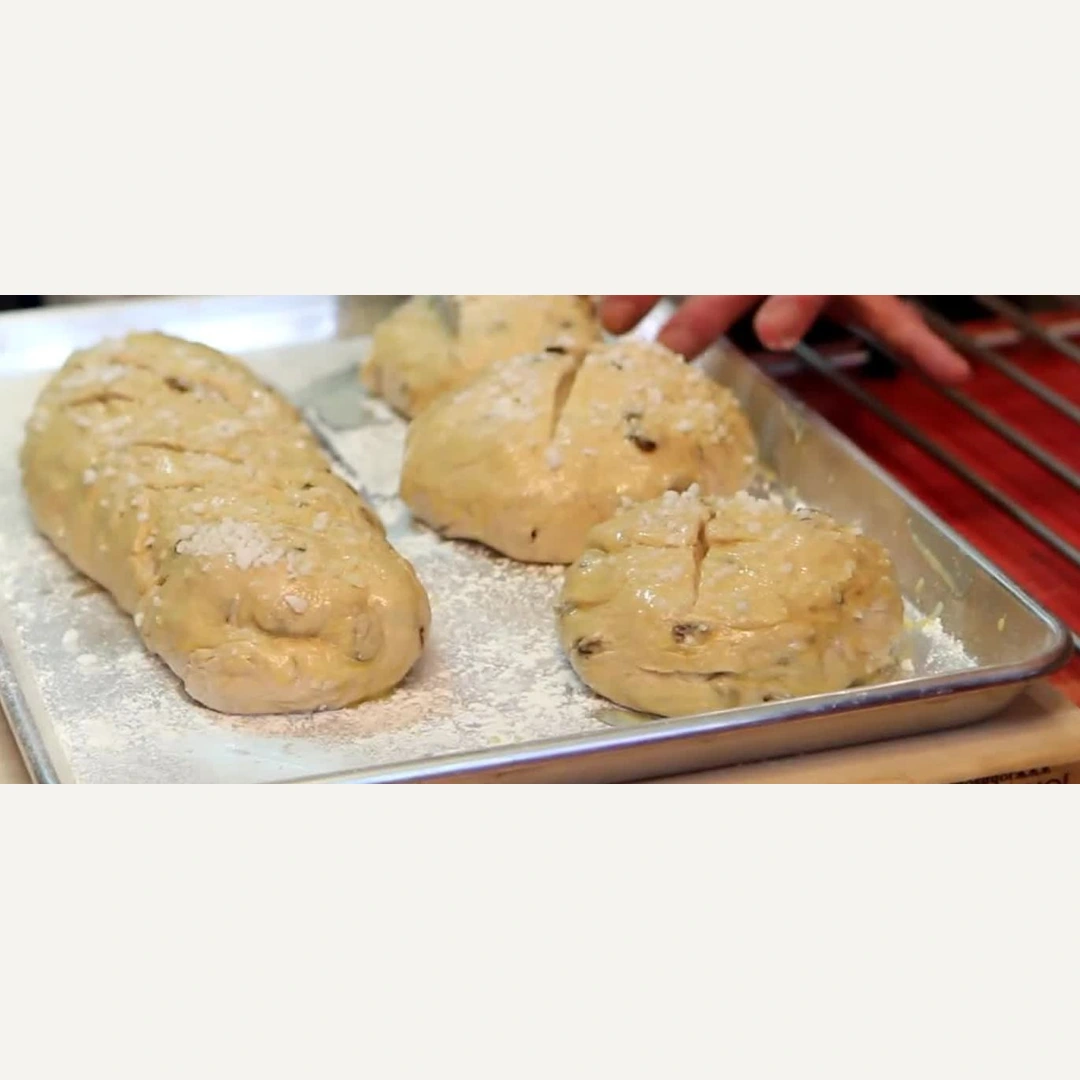
Turn the dough onto a lightly floured board and gently press out the largest air pockets. Divide into four portions. Shape one into a short oblong and three into rounds, as in the video, keeping the surface fairly taut and pinching the seams underneath.
Put the loaves on a parchment-lined large baking sheet, leaving at least 3 inches between them. Use two sheets if your tray cannot give them room to expand. Tuck exposed raisins under the surface where possible so they do not burn.
5. Glaze and allow the final rise
Beat the remaining egg with 1 tablespoon water. Brush a thin layer over the loaves and scatter the coarse sugar over them. Make shallow cuts across the oblong and a cross on each round. Cover loosely without letting the covering stick to the glaze.
Let rise for about 30 to 60 minutes, until visibly puffy. A light fingertip indentation should return slowly. Preheat the oven to 375°F during this rest. The short rest shown in the video is not a reliable target after reducing the yeast.
6. Bake and cool before slicing
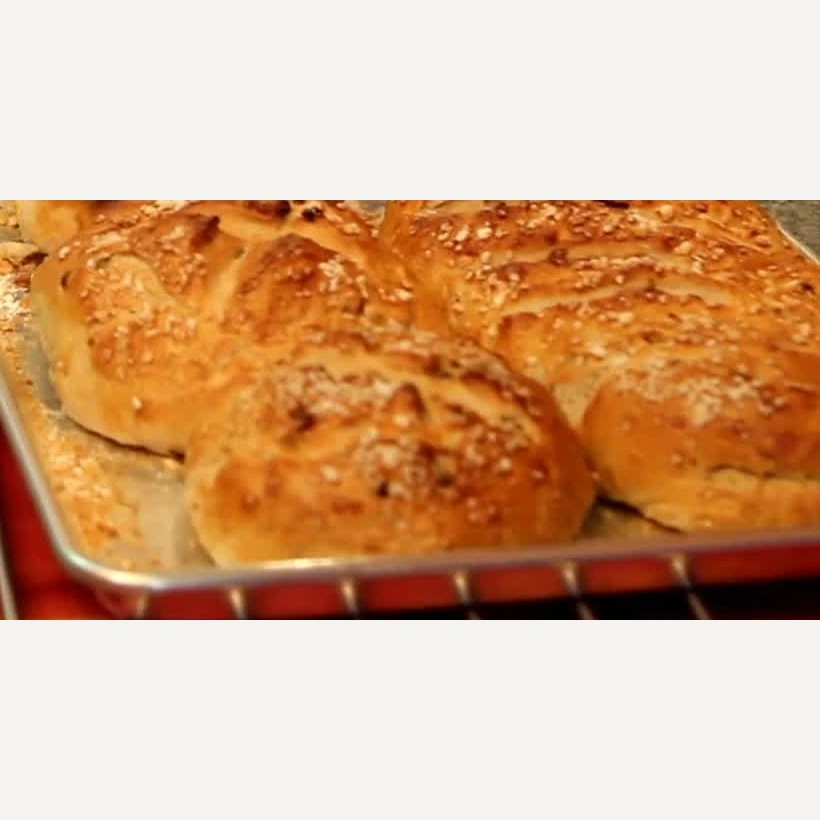
Bake for about 30 to 35 minutes, until golden brown and the centre of a loaf reaches at least 190°F. Check the centre of the thickest part, avoiding a raisin. If the crust colours too quickly, cover loosely with foil while the interior finishes.
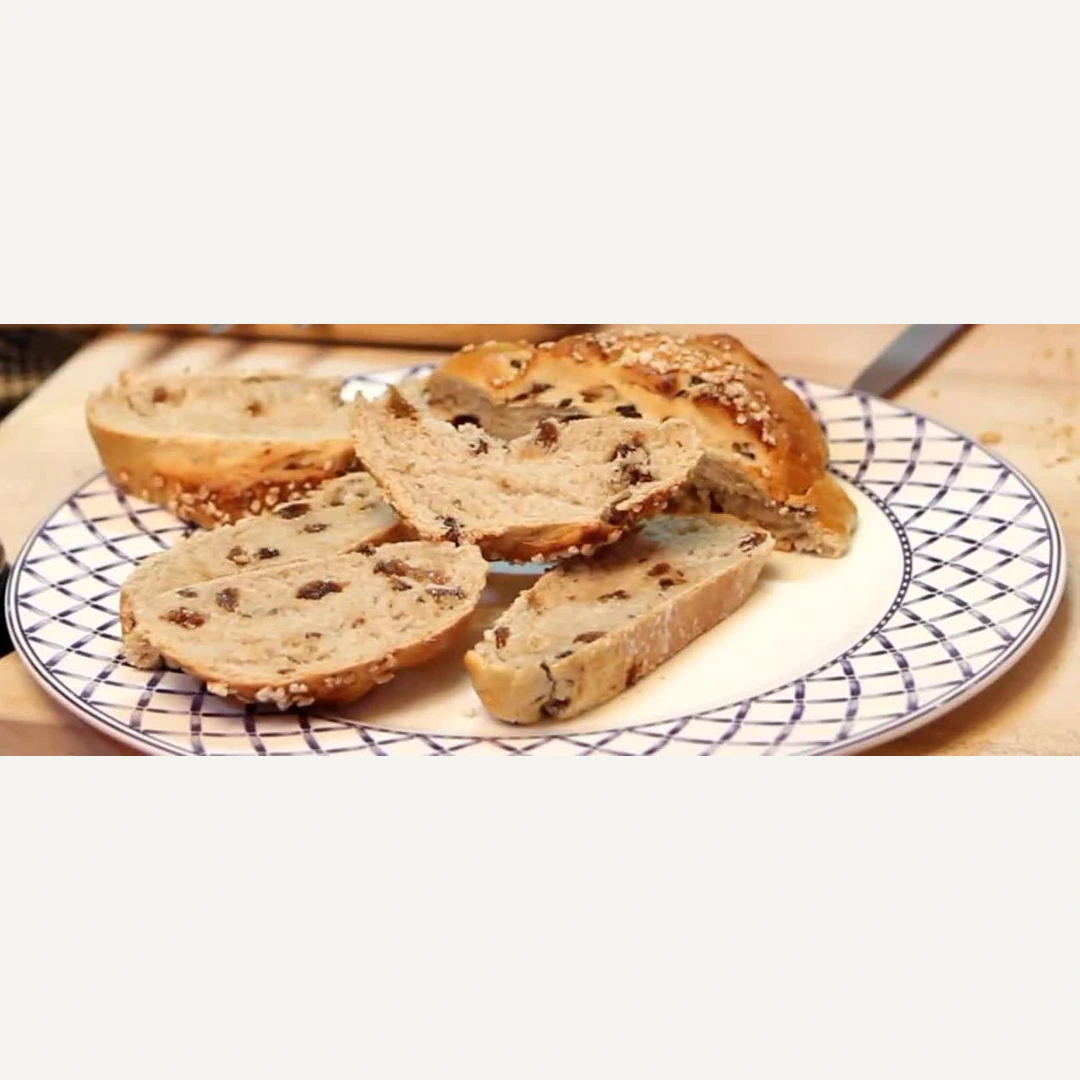
Move the loaves onto a rack and cool for at least 1 hour before slicing. The crust may crackle slightly as it cools. Cutting immediately traps steam under the knife and can make a properly baked loaf look underdone.
Substitutions
Golden raisins can replace dark raisins by the same weight. Dried cranberries give a different, sharper flavour; keep the same total amount of dried fruit rather than adding an extra handful to an already generous fruit load.
Instant yeast can replace active dry yeast by the same weight. Mix it with the flour and add all the measured water through the liquids; watch the dough rather than assuming exactly the same rising time. Baking powder is not a replacement for yeast here.
Coarse sugar can replace pearl sugar, or you can leave the topping off. Avoid adding a cinnamon-sugar filling without changing the shaping method. For an actual filled spiral, the cinnamon rolls with cream cheese icing are designed for that result.
Questions about the crumb and rising
Why is my dough sticky?
Water, eggs and flour need time to come together. A little tackiness is normal. Knead before deciding it needs more flour, then make small adjustments. A dry, stiff dough gives a tighter crumb.
Can I bake one large loaf instead?
That changes the baking time considerably. The timings here are for four smaller loaves. One very large loaf may brown before its centre is baked, so keep the four-piece shaping for the most predictable result.
How should I store it?
Once completely cool, wrap well and keep at room temperature for up to 2 days. Slice and freeze what you will not use promptly. Toast slices straight from frozen. Day-old slices also work in French toast with maple syrup.
Is this a very sweet bread?
Most of the sweetness comes from the raisins, with a little brown sugar in the dough and sugar on the crust. It is still an enriched bread containing eggs, butter and dried fruit, rather than a low-sugar or high-protein recipe.
Serving ideas for breakfast and brunch
Serve with butter or a little homemade strawberry jam. The brunch recipe collection gives savoury dishes to place alongside it, while almond hot chocolate makes a warming drink for a weekend breakfast.
For other cinnamon baking, apple cinnamon muffins are individual portions and apple cinnamon bread is a separate fruit loaf recipe. Keep those alternatives in mind when you want another bake rather than changing the balance of this yeast dough.
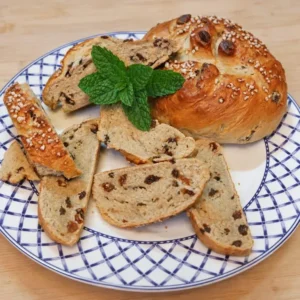
Homemade Cinnamon Raisin Bread with Coarse Sugar
Ingredients
- 1 lb 12 1/4 oz all-purpose flour about 6 2/3 cups, spooned and levelled, plus a little for dusting
- 2 cups plus 2 tablespoons warm water divided; hold back 2 tablespoons initially
- 3 1/4 teaspoons active dry yeast
- 2 teaspoons fine salt
- 3 tablespoons packed brown sugar
- 1 tablespoon ground cinnamon
- 10 1/2 oz seedless raisins about 2 cups
- 1 1/2 tablespoons unsalted butter
- 2 large eggs for the dough
- 1 large egg for the wash
- 1 tablespoon water for the wash
- 2 tablespoons coarse or pearl sugar for the topping
Instructions
- Measure all ingredients. Take 1/2 cup from the total water at 100 to 105°F and stir in active dry yeast. Let foam for 10 to 15 minutes.
- Melt butter gently in the remaining water, reserving 2 tablespoons water from the total. Remove from heat and cool to 100 to 105°F before whisking in the two dough eggs.
- Combine flour, brown sugar, salt, cinnamon and raisins. Add egg-butter liquid and yeast mixture. Mix and knead about 8 to 10 minutes until soft, elastic and slightly tacky. Add reserved water as needed.
- Cover in a roomy bowl and let rise about 60 to 90 minutes, until roughly doubled. Give more time if needed.
- Gently deflate, divide into four portions and shape one oblong and three rounds. Place seam-side down on parchment-lined sheets with at least 3 inches between loaves.
- Beat the wash egg with 1 tablespoon water. Brush loaves, sprinkle with sugar and make shallow slashes. Cover loosely and let rise 30 to 60 minutes until puffy and a fingertip mark returns slowly. Preheat oven to 375°F.
- Bake about 30 to 35 minutes, until golden and the centre reaches at least 190°F. Cover loosely with foil if browning too fast. Cool on a rack for at least 1 hour before slicing.