Garden Salad with Lemon Basil Dressing
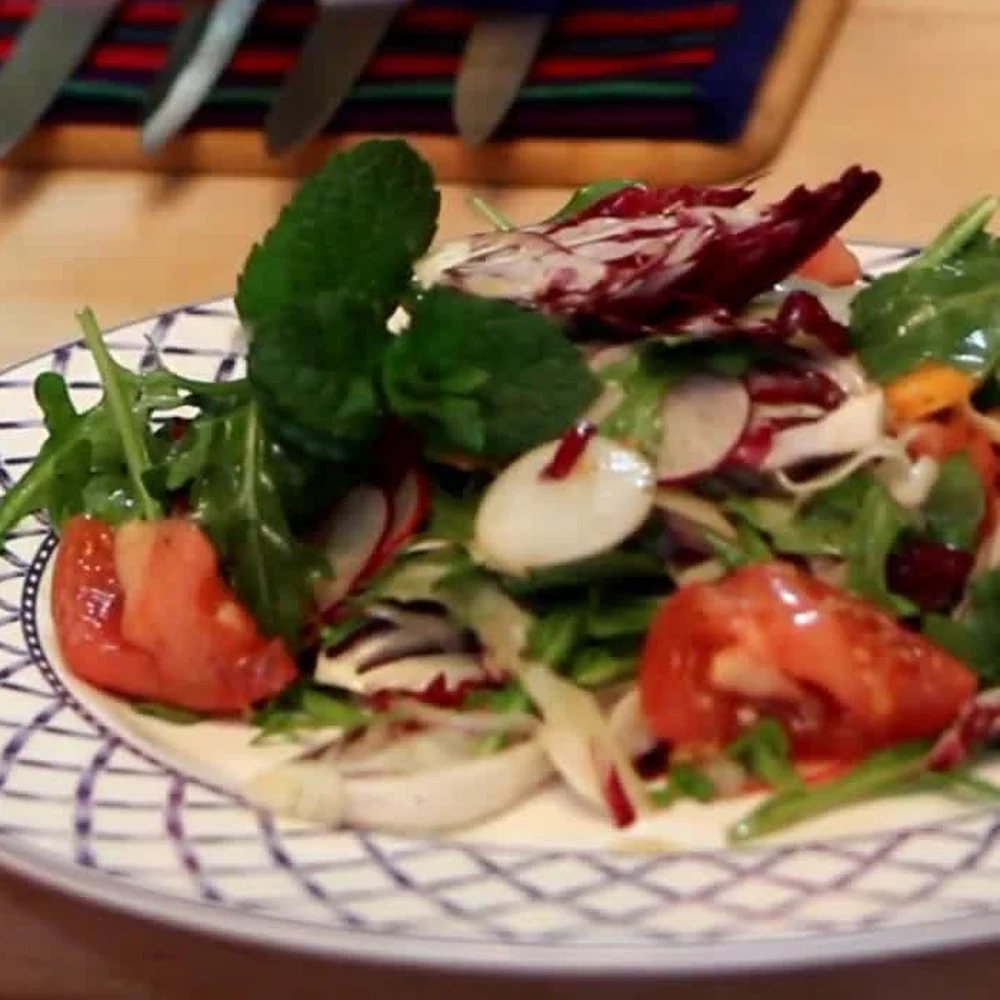
This garden salad combines arugula, radicchio, radishes, carrots, fennel, red onion and tomato with a fresh lemon-basil dressing. Thin slices make the crisp vegetables easy to eat alongside the tender leaves. Serve it as a colourful, no-cook side salad, with a small mint garnish if you want the finish shown in the video.
A garden salad is a mixed raw vegetable salad whose appeal comes from the balance of fresh leaves, crunchy vegetables and dressing. This version is based on my video, with measured amounts and clearer slicing and drying instructions added since publication. The basil is blended into the dressing; mint is only an optional finishing garnish.
{VIDEO}
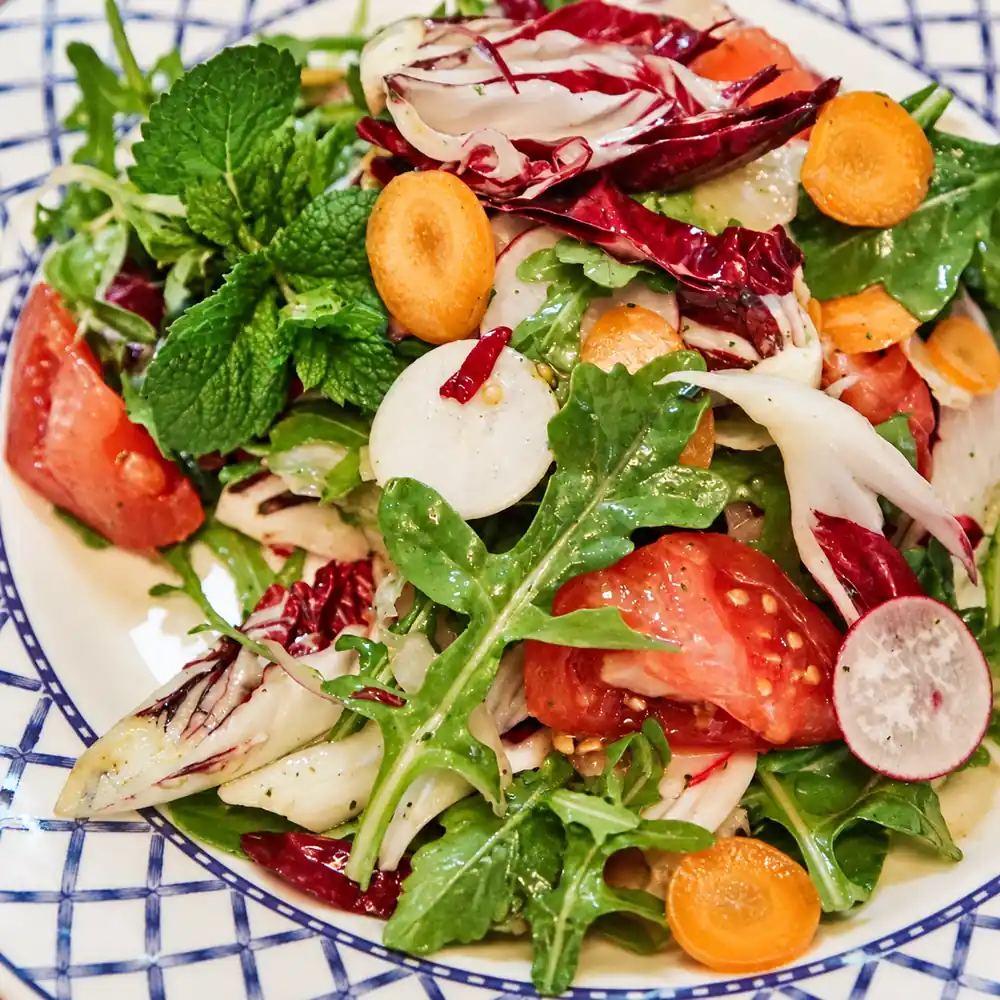
A fresh salad with plenty of texture
Arugula brings a peppery note, radicchio brings gentle bitterness, carrots add sweetness, and fennel contributes a light anise flavour. Radishes give a crisp bite while tomato makes the salad juicier. I keep the firm vegetables thin so they share a forkful naturally with the leaves. Big carrot chunks would change that balance and make a delicate salad much harder to eat.
For another combination of mild and bitter leaves, try romaine and endive salad. The crunchy red chicory salad puts more emphasis on chicory itself. Here, radicchio is one part of a larger vegetable mixture, so it should not crowd out the arugula and garnishes.
Does this recipe work, and are any ingredients missing?
Yes, the method is practical: prepare the raw vegetables, make a blended citrus dressing, toss and serve. No cooking, cheese or mayonnaise is needed for the filmed result. The video names the ingredients but does not supply a complete set of weights. This written card therefore standardizes the vegetable quantities for four side portions while keeping the same ingredient combination.
The oil is measured by eye in relation to the lemon juice in the video. The written version uses 2 tablespoons of lemon and ½ cup of olive oil, a rich 4:1 oil-to-lemon ratio. That amount makes about ⅝ cup of dressing before the basil is added. It is a batch to add gradually, not a reason to saturate the greens. A very bitter oil can amplify the bitterness already present in arugula and radicchio.
The main omissions are technique details. Wet leaves dilute the dressing, thick carrot or fennel slices feel hard, and early dressing makes the greens lose their lift. None of those problems requires an extra ingredient. Dry well, slice thinly and toss close to serving. This is a technical review and a clarified recipe, not a claim that the measured version has been newly kitchen-tested.
Ingredients for four side portions
2¾ oz arugula, about 3 loosely filled cups
1 small head radicchio, about 5¼ oz, trimmed
6 small radishes, about 3½ oz
2 small carrots, about 4¼ oz, washed and trimmed
¼ small fennel bulb, about 3½ oz usable weight
¼ small red onion, about 1¾ oz
1 medium tomato, about 6¼ oz
2 tbsp fresh lemon juice, strained
½ cup mild olive oil
1 small handful fresh basil leaves, about 10–12 leaves
¼ tsp fine salt, then more to taste
Freshly ground black pepper, to taste
A small mint sprig or a few mint leaves, optional, for serving
These weights describe the usable vegetable portions, except the radicchio head before its tough base is removed. They give you a consistent bowl even when produce sizes vary. Multicoloured radishes are attractive but ordinary red radishes work equally well. Small, tender carrots are easiest to slice. Choose a ripe but firm tomato that holds its shape when cut.
Use a clean, mild olive oil and fresh basil. The dressing is intentionally simple, without mustard. If you want to learn other dressing methods, compare quick lemon vinaigrette, classic vinaigrette and mustard vinaigrette. Those are separate recipes with different flavour balances; you do not need to combine them here.
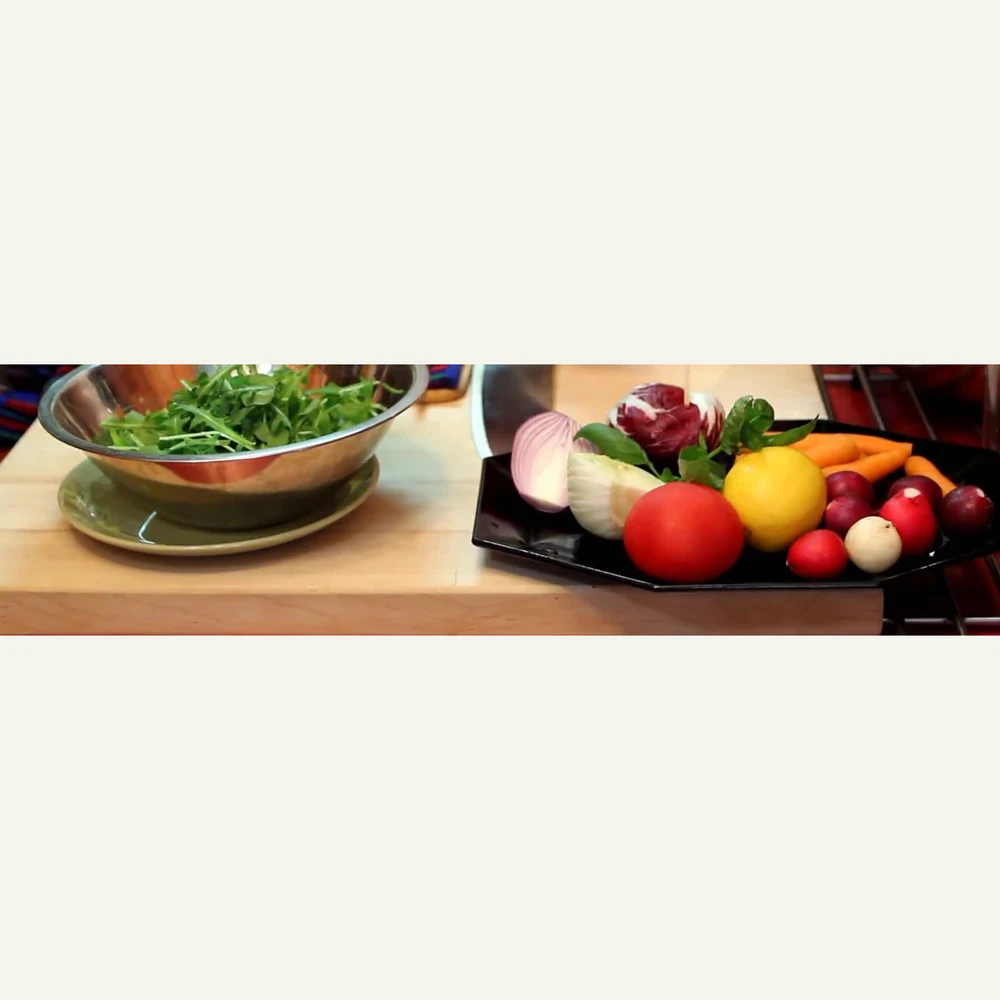
How to make the garden salad
1. Wash, dry and prepare the leaves
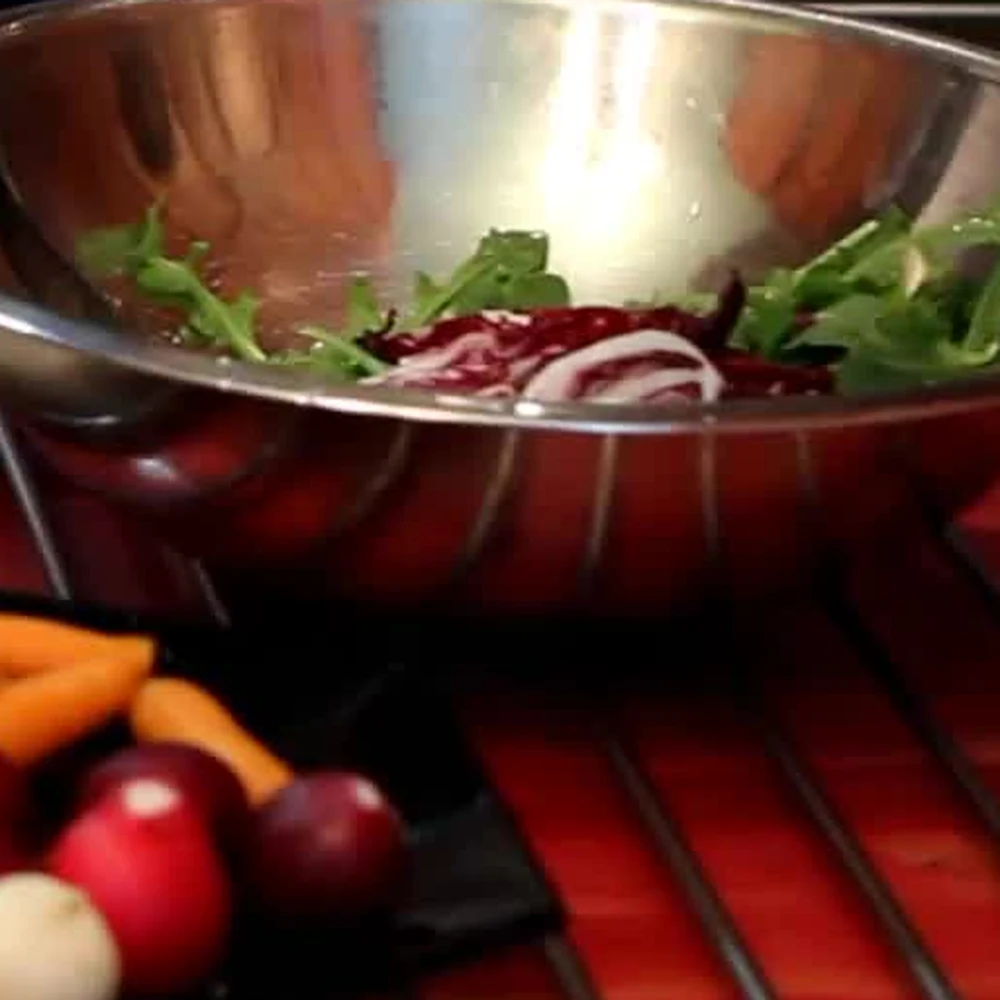
Wash the arugula and radicchio and dry thoroughly, preferably in a salad spinner. Remove damaged radicchio leaves and the hard base. Cut the usable radicchio into bite-size pieces or wide strips. Put both leaves in a large bowl with room for tossing. If the bowl is already packed tightly, use a larger one rather than compressing the leaves before the other vegetables go in.
2. Slice the radishes and carrots very thinly
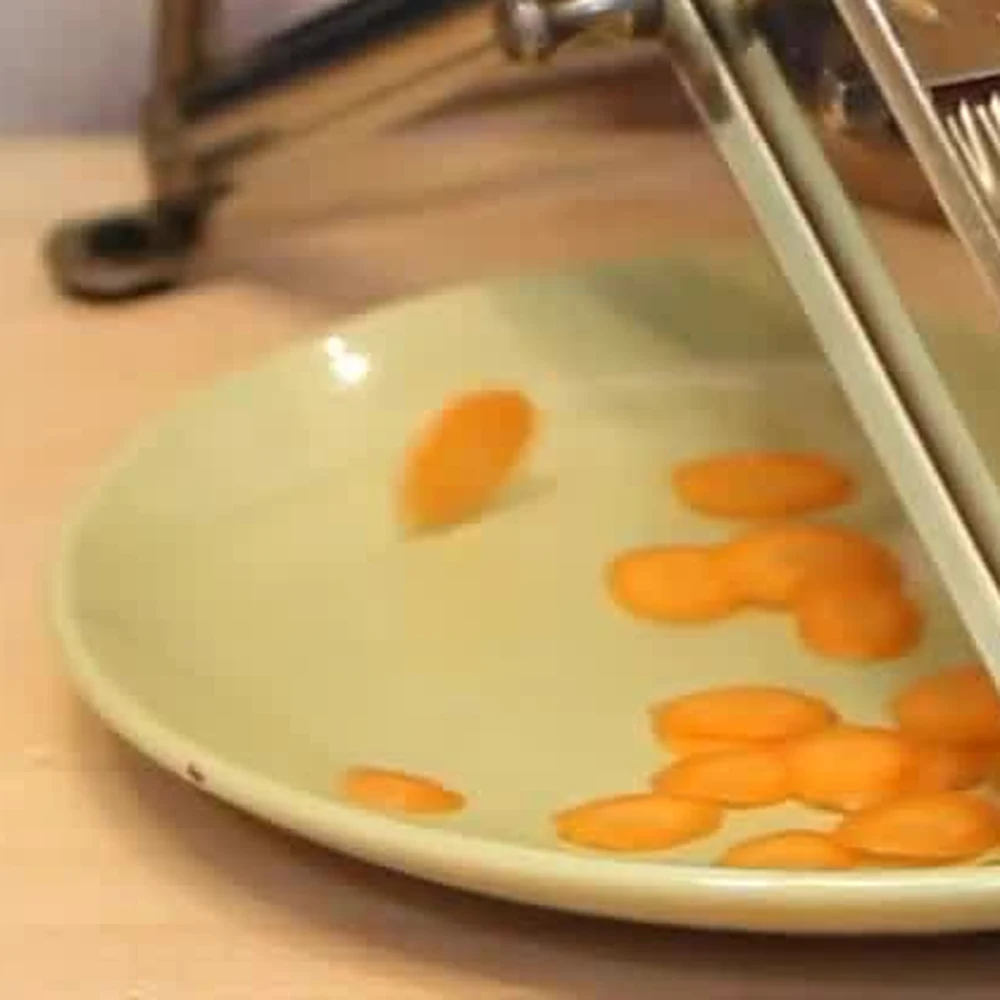
Trim the radishes and carrots. Slice into thin rounds, about 1⁄16 inch if using a mandoline, or as thin and even as you can with a sharp knife. Use the mandoline’s hand guard. Test one carrot slice: it should feel pleasantly crisp and easy to bite, not like a hard chunk. Add the rounds to the bowl. Uniform slices distribute more evenly than a mix of thick coins and fine shavings.
If you prefer grated carrots in a separate side dish, grated carrot salad with mustard vinaigrette uses that preparation. For this garden salad, the small rounds keep the colour and crunch visible without turning the whole bowl into a grated vegetable mixture.
3. Add onion, fennel and tomato
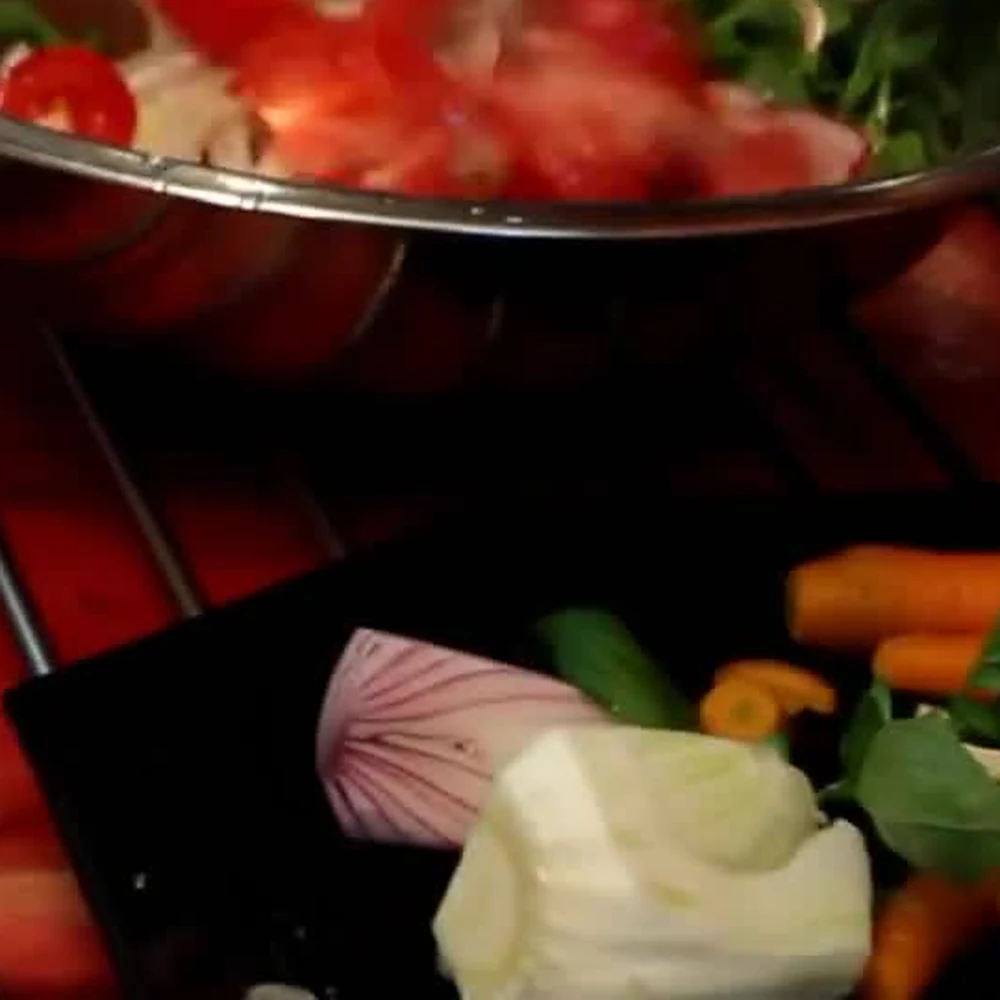
Thinly shave the red onion and fennel. Remove any tough fennel core from the portion you are using. A small amount of onion is enough; thick slices can dominate the salad. Add both to the bowl. Cut the tomato into bite-size wedges or chunks and add it with any modest amount of juice released during cutting. Avoid transferring a large puddle from an unusually watery tomato.
Keep the tomato pieces larger than the shaved vegetables so they remain recognizable after tossing. All the vegetables are raw. The fennel should be sliced finely enough to eat comfortably with the greens, not blanched or cooked. The video’s crisp contrast depends on that raw preparation.
4. Blend the lemon-basil dressing
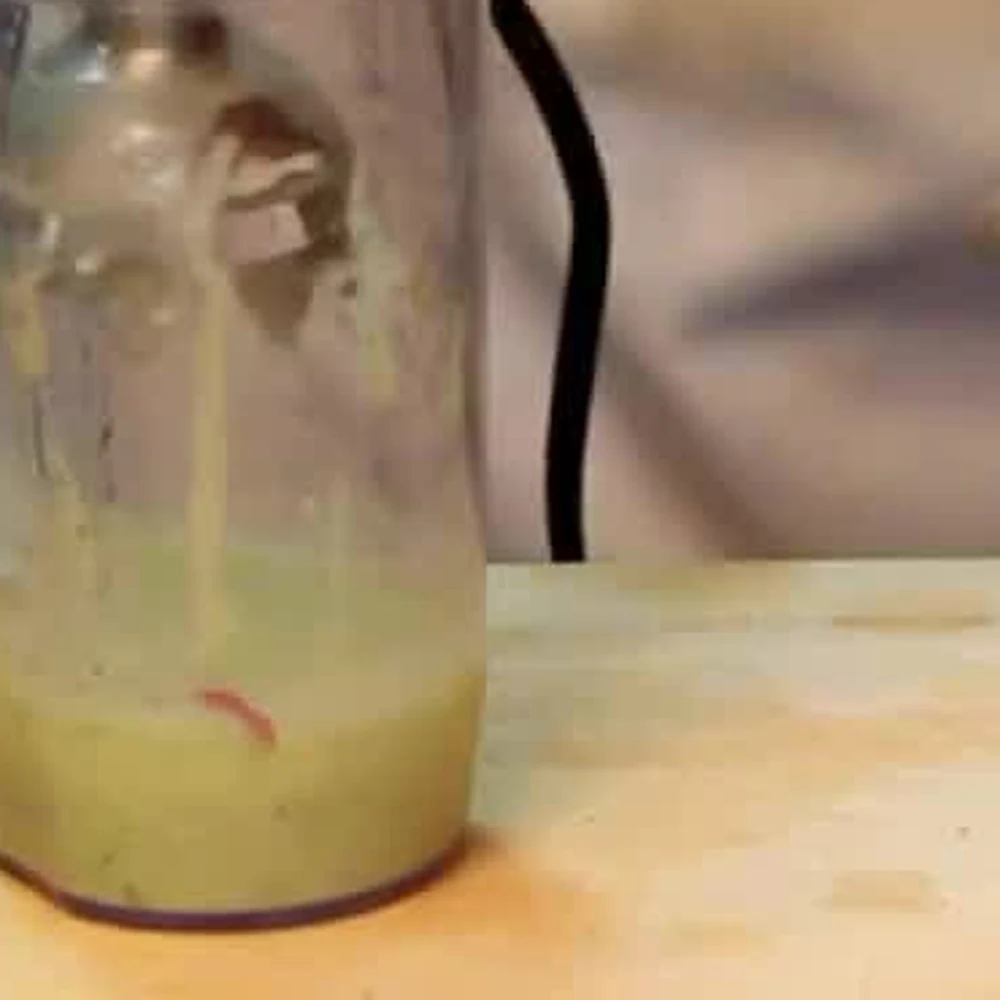
Put the measured lemon juice, basil, salt and pepper in a narrow blender-safe beaker. Add the olive oil and blend with an immersion blender, keeping the head covered by the mixture. Blend only until the basil is finely dispersed and the dressing is uniform. With a small volume, choose a beaker just wide enough for the blender head so it does not sit above the liquid.
Taste on a leaf rather than judging a spoonful of oil-rich dressing on its own. Adjust salt and pepper. If you want a sharper variation, add lemon a teaspoon at a time. Stir or blend again if the mixture separates while standing. The dressing should coat the leaves lightly; it does not need to behave like a permanent mayonnaise emulsion.
5. Toss gently and plate immediately
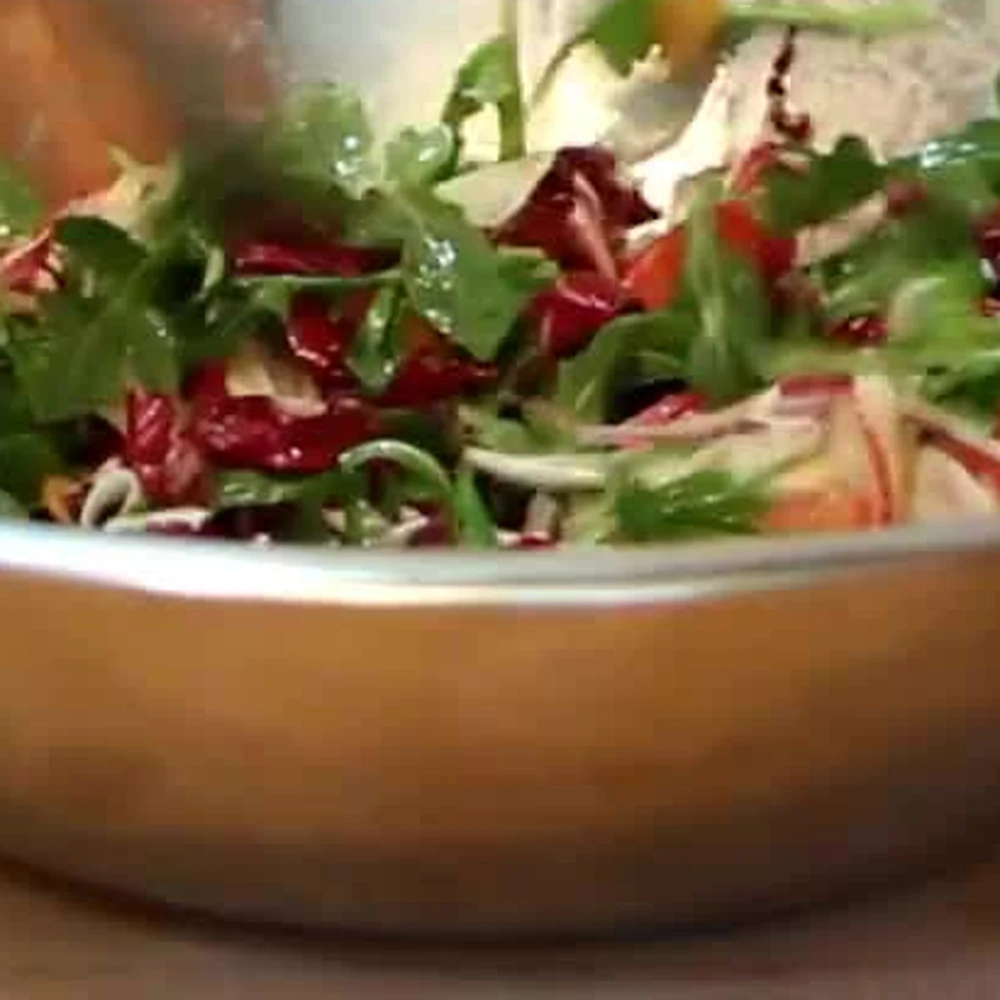
Start with about half the dressing. Lift the vegetables from the bottom of the bowl and fold them through the leaves with tongs or salad servers. Add more dressing gradually if needed, stopping when everything is lightly coated. Taste a forkful with both leaves and vegetables. Reserve any unused dressing rather than letting the salad sit in excess oil.
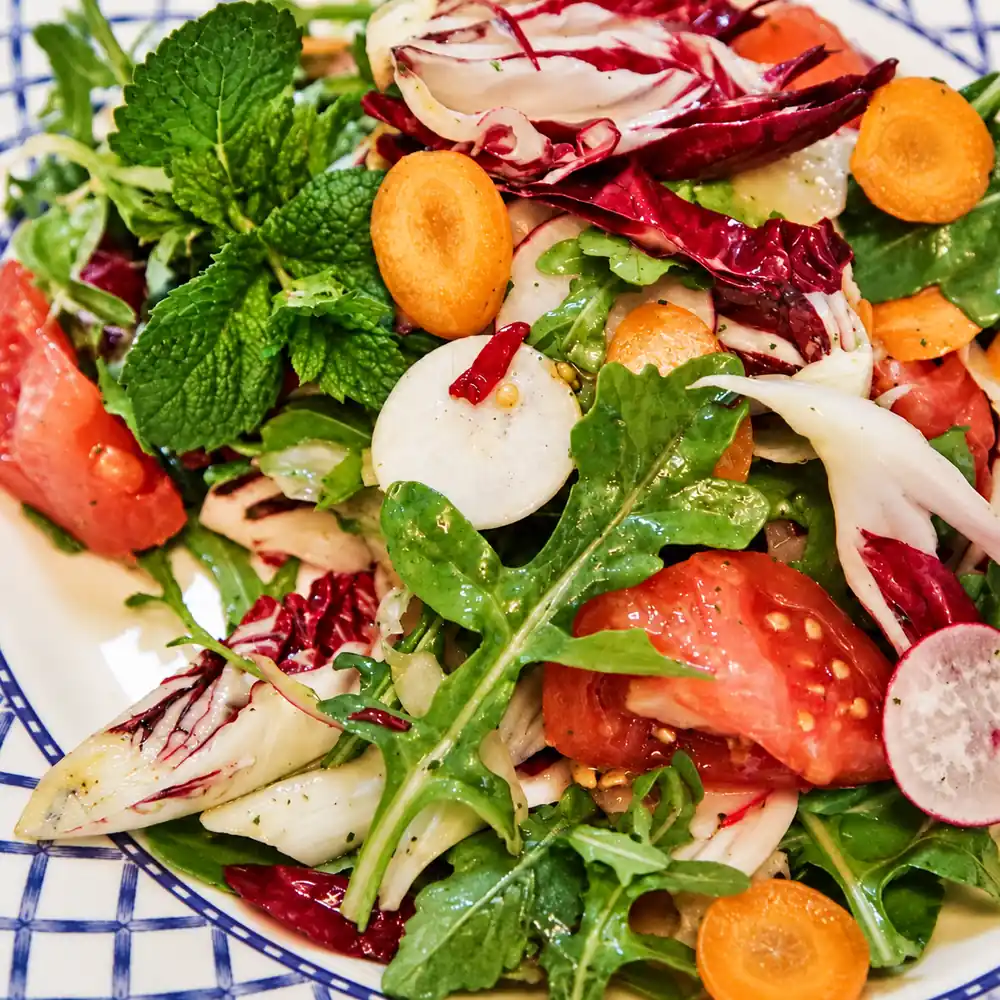
Arrange loosely on plates, keeping some height. Add a small mint garnish if desired, as shown at the end of the video. Mint is optional and is not a replacement for the basil in the dressing. Serve promptly; the greens have the best texture immediately after tossing.
Troubleshooting a raw vegetable salad
If the salad is watery, check leaf drying and the amount of tomato juice transferred to the bowl. Extra oil does not remove that water. Drain an obvious puddle gently and add a little freshly stirred dressing only if the leaves need it. For the next bowl, spin the leaves thoroughly and keep the second half of the dressing in reserve.
If the salad tastes harsh, the onion may be too abundant, the radicchio too dominant, or the oil too bitter. Reduce the onion portion or shave it more finely. If desired, rinse sliced onion briefly in cold water and drain thoroughly before adding. More arugula or a mild lettuce can soften a very bitter chicory batch, but that is a vegetable adjustment rather than a need for sugar.
Serving ideas and more salads
Serve this beside your main dish as four generous side portions. homemade focaccia makes a useful accompaniment. For a tomato-focused salad, tomato panzanella with crispy chickpeas offers a different combination. homemade Greek salad is another option when you want a more substantial cheese-and-vegetable side.
For leafy variations, flower mesclun salad uses a different mix of greens. The easy salad recipe collection provides more choices. This garden salad is a vegetable side, not a high-protein main meal. Keeping that role clear also makes the four-serving yield more useful.
Substitutions
A mild mixed lettuce can replace some arugula if its peppery flavour is too strong. Red endive can replace the radicchio as a variation, with a different shape and bitterness. Use red radishes if multicoloured ones are unavailable. Another tender carrot variety works as long as you keep the slices thin.
Omit fennel if you dislike anise flavour, or replace it with thinly sliced celery as a different variation. Basil remains the main dressing herb; mint alone gives a noticeably different sauce. A mild neutral oil can replace olive oil, but the flavour changes. There is no need to add cheese or nuts to make the original recipe work.
Frequently asked questions
Do I need a mandoline?
No. A sharp knife works if you take time to cut thin, even slices. A mandoline is convenient for uniform rounds, but use its hand guard instead of copying bare-handed handling.
Can I make this salad ahead?
Wash and dry the leaves, slice the firm vegetables and prepare the dressing separately. Keep the components covered and refrigerated. Add tomato and dressing close to serving so the bowl stays crisp rather than becoming a marinated salad.
Is the dressing basil or mint?
Basil goes into the blended dressing. Mint is the optional finishing garnish shown on the plated salad. You can omit that garnish without changing the sauce.
Will the dressing stay emulsified?
It may separate during storage because it contains no mustard or egg-based binder. Stir or briefly blend before using. Separation alone does not mean the recipe has failed.
Garden Salad with Lemon Basil Dressing
Ingredients
- 2¾ oz arugula about 3 loosely filled cups
- 1 small head radicchio about 5¼ oz, trimmed
- 6 small radishes about 3½ oz
- 2 small carrots about 4¼ oz, washed and trimmed
- ¼ small fennel bulb about 3½ oz usable weight
- ¼ small red onion about 1¾ oz
- 1 medium tomato about 6¼ oz
- 2 tbsp fresh lemon juice strained
- ½ cup mild olive oil
- 1 small handful fresh basil leaves about 10–12 leaves
- ¼ tsp fine salt then more to taste
- Freshly ground black pepper to taste
- A small mint sprig or a few mint leaves optional, for serving
Instructions
- Wash and thoroughly dry arugula and radicchio. Remove the hard radicchio base, cut into bite-size pieces and put leaves in a roomy bowl.
- Trim and slice radishes and carrots into thin rounds, about 1⁄16 inch. Use a mandoline guard or a sharp knife. Add to bowl.
- Thinly shave onion and fennel, removing tough fennel core. Add them and the tomato cut into bite-size pieces.
- Blend lemon juice, basil, salt, pepper and olive oil in a narrow beaker with the blender head submerged. Taste on a leaf and adjust seasoning.
- Toss gently with about half the dressing, then add more only as needed to coat lightly. Reserve unused dressing.
- Plate loosely, add optional mint and serve promptly.