Escargot Puff Pastry Turnovers with Peppers and Tomato
A thick filling is what makes these golden pastry parcels work. Cooked escargots, sweet peppers, red onion and tomato sit inside a shell of puff pastry, with enough moisture to keep the filling pleasant but no loose sauce to soak the base. Let the filling cool before assembly, and leave a clean border so the edges can seal.
These escargot puff pastry turnovers are individual French starters filled with a cooked vegetable and snail mixture. They are different from escargots served in shells: the pastry holds the filling, and tomato provides the binding instead of a pool of garlic butter. Make them for a dinner with guests, a holiday starter or a weekend lunch with salad.
This recipe is based on my YouTube video, with a few adjustments since publication: measured quantities, a clear cooling stage and more precise sealing instructions. The video’s moderate oven and roughly forty-minute bake remain the starting point. The pastry underneath still decides when the parcels are ready.
{VIDEO}
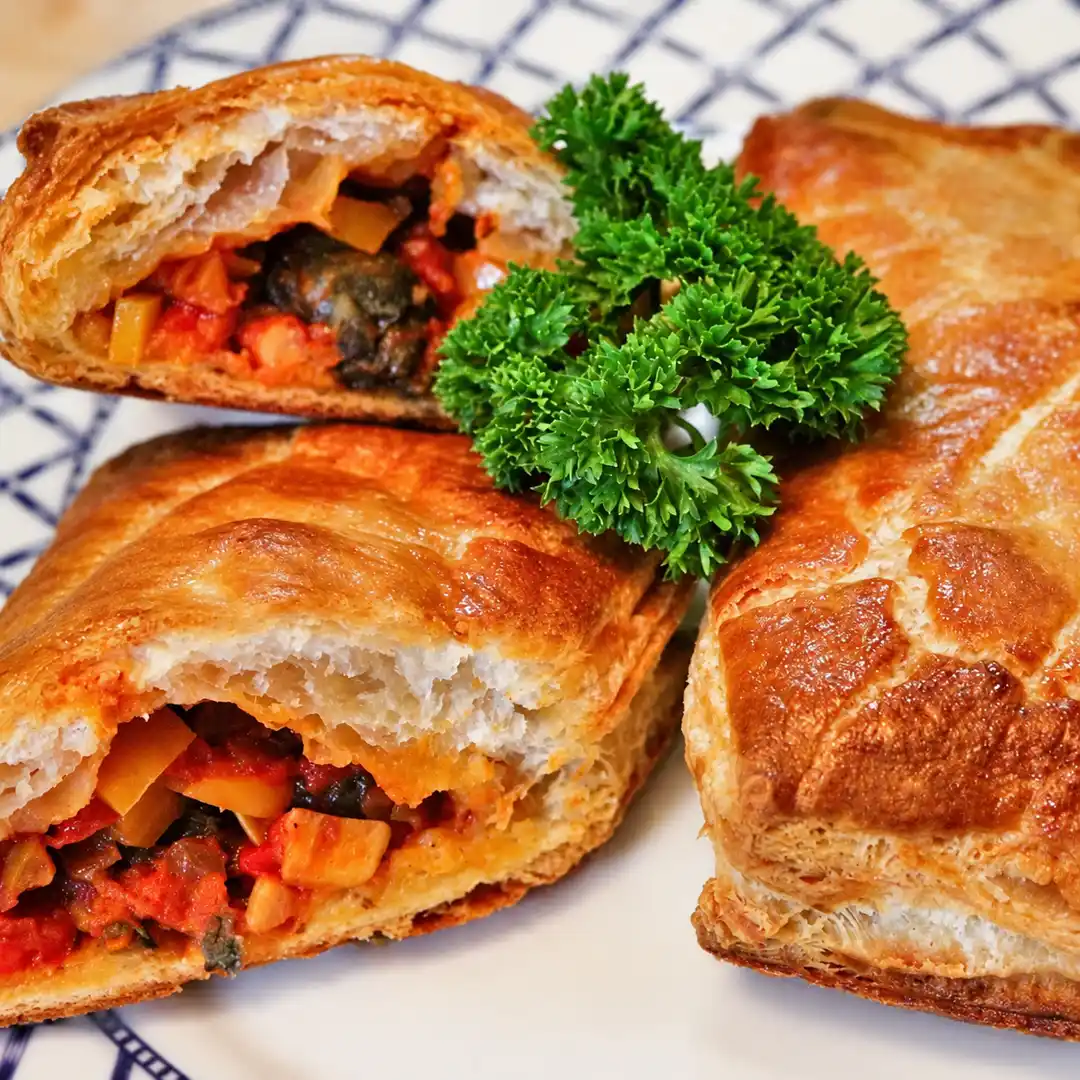
Tomato and peppers give this filling its character
The flavor here is more vegetable-forward than garlic-butter escargots. Sweet pepper, onion and tomato surround the snails, while basil and thyme keep the mixture aromatic. There is no cream or cheese in the filling, and no need to add either just to make it hold together.
I make it this way because reducing the vegetables and tomato gives the filling body without flour. It borrows some of the cooked pepper-and-tomato character of rustic ratatouille, but the dice is smaller and the mixture must be substantially drier. This is a rich pastry starter, so a modest serving makes sense before a main course.
Choose cooked escargots and cold pastry
For four large starters, use 24 cooked, shelled escargots, drained well. Canned escargots intended for cooking are convenient here. Check the label, rinse if directed and drain thoroughly; the packing liquid does not belong in the filling. This method starts with cooked snails, not raw or wild-collected snails.
Use about 1 pound 2 ounces of puff pastry. If frozen, thaw it according to its package instructions in the refrigerator. It should bend without cracking but still feel cool and firm. Two sheets can be rolled separately and divided into four rectangles. All-butter pastry gives a pronounced buttery flavor, but the important practical point is keeping whichever pastry you use cold.
The vegetable base uses 2 small sweet peppers, about 9 ounces after trimming, 1 small red onion, 3 garlic cloves and 3/4 cup crushed tomatoes. Choose red, orange or yellow peppers for sweetness and color. Fresh basil, thyme, olive oil, salt and pepper complete the filling. One beaten egg is enough to seal and glaze these four parcels.

Build the filling, then give it time to cool
1. Soften the finely diced vegetables
Remove the pepper stems, seeds and pale inner ribs. Cut the flesh and onion into small, even dice, about 1/4 inch. Chop the garlic finely. Large strips make the filling awkward to portion and can pull on the pastry when you try to close it.
Heat 1 tablespoon olive oil in a wide saucepan over medium heat. Add the peppers and onion with a little of the measured salt. Cook for 8 to 10 minutes, stirring, until softened with a little color. Add the garlic for the final minute so it becomes fragrant without catching on the bottom. The vegetables should have lost their raw crunch.

2. Add the tomato, herbs and escargots
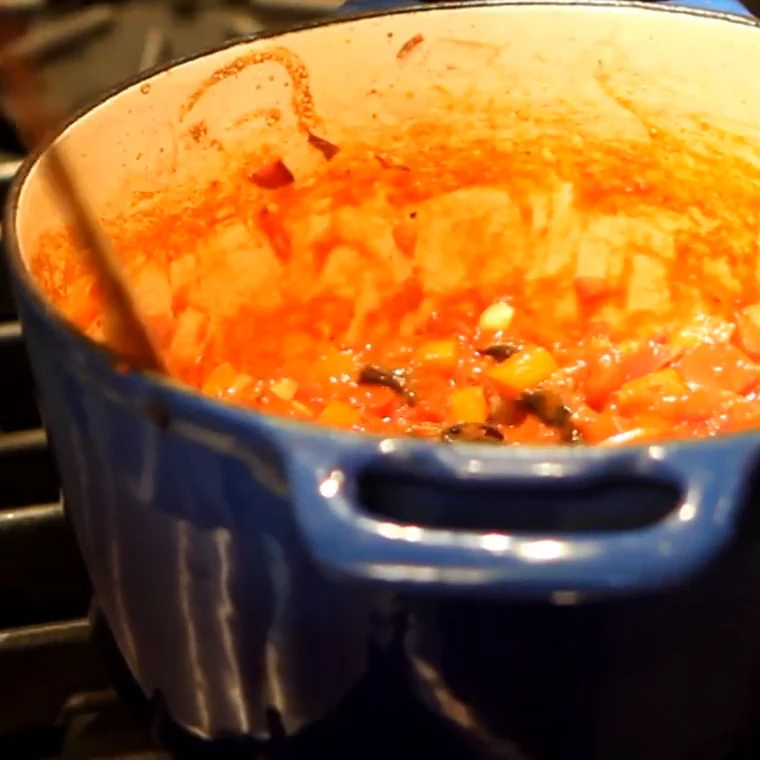
Add the crushed tomatoes, 1 tablespoon chopped basil, 1 teaspoon thyme leaves and the pepper. Simmer uncovered, stirring regularly. Unlike a spoonable fresh tomato sauce, this filling needs to gather into a soft mound. Draw a spoon across the bottom: the channel should remain visible briefly rather than immediately filling with watery liquid.
Fold in the drained escargots and simmer gently for another 2 to 3 minutes. Taste before adding the remaining salt, since canned snails can already be seasoned. If liquid collects around the snails, continue reducing gently. Do not compensate with flour; evaporating the excess liquid preserves the texture shown in the video.
Spread the filling in a shallow dish. Let the strongest steam escape, then refrigerate until cool, about 20 to 30 minutes depending on the dish and depth. Do not seal steaming filling inside the dough. A thin layer cools more quickly than a deep pot, and the pastry can remain in the refrigerator while you wait.
3. Roll and divide the pastry
Preheat the oven to 350°F and line a large baking sheet with parchment. Lightly flour the work surface. Roll the pastry evenly to roughly 1/8 to 3/16 inch thick, making one rectangle about 12 by 16 inches, or two equivalent smaller sheets. Cut four rectangles, each approximately 6 by 8 inches. The even thickness matters as much as it does for puff pastry cheese straws: thick patches take longer to dry through.
Use a sharp knife and clean downward cuts. If the pastry becomes sticky, soft or greasy, slide it onto a tray and refrigerate briefly. Adding more and more flour will not fix warm butter layers. Brush away excess flour from the edges that will be sealed.

4. Fill without stretching the dough
Beat the egg with 1 teaspoon water. Brush a thin film along two edges of each rectangle. Put a generous 1/3 cup of cool filling on one half, keeping a clear 3/4-inch border. Distribute the escargots evenly, about six per parcel. Fold the other half over to make a rectangle; a diagonal fold is also possible if using squares.
The top should drape over the filling comfortably. If you have to stretch it tight, remove a spoonful. Keep any extra filling separate to reheat and serve alongside. This is the same restraint that helps homemade sausage rolls hold their shape: more filling is not useful if it prevents a sound seal.

5. Seal, glaze and vent
Press the borders together, then crimp with a fork. Transfer the parcels to the baking sheet with space between them. Brush the tops lightly with egg, avoiding thick drips down the cut edges. Cut a small steam vent through each top. Decorative shallow scoring is optional and does not replace that opening.
Chill the assembled parcels for 10 to 15 minutes if they have softened. The video emphasizes the vent and the dry filling because steam needs a controlled exit. A parcel can be well browned on top and still open at the seam if the filling was wet or the border coated in sauce.

6. Bake until the base is cooked
Bake on the middle rack for about 40 minutes, checking from 35 minutes onward. Look for a deep golden top, distinct lifted layers and a firm, golden underside. Lift one carefully with a spatula to check. A pale, flexible base needs more time, even if the egg wash has already colored the top; loosely cover the tops if necessary.
Rest for 5 minutes before serving. The filling should be hot and cohesive when cut, with recognizable pieces of snail and pepper. A small parsley sprig or a few salad leaves are enough for the plate. Serve promptly while the layers still break into flakes.

Substitutions that keep the filling manageable
Use any combination of red, yellow and orange sweet peppers in the same trimmed weight. A yellow onion can replace the red onion. If using dried herbs, start with 1 teaspoon dried basil and 1/4 teaspoon dried thyme; their flavor is more concentrated, and you can adjust the cooled filling before assembly.
Crushed tomatoes vary in water content. A smooth passata can work, but it may need longer reduction. Keep the same thick final consistency rather than chasing a fixed simmering time. For a different pastry filling altogether, try spinach and goat cheese feuilletés; replacing snails with raw mushrooms in this recipe would require a separate cooking stage to remove their water.

Questions about sealing and preparing ahead
Can I make the filling the day before?
Yes. Cool it in a shallow container and refrigerate promptly, covered once chilled. Assemble with cold filling the next day. Keeping the dough and filling separate until assembly makes it easier to preserve the pastry texture.
Why did the bottom stay soft?
The filling may have been too wet, the dough too thick or the bake too short. Check all three. A dark top alone is not proof that the lower layers have baked. Avoid an extra sauce under the parcels when serving.
How should I store and reheat leftovers?
Refrigerate cooled leftovers within two hours and use within two days for best quality. Reheat in a 350°F oven until the center is hot and the pastry has firmed again. A microwave heats the filling but softens the crust. Keep salad and garnish separate.
Keep the rest of the plate fresh
Serve one large parcel with a crisp romaine and endive salad and a little classic vinaigrette. The bitter leaves and acidity balance the pastry. For an appetizer table, fresh tomato bruschetta adds a fresh element, while vegetable quiche offers another make-ahead savory option without repeating the snail filling.

Escargot Puff Pastry Turnovers with Peppers and Tomato
Ingredients
- 1 lb 2 oz puff pastry thawed but cold
- 24 cooked shelled escargots drained
- 9 oz trimmed sweet peppers about 2 small, finely diced
- 3 1/2 oz red onion about 1 small, finely diced
- 3 garlic cloves finely chopped
- 3/4 cup crushed tomatoes
- 1 tbsp olive oil
- 1 tbsp chopped fresh basil
- 1 tsp fresh thyme leaves
- 1/4 tsp fine salt divided, then to taste
- 1/4 tsp black pepper
- 1 egg beaten with 1 tsp water
- All-purpose flour for rolling
- Small parsley sprigs optional, for serving
Instructions
- Dice the peppers and onion finely. Heat the oil over medium heat; cook peppers and onion 8 to 10 minutes until soft. Add garlic for the last minute.
- Add tomatoes, basil, thyme, pepper and a little salt. Simmer uncovered until thick with no loose liquid. Fold in drained cooked escargots; simmer 2 to 3 minutes and adjust salt.
- Spread filling in a shallow dish, let strong steam escape, then refrigerate until cool. Keep pastry cold.
- Preheat oven to 350°F. Line a baking sheet with parchment. Roll pastry evenly to about 12 by 16 inches, 1/8 to 3/16 inch thick. Cut four 6-by-8-inch rectangles.
- Beat egg with water. Brush two edges lightly. Place a generous 1/3 cup cold filling on one half, about six snails per parcel, leaving a 3/4-inch border. Fold and crimp securely with a fork. Reserve excess filling separately.
- Arrange on the sheet, brush tops with egg and cut a small steam vent in each. Chill 10 to 15 minutes if softened.
- Bake about 40 minutes, checking from 35 minutes, until deep golden with firm, cooked bases. Extend baking as needed and cover tops loosely if darkening too fast. Rest 5 minutes and serve.