Best Homemade Lasagna (Canada & USA): Beef Lasagna with Cream-Enhanced Ragù, No-Béchamel Option
Lasagna is North America’s ultimate comfort casserole—crowd-pleasing, freezer-friendly, and perfect for Sunday dinner or holiday potlucks from Toronto to Texas. This upgraded “Cabin in Canada” version keeps the pepper-forward personality of my video while fixing the two classic problems: watery layers and cheese that slides. The secret is a properly reduced meat ragù, fresh herbs added at the right time, and cream used as an emulsifier (or a light béchamel if you prefer classic). I’ll show you how to use fresh sheets or dry no-boil pasta, how to scale for a 13×9-inch pan, and how to rest the lasagna so it slices like a dream.

This recipe is based on my YouTube video, but I’ve made key improvements since publishing: a thicker ragù, better moisture control, smarter use of cream for binding, and a bake schedule that delivers clean slices every time.
Along the way, you’ll find useful side pairings like Homemade Greek Salad, Potage Parmentier, and comfort-food classics such as Spaghetti with Meat Sauce and Homemade Beef Meatballs in Tomato Sauce to build an easy, family-friendly menu.
Why This Lasagna Works
1) Meat-tomato ratio.
In the video, the sauce used about 2 liters of tomatoes with a lot of peppers. Delicious—but wet. Here we rebalance to 1.2–1.5 L tomato base per 900–1000 g beef, switching partly to passata for body. The sauce simmers until spoon-coating, which sets layers instead of flooding them.
2) Vegetables cooked dry.
Bell peppers and a big onion add sweetness but also water. We sweat them hard until no liquid remains. If you love the pepper vibe, keep two; if you want more classic sweetness without juice, swap one pepper for 100 g finely grated carrot.
3) Herb timing.
Thyme and bay can simmer for an hour; fresh basil goes in at the end so it stays bright.
4) Cream used smartly.
Instead of pouring all the cream on top (where it can pool), we stir ½ cup into the ragù off heat. That’s an Italian “alla panna” nudge—tames acidity, binds fat and water, and coats the pasta. Then we drizzle the remaining ½ cup on the surface before the final cheese bake for a silky top.
5) Fresh vs. dry pasta.
Fresh sheets need a thicker sauce (steam will finish them). Dry sheets can handle a slightly looser sauce or a splash of water under the foil.
6) Bake hot, rest long.
We bake covered to cook the pasta and hydrate layers, then uncover to brown deeply. After baking, a 15–20 minute rest is non-negotiable for clean squares.
If you like creamy, comforting pasta dinners, you’ll also love Easy Creamy Tomato Pasta, Easy Cacio e Pepe, and Homemade Pesto Pasta.

Ingredients
Meat Ragù
- 900–1000 g lean ground beef ( 2–2.2 lb )
- 300 g bell peppers, diced (2 peppers, 10.5 oz )
- 200–250 g onion (red or yellow), finely chopped ( 7–9 oz )
- 20 g garlic, minced (about 4 cloves, 0.7 oz )
- 30 ml olive oil ( 2 Tbsp )
- 120–150 ml dry red wine or water for deglazing ( ½–⅔ cup )
- 120–150 g tomato paste ( ¼–⅓ cup , see notes)
- 1.2–1.5 L tomatoes total: crushed + passata ( 5–6 cups )
- 10–12 g kosher salt ( 2 tsp , divided and adjusted)
- 1–2 g black pepper ( ¼–½ tsp )
- 2 bay leaves + 4–5 thyme sprigs (bundled)
- 10–15 g fresh basil, chopped ( 2–3 Tbsp , added at the end)
- 120 ml heavy cream 35% ( ½ cup , folded into ragù off heat)

Pasta & Cheeses
- 380–420 g fresh lasagna sheets (12 sheets, 13–15 oz ) or 12 dry sheets
- 80–100 g Parmesan, finely grated ( 1–1¼ cups )
- 300–350 g Emmental + Gruyère, grated ( 3–3½ cups )
- 120–130 ml heavy cream 35% ( ½ cup , drizzled on top before the final bake)
Instructions
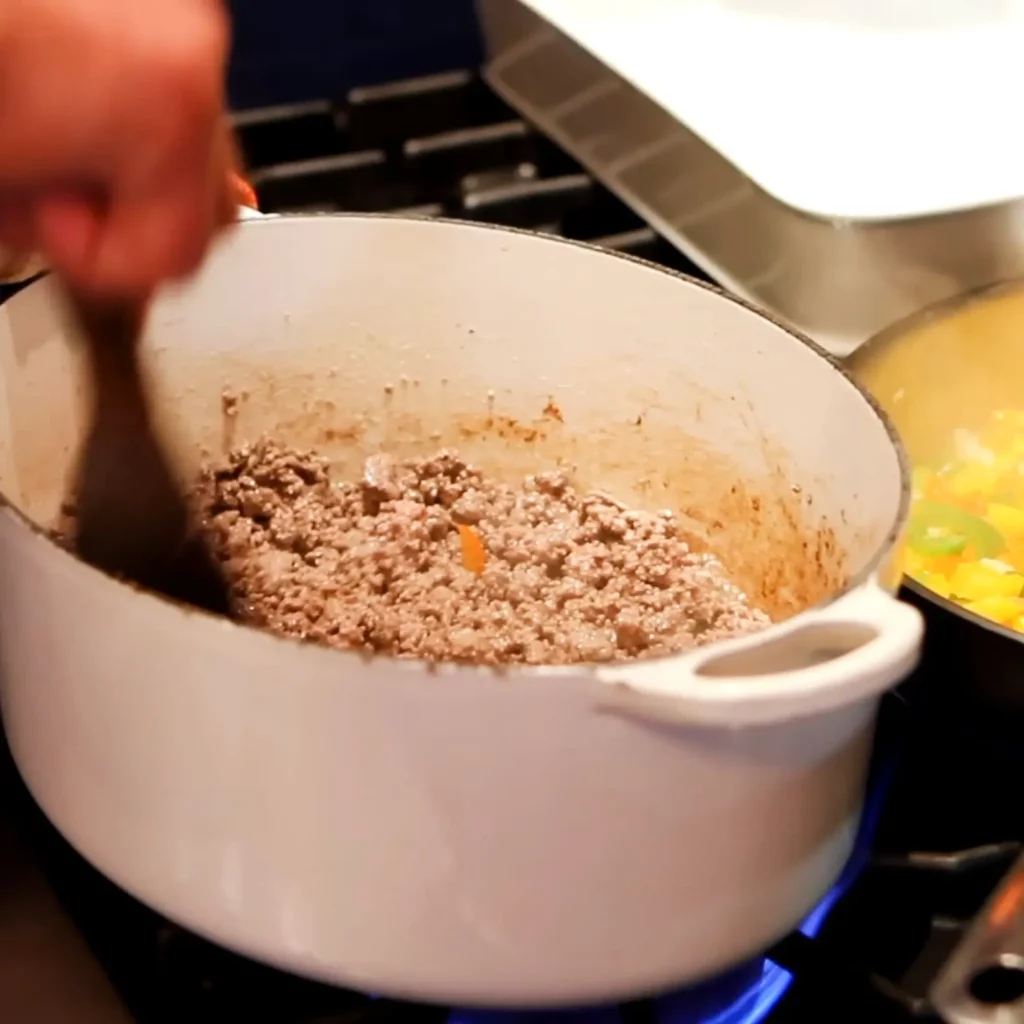
- Brown & sweat. Heat a large pan to high. Brown beef, breaking it up, until lightly caramelized and nearly dry. Transfer to a pot. In the same pan, add olive oil; sweat peppers and onion with a pinch of salt until no liquid remains. Add garlic 30–60 seconds. Deglaze with wine/water; scrape fond into the pot.
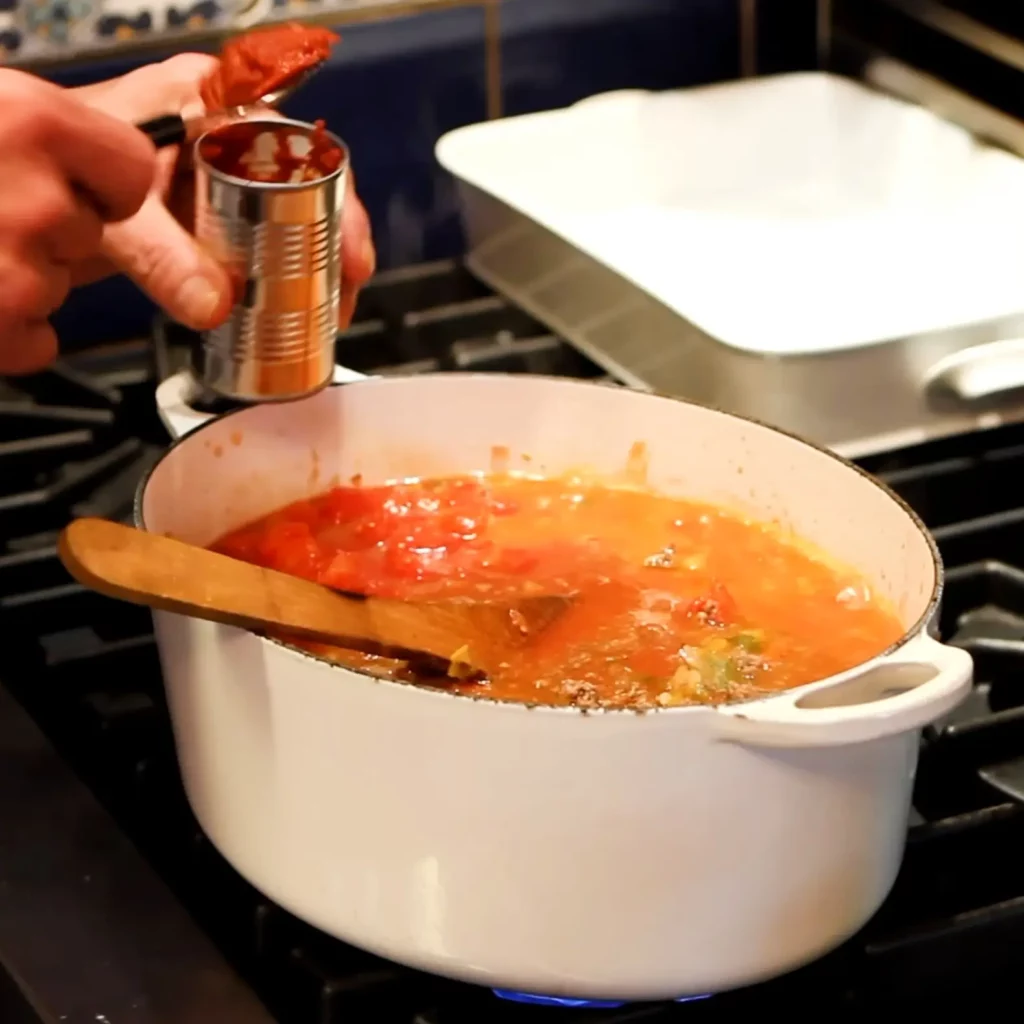
- Build ragù. Stir in tomato paste, crushed tomatoes and/or passata, bay and thyme. Simmer 75–90 minutes, stirring occasionally, until spoon-coating thick. Remove herbs; stir in basil. Adjust salt/pepper. Off heat, fold in ½ cup cream.
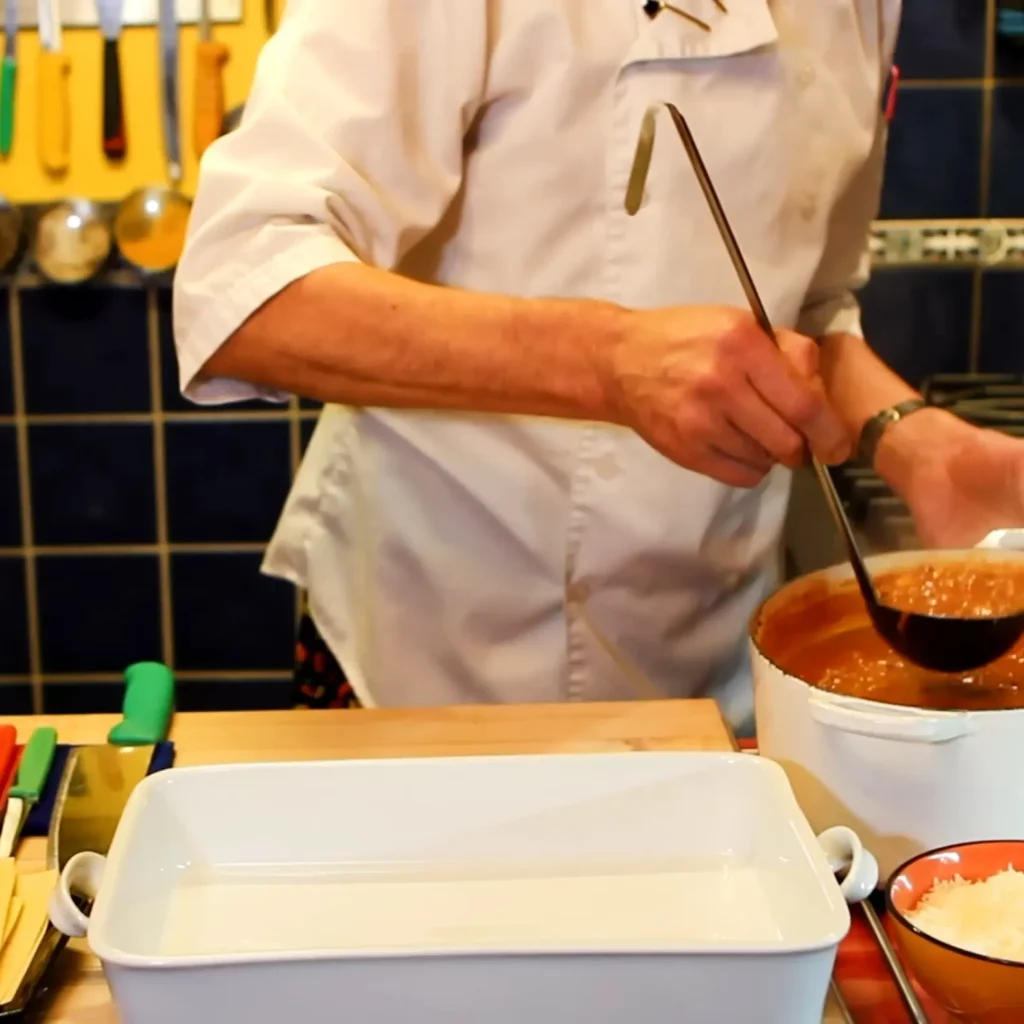
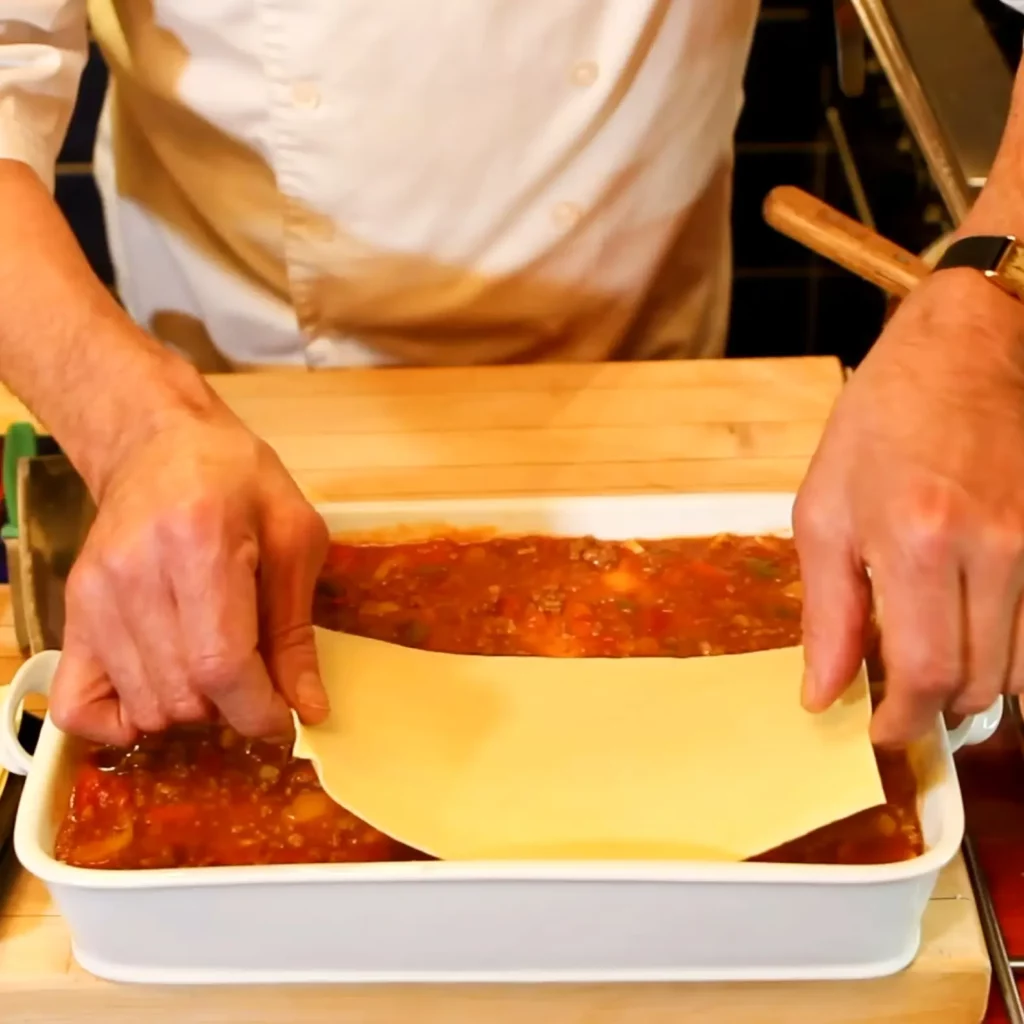
- Assemble. Heat oven to 375°F (190°C). Spread a thin ragù layer in a 13×9-inch pan. Add 3 sheets pasta → ragù → light Parmesan. Repeat for 4 levels (12 sheets). Keep the top for cream/cheese.

- Bake covered. Cover with parchment then foil. Bake 35 minutes. Internal should approach 165–170°F (74–77°C).
- Cream & cheese. Uncover. Drizzle ½ cup cream evenly over the surface. Top with Emmental + Gruyère. Bake 20–25 minutes more until deep golden.
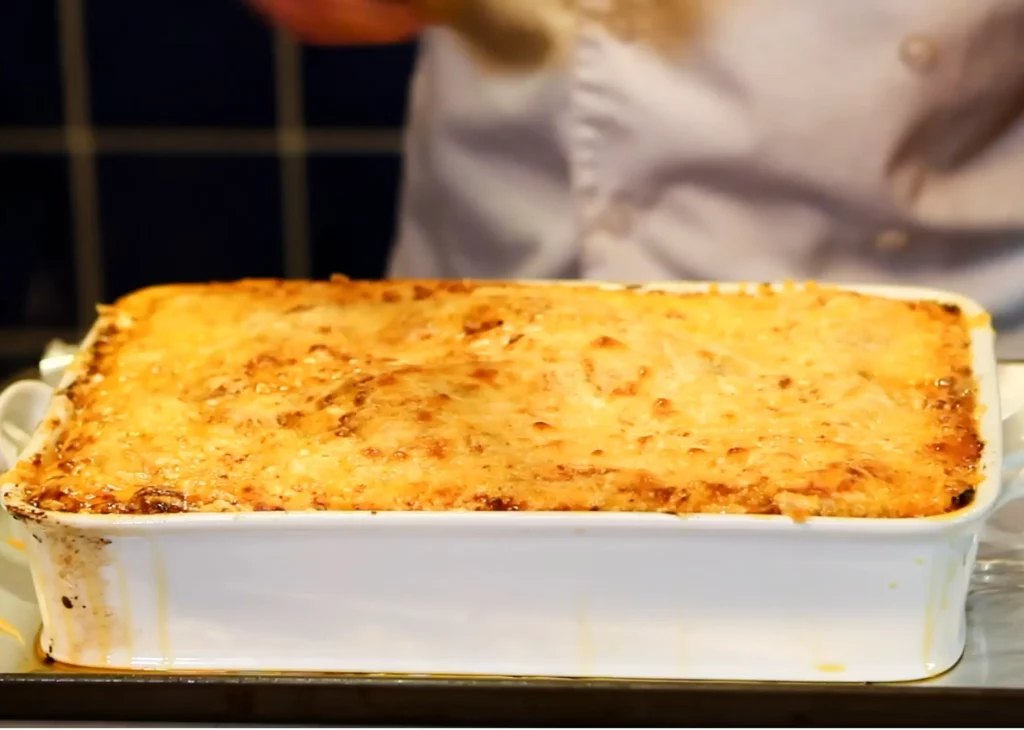
- Rest & serve. Rest 15–20 minutes before slicing. Finish with a few basil leaves.
Ingredients & Equipment Notes
- Beef: Lean ground beef stays light, but you can blend in 10–15% Italian sausage for extra depth. For umami without sausage, add 1 tsp soy sauce—it disappears into the background.
- Tomatoes: Use a mix of crushed and passata; passata gives body without extra chunks of watery diced tomatoes.
- Cheese: A French-leaning top of Emmental + Gruyère melts into a golden, lacy crust; keep Parmesan for delicate salting between layers.
- Pasta: Fresh or dry is fine. For dry no-boil sheets, see FAQ for liquid adjustments.
- Sides: A crisp salad, warm soup, and simple potatoes turn this into a restaurant-style menu at home. Try Parisian Potatoes and Homemade Garlic Butter on green beans or asparagus.
For more hearty, crowd-friendly casseroles, see American Goulash and Cheesy Beef Macaroni Casserole.

Substitutions & Variations
- Half beef, half pork: 500 g beef + 400–500 g pork for a juicier ragù.
- Hidden veggies: Finely chopped mushrooms (150 g) sautéed dry melt into the meat base.
- Ricotta layer: If you miss ricotta, mix 425 g ricotta with 1 egg, ½ cup grated Parmesan, and a pinch of nutmeg. Spoon in small dollops between sauce layers.
- Classic béchamel: Replace the cream with a quick 500 ml béchamel (2 Tbsp butter + 2 Tbsp flour + 2 cups milk; salt, white pepper, nutmeg).
- Spice profile: Add ½ tsp smoked paprika or chili flakes for a gentle kick.
- Gluten-free: Use GF lasagna sheets and thicken béchamel (if using) with cornstarch.
If you’re building an Italian-leaning menu, try Chicken Milanese with Fresh Tomato Sauce or a light starter like Classic French Onion Soup.
FAQs
Can I use dry, no-boil pasta?
Yes. Keep your ragù slightly looser or add ½–¾ cup hot water around the edges before covering. Bake covered as directed, then uncover to brown.
How do I avoid watery lasagna?
Reduce the ragù to spoon-coating thickness, sweat peppers/onion completely, and rest 15–20 minutes after baking.
Is the cream necessary?
It’s optional, but stirring ½ cup into the ragù off heat gives a beautiful body without heaviness. You can skip the surface drizzle and go full béchamel if you prefer.
Can I make it ahead?
Assemble (without the top cream and cheese), cover tightly, and refrigerate up to 24 hours or freeze. Add the surface cream/cheese just before the final bake.
What should I serve with it?
Crisp salad, simple veg, and a bright soup—see the suggestions below.
Leftovers?
Cool fully, cover, and refrigerate up to 4 days. Reheat covered at 325°F until hot, then uncover briefly to re-crisp.
For a lighter soup pairing, see Creamy Pumpkin Soup or Creamy Tomato Soup. For quick pastas, try Pasta alla Zozzona.
What to Serve with Lasagna (Suggested Posts)
- Homemade Greek Salad
- Caesar Salad Dressing Without Mayonnaise
- Potage Parmentier
- Parisian Potatoes
- Homemade Tomato Sauce with Fresh Tomatoes
- Spaghetti with Meat Sauce
- Homemade Beef Meatballs in Tomato Sauce
- American Goulash
- Homemade Garlic Butter
- Homemade Mayonnaise
- Paris-Style Almond Pear Tart or Homemade Tiramisu for dessert
Best Homemade Lasagna (Canada & USA): Beef Lasagna with Cream-Enhanced Ragù, No-Béchamel Option
Ingredients
Meat Ragù
- 900 –1000 g lean ground beef 2–2.2 lb
- 300 g bell peppers diced (2 peppers, 10.5 oz )
- 200 –250 g onion red or yellow, finely chopped ( 7–9 oz )
- 20 g garlic minced (about 4 cloves, 0.7 oz )
- 30 ml olive oil 2 Tbsp
- 120 –150 ml dry red wine or water for deglazing ½–⅔ cup
- 120 –150 g tomato paste ¼–⅓ cup , see notes
- 1.2 –1.5 L tomatoes total: crushed + passata 5–6 cups
- 10 –12 g kosher salt 2 tsp , divided and adjusted
- 1 –2 g black pepper ¼–½ tsp
- 2 bay leaves + 4–5 thyme sprigs bundled
- 10 –15 g fresh basil chopped ( 2–3 Tbsp , added at the end)
- 120 ml heavy cream 35% ½ cup , folded into ragù off heat
Pasta & Cheeses
- 380 –420 g fresh lasagna sheets 12 sheets, 13–15 oz or 12 dry sheets
- 80 –100 g Parmesan finely grated ( 1–1¼ cups )
- 300 –350 g Emmental + Gruyère grated ( 3–3½ cups )
- 120 –130 ml heavy cream 35% ½ cup , drizzled on top before the final bake
Instructions
- Brown & sweat. Heat a large pan to high. Brown beef, breaking it up, until lightly caramelized and nearly dry. Transfer to a pot. In the same pan, add olive oil; sweat peppers and onion with a pinch of salt until no liquid remains. Add garlic 30–60 seconds. Deglaze with wine/water; scrape fond into the pot.
- Build ragù. Stir in tomato paste, crushed tomatoes and/or passata, bay and thyme. Simmer 75–90 minutes, stirring occasionally, until spoon-coating thick. Remove herbs; stir in basil. Adjust salt/pepper. Off heat, fold in ½ cup cream.
- Assemble. Heat oven to 375°F (190°C). Spread a thin ragù layer in a 13×9-inch pan. Add 3 sheets pasta → ragù → light Parmesan. Repeat for 4 levels (12 sheets). Keep the top for cream/cheese.
- Bake covered. Cover with parchment then foil. Bake 35 minutes. Internal should approach 165–170°F (74–77°C).
- Cream & cheese. Uncover. Drizzle ½ cup cream evenly over the surface. Top with Emmental + Gruyère. Bake 20–25 minutes more until deep golden.
- Rest & serve. Rest 15–20 minutes before slicing. Finish with a few basil leaves.
Video
Notes
Substitutions & Variations
- Half beef, half pork: 500 g beef + 400–500 g pork for a juicier ragù.
- Hidden veggies: Finely chopped mushrooms (150 g) sautéed dry melt into the meat base.
- Ricotta layer: If you miss ricotta, mix 425 g ricotta with 1 egg, ½ cup grated Parmesan, and a pinch of nutmeg. Spoon in small dollops between sauce layers.
- Classic béchamel: Replace the cream with a quick 500 ml béchamel (2 Tbsp butter + 2 Tbsp flour + 2 cups milk; salt, white pepper, nutmeg).
- Spice profile: Add ½ tsp smoked paprika or chili flakes for a gentle kick.
- Gluten-free: Use GF lasagna sheets and thicken béchamel (if using) with cornstarch.
FAQs
Can I use dry, no-boil pasta?Yes. Keep your ragù slightly looser or add ½–¾ cup hot water around the edges before covering. Bake covered as directed, then uncover to brown. How do I avoid watery lasagna?
Reduce the ragù to spoon-coating thickness, sweat peppers/onion completely, and rest 15–20 minutes after baking. Is the cream necessary?
It’s optional, but stirring ½ cup into the ragù off heat gives a beautiful body without heaviness. You can skip the surface drizzle and go full béchamel if you prefer. Can I make it ahead?
Assemble (without the top cream and cheese), cover tightly, and refrigerate up to 24 hours or freeze. Add the surface cream/cheese just before the final bake. What should I serve with it?
Crisp salad, simple veg, and a bright soup—see the suggestions below. Leftovers?
Cool fully, cover, and refrigerate up to 4 days. Reheat covered at 325°F until hot, then uncover briefly to re-crisp. For a lighter soup pairing, see Creamy Pumpkin Soup or Creamy Tomato Soup. For quick pastas, try Pasta alla Zozzona.
Useful Links
🛒 Michel Dumas Shop : Explore our kitchen essentials, including aprons and knives.
🌐 Linktree : Access all our important links in one place.
📱 YouTube | Instagram | Facebook | TikTok : Follow us for the latest recipes and culinary tips.