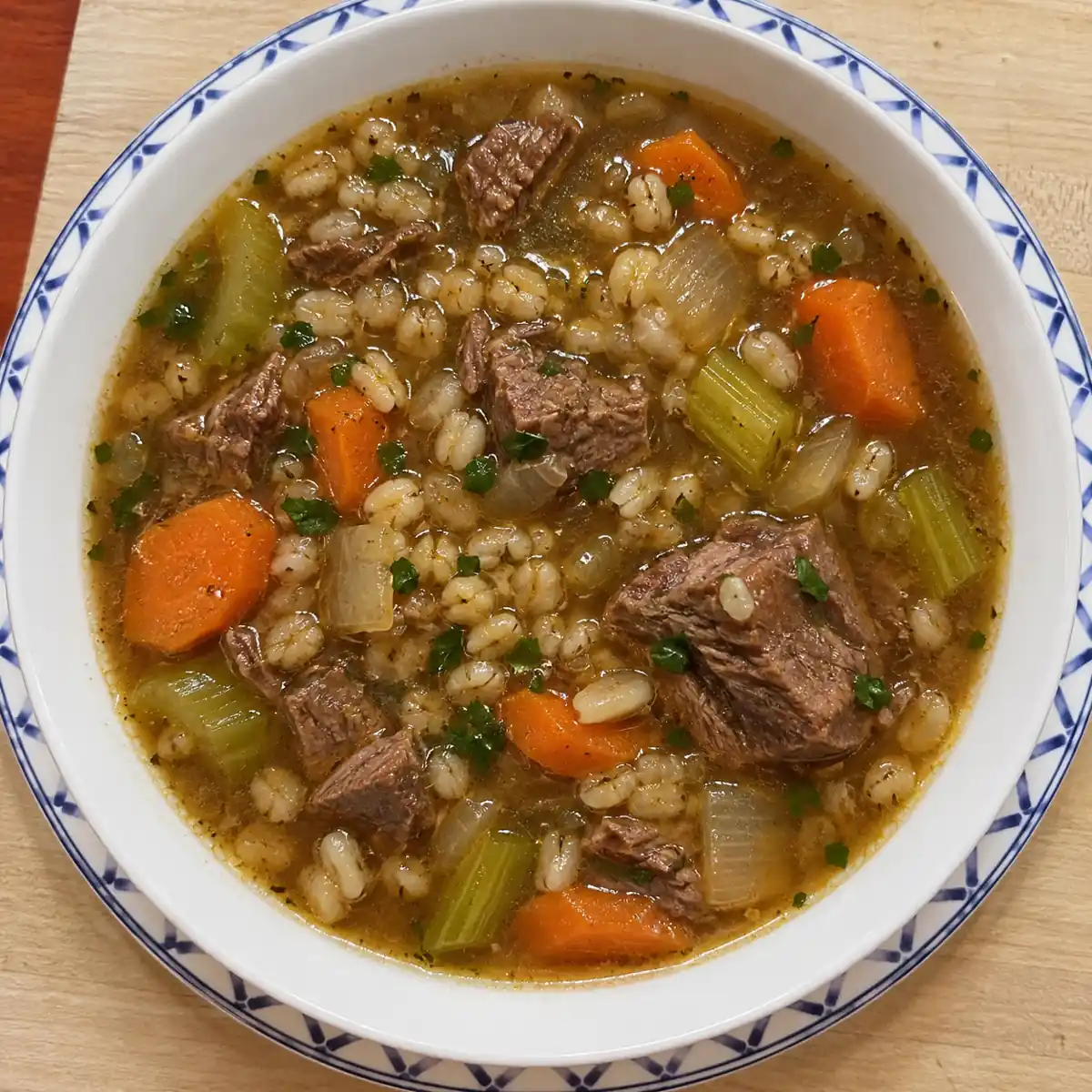
Beef Barley Soup with Tender Beef and Vegetables
Barley can be ready long before a tough piece of beef is tender. Give the meat a head start, then add the grain for the last part of cooking. This keeps the barley pleasantly chewy while the beef softens enough to break apart with a spoon, and the broth stays loose enough for a proper bowl of soup.
Beef barley soup combines small pieces of slow-simmered beef, pearl barley and vegetables in a brown broth. It is a hearty main-course soup with no cream or flour thickener. Make it on a cold afternoon when the pot can simmer gently, or prepare it ahead for lunches with a little extra broth for reheating.
Choose beef that benefits from a simmer
Chuck or blade roast is a useful choice. Trim thick external fat and tough silvery seams, then cut the meat into three-quarter-inch cubes. A little marbling is welcome, but large pieces of hard fat will not improve the bowl. Packages labelled stewing beef can contain different cuts, so use tenderness rather than the clock as the final test.
The principle is similar to a hearty beef stew or French beef and carrots: collagen-rich meat needs gentle cooking. This soup has considerably more broth and uses barley instead of potatoes. It also skips the wine-heavy sauce of classic beef bourguignon.
Pat the cubes dry before browning. Wet meat steams, and a crowded pot quickly fills with liquid. Brown in two batches, leaving space between pieces. You do not need every face to be uniformly dark; a few well-browned surfaces and the brown film in the pot provide plenty of flavour.
Pearl barley is the grain to use
Choose ordinary pearl barley, not quick-cooking barley and not hulled barley. Pearl barley has been polished and generally becomes tender during the final thirty-five to forty-five minutes. Hulled barley takes longer, while quick barley can turn soft well before the beef is ready.
Rinse it in a sieve before adding. The grains swell substantially, so half a cup is enough for six bowls with beef and vegetables. More can turn the pot into a grain stew. Barley contains gluten; this is not a gluten-free soup. It contributes fibre and gives the broth a little body without a separate roux.
Carrots and celery go in with the barley rather than simmering for the entire cooking time. Onion cooks earlier to flavour the broth. A spoonful of tomato paste adds depth without making this a tomato soup. For a vegetable-forward bowl, minestrone with pasta and beans follows a different balance.
Build flavour, then lower the heat
Brown the beef
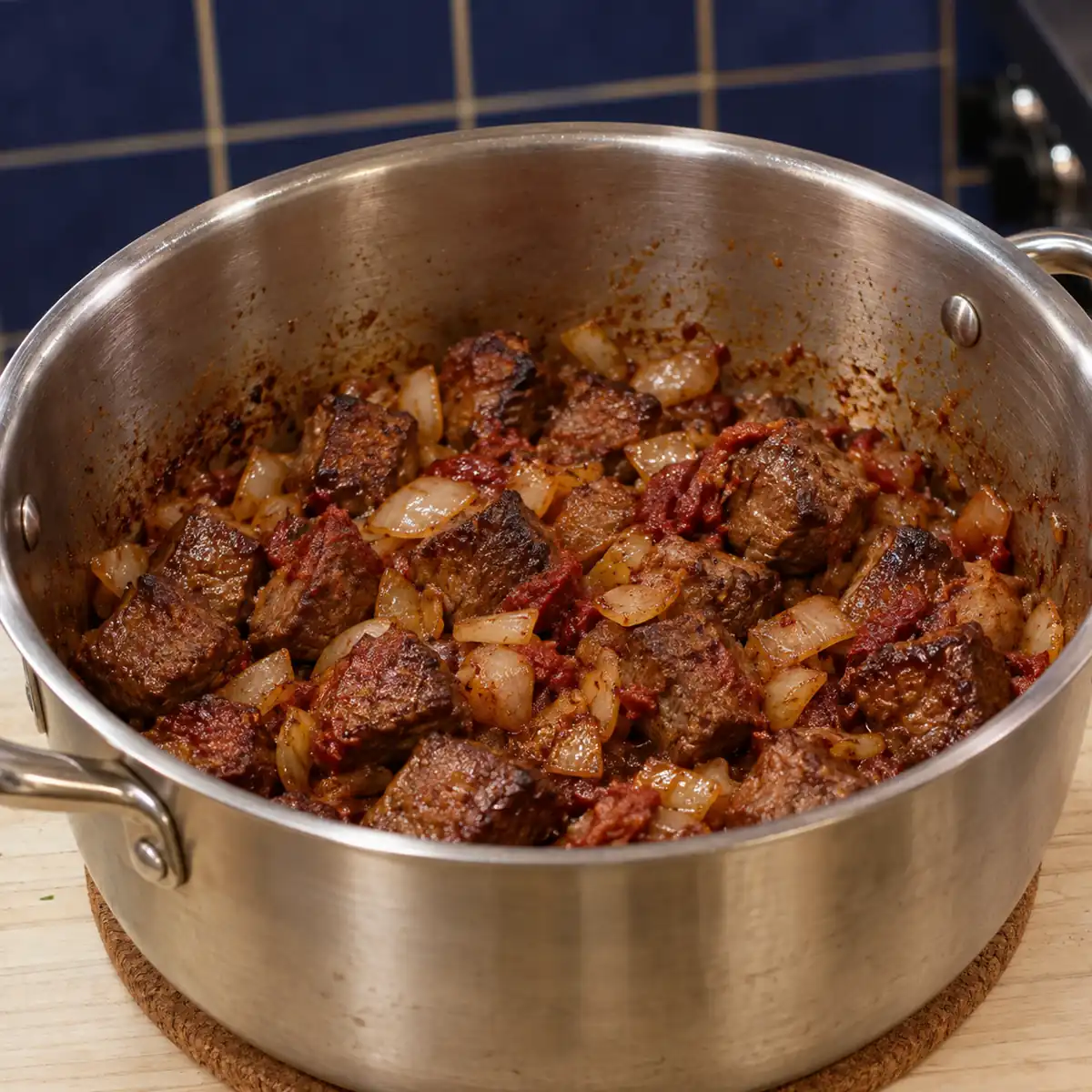
Heat the oil in a large heavy pot over medium-high heat. Season the dry beef with the measured salt and pepper. Brown in two batches for about eight to ten minutes total, adding a small splash of oil only if the pot becomes completely dry. Transfer the browned pieces to a plate.
Reduce to medium heat. Add the onion and cook for five minutes, scraping the bottom. Add garlic and tomato paste and stir for one minute. The paste should darken slightly without burning. A black, bitter crust is not useful browning; avoid letting the pot smoke heavily. Return the browned beef and stir briefly to coat it with the onion mixture.
Let the meat soften first
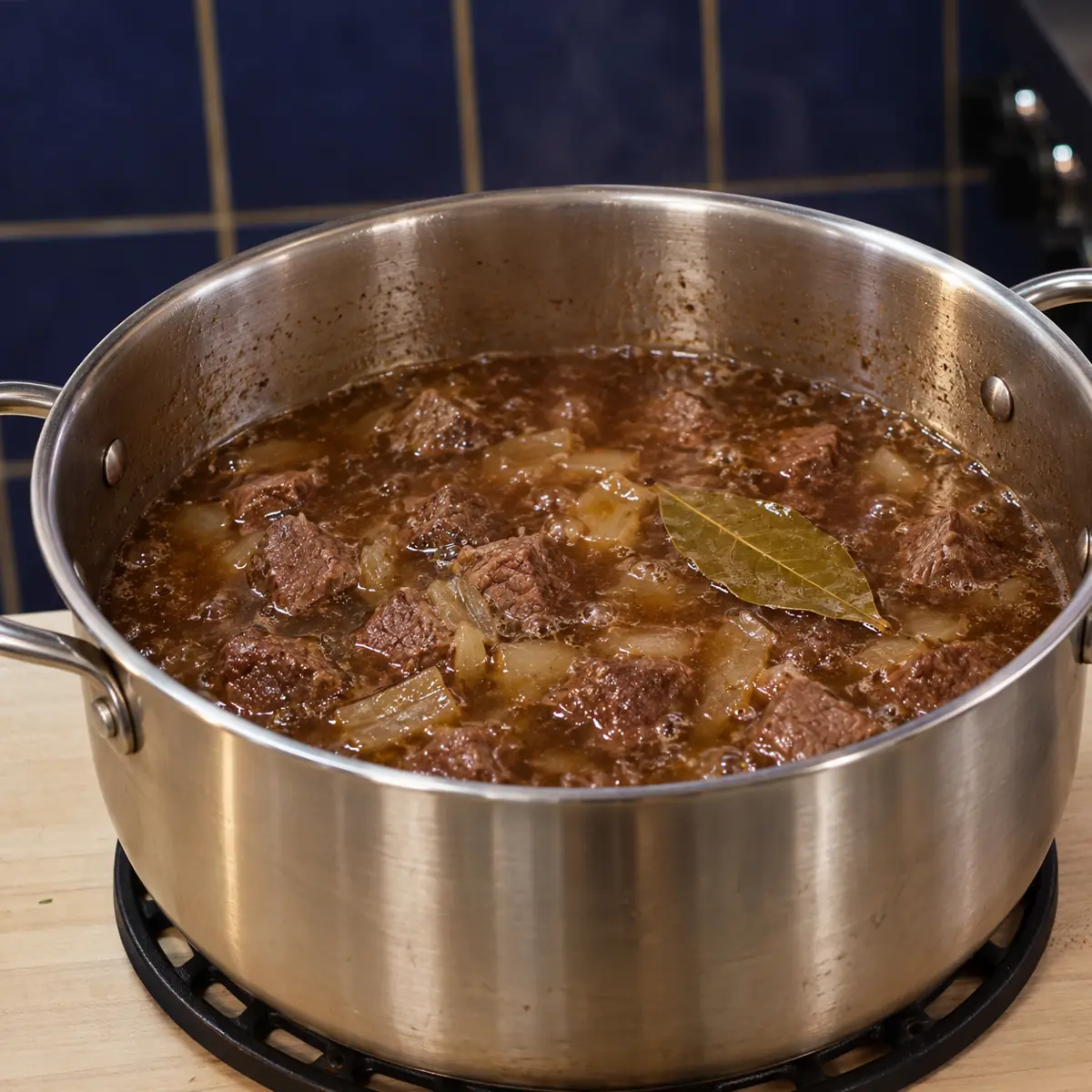
Pour in a little broth and scrape up the browned bits. Add any juices from the plate, then add the remaining broth, water, bay leaf and thyme. Bring just to a simmer. Partially cover and cook gently for sixty to seventy-five minutes, until the beef is beginning to yield when pressed with a fork but is not yet fully tender.
If the meat is still very firm, give it another fifteen to thirty minutes before adding the barley. Keep the liquid at a quiet simmer with small bubbles, not a hard boil. Add water if evaporation exposes the meat. This patient stage is also important in beef ragout.
Add the barley and vegetables
Stir in the rinsed barley, carrots and celery. Simmer partially covered for thirty-five to forty-five minutes, stirring occasionally, until the grain is tender with a slight chew and the beef breaks easily under a spoon. Add more water or broth if the soup becomes too thick before everything is cooked.
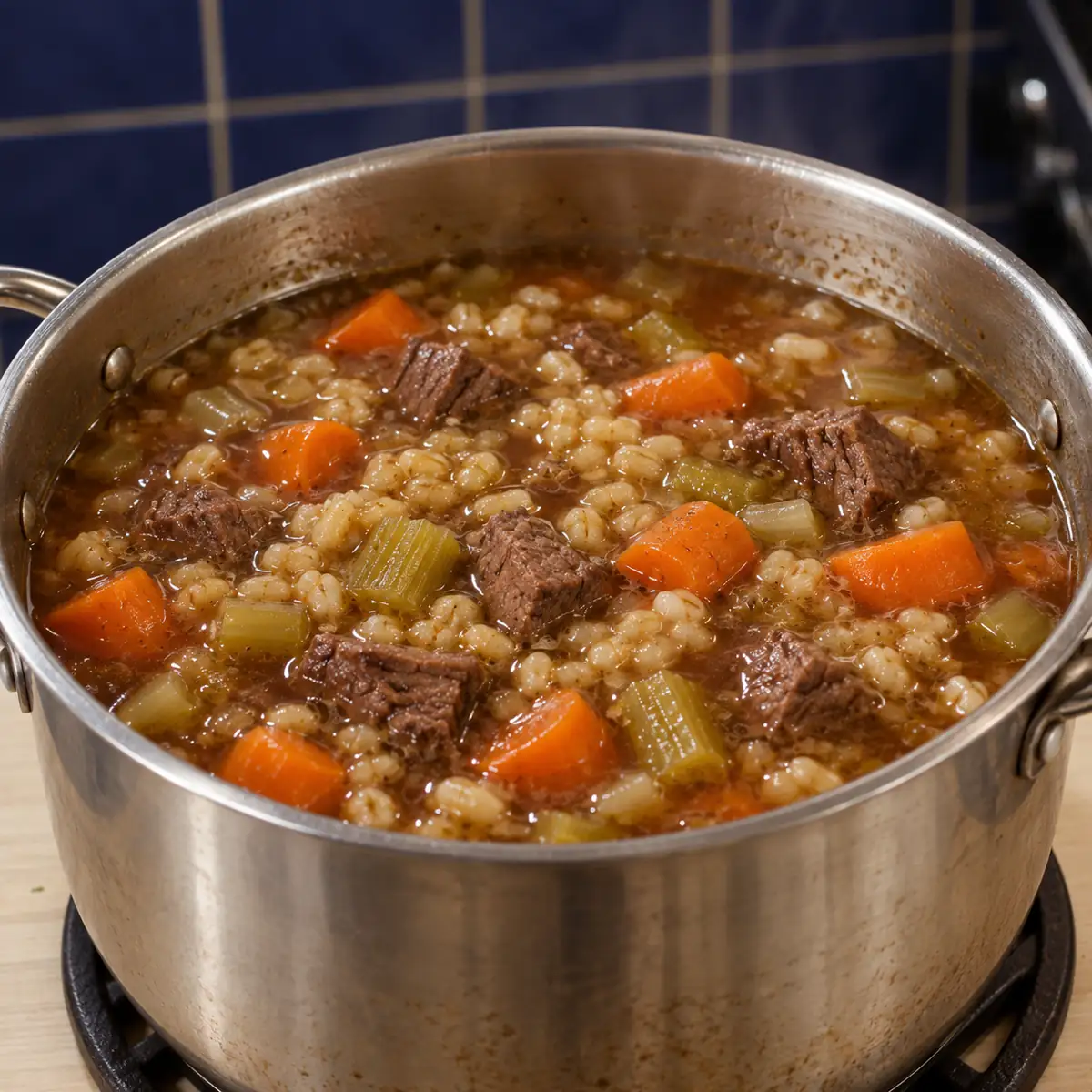
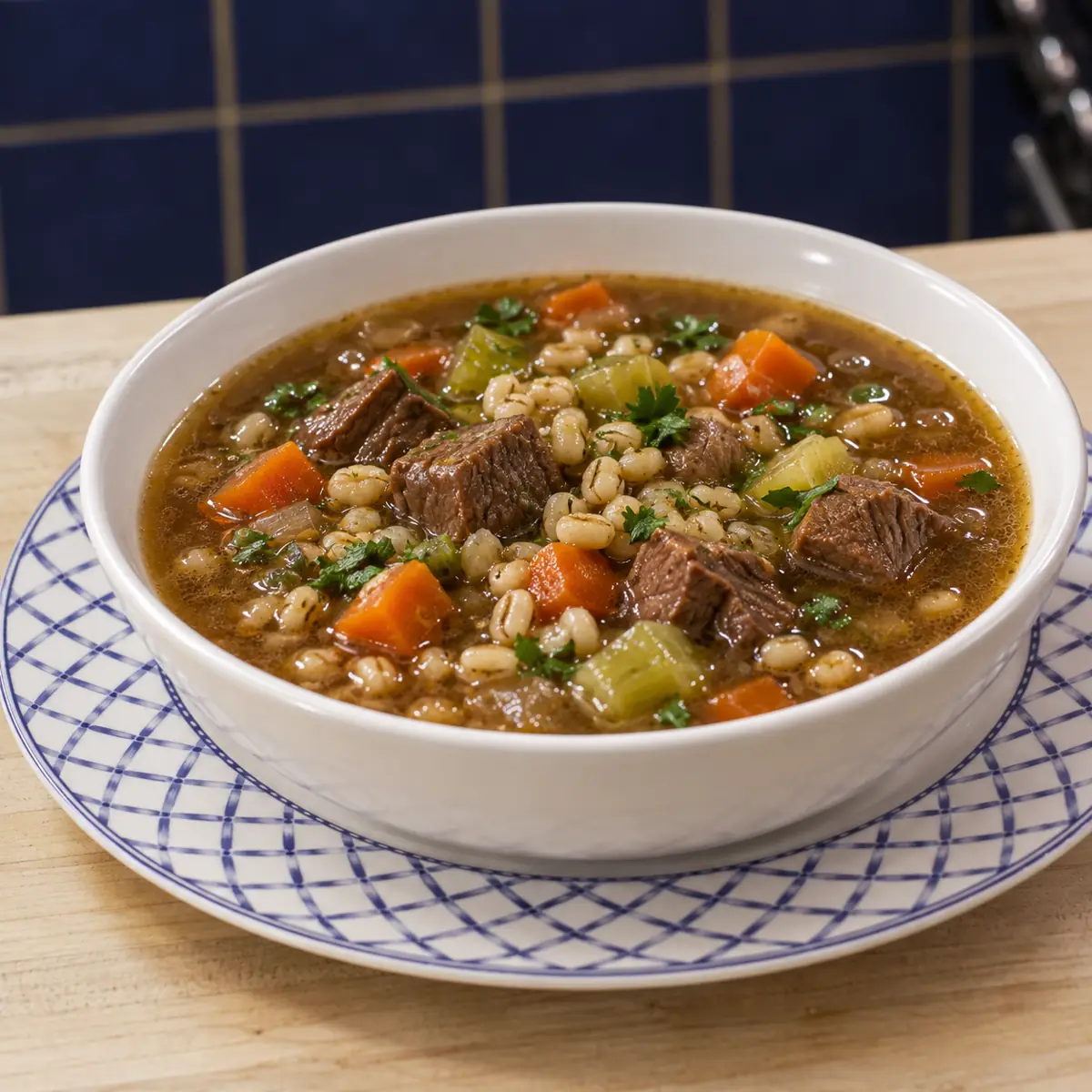
Remove the bay leaf. Taste and adjust the salt, then stir in the parsley. A teaspoon of red wine vinegar is optional if the broth tastes flat; add it sparingly and taste again. Serve hot in deep bowls with enough broth around the meat and grain.
Chef tips for the second day
My advice is to keep extra broth for reheating, because the barley continues to absorb liquid in the refrigerator. A thick chilled pot is normal, not a sign that the recipe failed. Reheat only the portion you need and loosen it with broth or water. Taste after dilution, since adding liquid changes the salt balance.
If making the soup specifically for several days of lunches, you can cook the barley separately in water according to its package and add it to each bowl. Simmer the carrots and celery in the beef broth until tender instead. The separate-grain method gives more control, although cooking barley in the soup produces a slightly fuller broth.
Substitutions
Boneless beef shank can replace chuck, but it may need longer before the barley goes in. Lean steak is less suitable for this long simmer. For a meat-free meal, choose a recipe developed around pulses, such as green lentil soup, rather than simply removing the beef and expecting the same broth.
For a little variety, I’d replace part of the carrot with small diced parsnip. Mushrooms can be browned after the beef and returned with the broth. Keep the total quantity modest so the soup still has enough liquid. Do not replace pearl barley with rice on the same timing; rice cooks differently and needs its own adjustment.
Questions about cooking and storage
Why is the beef still chewy?
It probably needs more gentle cooking. Browning cooks the surface but does not tenderize the connective tissue. Continue simmering before adding barley if the meat is still firm at the first checkpoint. Different cuts and cube sizes make the total time vary.
Can I freeze this soup?
Yes. Cool promptly in shallow containers, then freeze up to three months. Thaw in the refrigerator and reheat to 165°F, adding liquid as needed. The barley will be softer after freezing, but it generally holds together better than delicate noodles.
How long will it keep refrigerated?
Use within three to four days. Do not leave the large pot cooling on the counter for hours; divide it into smaller containers. Reheat only what you plan to serve and bring the entire portion to steaming hot.
Serve with something simple
A slice of homemade white bread is enough alongside this protein-rich soup. A crunchy cabbage and carrot salad or greens with mustard vinaigrette adds a fresh contrast. For other bowls to alternate through the week, browse the soup collection.
Beef Barley Soup with Tender Beef and Vegetables
Ingredients
- 1 1/2 pounds boneless beef chuck trimmed and cut into 3/4-inch cubes
- 1 tablespoon neutral oil
- 1/2 teaspoon fine salt plus more as needed
- 1/2 teaspoon ground black pepper
- 1 medium onion diced
- 2 cloves garlic minced
- 1 tablespoon tomato paste
- 6 cups low-sodium beef broth
- 2 cups water plus more as needed
- 1 bay leaf
- 1/2 teaspoon dried thyme
- 1/2 cup pearl barley rinsed
- 2 medium carrots cut into small pieces
- 2 celery ribs sliced
- 2 tablespoons chopped parsley
- 1 teaspoon red wine vinegar optional
Instructions
- Pat beef dry and season with salt and pepper. Heat oil in a heavy pot and brown beef in 2 batches, 8–10 minutes total. Remove to a plate.
- Cook onion over medium heat 5 minutes. Add garlic and tomato paste; stir 1 minute. Deglaze with a little broth.
- Return beef and juices. Add remaining broth, water, bay and thyme. Simmer partially covered 60–75 minutes until beef begins to soften; allow longer if still firm.
- Add barley, carrots and celery. Simmer 35–45 minutes until barley is tender and beef easily yields to a spoon. Stir occasionally and add liquid as needed.
- Remove bay leaf. Adjust salt, add parsley and optional vinegar, and serve hot.