Québec Ground Beef and Potato Fricassee
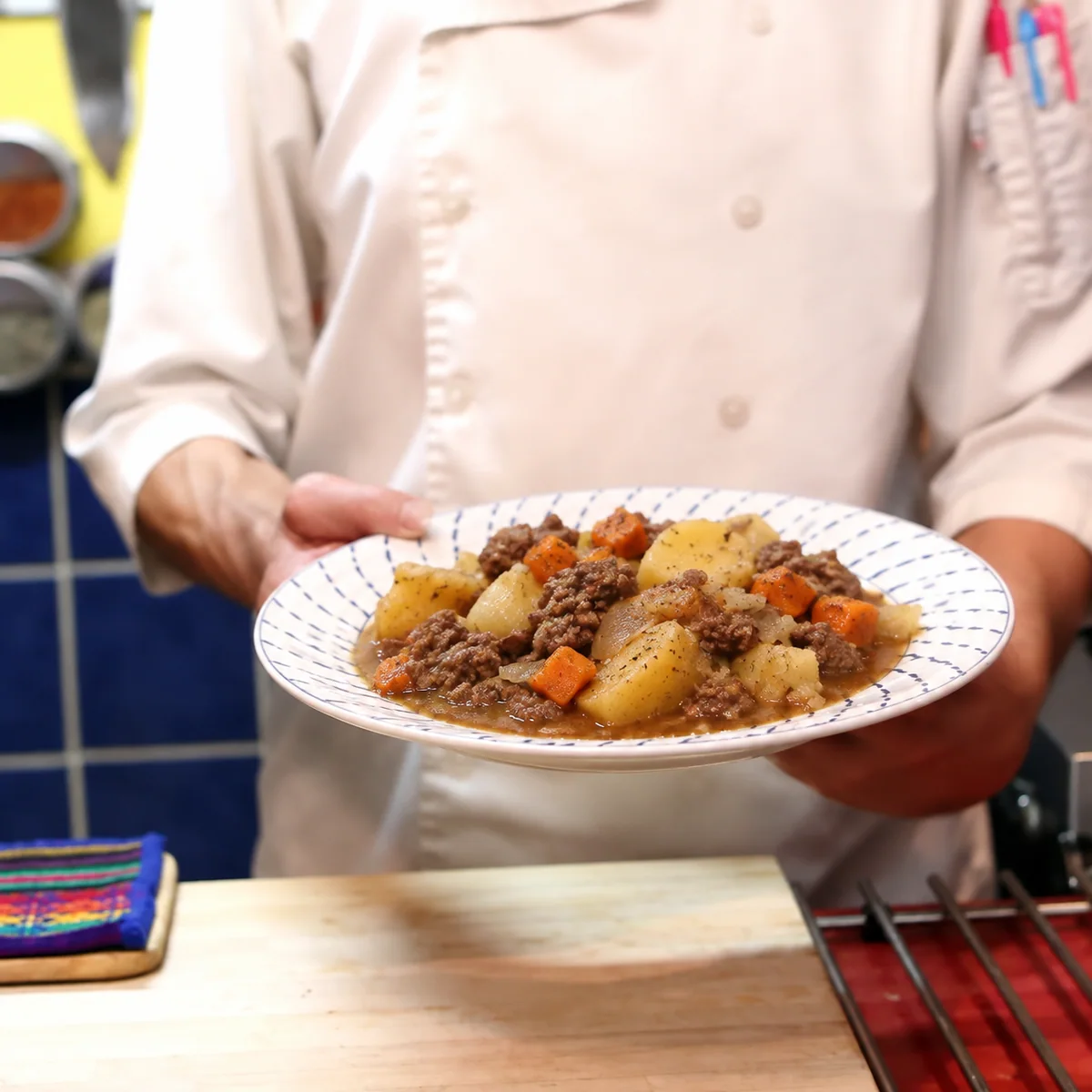
This Québec-style beef and potato fricassee cooks in one deep skillet with ground beef, diced potatoes, a carrot and a little savory. The potatoes simmer in the beef juices and thicken them just enough to coat a spoon. I leave most of the cubes intact so each serving has browned meat, tender vegetables and a little gravy for the bread.
Choose the pan by its base and its lid
Use a broad skillet with high sides and a lid that fits. The broad base gives the beef a chance to touch hot metal before it releases too much moisture. Later, the lid holds steam around the vegetables even though the broth barely reaches the top layer. A shallow frying pan may hold the raw ingredients but spill when you stir them. A deep sauté pan or a low Dutch oven is easier to work with. If using a narrower pot, brown the beef in two batches to get the same colour.
This dish shares its name with French chicken fricassee, but the cooking liquid and the cut of meat take it in another direction. Ground beef needs time against the pan for flavour and very little time to become tender. In a beef stew with larger pieces, the meat can set the schedule for the whole pot. Here it is the potato that tells you when dinner is ready. That makes the size of the dice worth a minute of attention before the pan goes on.
Prepare vegetables that will finish together
Peel the potatoes and cut a thin flat slice from one side of each round potato. Set it on that face, cut into slabs a little over half an inch thick, then into strips and cubes. A few irregular edge pieces are useful. They soften sooner and make good candidates for thickening the broth. Cut the carrot to about the same size or slightly smaller if its centre feels especially firm. Mince the onion more finely. You want the onion to melt into the juices while the potato and carrot remain distinct.
A yellow potato generally keeps a clean edge. A floury baking potato can work too, but stir it more gently toward the end because the corners break readily. If you already have a bowl of mashed potatoes, save it for Québec pâté chinois or hachis Parmentier. For this skillet, start with raw cubes. They pick up the beef and onion flavour as they cook, and you can decide how much to crush once you see how much liquid remains.
Brown the beef, then add the broth
Heat the oil in the pan over medium-high heat and spread out the beef. Let it take colour underneath before breaking it into rough pieces with a wooden spoon. If the spoon keeps pushing a puddle ahead of it, the meat is still giving off water. Keep cooking uncovered and wait for the sound to change from bubbling to a light sizzle. Only then add the onion. A little colour on the beef will carry through the whole sauce. Breaking it to a fine sand at this stage leaves very little texture in the finished dish.
Cook the onion for about four minutes, stirring it through the beef. If the meat has rendered a deep pool of fat, spoon off most of it and leave a thin film for the onion. Add the potatoes, carrot and savory, then pour in the broth. Scrape the golden patches from the base. Taste the broth before deciding whether it needs salt, especially if it is made from concentrate. It will reduce after the lid comes off. A ground beef vegetable soup uses more liquid; resist topping up this pan simply to submerge every cube.
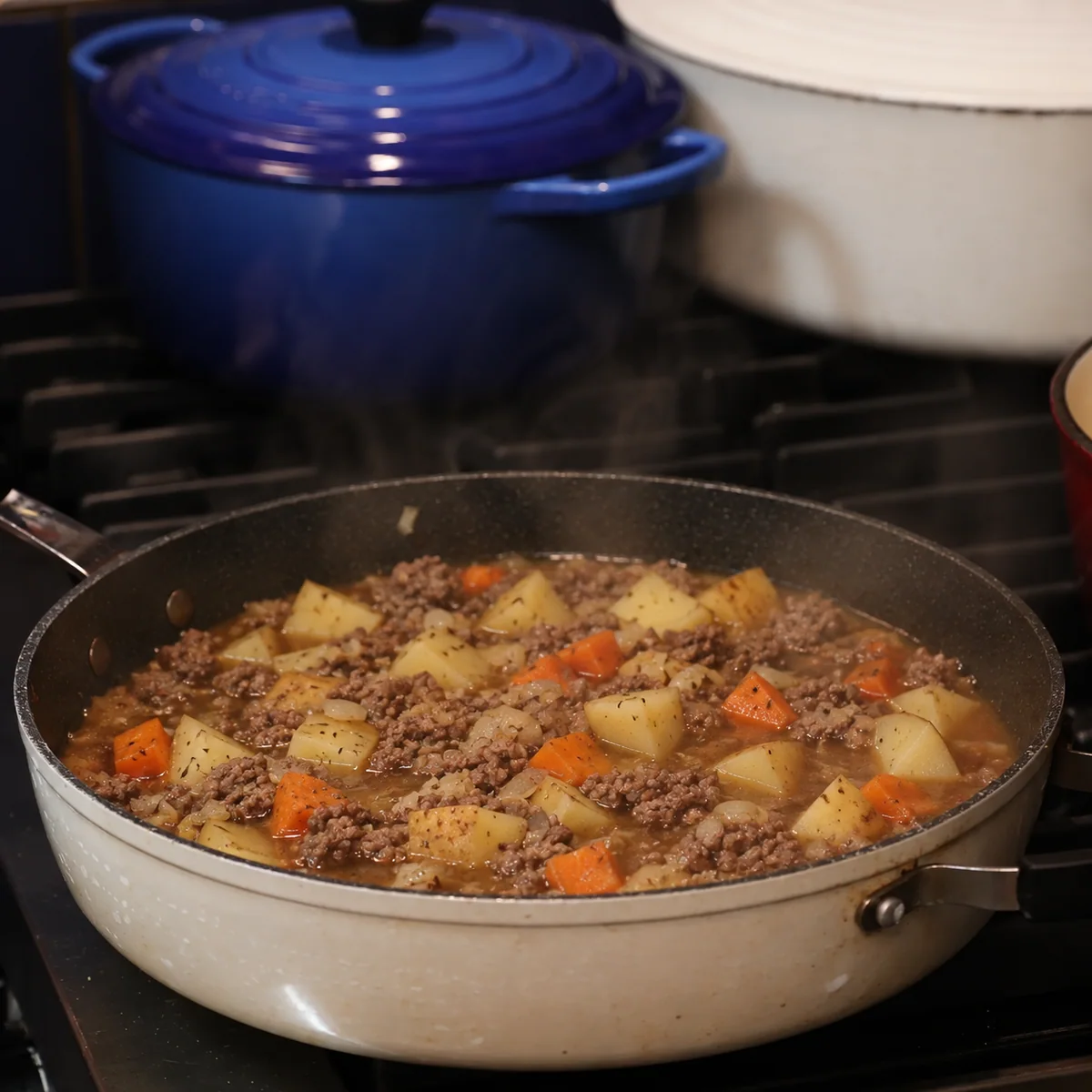
Cover and simmer gently for about twenty minutes. Lift the lid once midway through and turn the uppermost potatoes into the broth. If the pan looks almost dry, add a splash of hot water, cover and lower the heat. At the end, choose one of the largest potato cubes for the test. A thin knife should go through it easily. Taste a carrot too. The object is a spoonful that yields without needing a knife at the table, with enough body that the potatoes survive being served.
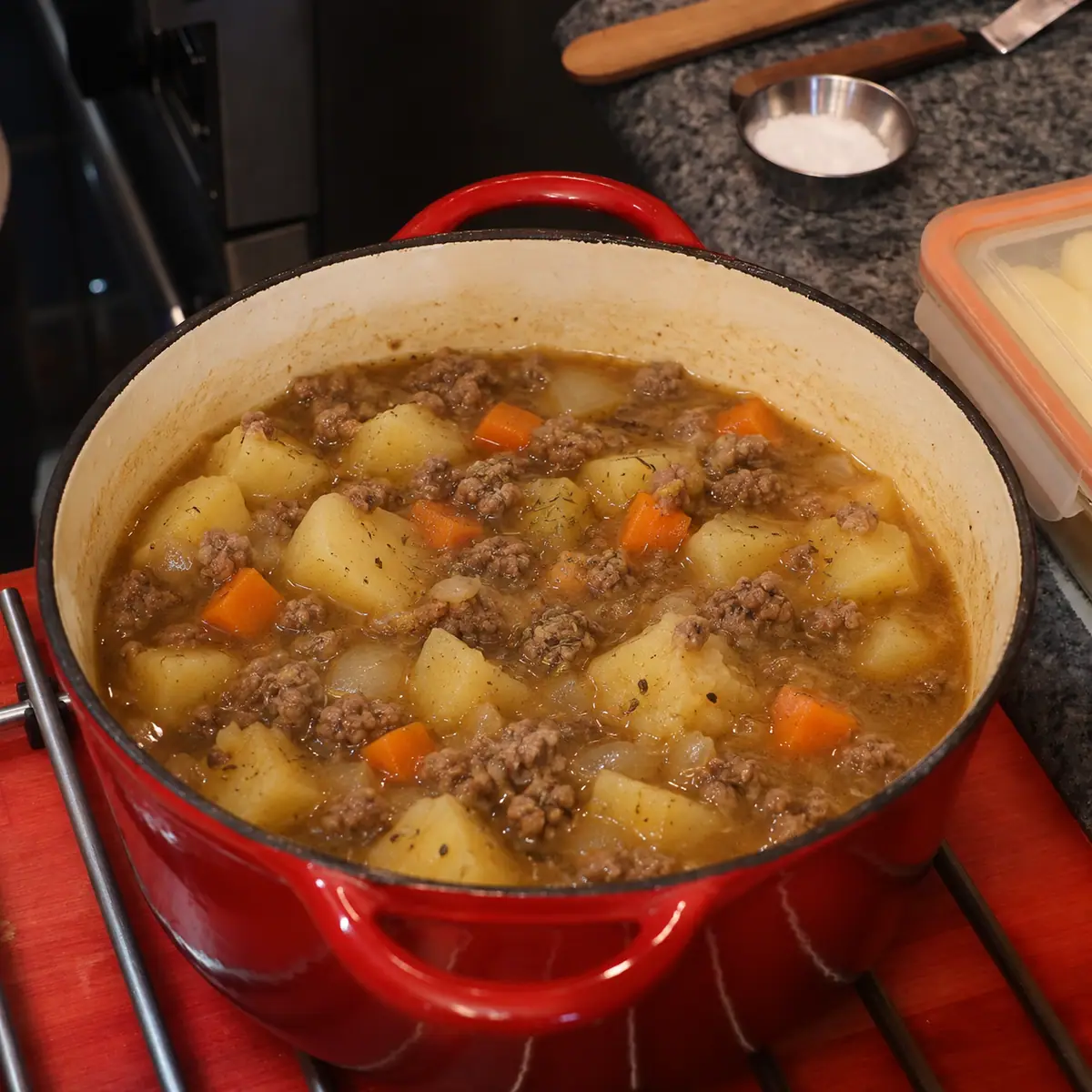
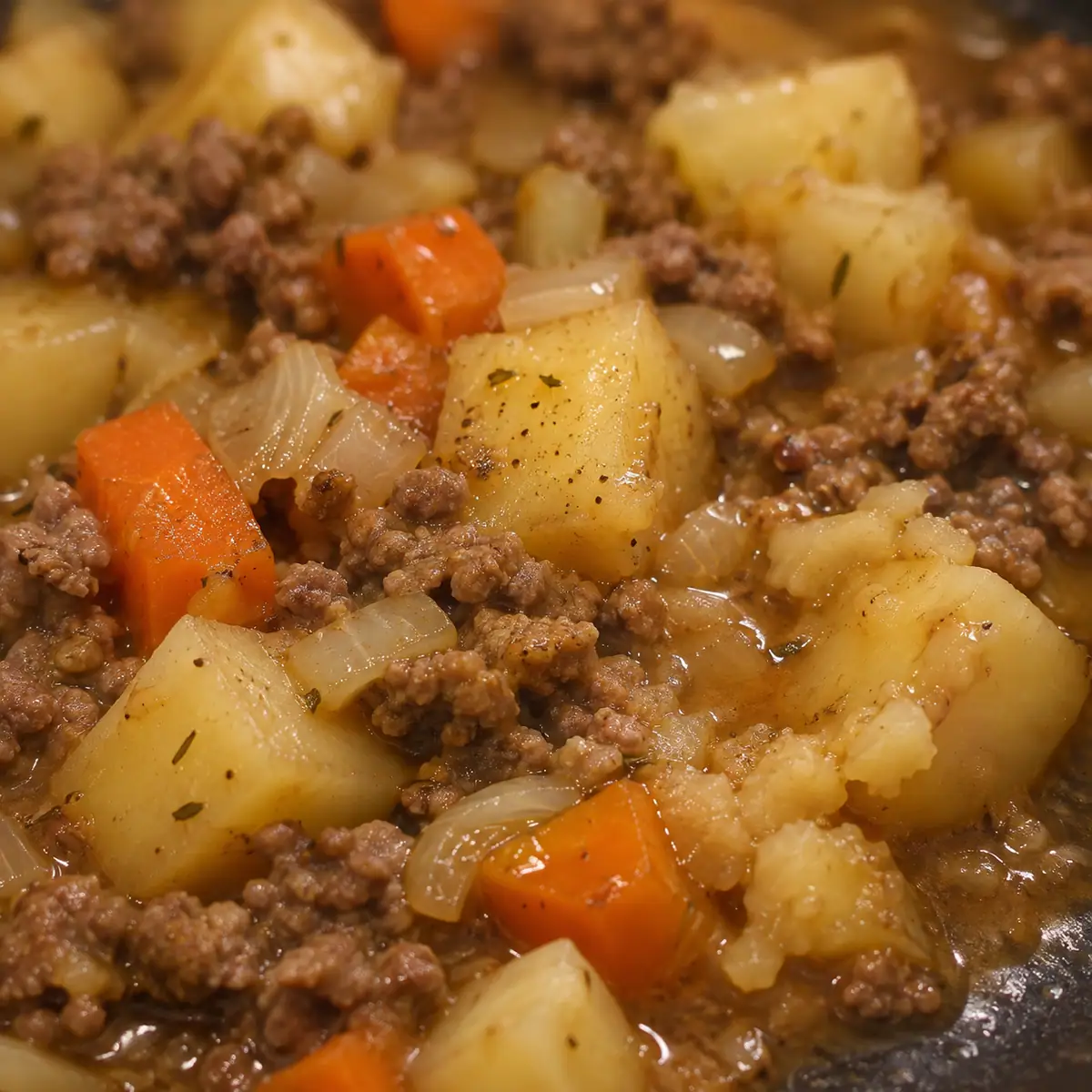
Uncover and press a few soft potato pieces against the side of the pan. Stir the crushed potato back into the liquid and let it simmer briefly before deciding whether to crush more. The gravy will thicken a little as the skillet comes off the heat. If you still see a broad pool of broth around the vegetables, reduce uncovered for a few minutes. If every spoonful looks dry, stir in a splash of water. Taste with the meat and potatoes together. Serve with marinated red cabbage for a cool, tangy side.
Substitutions and next-day portions
To use leftover roast, soften the onion in the oil first. Add the raw vegetables, savory and broth as above. Dice about twelve ounces of cooked beef and stir it in only near the end, allowing enough time to heat it through. A whole simmer can make yesterday’s roast stringy. If the leftover meat is still raw and intended for braising, follow the longer method in beef ragout instead. Pearl barley also needs its own timing, as in beef and barley soup; it absorbs broth that the potatoes need here.
Cool leftovers promptly in shallow portions and refrigerate. Reheat with a splash of broth and turn the mixture with a broad spoon to keep the cubes intact. The starch settles as the dish chills, so wait until it is hot before adding more liquid. For a menu built around Québec family classics, serve in warm shallow bowls. Anyone who likes a baked version with pastry and a more leisurely cooking time might also enjoy Lac-Saint-Jean tourtière.
Questions about the skillet
Why are some potatoes hard while others are falling apart?
Check the size of the pieces and where they sat in the pan. Large cubes above the liquid cook more slowly if the lid lets steam escape. Move the firmest pieces down, add a spoonful of water if needed and cover for a few more minutes. Leave the already soft potatoes alone. Once the firm ones are ready, the softer pieces can supply all the thickening the pan needs.
Can I leave out the savory?
Yes. Try the beef, onion and broth with black pepper alone before reaching for another herb. A small pinch of thyme will also work, but use it lightly. The onion and browned meat should still be the first flavours you notice. At the table, pass pepper separately so each person can adjust a bowl without changing the whole skillet.
Serving suggestions and related recipes
Set the skillet in the centre and pass the marinated red cabbage cold for a little bite between forkfuls of potato. For another supper with the same ground beef, try Québec pâté chinois.
Québec Ground Beef and Potato Fricassee
Ingredients
- 1 lb lean ground beef
- 1 onion finely chopped
- 1 lb 7 oz potatoes peeled and diced
- 1 carrot diced
- 1⅔ cups low-sodium beef broth
- 2 tsp neutral oil
- ⅜ tsp dried summer savory
- Fine salt and black pepper to taste
Instructions
- Dice potatoes and carrot about ⅝ inch thick. Heat oil in a deep skillet and brown beef in rough pieces.
- Once excess moisture evaporates, add onion and cook 4 minutes.
- Add potatoes, carrot, savory and broth. Scrape the base, cover and simmer about 20 minutes, turning vegetables once.
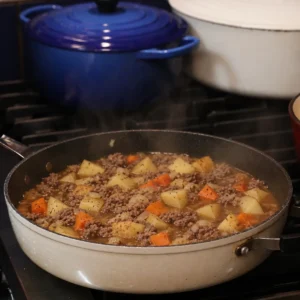
- Uncover and finish until the largest cubes are tender. Crush a few potato pieces into the broth, adjust seasoning and serve.