80s-Style Beef Tartare: Easy Summer Recipe That’s Fresh, Fast & Flavorful
Looking for a dish that combines freshness, indulgence, and tradition? A classic beef tartare is always a sure bet to brighten your summer lunches. Served 80s-style—with hand-cut beef and a perfectly balanced garnish—this nostalgic recipe awakens the taste buds and brings people together, whether it’s family or friends.
Retro Beef Tartare: Freshness and Nostalgia on Your Plate
Nothing beats homemade beef tartare on a hot day. It’s the perfect summer dish—cool, quick to assemble, and incredibly satisfying. This 80s-style presentation nods to the old-school dining rooms where waiters would mix your tartare tableside, tailored to your preferences. Generous, simple, and timeless.
Key Ingredients & Essential Tools
Success begins with high-quality beef and clean, organized prep. Choose a premium beef tenderloin—ideally a well-marbled AAA Angus.

Ingredients for 4 servings:
- 500g beef tenderloin, finely diced
- 50g pickles (cornichons), diced
- 40g shallots, finely chopped
- 1 very fresh egg yolk
- 20g Dijon mustard
- 30–50ml neutral oil (grapeseed or sunflower)
- 30g capers, roughly chopped
- 20ml caper vinegar
- 5g flat-leaf parsley, finely chopped
- Fine salt, to taste
- Freshly ground black pepper, to taste
- 10–20ml harissa (optional), to taste
Equipment Needed:
- A sharp chef’s knife
- Clean cutting board
- Small bowls for prep
- Silicone spatula
- Stainless steel ring mold for plating
- Spoons and a fork
- Mixing bowl chilled in the freezer
Craving more fresh and fast recipes like this tartare? You’ll love our Salmon Tartare with Sriracha or the Tuna Tartare with Lime for a seafood variation. Want something to serve alongside? These Homemade Garlic Croutons are crisp, aromatic, and ideal for contrast.
Initial Prep: Clean Station, Cold Tools
A tidy workspace helps keep things stress-free and safe. Begin by sanitizing your knives, board, and tools. Pre-portion all ingredients into ramekins for easy access. Keep your beef refrigerated until the last possible moment to ensure it stays cold and safe for raw preparation.
Chopping Capers: Texture Matters
Capers bring brightness to the tartare but can be overpowering if not prepped properly. Roughly chop them—enough to spread the flavor without creating a paste.
Finely Chopped Shallots = Delicate Flavor
Shallots add depth. Slice them lengthwise, then mince them as finely as possible. Remove any tough root ends. Texture is key—they should melt in your mouth, not overwhelm it.
Parsley: A Burst of Freshness
Parsley brings an herbal lift. Bundle a small bunch, roll it tightly, and slice it into airy threads. Reserve a little for a final garnish.

Perfectly Diced Beef: Technique for Tender Texture
Remove the beef from the fridge just before chopping. Slice it into thin sheets, then into strips, and finally into uniform cubes. Work quickly to keep the meat cold and tender. Transfer the diced beef into a chilled bowl immediately.
🔸 Chef tip: Handle the meat as little as possible to prevent warming it up with your hands.
Preparing the Egg Yolk

Separate the yolk carefully (freeze the white for later). Rather than placing it raw on top, use it to bind the sauce—it emulsifies the mustard and oil, creating a silky base. Keep the yolk cold until ready to mix.
Making the Tartare Sauce: Balance is Key

This flavorful dressing combines mustard, egg yolk, oil, capers, harissa, vinegar, pickles, shallots, and parsley. Whisk the mustard and yolk first, then drizzle in oil slowly to emulsify like a light mayonnaise. Once the texture is smooth and rich, fold in the chopped ingredients.
Assembling the Tartare: Gentle Touch Required

In a chilled bowl, combine the diced beef with the prepared sauce. Use two spoons to fold everything together gently—don’t mash it. Check that the tartare stays cold throughout. Taste, then season with salt, pepper, and more heat if desired.
Final Plating: Restaurant-Style Presentation

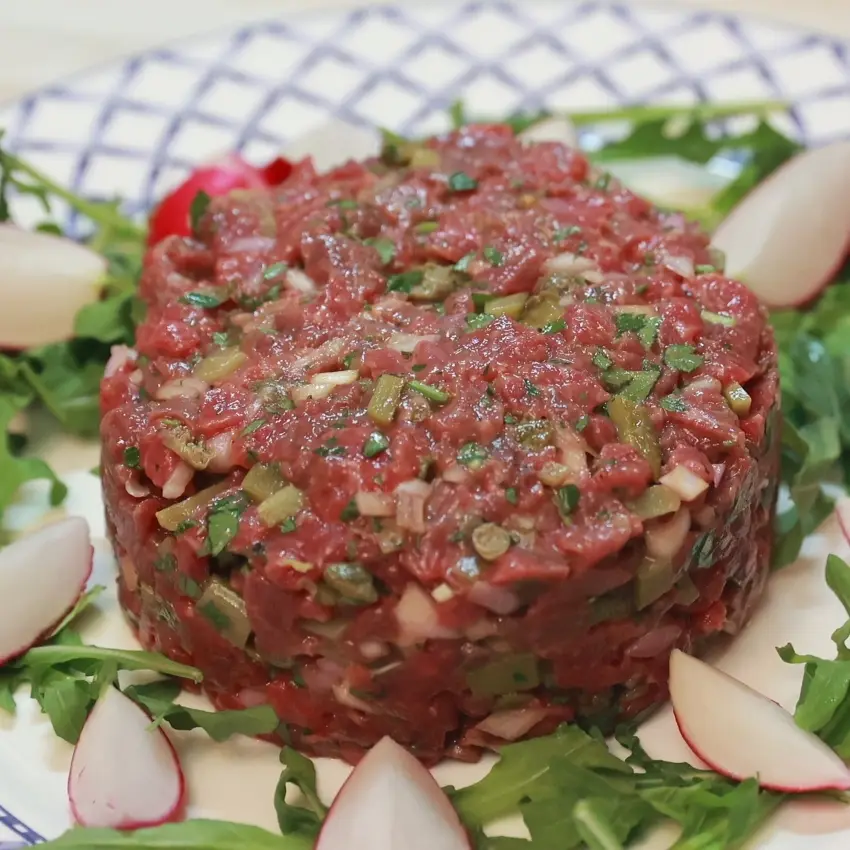
Use a ring mold to form a clean, compact tartare in the center of the plate. Gently tamp it down, level the top, and remove the ring. Sprinkle with fresh parsley and wipe the plate edges for a polished look. Serve immediately—the dish must remain cold at the core.
How to Keep Tartare Fresh: Pro Tips

Every technique here is designed to preserve the tartare’s freshness:
- Work fast
- Chill ingredients and bowls
- Store components separately until assembly
- Wash hands frequently
Pro Tips for Making Classic French Beef Tartare at Home
✅ Choose fresh, high-quality meat and dice by hand
✅ Work quickly and keep everything cold
✅ Don’t mix too early—assemble at the last minute
✅ Taste at every stage to balance seasoning
✅ Use seasonal and local ingredients whenever possible
Flavor Variations: Customize Your Tartare
Beef tartare is incredibly versatile:
- Swap capers for mild red onions
- Add Worcestershire sauce for a British twist
- Craving spice? Use fresh chili or extra harissa
- Serve with toast or shoestring fries for added crunch
Ingredient Substitutions
- Beef tenderloin → sirloin, flank steak, or very tender ribeye
- Shallots → mild red onions
- Dijon mustard → whole-grain mustard
- Parsley → chives or cilantro for a different note
- Caper vinegar → fresh lemon juice
Tips & Tricks for the Perfect Homemade Tartare
- Always hand-chop the beef—never use a food processor
- Chill your mixing bowl to keep the meat tender and tasty
- Combine ingredients just before serving
- Add garnishes gradually and taste often
- For crunch, try finely chopped celery or green apple
Beef Tartare FAQ
What cut of beef is best for tartare?
Choose tender, lean cuts like filet, sirloin, or flank. Ask your butcher for meat suitable for raw use.
Why does the beef need to stay cold?
Cold meat is safer, easier to dice, and retains a better texture. Always chill tools and ingredients during prep.
Can I make tartare in advance?
You can prep the garnishes ahead, but only cut and mix the meat at the last minute. Never let the full tartare sit unrefrigerated.
What if I’m missing some ingredients?
No problem! Use what you have—pickles, onions, capers… what matters most is freshness and balance.
How do I prevent the tartare from becoming watery?
Use a sharp knife, cut in small batches, avoid pre-mixing, and don’t overdo the oil.
How do I control spice without overpowering the dish?
Add heat gradually—taste and adjust. The beef should remain the centerpiece of the dish.
Fresh and Flavorful Recipes to Pair with This Tartare
- Salmon Tartare with Sriracha — bright, spicy, and elegant.
- Tuna Tartare with Lime and Sriracha — fresh and zesty with a hint of heat.
- Homemade Garlic Croutons — the perfect crunchy accompaniment.
- French Onion Soup (Gratinated) — a hearty first course before tartare.
- No-Churn Dark Chocolate Ice Cream — cool and rich to finish.
Useful Links
🛒 Michel Dumas Shop : Explore our kitchen essentials, including aprons and knives.
🌐 Linktree : Access all our important links in one place.
📱 YouTube | Instagram | Facebook | TikTok : Follow us for the latest recipes and culinary tips.

Beef Tartare: Easy Summer Recipe That’s Fresh, Fast & Flavorful
Ingredients
- 500 g beef tenderloin finely diced
- 50 g pickles cornichons, finely diced
- 40 g shallots finely chopped
- 1 very fresh egg yolk
- 20 g Dijon mustard
- 30 –50ml neutral oil
- 30 g capers roughly chopped
- 20 ml caper vinegar
- 5 g flat-leaf parsley finely chopped
- Fine salt to taste
- Freshly ground black pepper to taste
- 10 –20ml harissa optional, to taste
Instructions
- Dice the beef just before serving to keep it cold.
- Prep all condiments separately in small bowls.
- Whisk together the egg yolk, mustard, harissa, and oil to form a light sauce.
- Stir in the pickles, shallots, capers, parsley, and vinegar.
- Gently fold the sauce into the diced beef using two spoons.
- Plate with a ring mold for a clean presentation. Serve immediately.
Video
Notes
Beef Tartare FAQ
What cut of beef is best for tartare?Choose tender, lean cuts like filet, sirloin, or flank. Ask your butcher for meat suitable for raw use. Why does the beef need to stay cold?
Cold meat is safer, easier to dice, and retains a better texture. Always chill tools and ingredients during prep. Can I make tartare in advance?
You can prep the garnishes ahead, but only cut and mix the meat at the last minute. Never let the full tartare sit unrefrigerated. What if I’m missing some ingredients?
No problem! Use what you have—pickles, onions, capers… what matters most is freshness and balance. How do I prevent the tartare from becoming watery?
Use a sharp knife, cut in small batches, avoid pre-mixing, and don’t overdo the oil. How do I control spice without overpowering the dish?
Add heat gradually—taste and adjust. The beef should remain the centerpiece of the dish.