Easy Greek-Style Potato Salad with Feta, Kalamata Olives and Creamy Dressing
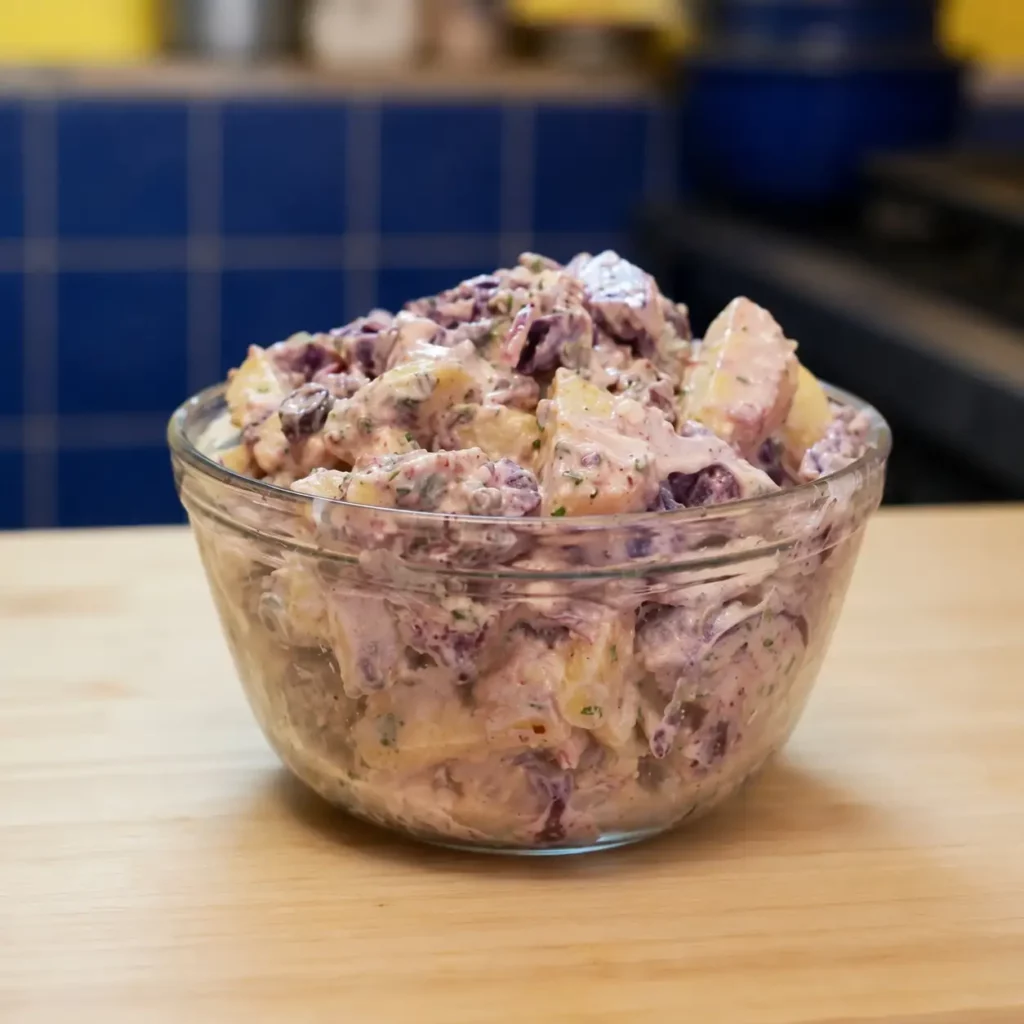
This Greek-style potato salad is a cold potato salad made with tender potatoes, feta, Kalamata olives, capers, fresh herbs, and a creamy olive oil dressing. It is different from a classic mayo potato salad because the sauce is built with softened cream cheese, olive brine, mustard, and olive oil instead of a heavy mayonnaise base. I make it when I want a cold side dish that still has a bit of character, especially for grilled meats, picnic plates, seafood, or a simple summer meal.
This recipe is based on my YouTube video, with a few adjustments since publication. In the video, I made three potato salads: one with eggs, one with ham, and this Greek-style version with feta and olives. The idea is the same here, but the proportions are tightened up so the salad is easier to reproduce at home.
The main thing to watch is the salt. Feta, olives, capers, mustard, and olive brine all bring seasoning, so the mistake to avoid is salting too early. I prefer to mix the whole salad first, let the potatoes absorb the dressing for a few minutes, then taste. Most of the time, black pepper is enough.
Why I Make It This Way
I make it this way because the cream cheese gives the dressing enough body to coat the potatoes without turning the salad into a mayonnaise salad. It clings to the edges of the potato pieces, especially if the potatoes are still slightly warm, and it carries the briny flavor from the olives and capers.
I prefer to loosen the cream cheese first with olive brine, lemon juice, or red wine vinegar. Cold cream cheese straight from the fridge can stay lumpy, and if you add oil too fast, the dressing can look broken. What I look for here is a smooth, pale, creamy base before the olives, feta, and herbs go in. It should feel like a loose dip, not a thick spread.
This version sits apart from my more classic creamy potato salad because it is sharper, saltier, and more Mediterranean in style. It is also different from the creamy dill pickle potato salad, which leans into pickle brine and dill, and from the creamy bacon cheddar potato salad, which is richer and more comfort-food style.
Ingredients That Matter
Use waxy potatoes if possible. Yukon Gold, yellow potatoes, Charlotte potatoes, or small red potatoes work well because they hold their shape after boiling. Russets can work in a pinch, but they break more easily and may make the salad feel mashed instead of chunky.
The feta should be salty and crumbly, but not bone dry. If it comes packed in brine, drain it well and crumble it by hand. Kalamata olives bring the dark, fruity, briny flavor that makes the salad taste Greek-inspired. Green olives can work, but the result will be sharper and less rounded.
Capers are small, but they matter. They add little salty pops between the potatoes. Do not overdo them. A spoonful is enough.
The herbs keep the salad from feeling heavy. Fresh oregano is excellent here, but it is strong. I use a little, then add parsley and chives to soften the flavor. The oregano should be present, not shouting over the feta.
For a more traditional Greek salad feeling, serve this beside a fresh homemade Greek salad with tomatoes, cucumber, onion, and olives. If you want the same flavor family but with pasta instead of potatoes, the Greek-style pasta salad with feta and olives is the closer cousin.
Step-by-Step Instructions
Start the potatoes in cold water. This helps them cook evenly from the center to the outside. Bring the pot to a steady boil, then lower the heat just enough so the water does not beat the potatoes apart. You want movement in the pot, but not a violent boil.
Cook until a knife slides through the center with only a little resistance. Depending on the size, this usually takes around 25 to 30 minutes. The potatoes should be cooked but not collapsing. If the skins start splitting a little, that is fine. If the potatoes are falling apart when you lift them, they went too far.
Drain them and let them cool just enough to handle. Peel them if you prefer a cleaner texture, or leave the skins on if they are thin and tender. Cut into large bite-size chunks. I prefer bigger pieces here because the dressing is bold. Tiny cubes absorb too much sauce and can make the salad feel pasty.
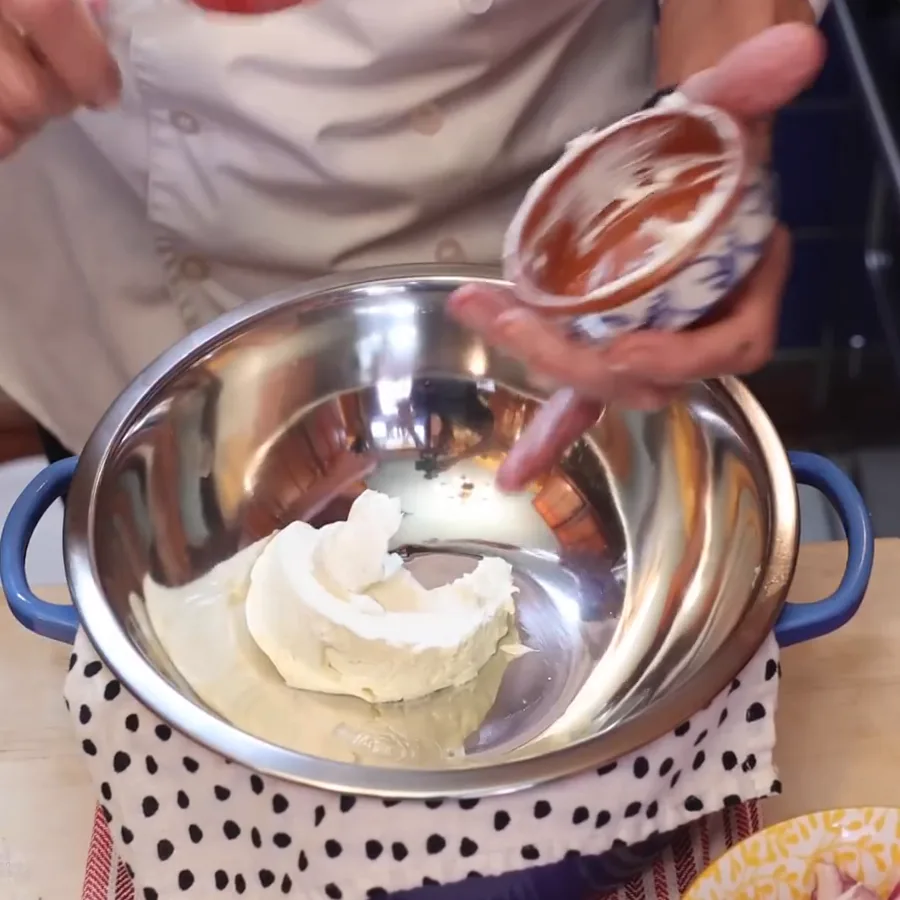
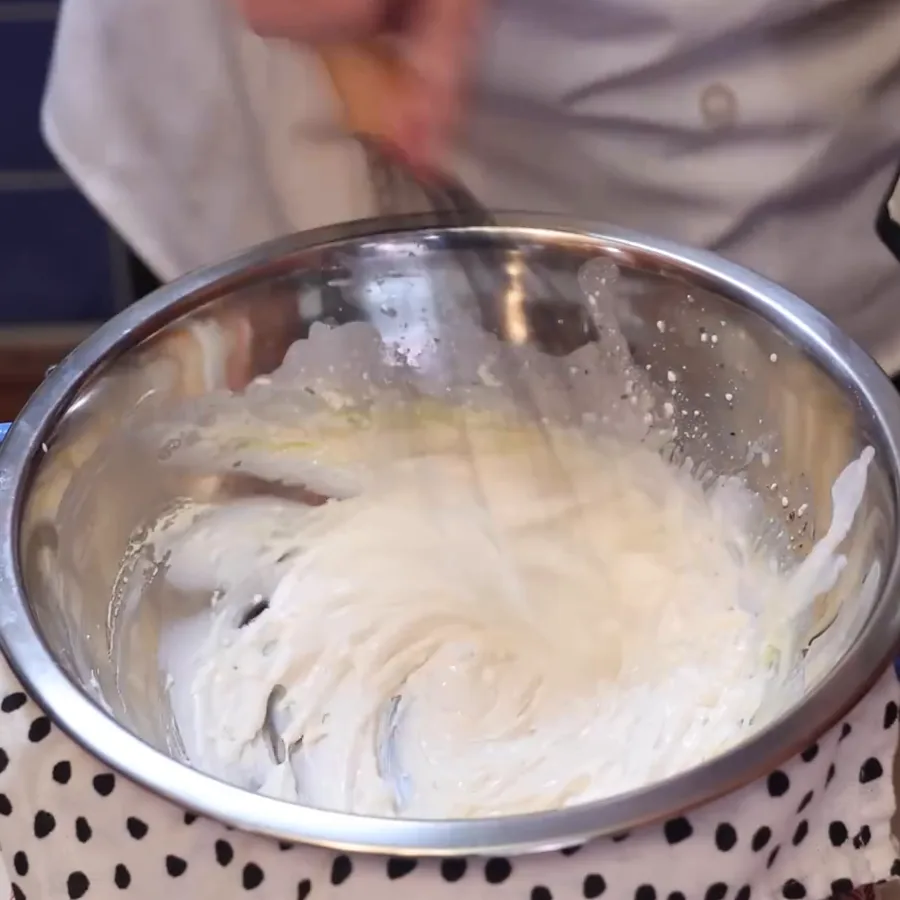
In a large bowl, add the softened cream cheese. Add olive brine, lemon juice, or red wine vinegar and whisk until smooth. At first, it may look uneven. Keep whisking. It should loosen and become glossy. Add the olive oil slowly while whisking. The dressing should look creamy and thick enough to coat a spoon.
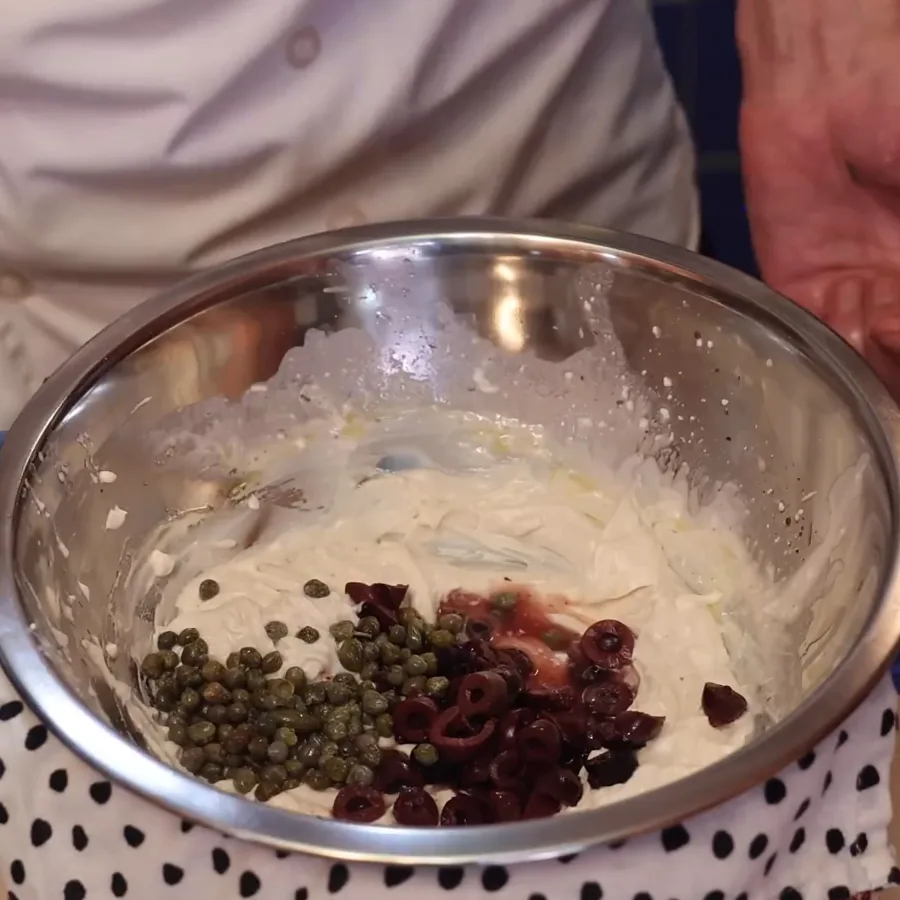

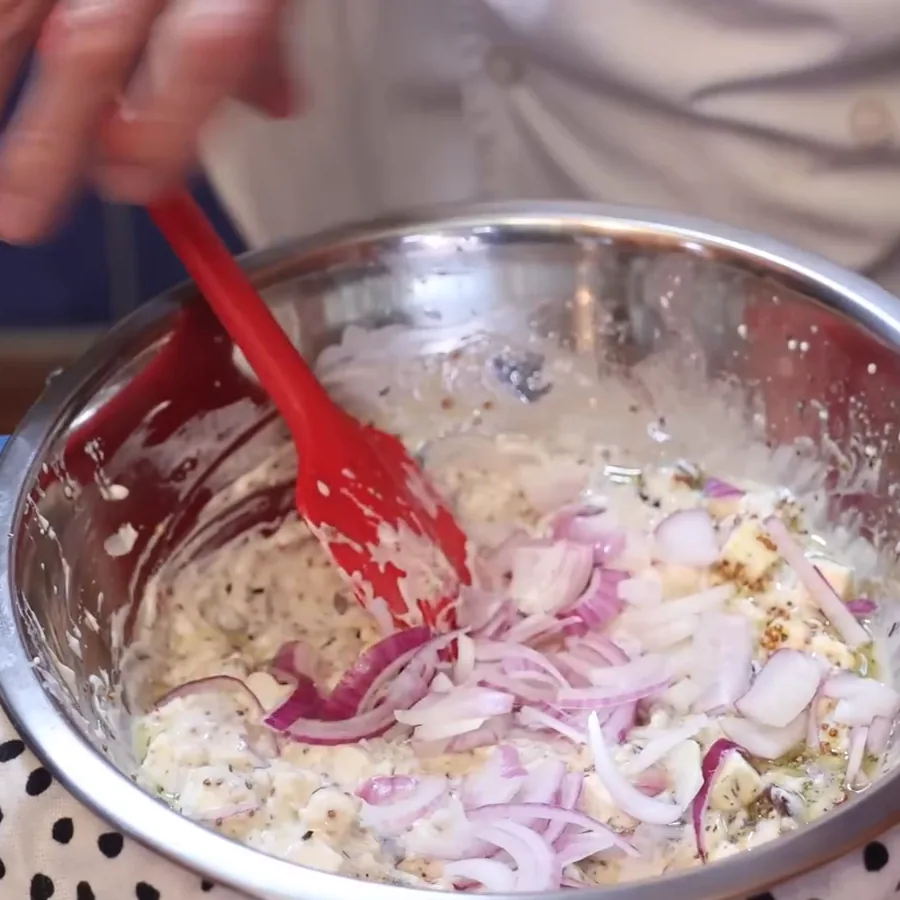
Add the whole-grain mustard, Kalamata olives, capers, feta, red onion, oregano, parsley, and chives. Stir gently. At this point, it should smell like olive oil, herbs, and brine. If it smells too creamy and flat, add another small splash of lemon juice or vinegar.
Add the potatoes while they are warm or at room temperature. Not hot. Warm potatoes take the flavor better, but hot potatoes can soften the feta too much and make the dressing greasy. Fold with a spatula, lifting from the bottom of the bowl and turning the potatoes over gently.

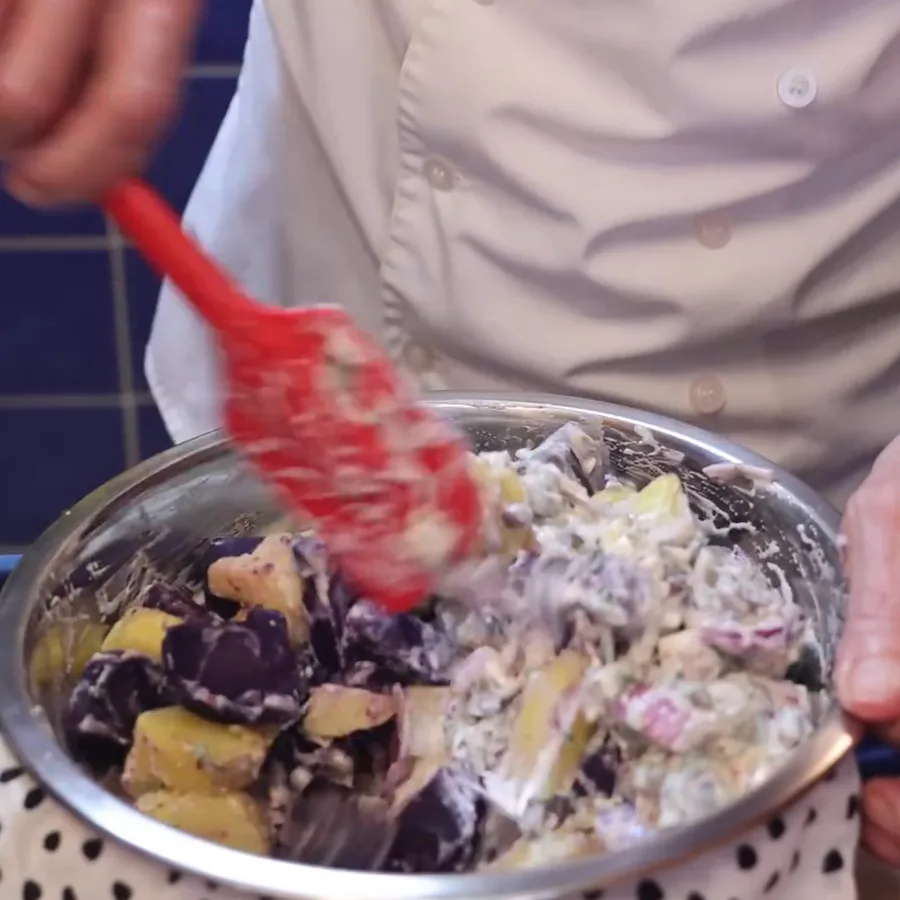
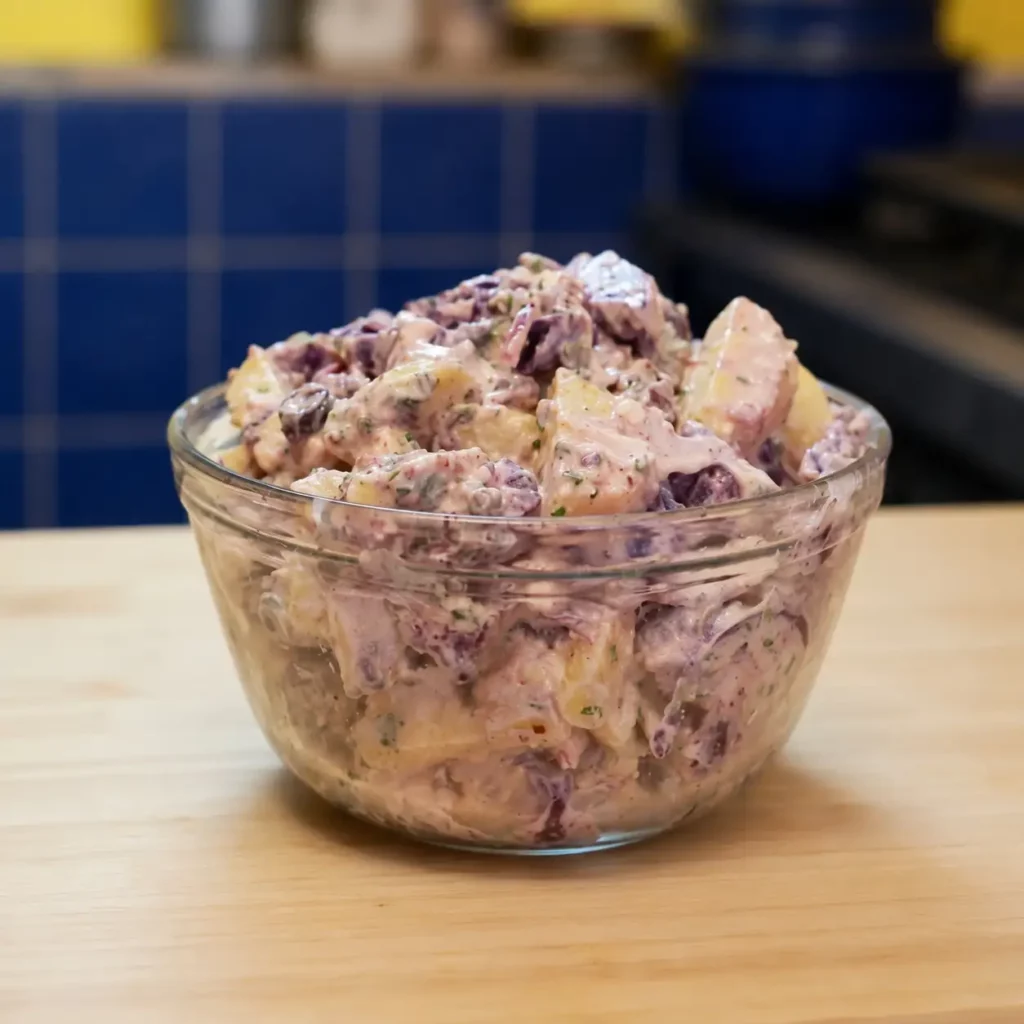
Let the salad sit for at least 10 minutes before serving, or chill it for 30 minutes if you want it colder. You know it is ready when the dressing has settled onto the potatoes instead of sitting in clumps at the bottom of the bowl.
Taste at the end. Add black pepper. Add salt only if it truly needs it.

How This Version Is Different From Other Potato Salads
This is not a traditional mayonnaise-based deli potato salad. It is creamy, yes, but the creaminess comes from a small amount of cream cheese blended with olive oil and acid. That makes it more tangy and briny than sweet or eggy.
It is also not the same as a ham-based potato salad. For a more classic, picnic-style version with meat, the creamy potato salad with ham is a better fit. This Greek-inspired one stays vegetarian unless you add a protein on the side.
Compared with a pasta salad, this has more body and a softer bite. The potatoes absorb the dressing in a different way than pasta does. If you are building a cold summer table, this salad can sit beside a Greek pasta salad with oregano vinaigrette without tasting like a duplicate, because one is creamy and potato-based while the other is lighter and vinaigrette-based.
Substitutions
Greek yogurt can replace half of the cream cheese if you want the dressing a little lighter and tangier. Use thick yogurt, not runny yogurt, or the sauce will slide off the potatoes.
Red wine vinegar gives the cleanest acidity. Lemon juice tastes fresher. Olive brine gives the strongest olive flavor but also adds salt. I often use a mix of lemon juice and olive brine.
No Kalamata olives? Use another good black olive. Green olives work too, but the flavor will be brighter and more acidic.
No fresh oregano? Use a small pinch of dried oregano. Rub it between your fingers before adding it so the aroma wakes up. Do not use too much. Dried oregano can take over quickly.
For the dressing base, homemade mayo is not needed here, but if you want a more classic creamy version, a spoonful of homemade mayonnaise can replace part of the cream cheese. The texture will be softer and closer to a deli salad.
What to Serve With It
This salad works cold, so it is easy for BBQs, weekday lunches, potlucks, and summer dinners. It also works year-round with roasted meats or fish because potatoes, olives, and feta are not tied to one season.
Serve it with Greek grilled chicken thighs when you want the lemon and oregano flavors to match. It also goes well with Mediterranean chicken thighs because the potatoes can handle the juices from the chicken.
For fish, I like it with pan-seared salmon or something simple from my easy fish recipes for weeknight dinners. The saltiness of the olives and feta works well with mild fish, especially if you add a bit more lemon to the dressing.
If the meal needs another cold sauce on the table, tzatziki sauce fits naturally. It brings cucumber and garlic, while the potato salad brings the creamy, briny side.
For a potato-heavy meal, keep the rest lighter. But if you are building a full comfort plate, you can also serve it with crispy potatoes like easy crispy potato latkes or a warm side of Lyonnaise potatoes. Just keep portions smaller because this salad already has richness from the cheese and olive oil.
FAQ
Can I make this potato salad ahead of time?
Yes. It is better after 30 minutes in the fridge, and it can be made a few hours ahead. If making it the day before, keep a little extra lemon juice or olive oil aside and refresh the salad before serving. Potatoes can absorb dressing overnight.
Should the potatoes be hot or cold when mixed?
Warm or room temperature is best. Hot potatoes can make the dressing greasy and soften the feta too much. Cold potatoes do not absorb flavor as well.
Is this a healthy potato salad?
It is a hearty vegetarian side with potatoes, olive oil, feta, olives, and herbs. It is not a low-salt dish because feta, olives, capers, and brine all contain salt. The best approach is to avoid adding extra salt until the very end.
Can I make it without cream cheese?
Yes. Use thick Greek yogurt, a spoonful of mayonnaise, or a straight olive oil and lemon dressing. The texture will change, but the salad still works.
Can I use red potatoes?
Yes. Red potatoes hold their shape well and are a good choice for this recipe. Leave the skins on if they are thin and tender.
Can I add cucumber or tomato?
Yes, but add them just before serving. Tomato and cucumber release water as they sit, which can loosen the dressing and make the bottom of the bowl watery.
Easy Greek-Style Potato Salad with Feta, Kalamata Olives and Creamy Dressing
Ingredients
- 1 1/2 lb waxy potatoes such as Yukon Gold, Charlotte, yellow potatoes, or small red potatoes
- 2 1/2 oz cream cheese softened
- 1 to 2 tbsp olive brine lemon juice, or red wine vinegar
- 3 tbsp olive oil
- 1 tbsp whole-grain mustard
- 3 1/2 oz feta crumbled
- 1/3 cup Kalamata olives pitted and halved
- 1 tbsp capers drained
- 2 tbsp finely chopped red onion
- 1 tbsp chopped fresh parsley
- 1 tbsp chopped fresh chives
- 1 tsp chopped fresh oregano or a small pinch of dried oregano
- Black pepper to taste
- Salt only if needed
- 1 hard-boiled egg halved, for garnish, optional
Instructions
- Place the potatoes in a pot of cold water. Bring to a boil, then cook for 25 to 30 minutes, or until a knife slides through the center without the potatoes falling apart.
- Drain the potatoes and let them cool until easy to handle. Peel if desired, then cut into large bite-size chunks.
- In a large bowl, whisk the softened cream cheese with the olive brine, lemon juice, or red wine vinegar until smooth.
- Slowly whisk in the olive oil until the dressing looks creamy and glossy.
- Stir in the whole-grain mustard, feta, Kalamata olives, capers, red onion, parsley, chives, and oregano.
- Add the warm or room-temperature potatoes and fold gently with a spatula until coated.
- Let the salad rest for 10 minutes, or chill for 30 minutes before serving.
- Taste and add black pepper. Add salt only if needed.
- Garnish with a hard-boiled egg, if using, and serve cold or slightly chilled.
Video
Notes
FAQ
Can I make this potato salad ahead of time?
Yes. It is better after 30 minutes in the fridge, and it can be made a few hours ahead. If making it the day before, keep a little extra lemon juice or olive oil aside and refresh the salad before serving. Potatoes can absorb dressing overnight.Should the potatoes be hot or cold when mixed?
Warm or room temperature is best. Hot potatoes can make the dressing greasy and soften the feta too much. Cold potatoes do not absorb flavor as well.Is this a healthy potato salad?
It is a hearty vegetarian side with potatoes, olive oil, feta, olives, and herbs. It is not a low-salt dish because feta, olives, capers, and brine all contain salt. The best approach is to avoid adding extra salt until the very end.Can I make it without cream cheese?
Yes. Use thick Greek yogurt, a spoonful of mayonnaise, or a straight olive oil and lemon dressing. The texture will change, but the salad still works.Can I use red potatoes?
Yes. Red potatoes hold their shape well and are a good choice for this recipe. Leave the skins on if they are thin and tender.Can I add cucumber or tomato?
Yes, but add them just before serving. Tomato and cucumber release water as they sit, which can loosen the dressing and make the bottom of the bowl watery.🔗 Useful Links
🛒 Michel Dumas Shop : Explore our kitchen essentials, including aprons and knives.
🌐 Linktree : Access all our important links in one place.
📱 YouTube | Instagram | Facebook | TikTok : Follow us for the latest recipes and culinary tips.