Oven-Roasted Boneless Leg of Lamb with Homemade Pan Jus and Fondant Potatoes
A bistro-style boneless leg of lamb roasted to a rosy 131°F (55°C) center, served with a deep homemade lamb jus and butter-braised fondant potatoes—perfect for Sunday dinner, special occasions, and anytime you want an impressive roast without complicated steps.
This is a boneless, tied leg of lamb roasted in the oven until rosy and juicy, then sliced and served with a reduced lamb jus and fondant potatoes. It’s different from slow-braised lamb because it stays roast-style (clean slices, rosy center) while still delivering big flavor from the bones and pan drippings. Make it when you want a classic roast dinner that feels special but works year-round.

This recipe is based on my YouTube video for gigot d’agneau, with a few adjustments since publication: more precise seasoning, clearer timing cues, and a slightly more structured jus so the results are consistent in any home kitchen.
Why this lamb roast works (and how it’s different from other lamb recipes)
A roast like this is all about control: high heat at the right moments for color, a probe thermometer for accuracy, and a proper rest so juices stay in the meat. The goal is a lamb roast that slices neatly—rosy in the center with slightly more cooked ends—so everyone at the table gets their preferred doneness.
This is not a creamy lamb dish, not a quick skillet lamb recipe, and not a slow stew. It’s a classic oven roast with a reduced jus. If you’re looking for a completely different lamb experience—spiced, saucy, and built around a big platter—try Couscous Royal with Lamb, Beef Shank, and Chicken: https://www.micheldumas.com/en/couscous-royal-lamb-beef-shank-chicken/
For more lamb ideas and variations, browse Lamb Recipes (Ingredient Collection): https://www.micheldumas.com/en/category/ingredients-en/lamb/
Ingredients overview
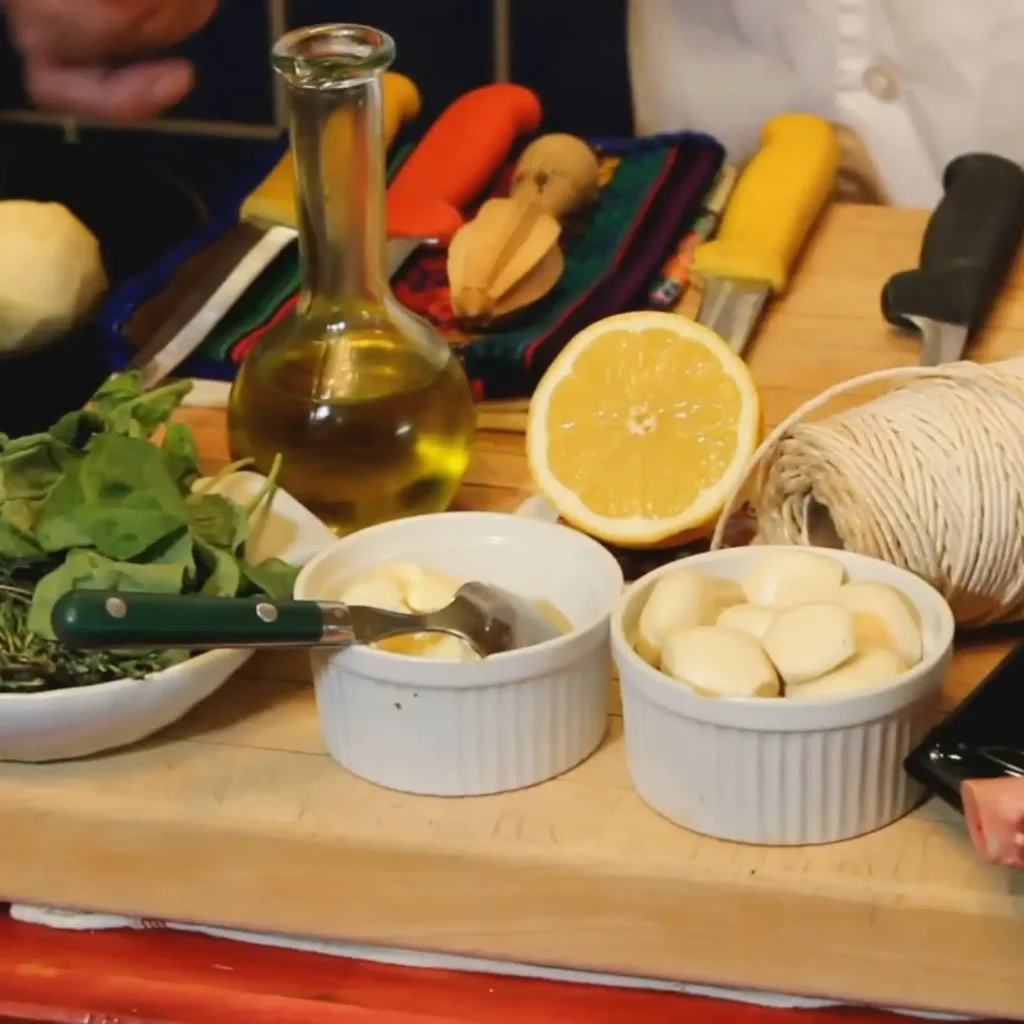
Lamb can handle bold seasoning. The original video approach keeps it simple, but for a blog-ready version that works reliably, seasoning needs to be defined. The two levers that matter most:
- Salt level (enough for the size of the roast)
- Aromatics (garlic + herbs, used strategically)
The jus gets its depth from bones, caramelized vegetables, and reduction—no shortcuts needed, just smart steps.
Step-by-step instructions
1) Prep the lamb
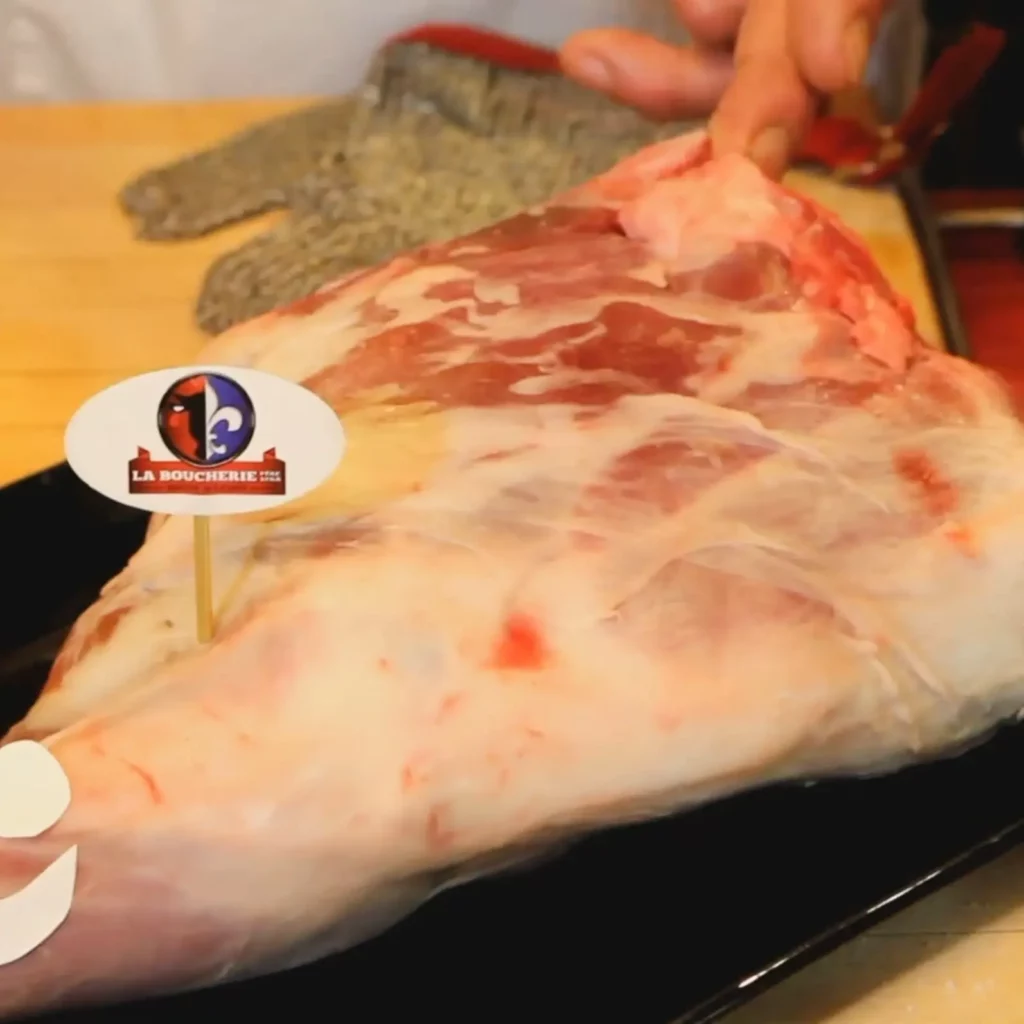
- If your leg of lamb is already boneless, you’re ahead. If it’s semi-boneless or “short shank” style, remove the main leg bone and any loose joint pieces so the meat can be rolled into an even cylinder. Reserve all bones and trimmings for the jus.
- Pat the lamb dry with paper towel. Dry surface = better browning.
- Season all over with salt and pepper. Add chopped rosemary/thyme and rub with olive oil.
- Roll the lamb into a tight roast and tie with butcher’s twine every 1½–2 inches so it keeps a round shape and cooks evenly.
Tip: Even shape matters more than exact weight. A uniform cylinder cooks predictably and slices beautifully.
2) Sear for color
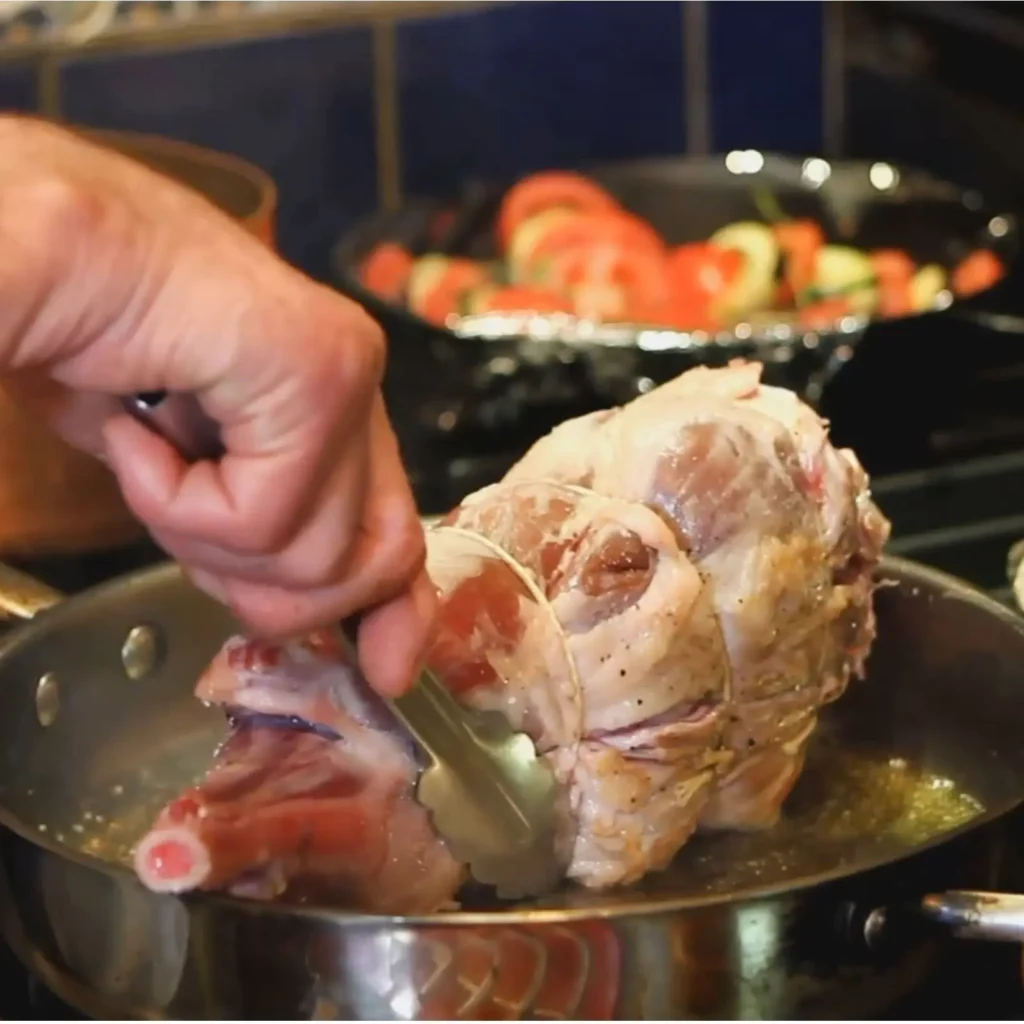
- Heat a large skillet or roasting pan over medium-high heat with a thin layer of olive oil.
- Sear the lamb on all sides until deeply browned, turning as needed. This step builds the crust and the base flavor for the jus.
- Transfer the lamb to a rack set over a roasting pan (or onto a rack in a baking dish). Keep the skillet/pan—you’ll use the browned bits for the jus.
Optional but excellent: During the last minute of searing, add a knob of butter and a few herb sprigs, then baste quickly for extra aroma.
3) Start the lamb jus
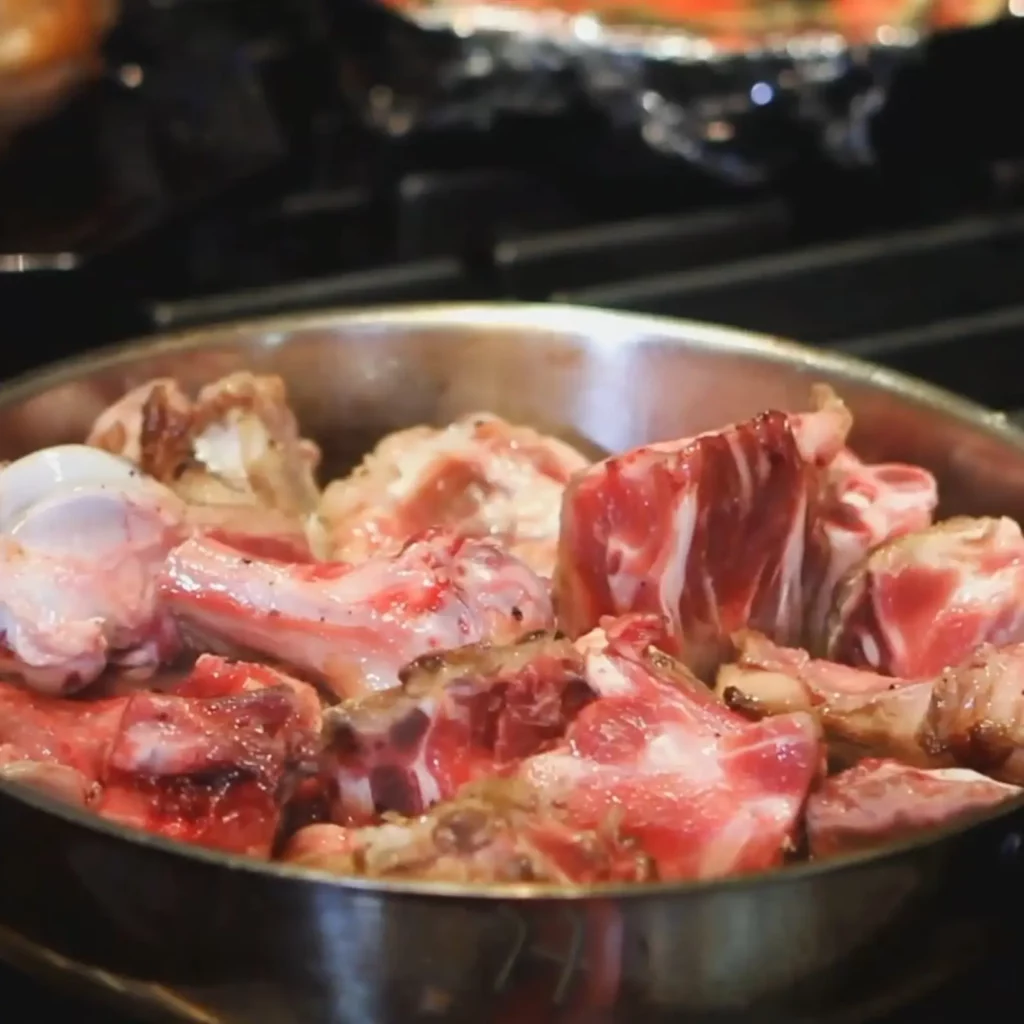
- In the same pan used for searing, add the reserved lamb bones and brown them well.
- Add large chunks of onion and carrot. Cook until they pick up color.
- Add smashed garlic.
- Deglaze with water (and optionally a splash of red wine), scraping up all the browned bits. Those bits are the backbone of the jus.
- Add enough water or light stock to cover the bones halfway to two-thirds. Bring to a gentle simmer.
Let it simmer while the lamb roasts. Skim excess fat if needed.
Technique link: If you want a simple way to thicken or give more body to a jus at the end, Beurre Manié (Quick Thickener) is the classic move: https://www.micheldumas.com/en/beurre-manie-recipe/
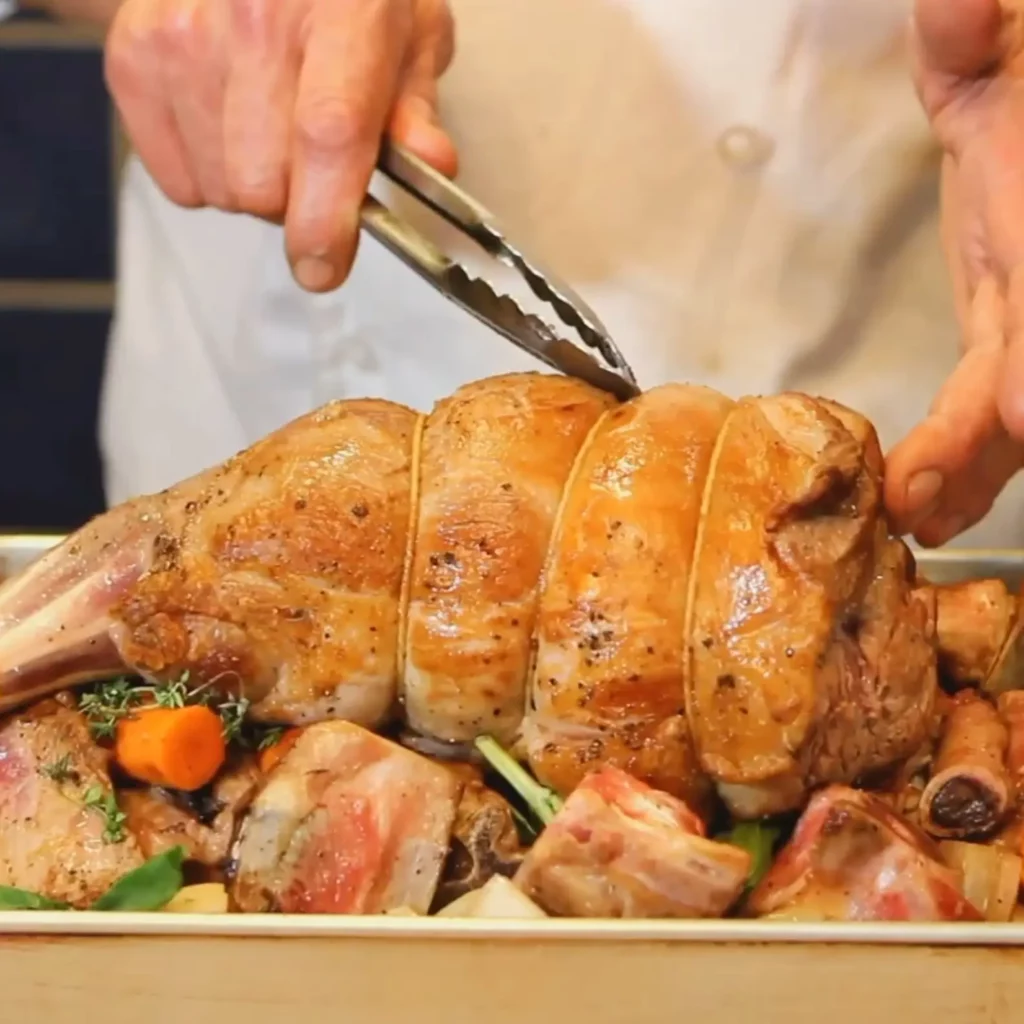
4) Roast the lamb to exact doneness
- Preheat the oven to 350°F.
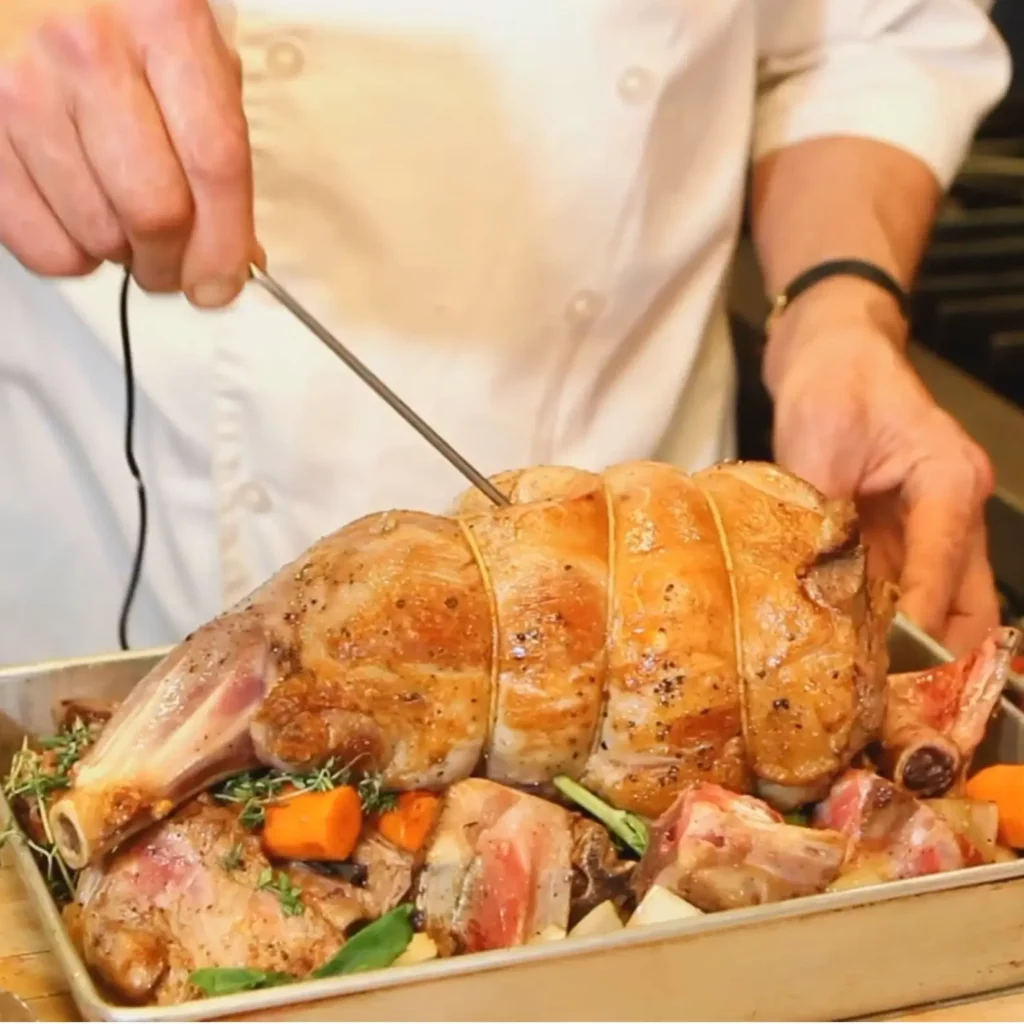
- Insert a probe thermometer into the center of the roast (not touching twine, not near a seam).
- Roast until the center reaches 131°F (55°C) for rosy, sliceable lamb.
Timing varies by thickness, but plan roughly 45–75 minutes.
Baste occasionally if you like, but don’t drown the roast. The goal is a browned exterior, not a steamed one.
5) Rest properly
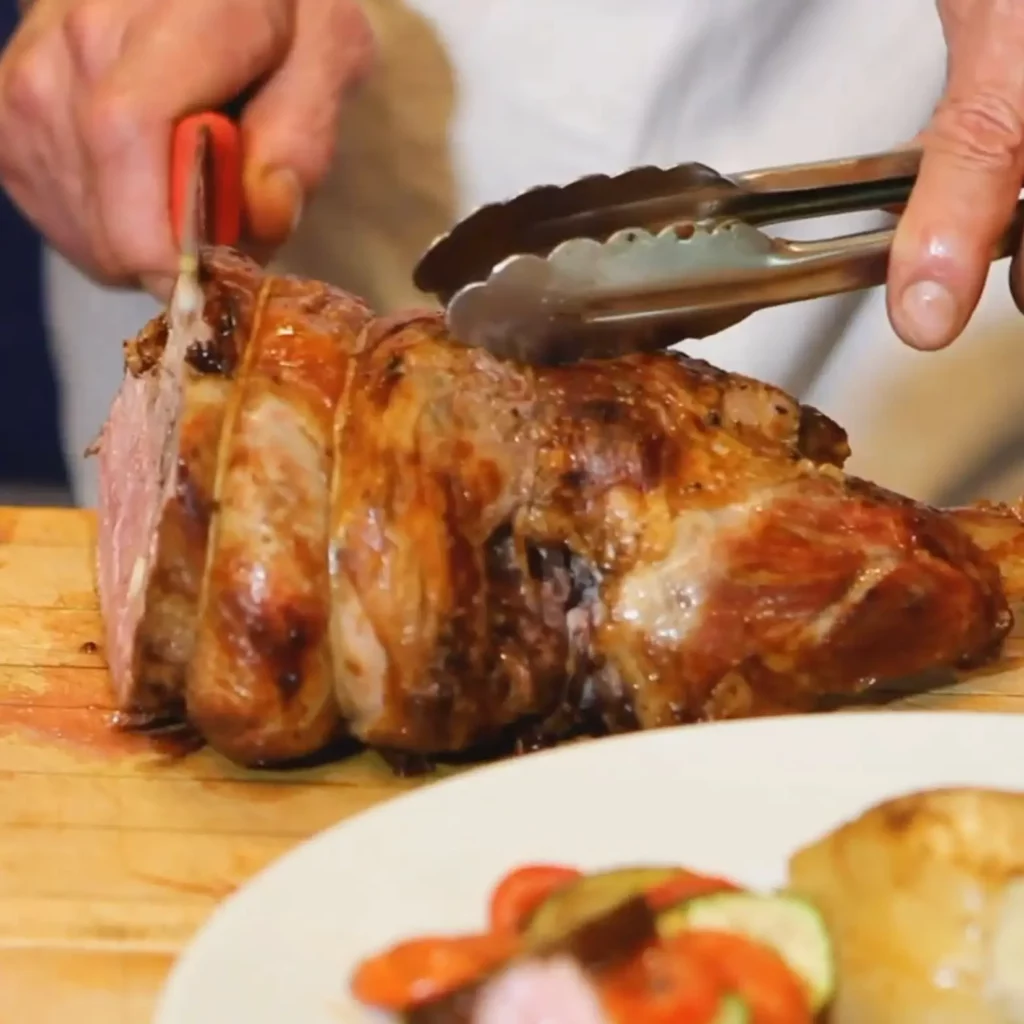
- Move the lamb to a cutting board.
- Tent loosely with foil and rest 15 minutes.
Resting prevents juice loss and keeps slices glossy.
6) Make fondant potatoes
Fondant potatoes are “restaurant potatoes” made at home: browned, then gently braised in butter and stock until the center turns silky.
- Peel and trim medium potatoes into even cylinders (or cut thick rounds if you prefer).
- Brown them in butter in an oven-safe skillet until one flat side is deeply golden.
- Flip, add a bay leaf, and pour in stock to come about halfway up the potatoes.
- Add lemon juice (a little goes a long way), pepper, and a pinch of paprika if you like that personal touch.
- Roast in the oven until tender, basting once or twice.
If you want more potato side options for different nights:
- Homemade Mashed Potatoes: https://www.micheldumas.com/en/homemade-mashed-potatoes-recipe/
- Lyonnaise Potatoes (French Sautéed Potatoes): https://www.micheldumas.com/en/lyonnaise-potatoes-french-sauteed-potatoes/
- Parisian Potatoes: https://www.micheldumas.com/en/parisian-potatoes-recipe/
7) Green vegetables
- Bring salted water to a boil.
- Blanch green beans (or your favorite green veg) briefly until bright green and still crisp.
- Drain well, toss with olive oil, and season with salt and pepper.
For an easy oven option that works any season, Oven-Roasted Mixed Vegetables pairs perfectly with lamb: https://www.micheldumas.com/en/oven-roasted-mixed-vegetables/
8) Finish the jus (strain and reduce)
- Strain the simmered stock through a fine strainer.
- Return liquid to the pot and reduce until it tastes deep and meaty.
- Adjust salt and pepper.
If you want to explore an herb-forward sauce style that’s incredible with roasted meats, Steak Sauce Entrecote (Warm Herb Butter Emulsion) is a great reference: https://www.micheldumas.com/en/steak-sauce-entrecote-herb-butter-emulsion/
For a fresh, punchy contrast that also works beautifully with lamb, Homemade Chimichurri Sauce is another strong option: https://www.micheldumas.com/en/homemade-chimichurri-recipe/
9) Slice and serve
- Warm plates if possible (hot plate + hot jus helps the whole dish feel “bistro”).
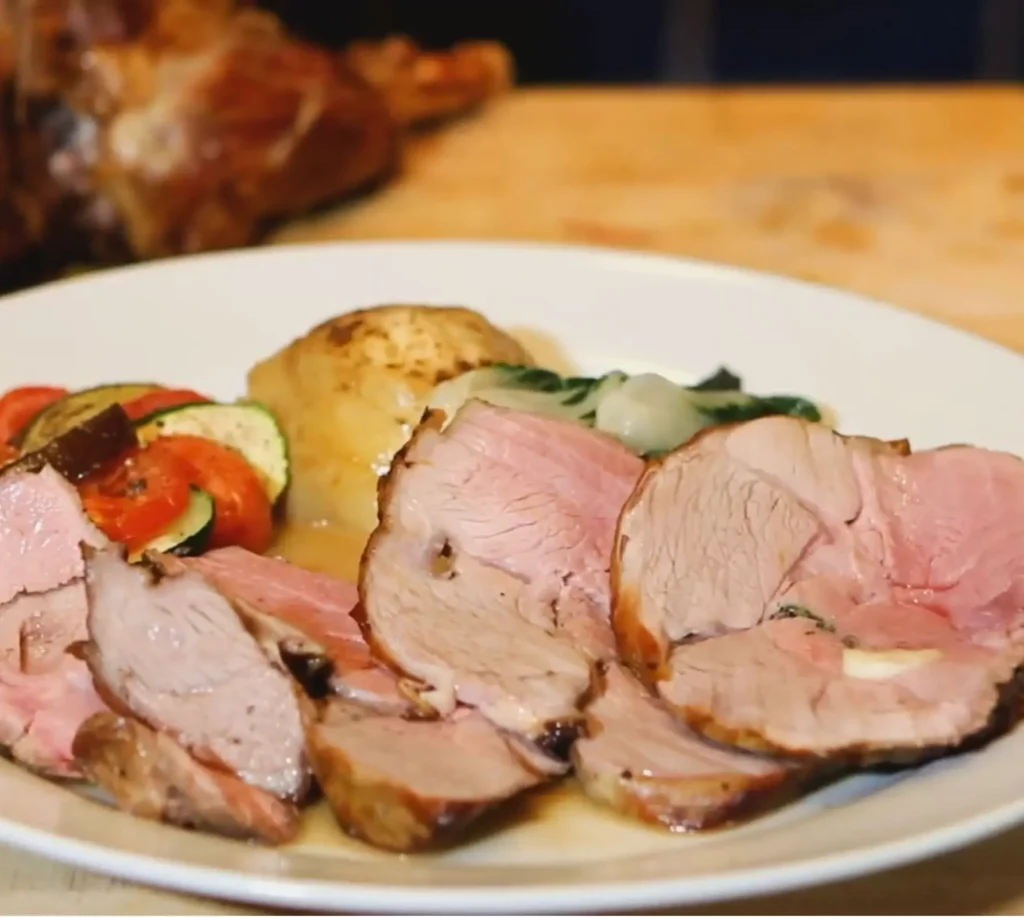
- Slice the lamb across the grain into even slices.
- Remove twine as you slice.
- Spoon a little jus over the meat (don’t flood it). Serve extra jus at the table.
Nutrition and meal feel
This is a hearty roast dinner: high in protein, satisfying, and naturally filling. Pair it with vegetables and a lighter side when you want balance, or lean into comfort food with potatoes and extra jus on colder nights. It’s a year-round recipe—cozy in winter, still perfect in spring and summer with brighter sides and a fresh sauce.
Substitutions
Lamb cut:
- Boneless leg of lamb is ideal. A semi-boneless leg works too—just tie it well.
- If you only have a bone-in leg, roast it bone-in and skip the boning step; still make the jus with additional bones if available.
Herbs:
- Rosemary + thyme are classic.
- Basil can be used, but it’s gentler; pair it with garlic for better impact.
Stock for potatoes:
- Chicken stock is fine.
- Vegetable stock works.
- Water works in a pinch, but flavor will be lighter.
Jus depth options:
- Add a small spoon of tomato paste during the bone-browning stage for deeper color and roundness.
- Deglaze with a splash of red wine for extra complexity.
No probe thermometer:
- Roast to preference, but consistency drops. A probe is strongly recommended for rosy lamb.
FAQ
What internal temperature should lamb be for a rosy roast?
131°F (55°C) gives a rosy center that slices cleanly. For medium, aim closer to 140°F (60°C). For well done, 149°F+ (65°C+).
Why tie the lamb?
Tying creates a uniform shape so the roast cooks evenly. It also improves slicing and presentation.
How long does it take to roast a boneless leg of lamb at 350°F?
It depends on thickness and starting temperature. Plan 45–75 minutes for a typical tied roast, then trust the probe temperature.
Do I have to sear the lamb first?
Searing isn’t optional if you want deep flavor and a beautiful crust. It also improves the jus dramatically.
Can I make the jus ahead?
Yes. Make it the day before, chill, remove solidified fat, then reheat and reduce slightly before serving.
What if my jus tastes weak?
Reduce longer, season properly, and consider finishing with a small knob of butter for shine. For extra body, use a small amount of beurre manié: https://www.micheldumas.com/en/beurre-manie-recipe/
What should I serve with lamb besides potatoes?
A crisp salad is perfect. Homemade Greek Salad is a strong match: https://www.micheldumas.com/en/homemade-greek-salad-easy-recipe/
For a creamy, classic dressing option, Homemade Ranch Dressing also works well: https://www.micheldumas.com/en/homemade-ranch-dressing-fresh-and-easy/
Can I freeze leftovers?
Yes. Slice, cool, and freeze in portions. Reheat gently with a splash of jus so it stays moist.
What to Serve With This Roast Lamb (Suggested Posts)
- Homemade Mashed Potatoes: https://www.micheldumas.com/en/homemade-mashed-potatoes-recipe/
- Lyonnaise Potatoes (French Sautéed Potatoes): https://www.micheldumas.com/en/lyonnaise-potatoes-french-sauteed-potatoes/
- Parisian Potatoes: https://www.micheldumas.com/en/parisian-potatoes-recipe/
- Oven-Roasted Mixed Vegetables: https://www.micheldumas.com/en/oven-roasted-mixed-vegetables/
- Homemade Greek Salad: https://www.micheldumas.com/en/homemade-greek-salad-easy-recipe/
- Homemade Chimichurri Sauce: https://www.micheldumas.com/en/homemade-chimichurri-recipe/
- Steak Sauce Entrecote (Warm Herb Butter Emulsion): https://www.micheldumas.com/en/steak-sauce-entrecote-herb-butter-emulsion/
- Garlic Butter (Freezer-Friendly): https://www.micheldumas.com/en/garlic-butter-freezer-friendly/
- Beurre Manié (Quick Thickener): https://www.micheldumas.com/en/beurre-manie-recipe/
- More Lamb Recipes (Ingredient Collection): https://www.micheldumas.com/en/category/ingredients-en/lamb/
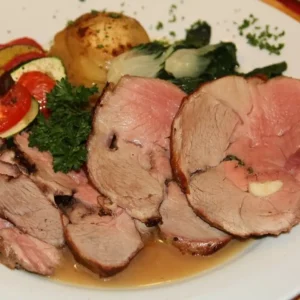
Oven-Roasted Boneless Leg of Lamb with Homemade Pan Jus and Fondant Potatoes
Ingrédients
Lamb
- 1 boneless leg of lamb about 5–6 lb, tied
- 2 1/2 tsp kosher salt or 1 1/2 tsp fine salt
- 1 1/2 tsp black pepper
- 2 tbsp olive oil
- 3 garlic cloves grated or finely minced
- 1 tbsp chopped rosemary or 2 tsp dried
- 1 tbsp chopped thyme or 2 tsp dried
Jus
- Reserved lamb bones and trimmings
- 1 onion cut into large chunks
- 1 carrot cut into large chunks
- 2 garlic cloves smashed
- 4 cups water plus more as needed
- 1 cup chicken stock optional, for a richer base
- Salt and pepper to taste
Fondant Potatoes
- 6 medium Yukon Gold potatoes peeled and trimmed
- 4 tbsp unsalted butter
- 1 bay leaf
- 2 cups chicken stock approx., enough to reach halfway up potatoes
- 1 tbsp lemon juice
- Black pepper
- Pinch of paprika optional
Green Vegetables
- 1 lb green beans or similar green veg
- Salt for blanching water
- 1 tbsp olive oil
- Salt and pepper to taste
Instructions
- Preheat oven: Heat oven to 350°F.
- Season lamb: Pat dry. Rub with salt, pepper, olive oil, garlic, rosemary, and thyme.
- Sear: Sear lamb in hot oil on all sides until deeply browned. Transfer to a rack over a pan.
- Start jus: Brown lamb bones in the same pan. Add onion, carrot, and smashed garlic; cook until colored. Add water (and chicken stock if using), scrape up browned bits, and simmer gently while lamb roasts.
- Roast: Insert probe into center of lamb. Roast to 131°F (55°C) for rosy lamb.
- Rest: Tent with foil and rest 15 minutes.
- Fondant potatoes: Brown potatoes in butter in an oven-safe skillet until golden. Flip, add bay leaf, pour in stock to halfway up, add lemon juice, pepper, and paprika if using. Roast until tender, basting once or twice.
- Green veg: Blanch in salted boiling water until bright and crisp-tender. Drain, toss with olive oil, season.
- Finish jus: Strain jus, return to pot, reduce to a deeper flavor, season to taste.
- Serve: Slice lamb, remove twine as you go, spoon over hot jus, and serve with fondant potatoes and green vegetables.
Vidéo
Notes
FAQ
What internal temperature should lamb be for a rosy roast?131°F (55°C) gives a rosy center that slices cleanly. For medium, aim closer to 140°F (60°C). For well done, 149°F+ (65°C+). Why tie the lamb?
Tying creates a uniform shape so the roast cooks evenly. It also improves slicing and presentation. How long does it take to roast a boneless leg of lamb at 350°F?
It depends on thickness and starting temperature. Plan 45–75 minutes for a typical tied roast, then trust the probe temperature. Do I have to sear the lamb first?
Searing isn’t optional if you want deep flavor and a beautiful crust. It also improves the jus dramatically. Can I make the jus ahead?
Yes. Make it the day before, chill, remove solidified fat, then reheat and reduce slightly before serving. What if my jus tastes weak?
Reduce longer, season properly, and consider finishing with a small knob of butter for shine. For extra body, use a small amount of beurre manié: https://www.micheldumas.com/en/beurre-manie-recipe/ What should I serve with lamb besides potatoes?
A crisp salad is perfect. Homemade Greek Salad is a strong match: https://www.micheldumas.com/en/homemade-greek-salad-easy-recipe/
For a creamy, classic dressing option, Homemade Ranch Dressing also works well: https://www.micheldumas.com/en/homemade-ranch-dressing-fresh-and-easy/ Can I freeze leftovers?
Yes. Slice, cool, and freeze in portions. Reheat gently with a splash of jus so it stays moist.
Useful Links
🛒 Michel Dumas Shop : Explore our kitchen essentials, including aprons and knives.
🌐 Linktree : Access all our important links in one place.
📱 YouTube | Instagram | Facebook | TikTok : Follow us for the latest recipes and culinary tips.