Homemade Mango Sorbet with Fresh Mangoes
Homemade mango sorbet is one of the best warm-weather desserts to make when ripe mangoes are sweet, fragrant, and almost too soft to slice neatly. This recipe is based on my YouTube video, with a few adjustments since publication to make the proportions easier to repeat at home.
A good mango sorbet should taste bright, clean, and very mango-forward, not like frozen sugar water. I make it this way because the simple syrup gives the sorbet its smooth texture, while lemon juice keeps the fruit from tasting flat. The mistake to avoid is guessing too much with the syrup. Too little sugar and the sorbet freezes hard. Too much and it can turn heavy or slushy.
Mango sorbet is a churned frozen dessert made with fruit, sugar syrup, and a little acidity. Unlike ice cream, there is no cream, milk, or egg base, so the fruit has nowhere to hide. That is why ripe mangoes, enough sugar, and a very cold mixture matter so much here.
What Makes This Recipe Different
This is not a creamy mango dessert and it is not a no-churn frozen mousse. It is a proper fruit sorbet, made with a syrup, blended smooth, chilled, then churned in a sorbet maker.
I prefer to use a simple syrup instead of adding dry sugar directly to the mango because the texture is more even. The sugar is already dissolved, so the base blends into a clean coulis without gritty spots. When the machine starts turning, the sorbet freezes more smoothly and comes out soft enough to scoop.
The original video uses 6 mangoes and a one-to-one syrup made with water and sugar. For a public recipe, the mangoes need a more precise weight because mango size changes everything. Six small mangoes and six large mangoes are not the same recipe. Here, the target is about 2 1/4 to 2 2/3 pounds of peeled mango flesh.
This sorbet also sits in a different place from my homemade strawberry sorbet. Strawberry sorbet usually needs careful balancing because strawberries are watery and acidic. Mango is thicker, richer, and naturally creamy, so it can make a very smooth sorbet if the sugar level is right.
Ingredients You Need
The ingredient list is short, so each ingredient has to do its job.
For the mangoes, use ripe fruit that smells sweet at the stem end and gives slightly when pressed. If the mango tastes bland before freezing, it will taste even blander after freezing. Freezing dulls sweetness and aroma, so start with fruit that already tastes good.
The lemon juice is not there to make the sorbet taste like lemon. It sharpens the mango. What I look for here is a clean, fresh edge after the first spoonful. Without it, mango sorbet can taste heavy even when the texture is right.
The syrup is made with water and sugar. In the video, the syrup is a simple 1:1 base. That means equal weights of water and sugar, but for a home recipe in imperial measurements, 2 cups of water and 2 1/2 cups of sugar gets very close. Let it boil briefly, then cool it completely before blending.
If you like fruit desserts, this sits nicely beside something baked, like a slice of gluten-free apple tart or a bowl of apple crisp with oats. The contrast between warm pastry and cold sorbet is simple, but it works.
Step-by-Step Instructions
Make the simple syrup
Combine the water and sugar in a saucepan. Heat it over medium-high heat, stirring at the beginning so the sugar dissolves evenly.
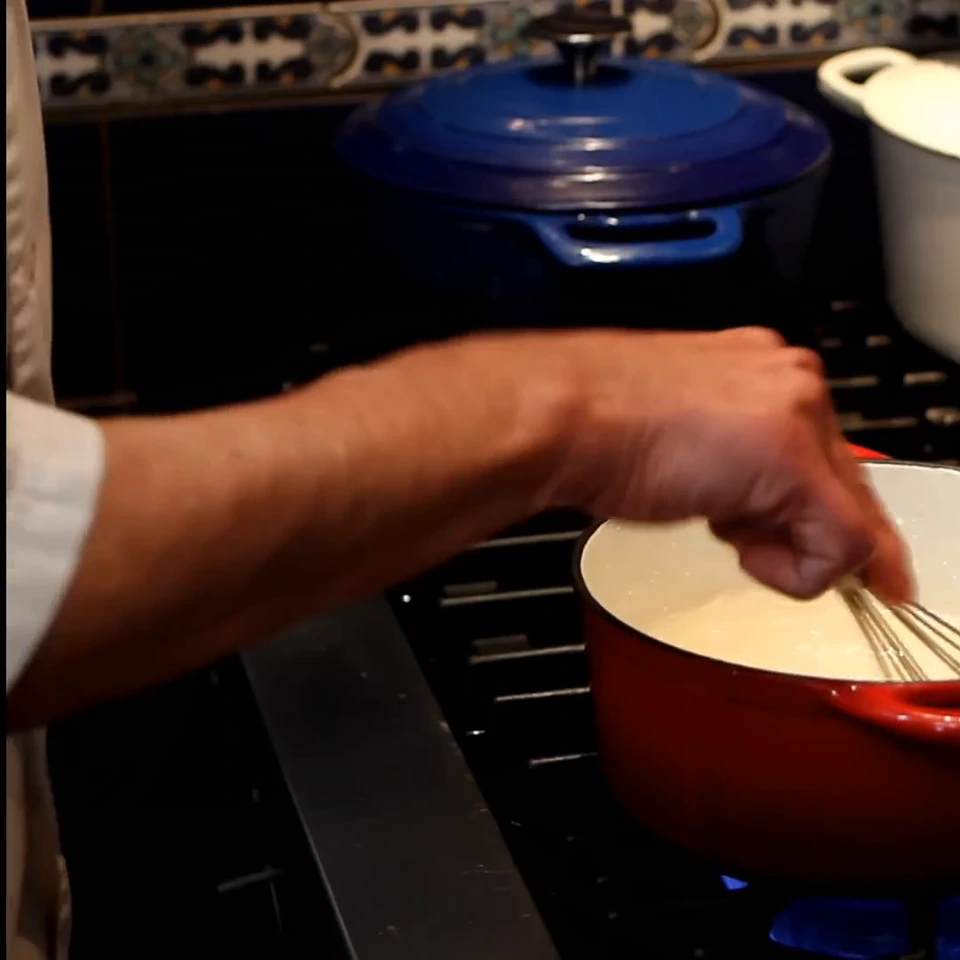
Once the syrup comes to a boil, let it bubble for about 2 minutes. It does not need to become caramel, and it should not color. You are only dissolving the sugar completely and making a clean syrup.
Turn off the heat and let the syrup cool. This part matters. Hot syrup warms the mango puree, and a warm sorbet base takes longer to churn. If the base goes into the machine too warm, the texture can turn coarse before it freezes properly.
Prepare the mangoes
Peel the mangoes and cut the flesh away from the pit. Dice the fruit and weigh it if possible. You want about 2 1/4 to 2 2/3 pounds of mango flesh.

At this point, the mango should look juicy and bright, with no hard pale pieces. If some parts are fibrous, trim them out. Fibrous mango can make the sorbet feel stringy after blending.
Blend the sorbet base
Add the mango to a blender with the lemon juice. Pour in most of the cooled syrup and blend until completely smooth.
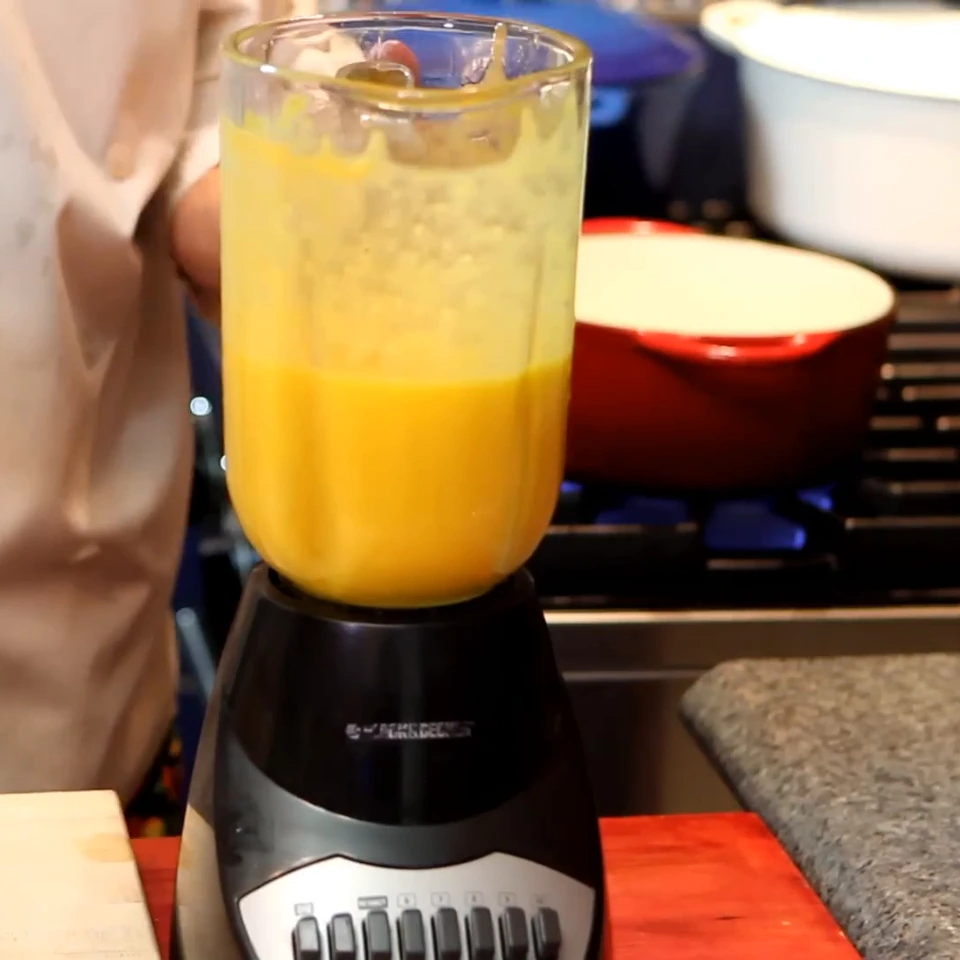
You can adjust with more syrup after tasting. The base should taste slightly sweeter than you want the final sorbet to taste. That is normal. Once frozen, the sweetness will feel less intense.
If you use a refractometer, aim around 28 to 32 Brix, or about 14 to 16 Baumé. In the video, the reading mentioned is in the sorbet range, but the important practical point is this: do not undersweeten the base. An undersweetened sorbet may taste fresh before churning, but it will freeze into a hard block later.
Chill the base
Pour the mango mixture into a container, cover, and refrigerate until very cold. Two to four hours is good. Overnight is even easier if you are preparing ahead.
This chilling step is one of the easiest ways to improve texture. A cold base freezes faster, which means smaller ice crystals and a smoother spoonful.
Churn the sorbet
Pour the cold mango base into the frozen bowl of your sorbet maker. Churn until the mixture thickens and looks soft, creamy, and scoopable.
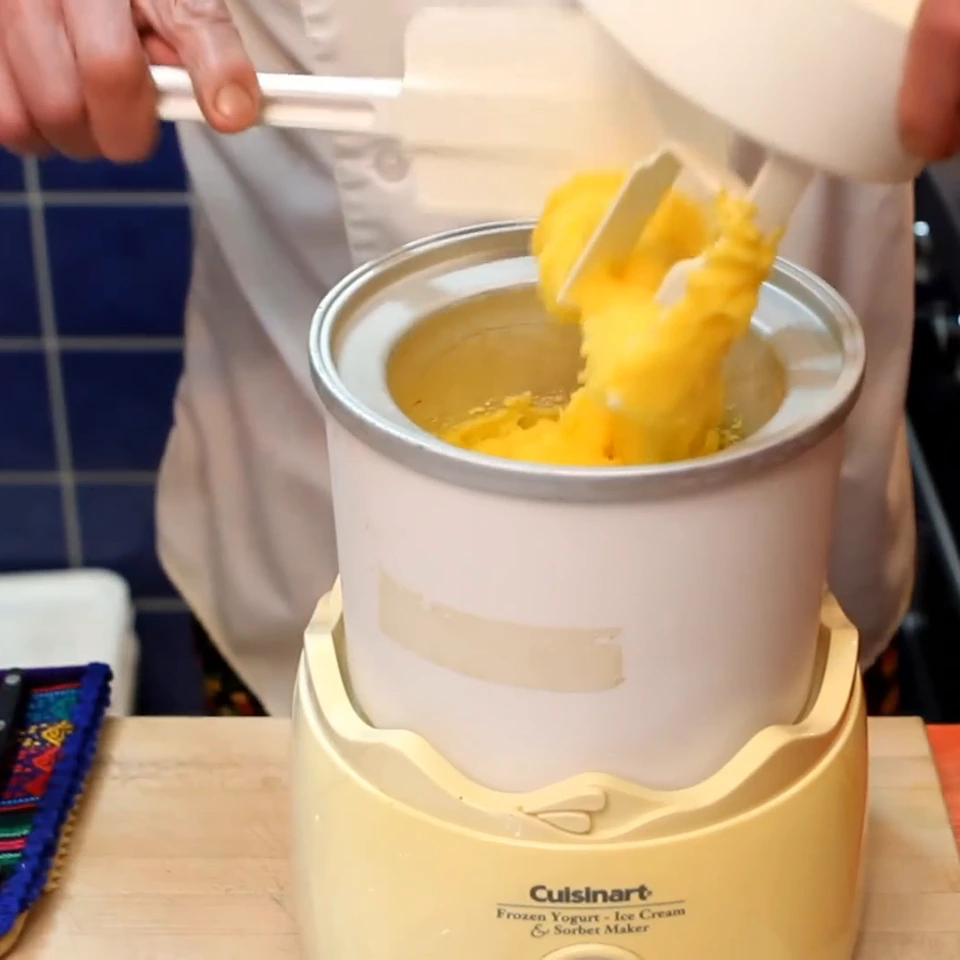
You know it is ready when the machine leaves clear tracks in the sorbet and the texture looks like a very soft gelato. It should hold its shape on a spoon, but still look supple.
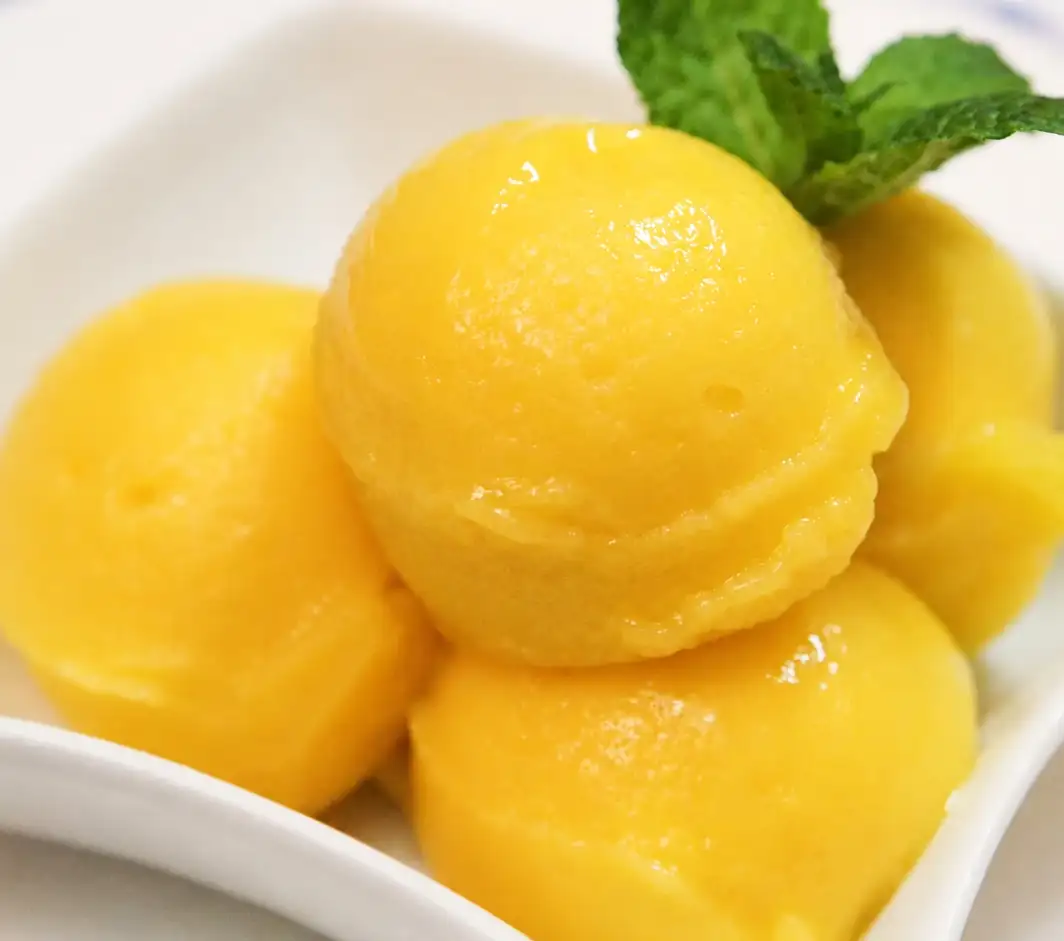
Serve right away for the softest texture, or transfer it to a freezer-safe container and freeze until firmer.

Texture, Storage, and Serving
Fresh from the machine, this sorbet is at its best. It is soft, bright, and very smooth. After several hours in a home freezer, it will firm up. That is normal for homemade sorbet, especially one made without glucose syrup or stabilizer.
Let it sit at room temperature for 5 to 10 minutes before scooping if it is too hard. Do not microwave it. The outside melts too fast while the middle stays frozen.
For a summer dessert plate, I like this with something simple and buttery. It works with brown butter chocolate cookies, lemon blueberry muffins, or even a small slice of easy lemon yogurt cake.
Substitutions
If fresh mangoes are not good, frozen mango can work. Thaw it first, then drain off excess liquid before blending. Frozen mango can be less fragrant, so taste before freezing and add a little extra lemon juice if needed.
Lime juice can replace lemon juice. It gives the sorbet a slightly more tropical taste. Start with the same amount and adjust after blending.
For a softer freezer texture, replace a few tablespoons of the sugar syrup with light corn syrup. This is optional, but it helps reduce iciness. I would not use honey here unless you specifically want the honey flavor, because it can cover the mango.
If you want a richer frozen dessert, make a different recipe instead of adding cream here. Cream changes the identity of the dish. For a creamy cold dessert, something like no-churn dark chocolate ice cream belongs in a different category.
FAQ
Can I make this without a sorbet maker?
You can freeze the mixture in a shallow pan and stir it every 30 minutes as it freezes, but the texture will be more icy. A sorbet maker gives a smoother result because it freezes and moves the mixture at the same time.
Why is my mango sorbet hard after freezing?
The most common reason is not enough sugar in the base. Sorbet needs sugar for texture, not only sweetness. If you reduce the syrup too much, the mixture freezes very solid.
Can I reduce the sugar?
A small reduction is possible, but I would be careful. Mango sorbet depends on sugar for scoopability. If you want a less sweet result, use very ripe mangoes and add enough lemon juice for balance rather than removing too much syrup.
Can I use frozen mango?
Yes. Thaw it first, then blend it with the syrup and lemon juice. Taste carefully because frozen mango is often less aromatic than ripe fresh mango.
How long does homemade mango sorbet keep?
It is best within the first week. After that, it can still be eaten, but the texture may become icier. Keep it tightly covered to avoid freezer smells.
What should I serve with mango sorbet?
It is excellent after a rich meal because it is light and clean. For dessert pairings, try it with caramelized apple upside-down cake, peach cobbler with canned peaches, or creamy vanilla rice pudding.
Suggested Posts
For another fruit-forward frozen dessert, try my homemade strawberry sorbet. It is a useful comparison because strawberries behave differently from mangoes in the machine.
If you want something chilled but creamy, the cottage cheese lemon mousse is a lighter spoon dessert with a clean citrus finish.
For a baked dessert to serve beside this sorbet, try foolproof one-bowl vanilla cake or moist blueberry cake. Mango and vanilla are an easy match, and blueberry gives a nice color contrast on the plate.
For a sharper citrus option, yuzu lemon bars make sense with this sorbet because the tart filling cuts through the mango sweetness.
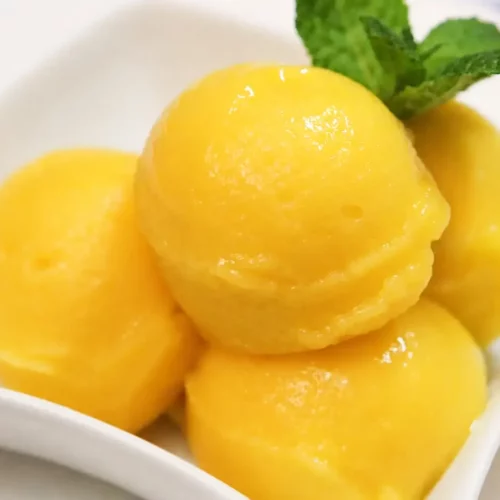
Homemade Mango Sorbet with Fresh Mangoes
Ingredients
- 2 cups water
- 2 1/2 cups granulated sugar
- 2 1/4 to 2 2/3 lb ripe mango flesh peeled and diced
- 2 to 3 tbsp fresh lemon juice
- Fresh mint leaves optional for serving
Instructions
- Combine the water and sugar in a saucepan.
- Bring to a boil, stirring until the sugar dissolves.
- Boil for about 2 minutes, then remove from the heat and cool completely.
- Add the mango flesh and lemon juice to a blender.
- Add most of the cooled syrup and blend until completely smooth.
- Taste and add more syrup if needed. The mixture should taste slightly sweeter than the finished sorbet.
- Chill the mango base until very cold, at least 2 hours.
- Pour into a sorbet maker and churn until thick, smooth, and scoopable.
- Serve immediately for a soft texture, or freeze in a covered container until firmer.
- Let sit at room temperature for 5 to 10 minutes before scooping if frozen solid.