Easy Raclette Grilled Cheese Sandwich
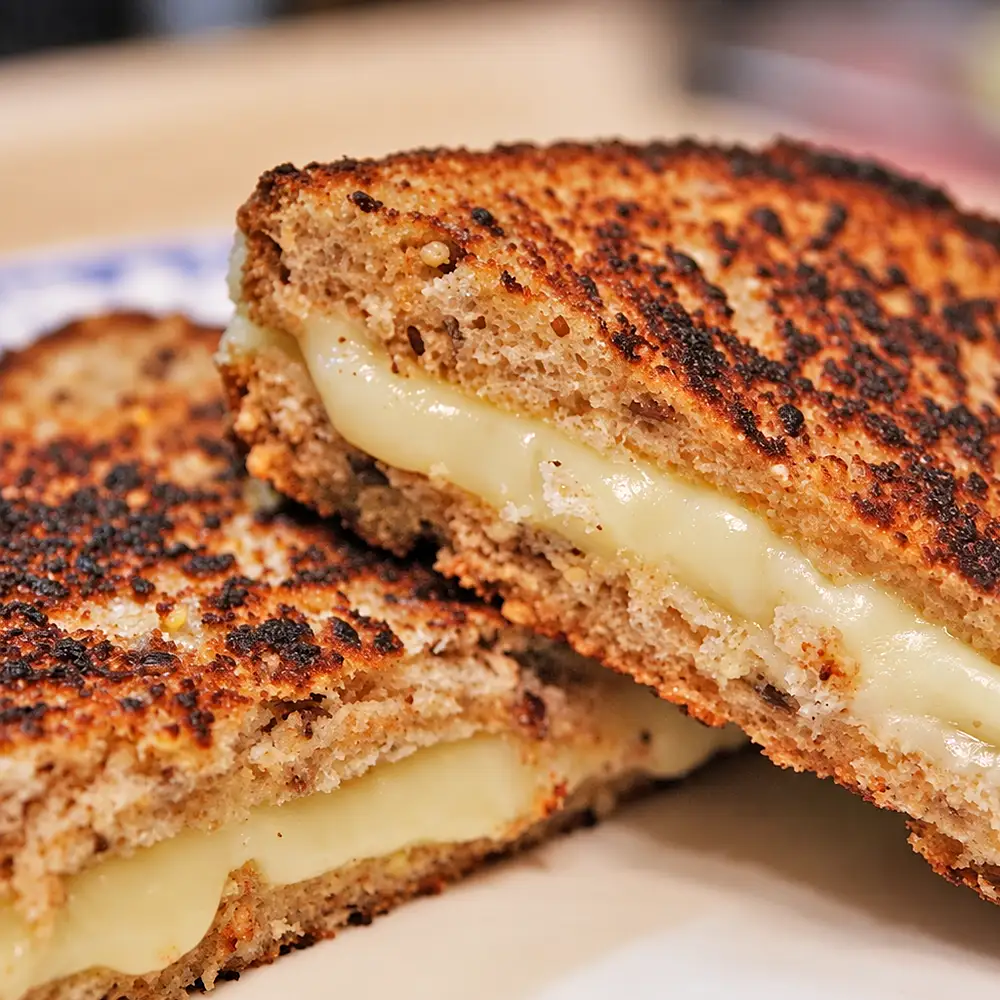
This quick skillet sandwich pairs nutty multigrain bread with a full layer of melting raclette cheese. The key is to brown the bread slowly enough that the cheese becomes soft and fluid before the crust gets too dark.
This recipe is based on my YouTube video, with a few practical adjustments since publication. I have specified the amount of butter, the skillet temperature, and more precise cooking times so the result is easier to reproduce at home.
{VIDEO}
What Makes This Raclette Sandwich Different
A traditional grilled cheese sandwich is made by cooking buttered bread and cheese together in a skillet until the outside is toasted and the filling melts. This version uses raclette, a supple Alpine cheese with a savoury, slightly nutty character and excellent melting qualities. It makes a satisfying lunch, quick supper, or cold-weather snack, but there is no reason to reserve it for winter.
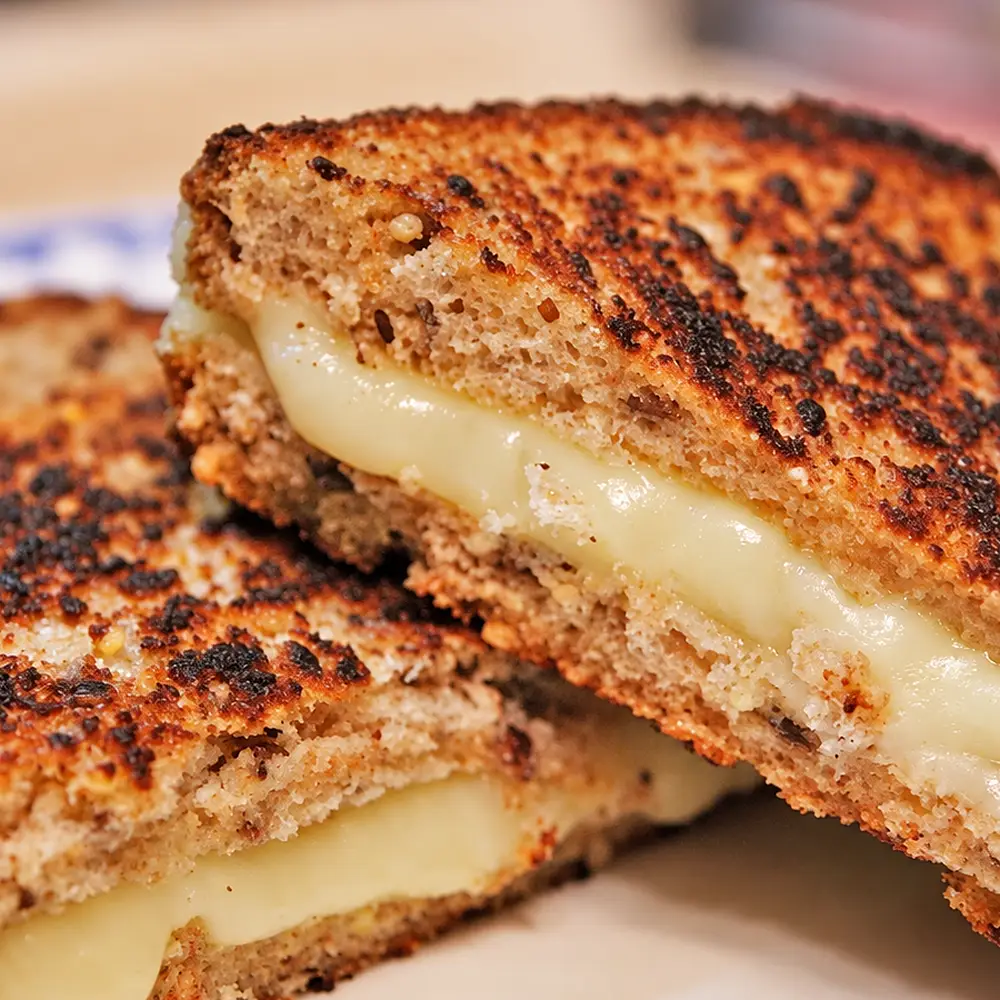
Raclette is richer and more assertive than the processed cheese commonly used in a North American grilled cheese. I use about 2 ounces for one sandwich. That is enough to cover the bread properly without leaving so much cheese that it pours into the skillet.
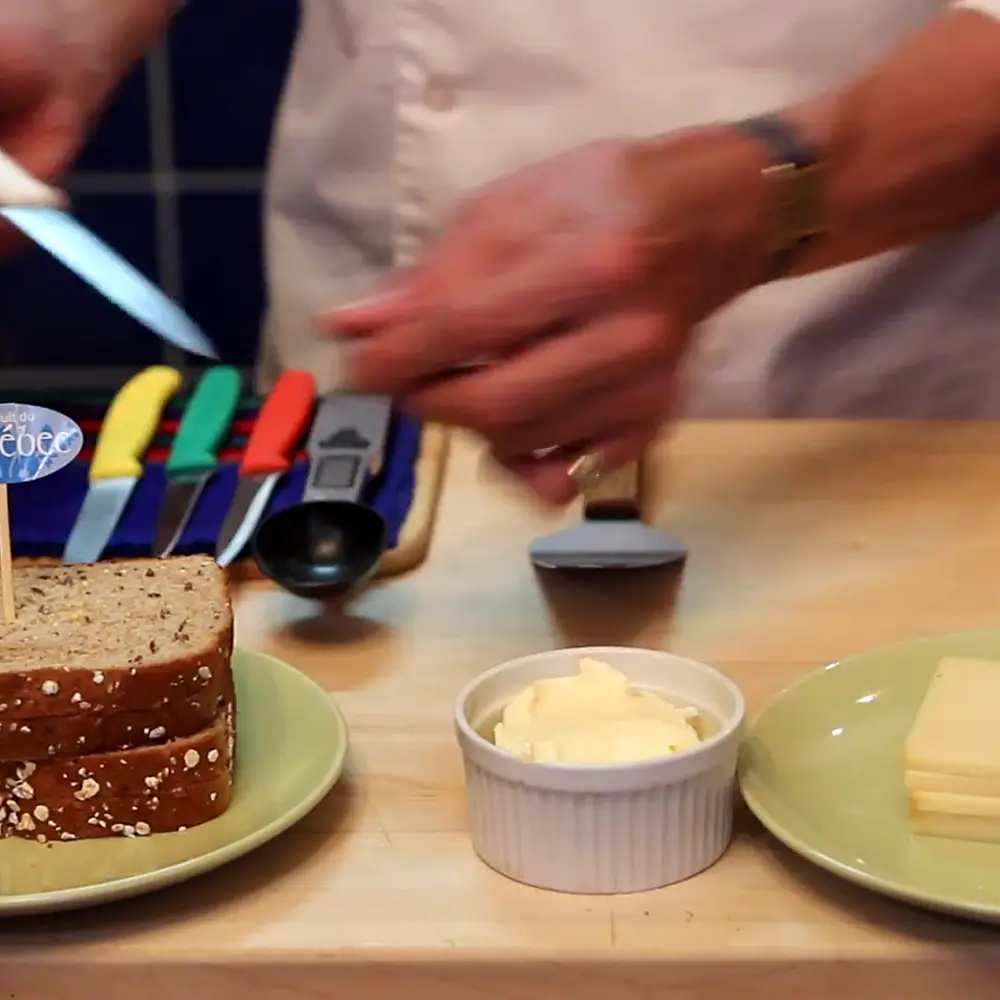
The original video uses one piece weighing about 1 1/4 ounces and a second piece of roughly 3/4 ounce. Together, they produce the right proportion for two standard slices of bread. Thin slices are important. Cheese cut about 1/16 inch thick softens much faster than one thick block.
This recipe is deliberately simple. Unlike my double grilled cheese with three cheeses and ham, it does not rely on meat or several cheeses. It is also different from the grilled cottage cheese sandwich, which has a softer, higher-moisture filling. Here, the flavour comes from the raclette itself and the toasted multigrain bread.
Ingredients You Need
– Multigrain bread: Choose two evenly cut slices about 1/2 inch thick. Bread that is sliced too thick may brown before heat reaches the centre.
– Raclette cheese: Remove any inedible outer coating and cut the cheese into thin, even slices. Use enough pieces to cover the bread from edge to edge.
– Softened butter: Soft butter spreads without tearing the bread and gives the surface more even contact with the skillet.
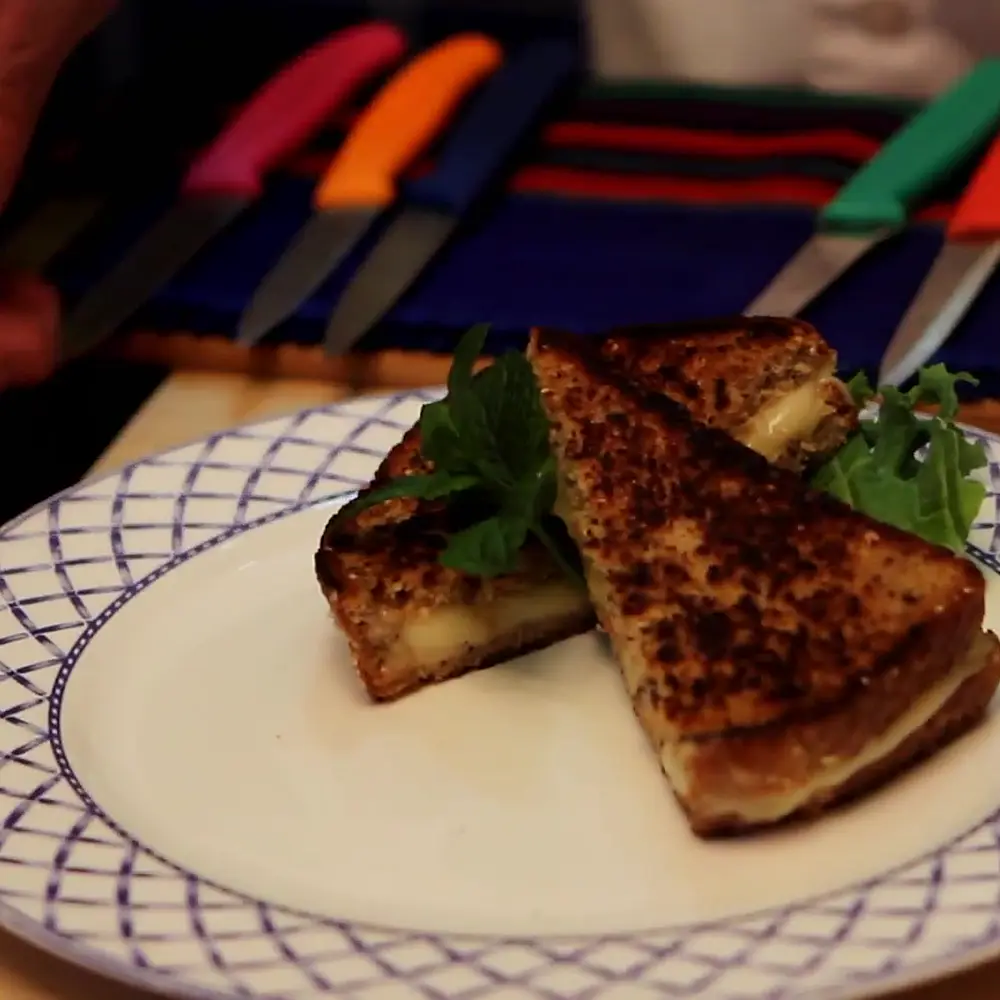
– Mâche: A few leaves can be added to the plate as a fresh garnish. This is optional and is not cooked inside the sandwich.
Raclette is naturally well seasoned, so additional salt is normally unnecessary. Taste the cheese before adding anything. Black pepper may be served at the table, but the sandwich does not depend on it.
Step-by-Step Instructions
1. Butter the bread
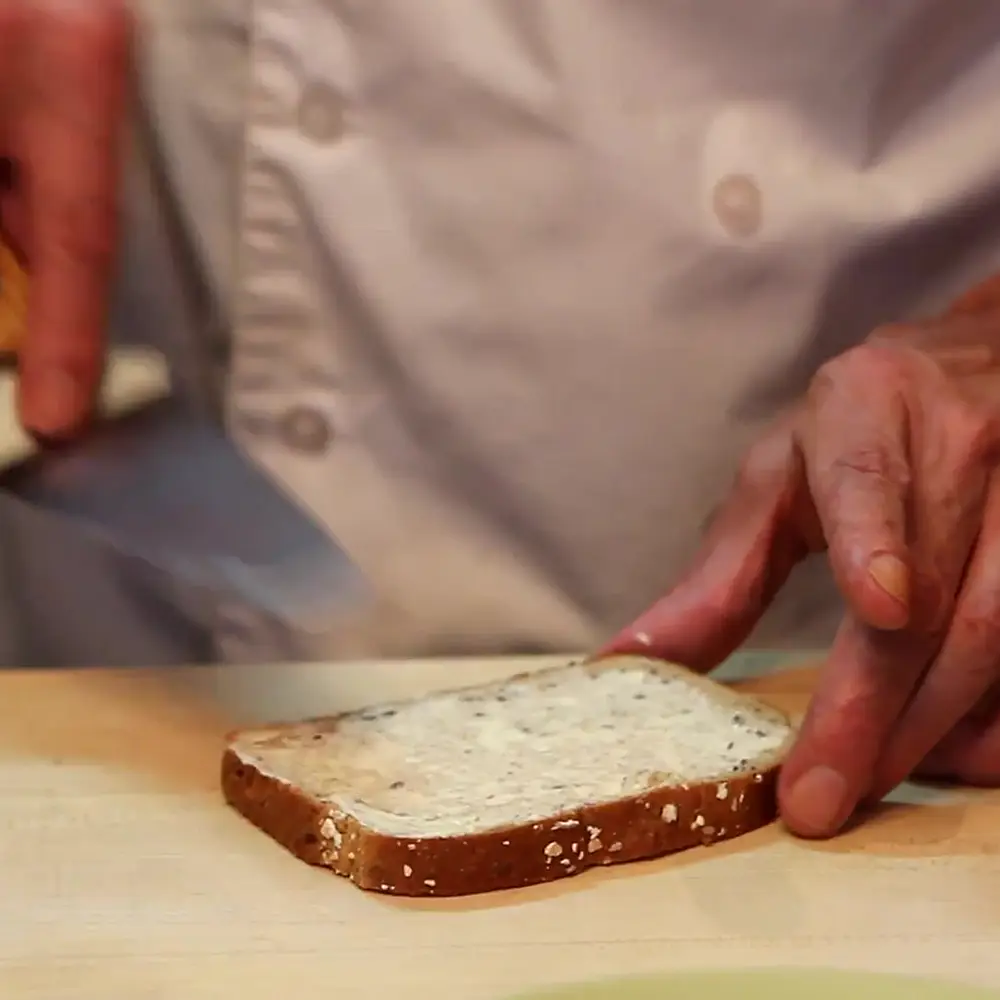
Spread softened butter over one side of each slice, reaching all the way to the edges. Use approximately half a tablespoon per slice. A thin, complete layer works better than several thick patches because bare spots will not brown at the same rate.
Place the first slice on the work surface with its buttered side facing down. The butter should remain on the outside of the sandwich, where it will contact the skillet.
2. Add the raclette
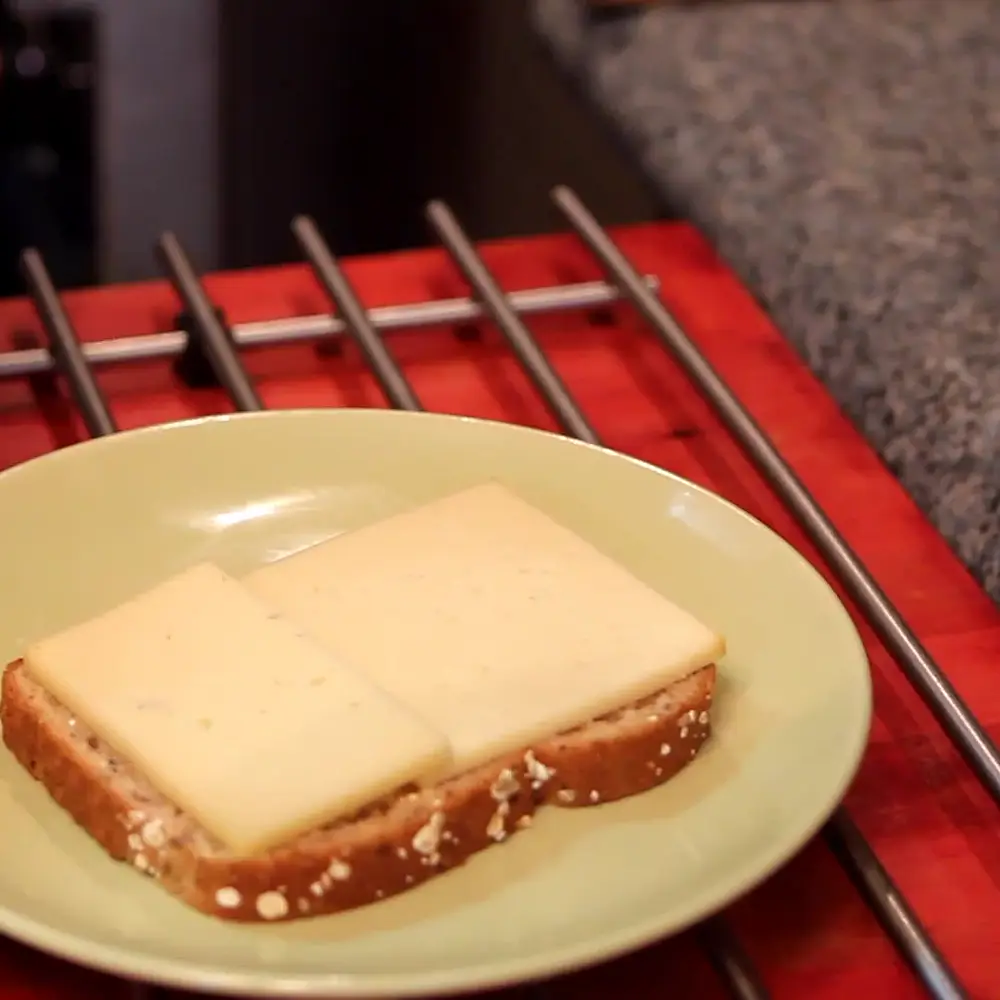
Arrange the thin slices of raclette over the bread. Cut smaller pieces as needed to fill open spaces, particularly near the corners. Even coverage matters more than making the pieces look uniform.
Set the second slice on top with its buttered side facing up. Press very lightly with your hand to keep everything in place, but do not compact the bread.
For another way to use the same cheese, my raclette cheese omelette melts it gently with eggs. The same principle applies here: moderate heat gives the cheese time to soften without scorching the food around it.
3. Brown the first side
Preheat a dry skillet over medium-low heat. Add the assembled sandwich once the pan feels warm, not smoking hot. You should hear a quiet sizzle from the butter. A loud, aggressive sizzle is a sign that the pan is too hot.
Cook for 3 to 4 minutes. What I look for here is an even golden-brown surface with slightly deeper colour around the edges. Lift one corner with a spatula after about 2 minutes rather than guessing from the clock.
4. Turn and finish cooking
Slide the spatula fully underneath the sandwich and turn it in one controlled movement. Cook the second side for another 2 to 3 minutes over low to medium-low heat.
Press gently once or twice with the spatula to improve contact with the pan. Do not lean heavily on it. Excessive pressure compresses the crumb and may force melted cheese out through the sides.
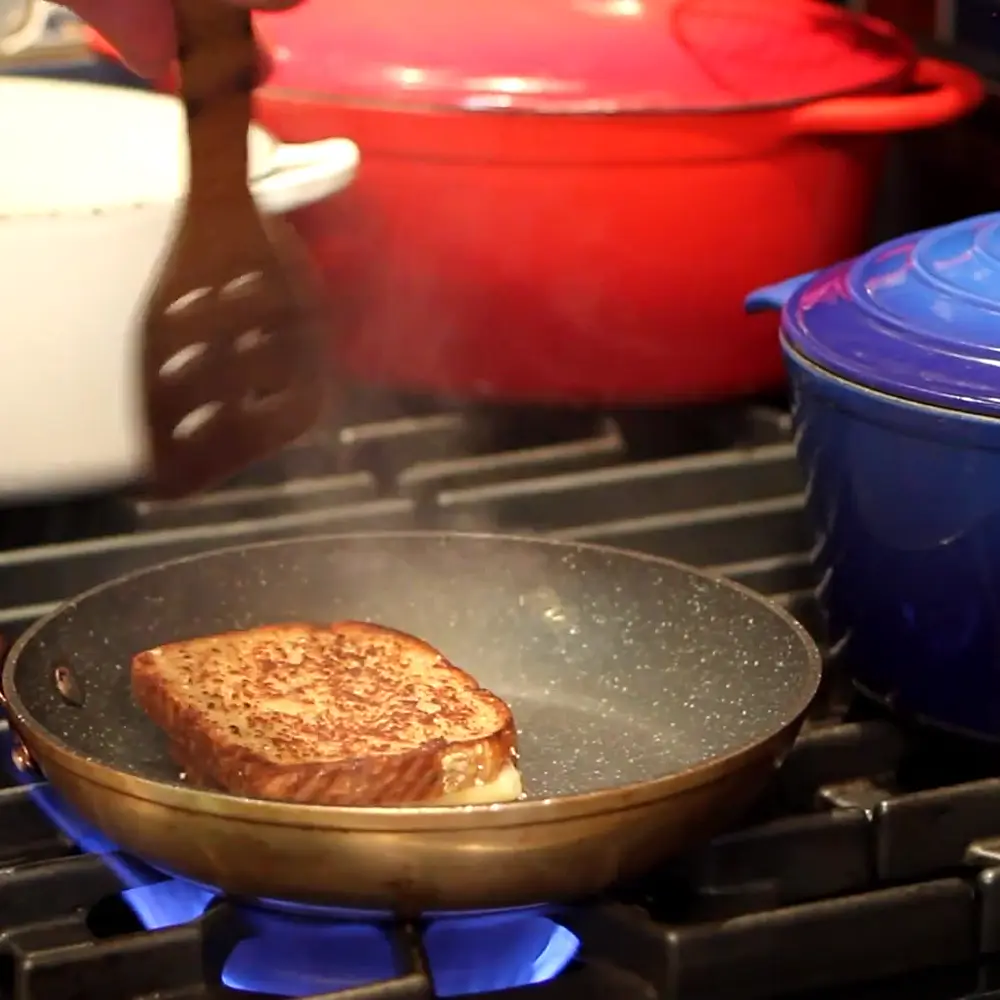
You know it is ready when both sides are evenly browned and the raclette is visibly soft at the edges. If the bread is ready before the centre has melted, reduce the heat to low and cover the skillet for 30 to 60 seconds. The trapped warmth will finish the cheese without burning the crust.
Transfer the sandwich to a cutting board and let it rest for about 30 seconds. Cut it in half and serve while the centre is still hot and fluid. Add a few leaves of mâche to the plate if desired.
Mistakes to Avoid
The main mistake is using a skillet that is too hot. Dark toast does not mean the centre is ready. Starting over medium-low heat gives the warmth time to travel through the bread and into the cheese.
Do not leave the raclette in one thick piece. Thin slices melt more predictably and make it easier to cover the entire sandwich. Cheese placed only in the middle leaves dry bread around the perimeter.
Avoid cold, hard butter. It can tear the surface of soft bread and create thick spots that brown too quickly. Let the butter soften until it spreads easily but is not melted.
Finally, do not walk away from the pan. Multigrain bread can change from golden to overly dark in less than a minute. Check the underside early and adjust the burner when necessary.
If you want a different cooking method, the air fryer grilled cheese explains how moving hot air changes the timing. For a more substantial raclette sandwich, the maple bacon chicken version adds sweet, smoky, and savoury elements.
Serving and Storage
Serve this sandwich immediately. Raclette remains soft for a short time, but it firms as it cools. Cutting it just before serving keeps the middle warm and gives the buttered crust a chance to stay crisp.
A soup or sharp salad balances the richness well. For a classic lunch, pair it with smooth tomato soup. A small green salad with a mustard-forward vinaigrette also brings welcome acidity.
Grilled cheese is not ideal for long storage. If necessary, refrigerate a cooked sandwich in a covered container for up to two days. Reheat it in a dry skillet over low heat, turning several times. A microwave will soften the bread and should only be used when crispness is not important.
Substitutions
If raclette is unavailable, another good melting Alpine-style cheese, such as Gruyère or Emmental, can be used in the same quantity. The flavour will change, but the cooking method remains the same. Avoid very dry aged cheeses on their own because they may become oily before creating the soft filling intended here.
White, sourdough, or whole-wheat sandwich bread can replace multigrain bread. Keep the slices close to 1/2 inch thick so the cooking time remains reliable. Very airy artisan bread may need a little less butter, while a dense loaf may require slightly lower heat.
For a crisp pan-cooked alternative using another type of flatbread, try the skillet cheese quesadillas.
FAQ
What is the best heat for grilled cheese?
Medium-low heat is the safest starting point. It browns the buttered bread gradually while giving the raclette enough time to melt. If your stove or skillet runs hot, use low heat after turning.
Should I remove the rind from raclette cheese?
Remove any wax, plastic coating, or rind identified by the producer as inedible. Some natural raclette rinds are edible, although they have a stronger flavour and do not always melt as smoothly. Follow the instructions on the package.
How much cheese should I use?
Use approximately 2 ounces for two standard slices of bread. This is a dependable ratio for one sandwich. Increase it slightly only if the bread slices are unusually large.
Can I make it without butter?
Butter provides flavour and promotes even browning. A light coating of mayonnaise can brown the bread, but it changes the taste. If cooking without either one, use a well-seasoned or nonstick skillet and expect a drier crust.
Why did the bread burn before the cheese melted?
The skillet was probably too hot, the cheese was sliced too thickly, or the bread was unusually thick. Lower the heat, slice the cheese thinly, and cover the skillet briefly if the centre needs more time.
Can I assemble it in advance?
It can be assembled a few hours ahead and refrigerated, but do not butter the bread until shortly before cooking. Allow a refrigerated sandwich to sit at room temperature for about 10 minutes so the cheese is not extremely cold.
What to Serve With It
For a comforting lunch, serve it beside classic French onion soup or the lighter broccoli soup.
To add something crisp and fresh, choose a quick flower and mesclun salad or a cabbage and carrot salad with creamy dressing.
For a heartier plate, add crispy homemade French fries or make air fryer fries when you want an easier side with less stovetop work.

Easy Raclette Grilled Cheese Sandwich
Ingredients
- 2 slices multigrain bread about 1/2 inch thick
- 2 ounces raclette cheese rind removed and thinly sliced
- 1 tablespoon softened butter
- Small handful mâche for serving, optional
Instructions
- Spread the butter evenly over one side of each bread slice.
- Place one slice buttered-side down and cover it evenly with the raclette.
- Close the sandwich with the second slice, buttered-side up.
- Preheat a dry skillet over medium-low heat.
- Cook the first side for 3 to 4 minutes, until evenly golden.
- Turn the sandwich and cook for another 2 to 3 minutes over low to medium-low heat.
- Press gently with the spatula. Cover for 30 to 60 seconds if the bread is browned before the cheese has melted.
- Rest for 30 seconds, cut in half, and serve immediately.