Easy Homemade Spicy Jalapeño Tomato Sauce
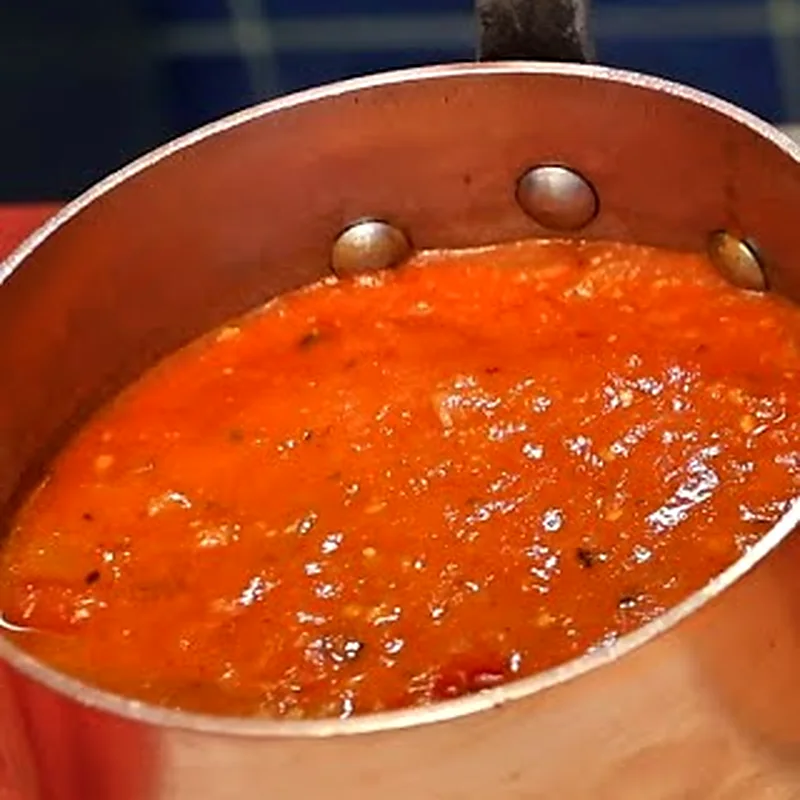
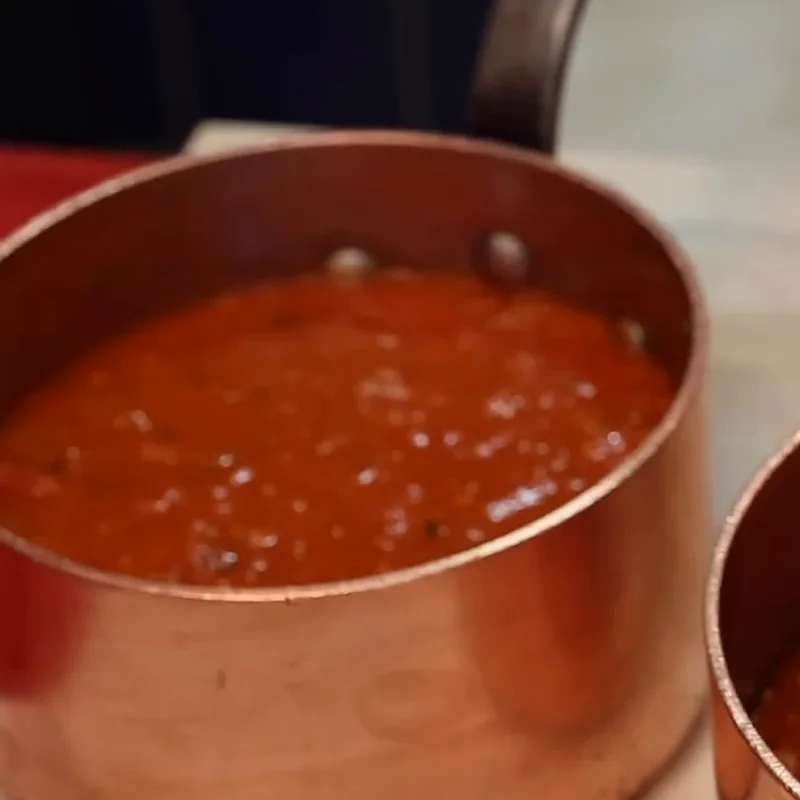
This bright, gently spicy sauce works because the onion and jalapeño are softened before the fresh tomato pulp goes into the pot, giving the sauce sweetness and heat without a raw pepper taste. The mistake to avoid is cooking the garlic until brown, so add the tomatoes as soon as it smells fragrant. When the sauce is ready, it should cling to a spoon in a smooth, glossy layer rather than run off like tomato juice.
This is a fresh tomato sauce made with jalapeño, garlic, basil, thyme and bay leaf. It is hotter and slightly more aromatic than a basic tomato sauce, but still versatile enough for pasta, meatballs, pizza, baked dishes and dipping. I make it when ripe summer tomatoes are available, although good-quality plum tomatoes also let you prepare it throughout the year.
This recipe is based on my YouTube video, where I prepared three tomato sauces at the same time. I have made a few adjustments since publication to give the spicy version precise quantities, a shorter blanching time and a more reliable cooking range.
{VIDEO}
What Makes This Recipe Different
This sauce is not simply a regular tomato sauce with hot pepper stirred in at the end. The chopped jalapeño cooks with the onion in olive oil, which softens its sharp, grassy taste and spreads the heat more evenly through the finished sauce.
Compared with my basic sauce made from fresh tomatoes, this version has a noticeable but manageable kick. It is also less specialized than a finished plate of quick spaghetti al pomodoro, since you can keep this batch in the refrigerator or freezer and use it in several different meals.
I prefer to peel the tomatoes because loose tomato skins become chewy as the sauce reduces. A food mill then removes rough pieces while preserving a natural, slightly rustic texture. The sauce should be smooth enough to coat pasta, but it does not need to resemble a completely puréed commercial sauce.
The jalapeño level is flexible. Removing its membranes gives you a mild to medium sauce. Leaving some or all of the white membranes attached makes the heat more pronounced. Since peppers vary, taste a very small piece before deciding how much to use.
Ingredients You Need
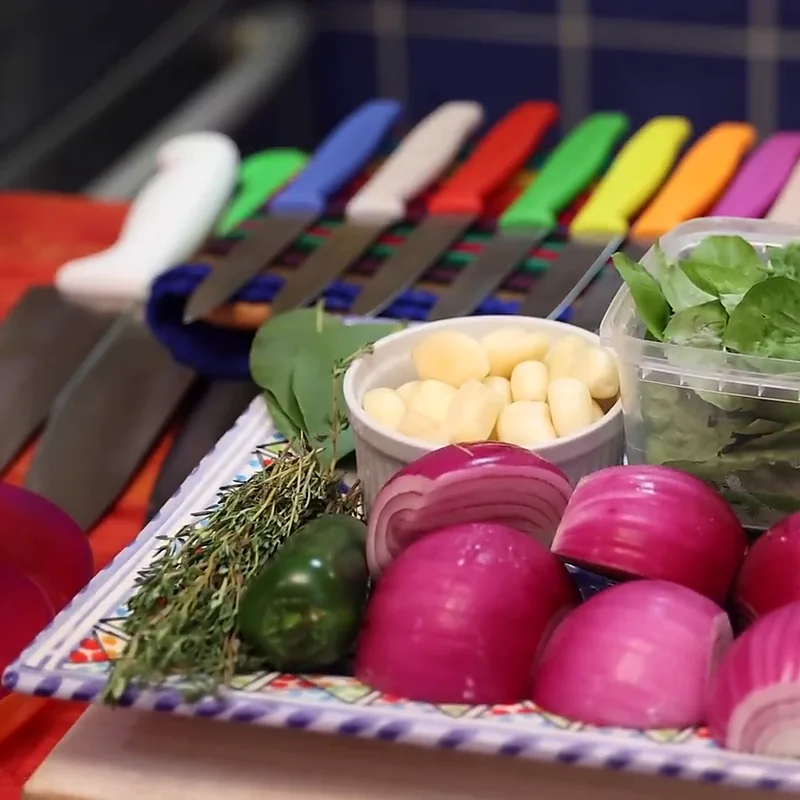
Ripe tomatoes: Use about 2 1/2 pounds of ripe tomatoes, usually six to eight medium tomatoes. Plum or Roma tomatoes are especially useful because they contain more flesh and less water, but any ripe field or garden tomatoes will work.
Yellow onion: One medium onion gives the sauce sweetness and body. Chop it fairly small so it softens at the same rate as the jalapeño.
Jalapeño: Use one medium pepper for moderate heat. Remove the stem and adjust the membranes according to your preference. Half a seeded jalapeño is enough for a mild version.
Garlic: Two fresh cloves provide enough garlic without overpowering the tomatoes and basil.
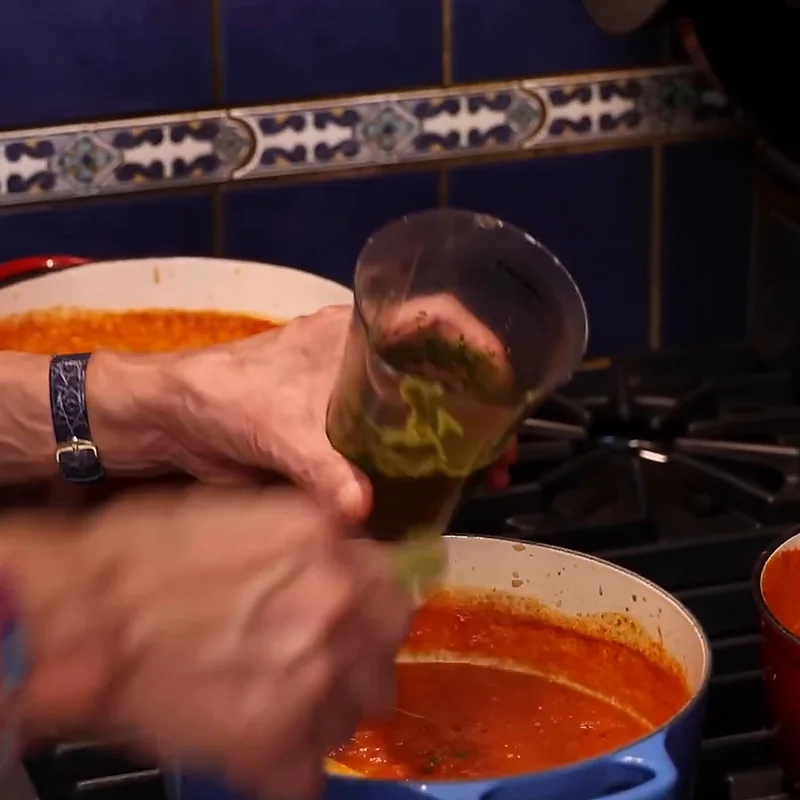
Olive oil: Two tablespoons are sufficient for cooking the aromatics. In the original video, garlic and basil were each blended with olive oil. Using a measured amount of oil makes the written recipe more predictable.
Fresh basil: About 1/2 cup of loosely packed leaves adds freshness after the sauce has finished reducing. Adding basil near the end keeps its colour and aroma brighter.
Thyme and bay leaf: These herbs simmer in the tomato pulp and are removed before serving.
Salt: Begin with 3/4 teaspoon of fine salt. Taste again after reduction because the seasoning becomes more concentrated as water evaporates.
Cane syrup or maple syrup: This is optional. Add only a small amount when the tomatoes taste unusually acidic. The goal is not to make the sauce sweet.
You will also need a bowl of ice water and either a food mill, a fine-mesh strainer or a blender. A food mill gives the most traditional texture.
Step-by-Step Instructions
Step 1: Blanch and peel the tomatoes
Bring a large pot of water to a full boil. While it heats, remove the stem end from each tomato and cut a shallow X through the skin on the bottom.
Lower the tomatoes into the boiling water. Begin checking them after 30 seconds. As soon as the skin around the cuts wrinkles or starts pulling away, transfer the tomatoes to ice water. Depending on their variety and ripeness, this normally takes 30 to 60 seconds.
The three-minute blanch shown in the original video works, but it begins cooking the tomatoes and can cause unnecessary juice loss. What I look for here is loosened skin, not softened tomato flesh.
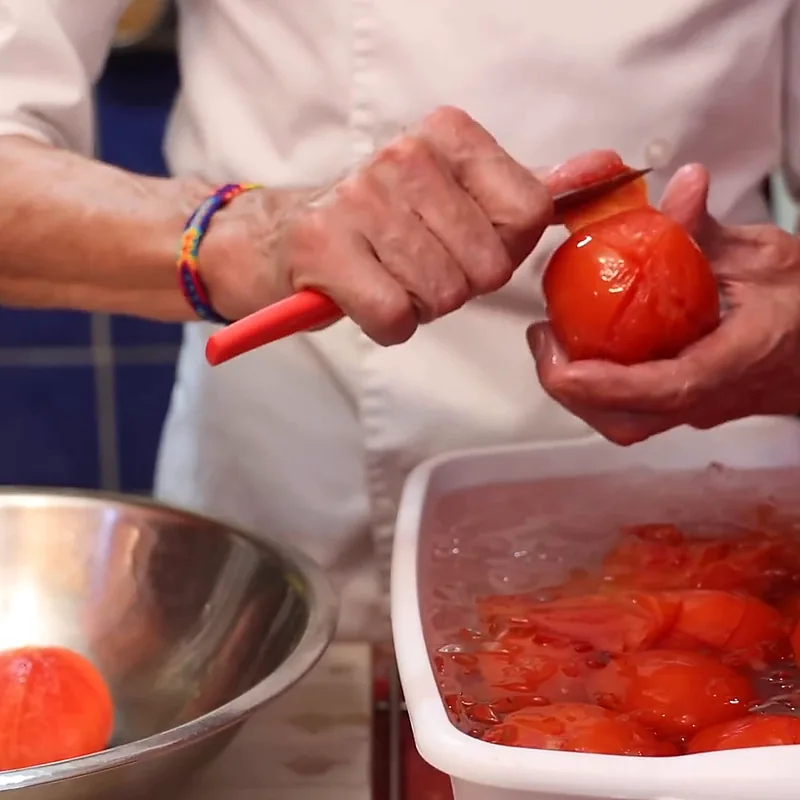
Once cool enough to handle, lift the skin from the corners of the X and peel it away.
Step 2: Process the tomato flesh
Cut the peeled tomatoes in half. If you want an especially smooth sauce, gently squeeze the seeds into a strainer set over a bowl. Keep the strained tomato juice because it contains plenty of flavour.
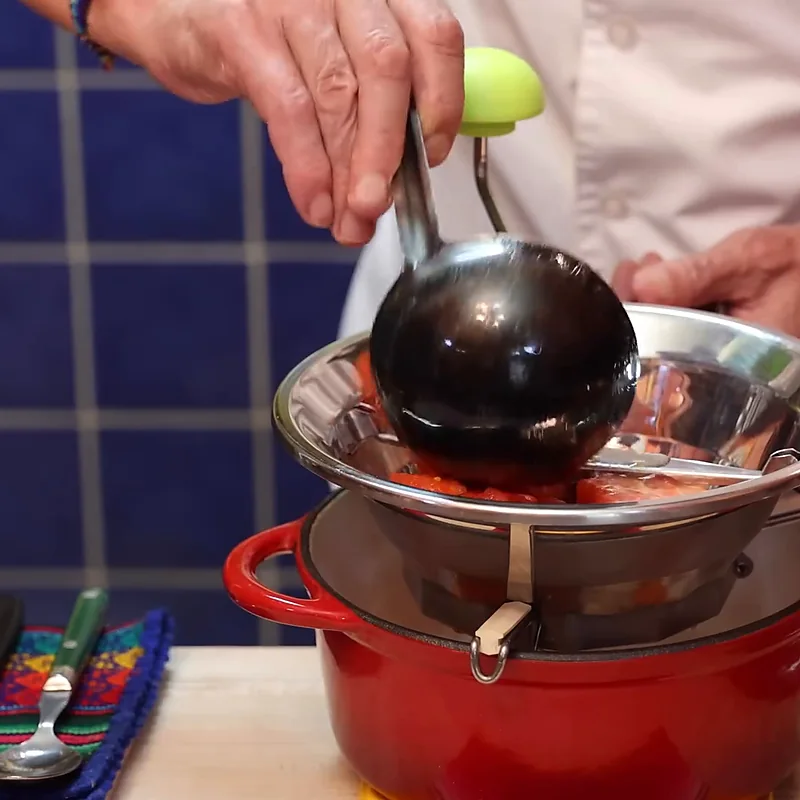
Pass the tomato flesh and reserved juice through a food mill. If you do not own one, crush the tomatoes by hand for a rustic sauce or pulse them briefly in a blender. Avoid blending continuously at high speed, which introduces air and can give the sauce a pale, foamy appearance.
Pour the processed tomatoes into a medium saucepan. Add the thyme sprig and bay leaf, then set the pan aside while you cook the aromatics.
Step 3: Soften the onion and jalapeño
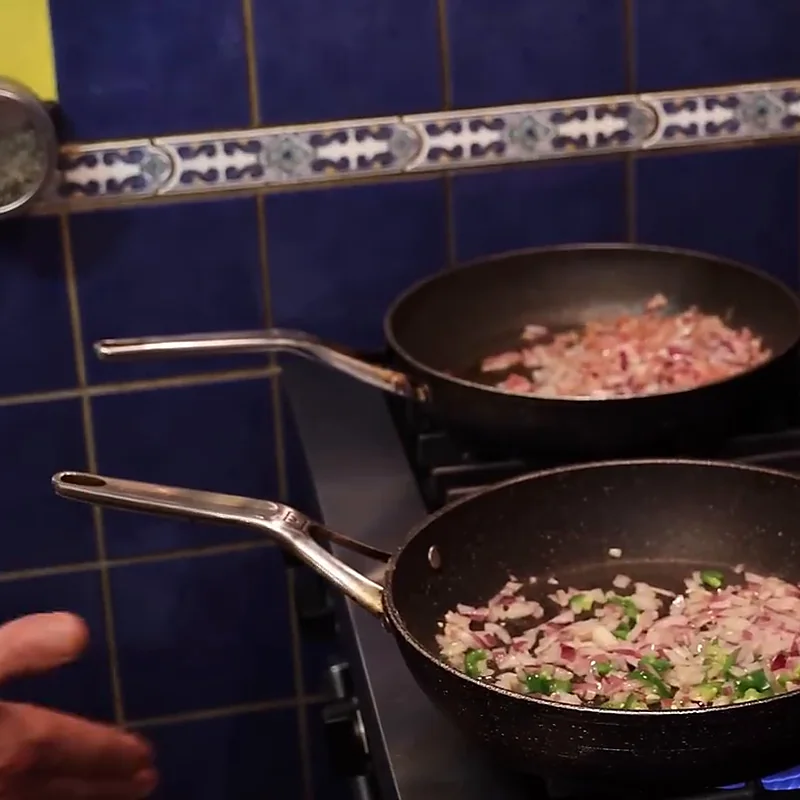
Heat the olive oil in a skillet over medium heat. Add the chopped onion and jalapeño with a small pinch of the measured salt.
Cook for five to seven minutes, stirring regularly. The onion should turn translucent and begin smelling sweet, while the jalapeño should soften without becoming dark or crisp.
Add the minced garlic and cook for only 30 to 60 seconds. You know it is ready when the garlic smells strong and savoury. Do not wait until it becomes brown because burnt garlic can make the whole batch bitter.
Step 4: Simmer until the sauce coats a spoon
Transfer the onion mixture to the saucepan containing the tomatoes. Add the remaining salt and stir well.
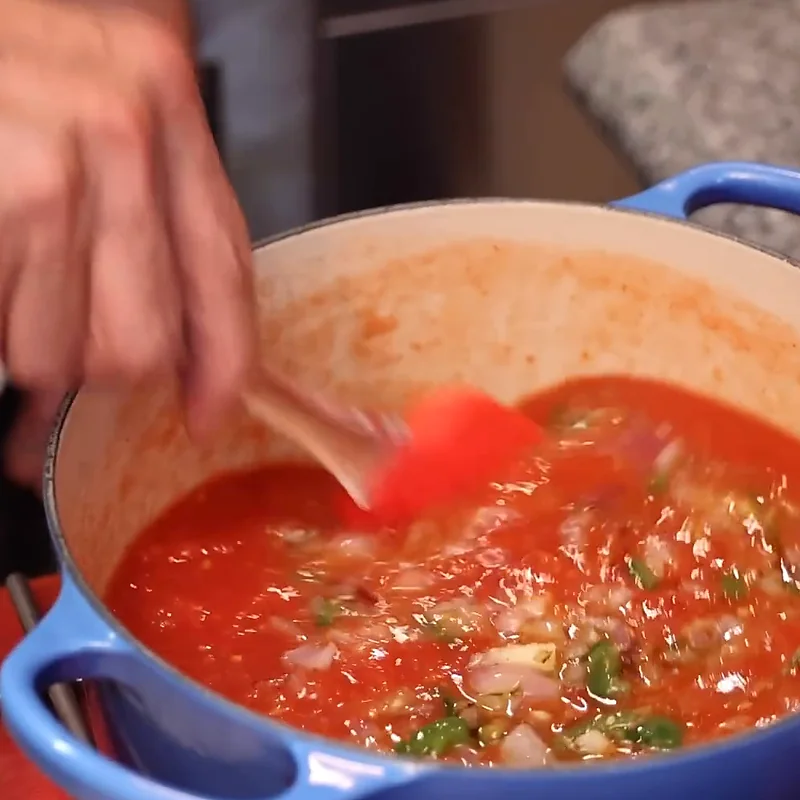
Bring the sauce to a gentle boil over medium-high heat, then reduce the heat to maintain a steady uncovered simmer. Stir every few minutes, scraping across the bottom and around the edges of the pan.
Cook for 35 to 60 minutes. Fresh tomatoes vary considerably in water content, so texture is more dependable than the clock. At first, the sauce will look thin and may separate when stirred. As it reduces, the bubbles will become slower and thicker.
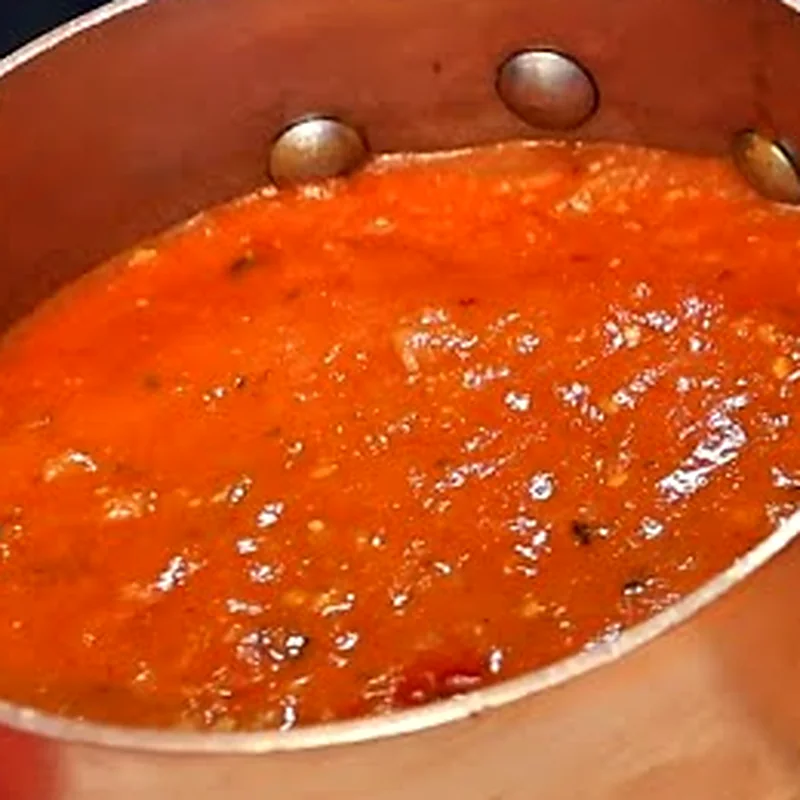
The sauce is ready when a spoonful holds together and coats the back of the spoon. Drag a spatula across the bottom of the pan. The path should remain visible for a second before the sauce closes over it.
For pasta, keep it slightly loose because it will tighten further when tossed with noodles. For pizza, continue simmering until it is thicker and does not release watery liquid around the edges. It makes an excellent base for homemade pizza or a crust prepared with my Neapolitan-style pizza dough.
Step 5: Finish with basil
Remove the thyme sprig and bay leaf. Tear or finely chop the fresh basil, then stir it into the hot sauce.
Taste before adding anything else. If the tomatoes are sharply acidic, mix in 1/2 teaspoon of cane syrup or maple syrup. Taste again and add the remaining 1/2 teaspoon only if necessary.
Adjust the salt and let the sauce stand for five minutes before serving. At this point, it should smell of fresh basil and cooked tomato, with a warming jalapeño finish that does not hide the other ingredients.
Use it immediately with fresh homemade pasta and tomato sauce, or cool it before storing.
How to Use and Store the Sauce
This recipe makes approximately 2 1/2 to 3 cups, depending on the tomatoes and the final thickness. That is enough for about one pound of pasta, one large pizza with sauce left for dipping, or a pan of meatballs.
For a complete dinner, use it with homemade spaghetti and meatballs or replace the regular sauce in these beef meatballs simmered in tomato sauce. Its mild heat also works well in baked dishes where cheese balances the jalapeño.
Let leftovers cool, then refrigerate them in a covered container for up to four days. For longer storage, freeze the sauce in small containers for up to three months. Leave some empty space at the top because liquids expand as they freeze.
Thaw overnight in the refrigerator or reheat gently from frozen in a covered saucepan. If the reheated sauce seems too thick, loosen it with a spoonful of water. If it seems thin, simmer it uncovered for a few minutes.
Substitutions
Canned whole tomatoes can replace fresh tomatoes when ripe seasonal tomatoes are unavailable. Use one 28-ounce can, drain only a little of the liquid and crush the tomatoes before cooking. The flavour will be slightly deeper and less fresh, but the sauce will be consistent year-round.
A serrano pepper can replace the jalapeño, although it is usually hotter, so begin with half. For little or no heat, use half a green bell pepper or omit the pepper entirely.
Fresh oregano can replace thyme, but use it sparingly because it has a stronger flavour. Dried herbs also work. Use about 1/4 teaspoon of dried thyme and remove the bay leaf as usual.
A blender can replace the food mill. Pulse just until the tomatoes reach the texture you want. For a chunky sauce, skip the mill and chop the peeled tomatoes with a knife.
Cane syrup, maple syrup or a small pinch of regular sugar can soften excessive acidity. None is necessary when the tomatoes are naturally sweet.
FAQ
How spicy is this tomato sauce?
One medium jalapeño with most of the white membranes removed produces mild to medium heat. Leaving the membranes attached gives a stronger result. Because every pepper is different, taste a small piece before adding the entire jalapeño.
Do I have to remove the tomato seeds?
No. Removing them gives the sauce a smoother texture, but it is optional, especially when using a food mill. If you remove the seeds, strain and keep the surrounding juice so the sauce does not lose flavour.
Can I leave the tomato skins on?
You can, particularly if you plan to blend the sauce thoroughly. However, the skins may curl into small, chewy pieces during reduction. Blanching makes them easy to remove and gives a more refined finish.
Why is my sauce watery?
The tomatoes probably contained more water and needed additional simmering time. Continue cooking the sauce uncovered over medium-low heat, stirring regularly, until it coats a spoon. Avoid adding tomato paste unless you specifically want a more concentrated cooked-tomato flavour.
Can I use this on pizza?
Yes. Simmer it toward the longer end of the cooking range so it becomes thick enough for pizza. A watery sauce can soften the centre of the crust.
Can I double the recipe?
Yes, but use a wider pot so moisture can evaporate efficiently. A deep, narrow pot may require much more cooking time. Stir more frequently near the end because a larger batch can catch on the bottom.
Is this sauce suitable for freezing?
Yes. Cool it completely and freeze it in airtight containers for up to three months. Small portions are useful for pizza, sandwiches and quick pasta dinners.
What to Serve With and Suggested Posts
Use this sauce in a pan of homemade lasagna without béchamel, where the jalapeño adds gentle warmth between the pasta and cheese.
Spoon it over eggplant Parmigiana or use it in easy chicken Parmigiana when you want a spicier alternative to the usual mild tomato sauce.
It also works as a dipping sauce beside a ricotta, mozzarella and ham calzone.
For soup, stir a small portion into homemade minestrone with pasta to deepen the tomato base and add a little heat.
Easy Homemade Spicy Jalapeño Tomato Sauce
Ingredients
- 2 1/2 pounds ripe tomatoes
- 1 medium yellow onion finely chopped
- 1 medium jalapeño finely chopped
- 2 garlic cloves minced
- 2 tablespoons olive oil
- 1/2 cup loosely packed fresh basil leaves
- 1 small fresh thyme sprig
- 1 bay leaf
- 3/4 teaspoon fine salt plus more to taste
- 1/2 to 1 teaspoon cane syrup or maple syrup optional
Instructions
- Bring a large pot of water to a boil and prepare a bowl of ice water.
- Remove the tomato stems and cut a shallow X through the skin on the bottom of each tomato.
- Blanch the tomatoes for 30 to 60 seconds, just until the skins loosen, then transfer them to the ice water.
- Peel the tomatoes, cut them in half and strain out the seeds if desired, reserving the tomato juice.
- Pass the tomato flesh and reserved juice through a food mill, then transfer the pulp to a saucepan.
- Add the thyme and bay leaf to the tomatoes.
- Heat the olive oil in a skillet over medium heat.
- Cook the onion and jalapeño for 5 to 7 minutes, until softened.
- Add the garlic and cook for 30 to 60 seconds, just until fragrant.
- Stir the onion mixture and salt into the tomatoes.
- Bring to a gentle boil, then simmer uncovered for 35 to 60 minutes, stirring occasionally, until the sauce coats a spoon.
- Remove the thyme and bay leaf, then stir in the fresh basil.
- Taste and add cane syrup or maple syrup only if the tomatoes are unusually acidic.
- Adjust the salt and let the sauce rest for 5 minutes before serving.