Easy Creamy Salmon Pasta with Spinach (15–20 Minutes, One-Pan Sauce)
This creamy salmon pasta is a fast stovetop dinner made by tossing al dente pasta with seared salmon, baby spinach, and a simple tarragon cream sauce. It’s different from heavier baked pasta dishes because it’s cooked entirely on the stovetop and finished with pasta water for a glossy, restaurant-style coating. Make it when you want a quick weeknight meal that feels comforting year-round—especially on busy school nights or when you’re cooking on a budget.
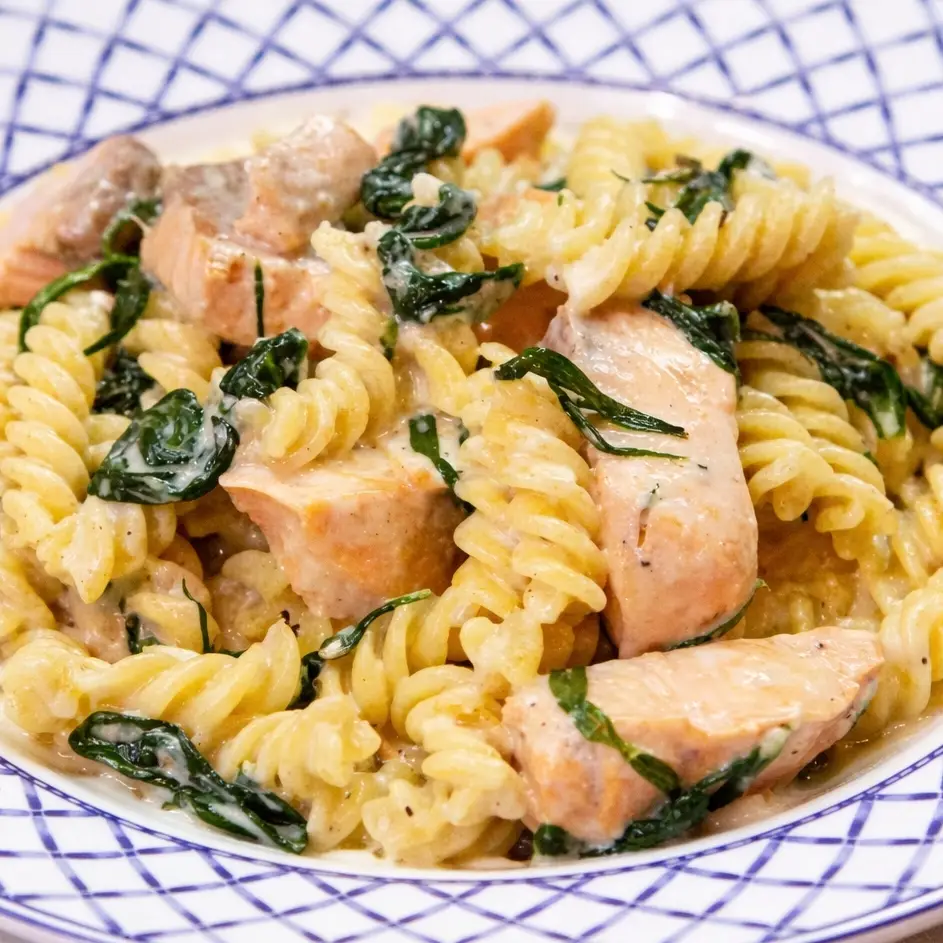
What Makes This Salmon Pasta Different
There are a lot of “salmon pasta” recipes online, and even on a big recipe site it’s easy for similar posts to overlap. This one is designed to be:
- Quick and practical: a true 15–20 minute dinner with no oven, no complicated steps, and a short ingredient list.
- Creamy but not heavy: the sauce is built with cream and butter, then loosened with pasta water so it coats instead of clumping.
- Herb-forward: fresh tarragon gives it a clean, slightly anise-like perfume that pairs beautifully with salmon and spinach.
- Balanced: a small amount of lemon keeps the cream sauce bright and prevents that “all-fat, no lift” feeling.
If you want a different pasta vibe (more classic Italian technique, different sauce profiles, or a totally different protein), check the pasta ideas later in the post so you can avoid making two recipes that compete for the same craving.

Ingredient Notes (So the Sauce Actually Works)
Salmon: Wild Pacific salmon is great here. Fresh or frozen both work—just thaw and pat it dry so it sears instead of steaming.
Spinach: Baby spinach wilts fast and feels lighter than heavier greens. It’s an easy way to make the dish feel more complete without turning it into a salad.
Tarragon: Fresh tarragon is the signature. If you don’t have it, there are substitution options below.
Cream: This recipe works with either lighter cream or heavy cream. Heavy cream is more forgiving if you’re new to cream sauces, but both can work if you avoid boiling hard.
Lemon: This is the key adjustment. A little lemon juice (and optional zest) makes the whole dish taste more “finished,” not just creamy.
Pasta water: Don’t skip it. It’s the difference between “cream sitting on pasta” and “sauce clinging to pasta.” If you enjoy pasta techniques and want more inspiration, take a look at Homemade Pesto Pasta (Easy Recipe) for another simple sauce that relies on proper finishing.

Step-by-Step Instructions
1) Bring the pasta water to a boil
Fill a large pot with water and bring it to a strong boil. Salt it well (it should taste pleasantly salty). Drop in the pasta and cook until al dente—usually 1–2 minutes less than the package suggests.
Important: Before draining, scoop out 1 cup of pasta water and set it aside. This is your “secret sauce tool.”
If you love fast pasta dinners and want a rotating weeknight menu, browse Weeknight Pasta Dinners for more ideas in the same quick category.
2) Prep the salmon and herbs
While the water heats, cut the salmon into bite-size chunks (or large cubes). Pat it dry with paper towel and season lightly with salt and pepper.
Strip the leaves from the tarragon and roughly chop them. Keep a small pinch of tarragon aside for finishing if you want a fresher aroma at the end.

3) Sear the salmon
Heat a large skillet over medium heat. Add butter and let it melt and foam. Add the salmon in a single layer. Sear for 2–3 minutes per side until lightly golden.
You’re not trying to cook it to death here—salmon will finish gently in the sauce. Overcooking is the main reason salmon pasta turns dry.

4) Wilt the spinach
Add the baby spinach to the skillet. Toss gently for 30–60 seconds until it collapses. If your skillet looks dry, add a splash of pasta water.

5) Build the cream sauce (and keep it gentle)
Lower the heat to medium-low. Pour in the cream and add the chopped tarragon. Let it warm and reduce slightly for 2–3 minutes.
Now add:
- a squeeze of lemon juice (start small, then adjust)
- a few tablespoons of pasta water
Toss and simmer gently until the sauce looks smooth and glossy. If it thickens too much, add more pasta water a splash at a time. If it seems too loose, let it reduce for another minute—gentle heat only.
For another creamy pasta with a different flavor profile, compare this with Pasta alla Norcina (Rigatoni), which leans richer and more pork-forward.

6) Toss the pasta and finish properly
Drain the pasta and add it directly into the skillet. Toss for 30–60 seconds so the sauce emulsifies and clings to every strand.
Taste and adjust:
- salt
- pepper
- more lemon if needed
- a touch more tarragon if you want it brighter
Serve immediately while it’s glossy.
If you’re in a lemon-pasta mood and want a non-seafood option, Lemon Garlic Creamy Pasta is a great “same category, different craving” comparison.
How to Prevent Cream Sauce Problems (Quick Fixes)
- Sauce too thick? Add pasta water 1 tablespoon at a time and toss.
- Sauce looks separated? Lower the heat, add a splash of pasta water, and toss vigorously.
- Salmon feels dry? Next time sear less and let it finish in the sauce at low heat.
- Tastes heavy? Add a little more lemon juice or zest and a fresh pinch of tarragon.
For a completely different direction (no cream, pure technique), Easy Cacio e Pepe is a great example of how pasta water transforms a sauce.

Nutrition Context
This is a hearty comfort-food pasta, but it has a solid balance: salmon brings protein and healthy fats, spinach adds vegetables, and the cream makes it satisfying. If you want it lighter, the substitutions section below shows how to reduce richness without turning it bland.
Substitutions
Salmon substitutes
- Smoked salmon: Stir it in at the end off-heat so it doesn’t toughen.
- Canned salmon: Drain well and fold into the sauce gently.
- Trout: Very similar texture and flavor to salmon.
If you like cured salmon flavors, Homemade Gravlax (Cured Salmon) is a great technique post to keep in rotation.
Spinach substitutes
- Baby kale (needs slightly longer to soften)
- Arugula (stir in at the very end)
- Frozen spinach (thaw, squeeze dry, and add cautiously)
Tarragon substitutes
- Dill (classic with salmon)
- Chives
- Parsley + a tiny pinch of fennel seed (optional) to mimic the tarragon vibe
Cream substitutes
- Half-and-half (keep heat very low and use pasta water)
- Evaporated milk (more “student budget” friendly)
- Heavy cream for maximum stability
Lemon substitute
- A small splash of white wine (reduce briefly before adding cream)
- A teaspoon of Dijon mustard (tiny amount, just for lift)

FAQ
Can I use frozen salmon?
Yes. Thaw fully, pat dry, then sear. Excess moisture is the enemy of browning.
Can I make this ahead?
It’s best fresh. Cream sauces thicken as they cool, and reheating can make the salmon overcook. If you must, reheat gently with a splash of water or milk.
What pasta shape works best?
Long pasta like linguine or spaghetti coats beautifully. Short shapes work too—use what you have. For pasta salad ideas that are totally different from this creamy dish, see Greek Pasta Salad with Creamy Dressing.
How do I keep the sauce from getting greasy?
Don’t boil the cream hard. Use pasta water and gentle heat to emulsify. Tossing is part of the “sauce-making” step.
Is tarragon overpowering?
In the right amount, it’s aromatic rather than strong. Start with a smaller amount and add more at the end if you want.
Can I add cheese?
You can, but go easy—too much can fight the tarragon. If you want a cheese-forward pasta instead, Creamy Mozzarella Parmesan Pasta is a better match for that craving.
What to Serve With / Suggested Posts
Light sides (balance the cream)
- Homemade Greek Salad (Easy Recipe) for crisp, fresh contrast
- Caesar Salad Dressing Without Mayonnaise if you want a lighter Caesar-style side
More pasta ideas
- Homemade Bolognese Sauce (Authentic Recipe) for a slow, meat-sauce night
- Homemade Pesto Pasta (Easy Recipe) for a herb-forward pasta that’s not creamy
- Pasta alla Norcina (Rigatoni) for a richer, sausage-and-cream style
Techniques and sauces to level up fast dinners
- Easy Homemade Ketchup Recipe for a simple base condiment you can batch
- Steak Sauce Entrecôte (Warm Herb Butter Emulsion) for another emulsified “silky sauce” technique
Hearty comfort options for busy weeks
- Hearty Chili Con Carne in Homemade Tortilla Bowls for a cozy, filling dinner
- Stovetop Cassoulet Recipe (Easy French Duck and Sausage Stew) when you want comfort food without an oven

Easy Creamy Salmon Pasta with Spinach (15–20 Minutes, One-Pan Sauce)
Ingredients
- 10 oz salmon cut into bite-size pieces
- 9 oz linguine or spaghetti or any pasta
- 2 packed cups baby spinach
- 1/2 cup heavy cream or light cream
- 2 tbsp butter
- 2 tbsp fresh tarragon leaves chopped
- 1 tbsp lemon juice plus more to taste
- 3/4 cup reserved pasta water as needed
- Salt and black pepper to taste
Instructions
- Boil salted water. Cook pasta until al dente. Reserve 1 cup pasta water, then drain.
- Pat salmon dry and season with salt and pepper.
- Melt butter in a skillet over medium heat. Sear salmon 2–3 minutes per side until lightly golden (still slightly underdone inside).
- Add spinach and toss 30–60 seconds until wilted.
- Lower heat to medium-low. Add cream and tarragon; simmer gently 2–3 minutes. Stir in lemon juice.
- Add drained pasta and toss. Add pasta water a splash at a time until the sauce turns glossy and coats the pasta.
- Taste and adjust seasoning (salt, pepper, lemon). Serve immediately.
Video
Notes
Substitutions
Salmon substitutes
- Smoked salmon: Stir it in at the end off-heat so it doesn’t toughen.
- Canned salmon: Drain well and fold into the sauce gently.
- Trout: Very similar texture and flavor to salmon.
Spinach substitutes
- Baby kale (needs slightly longer to soften)
- Arugula (stir in at the very end)
- Frozen spinach (thaw, squeeze dry, and add cautiously)
Tarragon substitutes
- Dill (classic with salmon)
- Chives
- Parsley + a tiny pinch of fennel seed (optional) to mimic the tarragon vibe
Cream substitutes
- Half-and-half (keep heat very low and use pasta water)
- Evaporated milk (more “student budget” friendly)
- Heavy cream for maximum stability
Lemon substitute
- A small splash of white wine (reduce briefly before adding cream)
- A teaspoon of Dijon mustard (tiny amount, just for lift)
FAQ
Can I use frozen salmon?
Yes. Thaw fully, pat dry, then sear. Excess moisture is the enemy of browning.Can I make this ahead?
It’s best fresh. Cream sauces thicken as they cool, and reheating can make the salmon overcook. If you must, reheat gently with a splash of water or milk.What pasta shape works best?
Long pasta like linguine or spaghetti coats beautifully. Short shapes work too—use what you have. For pasta salad ideas that are totally different from this creamy dish, see Greek Pasta Salad with Creamy Dressing.How do I keep the sauce from getting greasy?
Don’t boil the cream hard. Use pasta water and gentle heat to emulsify. Tossing is part of the “sauce-making” step.Is tarragon overpowering?
In the right amount, it’s aromatic rather than strong. Start with a smaller amount and add more at the end if you want.Can I add cheese?
You can, but go easy—too much can fight the tarragon. If you want a cheese-forward pasta instead, Creamy Mozzarella Parmesan Pasta is a better match for that craving.Useful Links
🛒 Michel Dumas Shop : Explore our kitchen essentials, including aprons and knives.
🌐 Linktree : Access all our important links in one place.
📱 YouTube | Instagram | Facebook | TikTok : Follow us for the latest recipes and culinary tips.