Blueberry Mango Smoothie with Orange Juice (No Yogurt)
This blueberry mango smoothie blends pineapple, strawberries and blueberries with fresh orange juice for a bright pink-purple fruit drink. It contains no yogurt, milk or added sweetener. Use cold, ripe fruit and blend until the mixture pours smoothly, then divide it between two large glasses and serve right away.
A smoothie is a blended drink that keeps the fruit pulp in the glass. This purple version is based on my video, with the original fruit and juice proportions retained and the preparation, serving yield and texture checks clarified since publication. It is a pourable fruit smoothie, rather than a thick smoothie bowl or a dairy shake.
{VIDEO}
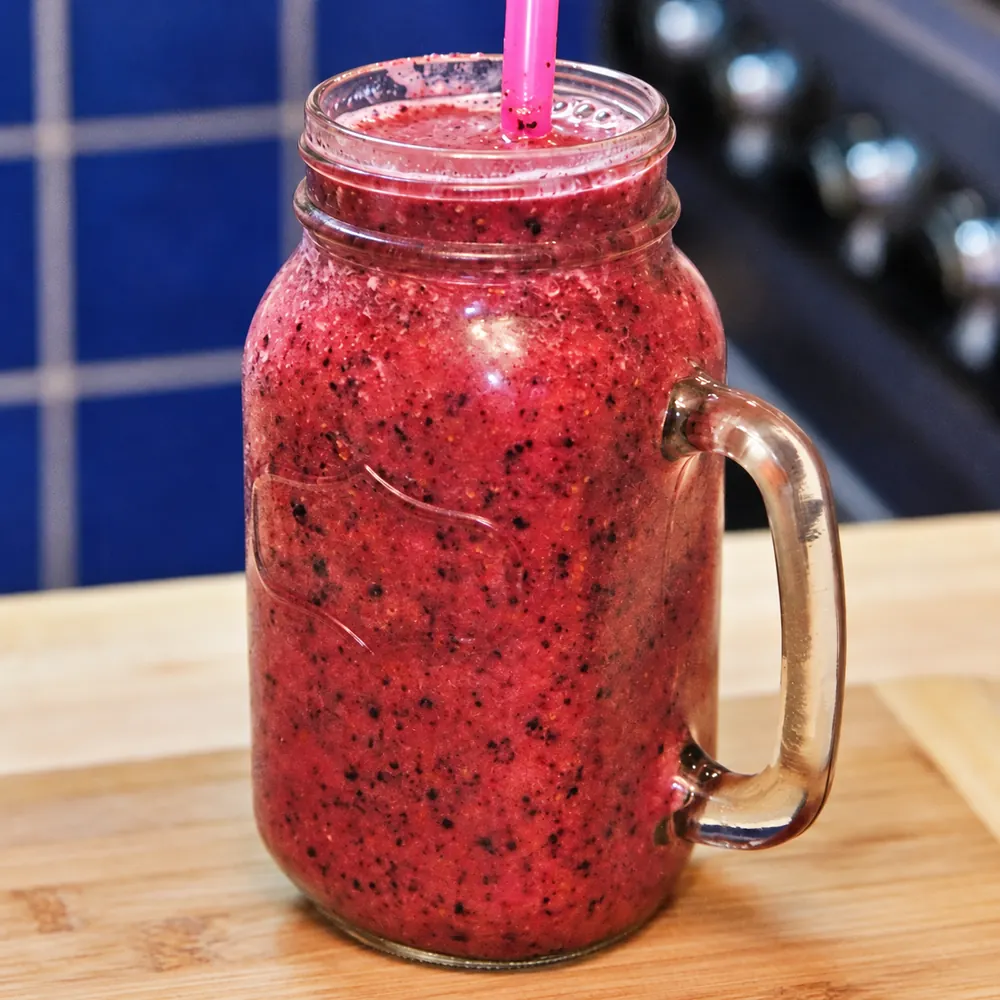
A purple smoothie with berries and tropical fruit
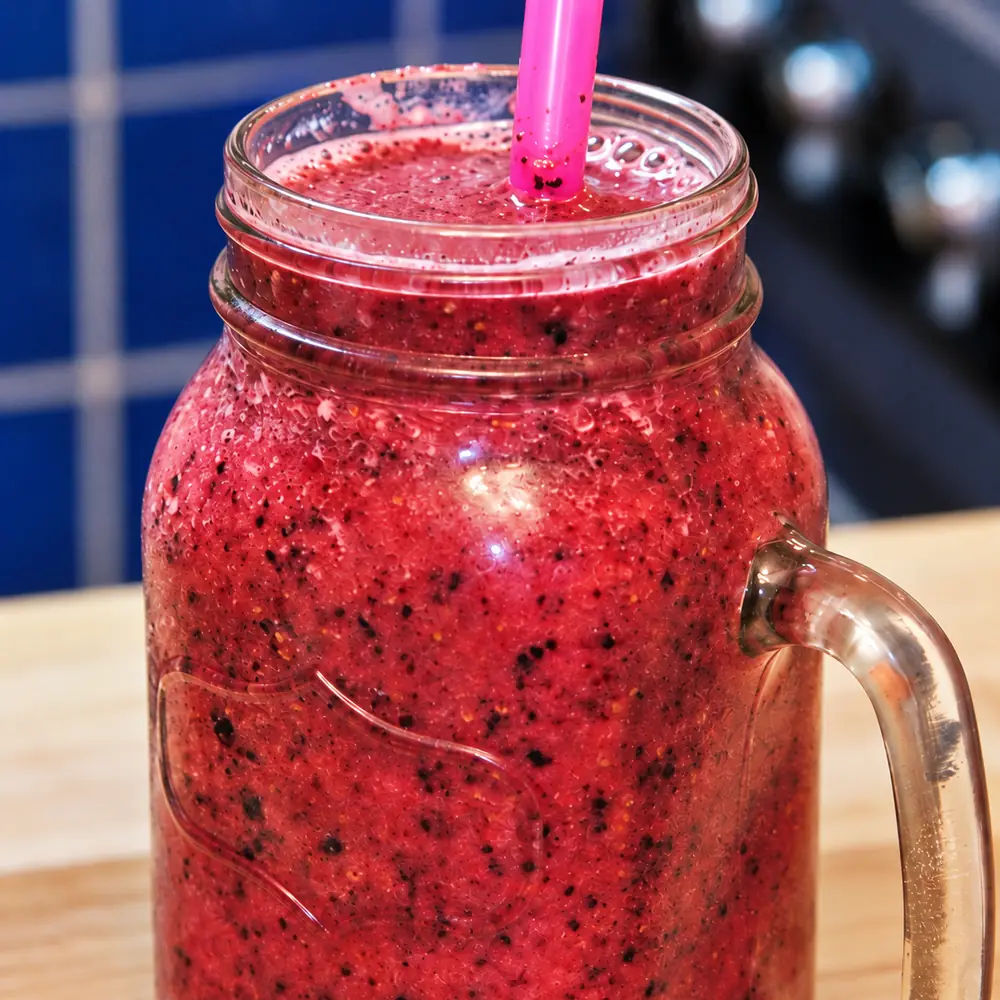
Blueberries give this drink its dark berry flecks and much of its colour. Strawberries bring a fresher berry note, mango gives a soft texture, and pineapple adds a lively tropical flavour. Orange juice supplies enough liquid to move the fruit around the blender. I want a mixture that is smooth enough to drink through a straw while still showing the tiny berry specks visible in the video.
If you are deciding between a smoothie and a juice, my fresh fruit and vegetable juices use extraction instead of blending whole fruit into the drink. For something thicker to eat with a spoon, the cottage cheese smoothie bowl uses a different base. Neither method is needed to reproduce this five-ingredient smoothie.
Does the recipe work?
Yes. The video gives clear quantities: 3½ ounces each of prepared pineapple, mango and strawberries, 7 ounces of blueberries, and about 1⅔ cups of freshly squeezed orange juice. There is enough liquid for a normal blender to circulate this amount of soft fruit. The result should be a drinkable, pulpy smoothie, not a stiff mixture that holds a spoon upright.
No banana, yogurt, milk, honey or sugar is missing. Those ingredients would produce a different smoothie. Ripe mango helps soften the texture without dairy, and the fruits and juice already bring sweetness. Because fruit ripeness changes, the taste may be brighter or sweeter from one batch to another even when the measured proportions stay the same.
The points that need clarification are the usable fruit weights, temperature and yield. Weigh pineapple and mango after peeling and removing their hard core or stone, and strawberries after hulling. Chill the ingredients first if you want a cold drink without extra ice. The whole batch makes two large servings; the large mug in the video is not a precise measurement of a single portion.
The method is technically sound, but this review is not a claim that the written conversion has been newly kitchen-tested. Also, a fruit-and-juice smoothie contains little protein and should not automatically be described as a complete breakfast. It can be a fruit drink alongside a meal. “No added sweetener” does not mean sugar-free, because the fruit and orange juice contain natural sugars.
Ingredients and preparation notes
3½ oz ripe pineapple flesh, peeled, hard core removed and diced
3½ oz ripe mango flesh, peeled, stone removed and diced
3½ oz strawberries, washed and hulled
7 oz blueberries, washed and drained
1⅔ cups freshly squeezed orange juice, chilled
The listed pineapple and mango weights are edible flesh, not the weight of a whole fruit. A kitchen scale makes this easy and avoids needing a particular size of mango or pineapple. Remove woody pineapple core so it does not leave tough strands in the finished drink. A ripe mango should yield slightly to gentle pressure and have a fragrant flavour, rather than a hard, chalky texture.
Drain the washed berries so you do not transfer unnecessary rinse water to the jug. Use freshly squeezed orange juice as shown, measuring the juice rather than counting oranges. Their yield varies. A 100% orange juice without added sweetener is a convenient substitution, although its flavour may differ. The recipe does not require organic produce for the blender method to work.
The same fruits can go into other preparations with different proportions. homemade mango sorbet and homemade strawberry sorbet are frozen desserts, not thicker versions of this drink. Do not reduce this smoothie’s liquid at random and assume it will turn into a properly formulated sorbet.
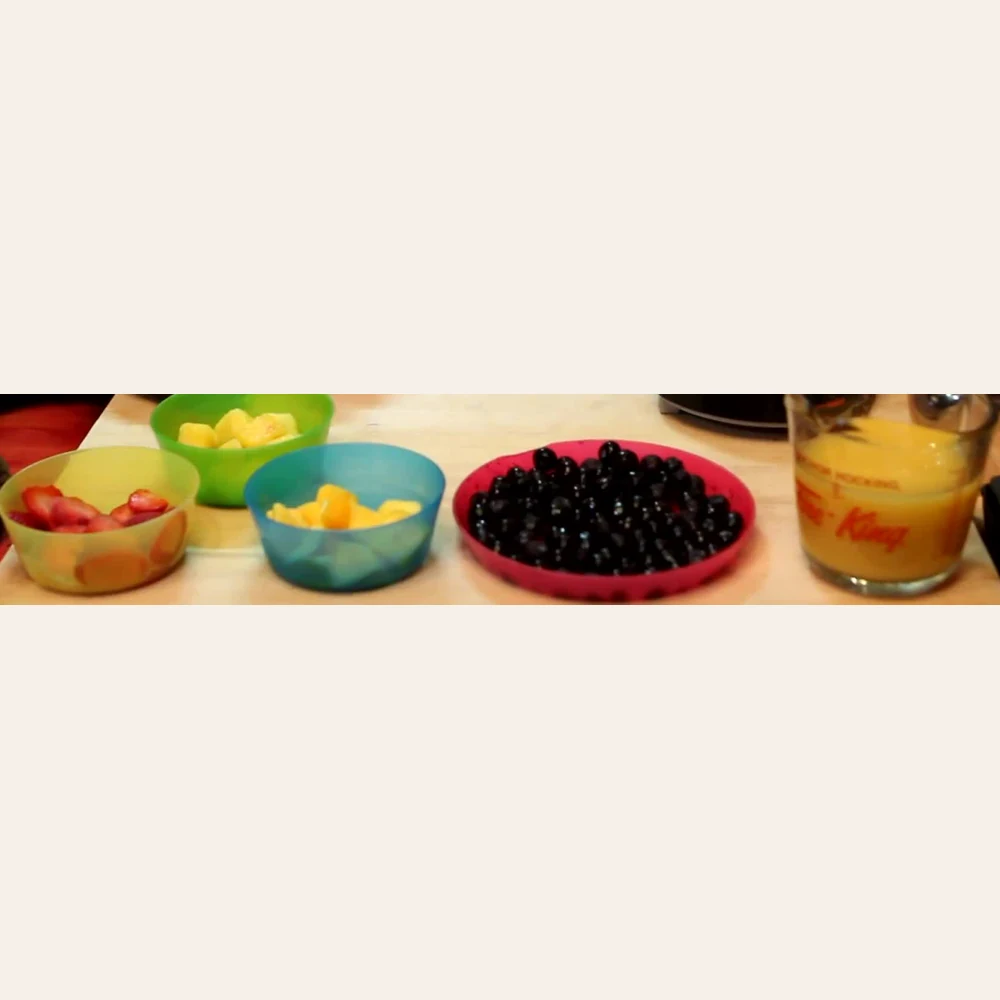
How to make the blueberry mango smoothie
1. Prepare and load the fruit
Wash the berries, hull the strawberries, and prepare the pineapple and mango. Weigh the edible portions, then cut the larger fruit into small pieces suited to your blender. Add pineapple, mango, strawberries and blueberries to the jug, as shown in the video. Keep the fruit cold until loading. Check the blender’s maximum fill line before proceeding; divide the batch if the jug is too small.

2. Add the measured orange juice
Pour in the chilled orange juice. The liquid should settle around the fruit and reach the blades once the blender starts. For the filmed drink, use the full listed quantity. You do not need an extra glass of water or a handful of ice. Adding either would dilute the flavour and change the relationship between the fruit and juice.
Fit the lid securely. If your blender’s instructions call for a different loading order, follow those instructions while keeping the same quantities. The important point is that the fruit and juice are together before blending, with enough room in the jug for circulation.
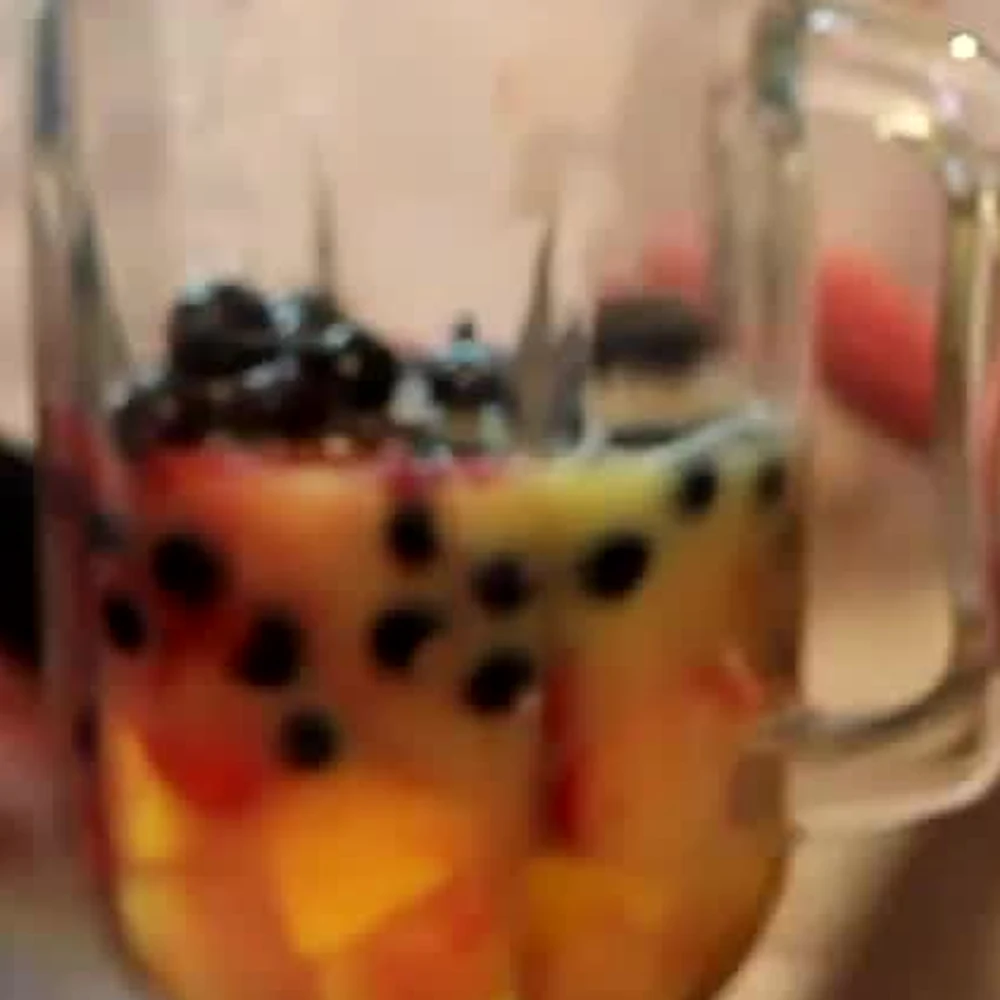
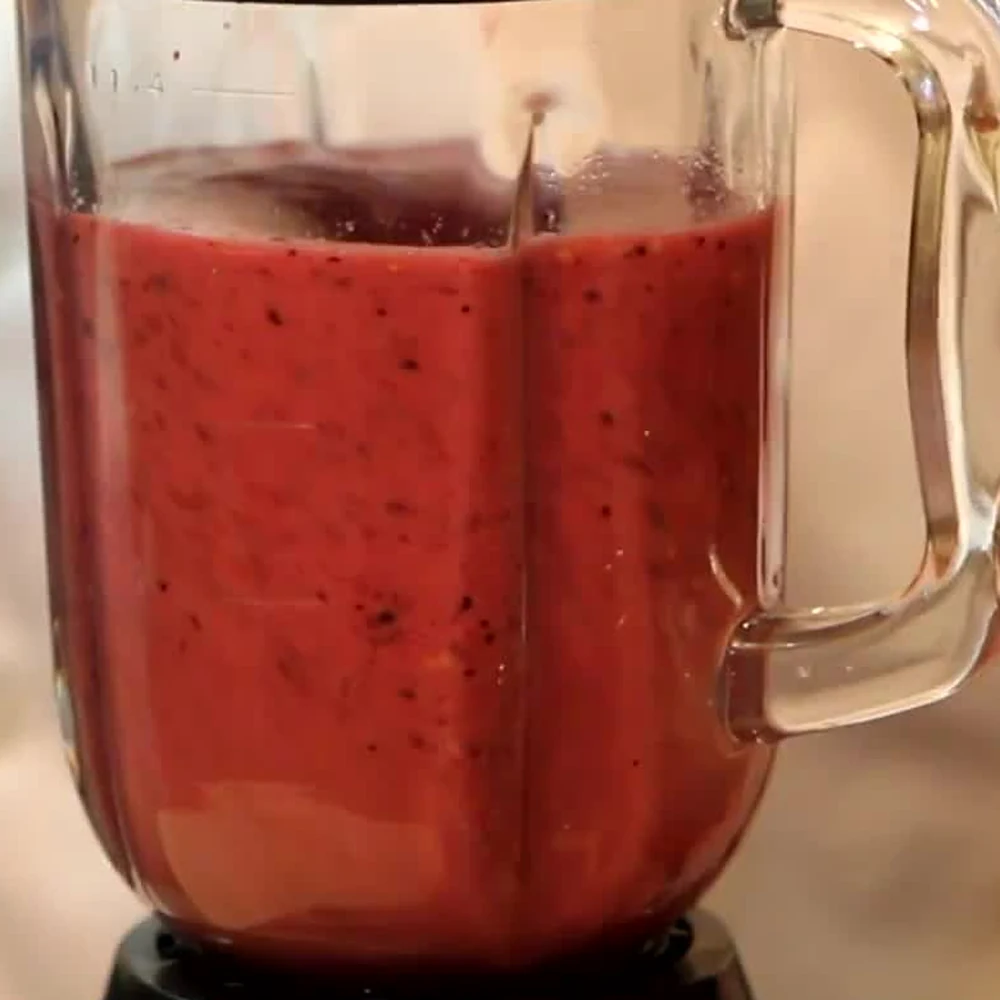
3. Blend until the texture is uniform
Begin at a low speed and increase once the fruit starts circulating. Blend for roughly 30 to 60 seconds, depending on your machine, until no visible mango, strawberry or pineapple pieces remain. Tiny blueberry skin flecks can remain even in a well-blended drink. Stop when the mixture is even; several extra minutes are unnecessary and can warm the smoothie.
If the blade spins without moving the fruit, stop the machine before stirring or repositioning the mixture. Use a manufacturer-approved tamper only if your blender is designed for one. Never put a spoon into a running blender. Check the liquid level and the size of the fruit pieces before assuming the recipe needs more ingredients.
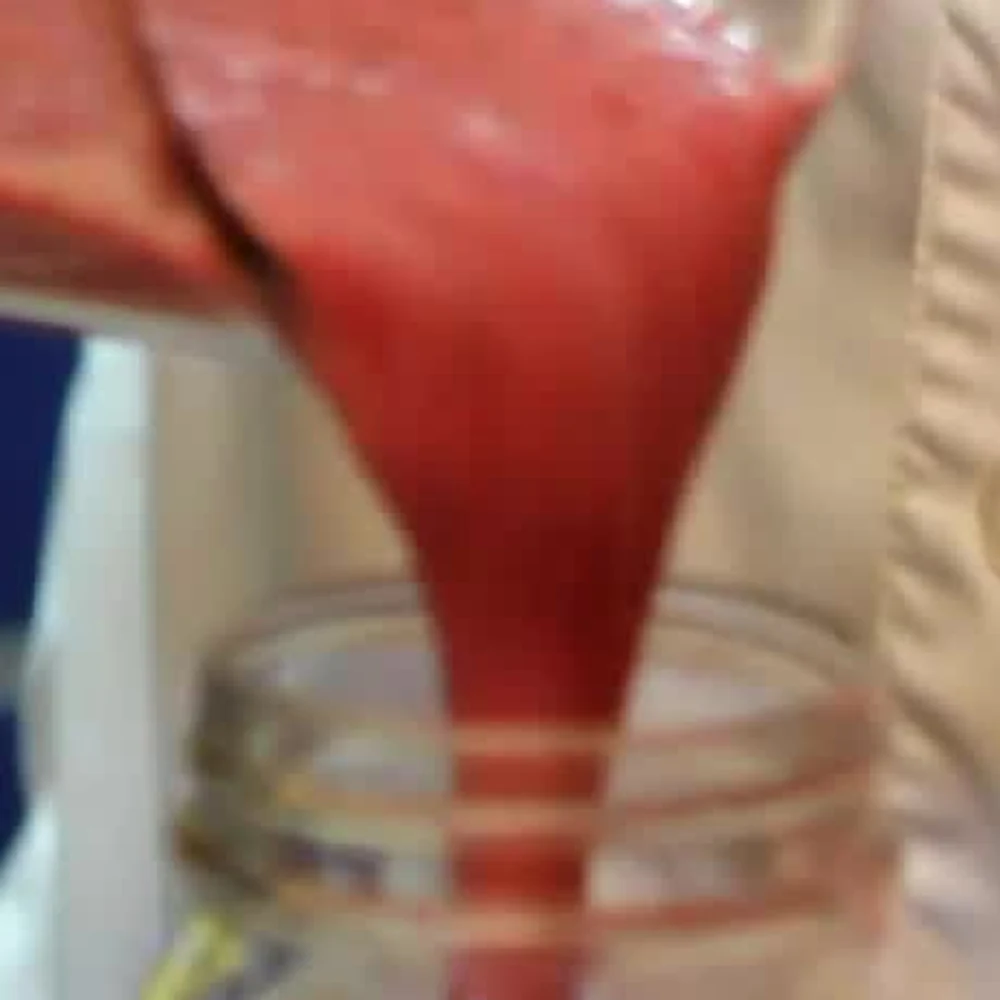
4. Pour and serve promptly
Taste, then divide between two large glasses or mason mugs. The smoothie should flow in a steady, fairly thick stream while remaining easy to drink. A little foam on the surface is normal after blending. Serve immediately for the freshest texture and colour. A straw is optional; the recipe does not need fruit skewers, mint, whipped cream or other garnish.
Texture, colour and flavour checks
A slightly pinker or darker purple colour is normal. Blueberry variety, strawberry ripeness, orange juice and the light in your kitchen all affect the appearance. The video’s drink is pink-purple with dark specks, rather than an artificial violet colour. There is no need for food colouring or a promise that every batch will match the thumbnail exactly.
If the smoothie is too thin for your preference, chill the ingredients more thoroughly next time or use some frozen mango or pineapple in a clearly identified variation. Do not expect the fresh-fruit version with all the juice to behave like a smoothie bowl. If it is stringy, check for pineapple core. If it is chalky, the mango may have been underripe. More juice alone will not fix those preparation problems.
Taste before adding anything sweet. A very tart orange juice or underripe strawberries can make the drink sharper. Choosing ripe fruit is the first correction. If you decide to add sweetener, that is a variation rather than a required ingredient in the filmed recipe. Keep any adjustment small and taste again before adding more.
Serving ideas and related fruit recipes
Serve it as two large drinks or split the batch into four smaller glasses for a brunch table. For a separate protein-containing breakfast option, consider a cottage cheese parfait with fruit and granola or cottage cheese banana pancakes. Those are separate dishes and do not change the dairy-free ingredients of the smoothie itself.
For a fruit-focused table, fruit salad with cottage cheese offers a different texture. lemon blueberry muffins and moist blueberry cake use blueberries in baked recipes. If you are planning a leisurely brunch, easy homemade crêpes or chocolate fruit crêpes can be served as separate choices.
Substitutions
Unsweetened frozen mango or pineapple can replace the same weight of prepared fresh fruit for a colder, thicker variation. Use fruit suitable for your intended preparation and follow package instructions. You may need a little more blending time. Fresh berries remain the simplest way to follow the filmed version. If using frozen fruit, do not automatically add ice as well.
Raspberries can replace strawberries by weight, but their seeds and acidity will change the texture and flavour. Replacing blueberries with a pale fruit changes the colour considerably. Orange juice can be replaced with another mild fruit juice as a variation, but the original citrus flavour will be lost. Milk or yogurt is not a direct requirement or a missing step.
Frequently asked questions
Does this smoothie need banana or yogurt?
No. Mango and the blended fruit provide body, while orange juice provides the liquid. The original recipe has no banana, yogurt or milk.
Can I prepare the fruit ahead?
Yes. Wash, trim and weigh the fruit, then keep it covered and refrigerated with the juice chilled separately. Blend close to serving for the best texture. If a prepared smoothie separates during a short refrigerated hold, stir before pouring.
Is it sugar-free?
No. There is no added sweetener in the recipe, but fruit and orange juice naturally contain sugar. Use the description “without added sweetener” rather than calling it sugar-free.
Can I halve the recipe?
Yes. Halve every ingredient and use a blender jug appropriate for the smaller volume. Keep the same fruit-to-juice relationship instead of halving only the fruit.
Blueberry Mango Smoothie with Orange Juice (No Yogurt)
Ingredients
- 3½ oz ripe pineapple flesh peeled, hard core removed and diced
- 3½ oz ripe mango flesh peeled, stone removed and diced
- 3½ oz strawberries washed and hulled
- 7 oz blueberries washed and drained
- 1⅔ cups freshly squeezed orange juice chilled
Instructions
- Wash and drain berries. Hull strawberries. Peel pineapple and mango, remove hard core and stone, and weigh the edible flesh. Dice the larger fruit.
- Put all four fruits in the blender jug. Add the measured chilled orange juice and secure the lid. Observe the blender’s fill limit.
- Blend from low to higher speed for about 30–60 seconds, until uniform with no large fruit pieces. Stop the machine before stirring if needed.
- Divide between two large glasses and serve promptly. Tiny berry specks and a little surface foam are normal.