Authentic French Duck Rillettes — Easy Homemade Recipe (No Pork)
This version of duck rillettes is based on my YouTube video, but I made a few changes since publishing it so it’s easier to reproduce at home in Canada and the USA: salt is clearly measured, the confit temperature is fixed at 100°C/212°F, onions are slowly confited in duck fat for sweetness, and the final fat quantity for mixing is better controlled so the rillettes stay spreadable, not greasy. It’s the classic French bistro-style duck spread you serve in small terrines with toasted bread, pickles, salad, or next to other French recipes like a classic French onion soup or a warm potato dish. This is a no-pork version, 100% duck.

For more French duck ideas, see the full duck category here: duck recipes. You can also pair this with a full Gascony-inspired meal such as duck confit or even a shorter stovetop cassoulet.
Why this version works
- Overnight salt + aromatics = flavor and mild curing.
- Low confit temperature (100°C/212°F) = meat that shreds in fibers.
- Onion confit folded in = natural sweetness and moisture.
- Fat added at the end in small ladles = rillettes that stay soft in the fridge.
- Everything filtered, chilled and potted = long storage.
Ingredients
Duck and cure
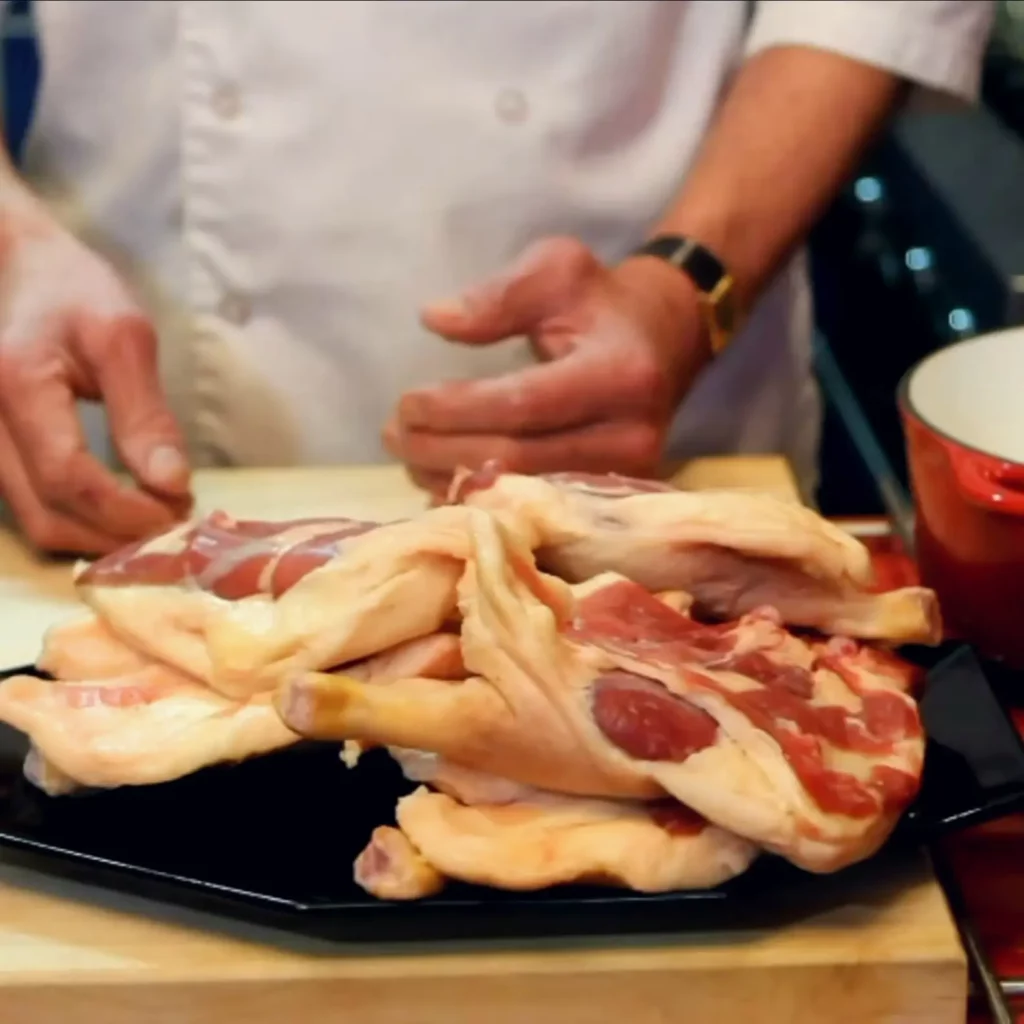
- 1800g / 4 lb duck legs (6 legs), trimmed of excess skin and fat
- 40g / 1 ½ tbsp coarse sea salt
- 20g / 1 ½ tbsp cracked black pepper (mignonnette)
- 12g / 3–4 garlic cloves, crushed
- 2–3 bay leaves
- 4–5 sprigs fresh thyme
For confit cooking
- 1500ml / 6 cups duck fat (enough to cover the legs; you can reuse filtered fat)
- 30ml / 2 tbsp water (to prevent scorching at the bottom)
Onion confit (to fold in after cooking)
- 150g / 5.3 oz yellow onion, finely sliced
- 30g / 2 tbsp duck fat
- Pinch of salt
To finish the rillettes
- 120–180ml / ½–¾ cup melted duck fat (added little by little, to adjust texture)
- Freshly cracked pepper, to taste
Step-by-Step Instructions
- Trim and collect fat
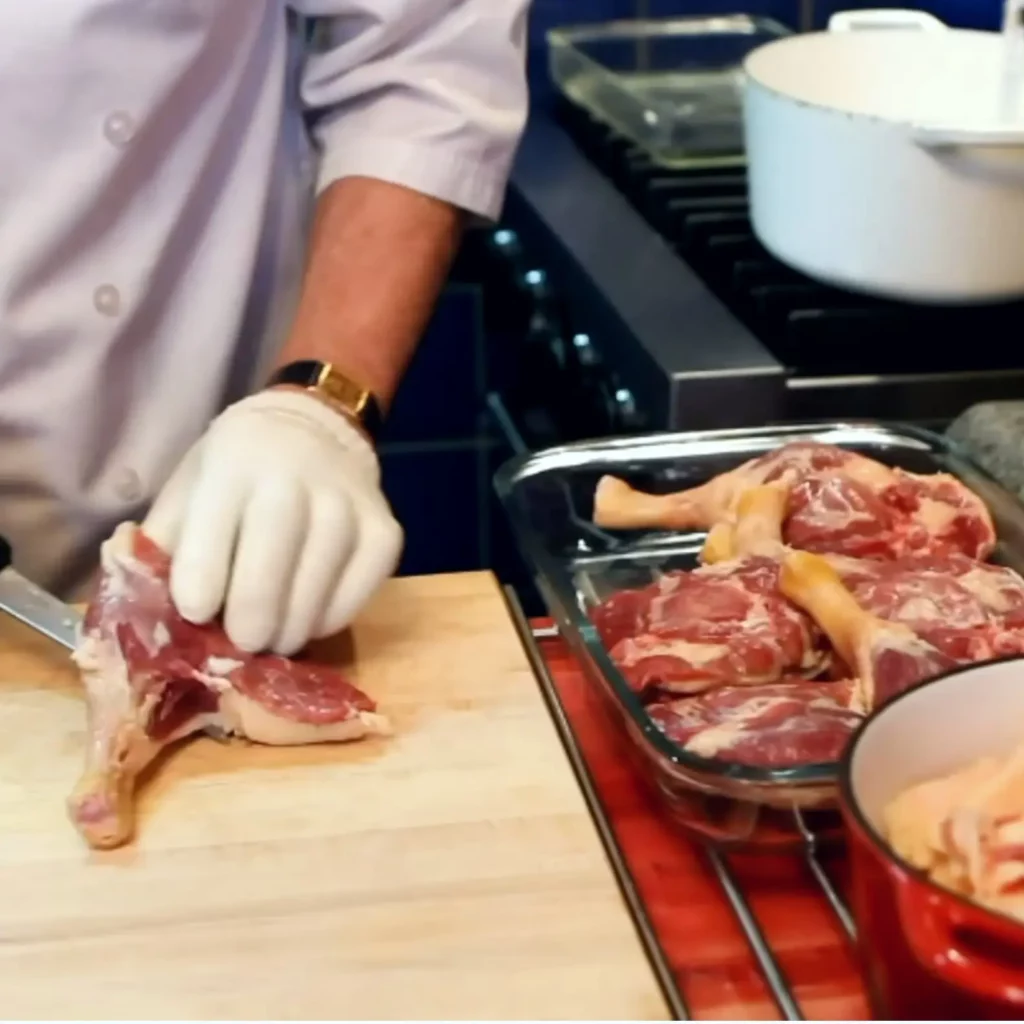
Place the 6 duck legs on a board. With a sharp knife, remove any big flaps of skin and extra fat. Keep those trimmings — melt them gently later to increase your duck fat supply.
- Season and marinate overnight
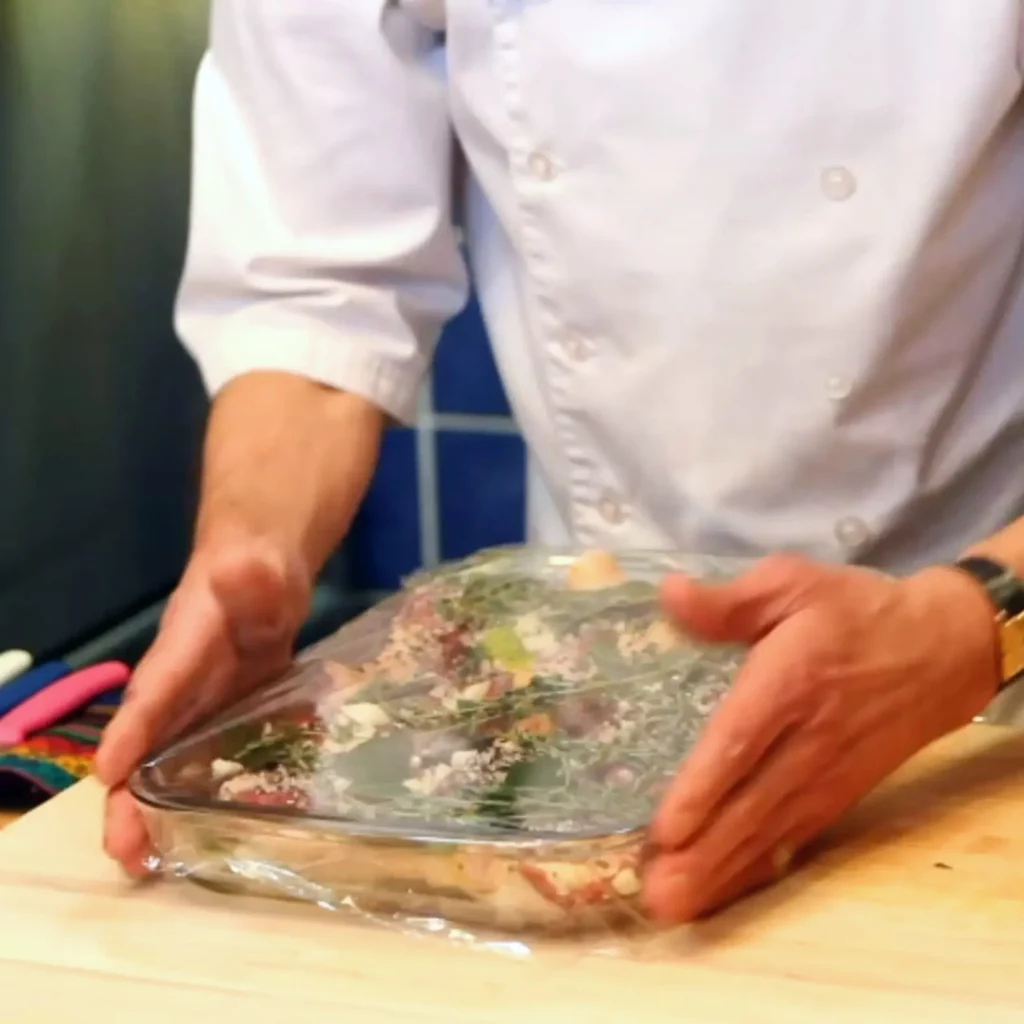
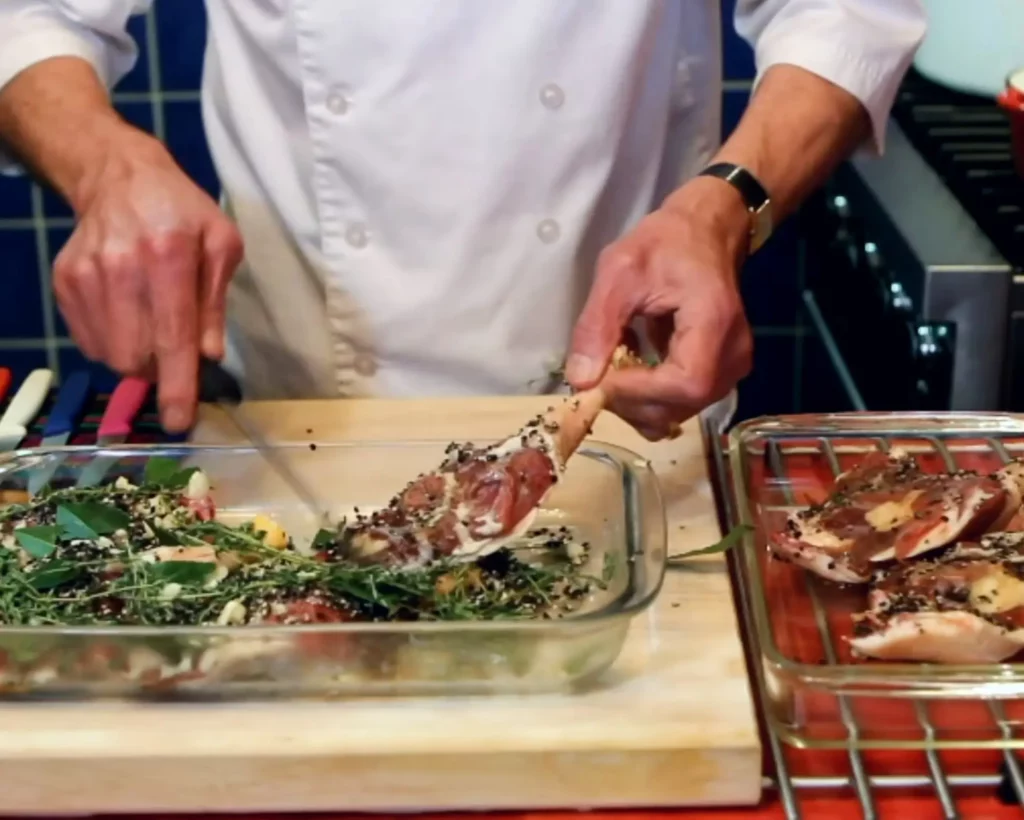
In a dish large enough for the 6 legs, sprinkle the 40g salt and 20g cracked pepper evenly. Add crushed garlic, bay leaves and thyme on top of the duck. Cover tightly and refrigerate overnight. This step is exactly like in the video but written for blog readers.
- Melt and clarify duck fat
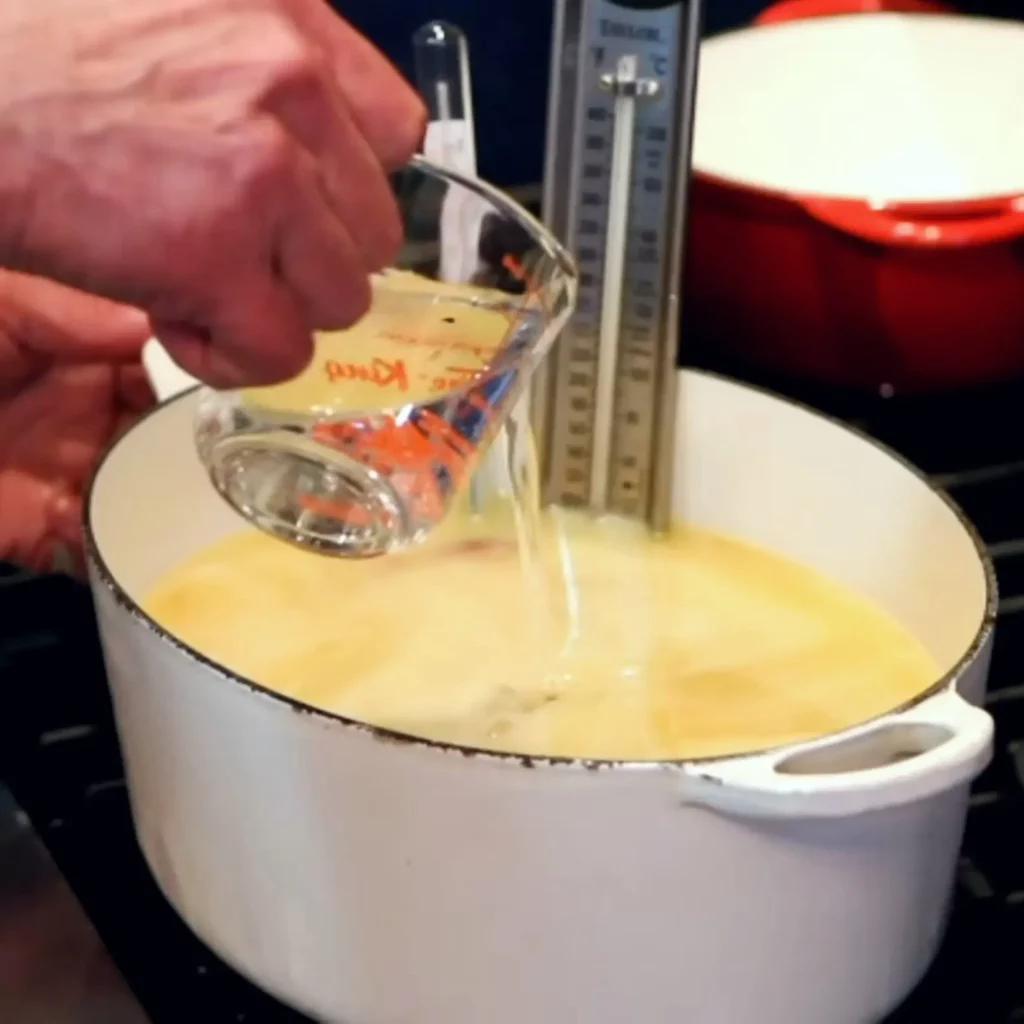
Next day, melt the duck fat very gently. If you used raw duck trimmings, melt them first with a splash of water, then strain through a fine mesh or oil filter so the fat is clean. Clean fat = cleaner flavor and longer storage.
- Rinse/wipe (optional but recommended)
If your duck legs released a lot of liquid or you’re sensitive to salt, pat them dry quickly before cooking. Don’t remove all the seasoning, just the excess.
- Confit the duck
Put the duck legs skin-side down in a Dutch oven. Add 30ml water at the bottom so nothing burns before the fat heats up. Pour in the melted duck fat to cover. Heat gently and stabilize at 100°C / 212°F. Hold that temperature for about 2 hours. The meat is ready when it pulls away from the bone easily but isn’t falling apart in the pot.
- Confit the onions
While the duck cooks, slice the onion very fine. In a small pan, melt 30g duck fat, add onions and a pinch of salt, and cook on very low heat for about 30 minutes until the onions are light blond, sweet and soft. This step gives the rillettes body and balances the salt.
- Drain and shred
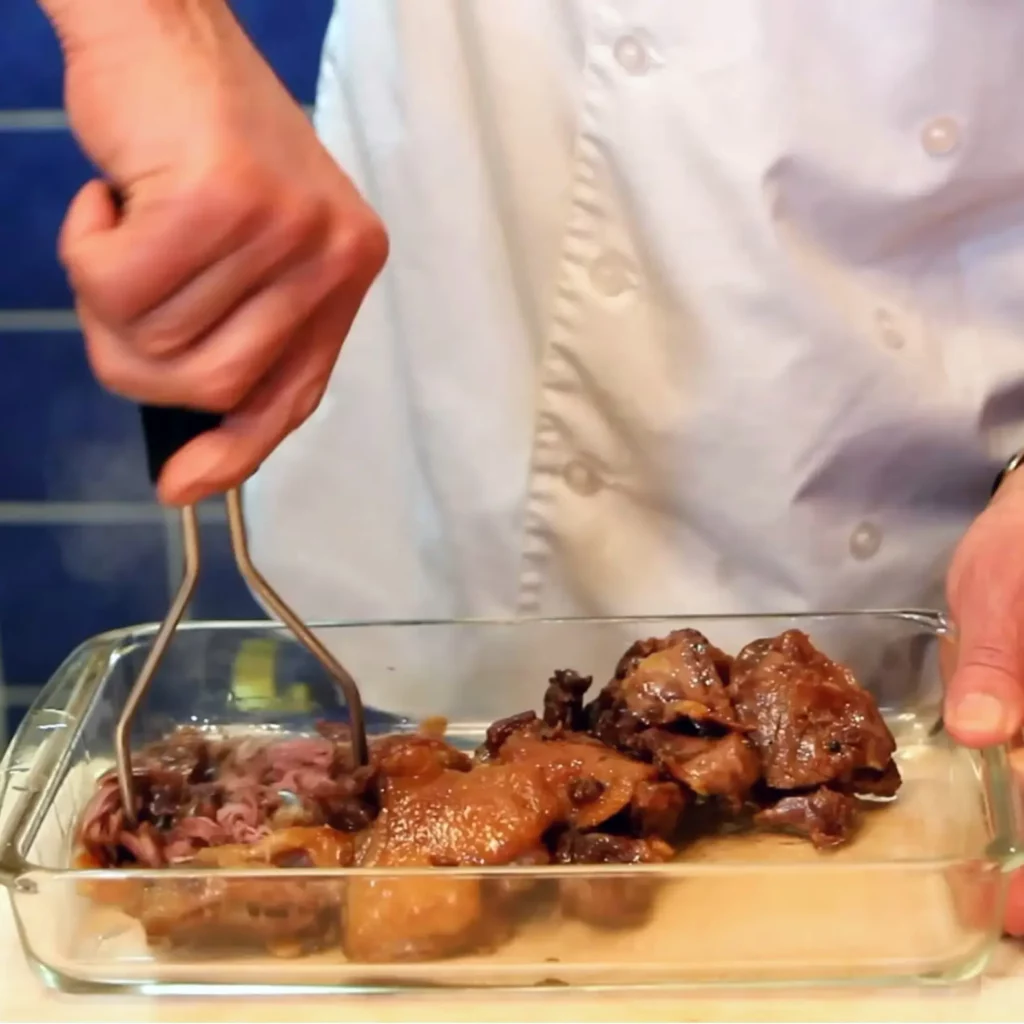
Remove duck legs from the fat and let them cool enough to handle. Discard thyme, bay and garlic. Remove skin and bones. Shred the meat with your hands or two forks — not too fine, you want visible fibers. Place in a mixing bowl.

- Fold everything together
Add the confited onions (with their fat) to the shredded duck. Mix with a spatula. Start adding 2–3 tbsp of warm duck fat at a time, mixing each time, until the rillettes feel moist, soft and spreadable. Depending on how much moisture was in the duck, you may need 120–180ml (½–¾ cup). Taste and add a bit of pepper.

- Pot and chill
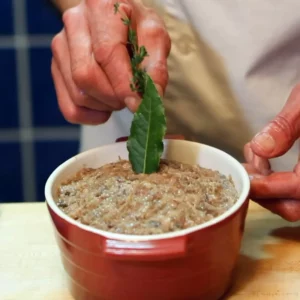
Pack into ramekins, jars or a terrine. Smooth the top and, if you want longer storage, pour a thin layer of melted duck fat (2–3 mm) on top. Refrigerate at least 4 hours, ideally overnight, so the texture sets.
Substitutions and Variations
- 1500ml / 6 cups duck fat → 1500ml / 6 cups goose fat or neutral fat + some duck fat for flavor.
- 6 duck legs → 6 confited duck legs you already made; just shred, warm a little fat and proceed with onions.
- Onion confit → 100g shallots, same method, for a finer taste.
- Aromatics → add 1 tbsp Cognac, Armagnac or dry white wine to the onions at the end and let it evaporate for a more “southwest France” profile.
- For serving → pair with a simple salad like this homemade Caesar salad or with warm potatoes such as traditional gratin dauphinois.
FAQ
Can I make this ahead?
Yes. Duck rillettes actually taste better the next day. Keep in the fridge for up to 3 weeks if sealed under fat.
Can I freeze duck rillettes?
Yes. Freeze in small containers, well sealed, for up to 3 months. Thaw overnight in the fridge.
Why are my rillettes too dry?
You didn’t add enough duck fat during mixing. Warm a little fat, fold it in a spoon at a time.
Why are my rillettes too salty?
Either your duck legs were small or you didn’t wipe off a bit of the cure before cooking. You can fix it by folding in more unsalted duck fat and more onion confit.
What do I serve it with?
Toasted bread, pickles, cornichons, mustard, and a few French recipes like French onion soup or even a lighter starter such as creamy tomato soup.
What to serve with these Duck Rillettes
- Duck confit recipe
- Stovetop cassoulet (duck and sausage)
- Classic French onion soup
- Traditional gratin dauphinois
- Foolproof homemade brioche bread
- Paris-style almond pear tart
- San Sebastian Basque burnt cheesecake
- Blog – all recipes
Authentic French Duck Rillettes — Easy Homemade Recipe (No Pork)
Ingredients
Duck and cure
- 1800 g / 4 lb duck legs 6 legs, trimmed of excess skin and fat
- 40 g / 1 ½ tbsp coarse sea salt
- 20 g / 1 ½ tbsp cracked black pepper mignonnette
- 12 g / 3–4 garlic cloves crushed
- 2 –3 bay leaves
- 4 –5 sprigs fresh thyme
For confit cooking
- 1500 ml / 6 cups duck fat enough to cover the legs; you can reuse filtered fat
- 30 ml / 2 tbsp water to prevent scorching at the bottom
Onion confit (to fold in after cooking)
- 150 g / 5.3 oz yellow onion finely sliced
- 30 g / 2 tbsp duck fat
- Pinch of salt
To finish the rillettes
- 120 –180ml / ½–¾ cup melted duck fat added little by little, to adjust texture
- Freshly cracked pepper to taste
Instructions
Trim and collect fat
- Place the 6 duck legs on a board. With a sharp knife, remove any big flaps of skin and extra fat. Keep those trimmings — melt them gently later to increase your duck fat supply.
Season and marinate overnight
- In a dish large enough for the 6 legs, sprinkle the 40g salt and 20g cracked pepper evenly. Add crushed garlic, bay leaves and thyme on top of the duck. Cover tightly and refrigerate overnight. This step is exactly like in the video but written for blog readers.
Melt and clarify duck fat
- Next day, melt the duck fat very gently. If you used raw duck trimmings, melt them first with a splash of water, then strain through a fine mesh or oil filter so the fat is clean. Clean fat = cleaner flavor and longer storage.
Rinse/wipe (optional but recommended)
- If your duck legs released a lot of liquid or you’re sensitive to salt, pat them dry quickly before cooking. Don’t remove all the seasoning, just the excess.
Confit the duck
- Put the duck legs skin-side down in a Dutch oven. Add 30ml water at the bottom so nothing burns before the fat heats up. Pour in the melted duck fat to cover. Heat gently and stabilize at 100°C / 212°F. Hold that temperature for about 2 hours. The meat is ready when it pulls away from the bone easily but isn’t falling apart in the pot.
Confit the onions
- While the duck cooks, slice the onion very fine. In a small pan, melt 30g duck fat, add onions and a pinch of salt, and cook on very low heat for about 30 minutes until the onions are light blond, sweet and soft. This step gives the rillettes body and balances the salt.
Drain and shred
- Remove duck legs from the fat and let them cool enough to handle. Discard thyme, bay and garlic. Remove skin and bones. Shred the meat with your hands or two forks — not too fine, you want visible fibers. Place in a mixing bowl.
Fold everything together
- Add the confited onions (with their fat) to the shredded duck. Mix with a spatula. Start adding 2–3 tbsp of warm duck fat at a time, mixing each time, until the rillettes feel moist, soft and spreadable. Depending on how much moisture was in the duck, you may need 120–180ml (½–¾ cup). Taste and add a bit of pepper.
Pot and chill
- Pack into ramekins, jars or a terrine. Smooth the top and, if you want longer storage, pour a thin layer of melted duck fat (2–3 mm) on top. Refrigerate at least 4 hours, ideally overnight, so the texture sets.
Video
Notes
Substitutions and Variations
- 1500ml / 6 cups duck fat → 1500ml / 6 cups goose fat or neutral fat + some duck fat for flavor.
- 6 duck legs → 6 confited duck legs you already made; just shred, warm a little fat and proceed with onions.
- Onion confit → 100g shallots, same method, for a finer taste.
- Aromatics → add 1 tbsp Cognac, Armagnac or dry white wine to the onions at the end and let it evaporate for a more “southwest France” profile.
- For serving → pair with a simple salad like this homemade Caesar salad or with warm potatoes such as traditional gratin dauphinois.
FAQ
Can I make this ahead?Yes. Duck rillettes actually taste better the next day. Keep in the fridge for up to 3 weeks if sealed under fat. Can I freeze duck rillettes?
Yes. Freeze in small containers, well sealed, for up to 3 months. Thaw overnight in the fridge. Why are my rillettes too dry?
You didn’t add enough duck fat during mixing. Warm a little fat, fold it in a spoon at a time. Why are my rillettes too salty?
Either your duck legs were small or you didn’t wipe off a bit of the cure before cooking. You can fix it by folding in more unsalted duck fat and more onion confit. What do I serve it with?
Toasted bread, pickles, cornichons, mustard, and a few French recipes like French onion soup or even a lighter starter such as creamy tomato soup.
Useful Links
🛒 Michel Dumas Shop : Explore our kitchen essentials, including aprons and knives.
🌐 Linktree : Access all our important links in one place.
📱 YouTube | Instagram | Facebook | TikTok : Follow us for the latest recipes and culinary tips.