Homemade Pork Sausage (6 Flavors) — Juicy, Beginner-Friendly, No Special Skills Needed
If you’ve ever wanted to make homemade pork sausage links that taste like something from a great butcher shop, this is the method I come back to. It’s based on my YouTube video, but I’ve tightened the proportions and added a few practical “chef-to-home-cook” upgrades so the results are consistent: better seasoning accuracy, a clearer mixing target (for that springy sausage bite), and more reliable moisture control.
The big idea is simple: we make one neutral sausage base, then divide it into portions and season each one into a different flavor. You end up with a full tray of sausages that cook beautifully on a skillet or grill, and you can tailor the heat level, salt, and aromatics to your taste.

What you’ll get from this method
- A repeatable base formula with reliable salt and moisture
- Six flavors that make meal prep feel like a feast
- Clear stuffing + linking steps, even if you’re doing it solo
- A cooking method that keeps sausages juicy (no bursting, no dryness)
Equipment (simple + optional)
- Meat grinder (or pre-ground pork from the butcher)
- Sausage stuffer attachment or dedicated stuffer
- Large mixing bowl
- Sheet pan + parchment
- Instant-read thermometer (highly recommended)
The base sausage formula (the “changes” vs my video)
In the video, the seasoning is done “like a steak,” then adjusted by tasting a small cooked piece. That absolutely works. For a website recipe people can follow, I’m giving you a locked base that is very forgiving:
- Salt: 1.7% of meat weight (great for fresh sausage)
- Liquid: just enough to help mixing and keep juiciness
- Binder: optional, but measured so it doesn’t turn pasty
You can still do the microwave taste test (I recommend it), but now you’re starting from a solid foundation.

INGREDIENTS (Imperial only) — Base for about 4 to 5 lb sausage
Base (Neutral)
- 4 lb pork shoulder (butt) or well-marbled pork (coarsely ground or cubed to grind)
- 1 tbsp + 1 tsp kosher salt (or fine sea salt)
- 2 tsp freshly ground black pepper
- 4 cloves garlic, finely minced
- 2 tbsp minced shallot (or 1 tbsp dried minced shallot)
- 1/4 cup dry white wine (or cold water)
- 1/3 cup panko breadcrumbs (optional, measured)
- Hog casings (enough for 4–5 lb)
- Cold water (for rinsing casings)
Flavor Add-ins (divide base into 6 portions)
- Roquefort / Blue Cheese
- 3 to 4 oz Roquefort or blue cheese, small dice
- Spinach
- 1 packed cup spinach, microwaved 60–90 sec, squeezed very dry, chopped
- Tandoori / Curry
- 2 to 3 tsp tandoori spice (or curry powder)
- Harissa (Merguez-style, pork)
- 1 1/2 to 2 tbsp harissa
- Pinch to 1/2 tsp dried hot chili flakes (to taste)
- Dijon Mustard
- 1 1/2 tbsp Dijon mustard
- “Extra Garlic + Shallot” (or keep plain)
- 1 extra clove garlic + 1 tbsp shallot (optional)
Important: Keep everything cold. Cold meat + cold bowl = better texture and less fat loss.
Step-by-step: Make the neutral sausage base
1) Chill + prep
- If grinding: cube pork and place in the freezer 20–30 minutes so it’s very cold (not frozen solid).
- Chill your mixing bowl if possible.
2) Grind (if needed)
Grind pork on a coarse plate. If you’re using store-bought ground pork, choose one with visible fat (not extra-lean).
3) Season + mix (this is where texture happens)
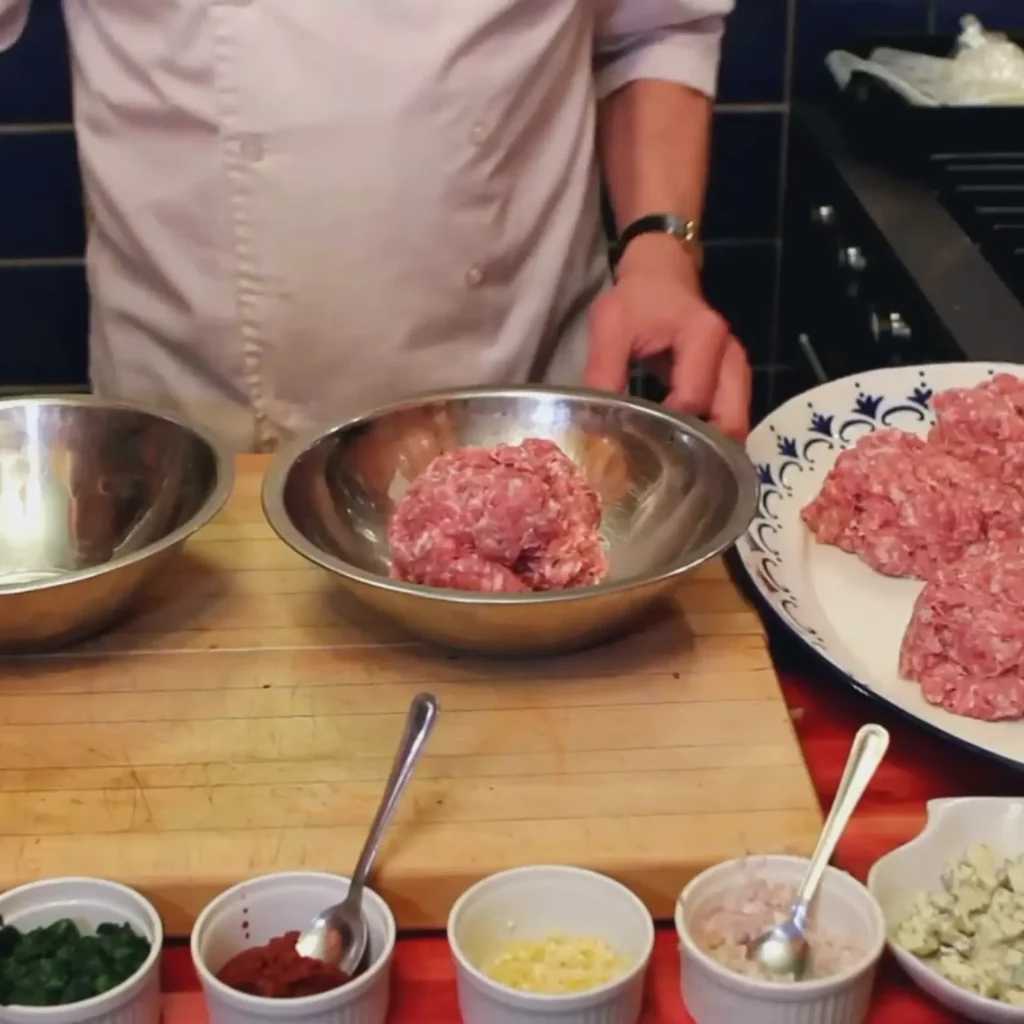
Add to the ground pork: salt, pepper, garlic, shallot, wine/water, and panko (if using).
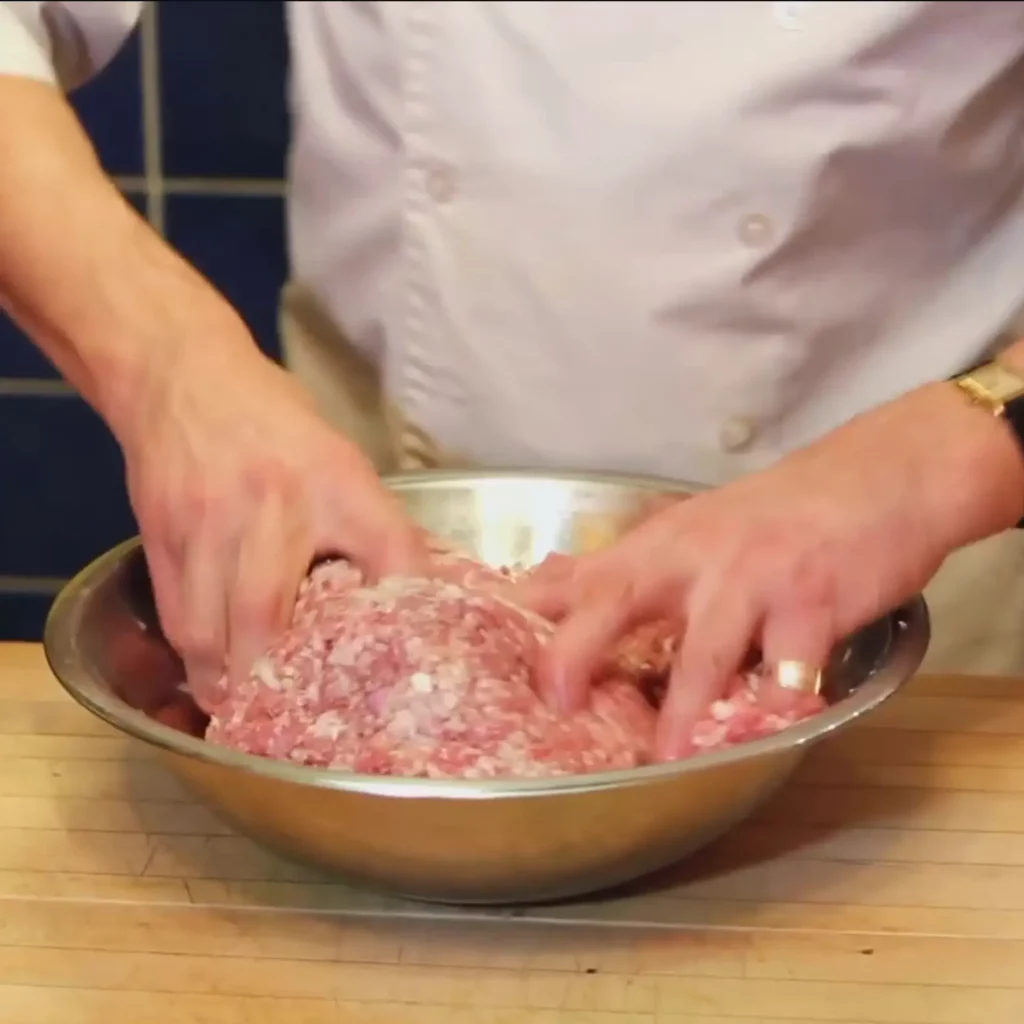
Mix by hand (or paddle) until the meat becomes sticky and cohesive—it should cling to your hand and look slightly emulsified. This usually takes 2–4 minutes depending on batch size and temperature.
4) Taste test (recommended)
Cook a small nugget in a pan (or microwave briefly) and taste:
- If bland: add a pinch of salt
- If too firm/dry: add a tablespoon of cold water and mix again
- If too loose/wet: add 1 tbsp panko and mix briefly
Divide into 6 flavors
Split the base into 6 equal portions. Mix each add-in just until evenly distributed (don’t overwork once flavored).
Roquefort: fold gently so cheese stays in pockets.
Spinach: squeeze it drier than you think—water is the enemy of tight links.
Tandoori/Curry + Harissa: spices hydrate as they sit; let these bowls rest 10 minutes in the fridge for best flavor.
Dijon: adds tang and moisture—keep the meat very cold.

Prep hog casings (simple method)
- Rinse casings under cold running water.
- Run water through the inside of the casing to flush and open it.
- Keep in a bowl of cold water until ready.
Stuffing + linking (solo-friendly)
- Slide casing onto the stuffing tube, leaving a few inches hanging.
- Tie a simple knot at the end.
- Start stuffing slowly. Keep gentle tension on the casing so it fills evenly without exploding.
- When the whole coil is stuffed, measure links (about 7 inches / 18 cm works great).
- Pinch at each link point and twist. Alternate directions as you go (one link forward twist, next link backward) to prevent unraveling.
If you see air bubbles, prick with a clean pin.

How to cook fresh sausage (no bursting, juicy inside)
- Use medium heat. High heat bursts casings and renders fat too fast.
- In a skillet: add a small splash of water, cover 6–8 minutes to gently cook through, then uncover to brown.
- On a grill: cook over indirect heat first, then finish over direct heat for color.
Target internal temperature: 160°F for pork sausage.

Substitutions
- No white wine: use cold water, or a mild apple juice splash (very small amount).
- No panko: skip it entirely, or use fine breadcrumbs (smaller amount). The best “binder” is proper mixing.
- No shallots: onion powder works (use lightly), or finely minced onion cooked and cooled.
- No harissa: try your own homemade harissa paste for a cleaner heat.
- No casings: shape into patties and cook like breakfast sausage.

FAQ
Can I make these without a grinder?
Yes. Ask the butcher for coarsely ground pork shoulder. You can still mix and season at home.
Why do my sausages turn dry?
Usually one of these: pork too lean, mixing not enough (poor bind), heat too high, or cooked too long. Keep fat in the mix and cook gently.
Do I need breadcrumbs?
No. Breadcrumbs are optional. They can help retain moisture, but too much makes a bready texture—keep it measured.
How long can I store fresh sausage?
In the fridge: 1–2 days (cook sooner for best texture). In the freezer: 2–3 months, well wrapped.
Can I use this base in other recipes?
Absolutely—stuff peppers, meatballs, pasta bakes, or casseroles. For a cozy sausage dinner idea, try a quick cassoulet-style dish like stovetop cassoulet with duck and sausages.

What to serve with homemade sausages (Suggested posts)
- Ultra-crispy beer battered fish and chips (for a pub-style spread)
- Parisian potatoes with bacon
- Spaghetti al Pomodoro (30 minutes)
- Tzatziki sauce
- Beet-cured salmon gravlax (for a brunch board)
- Juicy smash burger with bacon cheddar
- Crispy homemade General Tso chicken
- Creamy lemon garlic pasta
- Beurre manié recipe (thicken a pan sauce fast)
- Homemade mayonnaise (easy, failproof)

Homemade Pork Sausage (6 Flavors) — Juicy, Beginner-Friendly, No Special Skills Needed
Ingredients
Ingredients
- 4 lb pork shoulder coarsely ground
- 1 tbsp + 1 tsp kosher salt
- 2 tsp black pepper
- 4 cloves garlic minced
- 2 tbsp minced shallot or 1 tbsp dried minced shallot
- 1/4 cup dry white wine or cold water
- 1/3 cup panko breadcrumbs optional
- Hog casings + cold water to rinse
Flavor options (divide base into 6 portions):
- 3 –4 oz Roquefort/blue cheese small dice
- 1 cup spinach microwaved and squeezed dry, chopped
- 2 –3 tsp tandoori spice or curry powder
- 1 1/2 –2 tbsp harissa + chili flakes to taste
- 1 1/2 tbsp Dijon mustard
- Extra garlic/shallot optional
Instructions
- Keep everything cold. Mix pork with salt, pepper, garlic, shallot, wine/water, and panko (if using).
- Mix 2–4 minutes until sticky and cohesive. Cook a small piece to taste and adjust.
- Divide into 6 bowls and mix in flavor add-ins. Chill 10–15 minutes.
- Rinse casings, flush inside with water, slide onto stuffing tube, tie a knot.
- Stuff slowly, avoiding air pockets. Link into ~7-inch / 18 cm sausages, twisting alternately.
- Cook gently to 160°F internal. Brown at the end for color.
Video
Notes
Substitutions
- No white wine: use cold water, or a mild apple juice splash (very small amount).
- No panko: skip it entirely, or use fine breadcrumbs (smaller amount). The best “binder” is proper mixing.
- No shallots: onion powder works (use lightly), or finely minced onion cooked and cooled.
- No harissa: try your own homemade harissa paste for a cleaner heat.
- No casings: shape into patties and cook like breakfast sausage.
FAQ
Can I make these without a grinder?Yes. Ask the butcher for coarsely ground pork shoulder. You can still mix and season at home. Why do my sausages turn dry?
Usually one of these: pork too lean, mixing not enough (poor bind), heat too high, or cooked too long. Keep fat in the mix and cook gently. Do I need breadcrumbs?
No. Breadcrumbs are optional. They can help retain moisture, but too much makes a bready texture—keep it measured. How long can I store fresh sausage?
In the fridge: 1–2 days (cook sooner for best texture). In the freezer: 2–3 months, well wrapped. Can I use this base in other recipes?
Absolutely—stuff peppers, meatballs, pasta bakes, or casseroles. For a cozy sausage dinner idea, try a quick cassoulet-style dish like stovetop cassoulet with duck and sausages.
Useful Links
🛒 Michel Dumas Shop : Explore our kitchen essentials, including aprons and knives.
🌐 Linktree : Access all our important links in one place.
📱 YouTube | Instagram | Facebook | TikTok : Follow us for the latest recipes and culinary tips.