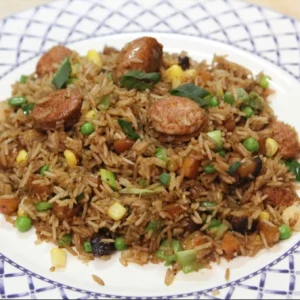
Cantonese-Style Fried Rice with Chinese Sausage (Lap Cheong)
If you’ve ever wondered why restaurant fried rice tastes glossy and aromatic while homemade versions can clump or steam, the answer is in rice prep, heat management, and a tight seasoning pack. This updated method keeps the spirit of my original video (Chinese sausage, carrots, peas, scallions) but corrects the sticking points: we rinse the rice, use a drier cook ratio, render then remove the sausage, and season with light soy, a touch of dark soy, Shaoxing wine, oyster sauce (or a clean MSG pinch), and white pepper. Optional eggs add body and that nostalgic Cantonese flavor.
Ingrédients
Rice (cook the day before)
- 450 g basmati or jasmine rice, uncooked (≈ 2½ cups)
- 560 ml water ≈ 2⅓ cups — slightly drier cook for fried rice
Stir-fry & seasoning
- 300 g Chinese sausage lap cheong, thinly sliced (≈ 10–11 oz)
- 200 g carrots small dice (≈ 7 oz)
- 120 –150 g peas thawed (≈ 1–1¼ cups)
- 80 g scallions/green onions whites and greens separated (≈ 3 oz)
- 20 ml peanut or neutral oil ≈ 1½ tbsp, plus rendered sausage fat
- 2 large eggs lightly beaten (optional but classic)
Seasoning pack
- 10 –15 ml light soy sauce ≈ 2–3 tsp
- 2 –5 ml dark soy sauce ≈ ½–1 tsp for gentle color
- 15 ml Shaoxing wine ≈ 1 tbsp
- 10 ml oyster sauce ≈ 2 tsp or a good pinch MSG for clean umami
- 1 –2 g white pepper ≈ ¼–½ tsp
- 2 –3 ml toasted sesame oil off-heat ≈ ½ tsp
- Fine salt only as needed sausages/soy are already salty
Instructions
Day before — cook & chill the rice
- Rinse the rice in several changes of cold water until almost clear; drain well.
- Cook with 560 ml water. Bring to a gentle boil, cover, reduce to low, and cook until just tender.
- Dry & chill: Spread on a tray 20–30 minutes to steam off excess moisture; then cover and refrigerate overnight. Cold, dry grains are non-negotiable for wok separation.
Day of — mise en place
- Thinly slice lap cheong; small-dice carrots; thaw peas; separate scallion whites/greens; beat eggs (if using).
- Loosen the cold rice by hand so there are no big clumps.
Stir-fry
- Render sausage: Wok medium-high. Add lap cheong; cook 2–3 minutes until lightly browned and some fat renders. Remove sausage; leave fat.
- Aromatics & veg: Add a little oil if needed. Scallion whites 15–20 seconds; add carrots 2–3 minutes (tender-crisp). Add peas 30–60 seconds.
- Rice in: Add the cold rice. Toss and press, breaking any small clumps. Fry 2–3 minutes until hot and slightly toasty.
- Season: Push rice aside; splash Shaoxing onto bare metal so it flashes. Fold in light soy, a touch of dark soy, oyster sauce (or MSG), and white pepper. Taste before adding any salt.
- Eggs (optional): Clear a hot spot, a few drops of oil, pour eggs, scramble softly, then fold through.
- Finish: Return sausage, toss 30–60 seconds. Off-heat, add sesame oil and scallion greens. Serve immediately.
Vidéo
Notes
Pro Tips for North American home stoves
- Batch size matters: If your burner is modest, fry in two rounds so the pan stays smoking-hot (prevents steaming).
- Oil economy: Add oil in teaspoon “drips” as needed. The goal is a light sheen on grains, not greasiness.
- Color control: Dark soy is potent; start small (½ tsp), then adjust.
- Basmati vs jasmine: Basmati gives drier, separated grains; jasmine gives a softer, classic Chinese-restaurant chew. Both work with this method.
Substitutions & variations
- Protein swap: Dice chicken thigh or shrimp; marinate briefly with a splash of light soy and white pepper; stir-fry first, remove, and re-add at the end.
- Vegetable add-ins: Corn niblets, diced bell pepper, or finely chopped cabbage (stir-fry briefly so the rice doesn’t steam).
- Sauce alternatives: If you avoid oyster sauce, a pinch MSG + ½ tsp sugar mimics umami + balance.
- Gluten-free path: Use tamari in place of light/dark soy; confirm your oyster sauce is GF or skip.