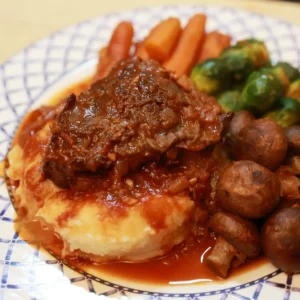
Braised Beef Cheeks with Red Wine and Creamy Mashed Potatoes
Slow-braised beef cheeks are one of those French comfort food dishes that turn a simple cut of meat into something luxurious. After a good sear and a long uncovered simmer in red wine, beef stock, onions and herbs, the cheeks become spoon-tender and the sauce reduces into a glossy, deeply flavored jus. Add buttery mashed potatoes and a few vegetables and you have a bistro-style plate that fits just as well for a cozy Canadian winter night as it does for a Sunday dinner in the U.S.
Ingrédients
For the braised beef cheeks
- 1.8 kg / 4 lb Beef cheeks trimmed, membrane removed
- 30 ml / 2 tbsp Duck fat or neutral oil
- 600 g / 4 medium Yellow onions finely chopped
- 20 g / 4–5 cloves Garlic finely chopped
- 750 ml / 3 cups Dry red wine
- 2 L / 8 cups Unsalted beef stock
- 500 ml / 2 cups Crushed tomatoes canned
- 4 g / 2 Bay leaves
- 4 –5 sprigs Fresh thyme
- 3 –4 Black peppercorns optional
- 5 –7 g / 1–1½ tsp Fine salt plus more to taste
- 2 –3 g / ½ tsp Freshly ground black pepper plus more to taste
- 15 –20 g / 1–1½ tbsp Cold butter optional, to finish the sauce
For the vegetables
- 400 g / 4–5 Carrots peeled and cut into large pieces
- 300 g / 10 oz Button mushrooms cleaned and left whole or halved
- 300 g / 10 oz Brussels sprouts trimmed
For the mashed potatoes
- 1.5 kg / 3.3 lb Russet potatoes peeled and cut into large chunks
- 25 g / 1½ tbsp Fine salt for the cooking water
- 80 –100 g / 6–7 tbsp Unsalted butter
- 120 –180 ml / ½–¾ cup Heavy cream or whole milk
- 2 –3 g / ½ tsp Fine salt or to taste
- 2 g / ¼ tsp Freshly ground black pepper
Instructions
Prepare and sear the beef cheeks
- Pat the beef cheeks dry and season lightly with salt and pepper.
- Heat the duck fat or oil in a wide Dutch oven over high heat. Sear the cheeks on all sides until deeply browned, 8–10 minutes. Remove to a plate.
Cook the onion base
- In the same pot, add the chopped onions with a pinch of salt. Cook over medium-high heat, stirring often, until very soft and lightly caramelized, 10–15 minutes.
- Add the garlic and cook 1–2 minutes more.
Deglaze with red wine
- Pour in the red wine, scraping the bottom of the pot to release all browned bits. Reduce by about half until slightly syrupy.
Build the braise
- Return the beef cheeks and any juices to the pot. Add the beef stock, crushed tomatoes, bay leaves, thyme sprigs and peppercorns.
- Bring to a strong simmer over high heat, uncovered.
Add the vegetables in stages
- Add the carrot pieces to the pot.
- After 30 minutes of uncovered simmering, add the mushrooms.
- Continue cooking uncovered, keeping a lively but controlled simmer.
Cook until tender, removing vegetables as they are done
- After about 30 minutes, fish out the mushrooms and reserve in a bowl.
- After about 60 minutes, fish out the carrots and reserve.
- Continue cooking the beef cheeks uncovered for a total of about 2½ hours, turning occasionally, until a small knife slides in with almost no resistance. If needed, cook 20–30 minutes longer.
Make the mashed potatoes
- While the cheeks cook, place the potato chunks in a large pot, cover with cold water and add the 25 g / 1½ tbsp salt.
- Bring to a boil and cook until the potatoes are just tender, about 20–25 minutes.
- Drain well and let steam off excess moisture. Add the butter and mash. Add the cream or milk a little at a time until creamy. Season with salt and pepper to taste.
Cook the Brussels sprouts
- Bring a pot of salted water to a boil. Add the Brussels sprouts and cook 10–12 minutes until just tender. Drain and reserve.
Finish the sauce
- When the cheeks are tender and the liquid has reduced to a glossy sauce that coats a spoon, taste and season with salt and pepper.
- If you like, whisk in the cold butter to add shine. If the sauce seems too thin, simmer a few minutes more uncovered.
Reheat vegetables in the jus
- In a small pan, combine the reserved carrots, mushrooms and Brussels sprouts with a ladle or two of the sauce. Reheat gently until hot.
Plate and serve
- On warm plates, spoon a mound of mashed potatoes.
- Arrange the carrots, mushrooms and Brussels sprouts around.
- Place a beef cheek on top of the potatoes and spoon plenty of sauce over the meat and around the plate.
- Serve immediately.
Notes
Substitutions and Variations
- Beef cheeks: Substitute with beef shank, short ribs or chuck roast cut into large chunks. Collagen-rich cuts will give the closest texture.
- Red wine: Use any dry red wine, or replace part of it with dark beer or extra stock if you prefer a milder wine flavor.
- Stock: Beef stock gives the deepest flavor, but a rich veal or chicken stock also works. Use unsalted or low-sodium so you have full control.
- Tomatoes: Crushed tomatoes can be replaced with tomato passata or a smaller amount of tomato paste for a more subtle tomato presence.
- Vegetables: Swap Brussels sprouts for green beans or peas; add parsnips with the carrots for extra sweetness.
- Mashed potatoes: Serve with Parisian potatoes, buttery gratin dauphinois or a simple oven-roasted mixed vegetables platter.
FAQ
Can I make this braised beef cheeks recipe a day ahead?Yes. Like many braises and dishes such as blanquette de veau, the flavor improves overnight. Let the cheeks cool in the sauce, refrigerate, then gently reheat, adding a splash of water or stock if the sauce has thickened too much. Can I cook the beef cheeks in the oven?
Yes. After adding the stock, wine and tomatoes, you can transfer the uncovered pot to a 160°C / 320°F oven. Keep it uncovered so the sauce still reduces, and follow the same timing for adding and removing the vegetables. What if my sauce is too thin?
Keep simmering uncovered until it reduces and thickens. If needed, you can whisk in a small spoonful of beurre manié (equal parts soft butter and flour mixed to a paste) and cook a few minutes more. Can I freeze leftovers?
Yes. Beef cheeks freeze very well. Cool completely, then freeze in portions with sauce. Thaw overnight in the fridge and reheat gently. What dessert goes well after such a rich dish?
Light and classic French desserts work best: try a slice of moist apple cake, a serving of no-churn dark chocolate ice cream, or creamy French rice pudding.