Whole Baked Pumpkin Soup with Cream
This soup cooks inside a whole pumpkin filled with cream and vegetable broth, then the tender flesh is blended into the hot liquid. The baked shell becomes a serving bowl, making it a striking starter for Halloween or an autumn dinner. Leave room above the liquid and scrape gently after baking: the soup should be smooth and pourable, while the pumpkin wall stays intact.
This recipe is based on my YouTube video, with a few adjustments since publication to clarify the oven temperature, liquid levels and handling of the cooked shell. There are only a few ingredients, but allow about two hours in the oven. The quick preparation shown in the video is not the total cooking time.
{VIDEO}
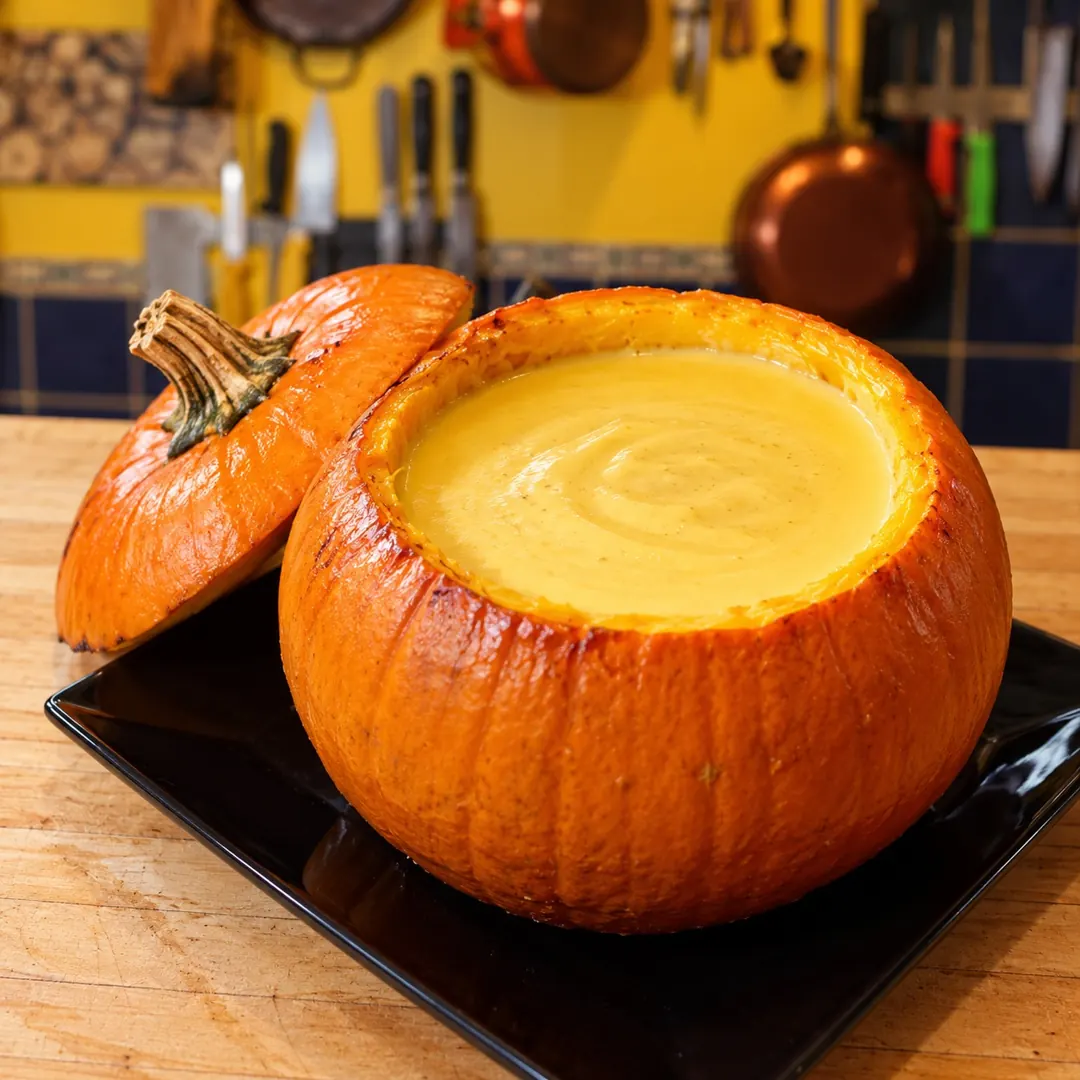
A pumpkin that does the cooking and the serving
I make it this way because the pumpkin holds the cream and broth while its flesh softens around them. There is no chopping a whole pile of pumpkin cubes. The lid and foil keep the contents moist, and the final blending happens in a separate pot where it is easier to control the texture.
This is different from the stovetop creamy pumpkin soup, where the vegetables cook in a saucepan. Here, keeping the shell sound is part of the recipe. It is also a different method from a creamy butternut squash soup, which does not need a round pumpkin that can stand upright.
The flavour is mild, sweet and creamy. There is no onion, garlic, butter or spice mixture in this version. A good cooking pumpkin and a well-flavoured vegetable broth matter more than a long ingredient list.
Ingredients and the important filling levels
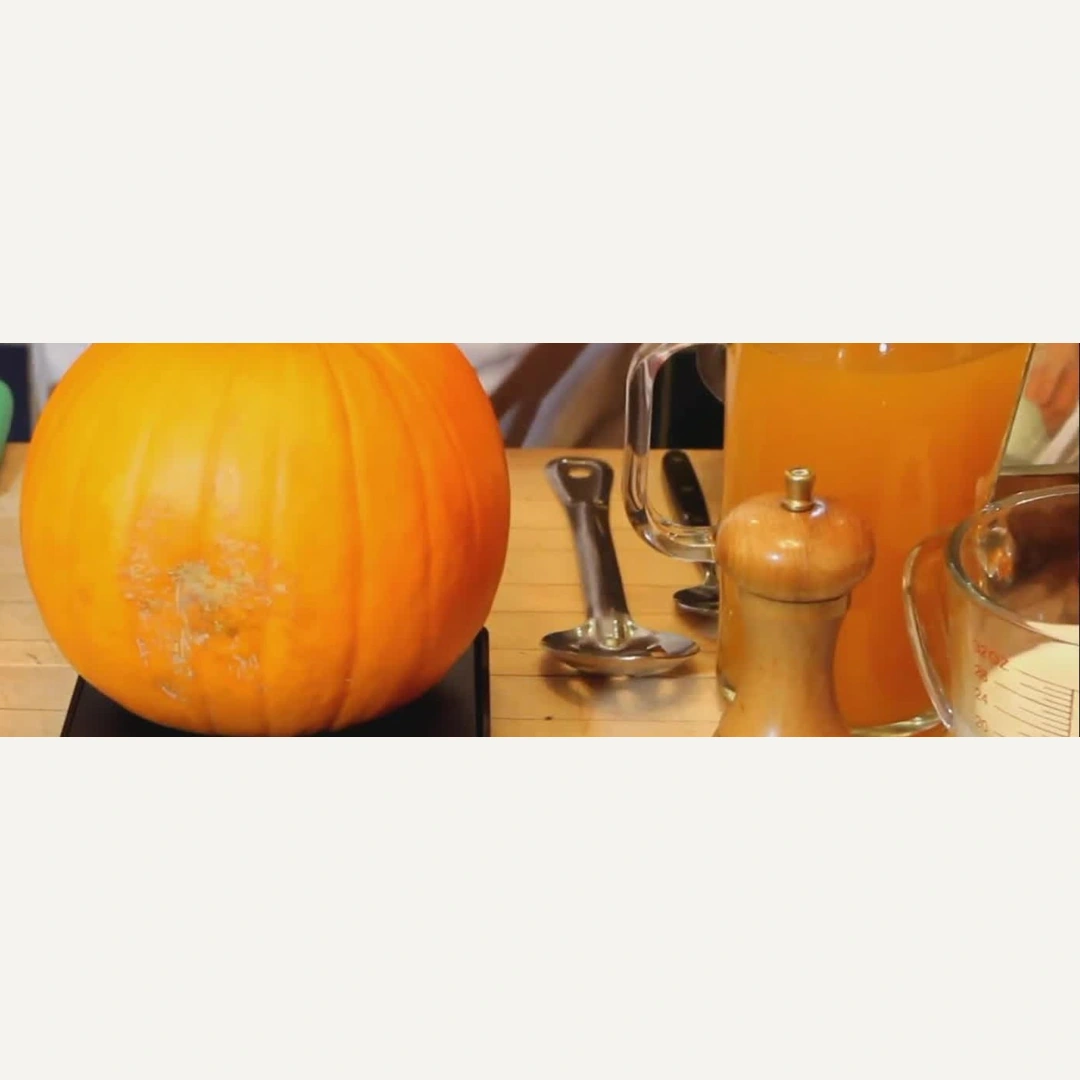
Choose a small edible cooking pumpkin weighing about 4 to 4 1/2 pounds, close to the pumpkin in the video. Look for a stable base, firm skin and no cracks. A sweet pie pumpkin is a better starting point than a large, watery carving pumpkin. Keep the skin plain and uncut apart from the lid; holes through the sides would let the soup leak.
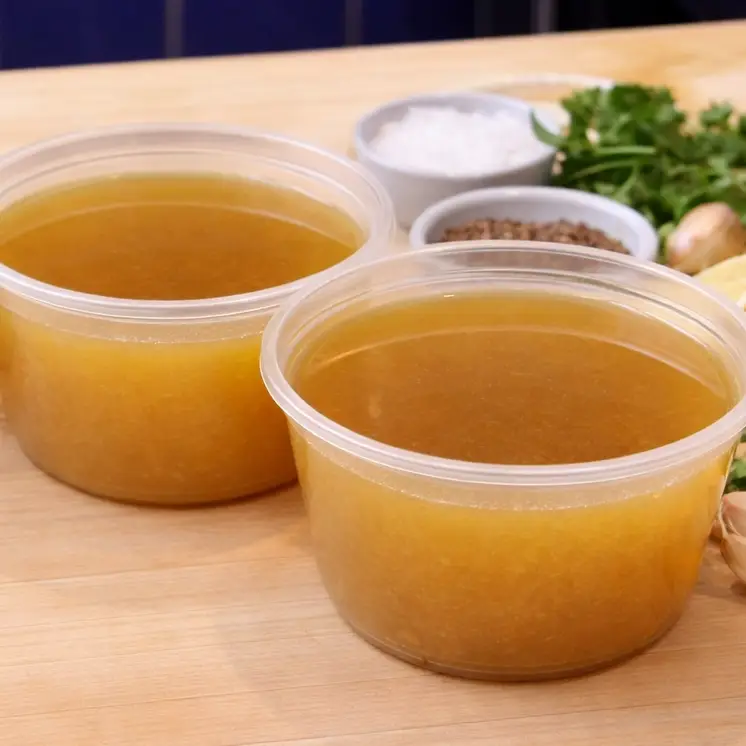
Use 15% cooking cream. It gives the pale, creamy colour seen in the video without the extra richness of heavy whipping cream. The homemade vegetable stock is useful if you want to control the seasoning. Use a ready-to-use broth, not undiluted concentrate, and taste it before deciding how much salt to add.
The liquid quantities in the card are starting estimates, not a fixed volume that fits every pumpkin. After removing the seeds, pour cream to about one-third of the cavity, then add broth until the combined liquid reaches about two-thirds. Stop there even if some liquid remains in the jug. The shape of the cavity determines what you actually use.
Salt and freshly ground pepper finish the seasoning. A little water goes into the roasting pan around the foil-wrapped pumpkin, not into the pumpkin itself. Foil and a deep ovenproof pan are equipment, rather than extra soup ingredients.
How to bake and blend the soup
1. Cut a lid and remove the seeds
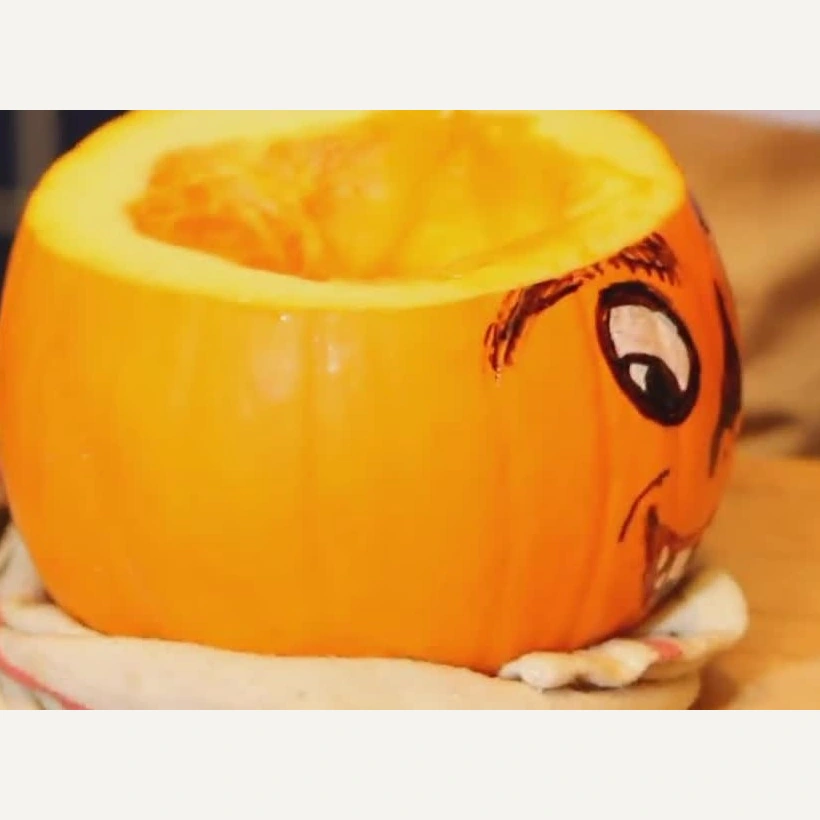
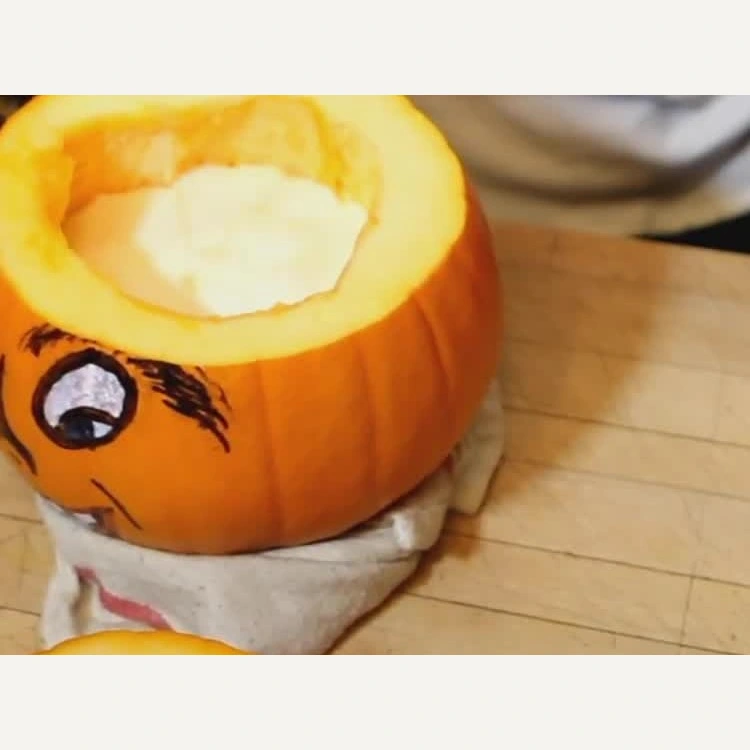
Preheat the oven to 350°F. Wash and dry the pumpkin. Set it on a folded towel formed into a ring so it cannot roll while you cut. Remove a broad lid around the stem, keeping enough of a rim for the lid to sit securely when replaced.
Scoop out the seeds and loose stringy fibres from the pumpkin and lid. Keep the firm flesh in place. Check the bottom and sides for accidental cuts before adding liquid. A cracked shell is better transferred to a covered ovenproof dish than relied on to hold hot soup.
2. Fill with cream and broth
Pour cream into the hollow pumpkin to about one-third of its cavity. Add vegetable broth to bring the total level to two-thirds, leaving the top third empty. Season lightly with pepper and, only if needed, a little salt. Replace the lid.
The mistake to avoid is filling right up to the opening. Hot liquid needs space, and an overfilled pumpkin is difficult to move without spilling. Keep any unused broth for thinning the soup after blending.
3. Wrap and bake until the flesh is tender
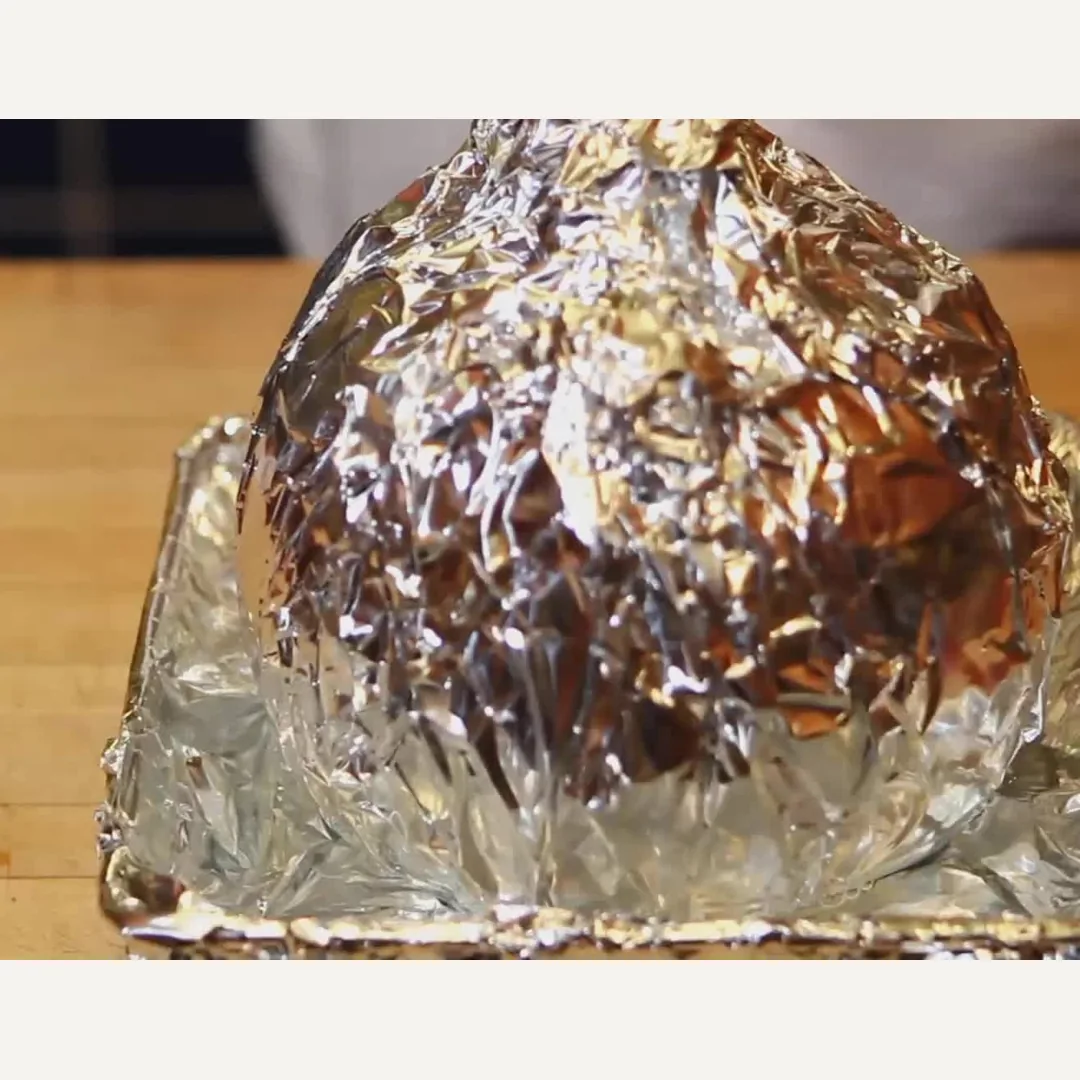
Set the pumpkin in the centre of two large crossed sheets of heavy-duty foil. Bring the foil up around it and close it snugly over the lid. Transfer it upright to a deep ovenproof pan and pour in about 1/2 cup water around the package, enough to wet the pan bottom without submerging the pumpkin.
Bake for about 2 hours. Open the foil carefully, keeping clear of escaping steam, and test the flesh near the opening with a small knife. It should yield readily, with no firm raw layer underneath. If it still resists, close the foil and give it another 15 to 20 minutes before checking again. Size and wall thickness change the timing.
4. Recover the liquid and scrape the flesh
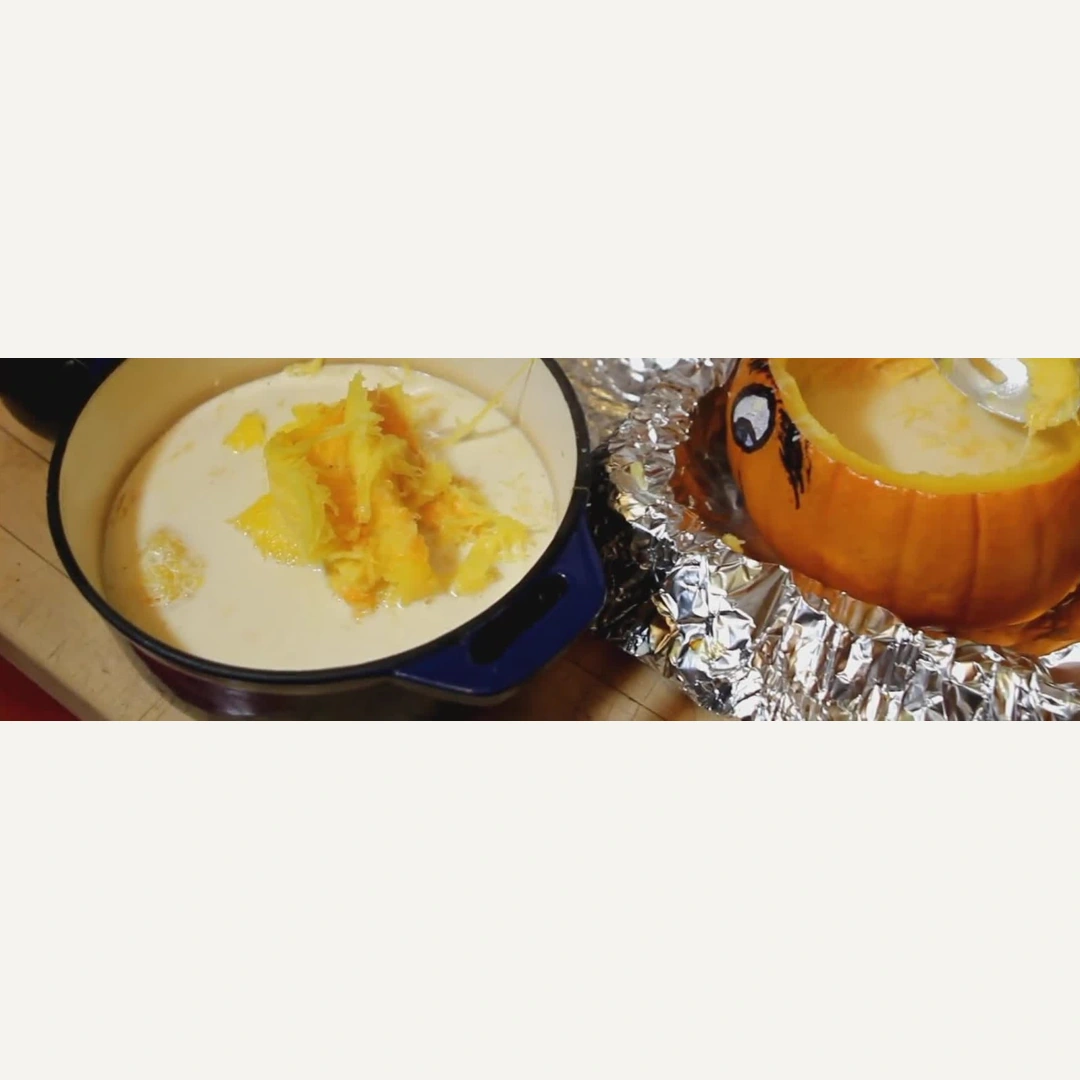
Let the pumpkin stand briefly until you can handle it securely with oven mitts. Remove the lid and transfer the hot liquid to a saucepan using a ladle; carefully pouring is also possible if the shell is firm enough to support. Do not lift a fragile cooked pumpkin by its stem.
Scoop the soft flesh into the same saucepan. I stop before reaching the skin because the pumpkin still needs to hold the finished soup. Leave a continuous wall of flesh, especially at the base. Scraping until the shell is paper-thin may give a little more soup, but it can ruin the serving bowl.
5. Blend, taste and return to the shell
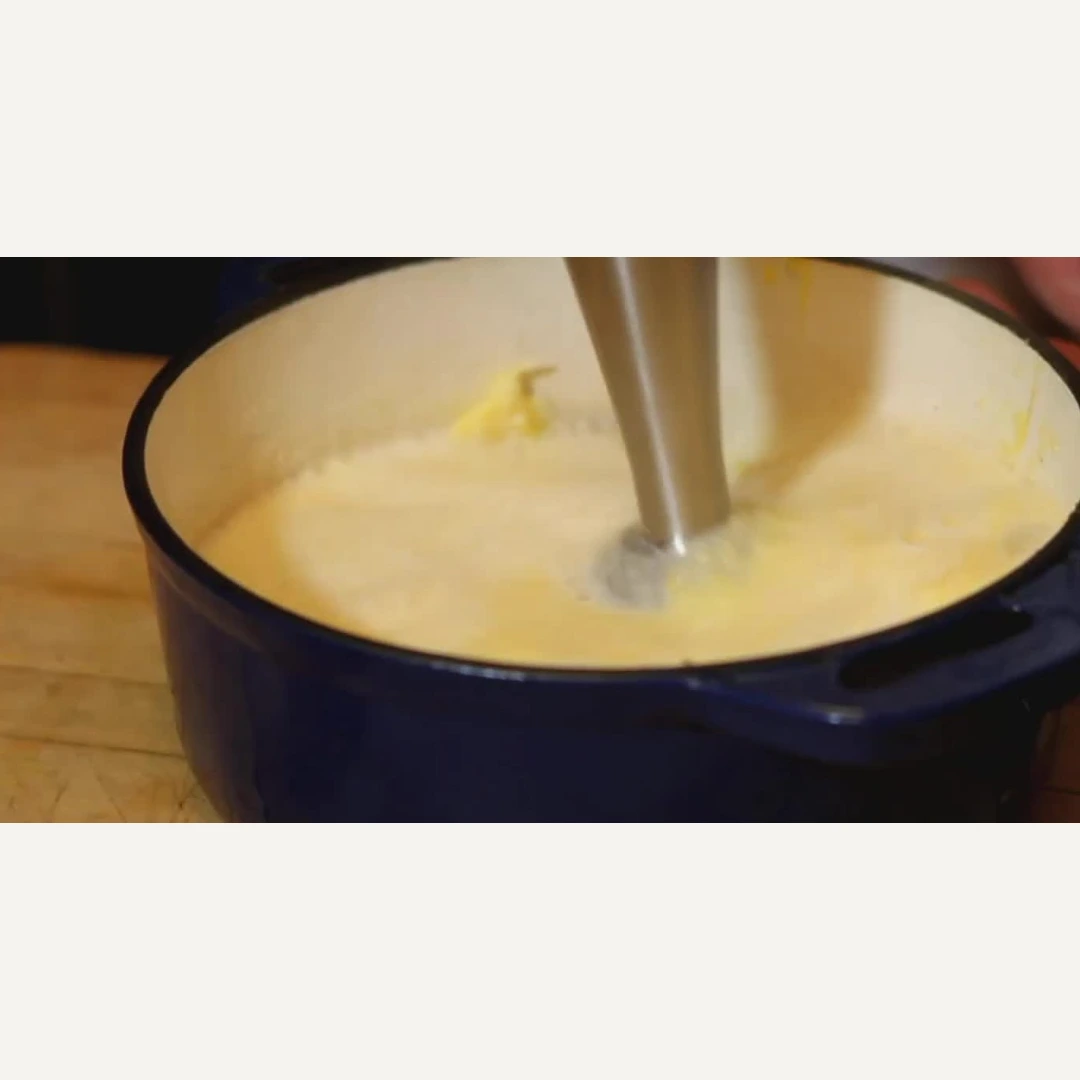
With the saucepan off the heat, use an immersion blender until the flesh and liquid are completely smooth. Keep the blender head submerged to limit splashes. The soup should coat a spoon lightly and flow from a ladle. If it is too thick, add a little reserved broth; if thin, simmer it gently in the saucepan before serving.
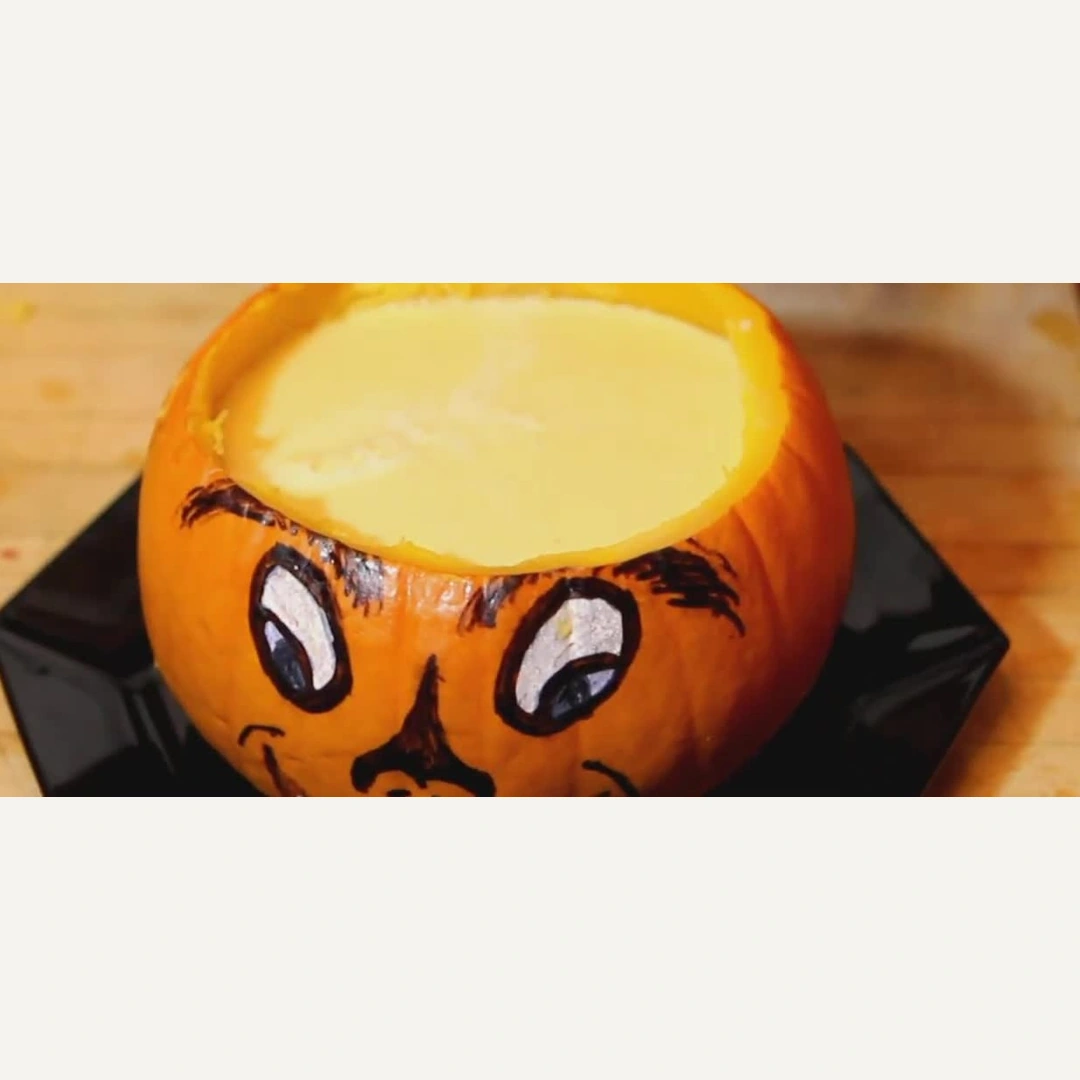
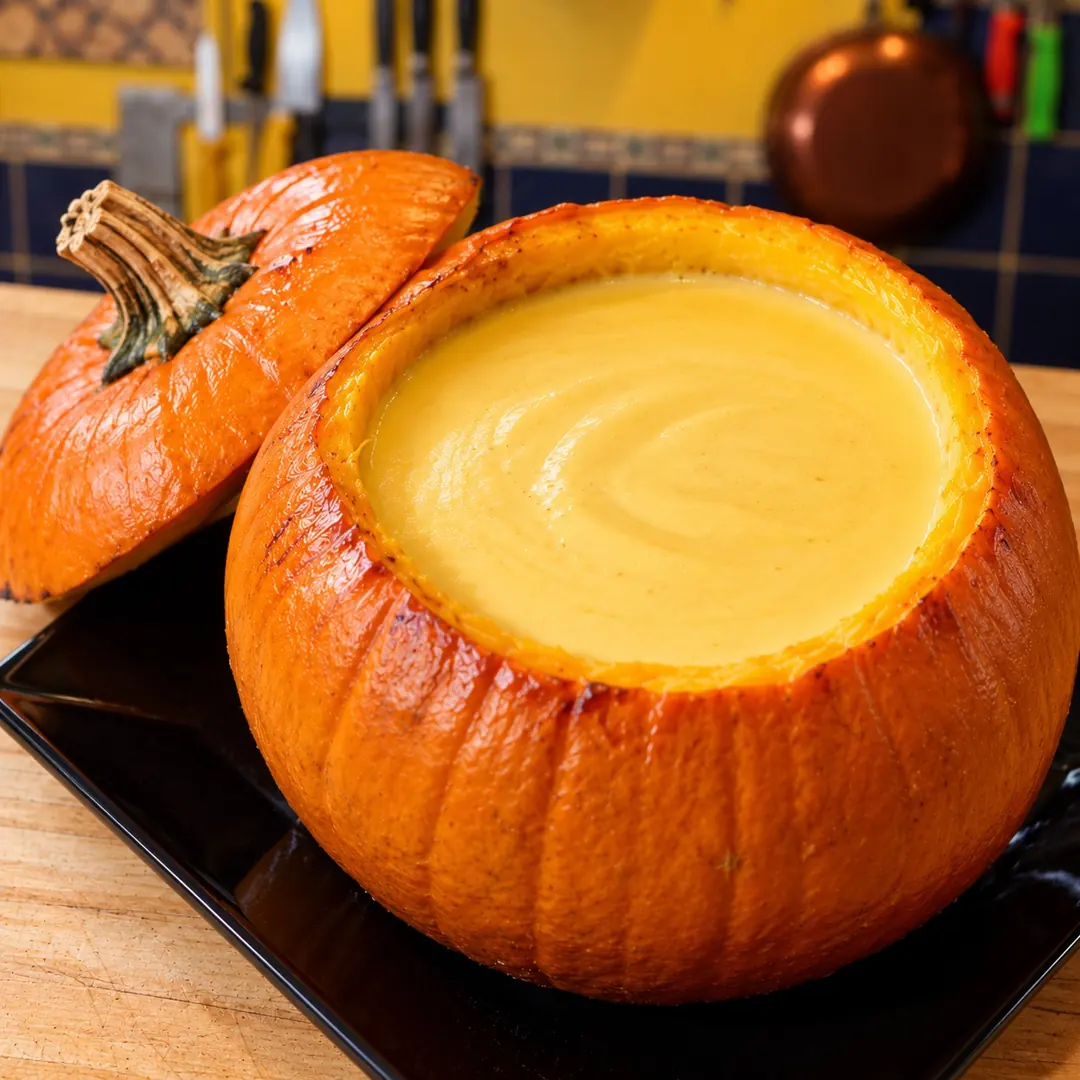
Taste after blending and adjust the seasoning. Put the pumpkin shell on a sturdy plate, check that it is sound, and ladle the soup back into it without filling to the brim. Serve any excess from the saucepan. If the shell has softened too much, use regular bowls instead.
Substitutions and texture adjustments
A round potimarron or another small edible pumpkin can suit this presentation if it stands upright and has a sound shell. Its flesh may be denser, so keep the liquid-level rule and adjust the blended soup with broth. A butternut squash is better suited to a conventional saucepan recipe because its shape makes this serving method awkward.
If 15% cooking cream is unavailable, a cooking cream with a similar fat content is the closest option. Heavy cream makes a richer soup; milk produces a lighter, thinner result and is not an identical replacement. There is no need to add flour to thicken the soup: the blended pumpkin supplies the body.
Keep vegetable broth for a vegetarian version. Homemade chicken bouillon cubes can provide an alternative broth once properly diluted, but that changes the recipe from vegetarian. With cream making up a substantial part of the liquid, this is a creamy starter rather than a high-protein main meal.
Questions about cooking in a whole pumpkin
Can I use pumpkin purée from a can?
Not for this whole-pumpkin method. You need the intact flesh and shell for baking and serving. Canned purée is better used in recipes designed around a measured purée, such as pumpkin muffins.
Will two hours always be enough?
No. The video gives a useful starting time, but the knife test is the deciding check. A thick-walled pumpkin may need longer. The flesh must scrape easily before it will blend smoothly.
Can I prepare it ahead?
Yes, but store the soup in a separate container rather than leaving it in the softened shell. Cool promptly, refrigerate and use within 3 days. Reheat gently in a saucepan, adding broth if needed. For the pumpkin-bowl presentation, baking on the day gives you better control of the shell’s condition.
Why is the finished soup pale yellow?
The cream lightens the pumpkin flesh, and varieties differ in colour. A pale golden soup can still have plenty of pumpkin flavour. Do not add extra spice or tomato simply to force a darker orange colour.
What to serve alongside it
Keep the accompaniments simple. Slices of homemade white bread are good for the last spoonful, while garlic croutons add crunch if you put them on individual bowls just before eating. A romaine and endive salad gives a crisp contrast to the cream.
For other smooth vegetable starters, the carrot potage Crécy and leek and potato potage use different vegetable bases. If you have additional pumpkin purée after another cooking project, pumpkin oatmeal cookies offer a separate sweet use. There is no need to add dessert spices to this soup.
For more ideas, browse our winter squash and pumpkin recipes.

Whole Baked Pumpkin Soup with Cream
Ingredients
- 1 small edible cooking pumpkin about 4 to 4 1/2 lb, whole
- About 1 cup 15% cooking cream adjusted to fill one-third of the hollow pumpkin
- About 1 cup vegetable broth adjusted to bring the combined liquid to two-thirds of the cavity; extra for thinning
- Salt to taste, depending on the broth
- Freshly ground black pepper to taste
- About 1/2 cup water for the roasting pan only
Instructions
- Preheat oven to 350°F. Wash and dry pumpkin. Stabilize on a towel ring, cut a broad lid and remove seeds and loose fibres without cutting through the shell.
- Fill the hollow pumpkin one-third with 15% cooking cream, then add broth to reach two-thirds in total. Add pepper and salt only as needed. Replace lid.
- Wrap snugly in two crossed sheets of heavy-duty foil. Stand upright in a deep ovenproof pan and add about 1/2 cup water around the package.
- Bake about 2 hours. Carefully open foil and test flesh with a knife. If not tender, rewrap and cook 15 to 20 minutes longer before rechecking.
- Let stand briefly for secure handling. Ladle liquid into a saucepan. Scrape soft flesh into the same pot, leaving a continuous wall and base to support the shell.
- Off the heat, immersion-blend until smooth. Add broth if thick or simmer gently if thin. Taste and adjust seasoning.
- Set sound pumpkin shell on a sturdy plate and ladle soup back in, leaving room at the rim. Serve excess from the saucepan; use bowls if the shell is fragile.