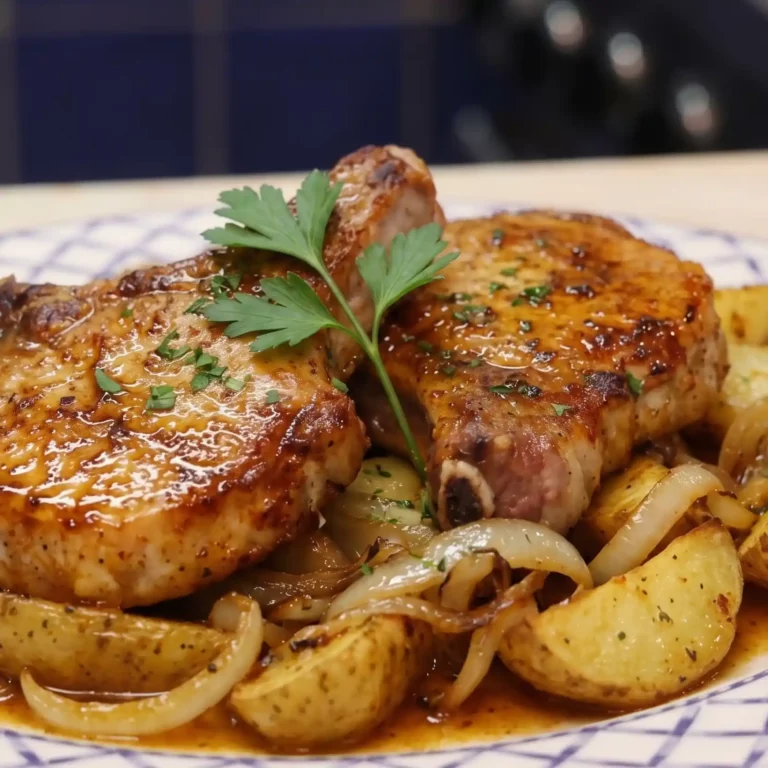
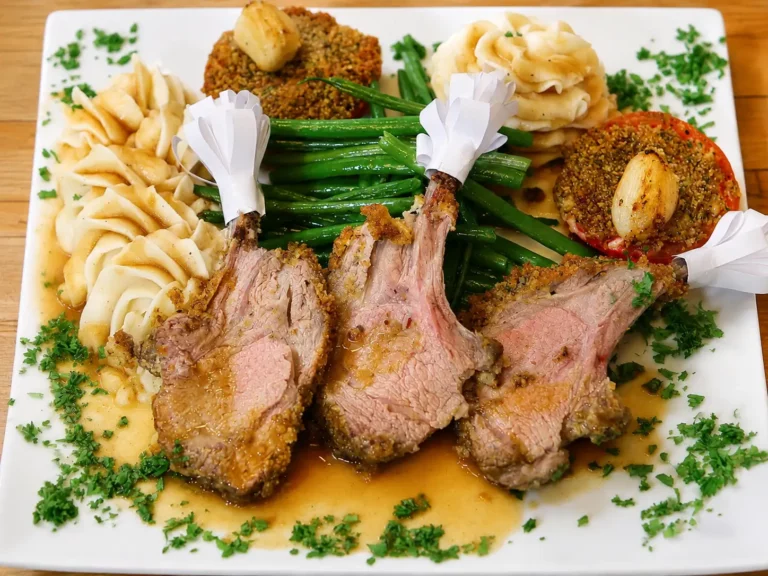
Tender Veal or Beef Tongue with Spicy Sauce and Mashed Potatoes
Veal or beef tongue with spicy sauce is a slow-simmered meat dish served with a sharp, warm sauce made with onions, peppers, garlic, vinegar, and a little cooking broth. What makes it different from a creamy veal dish or a quick beef dinner is the texture: the tongue becomes tender after simmering, then the slices go back into the sauce so they absorb that tangy, peppery flavor. I make this when I want a traditional, old-school comfort food dinner that feels hearty without needing an expensive cut of meat.
This recipe is based on my YouTube video, with a few adjustments since publication. In the video, I cooked a tongue of about 2 pounds and served it with homemade mashed potatoes. The main adjustment here is important: veal tongue and beef tongue do not cook at the same speed. A small veal tongue can be ready much faster, while a beef tongue needs a longer simmer or it will stay firm.
The mistake to avoid is cooking only by the clock. The tongue is ready when the tip of a knife slides into the thickest part with little resistance. At that point, the outside skin should peel away while the meat is still warm. If you let it cool completely, peeling becomes annoying. Not impossible, just annoying.
I make it this way because the cooking broth does two jobs. First, it tenderizes and perfumes the meat with pickling spices. Then a little of that broth goes into the sauce, giving it a deeper taste than plain water. The sauce should not be watery. It should lightly coat the slices, with softened onions and peppers sitting around the meat.

What Makes This Version Different
This is not the same as my more classic slow-simmered veal tongue. That version is more traditional and simple, built around the tenderness of the meat itself. This one is sharper, more colorful, and more sauce-driven.
It is also not a fast beef recipe like a skillet dinner or a stir-fry. If you need quick beef ideas for a weeknight, my easy beef dinners are in another lane completely. This recipe is for slow cooking, slicing, and letting the sauce settle into the meat.
The sauce here is piquant, but not just hot. A proper piquant sauce needs acidity. That can come from vinegar, chopped pickles, or both. The peppers bring sweetness, the onions bring body, the garlic gives the base, and the vinegar wakes everything up at the end. Without that sharp note, the dish tastes heavier and flatter.
If you enjoy old French-style beef and veal cooking, this fits nicely beside recipes like classic boeuf bourguignon, traditional pot-au-feu, and French beef bistro classics, but it has its own identity because of the texture of the tongue and the bright sauce.
Ingredients Notes
The tongue in the video was about 2 pounds. For that size, the quantities below work well. If your tongue is larger, increase the cooking time before increasing the sauce. You do not need a mountain of sauce. You need enough to coat and simmer the slices at the end.
For the pickling spice, I prefer to use a moderate amount. In the video, the quantity is stronger, but for home cooks in Canada and the USA, pickling spice blends vary a lot. Some are heavy on clove, mustard seed, or bay leaf. Too much can make the broth taste medicinal or bitter. Start with less, then the meat can still taste like meat.
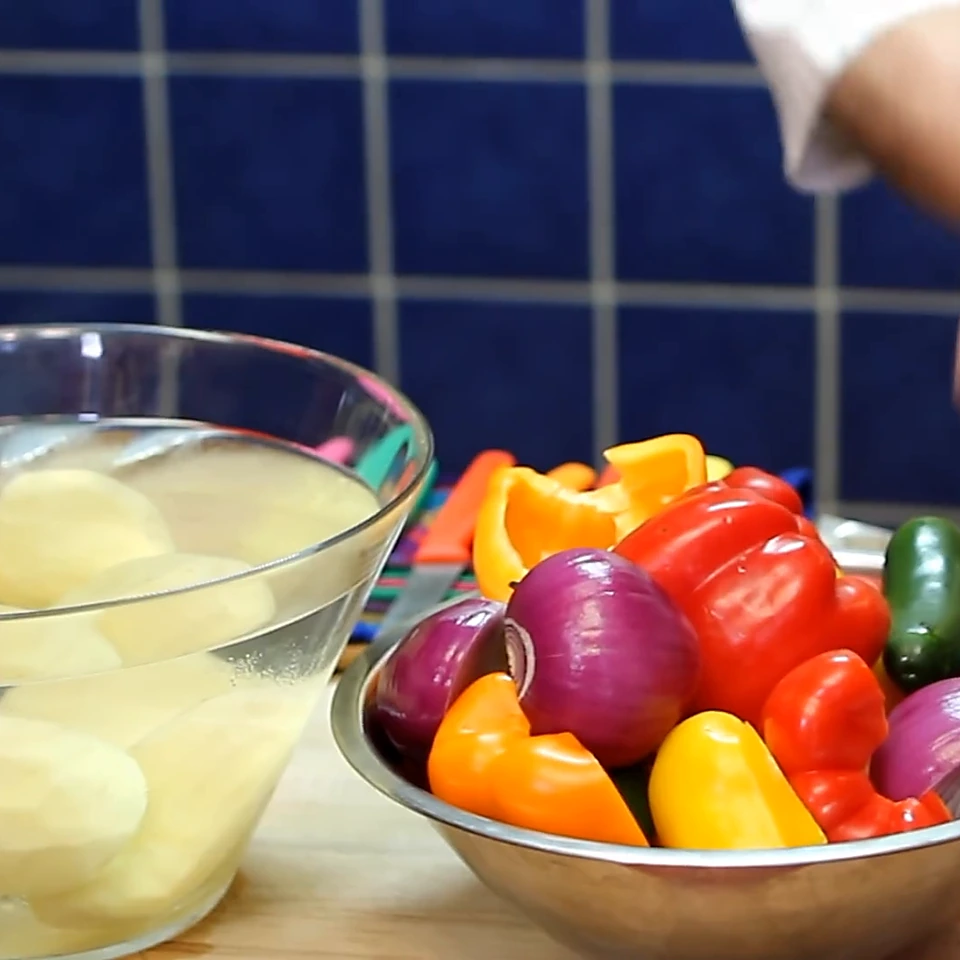
The sauce uses red onion, bell peppers, garlic, hot pepper if you want, tomato paste, vinegar, and a little cooking liquid. The tomato paste is one of the adjustments I prefer to make now because it gives the sauce a nicer color and helps it cling to the tongue.
For the mashed potatoes, use a floury potato if possible. Russet potatoes are easy to find in Canada and the USA and give a soft, fluffy mash. Yukon Gold also works if you want a buttery texture. For a separate side recipe with more detail, I often point people to my homemade mashed potatoes.
How to Cook the Tongue Properly
Put the tongue in a large pot and cover it with cold water. Add the pickling spice and a little salt. Bring it up to a boil, then lower the heat so the liquid is moving gently. You want a steady simmer, not a violent boil. If the pot is jumping too hard, the broth gets cloudy and the meat tightens before it relaxes.
For a small veal tongue around 2 pounds, start checking after 1 hour and 15 minutes. It may need up to 1 hour and 45 minutes. For beef tongue, expect more like 2 1/2 to 3 1/2 hours. The size matters more than the name on the package.


What I look for here is tenderness in the thickest part. Push in a small knife. If it feels rubbery or bounces back, keep simmering. If the knife slides in smoothly, it is ready.
Lift the tongue out of the broth and let it cool for about 10 minutes. Do not walk away too long. Peel the outer skin while the meat is still warm. It should come off in sheets with the help of a small knife. Trim any rough bits, then slice the tongue into medium-thick pieces.
Strain and reserve some cooking liquid. You only need part of it for the sauce, but it is useful to keep a little extra in case the pan reduces too much.
Making the Spicy Sauce
Start with a wide pan or saucepan. Add oil, then the sliced red onions. Let them soften until they smell sweet and start to shine. A little color is good. Burnt onion is not. If you want a refresher on knife work, my guide on how to cut an onion is useful for getting even slices that cook at the same speed.

Add the bell peppers and cook until they soften around the edges. They should still have some shape, but they should not taste raw. Add chopped garlic near the end of this stage. Garlic burns faster than onions and peppers, so I prefer to add it after the vegetables have already started cooking. For that exact point, the guide on mincing garlic without burning it is worth keeping close.
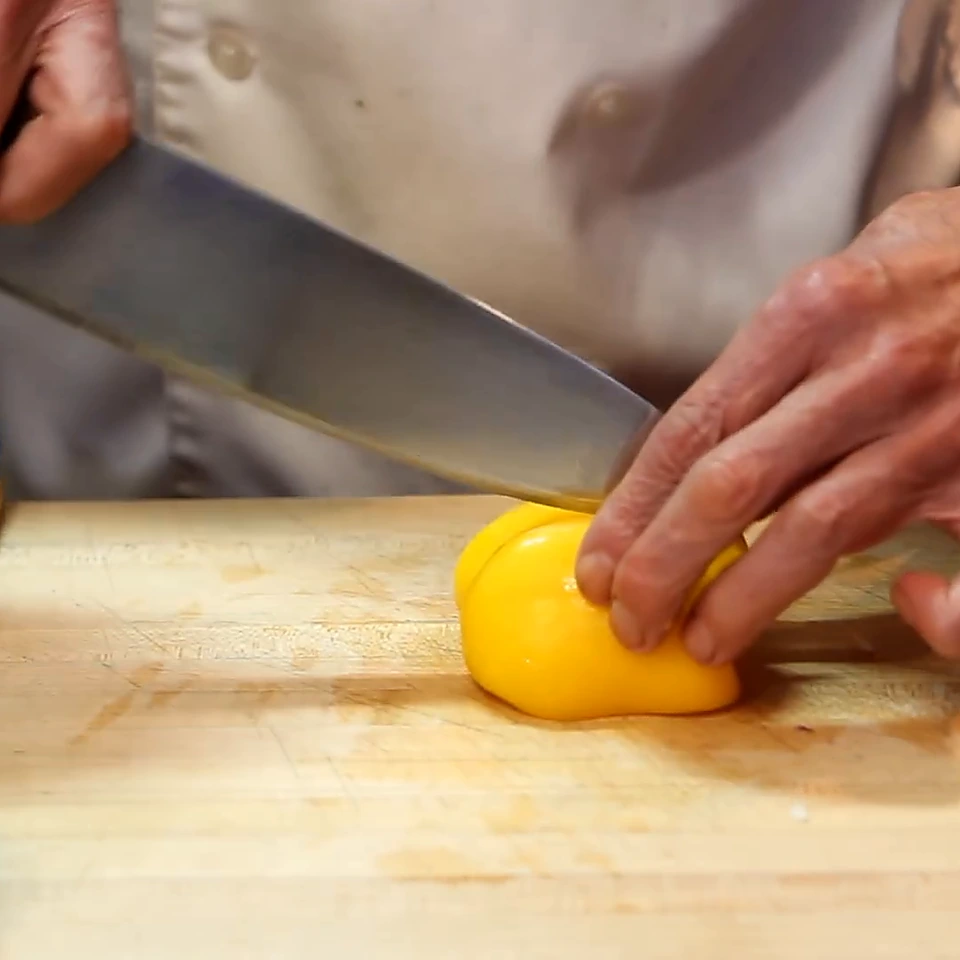

Stir in the tomato paste and cook it for a minute or two. It should darken slightly and stick a little to the bottom of the pan. That is good. Then add the reserved cooking liquid and scrape the bottom. The sauce should loosen, but it should not turn into soup.

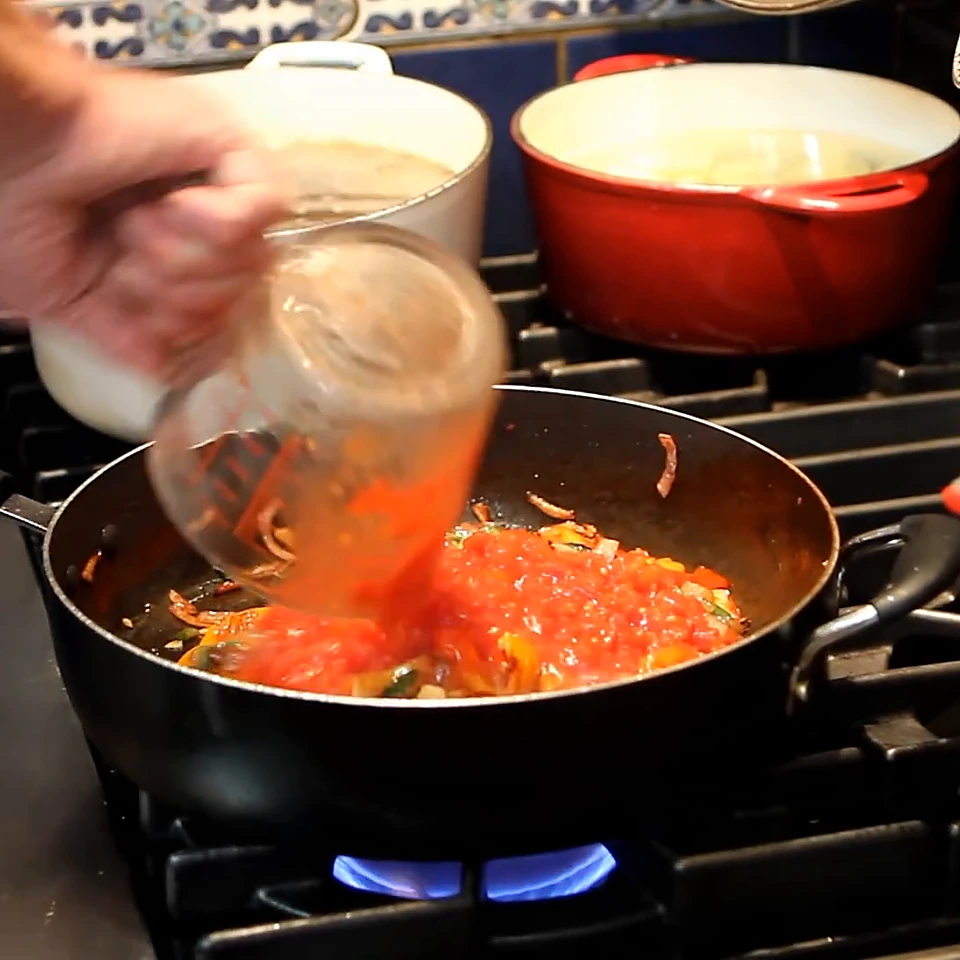
Let it simmer uncovered until the onions and peppers are soft and the liquid has reduced. You know it is ready when the spoon leaves a small trail through the sauce and the vegetables look glossy. If it stays thin, reduce it longer. For a more detailed explanation, my guide on how to thicken a sauce covers the same idea in a practical way.
Add vinegar and chopped pickles near the end. This is where the sauce becomes piquant instead of just vegetable sauce. Taste before adding more salt because the cooking liquid may already be seasoned.
Finishing the Dish
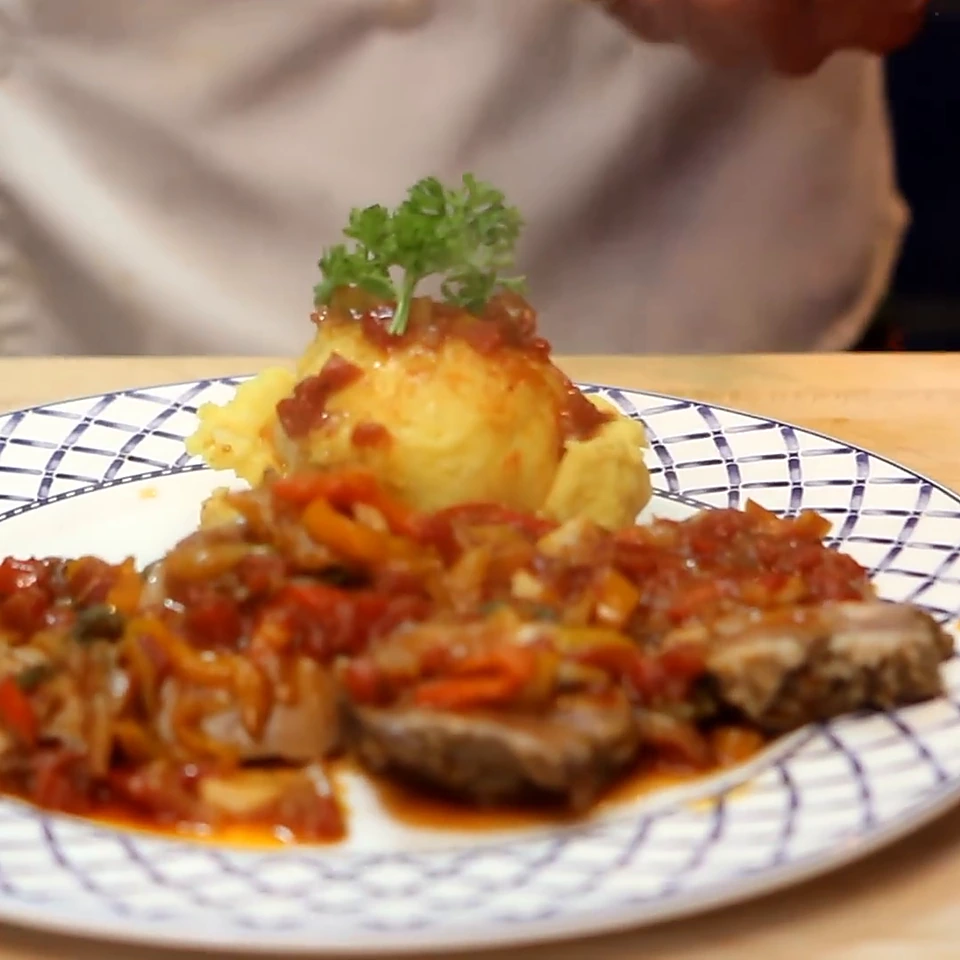
Once the sauce tastes balanced, slide the tongue slices into the pan. Spoon the sauce over the meat and let everything simmer together for 5 to 10 minutes. At this point, it should look like a finished dish: soft red onions, bright peppers, slices of tongue coated lightly, and a sauce that sits on the meat instead of running straight off.
The smell changes too. At first, the vinegar is sharp. After a few minutes, it settles into the sauce and becomes rounder. That is what you want.
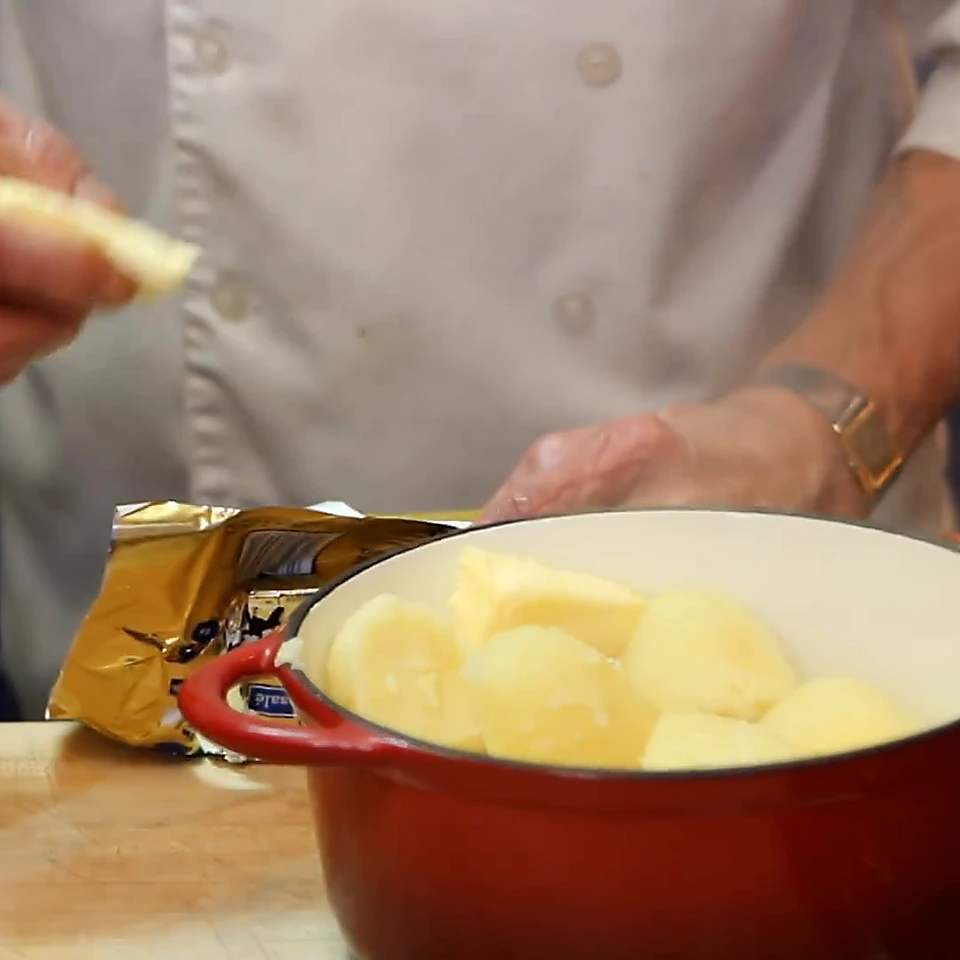
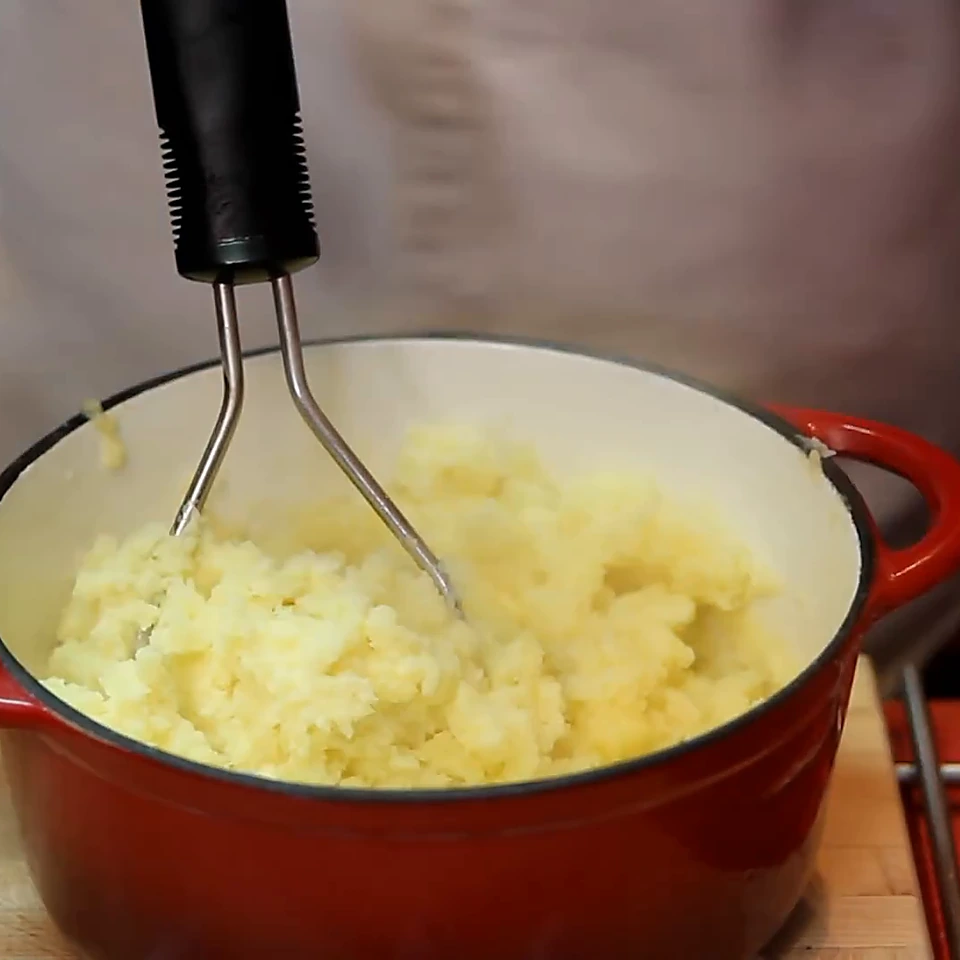
Serve it hot with mashed potatoes. The mash is not just a side here. It catches the sauce. A spoonful of buttery potatoes with a slice of tongue and a little vinegar-pepper sauce is the whole point of the plate.
This is a protein-rich, old-fashioned comfort dish. It is hearty, but not creamy or fried. The richness comes from the meat and potatoes, while the vinegar and peppers keep the sauce from feeling too heavy. It works in winter when you want something slow and warm, but it is also good year-round because the sauce has enough brightness for a lighter plate.
Substitutions
Beef tongue instead of veal tongue: Beef tongue works, but it needs much longer cooking. Do not use the veal timing for beef.
White onion instead of red onion: White or yellow onion works. Red onion gives a sweeter flavor and nicer color.
No hot pepper: Leave it out and rely on vinegar and black pepper. The sauce will still be piquant, just less spicy.
No pickles: Use vinegar only. Add it gradually and taste.
No tomato paste: Use a small amount of tomato sauce, but reduce the sauce longer so it does not become watery. A homemade base like fresh tomato sauce can work if it is not too thin.
Mashed potatoes alternative: Serve with classic pommes boulangères or traditional gratin dauphinois if you want a more bistro-style plate.
Frequently Asked Questions
Is veal tongue the same as beef tongue?
No. They are similar cuts, but veal tongue is smaller and usually more delicate. Beef tongue is larger and needs more time. The recipe works with both, but the timing must change.
How do I know when tongue is cooked?
Use a knife test. Insert a small knife into the thickest part. If it slides in easily, the tongue is ready. If it feels firm or rubbery, keep simmering.
Should I peel tongue before or after cooking?
Peel it after cooking, while it is still warm. Raw tongue is not practical to peel. If the cooked tongue cools completely, the skin becomes harder to remove.
Can I make it ahead?
Yes. Cook and peel the tongue ahead, then refrigerate it whole or sliced. Reheat it gently in the sauce. If the sauce thickens too much in the fridge, add a splash of reserved broth or water.
Why is my sauce too thin?
Too much liquid was added, or it did not reduce long enough. Simmer uncovered until it coats the spoon. If needed, use the same logic as a brown sauce or gravy. My guide to homemade brown gravy explains how reduction and body work.
Is the sauce supposed to be very spicy?
Not necessarily. “Piquant” means sharp and lively, not only hot. Vinegar, pickles, pepper, and a small hot pepper can all contribute.
Can I freeze cooked tongue?
Yes. Freeze the peeled cooked tongue in slices with a little sauce or broth to protect it from drying out. Thaw in the fridge and reheat gently.
What to Serve With It
Mashed potatoes are the natural choice because they soften the acidity of the sauce and make the plate feel complete. For a more rustic dinner, serve the tongue with crispy homemade French fries or Lyonnaise-style potatoes.
If you want something fresh beside it, a crisp salad works better than another heavy side. A simple classic vinaigrette or a bowl of marinated red cabbage salad gives the plate a nice contrast.
For another traditional simmered dinner, try beef cheeks braised in red wine or classic French veal stew. Those are richer and rounder, while this tongue recipe stays sharper because of the piquant sauce.

Tender Veal or Beef Tongue with Spicy Sauce and Mashed Potatoes
Ingredients
- For the tongue
- 2 lb veal tongue or beef tongue
- 6 to 8 cups water enough to cover
- 2 to 3 tbsp pickling spice
- 1 tsp salt plus more to taste
- For the spicy sauce
- 2 tbsp oil
- 2 large red onions thinly sliced
- 1 red bell pepper sliced
- 1 yellow or orange bell pepper sliced
- 1 small hot pepper thinly sliced, optional
- 4 garlic cloves chopped
- 1 tbsp tomato paste
- 1 cup strained tongue cooking liquid plus more if needed
- 1 to 2 tbsp vinegar
- 2 to 3 tbsp chopped pickles or cornichons optional but recommended
- Black pepper to taste
- Salt to taste
- For the mashed potatoes
- 2 lb potatoes peeled and cut into chunks
- 4 tbsp butter
- 1/2 cup hot milk plus more if needed
- Salt to taste
- Black pepper to taste
- 1 pinch turmeric optional
- For serving
- 2 tbsp chopped parsley
Instructions
- Place the tongue in a large pot and cover with water. Add pickling spice and salt.
- Bring to a boil, then reduce to a gentle simmer. Cook veal tongue for 1 hour 15 minutes to 1 hour 45 minutes, or beef tongue for 2 1/2 to 3 1/2 hours, until a knife slides easily into the thickest part.
- Remove the tongue from the broth and let it cool for about 10 minutes. Strain and reserve some cooking liquid.
- Peel the tongue while still warm. Trim any rough bits, then slice into medium-thick pieces.
- Meanwhile, cook the potatoes in salted water until tender. Drain, add butter, mash, then mix in hot milk until smooth. Season with salt, pepper, and turmeric if using. Keep warm.
- Heat oil in a wide pan. Add the red onions and cook until softened with light color.
- Add the bell peppers and hot pepper if using. Cook until the peppers soften. Add garlic and cook for 30 to 60 seconds.
- Stir in tomato paste and cook for 1 to 2 minutes.
- Add 1 cup strained cooking liquid and scrape the bottom of the pan. Simmer uncovered for 20 to 30 minutes, until the sauce reduces and lightly coats a spoon.
- Add vinegar and chopped pickles. Taste and adjust salt and pepper.
- Add the sliced tongue to the sauce. Simmer gently for 5 to 10 minutes, spooning sauce over the meat.
Video
Notes
Frequently Asked Questions
Is veal tongue the same as beef tongue?
No. They are similar cuts, but veal tongue is smaller and usually more delicate. Beef tongue is larger and needs more time. The recipe works with both, but the timing must change.How do I know when tongue is cooked?
Use a knife test. Insert a small knife into the thickest part. If it slides in easily, the tongue is ready. If it feels firm or rubbery, keep simmering.Should I peel tongue before or after cooking?
Peel it after cooking, while it is still warm. Raw tongue is not practical to peel. If the cooked tongue cools completely, the skin becomes harder to remove.Can I make it ahead?
Yes. Cook and peel the tongue ahead, then refrigerate it whole or sliced. Reheat it gently in the sauce. If the sauce thickens too much in the fridge, add a splash of reserved broth or water.Why is my sauce too thin?
Too much liquid was added, or it did not reduce long enough. Simmer uncovered until it coats the spoon. If needed, use the same logic as a brown sauce or gravy. My guide to homemade brown gravy explains how reduction and body work.Is the sauce supposed to be very spicy?
Not necessarily. “Piquant” means sharp and lively, not only hot. Vinegar, pickles, pepper, and a small hot pepper can all contribute.Can I freeze cooked tongue?
Yes. Freeze the peeled cooked tongue in slices with a little sauce or broth to protect it from drying out. Thaw in the fridge and reheat gently.What to Serve With It
Mashed potatoes are the natural choice because they soften the acidity of the sauce and make the plate feel complete. For a more rustic dinner, serve the tongue with crispy homemade French fries or Lyonnaise-style potatoes. If you want something fresh beside it, a crisp salad works better than another heavy side. A simple classic vinaigrette or a bowl of marinated red cabbage salad gives the plate a nice contrast. For another traditional simmered dinner, try beef cheeks braised in red wine or classic French veal stew. Those are richer and rounder, while this tongue recipe stays sharper because of the piquant sauce.🔗 Liens utiles
🛒 Boutique Michel Dumas : Découvrez nos ustensiles de cuisine, tabliers et plus encore.
🌐 Linktree : Retrouvez tous nos liens importants en un seul endroit.
📱 YouTube | Instagram | Facebook | TikTok : Suivez-nous pour ne rien manquer de nos nouvelles recettes et astuces culinaires.