Quebec Salmon and Potato Pie with a Flaky Double Crust
Quebec salmon pie, or pâté au saumon, turns canned salmon, potatoes, and onion into a generous family meal. This version has a flaky butter crust above and below a rustic filling, with visible pieces of salmon rather than a smooth fish paste. The potatoes hold everything together without a heavy sauce. Serve a warm slice with a crisp salad and, if you like, a spoonful of tartare sauce on the side.
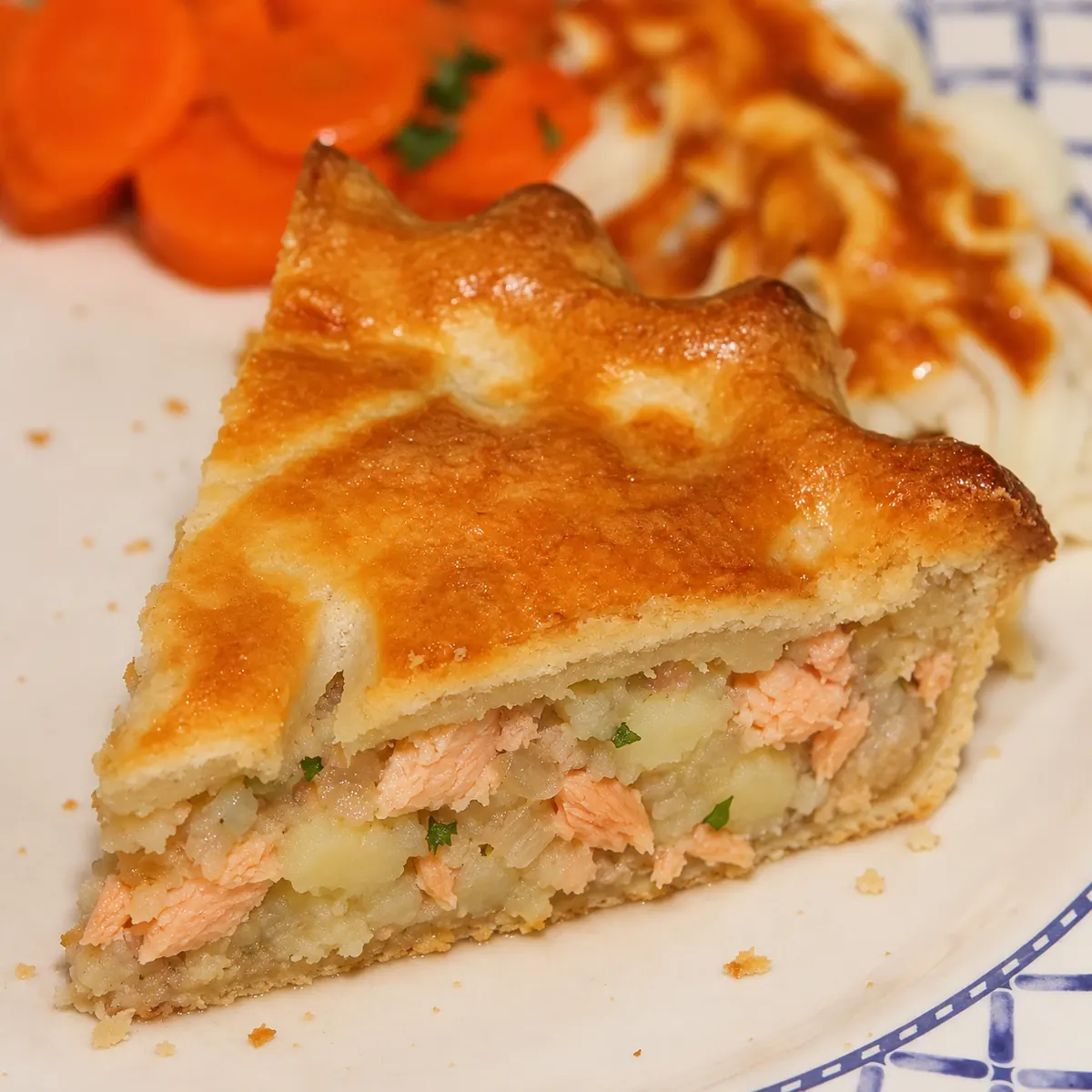
A salmon pie with a potato filling
This is a double-crust pie, not a salmon fillet wrapped in puff pastry. If you want the latter, my salmon Wellington is a different preparation with its own timing. Here, canned fish makes the filling convenient, and cooked potatoes give it enough body to cut into portions after a short rest.
The filling should be moist but not loose. A little milk and butter soften the potatoes; they are not meant to create a pouring sauce. You should still see salmon flakes when the pie is sliced. I fold the fish in at the end because vigorous mixing would break it into tiny fibres and lose that contrast.
Which salmon and potatoes to use
Choose canned pink or sockeye salmon packed in water, and weigh it after draining. You need about fourteen ounces of drained fish. Can sizes and drained yields differ, so the number of cans is only a shopping guide. Drain in a sieve without crushing the fish dry. Remove skin and any bones you do not want in the filling, then separate the salmon into generous flakes.
Floury or all-purpose potatoes work well. Peel them and weigh one pound five ounces before cooking. Cut them into similar chunks so they soften together. Waxy potatoes stay firmer and need more mashing, but avoid a blender or food processor: they can make the filling gluey.
Use a medium onion, cooked gently until tender, and a modest amount of parsley. Smoked salmon is too salty and strongly flavoured to substitute directly. For a recipe designed around that ingredient, see my salmon rillettes.
Start with the pastry
Mix flour and salt in a large bowl. Work in cold diced butter until some pieces are small and flat and the rest resemble coarse crumbs. Add six tablespoons of ice water and toss gently. Add more, a tablespoon at a time, only until a squeezed handful holds together. The dough should not feel wet or elastic.
Divide into two disks, making one slightly larger for the bottom. Wrap and refrigerate for at least one hour. That rest gives the flour time to hydrate and helps the dough relax. If your kitchen is warm, return the dough to the refrigerator whenever the butter starts to soften. Cold pastry is easier to handle than dough patched repeatedly with extra flour.
Cook and dry the potatoes
Cover the potato chunks with cold water in a saucepan. Bring to a boil, then simmer until completely tender, usually fifteen to twenty minutes. Drain thoroughly. Return them to the warm pan over low heat for a minute, stirring, to let remaining surface moisture evaporate. Mash by hand, leaving a little texture.
Meanwhile, soften the chopped onion in the filling butter over medium-low heat for about eight minutes. Stir regularly and avoid dark browning. Add the onion and its butter to the potatoes, along with the milk, salt, and pepper. Start with the listed small amount of salt because canned salmon varies substantially in seasoning.
Fold in the fish and cool the filling
Fold the drained salmon and parsley into the potato mixture. Taste a small spoonful, since the fish and potatoes are already cooked, and adjust seasoning if necessary. The mixture should mound on a spoon rather than spread into a puddle. If the potatoes were drained properly, the measured milk is enough to keep it pleasant without making the crust soggy.
Spread the filling in a shallow dish to cool for about thirty minutes before assembling. Do not put steaming filling onto butter pastry. I use this cooling time to prepare the pan and clear space for rolling, so the crust can go back into the cold as soon as it is shaped. Refrigerate the filling promptly if you are preparing it further ahead.
Assemble the double crust
Heat the oven to 425°F with a rack in the lower third. Roll the larger disk into a circle and fit it into a standard nine-inch metal pie pan without stretching. Add the cooled filling and spread it evenly, keeping the edge clean. Do not press it into a dense block.

Roll the second disk and lay it over the filling. Trim excess pastry, fold the edges together, and crimp firmly to seal. Cut three or four short steam vents in the top. Beat an egg with a tablespoon of water and brush a thin layer over the top, avoiding puddles around the rim. You will have some egg wash left over; discard it after brushing.

Bake until the bottom is cooked
Place the pie on a rimmed baking sheet. Bake at 425°F for fifteen minutes, then reduce to 375°F and continue for thirty-five to forty-five minutes. The top and rim should be richly golden, the bottom pastry cooked, and the centre hot throughout, reaching 165°F. Check through a steam vent with an instant-read thermometer.
If the top browns quickly, cover it loosely with foil while the pie finishes. The lower rack position helps the bottom crust receive heat. Do not remove the pie just because the egg wash has coloured: the pastry underneath the filling needs time too. Rest for twenty minutes before slicing so the filling settles and the crust is easier to support.
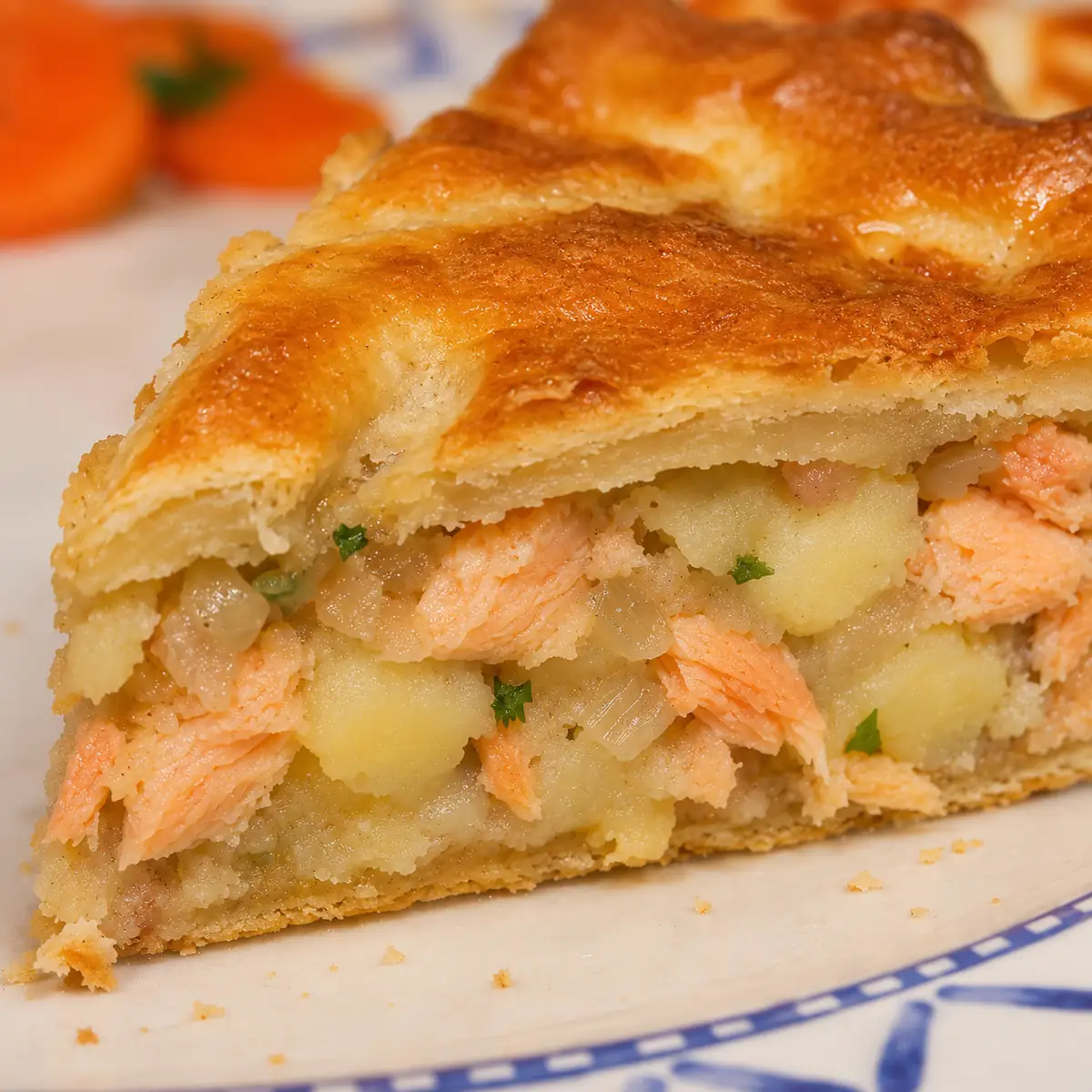
What to serve with salmon pie
This pie already contains potatoes and pastry, so I usually keep the side dish fresh and simple. A mixed green salad with herb dressing or romaine and endive salad works well. Grated carrot salad adds crunch and can be prepared while the pie bakes.
For a cool accompaniment, try cucumber salad with dill or creamy coleslaw. Serve homemade tartare sauce separately so everyone can choose how much they want. If you only need a dressing for greens, lemon vinaigrette brings acidity without adding another substantial component.
If you enjoy savoury pies, the collection of Québec comfort food includes other pastry-topped family dinners.
Make ahead and use leftovers
Prepare the pastry and cooked filling separately a day ahead and refrigerate both. Assemble when ready to bake. A refrigerated filling may require extra oven time, so use the centre temperature and pastry colour to judge doneness. For more ways to cook fish on another evening, browse my salmon recipe collection.
Refrigerate leftovers within two hours and keep covered for up to three days. Reheat portions in a 350°F oven, loosely covered at first, until they reach 165°F in the centre. Uncover briefly to restore some crispness. The microwave heats the filling conveniently but softens the pastry.
Can I freeze it? Freeze baked, cooled portions, well wrapped, for up to two months for best quality. Thaw in the refrigerator before reheating. Can I use cooked fresh salmon? Yes, use the same drained weight, remove bones, and fold it in gently. Raw salmon requires a different preparation and should not be substituted directly into this filling.

Quebec Salmon and Potato Pie with a Flaky Double Crust
Ingredients
- Pastry:
- 2 1/2 cups all-purpose flour
- 1/2 teaspoon fine salt
- 1 cup cold unsalted butter diced
- 6 to 8 tablespoons ice water
- Filling:
- 1 pound 5 ounces peeled potatoes cut into chunks
- 2 tablespoons unsalted butter
- 1 medium onion finely chopped (about 1 cup)
- 1/4 cup milk
- 1/2 teaspoon fine salt or to taste
- 1/4 teaspoon black pepper
- 14 ounces canned salmon drained weight, skin and unwanted bones removed
- 2 tablespoons finely chopped parsley
- Finish:
- 1 large egg
- 1 tablespoon water
Instructions
- Mix pastry flour and salt. Work in cold butter, leaving small pieces. Add 6 tablespoons ice water, then up to 2 tablespoons more as needed to make a dough that holds together. Divide into two disks, one slightly larger, wrap, and chill 1 hour.
- Cover potatoes with cold water. Bring to a boil and simmer 15 to 20 minutes until tender. Drain well, return to the warm pan over low heat for 1 minute, then mash by hand.
- Soften onion in 2 tablespoons butter over medium-low heat for about 8 minutes. Add to potatoes with milk, salt, and pepper. Fold in salmon and parsley, keeping fish flakes visible. Taste and adjust salt. Spread in a shallow dish to cool about 30 minutes.
- Heat oven to 425°F with a lower-third rack. Roll the larger pastry disk and fit a standard 9-inch metal pie pan. Add cooled filling. Roll and add the top crust.

- Trim, seal, crimp, and cut 3 to 4 steam vents.

- Beat egg with water and brush a thin layer over the pastry; discard unused egg wash. Place on a rimmed baking sheet.
- Bake 15 minutes, reduce oven to 375°F, and bake 35 to 45 minutes more, shielding with foil if needed. The pastry should be golden and cooked underneath, and the centre should reach 165°F. Rest 20 minutes before slicing.