Pumpkin Cheesecake Bars with a Graham Cracker Crust
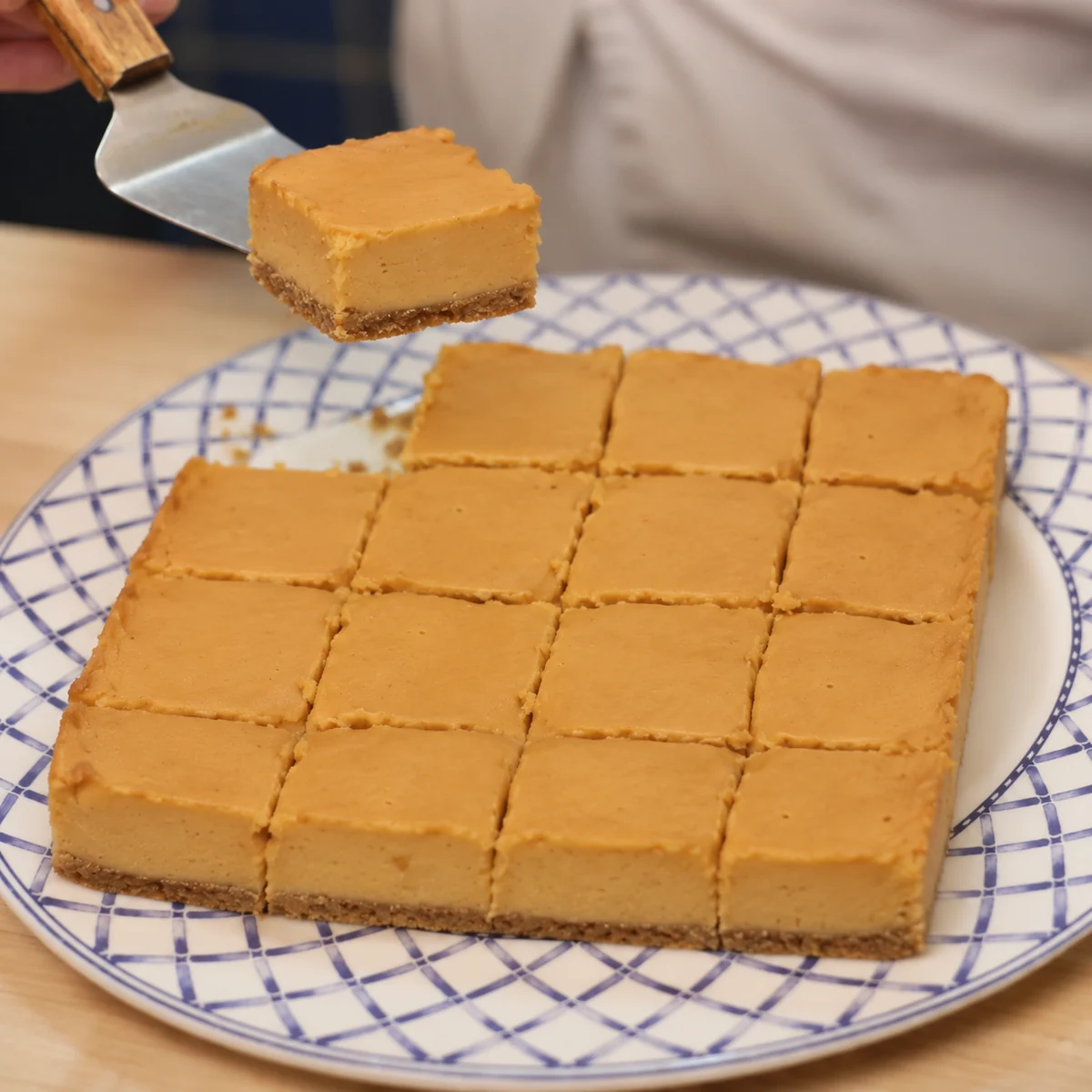
Pumpkin cheesecake bars combine a buttery graham cracker base with a gently spiced cream cheese filling. They bake in a square pan and chill before cutting, so they are easy to prepare the day before a holiday meal. This version uses plain pumpkin purée, full-fat block cream cheese, and a modest amount of cinnamon and ginger. The filling should be creamy and firm enough to lift, with a little softness at the centre rather than the dry texture of an overbaked cake.
Choose pumpkin purée, not pie filling
Use three-quarters of a cup of plain pumpkin purée. Check the label before opening the can: pumpkin pie filling already contains sugar and seasonings, so it changes the balance of this recipe. The purée should hold a soft mound on a spoon. If homemade purée is watery, drain it in a fine sieve before measuring. Do not add the liquid that collects underneath.
Pumpkin contributes moisture as well as flavour. Adding the remainder of a large can to avoid leftovers will make the filling deeper, softer, and slower to set. Measure the amount in the card and save the rest for another recipe. My pumpkin bread and pumpkin muffins are different ways to use plain purée; follow their own quantities rather than transferring this cheesecake mixture into them.
The spices should leave room for the cream cheese to taste like cream cheese. I keep the cinnamon moderate and add smaller amounts of ginger and nutmeg. If you prefer a commercial pumpkin spice blend, replace the three spices with one and a half teaspoons of the blend. There is no need to add it on top of the measured spices.
Prepare the pan before mixing
Use an eight-inch square metal baking pan with sides at least two inches high. Line it with parchment, leaving overhang on two opposite sides. A little butter underneath can help the paper stay in place, but the measured melted butter belongs in the crust. Press the paper into the corners so large folds do not push the filling inward.
A nine-inch square pan gives thinner bars and a shorter baking time. A loaf pan makes a much deeper cheesecake and is not a direct substitute. For this batch, keep the eight-inch pan and cut sixteen small squares after chilling. A metal pan also gives a more predictable crust than a thick ceramic dish; the latter takes longer to heat and cool.
Make a base that holds together
Mix one and a half cups of fine graham cracker crumbs with two tablespoons of sugar and five tablespoons of melted unsalted butter. Stir until the crumbs are evenly damp, with no dry pocket left at the bottom of the bowl. Pack into the prepared pan using the flat bottom of a measuring cup. Press firmly enough to form a continuous layer without spending several minutes crushing it into a hard slab.
Bake the crust for ten minutes at 350°F, then set the pan on a rack while you prepare the filling. Reduce the oven to 325°F. This short first bake helps the crumb base stay distinct under the wet mixture. The crust may smell toasted and deepen slightly at the edges; it should not become dark brown before the cheesecake goes in.
If you only have whole graham crackers, crush them finely and measure the crumbs afterward. Large flakes make the base fragile when sliced. A similar crumb base appears in my no-bake cheesecake bars, but that filling sets by a different method. These pumpkin bars contain eggs and must be baked.
Mix gently for a smooth filling
Let the cream cheese soften enough that it yields easily when pressed. Beat two eight-ounce blocks with the brown sugar until smooth, scraping the bottom and sides of the bowl. Do this before adding the eggs: cold lumps become much harder to remove once the mixture is thin. Use full-fat block cream cheese, not a whipped spread from a tub.

Add the pumpkin, sour cream, cornstarch, vanilla, spices, and salt. Mix on low until the colour is even. Add the eggs one at a time, stopping as soon as each disappears into the filling. Scrape the bowl once more and fold by hand to catch any pale streaks. I avoid beating air into cheesecake batter; a foamy mixture rises more in the oven and is more likely to sink or crack afterward.
Pour over the warm, prebaked crust and spread to the corners. Tap the pan lightly once or twice if large bubbles are visible. You do not need a glossy, perfectly level surface. A few shallow spatula marks settle during baking, and the finished dessert can look homemade without losing its creamy texture.

Recognize the right baking point
Bake at 325°F for approximately thirty-five to forty-five minutes. The outer area should look set while the small central area trembles gently when the pan is moved. The middle should not ripple like liquid. An instant-read thermometer inserted near the centre should reach at least 160°F. Check without repeatedly opening the oven during the first half of baking.
Do not wait for the top to turn dark or for the whole filling to become completely rigid. The cheesecake continues to firm as it cools. If the centre is still visibly fluid, give it another few minutes and check again. Ovens and pan finishes vary; the visual cues and centre temperature are more useful than forcing the bake to end at an exact minute.
These bars do not need a water bath. Their shallow filling can bake evenly at a moderate temperature, and parchment makes lifting them straightforward. My Basque cheesecake deliberately uses a different approach with a browned surface; that dark top is not the target here.
Chill before making clean portions
Cool the pan on a rack for about one hour, then refrigerate for at least four hours. Do not leave it at room temperature for more than two hours in total. Once cold, lift using the parchment and support the slab underneath. Cut with a sharp knife, wiping the blade between cuts. Warm water can help clean the knife, but dry it before the next cut.
I prefer serving these bars cold or after only ten to fifteen minutes out of the refrigerator. They need no frosting. If desired, offer a small spoonful of brown sugar caramel sauce separately; it adds sweetness and is not included in the nutrition estimate. Keep optional toppings light enough that the pumpkin filling remains the main flavour.

Plan a dessert table and store leftovers
For a mixed dessert tray, choose different textures rather than several rich cheesecakes. My chocolate peanut butter bars offer a chocolate option, while lemon yogurt cake brings a simple citrus cake. Pumpkin oatmeal cookies are useful when you want a separate cookie alongside the chilled bars. A small serving of pumpkin spice latte can accompany them, although the bars already contain their own spice mixture.
Store covered in the refrigerator for up to four days. Freeze individual cold squares for up to two months for best quality, separating layers with parchment. Thaw overnight in the refrigerator. Slight moisture on the surface after thawing is normal; blot gently if needed. Never reheat the bars to try to remove it, as that changes the filling texture and can loosen the crust.
For more ways to use the remaining purée, see the squash and pumpkin recipe collection. My Basque cheesecake video is a related cream-cheese preparation, not a demonstration of these pumpkin bars; follow the temperatures and quantities here.
Pumpkin Cheesecake Bars with a Graham Cracker Crust
Ingredients
- Crust:
- 1 1/2 cups fine graham cracker crumbs about 6 ounces
- 2 tablespoons granulated sugar
- 5 tablespoons unsalted butter melted
- Filling:
- 16 ounces full-fat block cream cheese softened
- 3/4 cup packed light brown sugar
- 3/4 cup plain pumpkin purée
- 1/4 cup sour cream
- 1 tablespoon cornstarch
- 1 teaspoon vanilla extract
- 1 teaspoon ground cinnamon
- 1/4 teaspoon ground ginger
- 1/8 teaspoon ground nutmeg
- 1/4 teaspoon fine salt
- 2 large eggs
Instructions
- Heat oven to 350°F. Line an 8-inch square metal pan with parchment, leaving lifting handles.
- Mix crumbs, granulated sugar, and melted butter. Press evenly into pan. Bake 10 minutes. Set on a rack; reduce oven to 325°F.
- Beat softened cream cheese and brown sugar until smooth. Mix in pumpkin, sour cream, cornstarch, vanilla, spices, and salt on low speed.

- Add eggs one at a time, mixing just until incorporated. Scrape bowl and fold gently. Spread over crust.

- Bake 35 to 45 minutes, until edges are set and centre trembles gently without looking liquid; centre should reach at least 160°F.
- Cool on rack about 1 hour. Refrigerate at least 4 hours, then lift out and cut into 16 squares.